
Ich bin drin - das ist ja einfach!
Joined May 2008
- Tweets 41,736
- Following 1,591
- Followers 268
- Likes 68,577
4,015 Photos and videos










oida retweeted
Oh look it’s one of the German flotilla members saying she doesn’t stand against Hamas and Hezbollah because they’re the “resistance”. Yes we knew who they were but it’s helpful to have it confirmed.
20
73
399
5,554
oida retweeted

Currently doing one of my deepest exposures yet and couldn't resist sharing a sneak peek. This is part of a supernova shockwave as it rips through interstellar space.
I haven't even touched the saturation slider- this area is so dynamic it naturally has strong color separation

95
210
2,678
25,435
oida retweeted

Jun 13
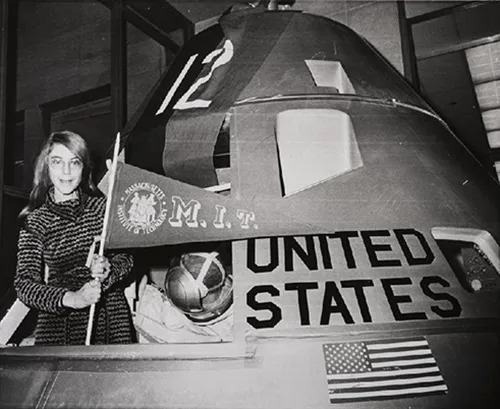
A 32-year-old mother brought her daughter to the lab on weekends so she could keep writing the code that would land humans on the moon. 400,000 feet above her, that same code became the only reason the mission did not abort.
Her name is Margaret Hamilton.
She was born in Indiana in 1936. She studied mathematics with a minor in philosophy. She taught herself to program at a time when the job she did had no name at all.
In 1965 she became Director of the Software Engineering Division at the MIT Instrumentation Laboratory. The lab had a contract with NASA to write the on-board flight software for Apollo. Hamilton led it.
She gave the field its name.
There was no term for what she did, so she coined one. Software engineering. Her colleagues laughed. Hardware was real engineering. Software was an afterthought. She insisted it deserved the same rigor.
She was right.
Here is the part that became history.
July 20, 1969. The lunar module Eagle is minutes from the surface. Armstrong and Aldrin are descending. Then the computer starts flashing alarms. 1201. 1202. Red and yellow lights across the board.
The computer was overloaded. A checklist error had left the rendezvous radar switched on during landing, flooding the machine with data it did not need.
A lesser system would have frozen. With astronauts halfway to the surface, that meant a dead crew or an aborted landing.
Hamilton's software did not freeze.
She had built it to recognize when it was overwhelmed and throw away the low-priority tasks, so it could lock onto the one job that mattered: landing the spacecraft.
The 1202 alarm was not a failure. It was her code announcing that it was shedding the unimportant work and keeping the crew alive.
Mission Control knew how robust her system was. They told the astronauts to ignore the alarm and go.
Three minutes later, a human stood on the moon.
"I like to say not only was that the first human on the moon," Hamilton said, "but the first software to run on the moon."
She did not stop there.
She worked on Skylab, the first American space station. She wrote the early space shuttle software. In 1986 she left to found her own company, Hamilton Technologies.
The concepts she pioneered are the foundation everything now runs on. Asynchronous software. Priority scheduling. Human-in-the-loop decision making.
Every operating system, every aircraft, every system that simply cannot fail, runs on the principles she invented. Because she knew there was no second chance, and she built for it.
In 2016, President Obama gave her the Presidential Medal of Freedom, the highest civilian honor in the United States. "Our astronauts didn't have much time," he said, "but thankfully they had Margaret Hamilton."
There is a famous photograph of her from 1969. A young woman, smiling, standing next to a stack of code listings printed on paper. The stack is taller than she is.
That stack is the software that took humanity to the moon.
She said it best herself. "There was no choice but to be pioneers. No time to be beginners."
The phone in your hand runs on software engineering.
She is the reason that phrase exists.
10
12
47
3,616
oida retweeted

In this video, everything speaks for itself:
— a fuel depot in Rybinsk is on fire
— a Ukrainian drone comes in for a follow-up strike
— russian air defense fires into the sky
— and another hit on the base for good measure
A russian system falling apart in real time.

Rybinsk, Yaroslavl region — roughly 900 km from the Ukrainian border.
A major industrial facility is reportedly going up in flames.
Distance is no longer a shield from Ukrainian sanctions.
21
131
559
19,366
oida retweeted

💥 Russia: Much of the Strategic State Fuel Reserve destroyed by a large swarm of Ukrainian drones in Rybinsk, Yaroslavl region.
45
422
2,735
32,612
oida retweeted

Ukrainian long-range drones have severely struck the oil depot of Rybinsk, Yaroslavl, in Russia. The drones just keep on coming.
44
313
2,529
45,019
oida retweeted

Ukrainian attack drones hit a major Russian oil depot in Rybinsk this morning, setting multiple tanks ablaze.
Seen here, a Ukrainian attack drone flies towards the already burning Russian depot, descends, and then smashes into another oil tank.
159
1,107
8,348
263,467

RT @BrianCox_RLTW: Periodic reminder that "direct action" is merely a progressive euphemism for "domestic terrorism."
#ICYMI I've convenie…
173
oida retweeted

Jun 12
The "Palestine Action" thug Qesser Zuhrah and her fellow extremists react to today's sentencing of racist vandals at Woolwich Crown Court. I think it's safe to say they have no respect for the criminal justice system.
Note her red triangle pin. It means "I back Hamas".
42
47
281
10,144
oida retweeted

Jun 12
‘Healthcare worker’ outside court saying we should be “looking up to” the Palestine Action thugs who smashed stuff up and broke the spine of a police officer. I really hope she never treats Jews or Israelis.
33
118
585
9,120
oida retweeted

A Palestine Action thug fractured a female police officer's spine with a sledgehammer.
Mehdi Hasan: "There was no violent intent"

23
34
139
2,032
oida retweeted

They're not smiling anymore.
The Four Palestine Action terrorists who attacked an Elbit Systems Site in the UK, causing over a million pounds of damage and beating a police officer with a sledgehammer within an inch of her life, have been jailed. The white guy got almost eight years in prison, the two white girls got five years, and the Indian received four years and eight months.
It would have taken five seconds of my time to find out their names, but they don't deserve that.

60
161
1,068
13,824
oida retweeted

AP Exclusive: Humanitarians at Médecins Sans Frontières sexually exploit Sudanese underage girls in refugee camps, systematically targeting vulnerable victims of war. Internal report, buried for 11 months, suggests there was organized sexual trafficking.
apnews.com/article/chad-suda…
46
798
1,459
41,627
oida retweeted
Reuters: Two-thirds of ICC bureau found prosecutor Karim Khan guilty of “serious misconduct” and “serious breach of duty” by sexually assaulting his employee.
14 voted against Khan: Switzerland, Japan, Belgium, Chile, Cyprus, Ecuador, Finland, Italy, Latvia, Poland, Slovenia, South Korea, Brazil, New Zealand
4 voted for Khan: South Africa, Senegal, Kenya, Sierra Leone
3 abtained: Uganda, Bosnia, Bolivia
reuters.com/world/prosecutor…

49
532
1,767
51,651
oida retweeted
Muhammad al-Namrouti, Hamas commander of the northern Khan Younis battalion, eliminated by IDF.
Gazans on social media say he worked for UNRWA — and was among the 70 employees recently let go by the agency.


28
193
888
8,532
oida retweeted

19h
Iranian-Jewish Doctor Drops Truth Bomb No Feminist Will Touch:
Dr. Sheila Nazarian:
"I studied Islam classes while I was at Columbia University, because I wanted to know what it says in the Quran that made my family have to escape Iran under gunfire, by border police.
I've read the Quran. I know what it says to do to Jews in the Quran, and no one can deny it to me because I studied it.
Shariah law is not compatible with the West.
Women are worth half as much. Women need their husband’s permission to travel outside the country or go anywhere. Women can be stoned. This is why my family got me out of Iran under the Islamic regime."
I couldn't agree more with her. Shariah law is simply not compatible with any non-Muslim country.
193
3,689
13,891
325,383



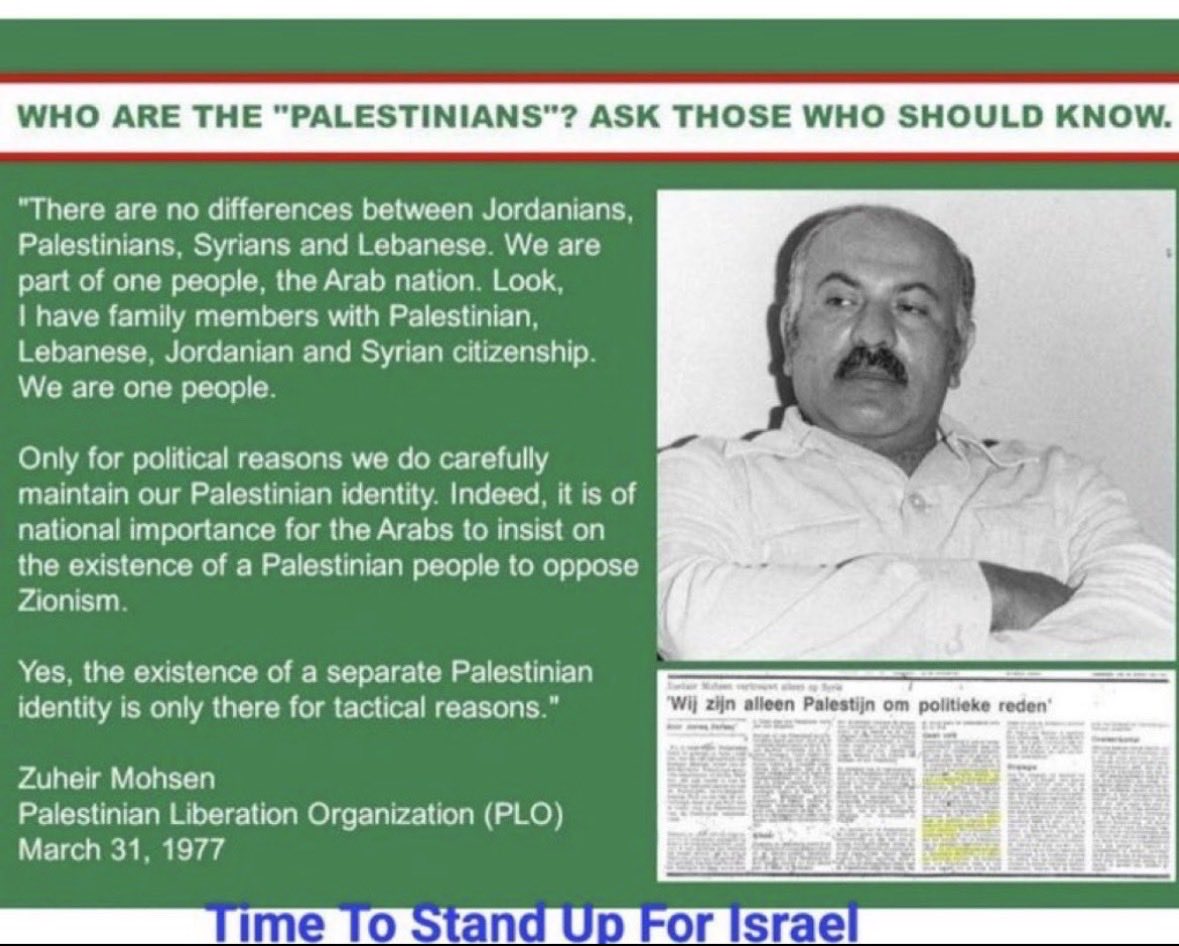


oida retweeted

Jun 11
We love Jerry!
One of the first entertainers to stand up for Israel against the flow!
4
20
404
12,378