Doing my best to determine signal from the noise.
Joined June 2020
- Tweets 8,856
- Following 249
- Followers 432
- Likes 46,208
329 Photos and videos
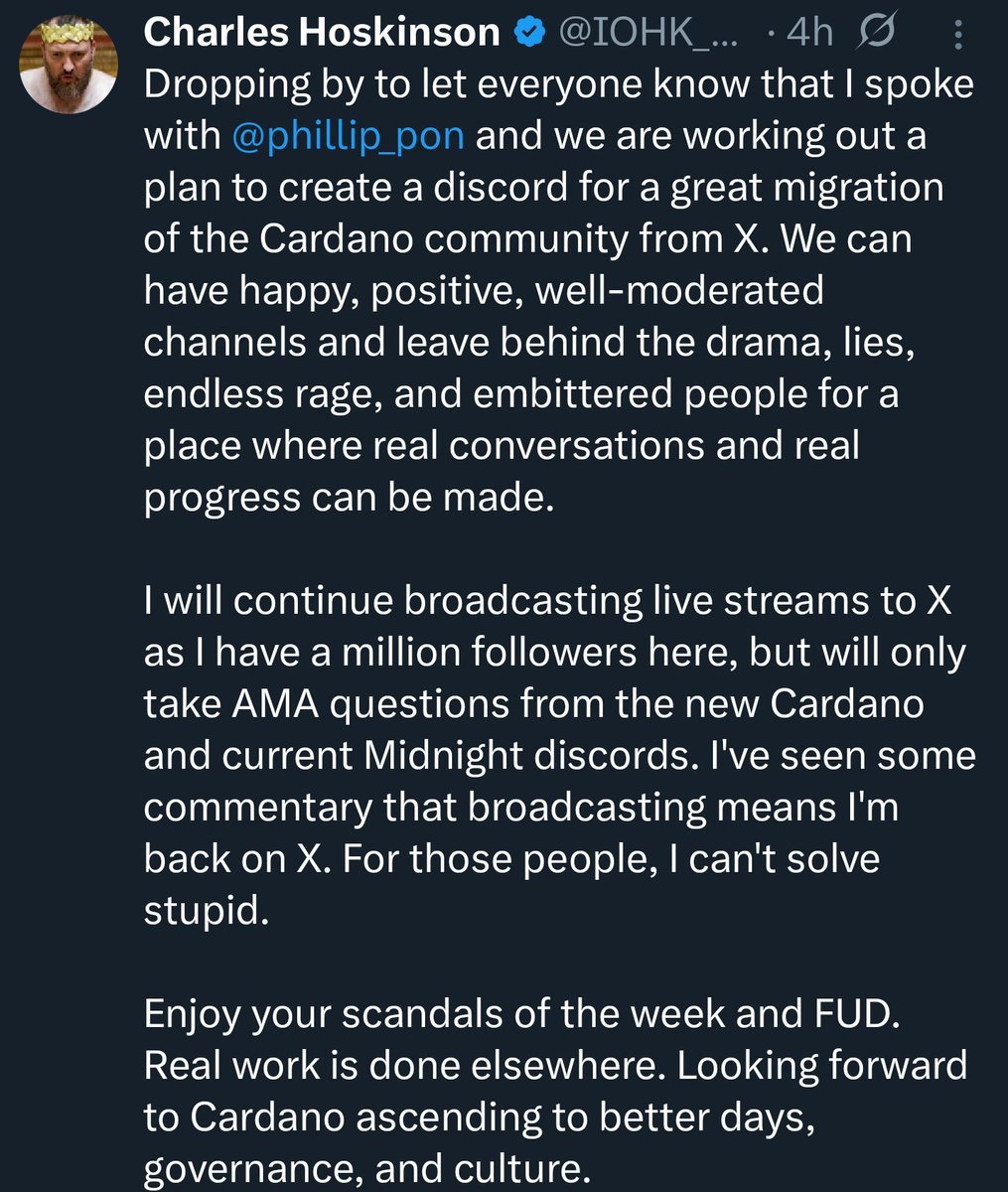
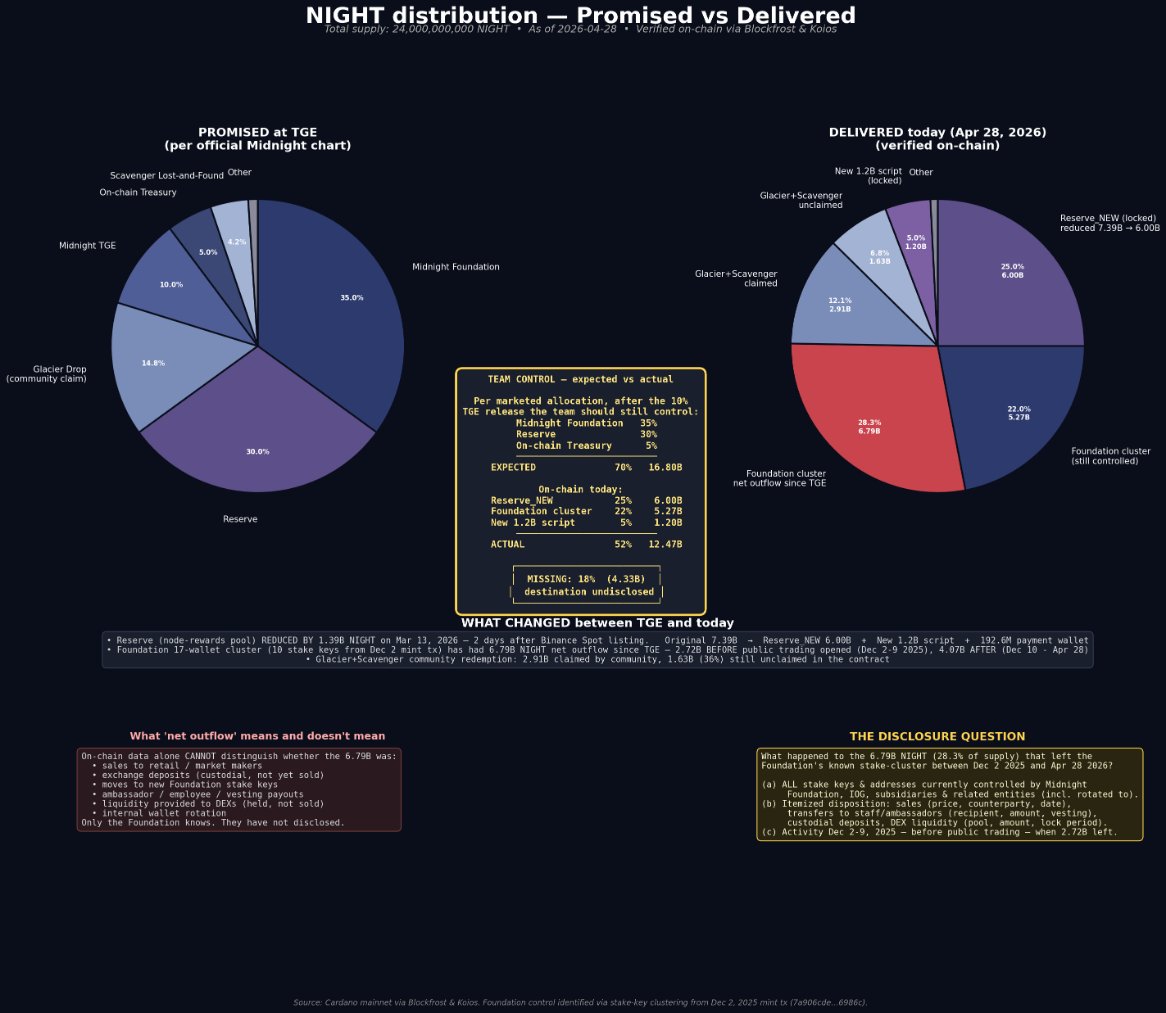
This is an insane, Soviet-esqe move that adds a level of bureaucracy wholly counter to why I was inspired by crypto in the first place.
Quick question- who gets to decide who does the banning?
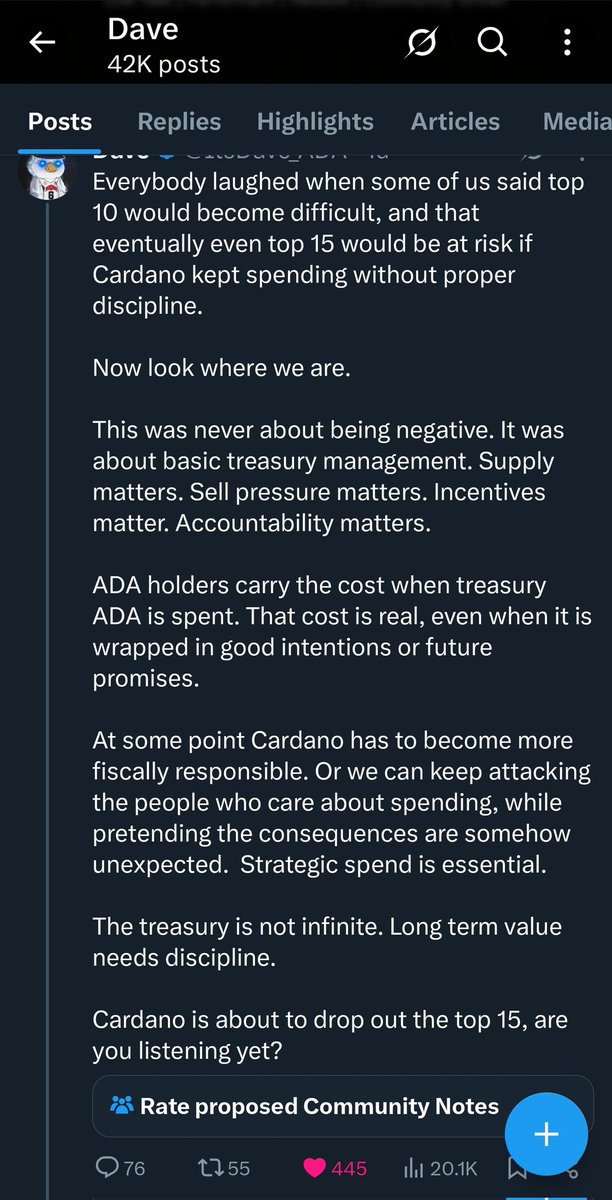
I warned months ago that an addiction to treasury spending would result in a spiral downward, as it would develop a class of recipients that constantly repeated the only way to solve declining price (caused by sell pressure) was MORE spending.
If Cardano goes down this path, it's basically giving up on decentralized decision making, and there isn't much of a reason for me to stick around anymore.

Here's a summary of three Cardano Discord videos by IOG:
If you don't join this Discord, you'll be subject to an automatic NO vote by the DReps party, including Charles DRep. They aim to become the largest DRep and lead the ecosystem. The goal is to create an annual omnibus proposal within the Discord. In short, this Discord is not just another Discord, but could potentially become a requirement for treasury spending, so those aiming for that should pay attention.
This is simply information sharing, not my opinion.
I. Diagnosis — the venue, not the people. Cardano's governance breaks down because it happens on X, a broadcast medium whose reward is attention and influence. That structure amplifies ego and turns every exchange into a win/lose spectacle. Real agreement requires three things — empathy, shared goals, and aligned incentives — and none of them can form on a broadcast channel. Without them you cannot set goals, build strategy, or collaborate, so governance is structurally impossible. Intersect was supposed to be the dedicated space but failed, partly because X already dominated the conversation and a small group of critics (he claims fewer than 100) controls the narrative.
II. The objective. The goal is not maximizing the ADA price but "growth with principles" — value growth that does not sacrifice decentralization. Price-maximization alone would justify even centralizing the chain, which he rejects.
III. The solution. Build a purpose-built, moderated space — a "heterotopia" — dedicated solely to governance. The first venue is Discord.
IV. Making the space attack-proof and productive. Confidentiality via the Chatham House Rule plus zero-knowledge anonymity blocks the "leak an unformed idea and manufacture a scandal" attack: members can prove they belong without revealing identity, which also enables anonymous voting (e.g., Semaphore ported to Midnight). Conversations are organized into domain-expert "circles" (from Holacracy) drawn from a statistically representative pool, run by a facilitator (human or AI) through a structured pre-/main-/post-conversation flow. The accumulated record becomes a governance knowledge graph and eventually a "Cardano LLM" single source of truth.
V. Teeth — the political party and Charles as DRep. A space with no power is "just yelling at a screen," so participation must have teeth. Charles will become a DRep only if a political party exists. The party is a product of the process: whoever wins the convergence on "what growth means" becomes its members, and that converged position becomes the platform; it would likely be the ecosystem's largest DRep. Its core mechanism: automatically vote NO on any funding proposal whose proposers refuse to join and participate in the governance Discord — which, with enough voting power, effectively gates all project funding. His rationale: receiving public treasury funds should carry a duty not just to pass audits but to participate in accountability and growth; accountability means being able to remove those who break commitments; participation is "no longer optional." The party's purpose is to push the constitutional updates through, fill the new elected roles with its members, execute a budget-funded strategy, and protect the discussion channels. He frames this as leadership, not a power grab — he says he wants to be neither king nor president, only to "lead" by including people.
VI. The output — a recursive governance cycle. Rules evolve by vote of the participants (the Nomic principle), iterating after each cycle: ① Define growth metrics → write them into the constitution's preamble. ② Design an executive function and new roles (beyond today's legislative/DReps and judicial/Constitutional Committee, adding an executive, an AI role, and representation for DApps/projects to address the concentrated voting power of large holders) → constitution v2. ③ Set strategy, accountability, and a budget — consolidating treasury spending into one withdrawal per year via Funding Organizations (FOs), so a DRep faces one decision and one debate per year instead of a flood of 600M ADA in proposals where every rejection makes an enemy → then loop. Convergence produces winners and losers; sometimes the ecosystem must shrink to grow (the Ethereum/Ethereum Classic split).
VII. Rollout as an MVP. Rather than chasing perfection, start lean and iterate: Stage 1 = ideation (an IO working group, RACI roles, staffing and tooling — current), Stage 2 = closed beta plus a hackathon and recruitment, Stage 3 = open it up (many banned at first for breaking the rules). Timeline 12–24 months, legitimized by a DRep vote and a constitutional amendment; later, fork a decentralized social platform into Cardano-native infrastructure linked to the chain.
VIII. Boundaries. This is not "No Homers" exclusion: every ADA holder is welcome, but only under the code of conduct. It is not a venue for transparency-litigation or personal attacks — that behavior gets you banned (the surgical-theater / library analogy). To disagree you must offer a workable alternative and explain why it is better.
3
2
20
582

Jun 14
Big if true
Jun 14

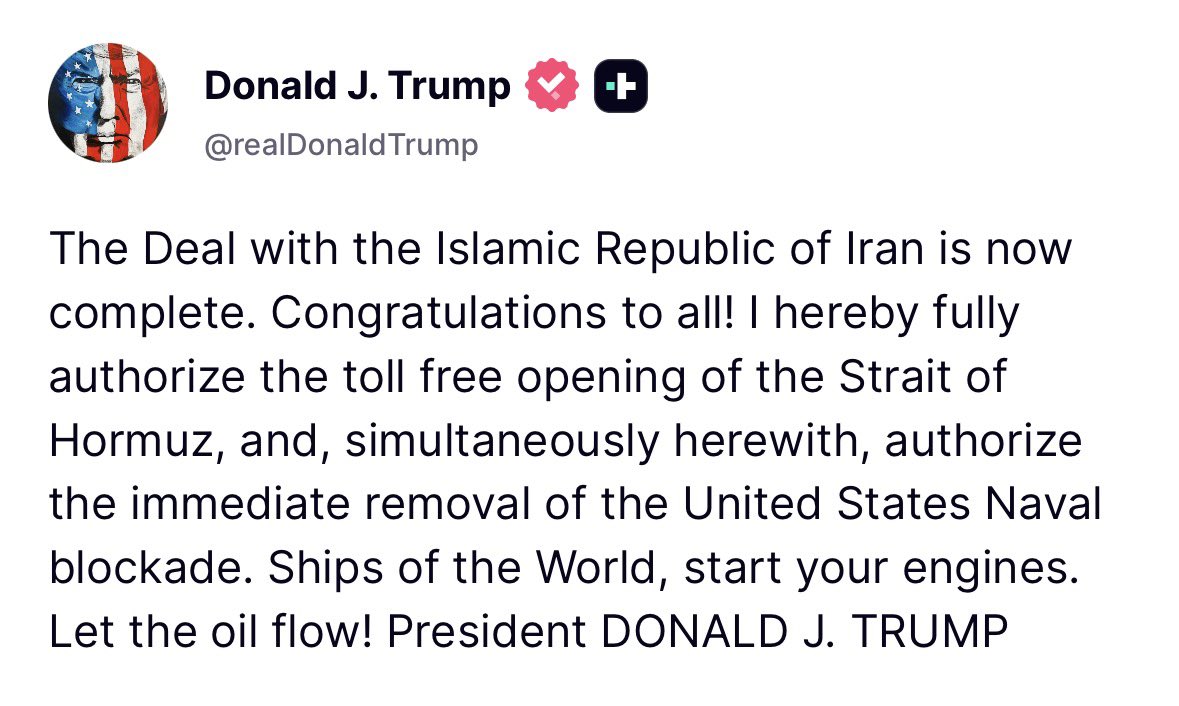
“The Deal with Islamic Republic of Iran is now complete. Congratulations to all!” President Donald J. Trump 🇺🇸
42
Jun 14
👀
Jun 13

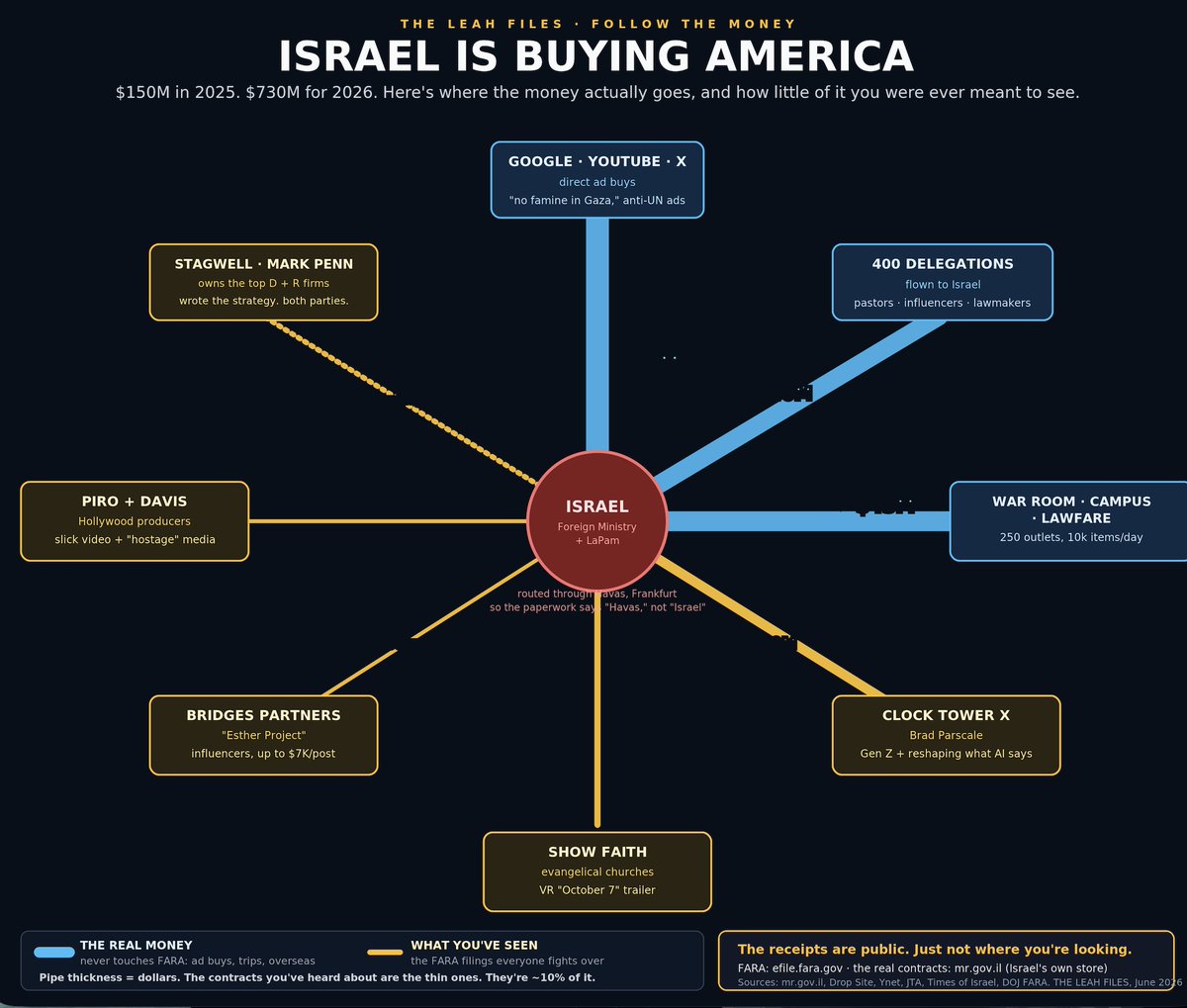
I saw that 6-8 companies registered in FARA for Israel within weeks of Charlie Kirk’s assassination. So, I did a deep dive on FARA and followed the money. It's worse than we thought...
We are all aware of the “Israel pays influencers" story. But that’s only 10% of the money.
8 companies registered in FARA in 2025. There are only 21 ever. So that’s more than 1/3 in one year to influence you.
Let’s follow the $ on how Israel is buying Americans
Israel's government spent $150M in 2025 and $730M for 2026, to move American opinion.
- $9M to Brad Parscale to flood Gen Z and reshape what AI says about Israel
- $900K to pay US influencers up to $7,000 a post, no disclosure, 25-30 posts a month
- $3.26M for a church campaign with a VR "October 7" trailer built to tour Christian colleges. They literally did a VR campaign to put people on the music festival field during the attack.
That's about $15M. Roughly a tenth.
The real money is in the fat blue pipes in the graphic, and none of it touches FARA:
~$52M paid straight to Google, YouTube and X for pro Israel / anti Palestine ads
~$40M to fly 400 pastors, influencers and lawmakers to Israel
- $20M on a media war room, campus ops and lawfare
Why don't you see it? FARA only catches Americans hired to do politics. Ad buys and free trips don't qualify. So the filings everyone quotes were only ever going to show you the tip of the iceberg…intentionally.
And it all routes through one Havas ad office in Frankfurt, so the paperwork reads "Havas," not "Israel."
The influencers pushing Israel sympathy propaganda are getting paid $175k-$200k/ month. So next time someone tries and discredits you for posting facts about Israel or is sympathizing with these war criminals, just know they are either 1- being paid like the wh*res they are or 2- pathetic sheep falling for the paid propaganda
22
olezigaba retweeted

It's clear that a lot of people just want to be proud of their country again after a Long Dark Winter when patriotism was basically equated with genocide for a decade-plus
It's not "crass" to lift the national spirit after enduring that, White House should do this all summer
Jun 14

WE HAVE A BALD EAGLE MAKING AN ENTRANCE AT THE UFC FREEDOM 250 WEIGH INS
[ #UFCWhiteHouse | SUNDAY, JUNE 14 | 8PM ET LIVE on @ParamountPlus ]
40
361
4,868
196,868
olezigaba retweeted

Jun 13
I’ve been making this point for years.
IOG replaced any effective forward progress and free-market innovation that Cardano ever had with broken political process and centralised control of power.
People still think “governance” was about decentralisation, when it’s done the absolute opposite.

As I have seen current governance, I think Cardano is repeating a mistake from the 20th century.
The socialist calculation debate concluded that "central committees cannot replace market price signals." All socialist nations failed to expand their economies in the 20th century. Yet our "Treasury governance" is making exactly this mistake.
Hayek's insight: prices compress the dispersed knowledge of millions of decision-makers. No committee, however expert, can process this information.
When DReps vote on marketing/commercial Treasury allocations, this is a political process replacing price discovery.
The irony: Cardano brands itself as "decentralization." But Treasury-based resource allocation, where political voting replaces market discovery, is structurally identical to central planning. Many DReps drawing from one central pool = Gosplan with a smiley face.
Public Choice theory also pointed out that bureaucrats who say "we serve the people" actually maximize their own budgets. "We need funding for the ecosystem" is the Cardano version of "we serve the workers."
We knew this type of economy always fails against free market capitalism. No one can be better than the invisible hand of the market. Commercial projects must be funded by profit-making entities with market expertise. DReps, on the other hand, are not directly responsible for outcomes of commercial/marketing projects. It's a wrong fit.
If we seriously want commercial/marketing success, don't be socialist. Let the economy be in the market's hands.
Stop repeating "Community, community, community."
We should think outside the box.
coffeepool.jp/notes/drep-vot…
5
4
46
3,521
Jun 13
LA is likely fucked, but at least Spencer Pratt is going to make it more interesting. This video is 🔥

38
olezigaba retweeted

Jun 13
Step one in ensuring that any peace deal has a chance: restrain Israel.
Right now, Israel’s ability to conduct consistent strikes into Iran is heavily dependent on U.S. assistance.
As Israel’s own defense minister spells out below, Israel has different objectives than we do, and it’s clear they will not be inclined to adhere to a peace agreement.
The stated intent runs wholly counter to U.S. objectives, yet Israel cannot sustain wars on multiple fronts without financial and military support from the U.S.
Until they are able to do so, their actions will continue to interfere with our strategic goals and drag the U.S. into conflicts that don’t serve us.
Make no mistake—this is a threat to sabotage our deal. But we can remove the leverage:
Take away the military support we are providing Israel, immediately, to preserve the potential of ending this foolish war.

נשיא ארה"ב מוביל בימים אלה להסכם עם איראן מתוך ראיית האינטרסים האמריקאים, ובהם גם האינטרס המשותף עם ישראל - למנוע מאיראן נשק גרעיני - ואנו מצפים שיעמוד על העיקרון הזה ועקרונות נוספים בתחום הטילים ושלוחי הטרור.
ביחד הנחתנו על איראן מכות קשות שהסיגו את יכולותיה שנים רבות לאחור.
ישראל חייבת לוודא שגם בעתיד תהיה לנו את היכולת לפעול באופן עצמאי כדי למנוע מאיראן נשק גרעיני, ורה"מ בנימין נתניהו ואני הנחינו את צה"ל להיערך בהתאם.
ישראל לא תיסוג מאזורי הביטחון בלבנון, בסוריה ובעזה. צה"ל ימשיך להגן על גבולותינו ואזרחינו מתוך כתר החרמון, הרי הלבנון, חבלי ארצנו בשומרון ורוב שטחה של עזה - מול איומי כוחות וארגונים ג'יהאדיסטים, כלקח מרכזי מאירועי ה-7 באוקטובר.
צה"ל לא ייסוג ממחנות הטרור בצפון השומרון, המפונים מתושבים, ובמידת הצורך יורחב המהלך למחנות טרור נוספים.
תפיסת הביטחון שלנו חדה וברורה: פועלים מול איומים קרובים ורחוקים ושואפים להכרעות ולא לפשרות וויתורים.
הרבה מונח על כפות המאזניים בתקופה זו ואנחנו נחושים להמשיך ולהוביל מדיניות ביטחונית תקיפה שתמנע פגיעה בהישגינו הביטחוניים ולא תסכן את יכולתנו להיאבק מול ציר הרשע השיעי בהובלת איראן וציר הרשע הסוני בהובלת האחים המוסלמים.
ברצוני להביע הערכה רבה לפיקוד הצה"לי על ההישגים הגדולים ולחיילינו הגיבורים, בסדיר, בקבע ובמילואים, על מלחמת הגבורה למען ביטחון ישראל - ולתושבי הצפון על עמידת הגבורה שנותנת לצה"ל את הכוח להמשיך ולהגן על ביטחונם.
אני שולח חיבוק גדול למשפחות השכולות שאיבדו את היקר מכל ומאחל החלמה לכל הפצועים, בגוף ובנפש, שמסרו עצמם למען ההגנה על חיי היהודים וביטחון מדינת ישראל.
783
2,862
12,076
469,914
olezigaba retweeted

Jun 12
Over 4000 workers just became millionaires by owning the means of production and the socialists are pissed
293
4,368
37,838
793,262
olezigaba retweeted

Jun 13
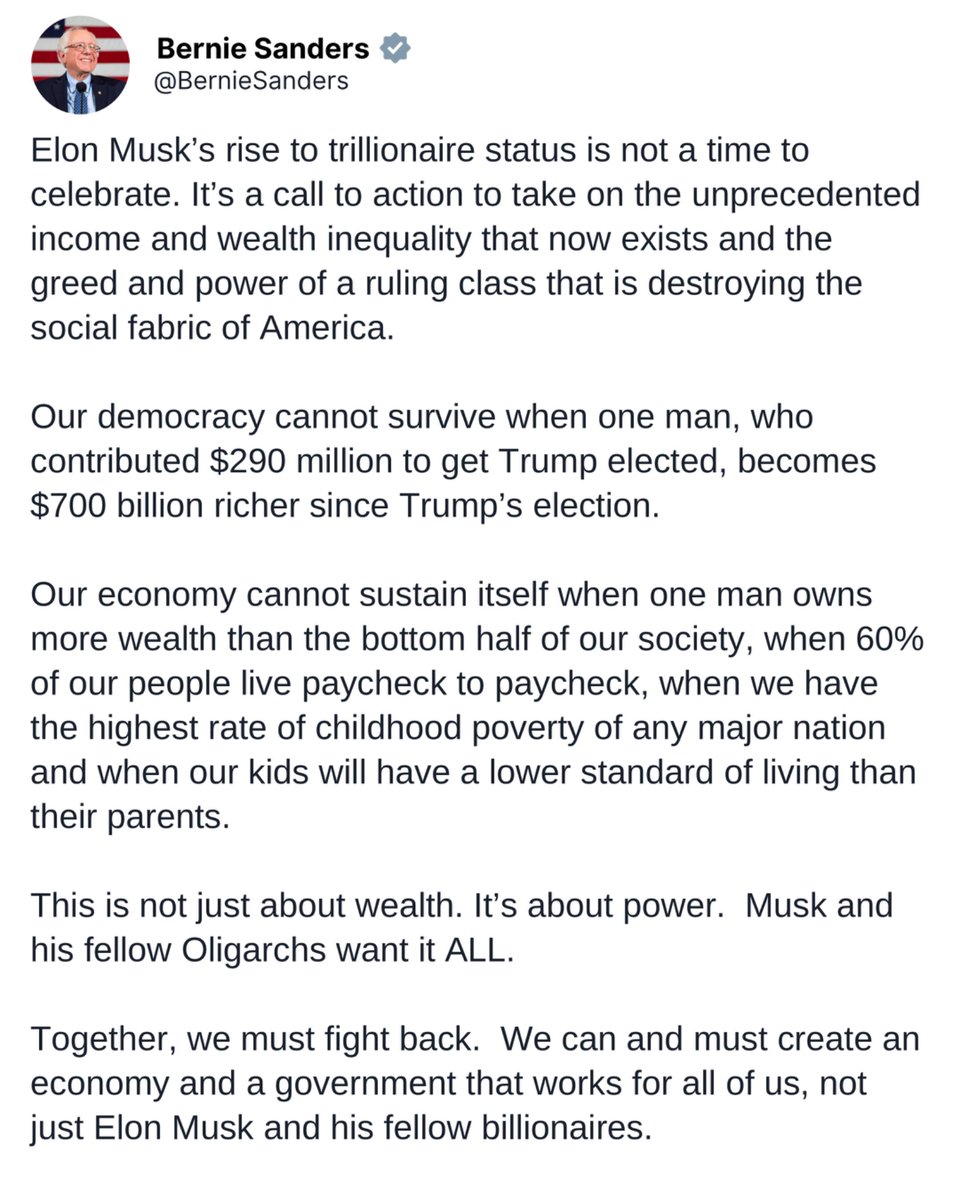
If the socialists had their way, Elon would have had his paypal profits taken and redistributed for the greater good.
The world would never have seen Tesla, nor SpaceX.
And the world wouldn't know it, because they were uncreated, and thus unseen.
Imagine the companies that don't exist, because Washington destroyed them before they were born.
460
2,651
15,966
351,030

History's first trillionaire is a guy who catches rockets out of the sky with chopsticks and beams internet to every dead zone on the planet.
Same guy ships cars that drive themselves, humanoid robots for the factory floor, brain chips that let paralyzed people move a cursor with pure thought, and an AI running on a supercomputer his team stood up in months instead of years.
And the people crashing out about his net worth are doing it on the app he owns. The same app governments spent years trying to censor.
You cannot legislate a rocket into orbit.
Jun 12

1,905
11,608
71,097
2,394,868
olezigaba retweeted

Jun 11
The good thing is, you have the autonomy to not solely communicate in a "new" discord while still participating in a decentralized ecosystem & continue the conversation freely
5
6
36
1,421
Jun 12
Translation: too many people on this forum are coming to know too much about my past and current antics, so need a forum with tighter control mechanisms.
2
6
74
olezigaba retweeted

Jun 10
There have always been a Cardano community and a Charles community.
The problem has always been the 2nd camp convincing you it was the first.
These days, very few from the first camp are still around.
The 2nd camp has convinced the sideliners the 1st camp are orbiters.
5
4
37
1,482
Jun 11
Lessons here for Cardano

As @LynAldenContact says. If one entity is able to be a problem that kills it, it’s never meant to be more.
1
1
168
olezigaba retweeted

This is insanity. We’re in the place we’re at exactly because of founding entity control over $ADA governance and the treasury.
The last thing we need is executive function to allow further draining of the #Cardano treasury.
The pentad literally can’t help themselves but continue the conflicts of interest and use massive voting power to continue to vote themselves more of the treasury and more power.
If @IOGroup @Cardano_CF and @emurgo_io / @YoroiWallet can’t survive the bear market with their current funding received, these entities need to die off.
There has been ample time for the founding entities to build a self-sustainable business model, and the drain on our community cannot continue.
Prove me wrong @phillip_pon @F_Gregaard @IOHK_Charles , we need sustainable leadership by example.
4
2
18
879
Jun 8
More of this energy please @realDonaldTrump
Jun 7

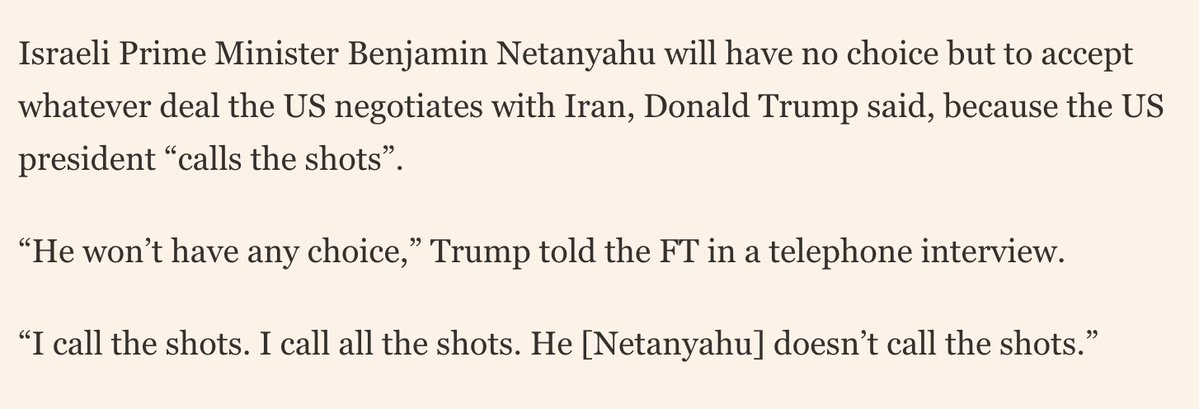
Trump tells FT that Israel would have no choice but to accept whatever deal the US negotiates with Iran
"He won’t have any choice. I call the shots. I call all the shots. He [Netanyahu] doesn’t call the shots"
35
Jun 7
Finally got around to watching the latest Charles Hoskinson video, and honestly, couldn't be more disappointed. Just weeks after pushing through treasury initiatives in which IO will receive a lion's share of the NCL, he now says that he has no interest in increasing KPI's or price? Would've been nice if the DReps knew that before allocating millions of ADA to IO this year.
Looking more and more like a "grab everything you can on the way out" exit.
I don't fault him for admitting shortcomings, but I do fault him for milking the community over the past 4 years through disproportionate staking rewards and treasury allocations. No amount of playing the victim now covers up the fact that his personal wealth exploded while the ADA community saw their holdings bleed out in value.
Cardano is in a rough place, and tbh, I've never been more unsure of its future. However, I'm increasingly convinced the only way it has a shot is if the past few years are accepted as sunk cost, and we grow past relying on the leadership of Charles Hoskinson.
youtube.com/live/8xtmi6mEnF8…
25
11
83
9,890
olezigaba retweeted

The Iranian navy, which has been destroyed eight times, has apparently closed the Strait of Hormuz again, because the United States, for the seventh time, won the war that wasn’t a war, so now the United States has to open the Strait of Hormuz that was already open before the not-war began.
The not-war began because Iran had uranium that was totally, completely, beautifully obliterated, so they can’t build the nuclear bomb they weren’t building, which is why the United States had to start the not-war it definitely didn’t start.
Now the United States, which has nuclear weapons, is threatening to use nuclear weapons to stop Iran from getting nuclear weapons, because nuclear weapons are far too dangerous for countries with nuclear weapons to allow other countries to have.
If the United States saw the United States doing what the United States does in other countries, the United States would invade the United States to liberate the United States from the tyranny of the United States.
2,705
34,518
103,424
3,522,223
olezigaba retweeted

IOG took the biggest genesis allocation (2.46B ADA) and kept most of the 108k BTC raised (only 8k BTC/600m ADA went to the CF)
now CH calls that ADA a fee-for-service, not upside equity, and wants more to keep building
the BTC they received is worth ~$6b today
the ADA? ~$379m
13
14
122
16,867