
scammed by our lord
Joined May 2011
- Tweets 5,179
- Following 550
- Followers 1,129
- Likes 39,796
266 Photos and videos






oxhy retweeted

🆘
We’re under fire now
Israeli tanks are shooting at our tents, displacement camps and homes in Al Zaytoun neighbourhood of the Gaza City..
Bullets are everywhere over our heads..
310
4,962
7,690
117,921
RT @OneWordPowerful: Your Epstein backed hate movement is failing and after Woke Restoration we’re burying you and your dumbshit father-in-…
3,504
oxhy retweeted

Apologize to your local communist and "tankie". Everything they said is true. Literally everything.
133
272
2,333
300,813
oxhy retweeted

Jan 31
Massacres all over Gaza today. Deadliest day in months and months.
Nearly 50 Palestinians, mainly women and children and elders, as always, were killed.
I can’t even bring myself to show it to you anymore. Kids blown to pieces, mothers blown apart by bombs. Babies.
547
5,140
11,250
167,761
oxhy retweeted

Jan 31
🚨BREAKING: The Gaza Strip is currently witnessing heavy and intermittent Israeli airstrikes across multiple areas.
#GazaGenocide
31.01.2026
550
11,673
18,559
1,624,714
oxhy retweeted

Jan 27
A big drop in donations over the last 3 weeks meant that we had to reduce water distributions by 50%, pause the grocery voucher for 110 families in our camps and stop all our music classes!
If donations don’t increase soon, we will have to reduce our food distributions as well. Please donate & share: chuffed.org/project/113222-t…
12
808
874
22,890
oxhy retweeted

Jan 27
It is tragic that Sameer Project is having to cut down on its services due to a lack of donations, please help reverse this awful trend. Donate, share and support:
Jan 27

Music classes have to stop 💔😭
Look at their smiles and faces filled with joy in their music therapy classes. One of our favorite videos comes from the music classes with Jaber and his team but sadly we will have to stop them! Help: chuffed.org/project/113327-r…
The lack of donations are forcing us to cut down on our work, and this will include the five camps that were receiving weekly music classes, including the three camps run by The Sameer Project. We find music therapy essential and not a luxury but just like we had to reduce water by 50%, we had to cut down on our activities.
Our hearts break as we are constantly advocating for aid and support to Palestinians in Gaza in the ongoing genocide. But donations are continuously dropping for mutual aid groups and some are considering closing due to lack of funds.
Please help us bring music classes back by donating to the Refaat Alareer Camp: chuffed.org/project/113327-r…
Other ways to donate include:
paypal.me/mahertali (Paypal option, please make sure to add a message saying "Camp")
account.venmo.com/u/Maher-Al… (Venmo option, please make sure to add a message saying "Camp")
20
2,031
2,556
67,341
oxhy retweeted

Jan 24
In light of the recent attacks on 'campism', I want to offer a few thoughts on internationalism. However shrivelled in practice and withered in theory, internationalism is not about 'solidarity' in the abstract. It is not about standing against 'bad actors', whatever that might mean. It is not even about opposing 'state repression' or 'violence' or 'war' — not when our conceptions of these things are abstracted from an assessment of the contradictions both domestic and international that give them shape. Internationalism is not a moral category. Nor is it a set of cookie-cutter principles against which political forces and social formations can be measured and judged.
Instead, internationalism is an extended historical tradition whose key pivot occurred with the October Revolution and the subsequent boom in anti-colonial nationalism across the Third World. The theories that took shape in this process reveal three key things. One, that the division of the world among the major capitalist powers means that the main contradiction within capitalism is not between the workers and factory owners in Manchester, but between the imperialists and the oppressed globally. Two, that the super-profits produced by the exploitation of the global periphery enable the imperialists to buy the consent of their working class and sustain the imperialist project. And therefore, three, that the motor force of the global liberation struggle is to be found in the global periphery. It is by severing the arteries of imperial plunder at the source of exploitation — in the colonies and neo-colonies — that capitalism can finally be defeated at the global scale.
These are material categories. They do not adjudicate — as many post-colonial thinkers are wont to do — between 'good' anti-colonial struggles and 'bad' anti-colonial struggles. They do not even attempt to make the moral claim that, whether you are 'good' or 'bad', you should not be colonized, starved, or bombed — apparently a controversial position among 'campism's' most ardent adversaries. Instead, they concern the structure of the international system. They make a set of historical and dialectical claims about the nature of imperialism in the present conjuncture. First, that imperialism operates through mechanisms — from sanctions to debt to war to genocide — designed to deflate incomes, shorten lives, fragment states, and weaken anti-hegemonic forces in the Global South, policies that eventually find their way back to the working people of the Global North. Second, that preventing the expansion of that agenda is a historical necessity and a question of our collective survival, something that the genocide in Palestine has made abundantly clear. Third, that the internal contradictions within spaces resisting that agenda are shaped and distorted by the external pressures they face — and should not be overemphasized.
Indeed, no one says that the actions of the anti-hegemonic front is immune from critique. To be sure, the national class struggle threads in millions of ways through the international anti-imperialist struggle. But is it useful for the Cuban revolutionary project that Steve in North Carolina thinks its government arrested too many people? Is it useful for Iran that Ulrich from Baden-Württemberg thinks its security forces should have handed out roses to armed rioters ransacking shops, mosques and hospitals across the country? There is an ideological front to the imperialist war, and 'critiques' cannot be abstracted from the broader propaganda apparatus that wields them to throttle solidarities with countries facing assault.
People must be given the space to settle their own contradictions. The state, while it undoubtedly exists as an instrument of oppression, also happens to be a vehicle for consensus-formation and collective decision-making. For this, sovereignty and stability are a precondition. A state's oppressive functions heighten in a time of war. Indeed, that is one of the strategies of contemporary imperialist hybrid war: to delegitimize the state, challenge its monopoly on violence, and foreclose avenues for the peaceful resolution of its internal contradictions. It is immeasurably more difficult to demand more bread and higher wages of a state under suffocating sanctions that privilege its capitalist class. And it is all but impossible to take to the streets in protest when your protest faces sabotage by armed reactionaries cooked up in Washington's death factory.
The premise of the so-called 'campist' is simple. States that find themselves structurally opposed to imperialism face a full-blown assault by a war machine whose agenda is balkanization, privatization, immiseration, extraction, exploitation, dislocation, and ultimately mass death — policies shrouded and whitewashed through a comprehensive ideological and propaganda apparatus designed to secure our consent. Those of us sitting in North Carolina or Baden-Württemberg would do well to oppose our states' role in that agenda rather than fixating on the shortcomings and contradictions of the forces seeking to defend themselves and, by extension, all of humanity against that assault.
33
214
633
56,735
oxhy retweeted

Jan 24
In honour of Parenti with the news of his passing, I'd like to bring back my favourite clip from his Yellow Speech.

21
1,409
6,767
163,996
oxhy retweeted

3 Nov 2025
Donations to the @sameerproject are down 50% since the "ceasefire" but the need remains as high as ever, with the criminal blockade still intact. Now is the time to redouble our efforts and donations so Palestinians can rebuild what the genocidal entity has destroyed. Give!
3 Nov 2025
Send some love to our team who are doing the back breaking work of cleaning up Gaza with nothing more than shovels and brooms. chuffed.org/project/149178-s…. Every day they are going to destroyed buildings and clearing dust and rubble with their bare hands so that families can move back in before the winter months.
The occupation has only allowed in a total of 115 “fuel and energy trucks” (meaning diesel, cooking gas, and gasoline), a fraction of the 1,100 trucks that were promised to be allowed in during this period of time post “ceasefire.” These items are an integral part of the clean up as they allow the operation of trucks and tractors that can be used to remove the rubble. By only allowing in 10% of the agreed upon amount they are deliberately obstructing the cleaning out and cleaning up process.
Join our “Yalla, Na’merha” initiative under our Return Home Campaign to help the Translating Falasteen x The Sameer Project teams help make buildings habitable and allow families to move back home. We need donations to cover labor, fuel for tractors, tarps to repair the walls of buildings, transportation fees to relocate people North, and more. The link for the Return Home Campaign.
Other ways to donate include:
paypal.me/mahertali (Paypal option, please make sure to add a message saying "Return")
account.venmo.com/u/Maher-Al… (Venmo option, please make sure to add a message saying "Return")
28
3,119
4,444
177,571
oxhy retweeted

21 Oct 2025


5
140
10,037
oxhy retweeted

8 Oct 2025
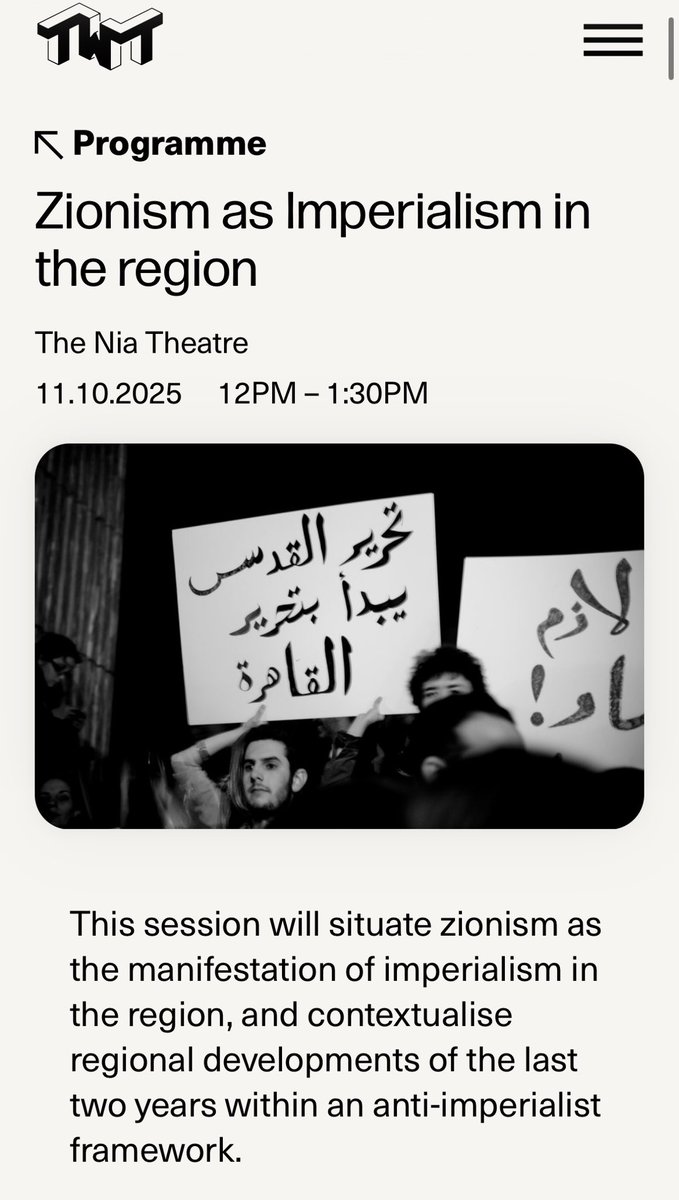
going to @TWT_NOW with @palyouthmvmt in conversation with @amalsaad_lb @taraalami and @kmatbb on Zionism as Imperialism in the region. would be great to see some of you!
theworldtransformed.org/twt2…
1
14
60
9,841
oxhy retweeted

29 Sep 2025
A demilitarized Palestine is essentially an Israeli puppet state and would be a death sentence to the Palestinian people
46
495
2,240
23,819
RT @nyeusi_waasi: "I wasn’t against communism, but i can’t say i was for it either. At first, i viewed it suspiciously, as some kind of whi…
6,586
oxhy retweeted

20 Sep 2025
We shouldn’t walk away from the project. The task now is to mobilise behind the September 15 new party founding convention plan. There’s huge potential here and a few egos or legal threats won’t stop it. The proposals released last Monday are bold and democratic, setting the stage for something real.
Zarah and others should run for leadership when the new party launches. Both sides need to stop the sabotage and drop the legal letters.
We also cannot allow Jeremy’s same old staffers to end up running the new party after the launch.
This can be done. It has to be. A broad left party is essential right now, and we cannot give it up.
30
78
369
23,852
oxhy retweeted
26 Aug 2025
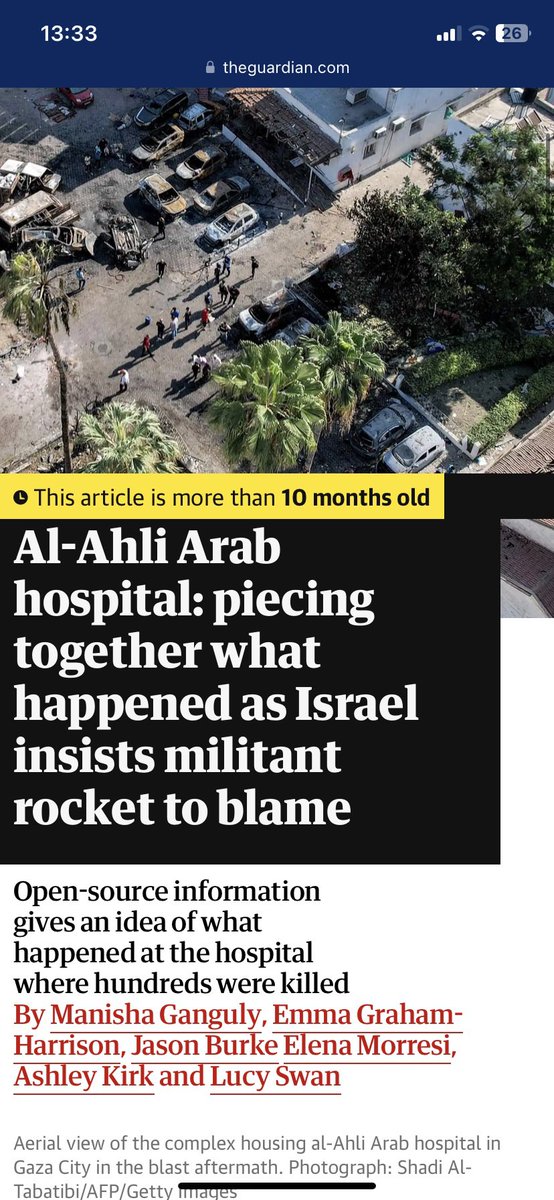
After yesterday’s “double-tap” strike on Gaza’s last southern hospital, every hospital in Gaza is not operational. It began with Al Ahli, where 471 were killed. Israel blamed “a Palestinian rocket,” and the Guardian green-lit the destruction that followed. Blood on their hands
11 Sep 2024

1/10 🧵 The Guardian’s fallacious investigation into the Al Ahli Hospital explosion
The Guardian still have not published a correction and apology for its October 18th “investigation” into Israel’s October 17th bombing of the Al-Ahli Hospital that killed 471 Palestinians and injured 342.
The Guardian’s conclusion supported Israel’s contention that it was a Palestinian Islamic Jihad (PIJ) missile not an Israeli strike — based entirely on a “fairly shallow crater size”. This was the first hospital Israel destroyed, and became a test of global and media responses. The Guardian’s sanctioning of it helped pave the way for Israel to bomb and destroy every hospital in Gaza.
It represents serious journalistic malpractice theguardian.com/world/2023/o…
3
38
79
4,691
oxhy retweeted
21 Aug 2025
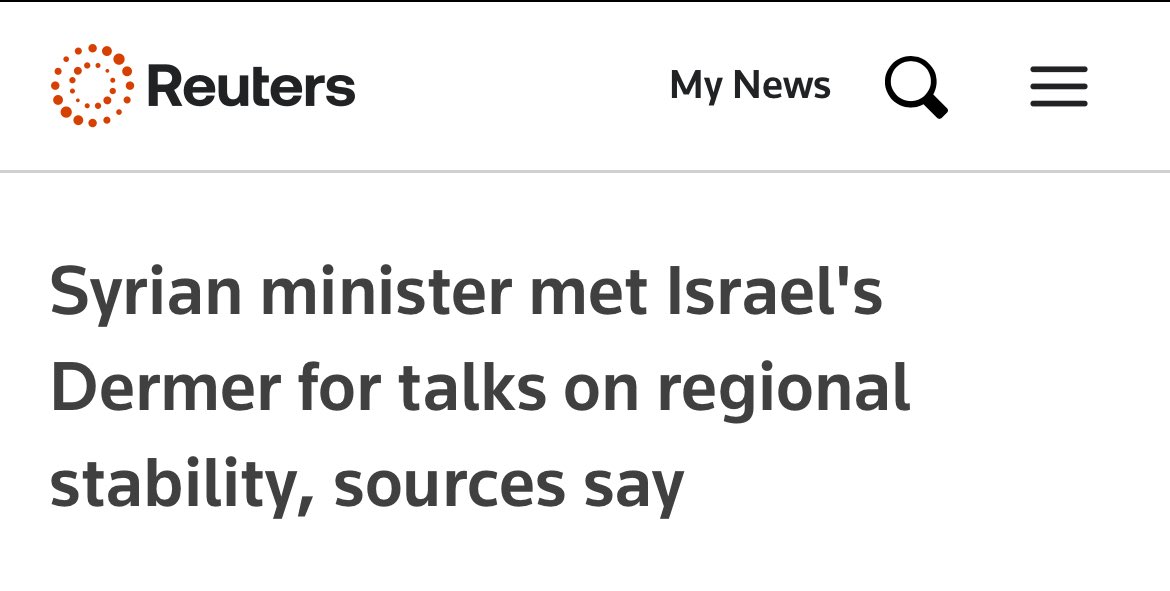
Syria officially abandons the Palestinians and opens direct talks with Israel for the first time in 25 years. Those of us who warned this would happen were denounced as “Stalinists,” “Assadists,” or even “Islamophobic” (apparently opposing ISIS was bigotry).
A bitter betrayal.
22
59
198
18,306
oxhy retweeted

18 Aug 2025
BREAKING: Entrance to Leonardo Edinburgh factory is BLOCKADED by two action takers locked onto a van.
They're halting the production of laser targeting systems for Israel's F-35 fighter jets.
252
1,342
3,461
86,404
oxhy retweeted

13 Aug 2025
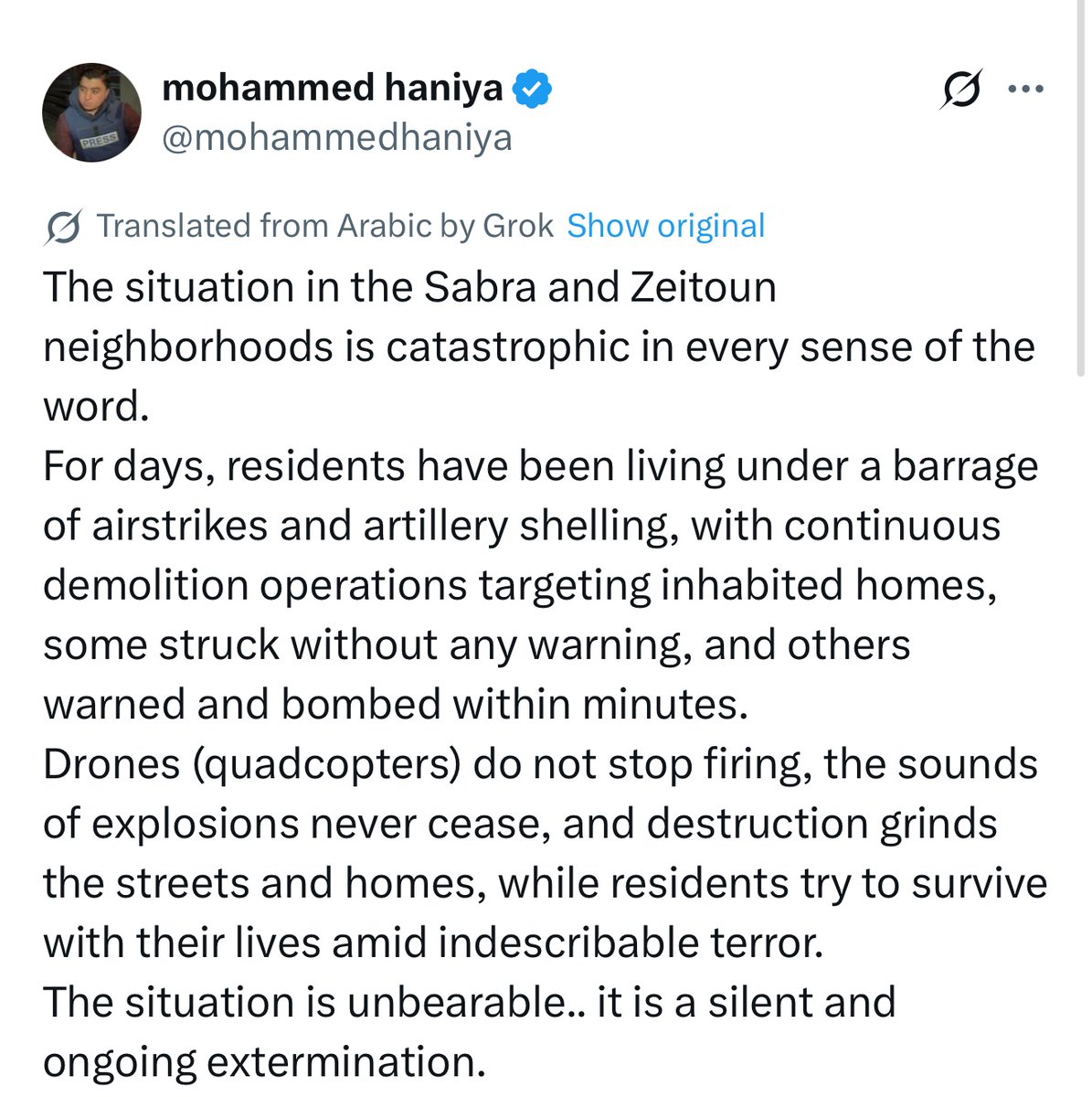
Gaza now as Israel gears up for a full-spectrum occupation of the city. Utterly appalling and horrifying for an entire population who have never found a respite from the horrors.
18
838
1,085
33,843