
ai software engineer @rauda_ai eu/acc - mac/linux - ESP/ENG
Joined October 2024
- Tweets 314
- Following 169
- Followers 21
- Likes 69
60 Photos and videos




Pablo retweeted

Jun 16
More of Codex is rolling out across Europe this week.
We’re bringing Computer use, the Codex Chrome extension, personalized memory, and Chronicle to Codex users in the EEA, UK, and Switzerland.
developers.openai.com/codex/…
251
229
3,537
578,191


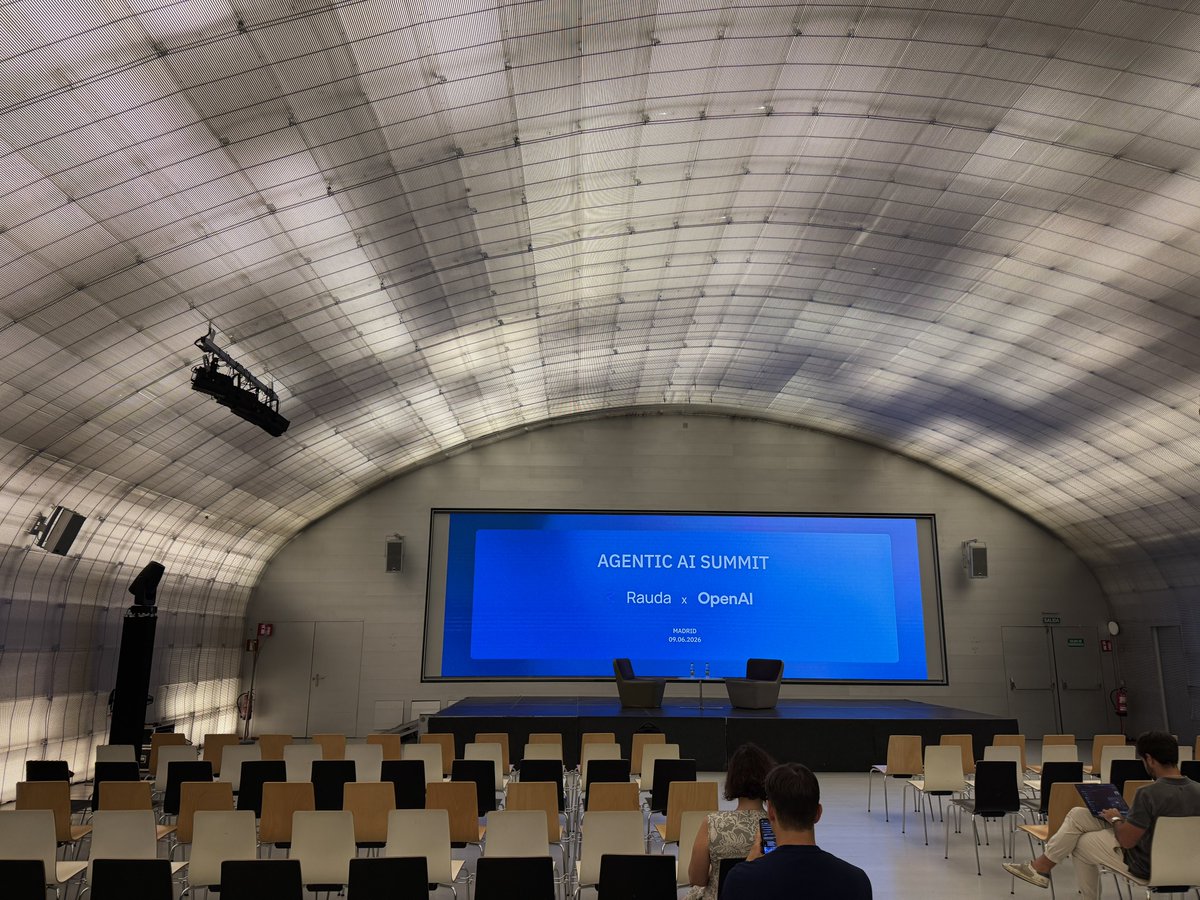
The Agentic AI Summit, next Tuesday, June 9, together with @OpenAI .
Four conversations with senior leaders building, deploying and scaling AI agents inside their companies, in front of a room of founders and operators.
On stage:
Alberto Barreiro (VML THE COCKTAIL) on creativity in the age of AI, and what changes when you treat agents as collaborators rather than tools.
Juan García (@somostuio ) on building an insurance business with AI agents at its core.
Román Orús (@MultiverseCompu ) on what it takes to build a unicorn at the frontier of AI.
Guillermo Kirkpatrick (@OpenAI ) on where AI is heading, from voice to text, and how it's reshaping the way businesses work from the inside.
Mad Tech Campus, Pº de la Chopera 10. 18:00 to 21:30.
Last seats available. Register through the link: luma.com/yq79y0jm.

2
3
1,774

Today, we announced plans to launch Spain’s first commercial robotaxi pilot in Madrid in partnership with @WeRide_ai. The service is expected to become available later this year through the Uber app, in partnership with the Madrid Regional Government. 🇪🇸
77
94
530
556,072
Pablo retweeted

May 28
94
1,624
3,367
53,677
We're hosting the Agentic AI Summit on June 9 in Madrid. Our biggest edition yet, together with @OpenAI .
A room of founders and senior leaders talking about what it actually takes to deploy AI agents inside real companies.
Mad Tech Campus, Pº de la Chopera 14. 18:30 to 21:30.
Seats are limited. Register through the link in the comments.

2
4
4
1,321
Pablo retweeted

Brutal esto que han hecho en @todoesmentiratv.
La lista de Sánchez.
42
1,117
2,982
99,074
Pablo retweeted

May 27
Los bukaneros se han plantado con banderas de la república en las gradas y esperaban no quedar subcampeones
81
1,879
13,614
256,379
Pablo retweeted

May 23
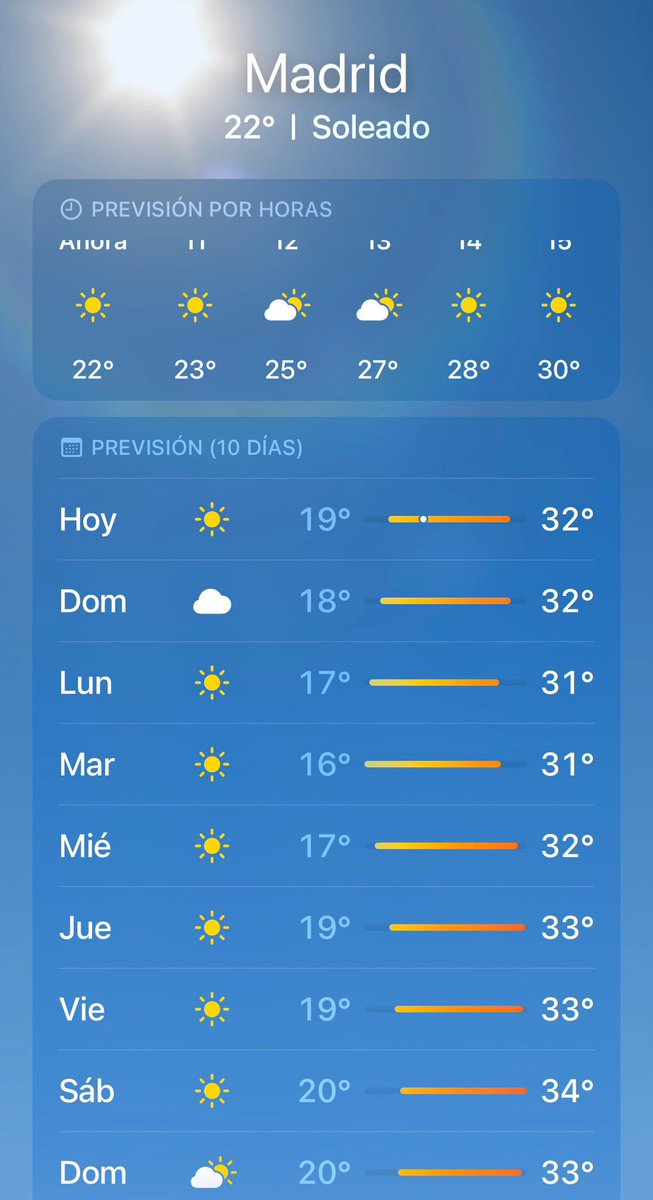
Ya llegó el verano… Y todas las piscinas de la Comunidad de Madrid ya están abiertas.
Buen fin de semana a todos 😊
616
250
2,658
911,979
Pablo retweeted

May 19
La Audiencia Nacional cita al expresidente José Luis Rodríguez Zapatero como investigado por delitos de tráfico de influencias y otros conexos
Deberá comparecer el 2 de junio en el procedimiento judicial en el que se investiga el rescate de Plus Ultra
📄 poderjudicial.es/cgpj/es/Pod…
657
3,231
9,149
438,086
Pablo retweeted

May 11
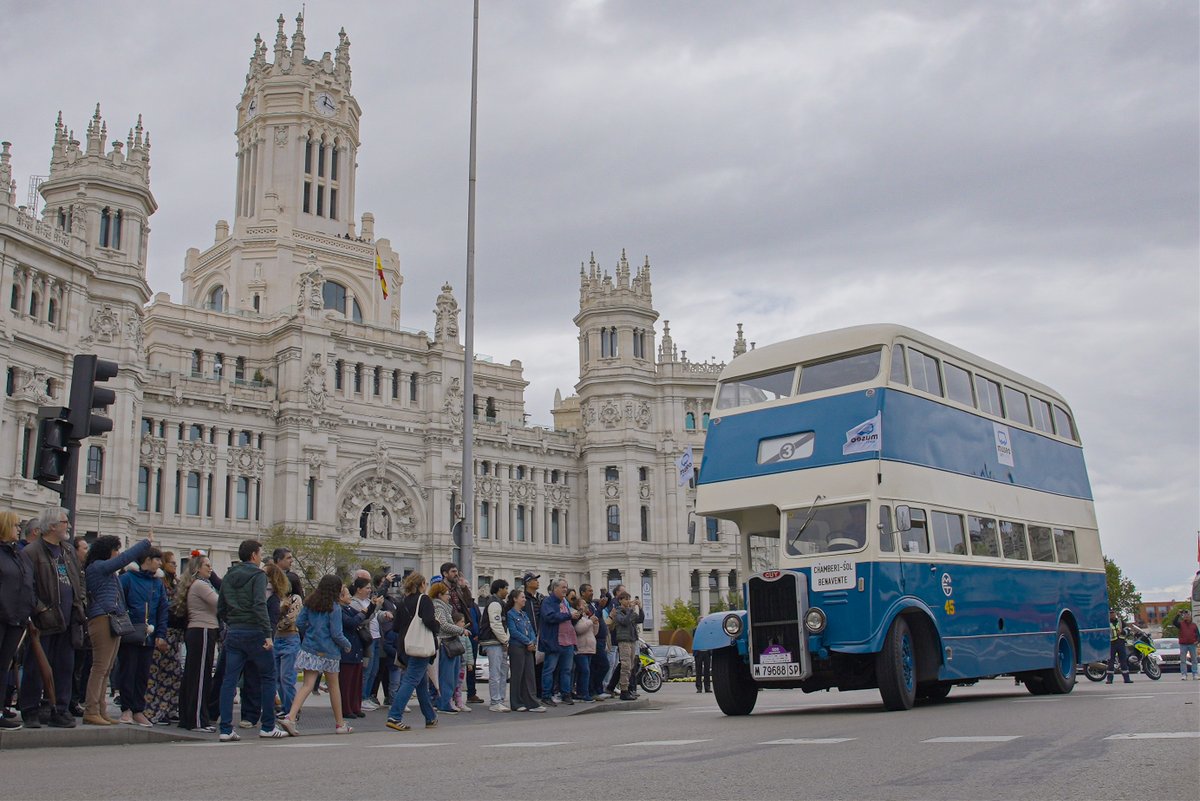
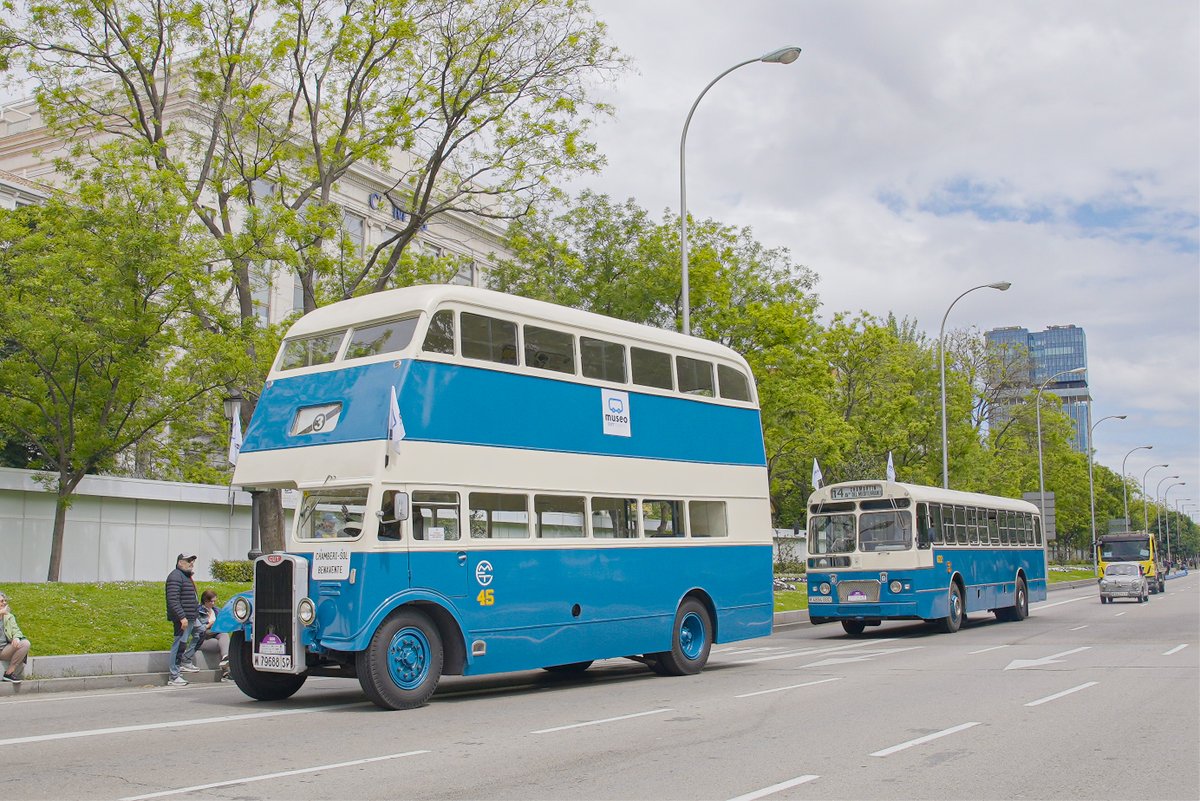
🚌 Varias joyas del #MuseoEMT participarán el viernes en el ‘Gran Desfile de Vehículos Históricos 2026’ organizado por @COIIM.
🕦 De 10:30 a 12:00h: Exposición de vehículos en @ETSIIUPM.
🕛 De 12:00 a 13:30h: Desfile por el eje paseo de la Castellana - plaza de Cibeles.


6
25
114
11,016


Introducing GPT-Realtime-2 in the API: our most intelligent voice model yet, bringing GPT-5-class reasoning to voice agents.
Voice agents are now real-time collaborators that can listen, reason, and solve complex problems as conversations unfold.
Now available in the API alongside streaming models GPT-Realtime-Translate and GPT-Realtime-Whisper — a new set of audio capabilities for the next generation of voice interfaces.
696
1,425
14,715
3,613,250


Pablo retweeted

Apr 28
Ghostty is leaving GitHub. I'm GitHub user 1299, joined Feb 2008. I've visited GitHub almost every single day for over 18 years. It's never been a question for me where I'd put my projects: always GitHub. I'm super sad to say this, but its time to go. mitchellh.com/writing/ghostt…
547
1,608
16,742
2,914,790
Pablo retweeted

Apr 28
There's a spectrum of "build your own Linux." On one end, you run an installer. On the other, you run Buildroot or Yocto: compile the kernel, the toolchain, every userspace package from source. The build can take hours. The output is a turnkey image that's yours top to bottom.
Most people only ever see the installer end, which is what makes the installer feel like the whole map.
The Linux Field Guide is going to walk you, eventually, all the way to the deep end. Building a distro from scratch, kernel and userspace and all. We're not there yet. The guide is for upper beginners and we're going to earn that ground in pieces.
This is the first piece. A quick dopamine hit, sitting closer to the installer end than to Buildroot, but with the inputs in your hands.
We don't compile the userspace. We stitch together prebuilt Alpine packages with a script that finishes in seconds and is short enough to read in one sitting. Declare a list of packages, a target architecture, the repositories to pull from. The script runs apk.static against a directory we own. The output is a tar of a root filesystem of our exact specification, ready to boot in QEMU.
So why bother, if it's not the from-source build?
Because the script is the spec. Run it today, run it next month, run it on a coworker's machine, and the output is the same artifact. The system stops being a thing you set up once and forget how. It becomes a recipe you can read, edit, and re-run.
Because it's the right shape for what comes later. Once you've internalized that the system is a directory of files produced by a script, swapping apk.static for a Buildroot pipeline is a different script with the same shape. The installer mental model doesn't generalize. This one does.
That's the slice this series teaches. Coming soon on The Linux Field Guide: lfg.popovicu.com
1
13
85
3,635
