Author: Path To The Summit: Anatoli Tarasov & the History of Soviet Hockey Part II - now available on Amazon. Email: pathtothesummit@outlook.com
Joined March 2021
- Tweets 744
- Following 16
- Followers 106
- Likes 799
112 Photos and videos

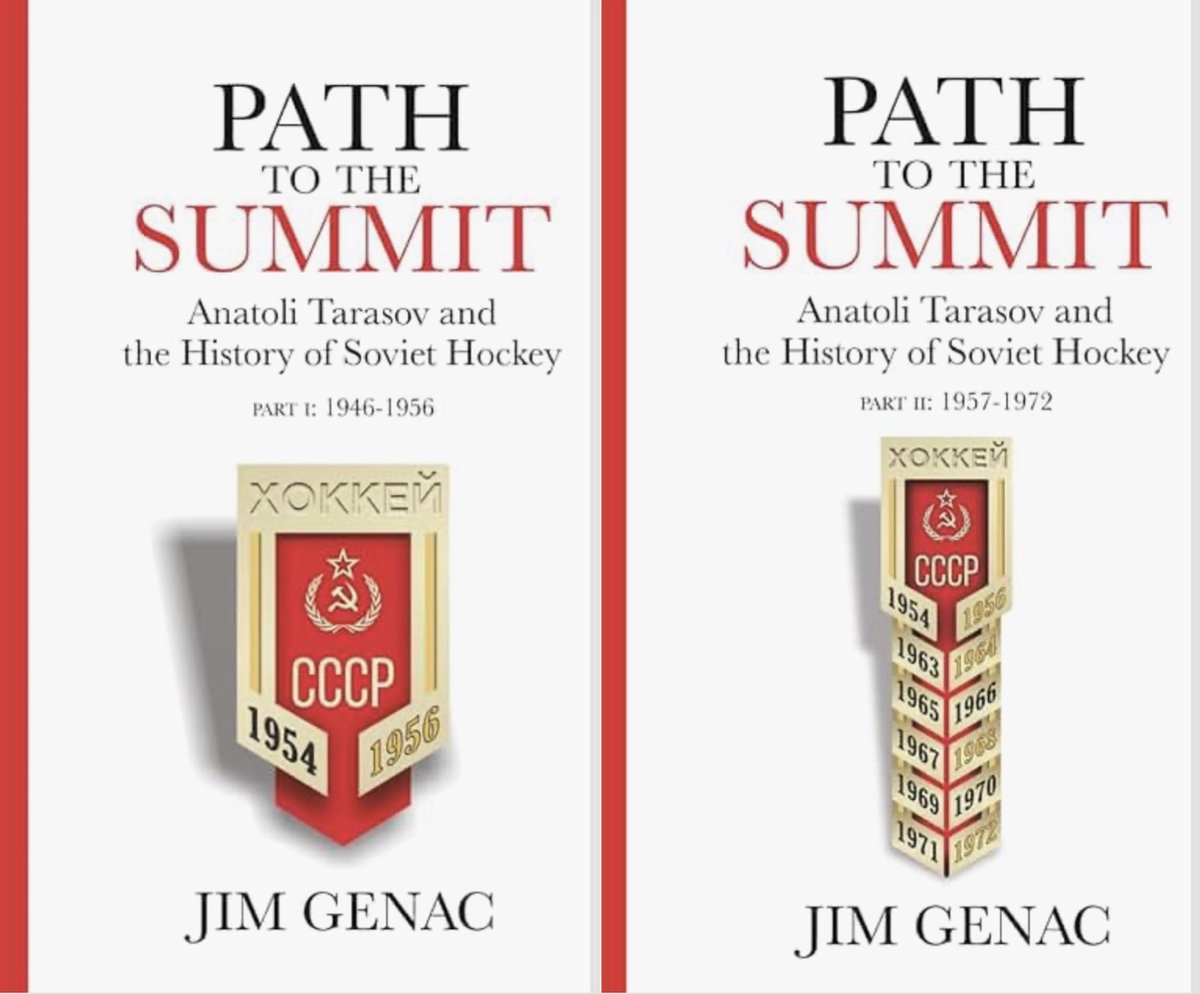
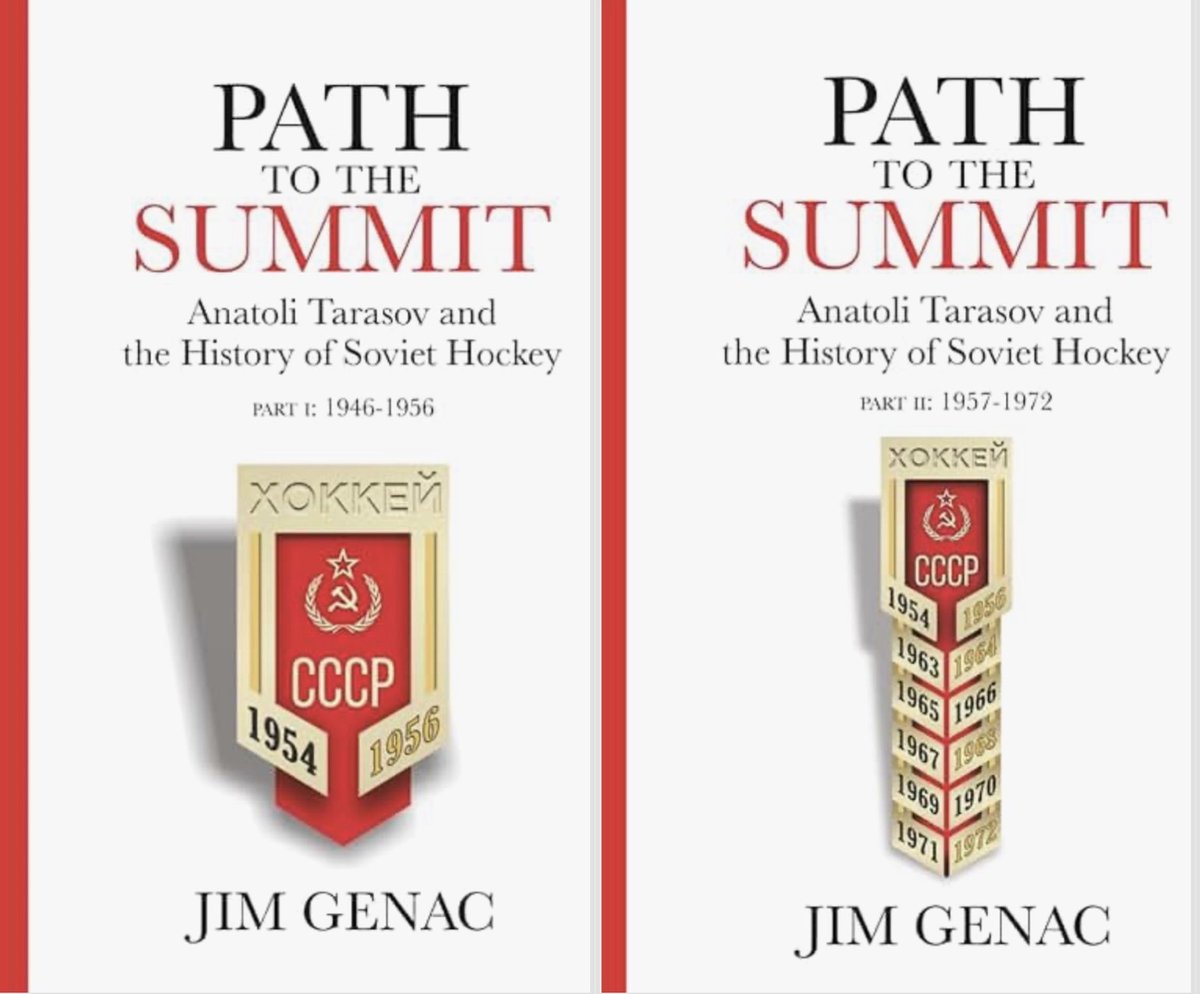
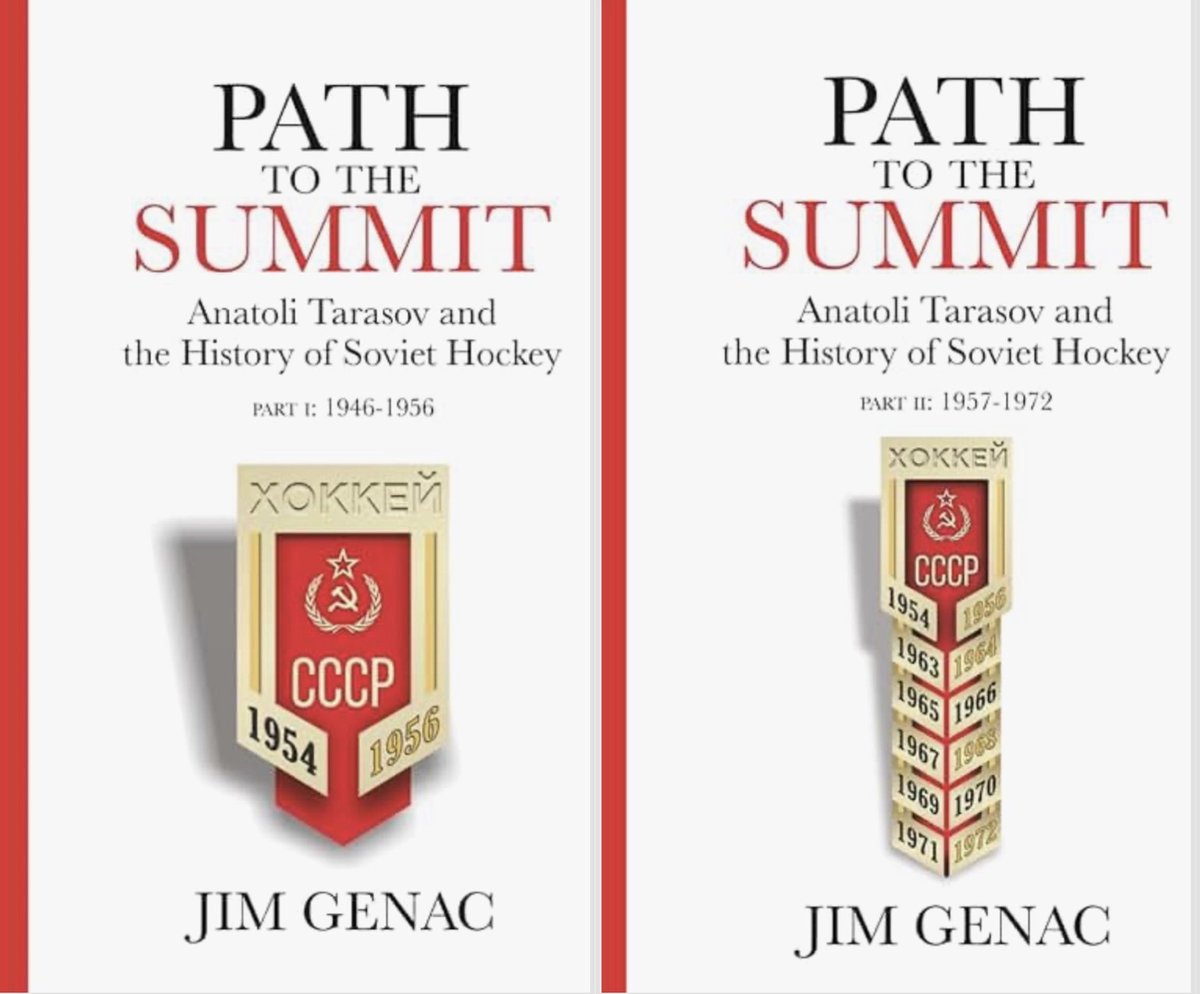
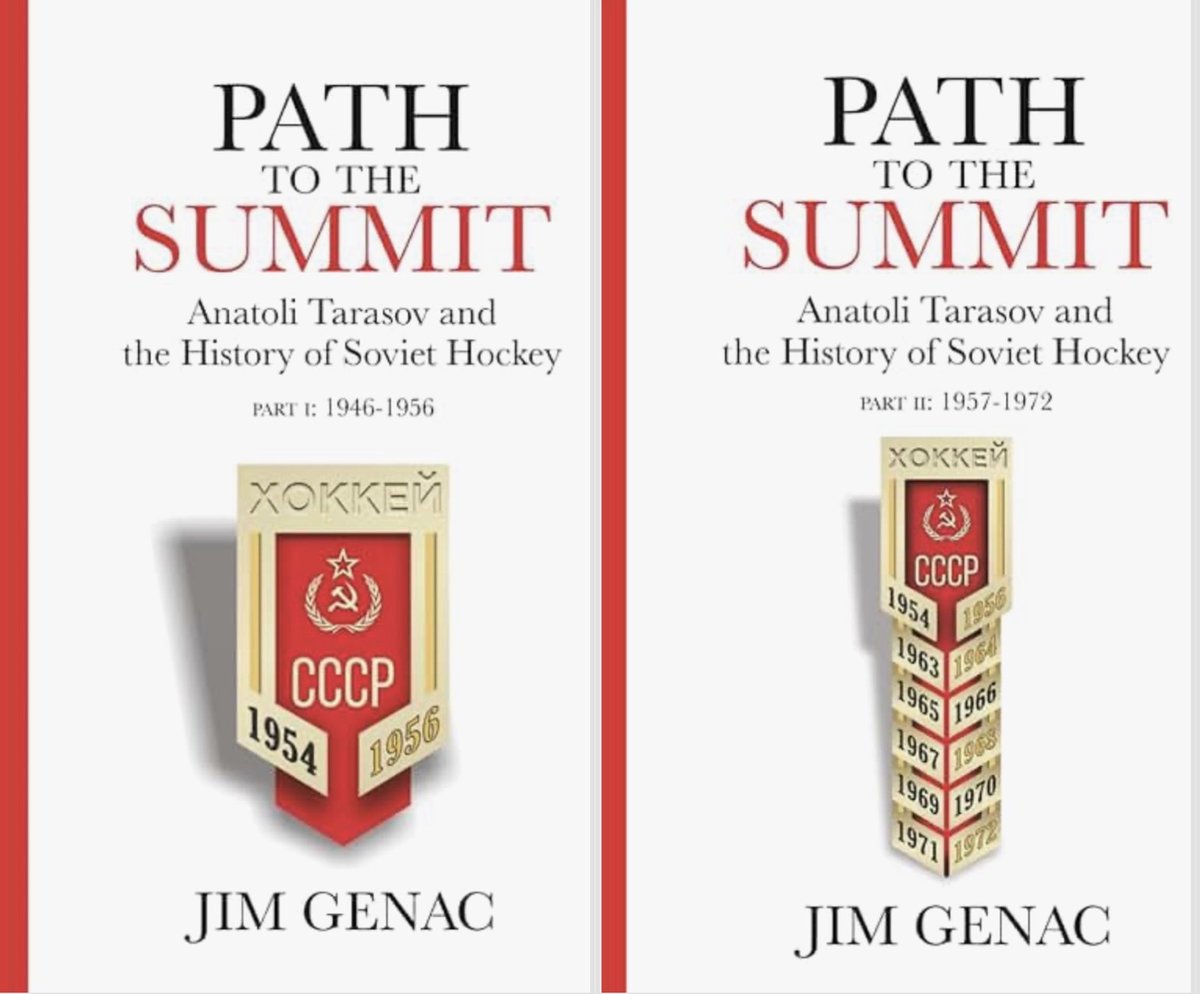
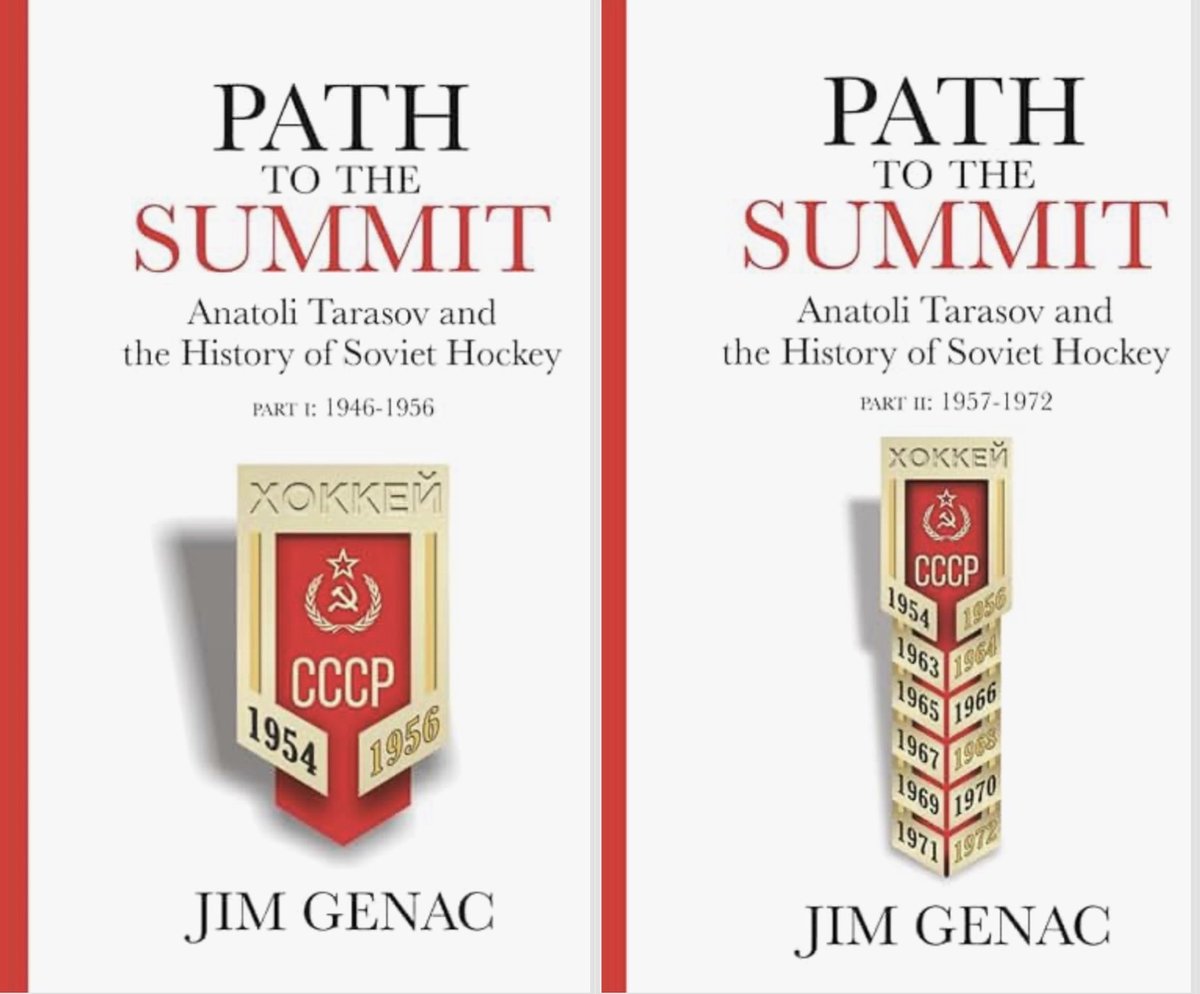
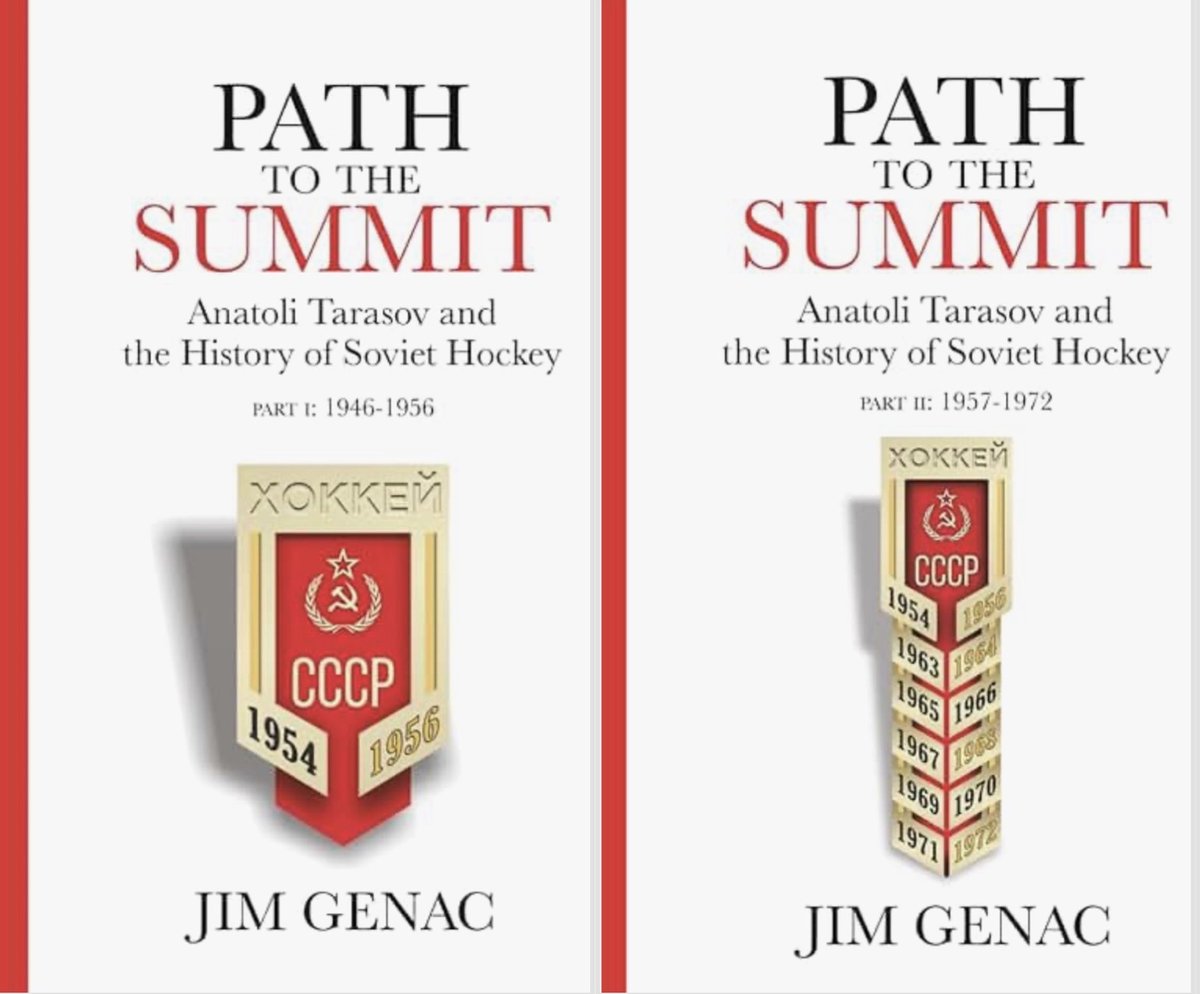
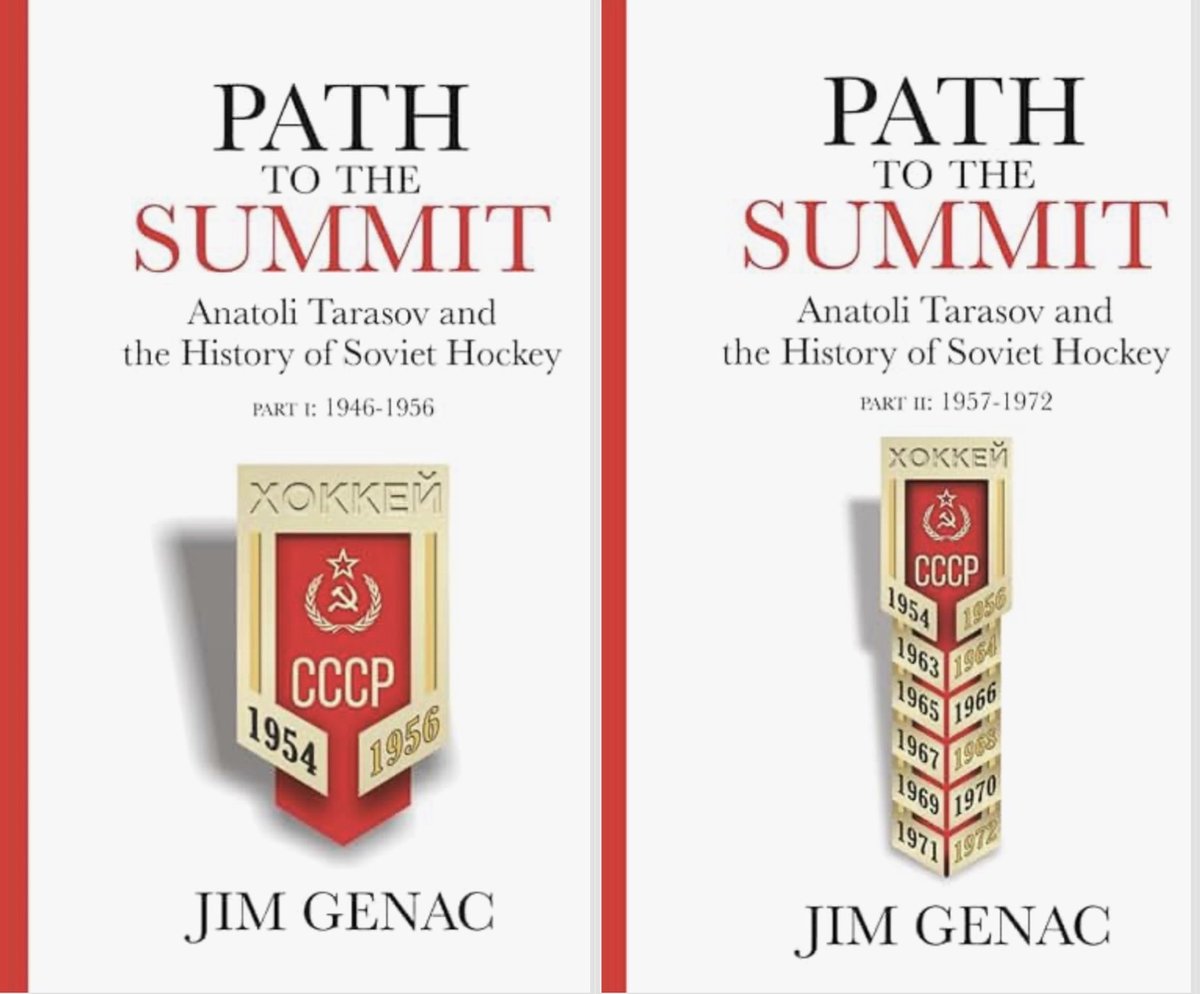
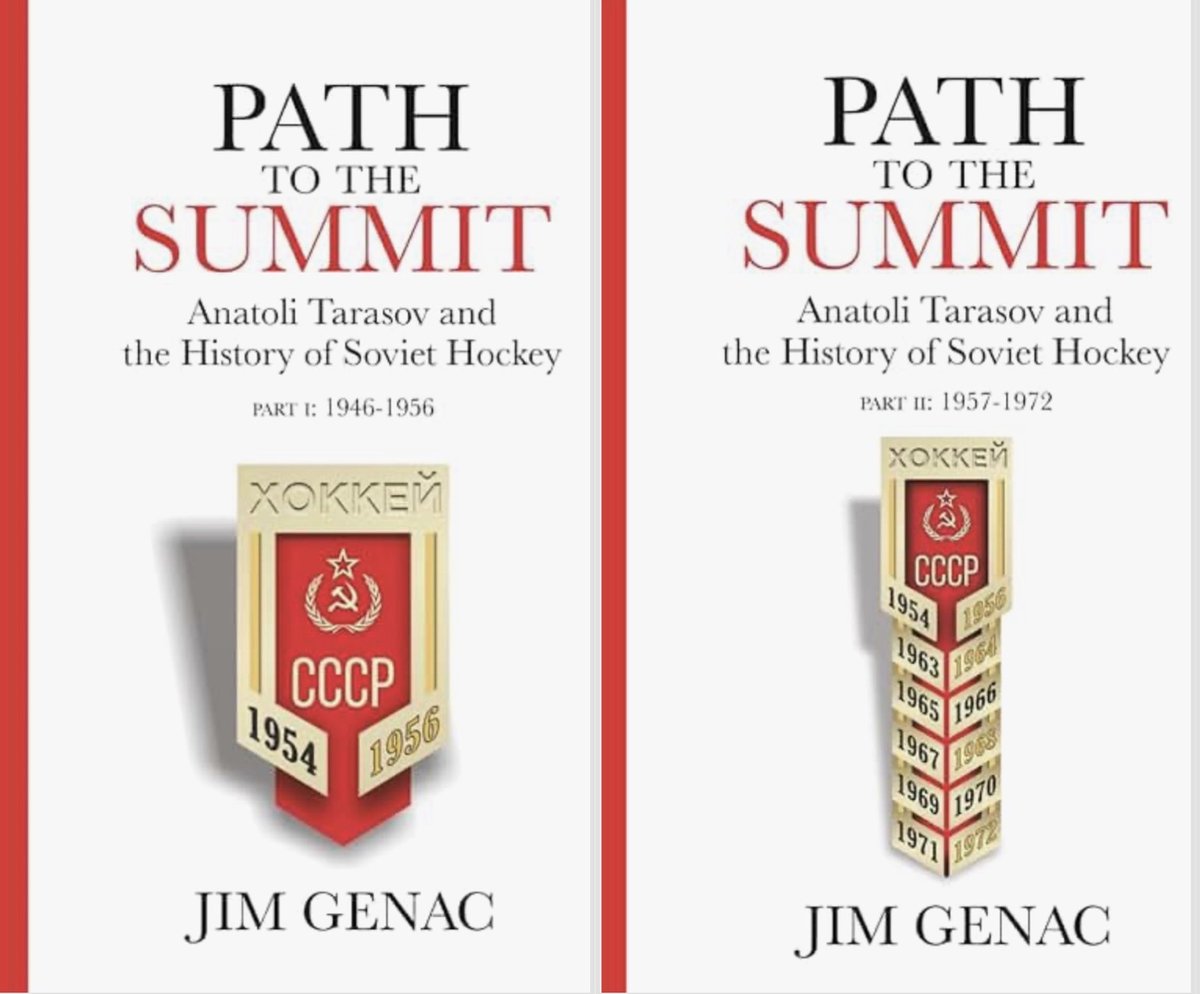
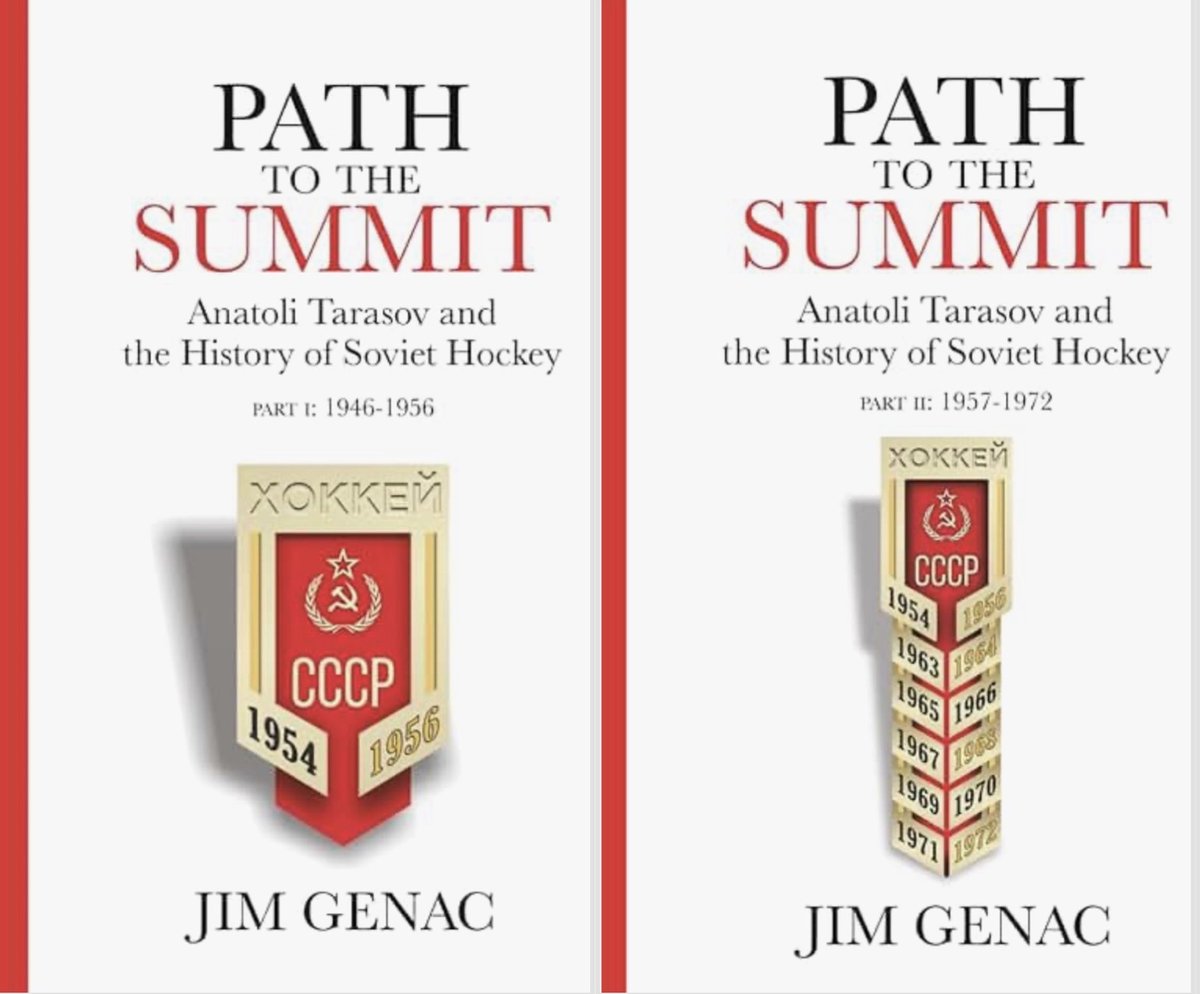
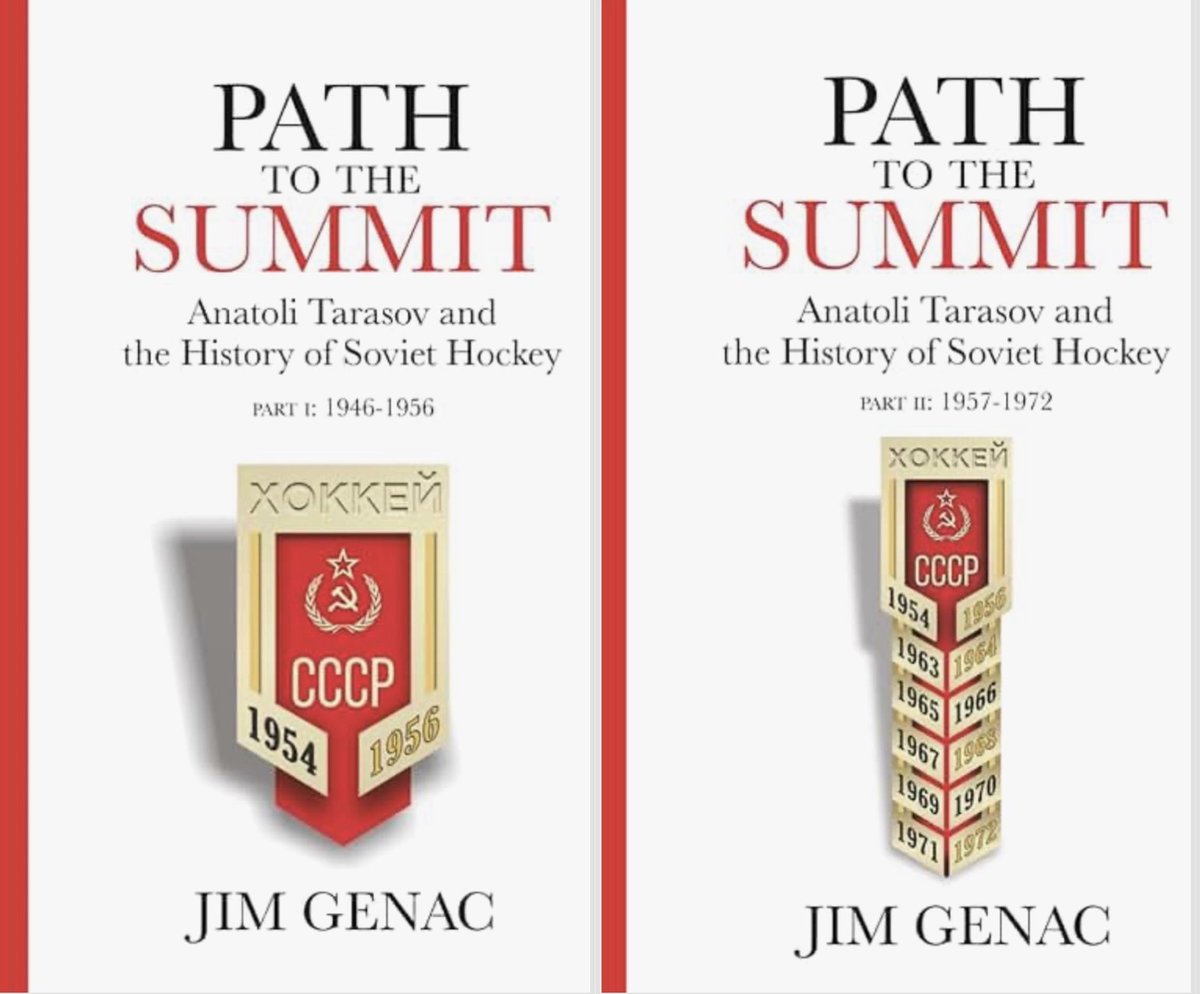
Outstanding summary of the Soviet Youth hockey system. The long awaited Path to the Summit: Part II now available on Amazon.
May 6

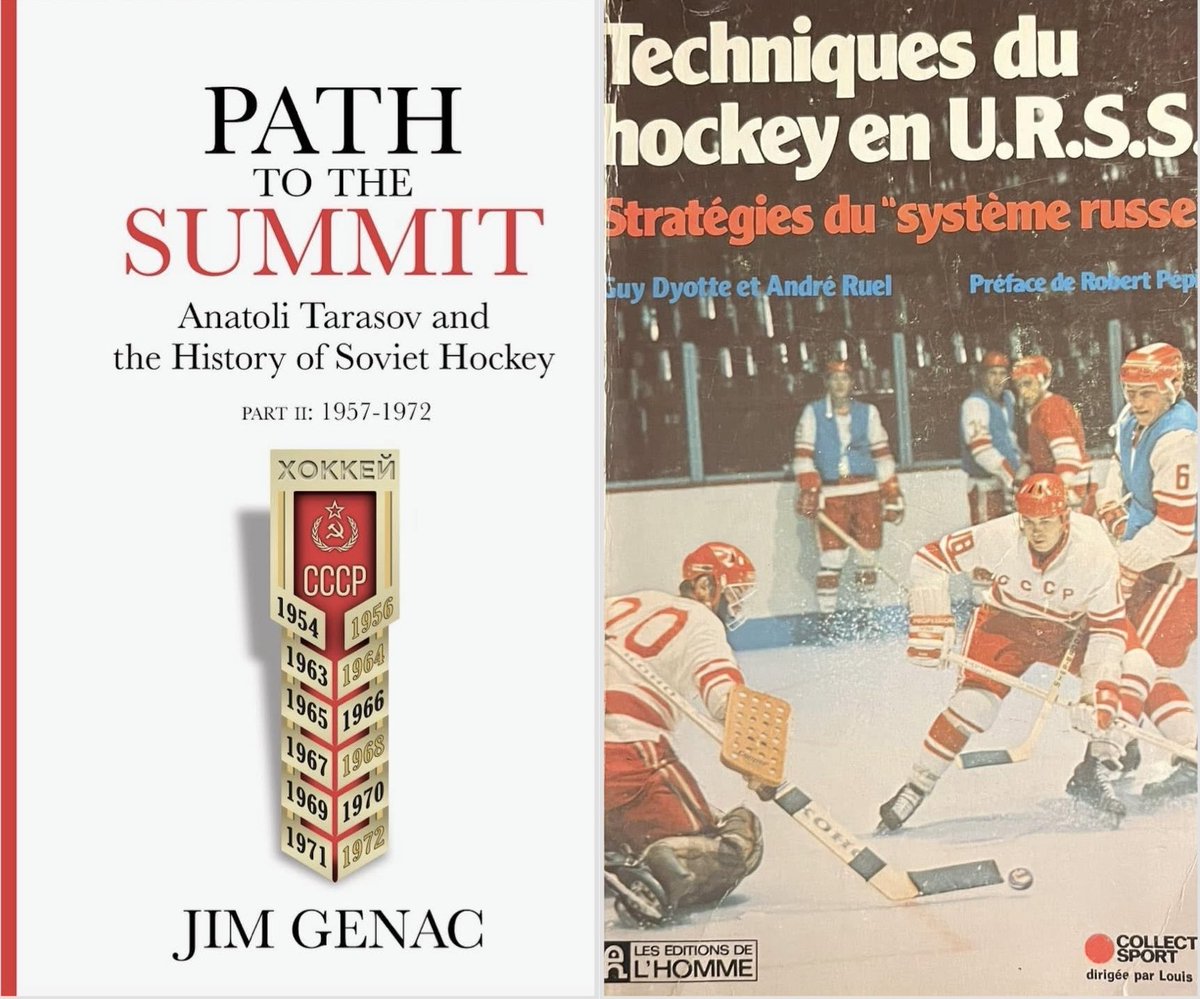
In June 1975 Guy Dyotte and André Ruel were part of a Concordia University hockey study internship that travelled to Moscow to study the Soviet hockey system. In 1976 they published this french language book detailing their visit and what they learned. Path to the Summit compares the Soviet Youth development system to the Canadian system in the lead up to the 1972 Summit Series. Available now on Amazon. #soviethockey #teamcanada1972 @usahockey @HockeyCanada #anatolitarasov #stanleycup
1
94
“𝘑𝘪𝘮 𝘎𝘦𝘯𝘢𝘤 𝘩𝘢𝘴 𝘸𝘳𝘪𝘵𝘵𝘦𝘯 𝘵𝘸𝘰 𝘣𝘰𝘰𝘬𝘴 𝘵𝘩𝘢𝘵 𝘸𝘪𝘭𝘭 𝘤𝘩𝘢𝘯𝘨𝘦 𝘵𝘩𝘦 𝘸𝘢𝘺 𝘸𝘦 𝘶𝘯𝘥𝘦𝘳𝘴𝘵𝘢𝘯𝘥 𝘵𝘩𝘦 𝘩𝘪𝘴𝘵𝘰𝘳𝘺 𝘰𝘧 𝘩𝘰𝘤𝘬𝘦𝘺 𝘣𝘦𝘩𝘪𝘯𝘥 𝘵𝘩𝘦 𝘐𝘳𝘰𝘯 𝘊𝘶𝘳𝘵𝘢𝘪𝘯." #russianhockey #usahockey #1972SummitSeries #anatolitarasov
2
144
Path to the Summit Part II is currently listed as #3 in hockey biographies.
#soviethockey #anatolitarasov #teamcanada72 #usahockey #nhl #NHLHockey #tmltalk

1
66
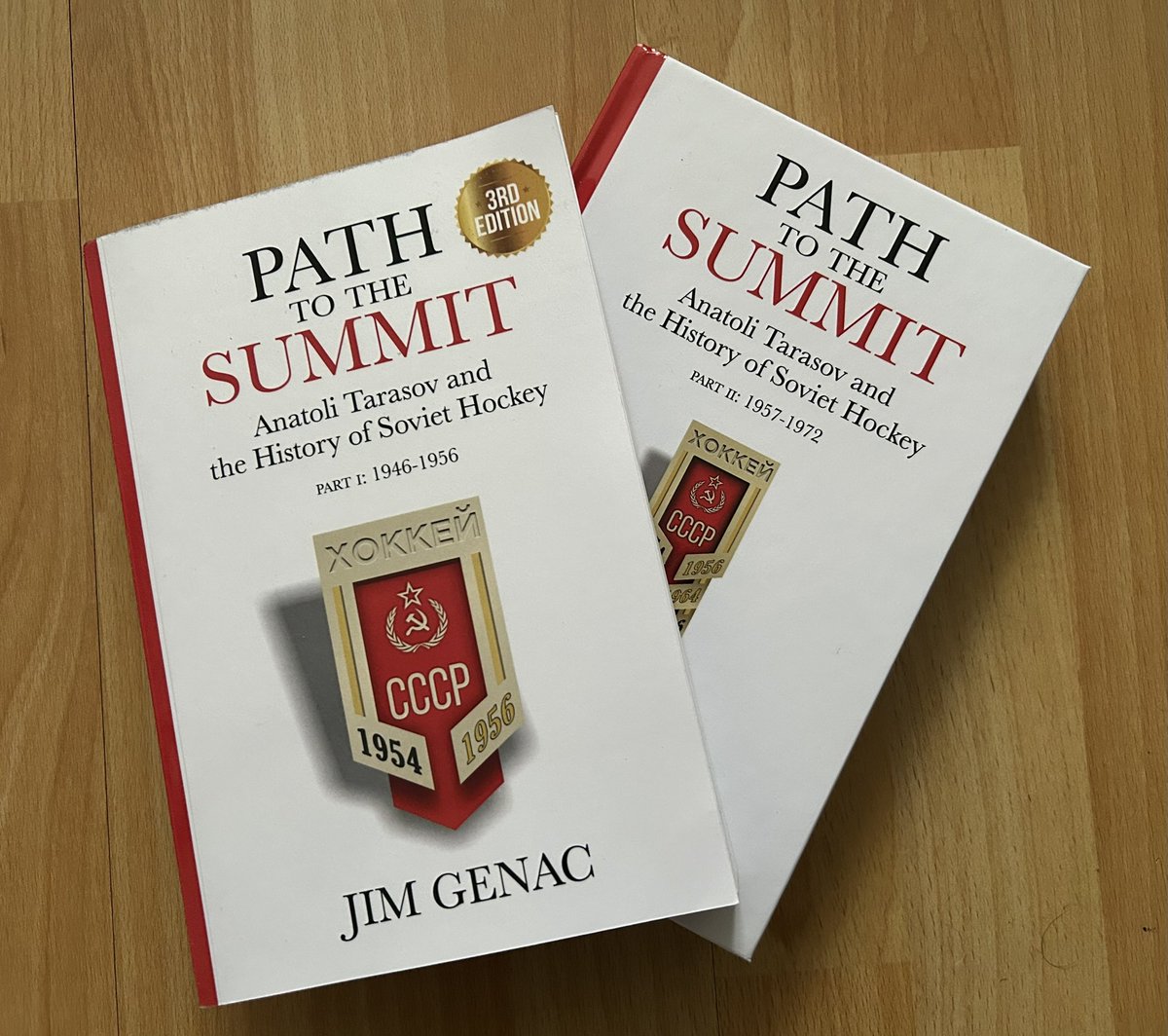
Hockey’s reach is international. So far this week copies of Part II have sold in Germany, Italy & France. This comes from France. So awesome to hear from those who are interested in this topic.
#soviethockey #anatolitarasov #1972summitseries

La saison morte va être studieuse... avec les 2 livres @pathtothesummit sur l'histoire du 🏒 de @Jim_Genac
3
81
Path to the Summit Part II has received its first rating on Amazon. A solid 5 stars ⭐️. Thanks for the feedback as we inch up to #7 on the new release bestseller list.
#Anatolitarasov #soviethockey #teamcanada72 #usahockey
2
45
Path To The Summit retweeted

Apr 9
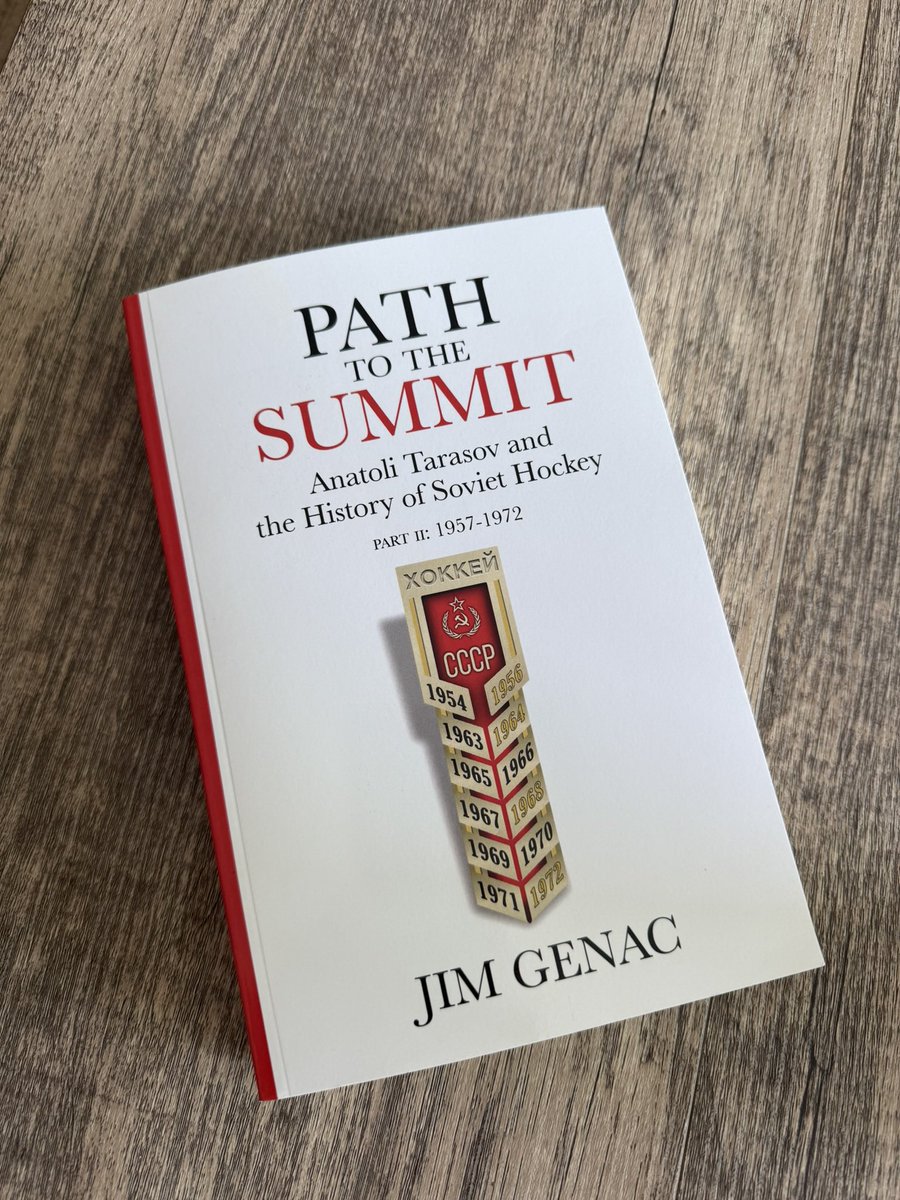
Path to the Summit Part II is starting to arrive in mailboxes. Thanks for your patience on this release & I hope you enjoy.
#Anatolitarasov #soviethocket #teamcanada72 #usahockey
Apr 9

Received my copy!
Part I was excellent - been anxiously waiting for Part II.
Thanks @Jim_Genac
1
4
158
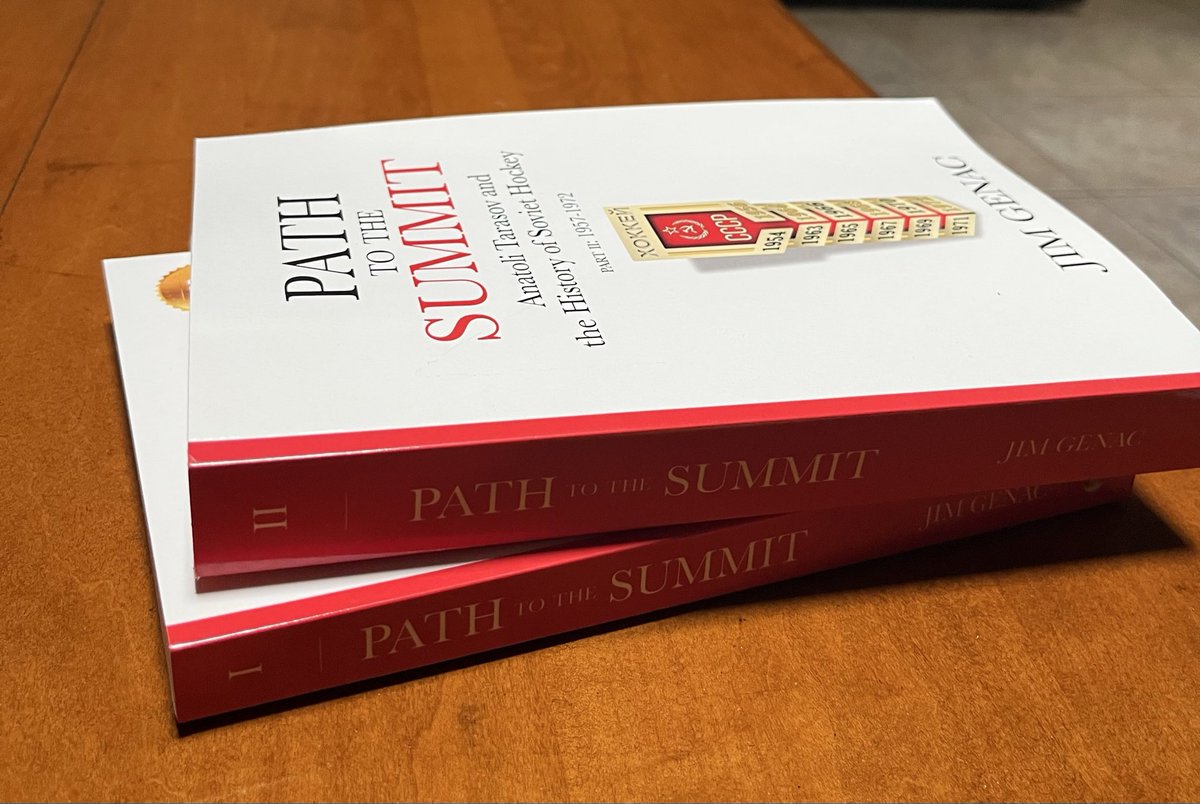
Path to the Summit Part II is now on Amazon. At 418 pages, it is a captivating deep dive into Soviet hockey from 1957 to 1972 & highlights Anatoli Tarasov’s unwavering quest for greatness. Essential reading for fans seeking the raw, unvarnished story of Soviet hockey’s golden era
1
57
Path To The Summit retweeted
Apr 6
I’m happy to announce that Part II (1957-1972) of "Path to the Summit: Anatoli Tarasov and the History of Soviet Hockey" is now available through amazon in both hardcover and paperback formats.
Thank you to all who have enquired & patiently waited for the release. I hope it meets, and exceeds, expectations.
amazon.com/Path-Summit-Anato…
2
5
331
Part II (1957-1972) of "Path to the Summit: Anatoli Tarasov & the History of Soviet Hockey" is now available through amazon in both hardcover & paperback formats. Thank you to all who patiently waited. I hope it meets, & exceeds, expectations. amazon.com/Path-Summit-Anato…
3
186
Path To The Summit retweeted
Jan 10
An updated version of the rear cover. Some ongoing editing is underway to reduce the overall size of the final book. Hopefully I will have a release date for you soon.
===========
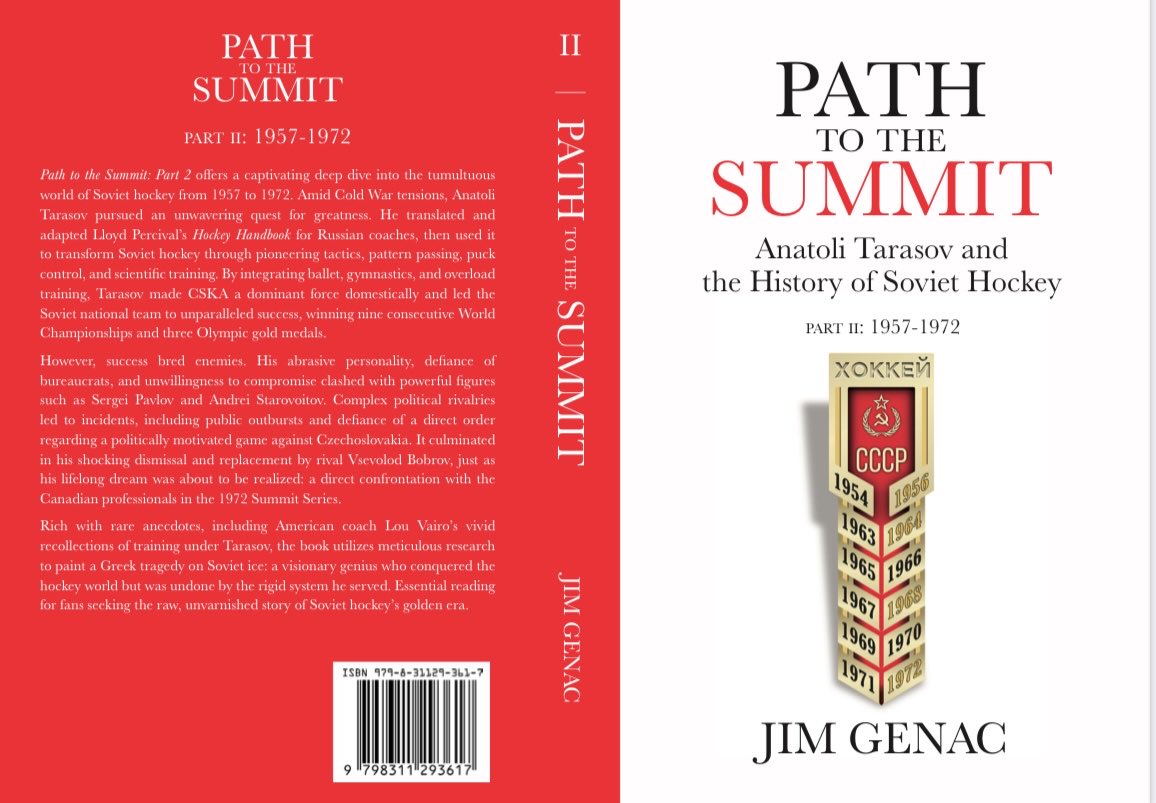
Path to the Summit: Part 2 offers a captivating deep dive into the tumultuous world of Soviet hockey from 1957 to 1972. Amid Cold War tensions, Anatoli Tarasov pursued an unwavering quest for greatness. He translated and adapted Lloyd Percival’s Hockey Handbook for Russian coaches, then used it to transform Soviet hockey through pioneering tactics, pattern passing, puck control, and scientific training. By integrating ballet, gymnastics, and overload training, Tarasov made CSKA a dominant force domestically and led the Soviet national team to unparalleled suecess, winning nine consecutive World Championships and three Olympic gold medals.
However, success bred enemies. His abrasive personality, defiance of bureaucrats, and unwillingness to compromise clashed with powerful figures such as Sergei Pavlov and Andrei Starovoitov. Complex political rivalries led to incidents, including public outbursts and defiance of a direct order regarding a politically motivated game against Czechoslovakia. It culminated in his shocking dismissal and replacement by rival Vsevolod Bobrov, just as his lifelong dream was about to be realized: a direct confrontation with the Canadian professionals in the 1972 Summit Series.
Rich with rare anecdotes, including American coach Lou Vairo’s vivid recollections of training under Tarasov, the book utilizes meticulous research to paint a Greek tragedy on Soviet ice: a visionary genius who conquered the hockey world but was undone by the rigid system he served. Essential reading for fans seeking the raw, unvarnished story of Soviet hockey’s golden era.
1
6
242

31 Dec 2025
The cover for Part II. Will be released early in 2026.
31 Dec 2025
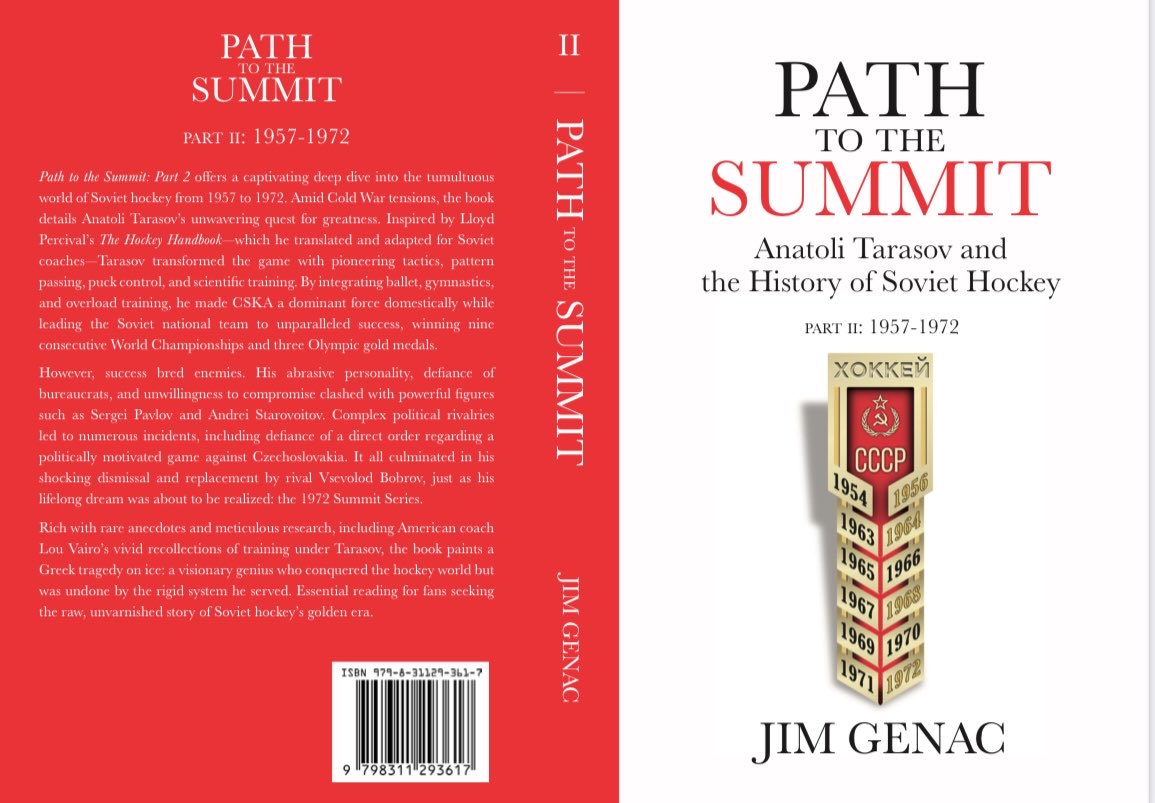
An update on Part II. The decision has been made to delay the release until early 2026. This is the cover.
Back Cover Narrative:
Path to the Summit: Part 2 offers a captivating deep dive into the tumultuous world of Soviet hockey from 1957 to 1972. Amid Cold War tensions, the book details Anatoli Tarasov's unwavering quest for greatness. Inspired by Lloyd Percival's The Hockey Handbook - which he translated and adapted for Soviet coaches - Tarasov transformed the game with pioneering tactics, pattern passing, puck control, and scientific training. By integrating ballet, gymnastics, and overload training, he made CSKA a dominant force domestically while leading the Soviet national team to unparalleled success, winning nine consecutive World Championships and three Olympic gold medals.
However, success bred enemies. His abrasive personality, defiance of bureaucrats, and unwillingness to compromise clashed with powerful figures such as Sergei Pavlov and Andrei Starovoitov. Complex political rivalries led to numerous incidents, including defiance of a direct order regarding a politically motivated game against Czechoslovakia. It all culminated in his shocking dismissal and replacement by rival Vsevolod Bobrov, just as his lifelong dream was about to be realized: the 1972 Summit Series.
Rich with rare anecdotes and meticulous research, including American coach Lou Vairo's vivid recollections of training under Tarasov, the book paints a Greek tragedy on ice: a visionary genius who conquered the hockey world but was undone by the rigid system he served. Essential reading for fans seeking the raw, unvarnished story of Soviet hockey's golden era.
#anatolitarasov #soviethockey #teamcanada72 #1972SummitSeries
242
19 Dec 2025
19 Dec 2025
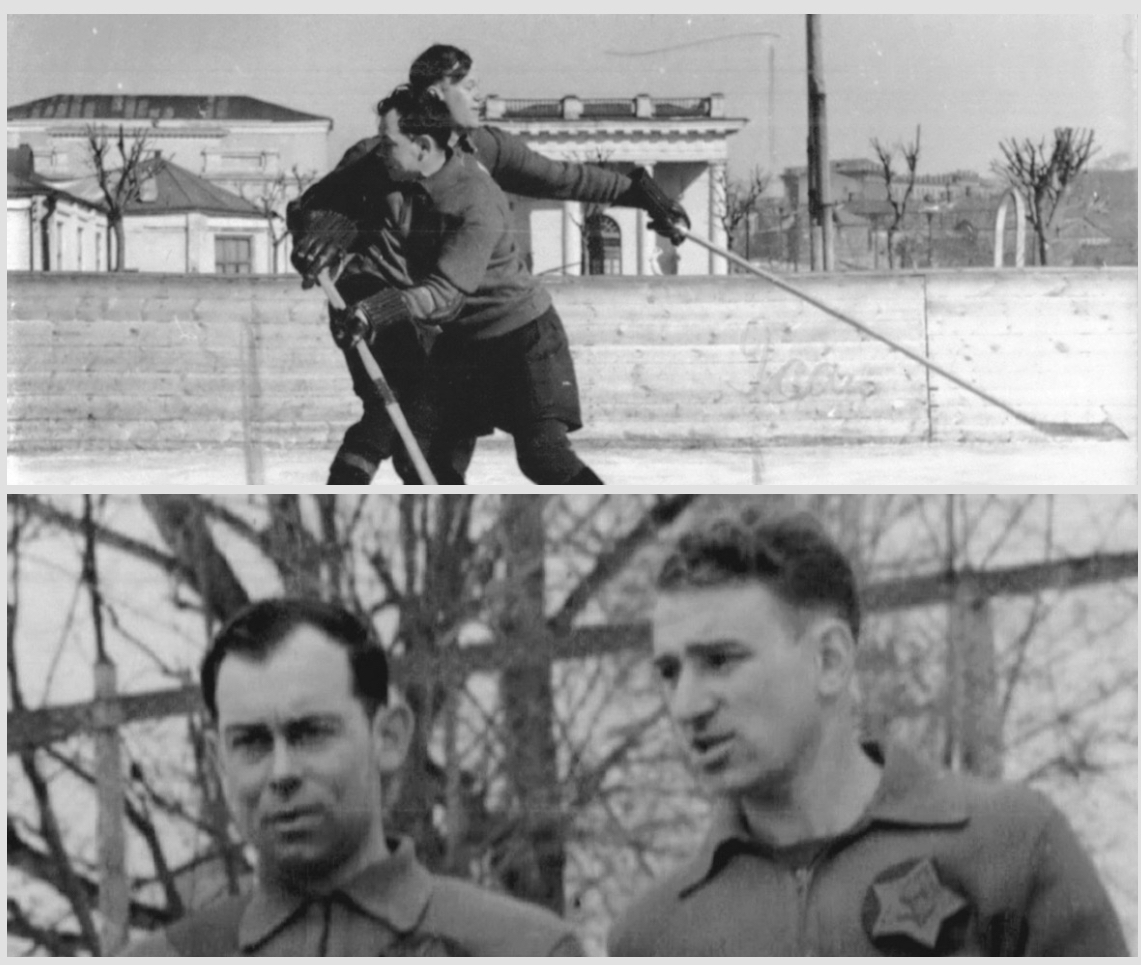
Success bred enemies for Anatoli Tarasov, whose abrasive personality, defiance of bureaucrats, and unwillingness to compromise clashed with powerful figures such as Andrei Starovoitov.
From 1946 to 1951, Starovoitov was a key player for CSKA. In addition to establishing a lifelong friendship with Vsevolod Bobrov, he reportedly became extremely bitter when Tarasov dismissed him from the team in 1951.
By 1969, Starovoitov had risen through the ranks of the Soviet hockey bureaucracy to become general secretary of the Soviet Ice Hockey Federation. He was in charge when Tarasov was shockingly dismissed just before his lifelong dream could be realized: playing against the NHL professionals in the 1972 Summit Series.
Tarasov's replacement? Starovoitov’s close friend, Vsevolod Bobrov.
Path to the Summit: Part 2 focuses on the political rivalries, public outbursts, and incidents which led to Tarasov's shocking dismissal. Rich with rare anecdotes and meticulous research, it's the story of how a visionary genius conquered the hockey world but was undone by the rigid system he served.
Essential reading for fans seeking the raw, unvarnished tale of Soviet hockey’s golden era.
Photo: Top shows Andrei Starovoitov and Vsevolod Bobrov circa 1949. Bottom is Starovoitov and Anatoli Tarasov circa 1950.
Path to the Summit: Part 1 is currently available on Amazon. Part 2 is coming soon.
#anatolitarasov #soviethockey #russianhockey #pathtothesummit
215
18 Dec 2025
18 Dec 2025
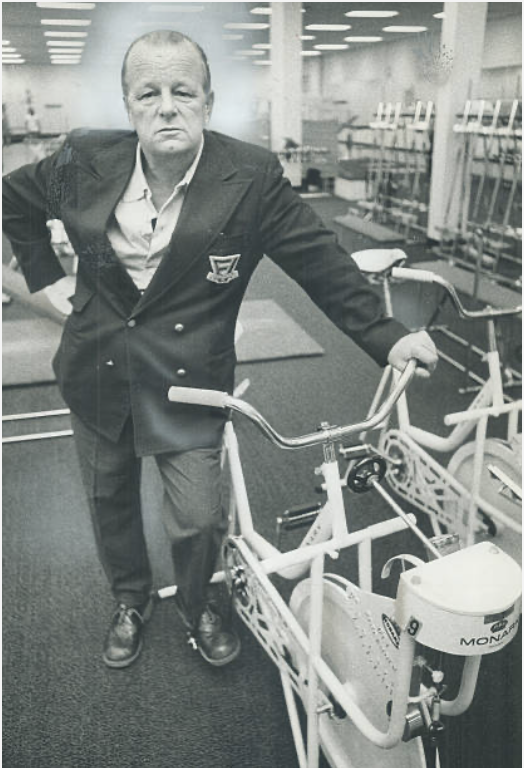
Did you know that in the 1960s, the Soviet national team would visit Lloyd Percival at his Fitness Institute in Toronto and allow him to test their players?
Percival had cutting-edge equipment to conduct oxygen uptake tests (essentially VO2 max measurements), and he could measure an athlete's oxygen-carrying capacity relative to the individual’s body size. The Soviets had a capacity of 65-70 mL of oxygen per kilogram of body weight per minute, a capacity that paralleled that of top-ranking international endurance athletes such as long-distance runners and cross-country skiers.
In 1969, the Canadian National Team came to him to conduct physical testing and develop a training plan to prepare for the 1970 World Championships. Percival tested the team (they called it the ‘treadmill torture test’) and discovered that Canadian capacity was only 55-60 mL. He told the team they were ‘Soviet soft’ in comparison.
The veterans on the team took great offence to the comment, while the new players embraced what he was trying to accomplish. Brian Conacher, the former Toronto Maple Leaf who had just rejoined the Nats after his amateur status was reinstated, trained exclusively with Percival and spoke highly of his training.
For their part, the Soviets would incorporate what they had learned about VO2 max measurements from Percival and make it a significant component of their training program.
Read all the details in Path to the Summit: Part 2, coming soon. Path to the Summit: Part 1 is currently available on Amazon.
1
184
Path To The Summit retweeted
18 Dec 2025
Did you know that in the 1960s, the Soviet national team would visit Lloyd Percival at his Fitness Institute in Toronto and allow him to test their players?
Percival had cutting-edge equipment to conduct oxygen uptake tests (essentially VO2 max measurements), and he could measure an athlete's oxygen-carrying capacity relative to the individual’s body size. The Soviets had a capacity of 65-70 mL of oxygen per kilogram of body weight per minute, a capacity that paralleled that of top-ranking international endurance athletes such as long-distance runners and cross-country skiers.
In 1969, the Canadian National Team came to him to conduct physical testing and develop a training plan to prepare for the 1970 World Championships. Percival tested the team (they called it the ‘treadmill torture test’) and discovered that Canadian capacity was only 55-60 mL. He told the team they were ‘Soviet soft’ in comparison.
The veterans on the team took great offence to the comment, while the new players embraced what he was trying to accomplish. Brian Conacher, the former Toronto Maple Leaf who had just rejoined the Nats after his amateur status was reinstated, trained exclusively with Percival and spoke highly of his training.
For their part, the Soviets would incorporate what they had learned about VO2 max measurements from Percival and make it a significant component of their training program.
Read all the details in Path to the Summit: Part 2, coming soon. Path to the Summit: Part 1 is currently available on Amazon.
1
2
3
608
Path To The Summit retweeted
20 Sep 2025
Before Team Canada played its two games in Sweden, Montréal Star journalist John Robertson was out with another succinct analysis of what was to come.
“I was pleased to hear John Ferguson say that no matter what transpired overseas in the four remaining games with the Russians, Team Canada would try and deport themselves with the dignity worthy of professionals. But I don't think they'll make it through the series without blowing their cool.”
“And this is where Canada really stands to lose this series in the eyes of the world - by the way the players react to adversity from here on in. The officiating is going to be a source of irritation to Team Canada throughout the Russian half of the series - simply because they are not used to European officials and European officials are not used to them.”
"Now the NHL players will find out what Father David Bauer and Jackie McLeod had to cope with during successive trips to the world hockey championships. To my mind, they'll find the difference in officiating far more difficult to adjust to than the vastly bigger ice surface. I look for trouble, in fact, before the Canadian team even gets out of Sweden.”
What sort of trouble would they encounter in Sweden? Two days before Team Canada’s first Swedish game, he wrote this…
“The Swedish sportswriters are notorious for their anti-Canadian hockey sentiments… During the 1969 world championships in Stockholm, in which Canada ended up a miserable fourth, pint-sized pacifists like Fran Huck and Gerry Pinder were branded animals because of their bull-terrier aggressiveness. Wait until these same writers and fans get a load of Wayne Cashman in high dudgeon.”
“Every time a Canadian team plays in Sweden, it creates tremors in diplomatic circles — and you have to figure that in the snarly mood the Canadian team must be in, that this year should be no exception. Father Bauer’s teams gained a measure of success, at least image-wise, by adjusting to the international refereeing style — but they still ended up taking more penalties than European clubs."
"And here is where Harry Sinden and John Ferguson are really going to have to bite their tongues. Because when those European referees start thumbing their players off for "infractions" they have been getting away with all through their careers in the NHL, it's going to be hard to take without kicking up a fuss.”
“High sticking is called in Europe any time a player lifts his stick above waist level. In an NHL game, nobody goes into a corner without raising his stick in self-protection. Canada will have to adjust.This was how they intimidated the Russians in that second game, the one they won 4-1. Not with their bodies - with their sticks.”
“If you'll recall Russian coach Vsevolod Bobrov's comment after that one - he said that if the game had been played in Europe, Cashman would have spent most of the night in the penalty box. Like it or not, this is what is going to happen if Cashman doesn't change his style. If you watched all four games you'll notice how much more disciplined the Russian players were in the art of keeping their tempers in check. This is drummed into them from the first time they pull on a pair of skates.”
"In the NHL, Clarence Campbell has often said that fighting is an integral part of the game — a way of letting off steam. Well, in Europe, it's not looked upon that way at all. As Bobrov said: ‘If they wanted us to send over our boxing team, we'd have gladly sent over our boxing team. I thought they wanted to play our hockey team.’”
Robertson reinforced his belief that Canada had better hockey players, a point critics constantly overlooked as they complained about what they perceived as his anti-Canadian articles.
“I'm a long way from being convinced the Russians are better hockey players. I am totally convinced, however, that this series was not a fair test for our NHLers. The people who scheduled the series and the criminally inadequate pre-series training camp - if anyone will ever own up to the blunder - are the ones who should be called to answer to the Canadian public. It's too late to do anything about that. But what really scares me are the rhubarbs over European refereeing which I just know will be forthcoming. And as usual, Canada will come off the loser, both on the ice and in the eyes of the world TV viewers. Wait and see.”
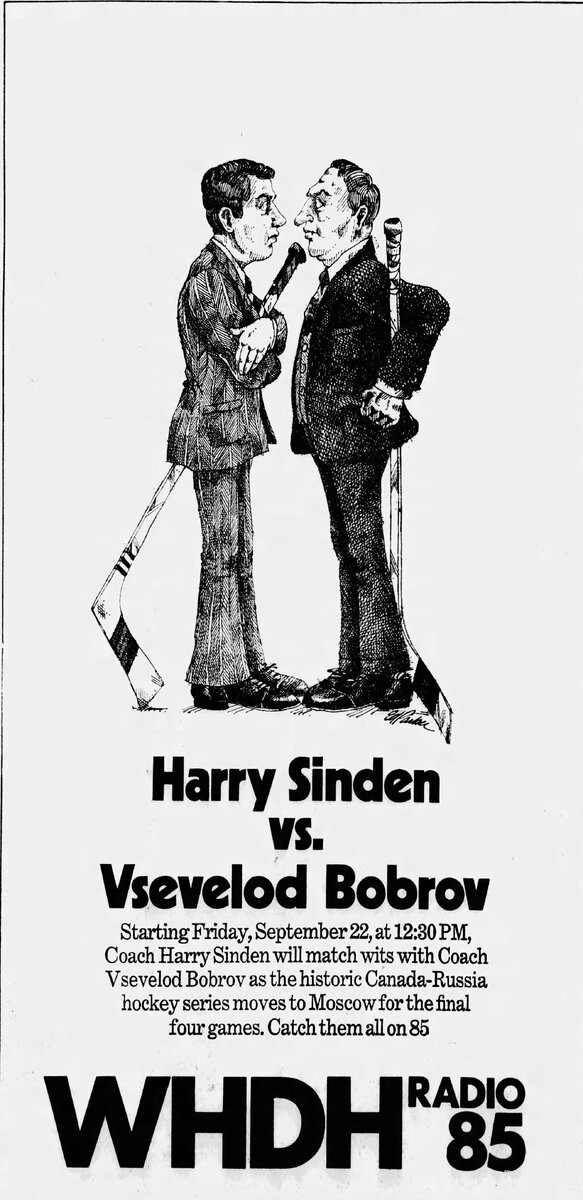
The two games in Sweden played out precisely as he predicted, worse in fact. We’ll cover those in ‘Path to the Summit: Part 3.’ It’s interesting to note that interest in the Series in North America wasn’t confined to just Canada. Boston radio station WHDH 85 planned on broadcasting the games from Moscow live.
Here is an advertisement they ran before the games began...
============
For an in-depth look at the early years of the Soviet hockey program, read 'Path to the Summit: Part 1' available now on Amazon. Part 2 is tentatively scheduled for Christmas 2025.
If you enjoyed this, please like and forward to those interested in the 1972 Summit Series.
#1972SummitSeries #soviethockey #anatolitarasov #pathtothesummit @TeamCanada1972 #usahockey
1
1
3
251
17 Sep 2025
Did you know the Soviets, confident they had the 1972 Summit Series won, were eager to negotiate another series in 1973?
17 Sep 2025
The day after their crushing victory over Team Canada in Game 4 of the 1972 Summit Series, the Soviet team spent Saturday flying back to Montréal. Early the next morning, they were right back at it with an early Sunday morning workout on a local soccer field.
Soccer is an integral part of the Soviet training routine, and they trained hard during the session. Afterwards, they went to Vic Tanny's for a sauna, were then whisked back to the Queen Elizabeth Hotel for a noon luncheon, and then boarded the plane for the trip home to Moscow.
Word was leaked that Andrei Starovoitov had met with Alan Eagleson in Vancouver to discuss another series in 1973. Only this time, on a much more elaborate scale - and at a time of year more conducive to the Canadians.
Eagleson had already been raving that the series was a financial success beyond his wildest dreams. Complaining that he had sold the TV commercial spots for only a fraction of what they should have brought in, he was eager to take advantage of Starovoitov’s public boast that the series was lost for Canada.
On the Soviet side, all hesitations about playing the Canadian professionals had evaporated. According to a Soviet source, Starovoitov was open to playing the series much later in the year, possibly around Christmas, increasing the number of games played and even playing some of the games in the United States… all for a healthy share of the TV revenue and gate receipts, of course.
None of this had been discussed with the NHL owners yet. But the feeling was that if the owners did not allow their players to answer a Russian challenge for another series, it would be tantamount to conceding.
In the eyes of the public, that would mean (a) the NHL was afraid to play them again, (b) that the Russians, therefore, were the unchallenged kings of the hockey world, and (c) if the two above factors weren't enough, there would be the ever-present threat that if the NHL declined, the World Hockey Association would eagerly step in and take up the challenge.
Of course, the dynamics of all of those discussions collapsed after the four games in Moscow.
By the end of the Series, Soviet officials were no longer eager for a quick rematch.
============
For an in-depth look at the early years of the Soviet hockey program, read 'Path to the Summit: Part 1' available now on Amazon. Part 2 is tentatively scheduled for Christmas 2025
If you enjoyed this, please like and forward to those interested in the 1972 Summit Series.
#1972SummitSeries #soviethockey #anatolitarasov #pathtothesummit @TeamCanada1972 #usahockey
2
275
16 Sep 2025
In the course of a week, the myth of the invincible Canadian professional had been utterly shattered. But the foundation of a legend was being born: that of the indomitable Canadian spirit.
#1972SummitSeries #soviethockey #anatolitarasov #pathtothesummit @TeamCanada1972
16 Sep 2025
Game 4 of the 1972 Summit Series in Vancouver was the absolute low point for Team Canada. Booed off the ice, the players were completely exhausted and emotionally defeated.
As we mentioned yesterday, Montréal Star journalist John Robertson repeated a message he had uttered before the series began: Team Canada was going to be hit by a challenge from a physically conditioned team, the likes of which they were completely unprepared for. He warned that the players would bear the brunt of public anger that should have been directed at Clarence Campbell, Hockey Canada, and Alan Eagleson.
After the game, Phil Esposito gave a speech that resonated with Canadians and is pinpointed as a major shift in the series.
A tired, sweating, defeated Esposito told Canada that they were down, dejected & disheartened. He said it was time to face the facts: the Soviets were good and everyone on the team was giving 100%.
It struck a chord with the nation and hundreds showed up at the airport to send them off.
In the course of a week, the myth of the invincible Canadian professional had been utterly shattered. But the foundation of a legend was being born: that of the indomitable Canadian spirit.
Esposito pledged that Team Canada would get better. This series wasn’t over.
============
For an in-depth look at the early years of the Soviet hockey program, read 'Path to the Summit: Part 1' available now on Amazon.
Part 2 is tentatively scheduled for Christmas 2025
If you enjoyed this, please like and forward to those interested in the 1972 Summit Series.
#1972SummitSeries #soviethockey #anatolitarasov #pathtothesummit @TeamCanada1972 #usahockey
1
235
15 Sep 2025
Bobby Clarke defended the Vancouver fans who booed Team Canada in the 1972 Summit Series. “You earn the right to get cheered. And we earned the right to get booed.”
15 Sep 2025
Game 4 of the 1972 Summit Series in Vancouver marked the lowest point in morale for Team Canada 1972. While boos echoed around the Montréal Forum after Game 1 and were pronounced after Game 3 in Winnipeg, the atmosphere in Vancouver was on a different level.
The importance of Game 4 required Canada's best effort of the series. To head to Russia down 1-2-1 was something unfathomable just one week earlier.
As the players came onto the ice, the Vancouver crowd heckled Team Canada and cheered approval for the Soviets and their brand of hockey. And when the game got underway, instead of being treated to Canada's best effort, what they saw was the worst performance of the Canadian portion of the series.
Canada looked like a bunch of childhood schoolyard bullies trying to play with adults.
The disastrous performance began with Bill Goldsworthy. On the first shift, he elbowed and high-sticked a Russian. The Soviets quickly scored on the ensuing power play. Within two minutes, he did it again, with the same result.
Throughout the game, the Canadians were outskated, outpassed, and outmaneuvered. At one seminal point, Frank Mahovolich even pinned goaltender Vladislav Tretiak down and sat on him.
Jack Ludwig, in his 1974 book, said, “The Vancouver crowd was booing a deteriorated brand of hockey. It booed silly play.”
Vancouver sportswriter Eric Whitehead was a little more specific. “The Coliseum customers, notoriously the toughest critics in the nation, turned on their all-stars. He said the boos were actually for the "fat-and-happy NHL Establishment that has been content to sit back and just rake in the money while the skills of the game have gone to pot.” After this “long week of humiliation,” Whitehead argued, “it is already plain that the upstart Soviets play a sounder, better, and more exciting hockey than is seen in the National Hockey League.”
Montréal Star journalist John Robertson reminded everyone that he had predicted this.
“One week ago, in this same space, I seem to recall laying the blame squarely in the laps of the people who foolishly agreed to lay Canada's hockey heritage on the line in September against a Russian team everyone knew would be in mid-season form. I called it a needless and foolish risk. I said we were too damned arrogant for our own good: that we felt we could just have some of our NHL All-Stars put on skates in the heat of the summer for a couple of weeks and handle the Russians with disdainful ease. And the people who agreed to the series, who knew the Russians infinitely better than I did, should have foreseen this. These are the people who let the Team Canada players down.”
Before the series began, Robertson warned that the players would bear the brunt of the anger that should have been directed at Clarence Campbell, Hockey Canada, and Alan Eagleson.
And that is precisely what happened on the night of September 8th in Vancouver.
While his players were complaining about the poor treatment they received from the fans and the media, Harry Sinden took a more realistic view of why his team was performing so poorly. Despite the close score of 5-3, Harry said, “We were just outskated. Nobody was skating well. We weren't skating like we can, and when this happens, it leads to a lot of other breakdowns.”
For years, Vancouver fans were highly criticized for the atmosphere at the Pacific Coliseum that night.
Attached are excerpts from that documentary featuring some of the Canadian stick work, the crowd reaction and Bobby Clarke's commentary.
============
For an in-depth look at the early years of the Soviet hockey program, read 'Path to the Summit: Part 1' available now on Amazon. Part 2 is tentatively scheduled for Christmas 2025
If you enjoyed this, please like and forward to those interested in the 1972 Summit Series.
#1972SummitSeries #soviethockey #anatolitarasov #pathtothesummit @TeamCanada1972 #usahockey
1
2
290
14 Sep 2025
Did fatigue & the pressure to change the lineup after the Winnipeg game set the conditions for the disaster for @TeamCanada1972 in Vancouver?
13 Sep 2025
As the team bus headed back to the hotel after the practice before the Winnipeg game, one of the players not receiving much ice time shouted out, “Hey, there’s where we can go eat. The Black Sheep Restaurant.” As others chimed in with their own one-liners about being associate members of Team Canada, Rod Gilbert announced to no one in particular, “Maybe we’ll get to play in Sweden.” Vic Hadfield eve asked Sinden quite bluntly if he was going to play or not.
“I told Vic I couldn’t guarantee him or anyone else that they’d be in the lineup. Hell, this team is going to be what John Ferguson and I want it to be, not what Vic Hadfield or any other player wants.”
When the Winnipeg game was over, that discontent was made public, and one headline blared: "Discontent grows, two team members threaten to quit."
If placating a roster of 35 NHL superstars wasn't enough, Sinden was also reeling from how fast the momentum had shifted in the Winnipeg game.
“For the first time their superior conditioning did us in. In the final 10 minutes of the game, our guys were gone physically. They didn’t have anything left to give. I have to give the Russians all the credit in the world. When we were ahead 4 to 2, and playing so well, I thought we were getting ready for a romp. But they didn’t lose their poise, and they got those two goals back so easily, I was really shook up. When they tied it up, I went running down the bench and yelled to Fergie, ‘What the hell is going on here? They’re all over the place.”
“After reviewing the films, our feelings were confirmed. We ran out gas near the end. Three games in five days were too much for some of our guys to handle at this stage of the season… So we are going to change our lineup for the game [in Vancouver]."
Whether it was reacting to his unhappy players or responding to the fatigue he saw so plainly, Sinden had decided to play Gilbert Perreault in Vancouver and was considering inserting Rod Gilbert and Vic Hadfield into the lineup. Jean Ratelle would continue to sit, and Wayne Cashman would be in the stands with him.
To compensate for Cashman's absence, Sinden took Bill Goldsworthy aside and told him he wanted him to make up for some of the muscle they were losing. “Now listen,” Sinden told him. “I don’t want you going out of your way to take a cheap shot at these guys. Just make sure every time you go into the corner with one of them that you come out with the final word. Get that last lick in so that they’ll know we’re around.”
Goldsworthy took those instructions perhaps a little too literally, and Game 4 in Vancouver proved to be the penultimate disaster for Team Canada.
Did the team struggle because Sinden was feeling the pressure to give everyone on the roster some ice time? Was four games in seven nights too much for them? We’ll have more on the Vancouver game in the next post.
In the meantime, Sinden also expressed amazed at the uniformity of the Russians to the media.
“Here were these guys who all look the same, skate the same, shoot the same, the whole game without changing expression.”
Sinden was particularly perplexed at the way the Soviets skated the same. However, it differed from the way Canadians skated. He asked if anyone in the media knew why.
In 1987, I had a chance to put this question directly to Anatoli Tarasov.
His fascinating answer stretched almost 20 minutes, and in ‘Path to the Summit: Part 2,’ I’ll share what he had to say
============
For an in-depth look at the early years of the Soviet hockey program, read 'Path to the Summit: Part 1' available now on Amazon.
Part 2 is tentatively scheduled for Christmas 2025
#1972SummitSeries #soviethockey #anatolitarasov #pathtothesummit @TeamCanada1972 #usahockey
1
163
11 Sep 2025
After the tie in Winnipeg, the Soviets were convinced they had the series won…
11 Sep 2025
After the 4-4 tie in Winnipeg, the Soviets were supremely confident. While coach Vsevolod Bobrov continued to spout the party line that the Russians were here 'to learn,' others were already claiming victory in the series.
“There's no way we can lose this eight-game series with Canada now. The series is lost for Canada. We have now reached our objective, which was a win and a tie in the four games here. We’ll wrap it up in Moscow, no matter what happens in the Vancouver game,” said one member of the Soviet hierarchy travelling with Russia’s National Team.
Although not directly named, many believe the statement was made by Andrei Starovoitov, general secretary of the Soviet Ice Hockey Federation. He was the one who negotiated the terms of the Summit Series with Joe Kryczka of the CAHA.
In his younger days, Starovoitov had been a defenseman with CSKA, where he played from 1946 to 1951. That first year, he played under coach Pavel Korotkov and became a lifelong friend of team captain Vsevolod Bobrov.
When Korotkov retired at the end of the season, Starovoitov was offered the coaching position, but he declined, citing work commitments to the Lenin Military-Political Academy. Anatoli Tarasov was appointed coach instead.
In 1951, Tarasov removed Starovoitov from the team after Bobrov had left to play with VVS MVO. Twenty years later, Starovoitov got his revenge. As head of the Soviet Ice Hockey Federation, he was the one who dismissed Anatoli Tarasov just prior to the 1972 Summit Series.
Enroute to Vancouver, Starovoitov took the time to explain how the Soviet team was picked. Fifty were chosen from the nine-team Soviet League and invited to a special camp. Twenty-seven came on the trip, and eight more back in Moscow are qualified to play in the final four games. He then said that after the Canada leg of the Series, the Soviet players would be allowed to return to their respective clubs to await the remainder of the series.
Many would later criticize this move as contributing to the Soviets' overconfidence in the last four games. Years later, Vladislav Tretiak would say Anatoli Tarasov would never have allowed this.
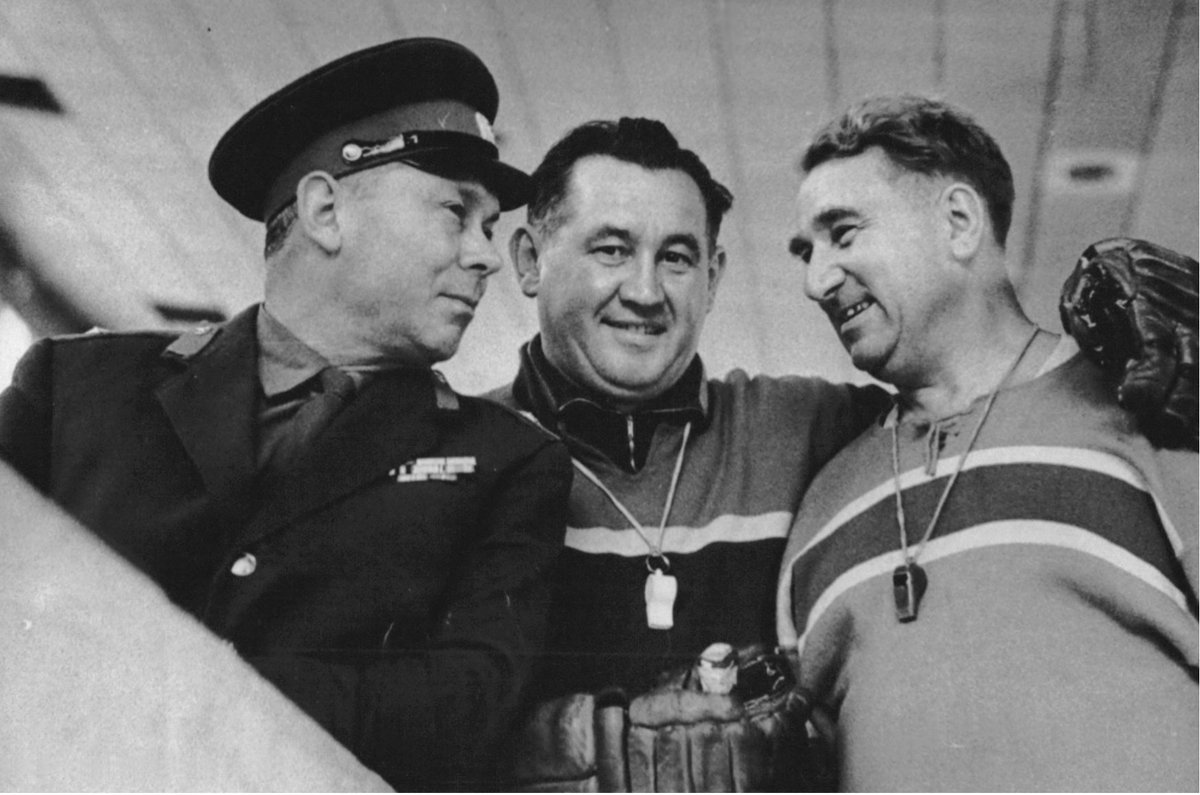
(Pictured is Andrei Starovoitov, Boris Kulagin and Anatoli Tarasov)
============
For an in-depth look at the early years of the Soviet hockey program, read 'Path to the Summit: Part 1' available now on Amazon.
Part 2 is tentatively scheduled for Christmas 2025
#1972SummitSeries #soviethockey #anatolitarasov #pathtothesummit @teamcanada72 #usahockey
1
193