
National Security, Foreign Policy Editor at The Atlantic
Joined April 2009
- Tweets 22,117
- Following 3,402
- Followers 23,774
- Likes 5,779
146 Photos and videos




The U.S. and Iran say they are close to an agreement to end a war that has left everyone badly bruised. We've heard that before, but this time could be different, @vmsalama and @nancyayoussef write.
theatlantic.com/national-sec…
1
3
3
960

Jun 11
Documents and interviews reveal growing disarray about celebrations of America’s 250th birthday, @michaelscherer reports. He examines the fractures between Trump’s advisers and bipartisan organizers over money, sponsorships, control, and tone. theatlantic.com/politics/202…
7
6
620
Jun 11
SCOOP: Despite insisting that a $1.776 billion “anti-weaponization” fund has been scrapped, the administration is quietly assuring allies that payout plans remain on track, @S_Fitzpatrick reports.
theatlantic.com/politics/202…
12
212
291
20,021
Jun 10
Smarts from @missy_ryan: Democrats oppose Trump’s foreign policy and don’t want a retread of Biden’s—but that’s where the agreement within the party ends: theatlantic.com/national-sec…
113
Paul Beckett retweeted

Kidnapped Houston journalist Austin Tice may be alive and in Iran, his family says – Houston Public Media houstonpublicmedia.org/artic…
1
13
18
2,438
Super smarts from @YAppelbaum theatlantic.com/magazine/202…
1
523
Paul Beckett retweeted

"Suddenly, many people have understood that the Russian narrative is wrong: The Ukrainians are not losing. The Russians are not winning, and more important, they don’t know how to win."
-- @anneapplebaum:
theatlantic.com/ideas/2026/0…
7
57
196
22,041
Paul Beckett retweeted

Jun 4
On the bright side, there's a flurry of new ideas, fired up state & city officials and consumer engagement.
We're going to dig in on practical fixes in coming weeks. Please - log your issues below or write me: consumed@theguardian.com theguardian.com/us-news/2026…
3
6
763
I am guessing that everyone who reads this headline is going to say: That’s what I want to know! @heathat has the answers - this is going to be good. theguardian.com/us-news/ng-i…
1
1
212
The Forever Wars give way to the Forever Limbo: Smarts from @vmsalama @JonLemire & @nancyayoussef theatlantic.com/national-sec…
3
3
718
Bill Pulte’s appointment as the new acting director of national intelligence brought reactions among current and former intelligence officials that ranged from disbelief to resignation, @shaneharris reports.
theatlantic.com/national-sec…
10
12
4,819
Paul Beckett retweeted

Jun 1
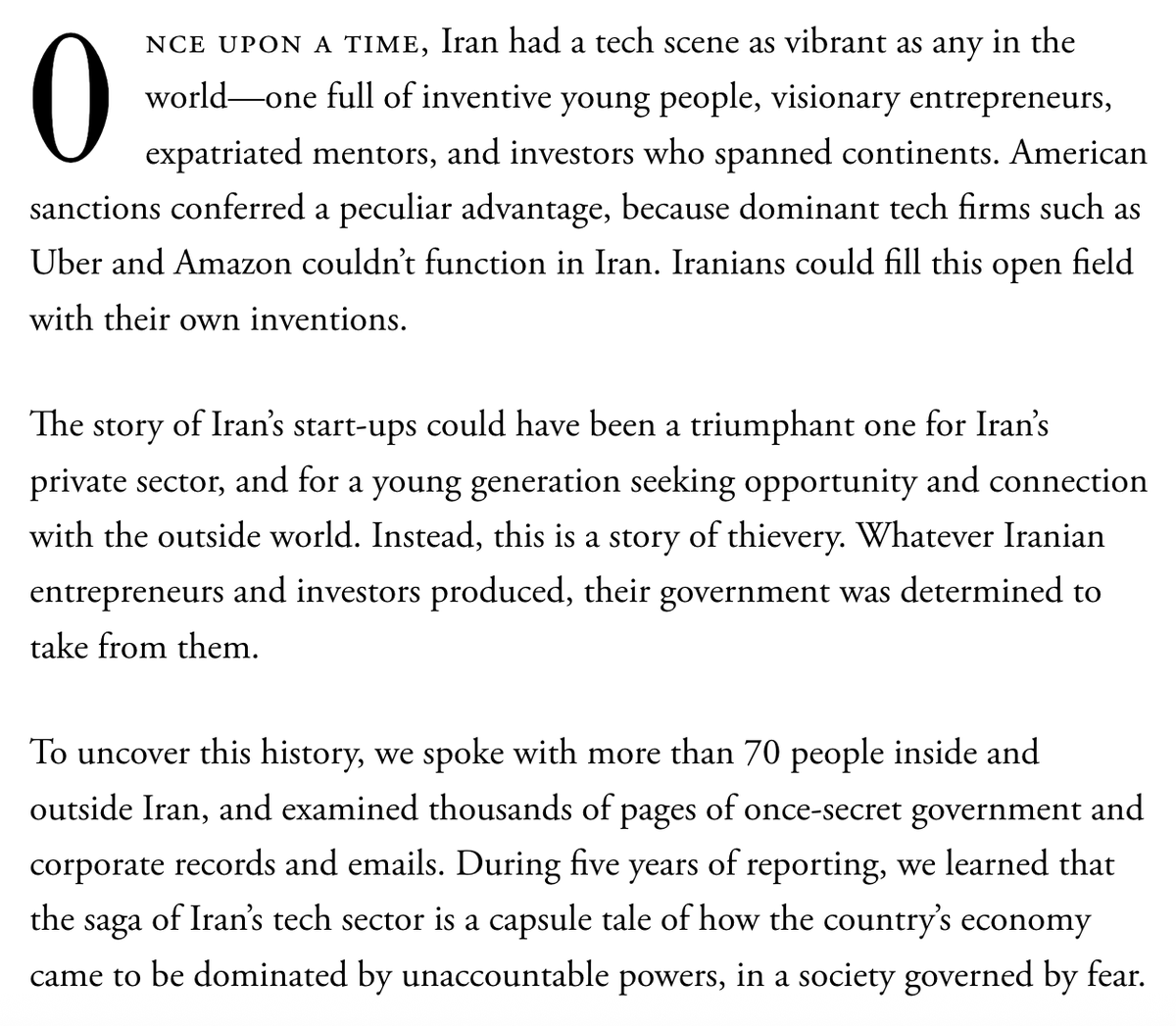
In an excerpt from their terrific new book, @yjtorbati and @bozorgmehr detail how the Islamic Republic systematically crushed Iran's burgeoning tech sector.
After the 2015 nuclear deal, Ayatollah Khamenei feared opening the country's economy would be a Trojan horse for political subversion. The IRGC moved in to block a successful, independent private sector—and to co-opt the data and technology of these young entrepreneurs for state control.
theatlantic.com/internationa…
11
146
311
126,892
Paul Beckett retweeted

Jun 1
In the weeks since the Supreme Court hollowed out the 1965 Voting Rights Act, the past has felt especially present to many congregants at Mount Zion First Baptist Church in Baton Rouge, Louisiana, @yvonnewingett reports.
theatlantic.com/politics/202…
5
2
1,042
Paul Beckett retweeted

Jun 1
A remarkable account of the creativity and inventiveness of the Iranian people—and the rapacious cruelty of their rulers:
4
15
32
4,694
Fortifications at the White House are growing in tandem with the threat of political violence. The 18-acre complex has become the new Green Zone, @mviser reports.
theatlantic.com/politics/202…
1
182
May 29
Trump might look like his grip on the GOP is firm but his recent actions suggest he is entering lame duck status, report @jonlemire & @michaelscherer theatlantic.com/politics/202…
114