
interests: AI research, engineering, product
Joined March 2010
- Tweets 595
- Following 1,131
- Followers 309
- Likes 4,482
69 Photos and videos





Mar 7
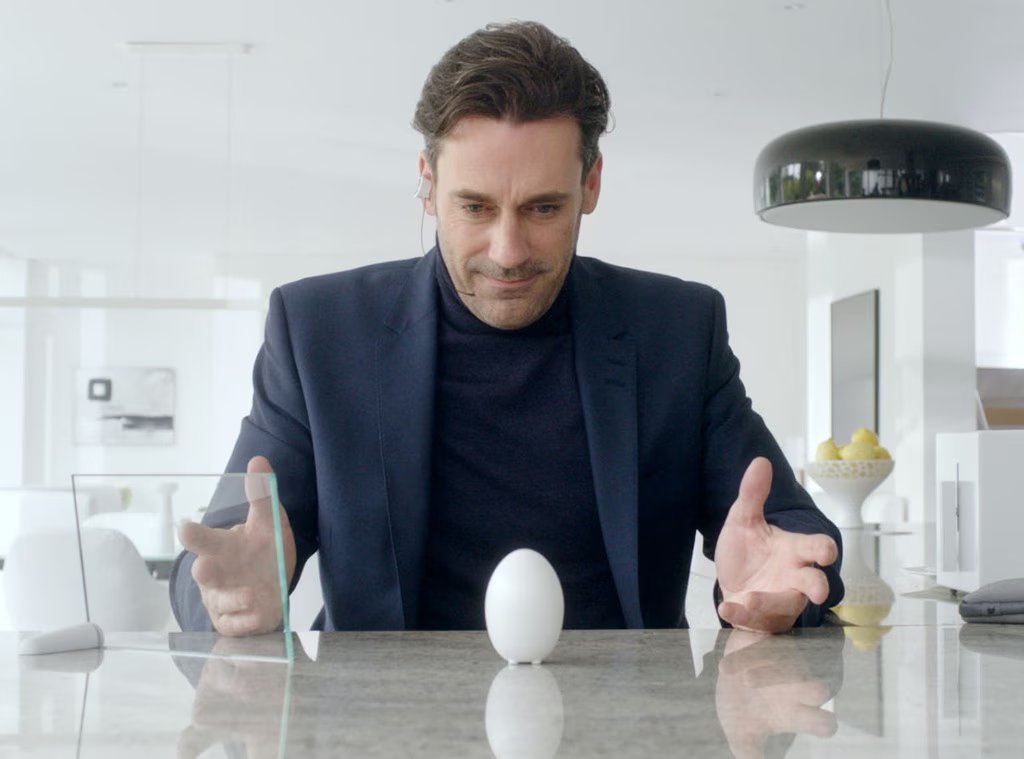
I hope this thing is not conscious:
youtube.com/watch?v=yRV8fSw6…
The monitor for Oxygen, Carbon Dioxide, and Temperature to the machine feels very weird. And the fact that the neurons die after 6 months.
1
1
80
Mar 7
I guess the belief is these neurons don't have enough structure to support consciousness. But since we don't really know how to measure it, it's not a certainty. And it becomes an "increasing concern" as more complex biological organoids are built...
47
Mar 7
Would be great if we figured out how to measure when there's consciousness so we're not accidentally torturing a bunch of things.

2
125
25 Sep 2025
Ozempic for mental health, incredible!
I have a small passion project from 2016 with about 11,000 lifetime users around weight loss. About 100 people lost more than 30 lbs, and 5 people achieved extreme fitness. I only worked on it for a few months over the years, but I’ve gotten to talk to and learn from hundreds of people using it to understand the problem better.
The reason I never turned it into a full-blown company/product is that I realized weight loss - and I suspect many more things, like finances - is fundamentally a mental health issue. If you can’t let the mind overcome boredom, stress, and anxiety, a meal planner, a calorie tracker, etc., are just bandages and won’t meaningfully help.
It’s been great seeing mental health become less taboo over the last decade, and seeing effective techniques - such as meditation/gratitude (separated from spirituality) and self-affirmations (separated from horoscopes) - become more mainstream. This could be a great addition for those in need.
An argument can be made: "Why are drugs needed for this? Shouldn’t natural methods just work?" That would be great, but very unnatural things are happening in the first place.
For example, first there’s a well-meaning innovation: the Interstate Highway System. It’s used for bad things: serial killers. Then it’s addressed by technology much later: DNA testing. I believe Ozempic is a similar counteragent to cheap, addictive food. And I imagine this could also be in the toolkit for modern problems of the mind caused by unnatural things like social media and 24/7 global news.
Super early. Hopefully this doesn’t also become a "well-meaning innovation" and is safe. But promising!
24 Sep 2025

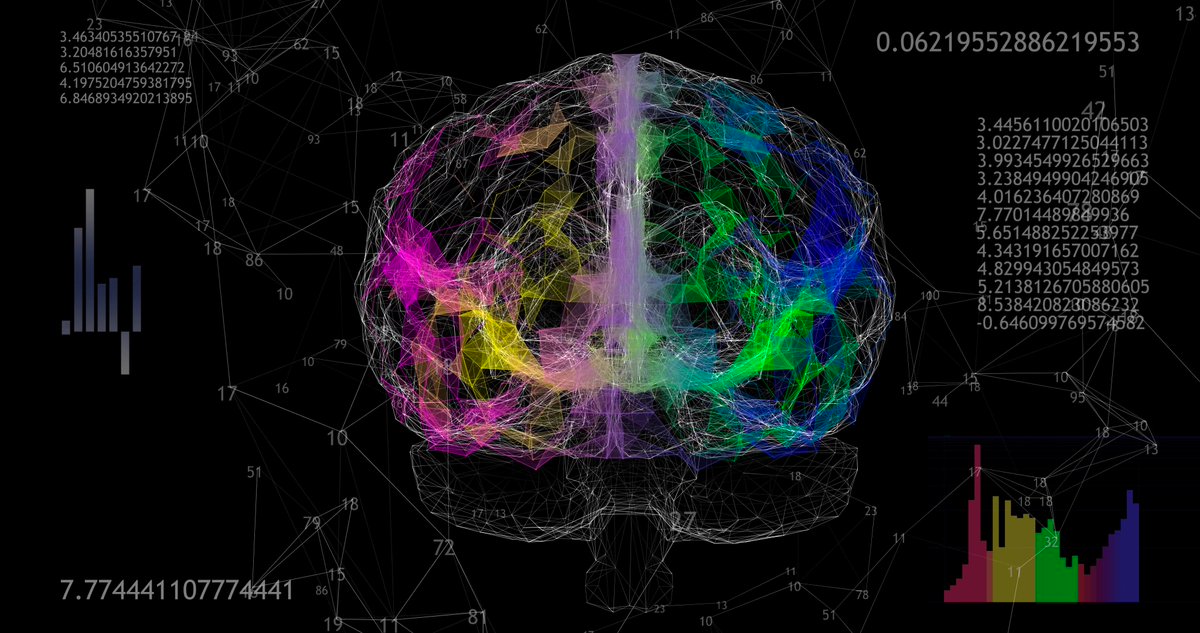
1/ It feels surreal to announce completion of the first human trial in the development of our neurotech platform for designing mental states, from the molecular level.
Human experience is now programmable.
A🧵on the sequel to psychedelics & the first new "emotion in a bottle."
2
3
319
23 Sep 2025
If you're curious what the "big bet" is right now at frontier AI labs, here's a quick non-technical summary:
The models have effectively been trained on all available human knowledge (internet/books/videos/pictures) for a while now. But we kept making the models bigger to make them better at "predicting the next token". From GPT-1 to GPT-4 it worked incredibly well but has plateaued going from GPT-4 to GPT-4.5.
Along the way, in GPT-3, a technique of incorporating human feedback to show the token prediction engine how to "chat" with us was discovered and that's how ChatGPT was born. There has since been a realization that we might be able to use that same technique to teach the models how to think. (o1, o3, GPT-5 thinking).
What's "thinking"? The model generates a bunch of text hidden from you to show its work. Then it says <DONE_THINKING> after which ChatGPT starts showing you the text it generates. We've even hooked up a computer program to run based on these "thoughts". e.g. If the model thinks "Use Tool, Google: What's the weather today?" a computer program will go and Google the weather and return the results. The model can then incorporate the result of that search into its thoughts. That's what the "reasoning models" are doing, that's why they take so long.
It's been shown the models aren't doing "real reasoning" though, in the human sense. So the idea right now is to get lots of examples of good reasoning and behavior to hopefully teach it how to. So once again a "hypothesis of scaling" but now through behavioral data (coding/computer work) and thinking traces. That data is much harder to get your hands on so there's a bit of a gold rush to figure out how to get lots of it at scale.
It's also an open question: if you train a model on a massive and diverse enough dataset of "problem solving" from countless different environments (math, code, science, logic puzzles), will it eventually stop memorizing specific solutions and start learning the underlying, abstract reasoning operators (e.g., decomposition, deduction, pattern matching)? If so, can that finally create Artificial General Intelligence (AGI), intelligence that can do anything a human can do?
That's why all the labs are creating "coding agents", buying coding companies (Windsurf), and buying digital "environments" and behavioral/thinking traces. Those are treasure troves of complex digitized reasoning and verifiable outcomes. e.g. You can observe all the steps it took an engineer to solve a problem and how they went about it.
So it's an open question. And some top AI researchers think we need a new approach and this won't work. But for now, Occam's razor, we'll see if this approach will create AGI or it'll be on to the next thing.
1
142
8 Sep 2025
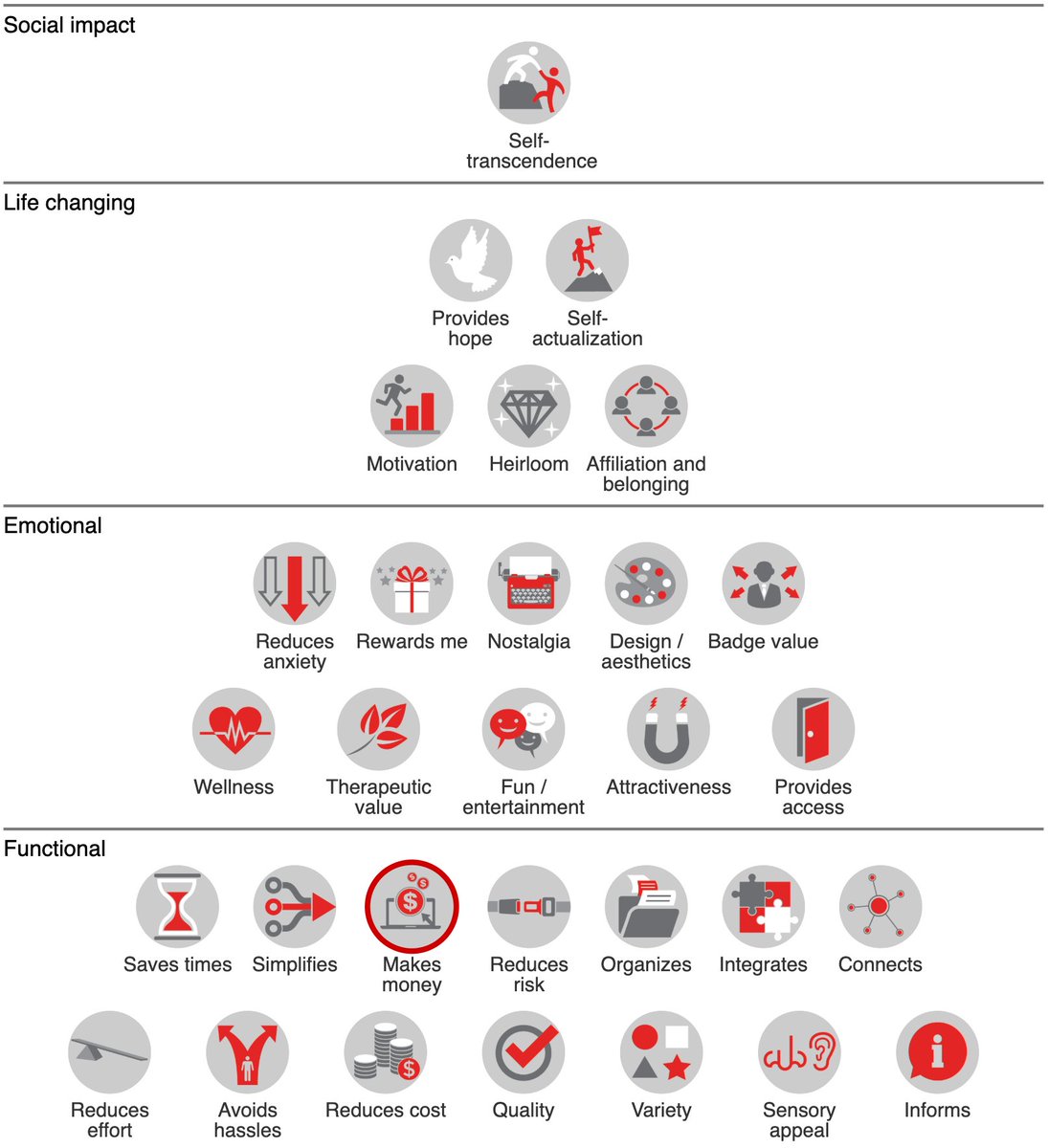
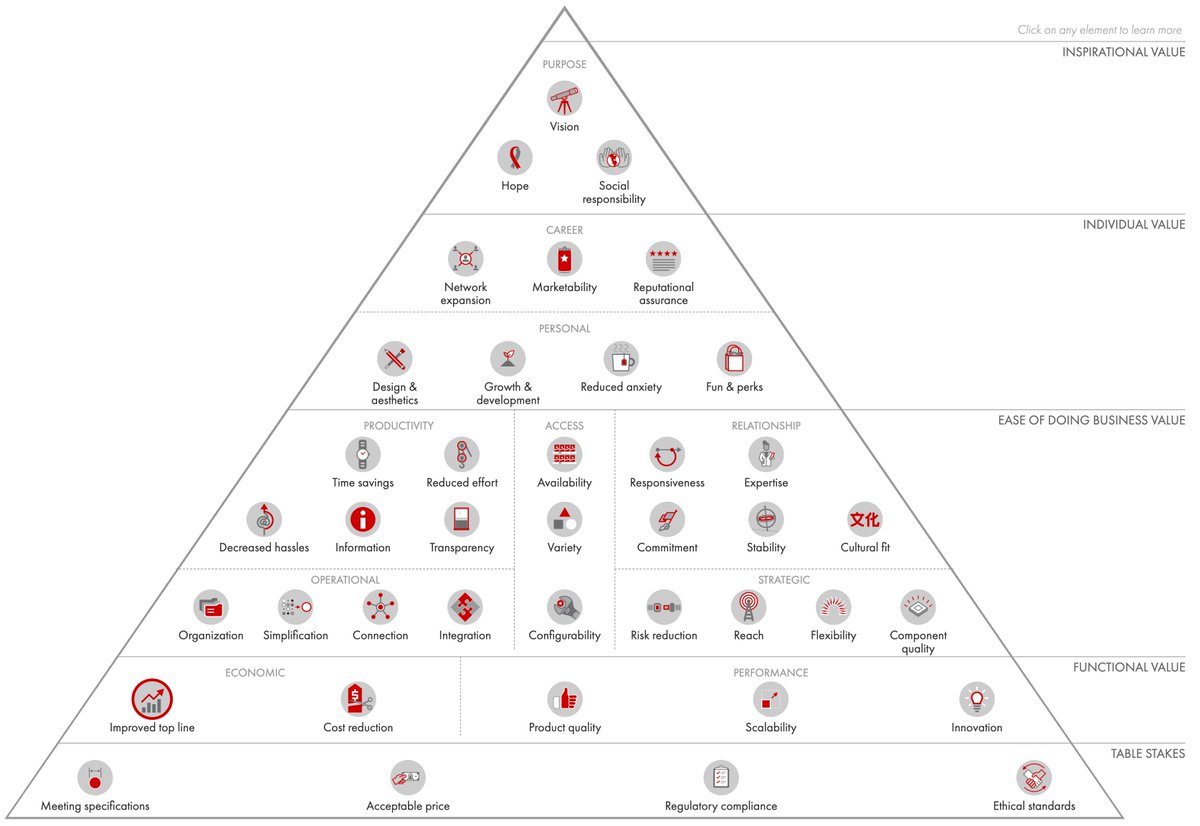
From here:
media.bain.com/elements-of-v…
And here:
media.bain.com/b2b-eov/#
A starting point for making value concrete when modelling a product.
150
7 Sep 2025
For extreme clarity of thought building value: Logic Model from 1967. Invented to get non-profit donations in social work. Outcomes are behaviors you can observe and measure. Impact are results you can measure but can't observe. Every chain is a hypothesis not a fact.
1
135
6 Sep 2025
Discourse around evals is funny. They're the unit tests of AI engineering. Good to have some coverage.. Wouldn't base my roadmap on them. TDD useful for gnarly bits.
362
13 Aug 2025
This is an excellent succinct way of putting it! I do NOT think it is correct. In my opinion there’s a variety of “intelligences” and we haven’t discovered the type responsible for creativity. Just because it creates outputs like our brain, doesn’t mean it thinks like our brain.
13 Aug 2025

If quality of output is not a function of intelligence (intensity/level), but of effort expended by a sufficiently capable intelligence, then:
LLMs don't need to be smarter than humans, they just need to be cheaper, faster, more abundant and scalable. Which they will be.
1
344
13 Aug 2025
I still need to reconcile with Sreeram’s perspective though to see whether I should update my beliefs
14 Feb 2023

AI Creativity. A hypothesis.
tl;dr AI creativity will flourish in domains where there is a high-speed oracle of fitness. In subjective domains, recommendation systems may provide such an oracle.
245
12 Aug 2025
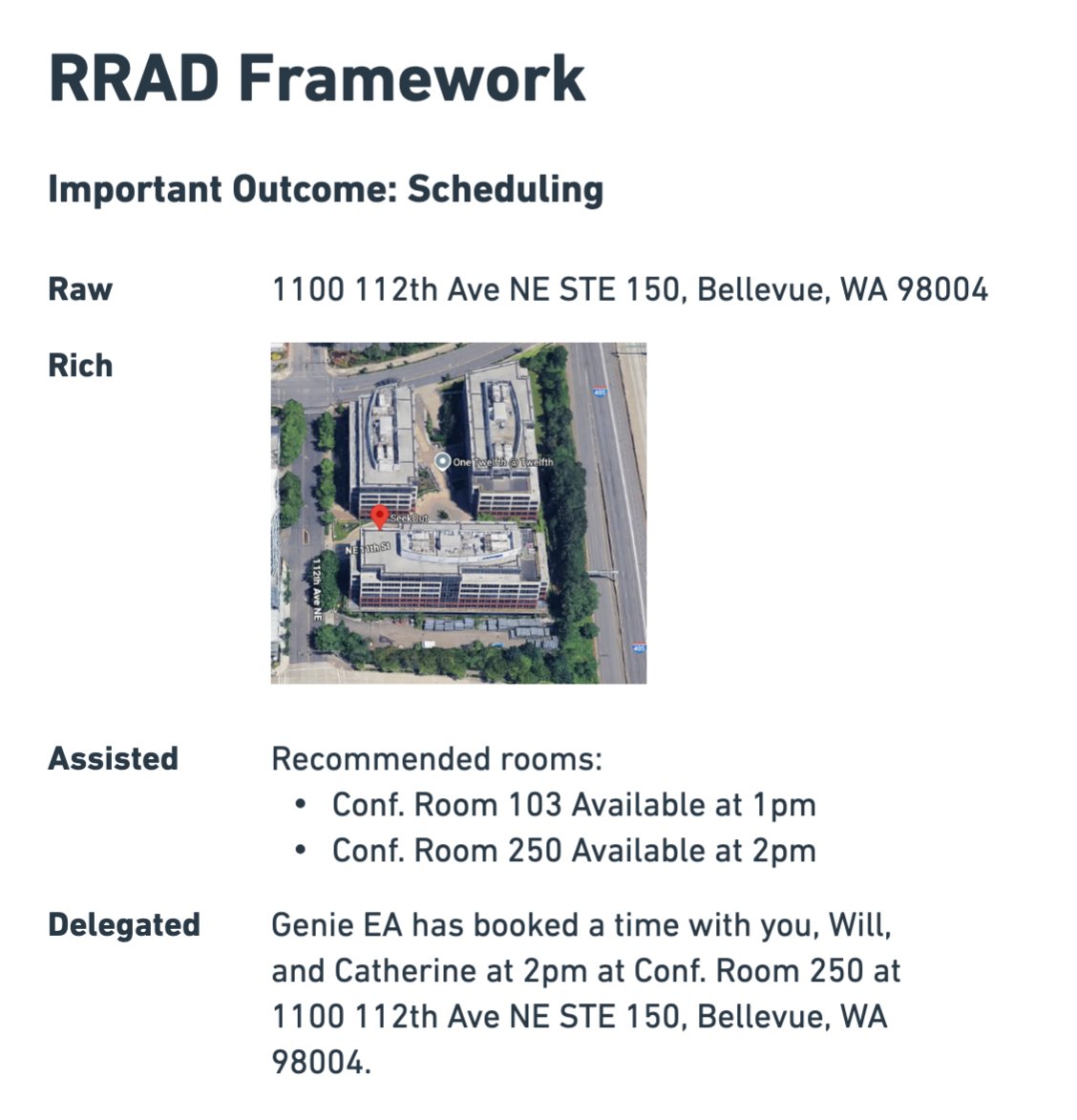
RRAD framework for building AI products that people actually love using.
1. Think through important outcomes.
2. Enrich the entities along those paths.
3. Recommend relevant entities at the right time.
4. Delegate task to agent only when high confidence.
3
1
440
12 Aug 2025
Each step builds on the previous step. In the example graphic, the outcome is scheduling a meeting. Here's how the AI driven UX can be developed:
=Raw=
The raw entity is the address which is represented as text.
=Rich=
You can then enrich that text with surroundings, travel time based on traffic, available conference rooms, show it on a map, and so on.
=Assisted=
Then when someone's scheduling a meeting in your system, you can recommend the top three relevant times and places to meet based on context. This is where you use traditional machine learning along with LLMs.
=Delegated=
Lastly, if you're very confident in your AI's ability to assist with finding a time based on the schedule, a place based on the context, and perform that multi-turn action on your behalf, you can delegate it to an agent.
If you skip steps, you inevitably create AI slop. A human being couldn't do it without the proper rich context, so how could AI?
100
12 Aug 2025
Might build a bunch of these in the coming nights & weekends if I can't find products that already do this. Really need some of these to improve the quality of my life...
12 Aug 2025

Here's some from my idea book but can only do one thing at a time 😥:
- MyMind like extension that summarizes and organizes your browsing saves/bookmarks to decide what to learn and read using AI.
- Talk to computer and thoughts are organized live on a tldr canvas side by side to a rich markdown render for individual brainstorming and collaborative sessions.
- Community browser: download Reddit dataset, organize all the communities and micro-communities by clustering, understand outcomes, problems, trends.
- Turn AI tools like VEO 3 image generation to start creating rich micro films all the way out to full films as models get better.
- Build the context engine inside of Augment Code and turn it into a command line tool that can be used in all the agents.
- Life goal organizer to go from high level to low level times on the calendar and examine against how time is actually spent to see how you're progressing towards happiness, success without pushing.
- AI event planner for people who are spontaneous and wish they would have something organized for the weekend but are too busy to research all that and plan, kind of how rich people have chief of staff do.
117
12 Aug 2025
30 May 2025
AI UX pattern @tonyyoox & I created working on Outlook in 2016:
Raw => Rich => Assisted => Delegated
e.g.:
raw: location text
rich: loc on map, conference room w/availability
assisted: suggestions based on time & attendees
delegated: agent schedules, asks for help if in trouble
92
12 Aug 2025
Most of my early thoughts are little squiggly shapes that then materialize into semi-coherent thoughts and visuals. Then I have to iteratively refine until I can explain it well. Then finally 10x effort to communicate it in a way that’s compelling and clear.
1
90
12 Aug 2025
It seems most of my creativity through association and envisioning happens this way. Sleep does some sort of processing to this as well.
1
83
12 Aug 2025
LLMs currently forward propagate in a hyper dimensional space on repeat. In->Out->In->Out w/stop token. Emergent properties well beyond token prediction that allow it to do such detailed token prediction. Unclear whether 1% thin sliver or 50% of human like thinking occurs.
101