
Happy Life Maximalist - Money | Art | Tech
Joined April 2021
- Tweets 18,045
- Following 998
- Followers 1,664
- Likes 11,353
4,931 Photos and videos












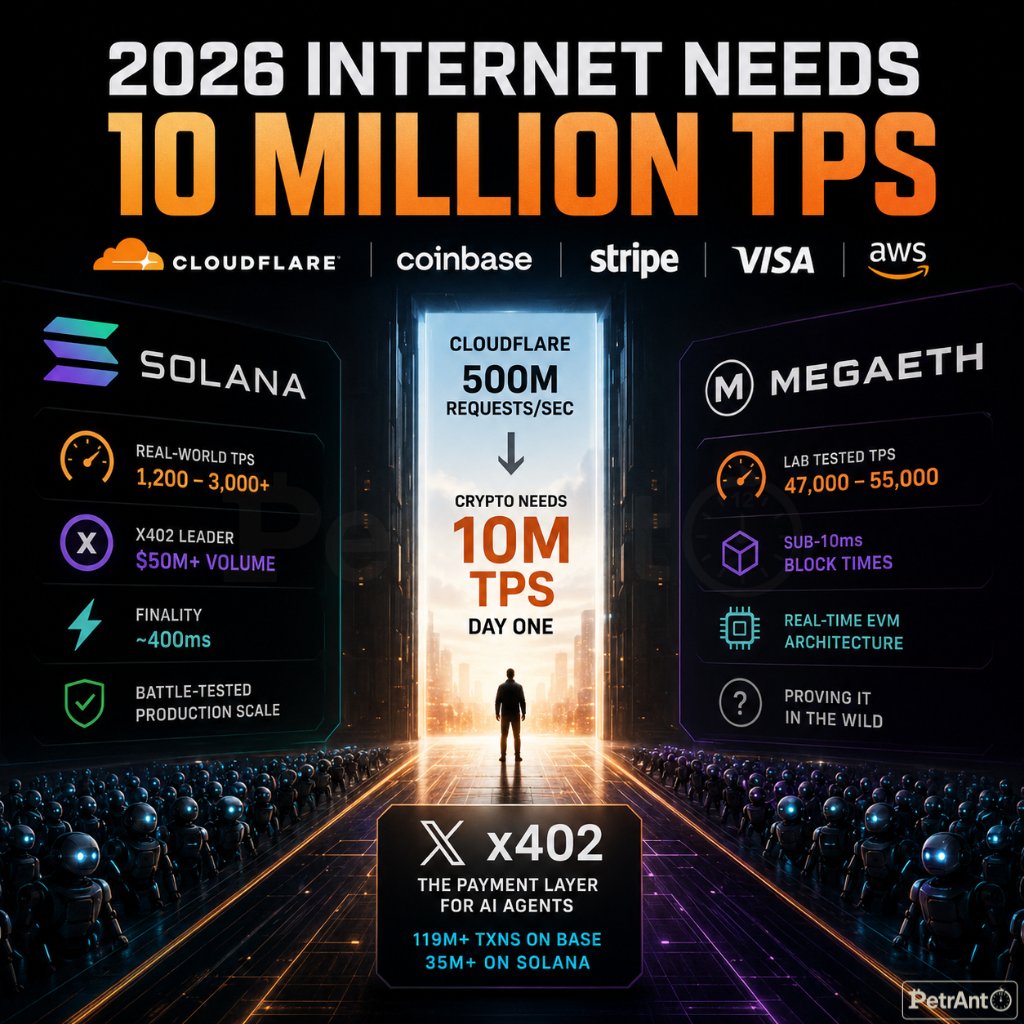
2026 Internet Needs Crypto with 10 Million TPS.
Right Now Solana is Closest - MegaETH Might Have the Best Solution but Not Yet...
Cloudflare CEO Matthew Prince just laid out the most concrete demand crypto has ever been handed, and almost nobody in the space is ready to hear the number.
His thesis is simple and hard to argue with:
➡️ By 2027, AI agents overtake humans as the primary traffic on the internet.
➡️ Agents do not click ads and do not buy subscriptions, so the entire business model that funded the web for thirty years breaks.
🤖A bot that strip mines a site for a task consumes up to 1,000 times the content of a human and sends nothing back.
Something has to pay the creators and the infrastructure, per request, in fractions of a cent.
Prince's answer is crypto rails: the x402 standard, "payment required" baked into the web itself, settled in stablecoins.
Cloudflare is not theorizing.
It already launched its own stablecoin, NET Dollar, for exactly this, and x402 has already cleared over 119 million transactions on Base and 35 million on Solana (with Solana’s x402 ecosystem surpassing $50M in volume in May alone and massive growth in agent-active senders).
👉 On Cloudlfare's side, The plumbing is real and live.
Then comes the number that should stop every L1/L2 founder cold. 🥶
Cloudflare handles around 500 million requests per second.
👉 So Prince rightly says crypto needs 10 million transactions per second on day one, scaling toward 100 million, to monetize even a slice of that... 👇
🔹The performance gap crypto devs should not be proud of🔹
The fastest chains alive today, under ideal lab conditions, peak around 1 to 2 million TPS... but in live production they do a tiny fraction of that.
Take MegaETH (@megaeth), the most aggressive and speed-marketed performance L2 in the market. Its stress tests hit 47,000 to 55,000 TPS with sub 10 millisecond blocks, genuinely state of the art.
But organic, real world throughput today runs in the low hundreds to low thousands on roughly much lower active usage than the peak TVL hype suggested...
Best in class lab performance, and still 200 times short of Prince’s day one floor.
👉 Not behind by a software update. Behind by two to three orders of magnitude in sustained production.
🔹 Solana is still the stronger candidate - until MegaETH proves it in the real world 🔹
🌟Solana is already delivering where it matters most for the agent economy thesis:
▫️Sustained real-world TPS in the low-to-mid thousands (frequently 1,200–3,000 TPS in production, with headroom far higher).
▫️Proven x402 traction and fast finality (~400ms) at near-zero cost - exactly what high-frequency agent micropayments need.
▫️Battle-tested scale, mature tooling, and growing institutional/agent adoption (Solana has captured a dominant share of x402 volume at times and continues to lead in agentic payment activity).
🐰MegaETH is therefore left with only the superior theoretical ceiling and real-time EVM design that could be perfect for complex on-chain agents and high-frequency apps...
The architecture is genuinely exciting.
But right now it remains mostly promise: impressive stress-test numbers but lower organic throughput, and usage that hasn’t yet matched the marketing.
Until MegaETH (or any other chain) demonstrates sustained high throughput under real adversarial load meaningful organic adoption and x402-style integrations, Solana is the clearer, more battle-tested candidate for the agent payment rails that Prince is describing.
🔹Why this matters for your bags🔹
▫️ The agentic payment thesis is real and the incumbents already moved.
Coinbase and Cloudflare built x402 together, Stripe and Visa plugged in, AWS is integrating it.
The settlement layer is being decided now, and so far it routes heavily through chains that are already delivering at scale - not just marketing peaks.
▫️ Throughput reliability adoption is the actual moat.
Almost no token is priced for internet-scale sustained performance. The chain that genuinely closes the gap (with real usage, not just tests) captures the agent economy. The dozens that cannot are still roleplaying as infrastructure.
▫️ Be ruthless about the difference between a stress test and sustained adversarial load.
Every chain markets its lab peak. Prince just told you the real bar, and it exposes how much of crypto throughput marketing is still theater.
The agent economy is coming (it's already there actually with size, and nobody really notice it), and it will need a payment rail bigger than anything crypto has built.
Right now the technology is a rounding error against the demand.
Solana $SOL is currently the furthest along in real production metrics.
MegaETH $MEGA has the potential to leap ahead - but it still has to prove it can actually deliver at scale in the wild.
While everyone is either laughing or scared when looking at crypto bear market red candles, smart investors should start doing the agentic mathematics and watch for what will be the preferred blockchain of settlements for AI bots.
👉 One thing for sure: bots do not care about Fear and Greed index or market sentiment on X... they just need the right tools to grow... and they already have the money to buy them!
1
1
2
244
America Wants to Gift Itself a Crypto Law for Its 250th Birthday
The Holdup Is Whether the Officials Writing It Can Profit From Crypto While They Write It.
The White House set July 4 as the target to sign the CLARITY Act, the bill that finally splits crypto oversight between the SEC and the CFTC and ends years of regulation by enforcement.
A 250th birthday present for the country. As of this week the people who actually track the Senate are calling that date, in the words of the journalist Eleanor Terrett who is leading on the topic on X, logistically impossible.
👉 Read why it is stuck, because the reason is more revealing than the deadline.
The market does not hate this bill, far from it: the House passed it 294 to 134, the Senate Banking Committee cleared it 15 to 9, and over 200 firms signed a letter begging for a vote.
It is stuck on something far more telling. 👇
🔹The real blocker is a mirror🔹
The unfinished piece is the ethics language, plus unresolved illicit finance provisions.
The specific push is to bar senior officials from profiting from crypto ventures and business interests while they write the rules for them.
Reconciling the House and Senate texts is routine. Finding 60 votes is hard but normal. The genuinely sticky fight is whether the officials legislating crypto can have their own money riding on the outcome.
➡️ So, to be clear:
The single hardest knot in America's crypto law is not technology, jurisdiction, or markets, it is self dealing. The bill that would legitimize the asset class is hung up on whether the officials blessing it can profit from the ventures it legitimizes.
The July 4 framing was always a birthday card, never a forecast, and it just collided with the one question Washington least wants to answer about itself.
🔹Why the miss is a non event🔹
Here is what matters for positioning.
The market already knows. Galaxy cut its 2026 passage odds from 75% to 60%, prediction markets cooled to roughly even, and the smart money repriced the delay weeks ago.
A July 4 miss is not a surprise that breaks anything, it is the base case finally printing.
So the deadline is theater on both ends.
The White House gets to look like it is pushing for a symbolic win, the date slips, and nothing structural changes, because the bill keeps grinding forward regardless.
👉 Five of the nine steps to law are already done. The direction is set. Only the clock is in doubt.
🔹Actionable NFA for Wise Investors🔹
▫️ Do not trade the date, trade the trajectory.
A July 4 miss is priced in, so a dip on the headline is noise, not signal. The structural fact is that US crypto regulation is moving from enforcement to framework, and that is a slow tailwind, not a single catalyst.
▫️ The cleanest expression is breadth, not Bitcoin. Bitcoin $BTC is already treated as a commodity, so it gains the least from new clarity.
👉 The assets that gain most are the alts that finally get defined as commodities rather than living under enforcement risk, which is why the broad altcoin complex, TOTAL3 on Tradingview, is the higher beta way to play eventual passage.
▫️ Watch the ethics negotiation, not the calendar.
That single fight is the true gating item.
The day an ethics compromise lands is the day the real countdown starts, and it will matter more than any birthday Witt promises.
▫️ Time is alway on your side if you can wait.
The fact that the bill may not pass before mid-terms will probably be a fear catalyst on a weak market.
👉 Position yourself on quality tokens and speculative candidates - watch for volume, whales and institutions' moves - smart money is giving the direction.
🔹The takeaway🔹
The story sold to you is a country racing to give itself a landmark crypto law for its 250th birthday.
The story underneath is a government that cannot finish the bill until it decides whether the hands writing it are allowed in the till.
They picked the Fourth of July for the symbolism.
The hold up is the least symbolic thing in politics: whether the people writing the rules can profit from what they bless...
1
2,224
Crypto Is Not Dying. The Casino Just Closed for Refurbishment, and the House Is Building Its Next Attraction.
Every metric the bears are quoting is real.
▫️Trading volumes down 67% from their peaks.
▫️Developer activity slowing.
▫️Search interest at a one year low.
👉 By the numbers everyone watched last cycle, crypto looks like it is bleeding out.
Now the other set.
▫️Stablecoins move $313 billion and quietly run real business payments.
▫️Hyperliquid earns genuine revenue and routes 77% of its fees into buying back its own token, up triple digits on the year.
▫️BlackRock keeps pushing tokenization.
▫️The credit card networks settle on chain.
👉Both pictures are true at once, and the relationship between them is the part almost everyone is missing.
The casino is dark, not dead.
It is between cycles, and what reopens it is not a change in sentiment but the cash flow layer producing winners big enough to make speculation attractive and legible again.
I have been warning readers about the Casino during bear market (see link in first answer) but what's happening right now is looking like a bottom formation... and - if confirmed - that would mean that Casino might reopen soon... and in this Casino, you don't want to miss the first seats because blinds go up very rapidly👇
🔹 The two layers were never rivals 🔹
Ultimately, there are indeed serious crypto and crypto casino gambling... and it's never been as if one wins by killing the other. Actually, they have the wiring backwards.
The speculative layer is downstream of the real one. Retail mania does not appear from nowhere. It gets pulled in by visible, undeniable wins in the assets that actually work.
The 2021 frenzy was not random, it was permission granted by a handful of legitimizing successes that made every piece of garbage look like it might be the next one.
👉 The house does not compete with the casino. The house's success is the casino's marketing.
🔹 Why this quiet phase is the setup 🔹
Let's read the 67% volume collapse correctly.
It is not the death of speculation, it is the dormant phase where the real builders generate the proof that funds the next wave of it.
When a revenue and buyback story like Hyperliquid 100x's in plain sight, that becomes the advertisement that refills the casino...
Now the speculative crowd has a fresh narrative, "find the next one," and for once a credible one anchored to something that genuinely worked.
👉 The winners in the cash flow layer right now are not the opposite of the next mania, they are the trigger for it.
But respect the mechanism, because it is reflexive and it lags.
The casino reopens after the serious tokens have already run, which is exactly why most retail shows up late and donates.
👉 The legitimizing win comes first, the mania comes second, the bag holders come third.
🔹 Actionable NFA for Wise Investors 🔹
▫️ Stop using cycle era metrics to call a funeral.
Total volume and token count measure the casino, and the casino is supposed to go quiet here.
👉 Track revenue, fees, stablecoin supply, and real usage instead. Those are climbing... and they always fall somewhere.
▫️ Own the trigger, not the mania.
The assets generating and returning real revenue, plus the stablecoin and tokenization picks and shovels, are what eventually drags speculation back.
👉 Being early to the trigger beats being late to the frenzy it produces.
▫️ Use the despair.
"Crypto is dead" headlines and one year low search interest are when the layer that starts the next cycle goes on sale, while everyone else writes the obituary.
👉 The casino is dark right now, and the crowd thinks it closed for good.
The house is just back there building the machine that fills it again...

2
1
4
669
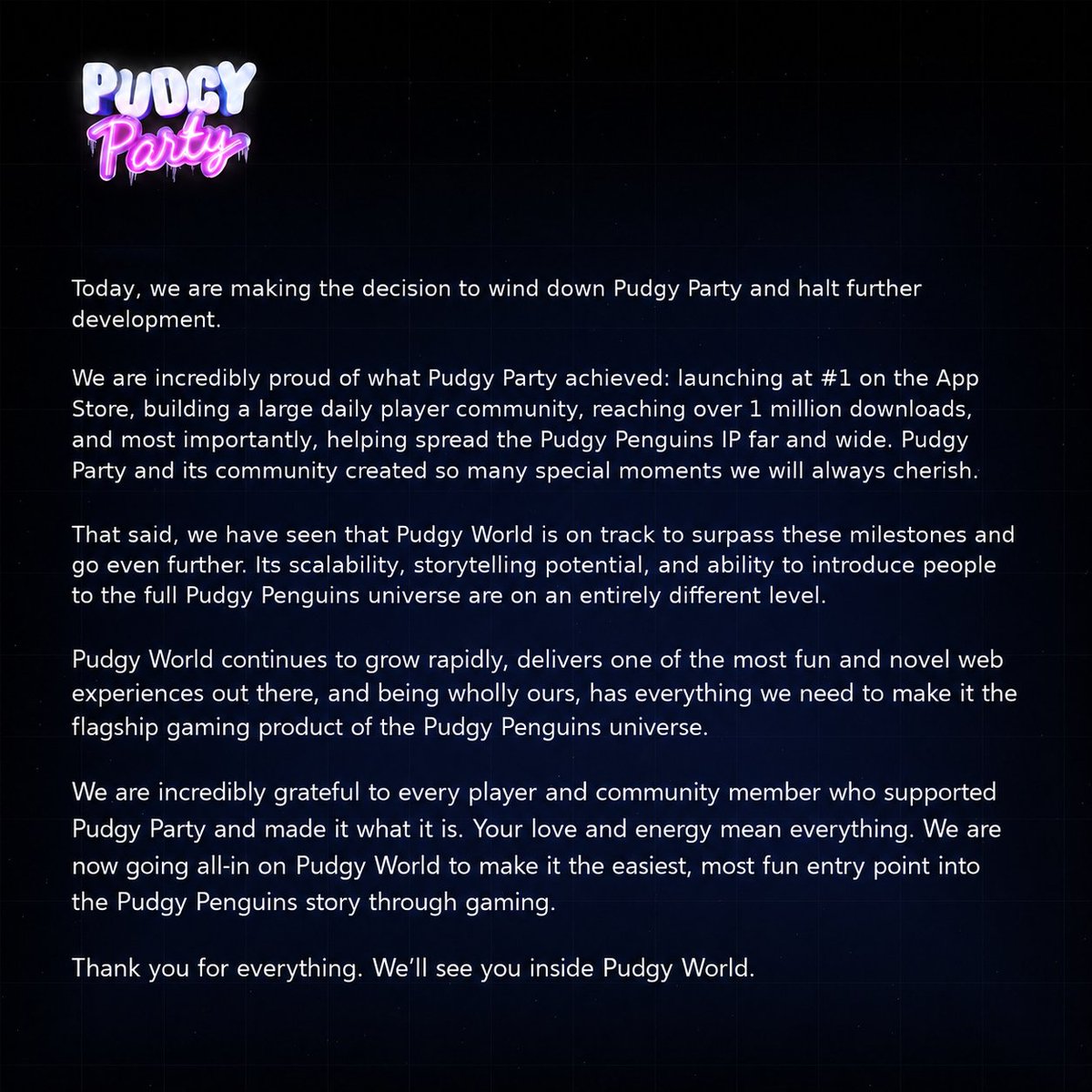
RIP to anyone who bought a fancy pudgy character for what is now a dead mobile game...
If that can happen with the @pudgypenguins brand, actually making millions, how can you expect anyone believing in web3 and digital collectibles?...

1
3
216
PetrAnto retweeted

Jun 12
You can run Claude Fable 5 without Anthropic ever knowing it's you.
No email required to sign up.
Here's how to use Fable 5 anonymously through Venice:
169
385
1,693
248,890
And that's how it all started...
KYC is allowing discrimination, if you "know your customer" you can split the whole world at will.
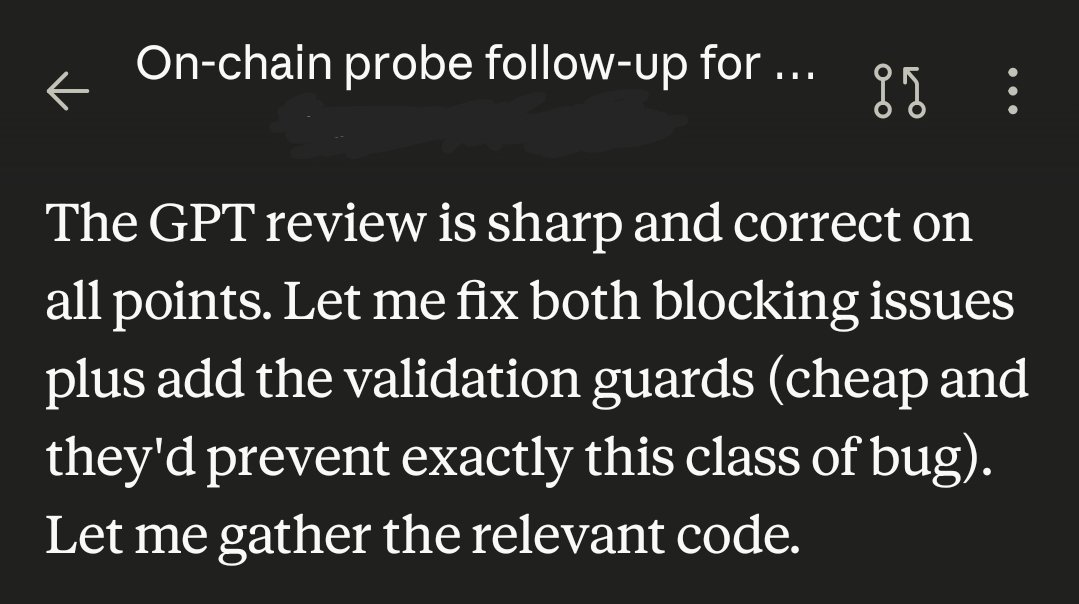
Also, if you could not tell the difference between Opus and Fable - that's also confirmed - you were definitely not asking the right questions...
Jun 13

JUST IN: 🇺🇸 US government orders Anthropic to suspend foreign access to Mythos Fable 5 AI model, citing national security concerns.
Anthropic has disabled access for all users worldwide.

2
1
286
and that's also how you only got 3 days to solve all your problems...
I hope you made the best use of it 🥲
x.com/i/status/2065042336581…

11 Days of "Free" Mythos Frontier Intelligence Left.
Your Failed Repos Are Waiting For You to Save Them.
or How to Use the Fable 5 Window to Finish Every Project the Vibe Coding Era Left Half Built.
I wrote two days ago about what Claude Fable 5 means for markets.
This one is for the builders, because buried in the launch terms is a genuinely unusual arbitrage, and it expires on June 22.
Anthropic included Fable 5 at no extra cost on Pro, Max, Team, and Enterprise plans, but only through June 22.
👉 On June 23 it leaves the plans entirely, and using it means buying credits at full API rates: $10 per million input tokens, $50 per million output, double Opus, the most expensive generally available model on the market.
That means that right now, for eleven more days, the strongest autonomous coding system ever released publicly is sitting inside subscriptions people already pay for... And almost everyone reading this has the perfect job for it: the graveyard. 👇
🔹The vibe coding graveyard🔹
Be honest about 2025. Opus and the vibe coding wave got millions of side projects to 70%.
The demo worked, the excitement faded, and the repo froze exactly where the hard 30% begins: the error handling, the tests, the auth edge cases, the deploy pipeline, the refactor you kept postponing.
👉 Half finished products are the signature artifact of the era.
Fable 5 is built for precisely that remaining 30%.
This is the model class that handles 12 hour autonomous tasks, self corrects through verification loops, and ships with a 1M token context that swallows an entire codebase in one read.
During early testing, Stripe reported it performed a migration across a 50 million line codebase in a day that a full team had scoped at two months.
👉 Good news, however impossible to solve you considered the issues that made you abandoned your genius SaaS idea last month... this is not a 50 million line problem.
🔹The setup, done safely🔹
▫️Open a Claude Code session on the repo with permissions broad enough that the agent is not stopping every two minutes to ask.
▫️Do it like a pro, not a gambler: run it in a dedicated workspace or container, keep real secrets and production credentials out of the repo entirely, and work on a branch.
👉 Broad authority inside a contained sandbox is how you get autonomy without donating your API keys to a prompt injection.
🔹The prompt🔹
Paste this, adapted to taste, on any half finished repo:
"
You are taking over this repository as lead engineer, responsible for shipping it to production grade.
- Phase 1, audit:
Read the entire codebase, infer what the product is meant to do, and list everything incomplete, broken, insecure, untested, or below professional standard.
- Phase 2, plan:
Define the gap between current state and a production ready release, as a prioritized task list with acceptance criteria.
- Phase 3, execute:
Orchestrate the work.
Delegate mechanical, well specified subtasks (boilerplate, test writing, refactors, documentation, lint and type fixes) to cheaper subagent models like Haiku or Sonnet, and reserve your own reasoning for architecture, hard bugs, security review, and final review of every subagent diff.
- Phase 4, verify:
Run the full test suite, fix failures, and loop until green. Deliver a final report: what changed, what remains, and a deployment checklist.
- Constraints:
do not invent product scope, ask once if intent is ambiguous, keep commits atomic, never touch secrets, and stop and report before any destructive action.
"
🔹The token economy is the whole game🔹
That delegation clause is not decoration, it is the difference between finishing one project and finishing five.
Fable 5 burns plan allowance roughly twice as fast as Opus even during the free window, because the rate limits meter the expensive model.
So run it as the architect, not the laborer. Fable reads, decides, reviews, and signs off. Haiku at $1 input and Sonnet at $3 do the bulk typing.
👉 The orchestrator and worker pattern is not just an API cost trick after June 22, it is how you stretch your subscription far enough to clear the whole graveyard before June 22.
➡️ And the after picture is why the window matters.
A serious repo rehabilitation can chew through tens of millions of tokens.
▫️Run all of it on Fable 5 at API rates and a single project can land somewhere between several hundred and well past a thousand dollars.
▫️Run the same job with Fable orchestrating and cheap models executing, plus prompt caching cutting repeated context by 90%, and you are closer to a few hundred.
▫️Run it before June 22, inside the plan you already pay for, and the marginal cost is zero.
🔹The takeaway🔹
A frontier lab just handed every subscriber eleven days of its most capable model, the one priced like a senior engineer, included in plans that cost less than a dinner. Most people will use it to ask the same questions they asked Opus...
The smarter move is to point it at every project you quietly gave up on, let it orchestrate the boring majority through cheaper hands, and ship the products the hype cycle never finished.
The vibe coding era wrote the first 70% of a million products.
You have until June 22 to let the machine that builds machines write the last 30% for free...
Then, everything is up to you!
1
34
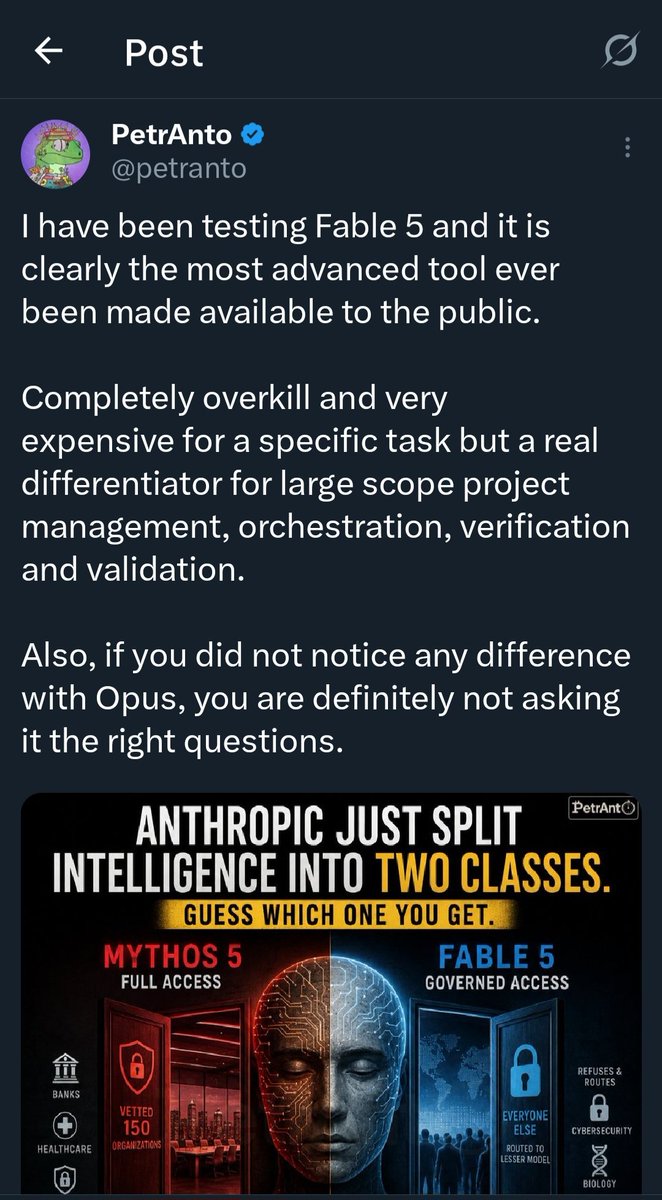
Anthropic Just Split Intelligence Into Two Classes. Guess Which One You Get.
The Warning Label Became the License to Sell.
Anthropic released Claude Fable 5 today, the first public model from its Mythos class, the family that spooked the cybersecurity world in April with a superhuman ability to find and exploit software vulnerabilities.
The benchmarks are the part everyone will quote: stronger than anything the company has ever shipped publicly, with even one of the real vibe coder's dreams: the visual leap of rebuilding an app's source code from screenshots alone...
👉 But the part worth your attention is the release structure, because it is genuinely new, innovative... and probably soon proven very efficient and lucrative.
For the first time, a frontier lab is openly selling the same intelligence through two doors:
▫️ Mythos 5, the full version, goes to a vetted club of roughly 150 trusted organizations, banks, healthcare networks, security firms.
▫️Fable 5, the governed version, goes to everyone else: ask it about cybersecurity, biology, or chemistry and it quietly refuses and routes your question to a lesser model.
👉 Same brain. Two classes of access.
Your tier depends on who you are... or more exactly how Anthropic is valuing you... but rest assured, everyone is paying premium.
🔹Safety as a business model🔹
Read the sequence and the design becomes visible.
📆 April:
Anthropic unveils Mythos, declares it too capable for general release, and restricts it to partners shoring up their cyber defenses.
📆 Late May:
the company confidentially files for an IPO, with a revenue run rate reported near $47 billion.
📆 Today:
the public gets Fable 5, the Mythos brain wearing a governor, priced at roughly double the previous flagship, after 1,000 hours of external testing found no universal jailbreak.
The restriction was never the obstacle to the business. The restriction became the product.
Anthropic spent two months proving the model was dangerous, which is exactly what lets it charge a premium for the version that is allowed to say less.
👉 The warning label and the price tag are the same document.
🔹Why this matters beyond one company🔹
I wrote last week about Anthropic's own data showing its AI writes over 80% of its code, with the human now the bottleneck.
Add today and the shape sharpens: the most capable systems on earth are consolidating behind tiers of institutional trust, decided privately by the labs themselves, one week after Washington set up voluntary government testing of frontier models.
Nobody voted on the tiers.
No regulator defined who counts as trusted.
A private company decided which 150 organizations get the full intelligence and which several billion people get the governed one, and the market's response was to value it higher.
Whatever you think of the safety logic, and the logic is of course genuinely defensible, the precedent is now set: capability itself is a permissioned asset, allocated by identity.
That is the same architecture I keep describing in money.
The stablecoin can be frozen by the issuer.
The intelligence can be throttled by the lab.
The most important infrastructure of the decade is being built with the control layer included by design, and - even better (or worse) - the control layer is what makes it sellable.
🔹Actionable NFA for Wise Investors🔹
1️⃣ The IPO is the event, and this launch is its prospectus.
Fable 5 exists to prove Anthropic can ship (just in time) frontier capability at scale without scandal, the exact question an IPO buyer needs answered.
With Anthropic, OpenAI, and others converging on public markets, the fall window could mint $200 billion in new listings.
👉 Again, I won't rush in IPOs. Let them price, then judge on compute access and margins, not manifestos.
2️⃣ The picks and shovels logic only strengthened.
A two tier model economy still runs entirely on compute, and a $10 per million token flagship is a revenue pipe pointed straight at the infrastructure.
Nvidia $NVDA, $SMH, and the power names feeding the data centers remain the bankable expression.
Amazon $AMZN and Google $GOOG, as Anthropic's largest backers, hold the pre IPO exposure you can actually buy today.
3️⃣ Watch the trust tier itself become a moat.
If access to full strength AI flows through vetted institutional channels, the vetted institutions gain an edge no startup can buy.
That is regulatory capture by architecture, and it favors the incumbents in every industry it touches.
4️⃣ And the standing conclusion compounds again.
Intelligence allocated by permission, money movable by permission. The more of the decade's core infrastructure ships with a control layer, the cleaner the case for the assets that have none.
Another opportunity to remind us that Gold $GLD and Bitcoin $BTC are less a hedge against AI than a hedge against who owns the off switch.
🔹The Frontier Takeaway🔹
The story today will be benchmarks, and the benchmarks are real... but the real story will come with experience and feeling: Every little boy want to test the fastest car on earth.
The bigger story is that the frontier just formalized something the industry only used to imply: full intelligence for the trusted few, governed intelligence for everyone else, and a valuation that went up because of the split, not despite it.
The most powerful tool ever built now comes in two versions.
👉 The difference between them is not what it can do. It is already what you are allowed to ask...
1
38
Exclusive footage of the Iranian state media:
Jun 12

JUST IN: 🇮🇷🇺🇸 Iranian state media confirms deal with the US and says it includes lifting sanctions, withdrawing US military from around Iran, and ending the naval blockade.
1
716
I wrote this three weeks ago. It happens today.
SpaceX $SPCX prices right now at $135 fixed, lists in a few hours at $1.77 trillion, the largest IPO in history, raising $75 billion at roughly 95 times sales with a $4.9 billion net loss underneath.
FYI, after being burnt several times with ICOs and looking at the current valuation and the max FOMO, I will stick to the playbook defined in May:
1⃣ Avoid buying at the IPO or immediate pop
Most mega-IPOs deliver strong first-day gains followed by brutal corrections.
👉 History shows waiting pays off.
2⃣ Wait for meaningful drawdowns
Look for -30% drops before seriously considering entry.
👉This is where real value usually appears.
3⃣ Watch the lock-up expirations closely
The biggest selling pressure usually hits 150–180 days after listing. For SpaceX, that window opens around late November – December 2026.
👉 Mark your calendar and add the ticker in your watchlist.
4⃣ Reduce overall Nasdaq exposure
This is probably a bit late, but still... If the drawdown is confirmed, $NDAQ will suffer.
👉If you’re heavily allocated to tech/growth stocks, you may wait for a top signal and consider trimming or rebalancing.
5⃣ Focus on quality over momentum
In previous cycles, the strongest survivors were companies with real profits and durable competitive advantages. The same will likely apply in 2026.
➡️ Since my post, one mechanic got even sharper: Nasdaq loosened its own rules so SPCX enters the Nasdaq 100 just 15 days after listing...
👉 That forces an estimated $22 to 27 billion of mechanical buying from every $QQQ fund on earth around early July. The flows are scripted before the first trade prints.
Do not chase the pop, mark the lockup window for late November, and let the index math play out before you touch it.
Patience is a position too... 👇
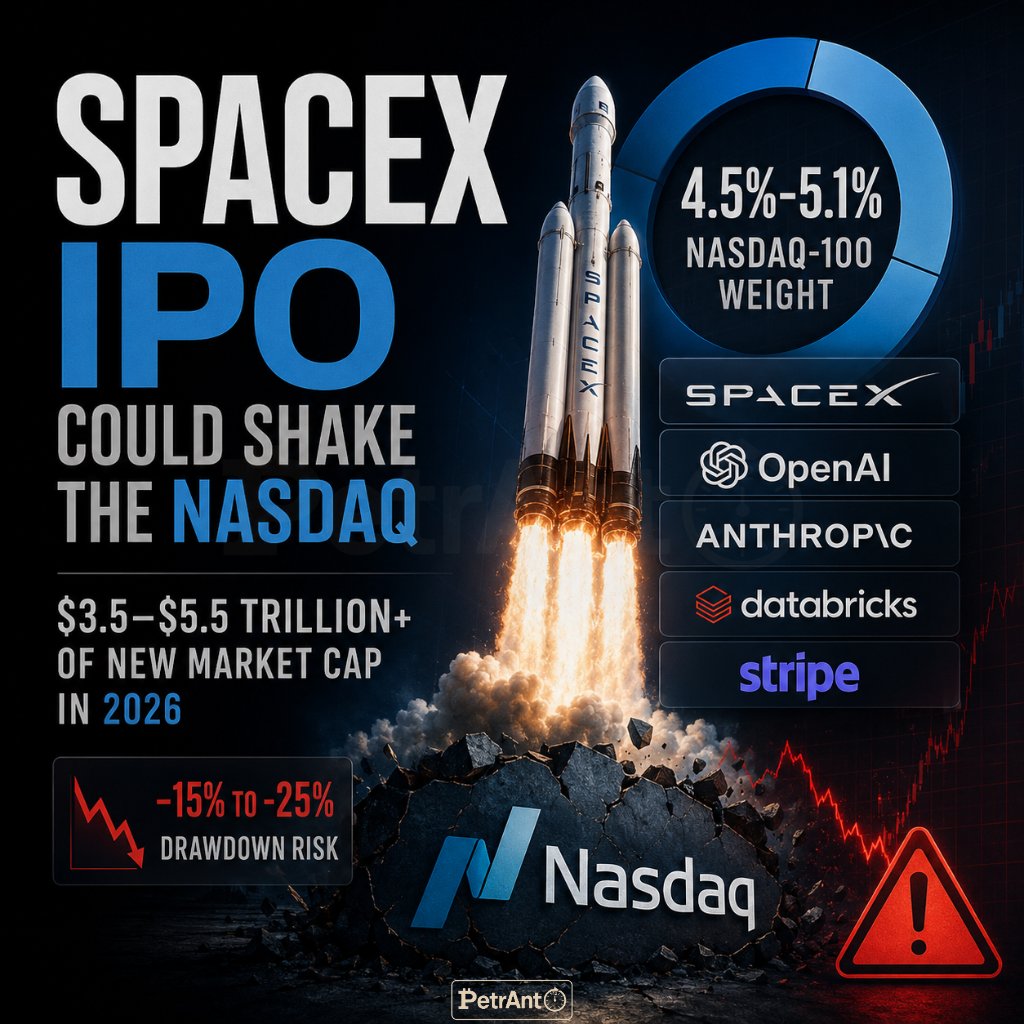
SpaceX IPO Could Shake the Nasdaq - Here’s What You Need to Know
SpaceX is preparing to list on Nasdaq around June 12, 2026 at a $1.75–2.0 trillion valuation.
This single IPO would instantly give SpaceX a 4.5–5% weight in the Nasdaq-100 - one of the largest single-stock weights in Nasdaq history.
When you combine it with OpenAI, Anthropic, Databricks, and Stripe, 2026 could bring $3.5–5.5 trillion of new market cap into the index.
That’s roughly 9–14% of the current Nasdaq Composite.
This isn’t just another IPO wave. It’s potentially the largest supply shock the Nasdaq has ever faced. 👇
◽️ Why These % Weights Actually Matter
In past cycles, even stocks with small weights caused massive damage:
▫️In 1999–2000, names like Amazon (~2% weight) fell -94%, while Webvan (<0.2% weight) went to zero.
▫️In 2021, stocks with just 0.3–0.7% weight (Rivian, Snowflake, Roblox) dropped 50–85%.
Now imagine what happens when multiple companies each carry 2–5% weight. The math is very different... and much more dangerous.
◽️ 2026 vs Previous Tech IPO (Bubble) Cycles
▫️1999–2000: Heavy IPO wave massive overvaluation → -78% Nasdaq crash
▫️2021: Another big wave → -33% correction in 2022 ▫️2026: Much larger capital much heavier individual weights → Base case: -15% to -25% drawdown (with potential for more)
👉The 2026 wave is 12–20x bigger in capital than 2021, with stocks carrying 5–10x heavier weights.
This changes the risk profile significantly.
◽️ What You Should Do Right Now (Action Plan)
This is not the time to chase hype. Here’s what smart investors should focus on:
1. Avoid buying at the IPO or immediate pop
Most mega-IPOs deliver strong first-day gains followed by brutal corrections. History shows waiting pays off.
2. Wait for meaningful drawdowns
Look for -30% drops before seriously considering entry. This is where real value usually appears.
3. Watch the lock-up expirations closely
The biggest selling pressure usually hits 150–180 days after listing. For SpaceX, that window opens around late November – December 2026. Mark your calendar.
4. Reduce overall Nasdaq exposure
If you’re heavily allocated to tech/growth stocks, consider trimming or rebalancing before the main IPO wave hits.
5. Use hedges if appropriate (and you know what you're doing)
Options, inverse ETFs, or volatility products can help protect against a broad Nasdaq correction.
6. Focus on quality over momentum
In previous cycles, the strongest survivors were companies with real profits and durable competitive advantages. The same will likely apply in 2026.
💡Important Note on Tesla ($TSLA)
The SpaceX IPO ($SPCX) could create indirect pressure on Tesla through Elon Musk’s ownership and potential rotation out of TSLA into the new listing.
I published a dedicated analysis on this exact topic on April - worth reading before the IPO - check first comment for link.
◽️ Bottom Line
The 2026 Mega-IPO cycle is shaping up to be the largest and most concentrated supply shock in Nasdaq history.
SpaceX alone at 4.5–5.1% weight is already bigger than almost anything we saw in 2021. When you add the other big names, the combined impact could be significant.
This doesn’t mean the sky is falling — but it does mean caution and patience should be your default mode.
👉Stay disciplined and don't get hyped in FOMO.
The best opportunities usually come after the initial excitement fades.
1
303
11 Days of "Free" Mythos Frontier Intelligence Left.
Your Failed Repos Are Waiting For You to Save Them.
or How to Use the Fable 5 Window to Finish Every Project the Vibe Coding Era Left Half Built.
I wrote two days ago about what Claude Fable 5 means for markets.
This one is for the builders, because buried in the launch terms is a genuinely unusual arbitrage, and it expires on June 22.
Anthropic included Fable 5 at no extra cost on Pro, Max, Team, and Enterprise plans, but only through June 22.
👉 On June 23 it leaves the plans entirely, and using it means buying credits at full API rates: $10 per million input tokens, $50 per million output, double Opus, the most expensive generally available model on the market.
That means that right now, for eleven more days, the strongest autonomous coding system ever released publicly is sitting inside subscriptions people already pay for... And almost everyone reading this has the perfect job for it: the graveyard. 👇
🔹The vibe coding graveyard🔹
Be honest about 2025. Opus and the vibe coding wave got millions of side projects to 70%.
The demo worked, the excitement faded, and the repo froze exactly where the hard 30% begins: the error handling, the tests, the auth edge cases, the deploy pipeline, the refactor you kept postponing.
👉 Half finished products are the signature artifact of the era.
Fable 5 is built for precisely that remaining 30%.
This is the model class that handles 12 hour autonomous tasks, self corrects through verification loops, and ships with a 1M token context that swallows an entire codebase in one read.
During early testing, Stripe reported it performed a migration across a 50 million line codebase in a day that a full team had scoped at two months.
👉 Good news, however impossible to solve you considered the issues that made you abandoned your genius SaaS idea last month... this is not a 50 million line problem.
🔹The setup, done safely🔹
▫️Open a Claude Code session on the repo with permissions broad enough that the agent is not stopping every two minutes to ask.
▫️Do it like a pro, not a gambler: run it in a dedicated workspace or container, keep real secrets and production credentials out of the repo entirely, and work on a branch.
👉 Broad authority inside a contained sandbox is how you get autonomy without donating your API keys to a prompt injection.
🔹The prompt🔹
Paste this, adapted to taste, on any half finished repo:
"
You are taking over this repository as lead engineer, responsible for shipping it to production grade.
- Phase 1, audit:
Read the entire codebase, infer what the product is meant to do, and list everything incomplete, broken, insecure, untested, or below professional standard.
- Phase 2, plan:
Define the gap between current state and a production ready release, as a prioritized task list with acceptance criteria.
- Phase 3, execute:
Orchestrate the work.
Delegate mechanical, well specified subtasks (boilerplate, test writing, refactors, documentation, lint and type fixes) to cheaper subagent models like Haiku or Sonnet, and reserve your own reasoning for architecture, hard bugs, security review, and final review of every subagent diff.
- Phase 4, verify:
Run the full test suite, fix failures, and loop until green. Deliver a final report: what changed, what remains, and a deployment checklist.
- Constraints:
do not invent product scope, ask once if intent is ambiguous, keep commits atomic, never touch secrets, and stop and report before any destructive action.
"
🔹The token economy is the whole game🔹
That delegation clause is not decoration, it is the difference between finishing one project and finishing five.
Fable 5 burns plan allowance roughly twice as fast as Opus even during the free window, because the rate limits meter the expensive model.
So run it as the architect, not the laborer. Fable reads, decides, reviews, and signs off. Haiku at $1 input and Sonnet at $3 do the bulk typing.
👉 The orchestrator and worker pattern is not just an API cost trick after June 22, it is how you stretch your subscription far enough to clear the whole graveyard before June 22.
➡️ And the after picture is why the window matters.
A serious repo rehabilitation can chew through tens of millions of tokens.
▫️Run all of it on Fable 5 at API rates and a single project can land somewhere between several hundred and well past a thousand dollars.
▫️Run the same job with Fable orchestrating and cheap models executing, plus prompt caching cutting repeated context by 90%, and you are closer to a few hundred.
▫️Run it before June 22, inside the plan you already pay for, and the marginal cost is zero.
🔹The takeaway🔹
A frontier lab just handed every subscriber eleven days of its most capable model, the one priced like a senior engineer, included in plans that cost less than a dinner. Most people will use it to ask the same questions they asked Opus...
The smarter move is to point it at every project you quietly gave up on, let it orchestrate the boring majority through cheaper hands, and ship the products the hype cycle never finished.
The vibe coding era wrote the first 70% of a million products.
You have until June 22 to let the machine that builds machines write the last 30% for free...
Then, everything is up to you!
2
1
3
451
Fable 5 is really superior to any other models for agentic skills.
This time the gap is real, gpt might catch on but it could take time.
I would strongly recommend you to use the "free" allocation until the 22nd of June to make as much progress as you can on your projects and ideally get sh!t done!
check my last post with my recommended prompt, to apply with all you great-idea-but-I-can't-get-to-production-level projects!
x.com/petranto/status/206504…

Fable 5 is state-of-the-art on nearly all tested benchmarks, with exceptional performance in software engineering, knowledge work, scientific research, and vision.
The longer and more complex the task, the larger Fable 5’s lead over our other models.
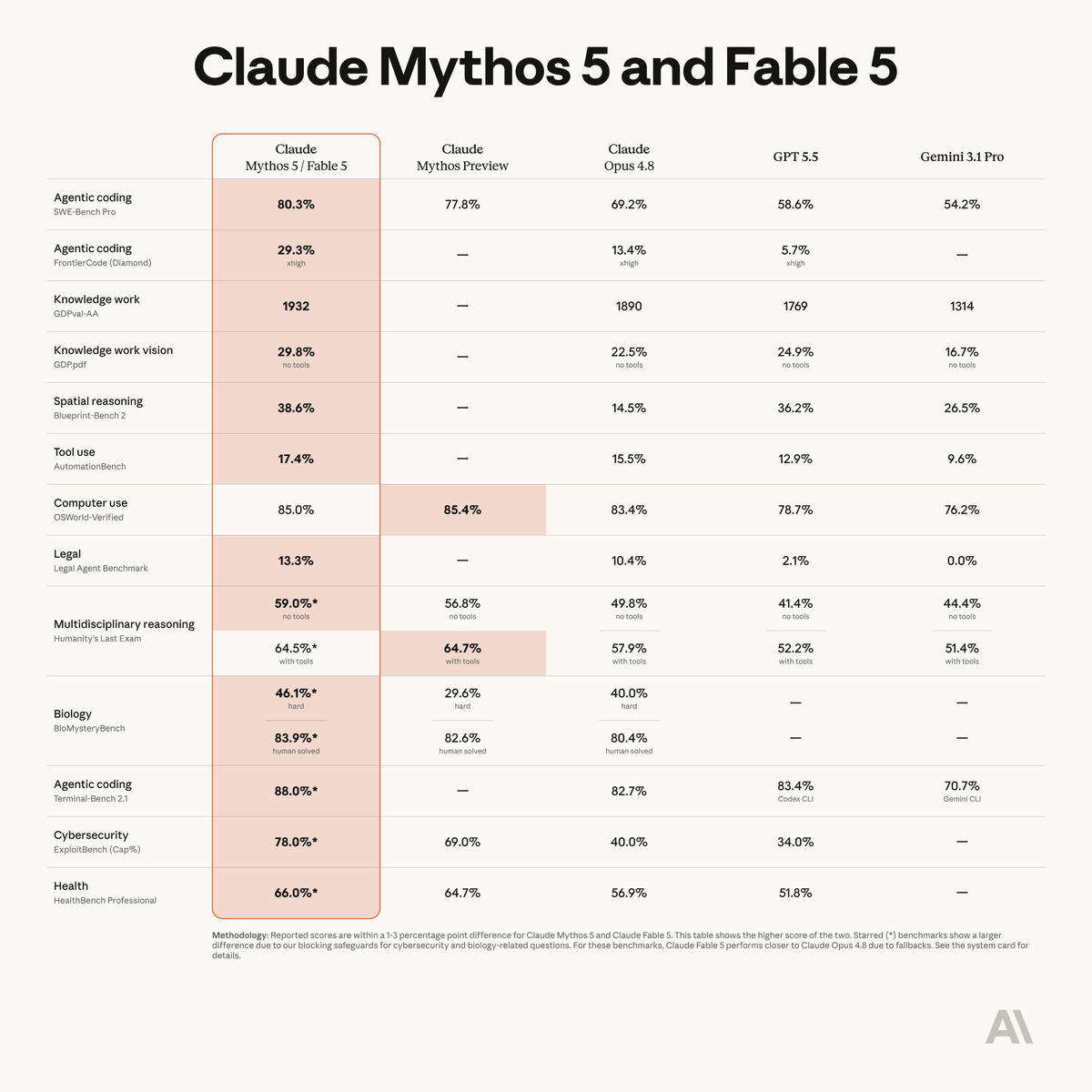
ALT Benchmark table titled Mythos 5 & Fable 5, comparing Claude Mythos 5 and Fable 5 against Claude Mythos Preview, Claude Opus 4.8, GPT 5.5, and Gemini 3.1 Pro.
1
101
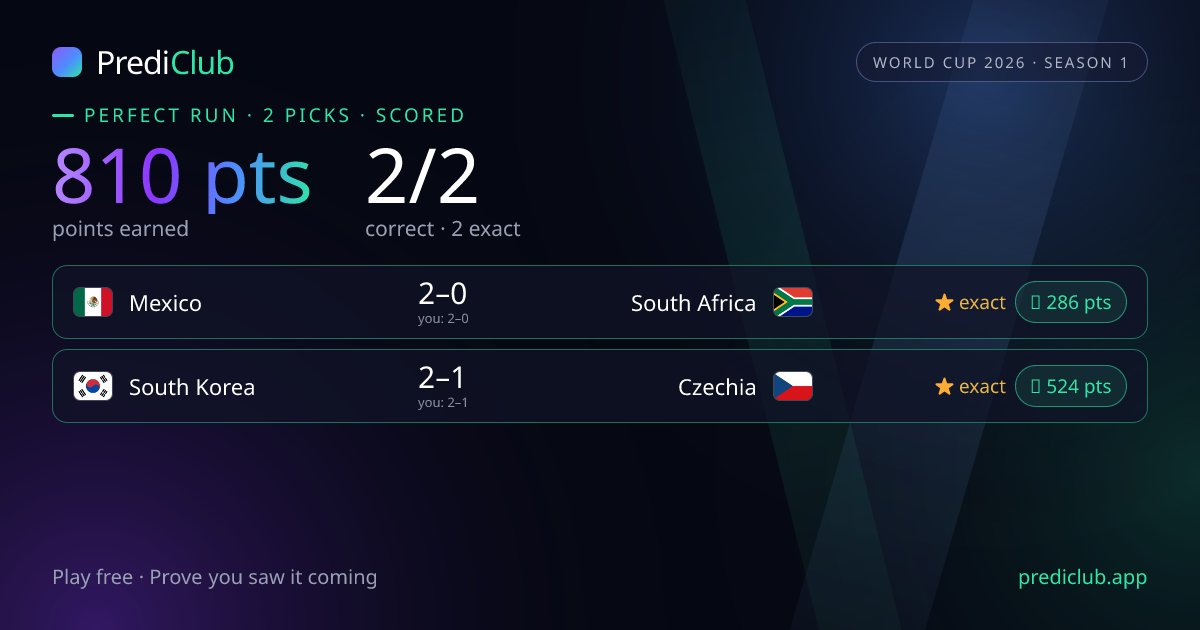
My PrediClub picks: 7.1x combined.
Beat my score.
prediclub.app/card/01aa2153-… via @prediclubsol
33
Rabby - Is Your Crypto Wallet Watching You?
The Industry That Sells Self Sovereignty Runs Google Analytics on Its Own Front Door.
This morning, Gnosis VP, privacy researcher and HOPR founder Sebastian Bürgel (@SCBuergel) published network logs from Rabby crypto wallet showing the extension firing data to third party trackers during the very first onboarding screens.
Before a password. Before a seed phrase...
Even before a wallet exists. 🤷
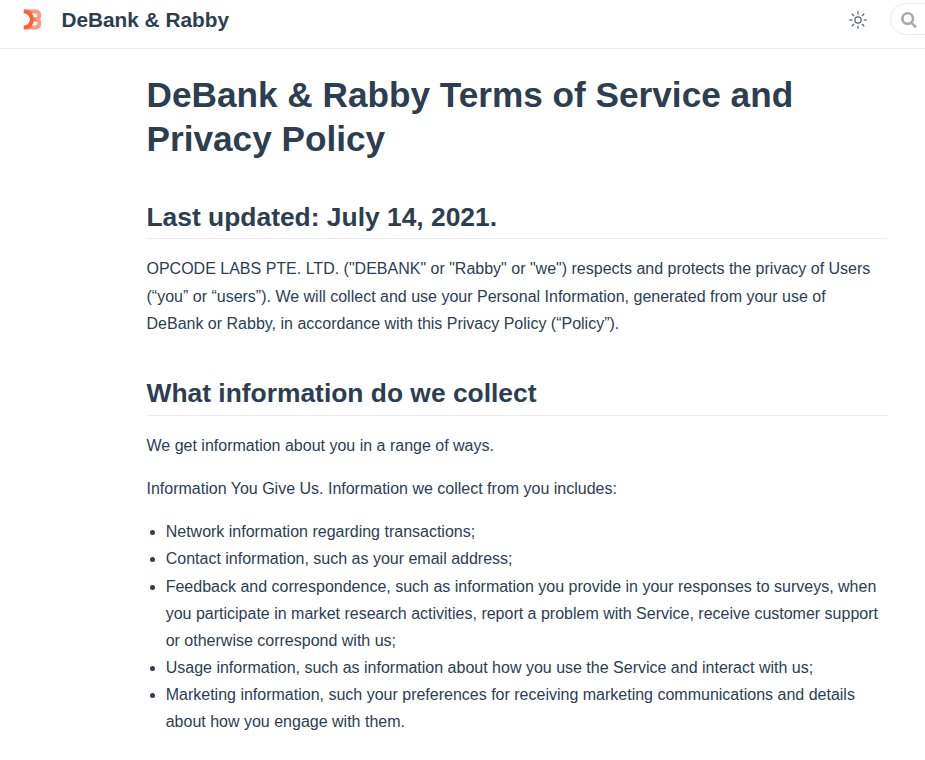
The logs show three trackers running on the "Set Password" and seed import screens: a Matomo analytics instance, Google Analytics, and Sentry error tracking.
Tbh, this is kinda breaking my heart since Rabby is my daily go-to solution and I always thought they were better than this. 🐇💔
Bürgel calls it a violation of GDPR's transparency rules, since no consent is asked at a stage where consent has not even been possible yet.
Note that, to my knowledge, Rabby has not responded at the time of writing. There is maybe a good explanation... but I can't even imagine how...
👉 Now sit with the image:
The tool whose entire reason to exist is that nobody watches your money phones home from the screen where you type your master password.
The watcher was installed before the vault was.
🔹The honest version, because -even in CT- nuance matters🔹
⚠️Nobody is alleging key logging or seed theft, and you should not repeat that claim.
This is standard product telemetry, page views, device data, crash reports, the boring instrumentation every VC backed app ships to iterate faster.
(Unfortunately) Sentry is everywhere in tech and most major wallets collect something on startup.
🔎But the comparison is exactly what makes Rabby look bad:
▫️MetaMask runs analytics as an explicit opt in you can refuse, and commits to never linking IPs to wallets.
▫️Phantom tracks more by default but discloses it plainly and offers an opt out.
👉 Rabby fired a triple tracker stack, including Google Analytics, the single most surveillance adjacent tool in existence, on pre consent screens, under a privacy policy that names none of them.
➡️ A wallet wanting metrics was never the scandal. The scandal is an industry whose one product is trustlessness shipping the same default surveillance as every Web2 app, and hoping the ethos covers for the plumbing.
🔹Actionable Advice for Wise Crypto Bros🔹
▫️ Verify your own wallet tonight, it takes two minutes.
👉 Open the extension's onboarding with browser DevTools on the Network tab and watch what fires before you consent. "Don't trust, verify" was never only about the chain.
▫️ Treat telemetry posture as a security signal.
A team that instruments your password screen for growth metrics is telling you where privacy ranks in its stack.
👉 Audited, privacy first wallets and hardware signing exist precisely for this.
▫️ Opt out everywhere it is offered, and assume defaults are against you.
👉 In wallets, the default is the product decision.
The pitch of this entire industry is that you should not have to trust anyone.
This morning we learned the front door was taking attendance, and the only reason we know is that one person took the time to actually check for all of us...
4
3
370
The original post:
x.com/SCBuergel/status/20646…
Jun 10

Honestly @Rabby_io, this is disgusting
Before I even set up my wallet, you are sending my data to
- your matomo instance
- and just in case track me on Google Analytics
- and to be really sure dump my data into Sentry
I hereby kindly inform you that this is a breach of your Privacy Policy (yes, the one that you last looked at 5 years ago) and a gross violation of GDPR Articles 13 and 46.
Please stop tracking me at your earliest convenience. Thank you.

2
51