
kindness, beauty, calling out informal fallacies, seeking justice and fairness and funny animal pics
Joined March 2011
- Tweets 69,733
- Following 5,714
- Followers 2,617
- Likes 331,855
1,677 Photos and videos











Ms Doe retweeted

Despite the official announcement that a US-Iran Memorandum of Understanding has been reached—which mandates a cessation of hostilities on all fronts, including Lebanon—Israeli attacks have continued to target southern Lebanon since dawn.
Local sources report that multiple southern villages have been hit by artillery shelling and demolition operations, while a booby-trapped armored vehicle was detonated on the main road leading to Haris and Tebnine.
31
444
506
12,262
Ms Doe retweeted

Toronto and Vancouver declined to participate in WW testing while #WorldCupFIFA is in. Surprise surprise! @fordnation already decimated ON WW surveillance and the science table, years ago. All 🇨🇦 cares about is to keep us consuming. @MarkJCarney #FIFAflu
canadahealthwatch.ca/2024/06…

They declined to participate.
2
9
9
344
Ms Doe retweeted

🚨 BREAKING: Lebanon files UN Security Council complaint accusing I$rael of violating the Chemical Weapons Convention in the south
Lab tests from Aita al-Shaab, Naqoura, and Dhaira confirmed catastrophic levels of Glyphosate—a cancer-linked chemical—in agricultural soil.
Normal farming levels would show 0.5 to 2 mcg/g but tests on soil in South Lebanon show 22,750 mcg/g, 11,000 times above safe levels
It has been labeled by some as a deliberate war crime designed to permanently destroy arable border lands.
Here is our report from the scene filmed in February
Feb 7

I$rael once again sprayed cancer-linked chemicals on agricultural land in south Lebanon on Friday, an act condemned as a war crime and a bid to make the border region uninhabitable
Our report from the ground
124
5,424
7,912
140,659
Ms Doe retweeted

I will not vote for any Democrat that doesn't explicitly call for Israel to be sanctioned. This is non-negotiable.
Jun 14

BREAKING: Israeli settlers are burning down the villages of Deir Dibwan and Burqa in the West Bank.
They set a mosque on fire, torched several vehicles, and poured gasoline on an elderly man in an attempt to burn him alive.
183
2,191
10,137
119,120
Ms Doe retweeted

Luxembourg's Foreign Minister, Xavier Bettel, arrived yesterday deeply frustrated at a conference in Paris that brought together Israeli and Palestinian civil society with diplomats from around the world, and launched an attack against the narrative that equates criticism of Israel with antisemitism. He then attacks the Peace Council, defends UNRWA, and receives a standing ovation. Watch
Jun 13

שר החוץ של לוקסמבורג, חבייר בטל, הגיע אתמול מתוסכל מאוד לכנס בפריז שהפגיש בין החברה הישראלית והפלסטינית לבין דיפלומטים מכל העולם ועלה להתקפה נגד הנרטיב שמשווה בין ביקורת נגד ישראל לאנטישמיות.
אחר כך תוקף את מועצת השלום, מגן על אונר"א וזוכה לתשואות רמות. צפו
6
112
307
7,868
Ms Doe retweeted

Uruguay the 3rd best team in South America and the 16th best team in the world, who are due to play Saudi Arabia tomorrow cannot enter the USA.
Because the USA will not allow them due to 'visa issues'.
The racist World Cup continues to be a disgusting joke.

454
3,993
10,026
283,445
Ms Doe retweeted

Jun 14
”There were even a couple instances where people were crushed to death at bakeries. We, the humanitarians, were screaming about the flour shortage. Israel was like no, the humanitarians are lying there is flour and broadcast images of flour moving into Gaza.
It’s true, flour was moving into Gaza. But what Israel did not talk about, and what governments and much of the mainstream media did not bother to look into was this inconvenient part of the story:
Israel was allowing flour to move into the NORTHERN part of Gaza. We, aid organizations, were not permitted by Israel to move that flour through Netzarim to central and south Gaza where the majority of the population was and where the shortage of flour existed. ”
Classic Israeli state deception.
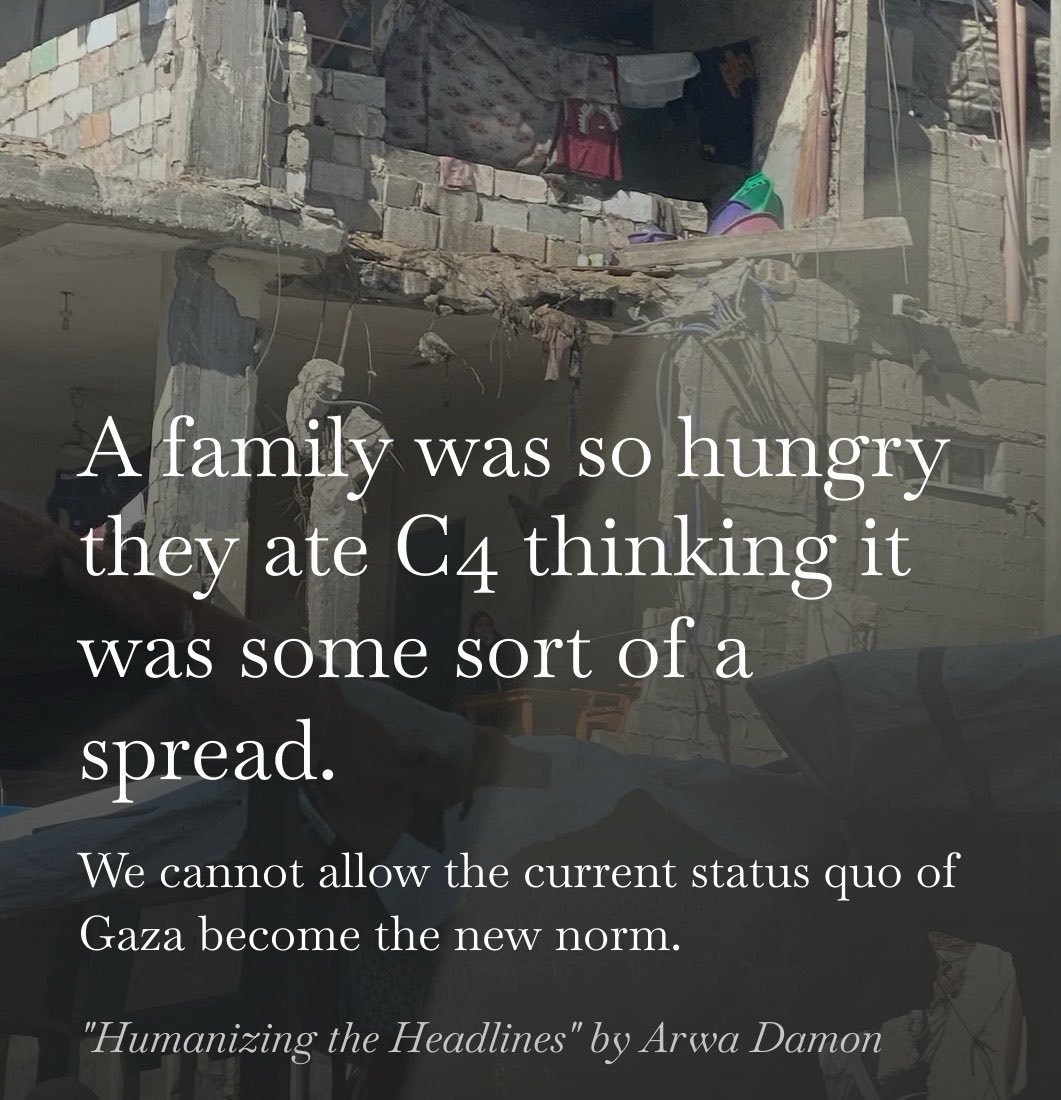
Recommended article by @IamArwaDamon
Jun 14

Excerpt: At first I was not sure I had heard the doctor properly.
“C4, like the explosive?”
“Yes, they thought it was cheese. They found it along with some bottles of water and Pepsi.”
It’s towards the end of Nov 2024 and I’m in Gaza City. The IDF had recently withdrawn from the area this family lived in. The family had briefly returned.
Read here (it’s free): open.substack.com/pub/arwada…
3
669
2,383
64,461
Ms Doe retweeted

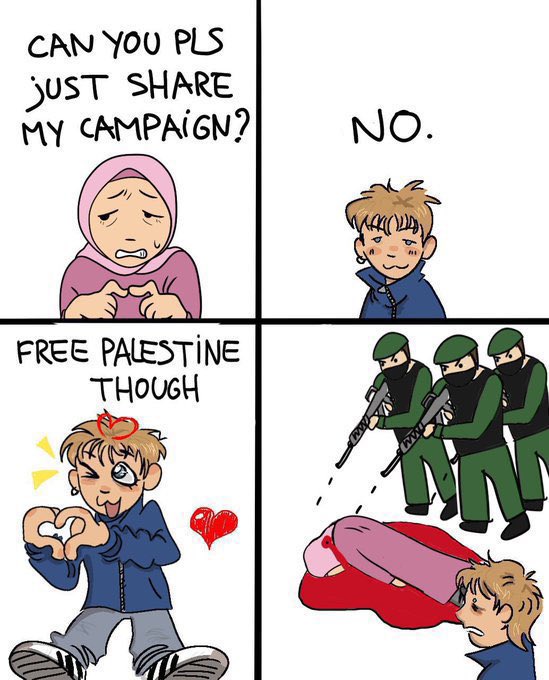
On this dark night in Gaza, I keep thinking about what TRAP really means.
T — Trauma
R — Running out of time
A — Asking for help
P — Palestine
I should be preparing for my Master’s in Canada this September, but I’m still trapped. Please don’t forget me.
chuffed.org/project/150182-h…

9
75
88
1,465
Ms Doe retweeted

Jun 13
We, the US people, welcome the Iranian team to the World Cup. Unfortunately, our government is humiliating them. Iranian players are being forced to sleep in Mexico. Team staff have been denied visas. Journalists have been blocked from covering the team. Fans are being prevented from traveling to cheer on their country. These athletes are not politicians. They are players who have spent their lives working for this moment. The people of Iran are not our enemies. Go Team Melli!
93
832
2,206
16,623
Ms Doe retweeted

Jun 14
BREAKING: Israeli settlers are burning down the villages of Deir Dibwan and Burqa in the West Bank.
They set a mosque on fire, torched several vehicles, and poured gasoline on an elderly man in an attempt to burn him alive.
276
7,687
9,465
800,525
Ms Doe retweeted

Jun 14
🚨 DISGUSTING: France 24 confirms the Zionist regime just committed another horrific war crime.
They intentionally fired two missiles into a densely populated residential building right on top of a civilian bakery in Beirut with absolutely zero evacuation warning!
123
7,040
12,986
171,881
Ms Doe retweeted

Jun 14
The IDF gave weapons and unchecked authority to violent settlers, including those under international sanctions, by drafting them into "regional defence units." Here's one of many examples uncovered by the investigative journalism program "Zman Emet" on Kan 11.
After October 2023, thousands of settlers enlisted in these units. Formally, they are subordinate to the IDF, but in practice operate as independent settler militias.
51
924
1,116
28,891
Ms Doe retweeted

Jun 12
🚨 In more than 25 years of working on terrorism cases, I never thought I would see terrorism legislation used in a way that blurs the line between genuine national security concerns and the policing of political expression and protest.
The sentencing of the Filton 4 raises profound questions about the direction of our justice system. Counter-terrorism laws exist to protect the public from serious threats, not to chill political dissent, including direct action protest.
If we are not careful, we risk setting a dangerous precedent, one that many will view as driven not by principle, but by a desire to shield Israel from criticism.
I strongly oppose what happened in this case today.
Jun 12

🚨BREAKING: Filton 4 sentenced as terrorists
Amnesty opposes the use of terrorism powers in this case.
It is completely disproportionate to punish protesters for criminal damage as if they were terrorists, a sentence which stays with you for life.
The defendants in today’s case were sentenced as terrorists because prosecutors want to make an example of them.
Today's decision shows how direct action protesters could be treated in the future.
The use of terrorism laws against direct action protesters must end.
Together we must continue calling out the abuse of power and fighting for our right to protest.
Read our position:
Criminal Damage, Direct Action, Terrorism: Misuse of counter-terrorism powers in the UK: amn.st/6015B87ZCx
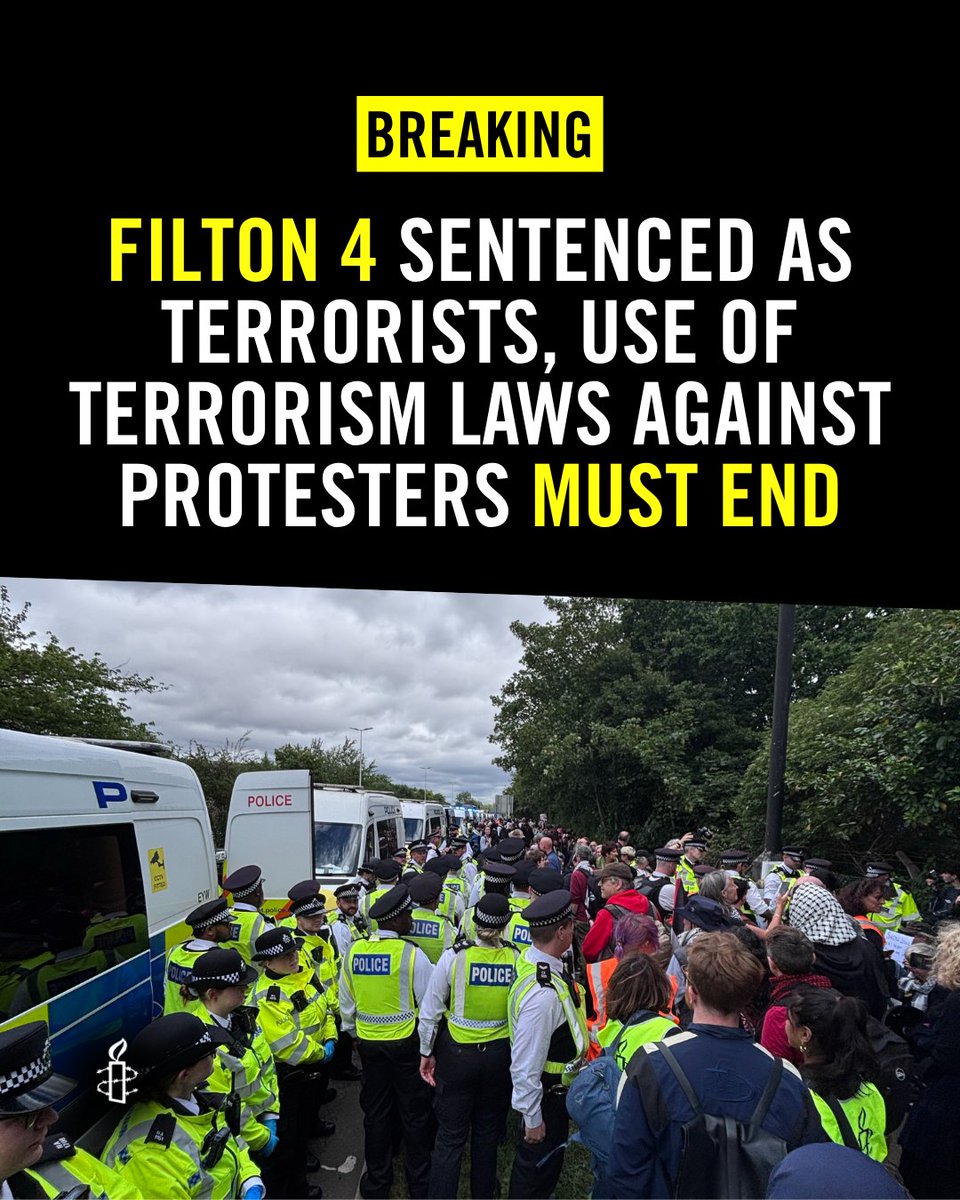
ALT Filton 4 sentenced as terrorists, use of terrorism laws against protesters must end
801
2,576
5,008
164,121
Ms Doe retweeted

Jun 14
There you have it. Anthropic's CEO said it: The murder of more than 100 schoolgirls in Minab targeted by Anthropic's CLAUDE "is a use case that doesn't even violate our red lines." Time to rise up against these technofeudal war criminals.

CEO of Anthropic Dario Amodei awkwardly smiles through his answer to a question about why Claude AI directly contributed to the US Military bombing of the elementary school in Minab.
204
7,743
18,864
501,981
Ms Doe retweeted

Jun 14
🚨🇺🇸🇲🇦FIFA press officer interrupted a Mexican journalist during Morocco’s press conference, instructing him to ask questions in English only!
This is the worst World Cup ever.
138
1,453
5,240
130,172
He was my personal, and professional, hero, my guiding light. Few would do what he did then, next to none would do it today.
My husband and I met him by chance; he was a lovely person.
Jun 13

🍁 🍁🍁🍁🍁
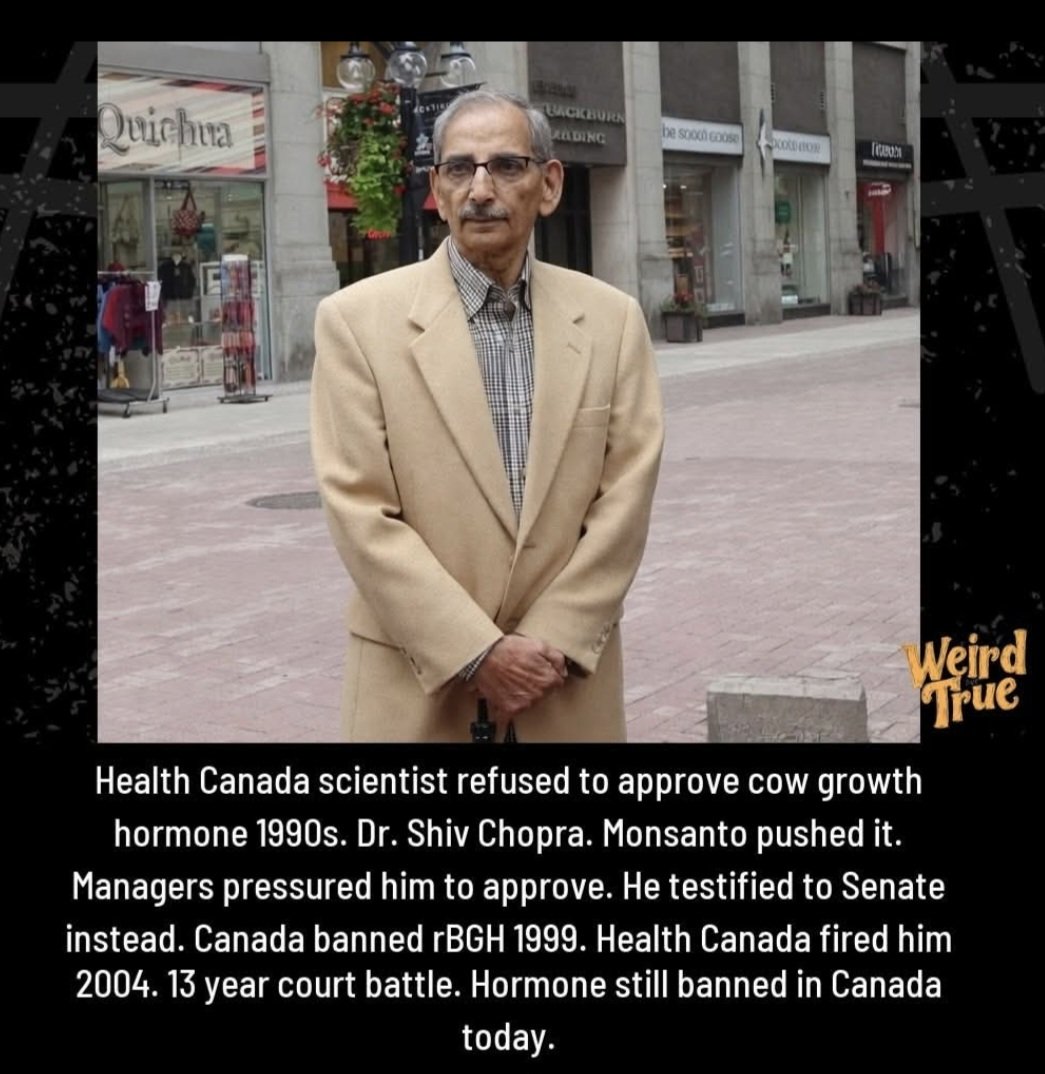
Monsanto wanted its growth hormone in every glass of Canadian milk. One government scientist stood in the way and his own bosses spent 14 years trying to destroy him for it.
His name was Dr. Shiv Chopra.
Born in India, 1934. Came to Canada in the 1960s. PhD in microbiology. Senior scientist at Health Canada's Bureau of Veterinary Drugs. 35 years reviewing drug applications. Approve the safe ones. Reject the unsafe ones. Protect the public.
For 20 years he did it quietly.
Then Monsanto came knocking.
A new drug. Bovine growth hormone. Brand name Posilac. Inject it into dairy cows, get 10-15% more milk. Bigger profits for the industry. Far bigger profits for Monsanto. The FDA had rubber-stamped it in 1993. Monsanto expected Canada to follow.
The file landed on Chopra's desk.
He started reading the science. He started finding holes.
The data was thin. Long-term safety studies were missing. The cow studies that did exist showed lameness, mastitis, reproductive failure, shortened lifespans.
If it was doing that to the cow, what was it doing to the milk?
His recommendation: reject it. Demand real safety data.
His managers had a different idea.
Approve it. The Americans approved it. Why are you holding it up? Just sign off.
He refused.
So the pressure started. Closed-door meetings. Attempts to pull the file and hand it to someone friendlier. Gag orders don't talk to the media, don't talk to anyone. Suspensions. Reprimands. Demotions. Dead-end reassignments.
He kept refusing.
Two other scientists refused with him. Dr. Margaret Haydon. Dr. Gérard Lambert. Same data. Same alarm. Same answer.
In 1998 the Canadian Senate launched an investigation into what was happening inside Health Canada.
Chopra and his colleagues did something almost nobody does. They walked into the Senate and testified under oath. Said managers were pressuring them to approve unsafe drugs. Said industry was running the regulator. Said the system was broken.
It made headlines around the world.
In 1999, Health Canada rejected Monsanto's application. rBGH would not be approved. Europe banned it next. Then most of the developed world.
Sit with that. One immigrant scientist in Ottawa beat one of the largest chemical corporations on Earth — and won.
Then his own government fired him for winning.
July 14, 2004. After 35 years of service, Health Canada fired Chopra, Haydon, and Lambert on the same day. Official reason: insubordination. Real reason: he embarrassed them in front of the country.
The same year, the Prime Minister mailed him a gold watch for "illustrious service." While they were firing him. He called it comedy.
He sued to clear his name. The fight took 13 years. He lost appeal after appeal. The final ruling came down in 2017. Three months later, in January 2018, he died. 83 years old. Never reinstated. Never given his pension back. Never owed an apology by anyone.
But here is what they could never take back.
rBGH is still banned in Canada today. Every glass of Canadian milk is still hormone-free — because one man refused to sign.
And the United States? Never banned it. It's still legal there. Right now.
He kept it out of Canada and they fired him. The system he fought is still pouring it into glasses across the border.
So tell me below was Shiv Chopra a hero, or just a troublemaker who got what was coming to him? Pick a side. Because someone in those meetings is still telling scientists to "just sign off."
2
5
88
Ms Doe retweeted

Jun 13
🍁 🍁🍁🍁🍁
Monsanto wanted its growth hormone in every glass of Canadian milk. One government scientist stood in the way and his own bosses spent 14 years trying to destroy him for it.
His name was Dr. Shiv Chopra.
Born in India, 1934. Came to Canada in the 1960s. PhD in microbiology. Senior scientist at Health Canada's Bureau of Veterinary Drugs. 35 years reviewing drug applications. Approve the safe ones. Reject the unsafe ones. Protect the public.
For 20 years he did it quietly.
Then Monsanto came knocking.
A new drug. Bovine growth hormone. Brand name Posilac. Inject it into dairy cows, get 10-15% more milk. Bigger profits for the industry. Far bigger profits for Monsanto. The FDA had rubber-stamped it in 1993. Monsanto expected Canada to follow.
The file landed on Chopra's desk.
He started reading the science. He started finding holes.
The data was thin. Long-term safety studies were missing. The cow studies that did exist showed lameness, mastitis, reproductive failure, shortened lifespans.
If it was doing that to the cow, what was it doing to the milk?
His recommendation: reject it. Demand real safety data.
His managers had a different idea.
Approve it. The Americans approved it. Why are you holding it up? Just sign off.
He refused.
So the pressure started. Closed-door meetings. Attempts to pull the file and hand it to someone friendlier. Gag orders don't talk to the media, don't talk to anyone. Suspensions. Reprimands. Demotions. Dead-end reassignments.
He kept refusing.
Two other scientists refused with him. Dr. Margaret Haydon. Dr. Gérard Lambert. Same data. Same alarm. Same answer.
In 1998 the Canadian Senate launched an investigation into what was happening inside Health Canada.
Chopra and his colleagues did something almost nobody does. They walked into the Senate and testified under oath. Said managers were pressuring them to approve unsafe drugs. Said industry was running the regulator. Said the system was broken.
It made headlines around the world.
In 1999, Health Canada rejected Monsanto's application. rBGH would not be approved. Europe banned it next. Then most of the developed world.
Sit with that. One immigrant scientist in Ottawa beat one of the largest chemical corporations on Earth — and won.
Then his own government fired him for winning.
July 14, 2004. After 35 years of service, Health Canada fired Chopra, Haydon, and Lambert on the same day. Official reason: insubordination. Real reason: he embarrassed them in front of the country.
The same year, the Prime Minister mailed him a gold watch for "illustrious service." While they were firing him. He called it comedy.
He sued to clear his name. The fight took 13 years. He lost appeal after appeal. The final ruling came down in 2017. Three months later, in January 2018, he died. 83 years old. Never reinstated. Never given his pension back. Never owed an apology by anyone.
But here is what they could never take back.
rBGH is still banned in Canada today. Every glass of Canadian milk is still hormone-free — because one man refused to sign.
And the United States? Never banned it. It's still legal there. Right now.
He kept it out of Canada and they fired him. The system he fought is still pouring it into glasses across the border.
So tell me below was Shiv Chopra a hero, or just a troublemaker who got what was coming to him? Pick a side. Because someone in those meetings is still telling scientists to "just sign off."
142
1,227
3,025
37,579
Ms Doe retweeted

Jun 14
🚨In Gaza’s displacement camps, mousetraps are now considered essential aid.
Rats and weasels roam through overcrowded tents at night, crawling over sleeping children and women. Many children are too terrified to sleep.
A population under siege has been left to fight hunger, disease, and now rodents alone.
5
315
479
6,327
Ms Doe retweeted

Jun 14
This tree witnessed every major event of human history
76
506
3,992
143,069
Ms Doe retweeted

Jun 13
Your father's worst childhood memories may have physically altered his sperm before you were conceived. And the mechanism is wild.
For a century sperm were treated as a courier: deliver the DNA, done. They also carry a live RNA readout of the father's life, and it can reset the child's stress response in the first hours after fertilization.
The DNA sequence never changes. What shifts is the cargo riding alongside it: microRNAs about 22 letters long, plus chopped-up fragments of tRNA. Stress changes which ones get loaded and how much.
The strange part is where the sperm picks them up. They don't write most of this cargo themselves. As they move through the epididymis to finish maturing, tiny vesicles called epididymosomes hand them RNA made by the surrounding tissue. The duct works like a sensor, reading the father's current physiology and updating the payload right before the sperm is ever used.
Two labs killed the coincidence explanation. Tracy Bale's group found nine specific microRNAs elevated in stressed males, injected exactly those nine into a normal single-cell embryo, and reproduced the same dysregulated stress-axis response in the offspring. Isabelle Mansuy's group took sperm RNA from males traumatized early in life and injected it into ordinary fertilized eggs. The egg was normal and the mother was normal. The RNA alone carried the behavioral and metabolic changes across. Inside the embryo, those microRNAs degrade specific maternal instructions stockpiled in the egg, which rewires gene expression in the offspring's hypothalamus, the control center for stress hormones.
The childhood specificity is doing real work. Mansuy's model is literally early trauma: pups separated unpredictably from stressed mothers, with the signature still detectable three generations down. In 2018 a Tufts team found the same two sperm microRNAs shifted in men who reported childhood trauma, the first time the mouse markers turned up in humans.
It also stays editable. The cargo tracks current conditions, so it shifts with them. Enriched environments reversed part of the effect in mice; in men, weight loss after bariatric surgery moves obesity-linked microRNAs back toward baseline. The hard causal proof still lives in rodents, and the human evidence so far is matching markers rather than a demonstrated handoff to the next generation. The mechanism is real. The size of the human effect is the open question.
Heredity runs on two channels. One is the genome, locked at conception. The other is a layer of RNA that keeps sampling the father's life and gets written onto sperm at the last possible moment. The second one is still within reach of what he does before then.
Jun 12

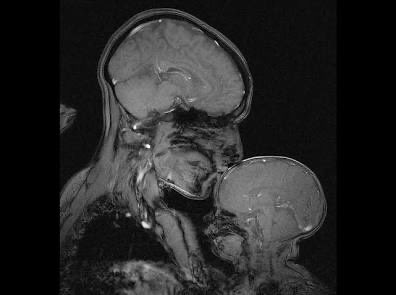
🚨: Study reveals that the sperm cells carry biological ECHOES of a father's stress, particularly from childhood trauma
4
30
371
80,108