
Joined June 2023
- Tweets 10,548
- Following 580
- Followers 128
- Likes 8,113
4,216 Photos and videos



Rotovegas retweeted

If Nicola Willis is so desperate for attention she's calling a press conference on a Sunday afternoon & dragging reporters in on their weekend it better be a fucking emergency!
It's not?
It's just a whinge session?
Call it what it is, NZ media!
And call out this bullshit.

8
22
87
838
Rotovegas retweeted

Jun 7
"If a person has ugly thoughts, it begins to show on the face. And when that person has ugly thoughts every day, every week, every year, the face gets uglier and uglier until you can hardly bear to look at it." - Roald Dahl

632
6,498
26,537
250,802

May 28
✅
8 Oct 2024

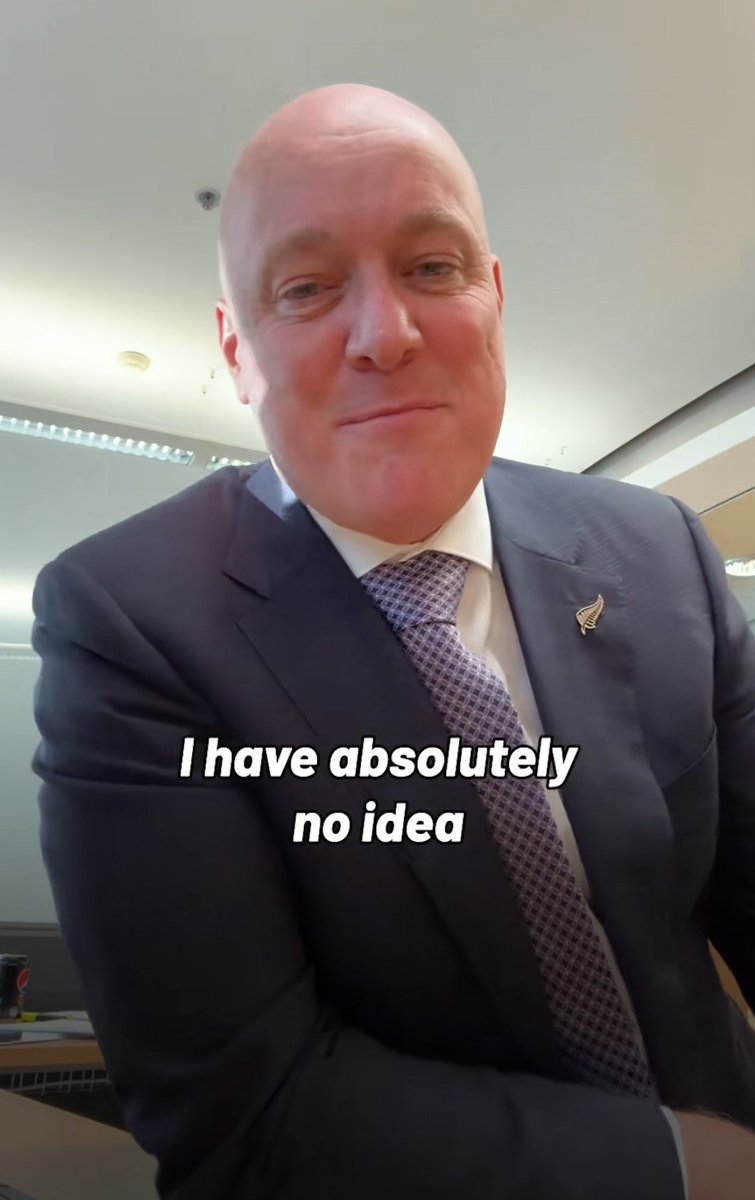
Our Prime Minister has no portfolios and yet never seems to have the time to get ahead of what's happening within his government.
Here's a thread of the many times Christopher Luxon has claimed he's been unaware of his coalition government controversies 🧵
2
87
Rotovegas retweeted

May 20
Bye bye Nature, bye bye Tourism.
Hello Drugs, Hello Foot and Mouth!
25
56
171
8,671
Rotovegas retweeted

Even in a cult of freaks,his chums are pedos, deviants and elderly wetnurses,he is still a singularly awful aberration.Thrilled by human misery, his low popularity nourishes him, he feeds off our dislike like a diseased rat eating dried vomit
20
36
125
1,158
Rotovegas retweeted

May 17
𝐋𝐎𝐑𝐃𝐄 𝐋𝐀𝐒𝐓 𝐔𝐋𝐓𝐑𝐀𝐒𝐎𝐔𝐍𝐃 𝐋𝐎𝐒 𝐀𝐍𝐆𝐄𝐋𝐄𝐒
4
122
1,408
27,777
Rotovegas retweeted

May 11
So @LloydBurr Where are you. How come no statement? Did you really call a Maori woman with 6 Kids a #HangiPants. Resign you prick.
30
36
247
8,189
Rotovegas retweeted

If genocide and pedophilia aren't your red lines, then none of your other opinions really matter.
263
9,237
36,456
387,128
Rotovegas retweeted

Apr 28
Donald Trump’s vocabulary is filled with unpresidential insults, labeling Americans as “fascists,” “communists,” “vermin,” and “garbage.”
Here’s a glimpse of Trump’s vile rhetoric aimed at his political opponents, immigrants, and journalists.
Subscribe to Zeteo.
30
609
1,462
21,369
Rotovegas retweeted

Apr 26
🚨 Sabastian Sawe just ran 1:59:30 at the London Marathon. He ran the second half in 59:01.
That's faster than the first half. At sub-2-hour pace. Nobody negative splits a marathon at world record pace. He just did.
Now stack what else happened. Yomif Kejelcha came in at 1:59:41, also under 2 hours, in his MARATHON DEBUT. Jacob Kiplimo ran 2:00:28 for third, breaking the previous world record by seven seconds.
Three men beat Kelvin Kiptum's old record on the same course on the same day. The first sub-2-hour ever and the second sub-2-hour ever finished 11 seconds apart.
The Bannister parallel is everywhere today. Here's the part nobody's saying.
When Roger Bannister broke 4:00 on May 6, 1954, he was alone. The next runner, John Landy, broke the barrier 46 days later. By 1957, sixteen men had done it. The wall was psychological, and the moment it fell, everyone else came through.
Sawe waited 11 seconds for the second sub-2-hour marathon ever. The whole field shifted in one race.
Eliud Kipchoge ran 1:59:40.2 in Vienna in 2019 with 41 pacers in formation, drinks handed off from bikes, a laser-guided pace car, and a closed flat course. It didn't count. People treated it as a stunt.
It was a roadmap. It took 6.5 years for the field to catch up to what one man proved possible under controlled conditions.
Within a decade of Bannister's mile falling, dozens of men had broken 4:00. Within sixty years, high schoolers were doing it. The pattern repeats every time a barrier falls.
Sawe at 31 hasn't peaked. Kipchoge ran his fastest at 37. Kejelcha just went sub-2 in his first marathon ever and there's no reason to think his second one will be slower.
Bannister waited 46 days for the second sub-4 mile. Sawe waited 11 seconds for the second sub-2 marathon. The next decade of marathon running just got rewritten in 1 hour, 59 minutes, and 30 seconds.
31
73
995
247,929
Rotovegas retweeted

Apr 23
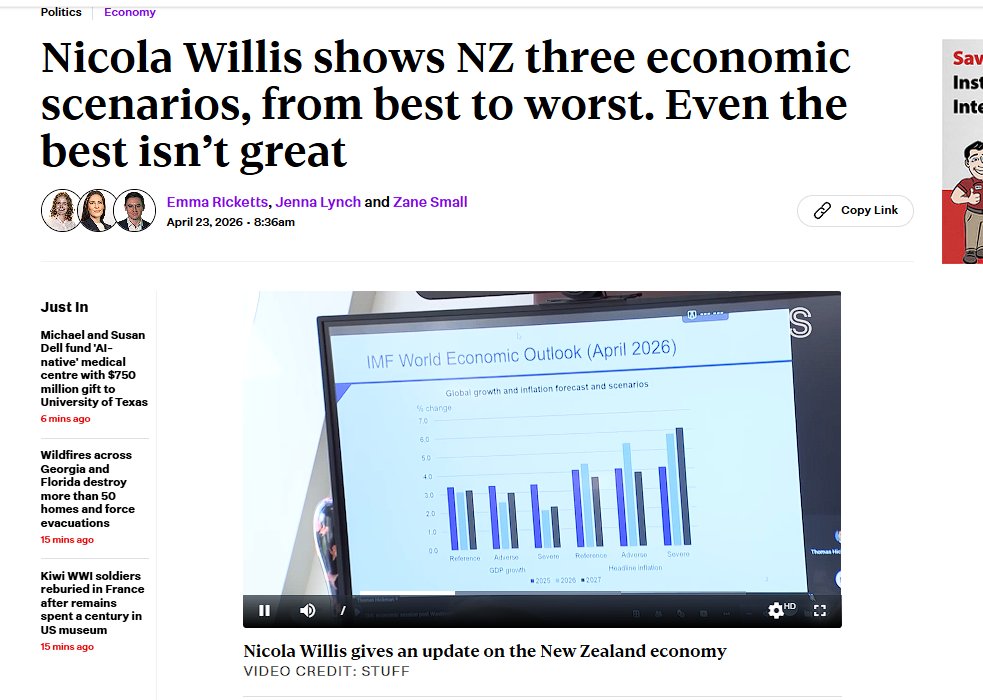
IT'S JUST ANOTHER POLITICAL SLIDESHOW
Apr 21

stop it, people are sick of these slideshows
3
5
42
1,087
Rotovegas retweeted
Apr 21
"Kiwis won't be losing sleep over political slideshows"
3
12
268
Apr 19
RT @RichardHills_: "It is now closed out. It's finished. We voted it down yesterday, and it's over, and we're moving forward." - Luxon
“Cr…
82
Rotovegas retweeted

Apr 16
my favorite Bible story is probably the one where Jesus starts an unprovoked, unnecessary and illegal war, blows up a building full of schoolgirls, destabilizes the world's economy, tells the Pope to go fuck himself, and then jets off for a long weekend of golf at Galilee-a-Lago
236
3,383
14,908
148,314
Rotovegas retweeted

Apr 16
JD Vance is lecturing the Pope on Catholicism and Pierre Poilievre is lecturing Mark Carney on economics and RFK Jr is lecturing scientists about vaccines and Donald Trump is lecturing the world on tariffs and Pete Hegseth is quoting Pulp Fiction and thinking it’s the Bible
1,626
21,054
89,193
1,403,361
Rotovegas retweeted

Apr 14
oh my god. was trump told to tell the press that the image was "doctored," but misunderstood and told everyone that he was depicted as a "doctor"?

Karoline Leavitt: “President Trump’s Truth Social post depicting him as Jesus was a doctored image.”
1,275
13,224
141,723
6,006,669


Rotovegas retweeted

10/10. No notes.
245
6,135
21,188
774,773
Rotovegas retweeted

The New York Times story from today shows exactly how Netanyahu manipulated Trump into the war in Iran, and now to the verge of economic disaster and possible use of nuclear weapons:
1) Netanyahu was the primary driver of the military campaign, spending months pressing the U.S. for a major assault. In a high-stakes Feb. 11 Situation Room meeting, he delivered a pivotal presentation arguing that Iran was "ripe for regime change".
2) He and Mossad Director David Barnea presented intelligence suggesting that intense bombing, combined with Mossad-fomented civil unrest and ground incursions by Kurdish fighters, would lead to the Iranian regime's collapse.
3) When questioned by U.S. officials, Netanyahu argued that the "risks of inaction" far outweighed the risks of a strike, asserting that the Iranian ballistic missile program could be destroyed within weeks with minimal blowback.
4) To avoid leaks and pushback, the key Situation Room meeting on Feb. 11 was kept small. Vance was in Azerbaijan and unable to return in time, leaving the path clear for Netanyahu to make his pitch directly to the president.
5) While intelligence assessments were pessimistic, Trump deferred to Netanyahu’s confidence, believing that a U.S.-led mission could "finally bring an end" to the Islamic Republic.
The story is clear. This was a pet project of Netanyahu and he used his sizable manipulation talents on Trump, who proved highly susceptible. This led us to the current disaster. That is not a conspiracy theory and it is not antisemitism. It is a fact.
84
1,189
3,532
173,207