
AI that runs your business, not assists it.
Joined August 2025
- Tweets 68
- Following 2
- Followers 577
- Likes 58
5 Photos and videos


Pinned Tweet

May 13
The software you buy was built for someone else's business.
Pit is built for yours.
2
1
6
1,352
Jun 4
We keep hearing the same thing from ops teams:
"We already tried automating this. It didn't stick."
Usually it's because the tool they used built around an ideal process, not their actual one.
1
110
Jun 3
Solutions built with Pit don't optimise the old way.
They make the old way unimaginable to go back to.
This is one of them.

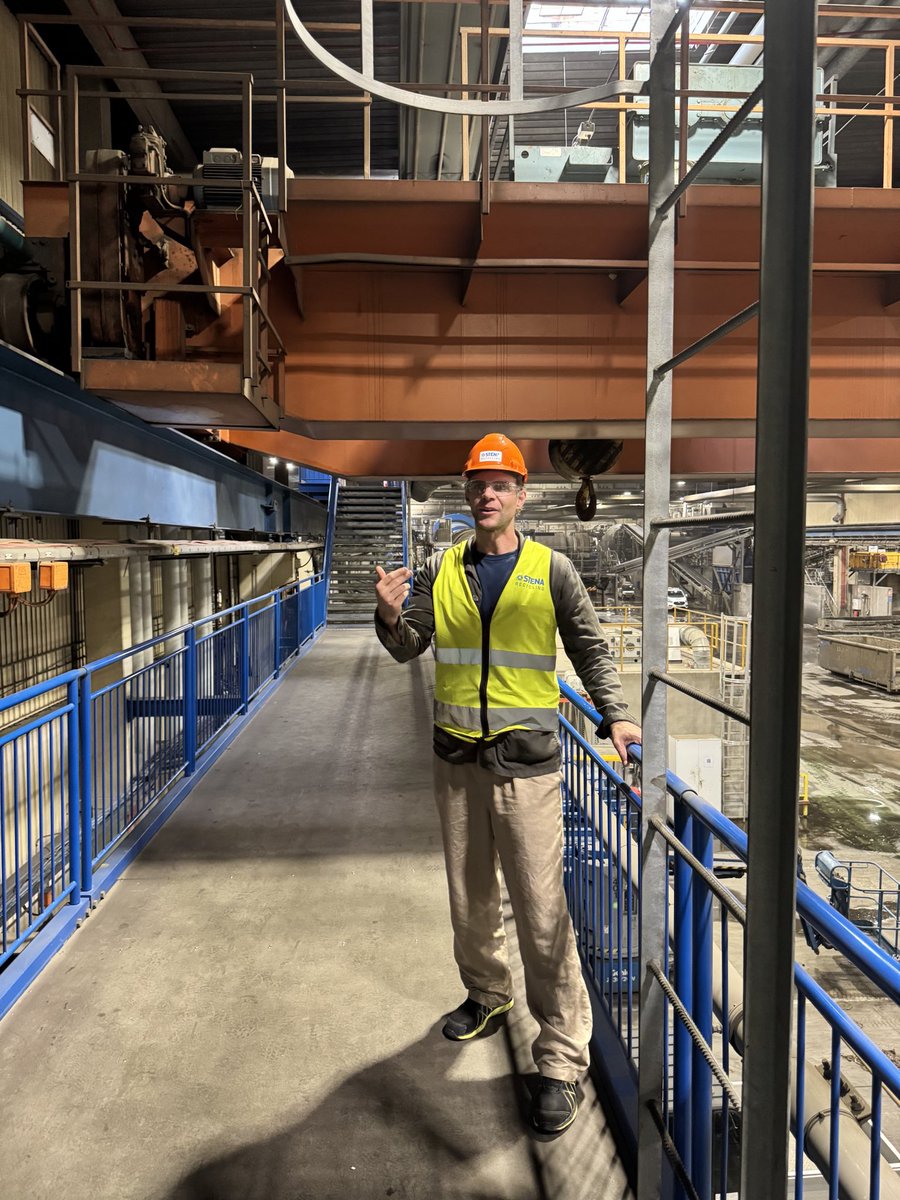
How Stena Recycling is replacing manual contract validation with AI, built on @pitdotcom
Stena Recycling (multibillion industrial) operates across seven countries with over 170 sites.
Every load of scrap, electronics, or industrial waste that arrives generates contracts.
Hundreds of thousands per year, each needing to clear a complex Microsoft and Oracle stack before an invoice can be raised.
Validation rules were buried inside the systems. When something failed, staff got a cryptic error and started reworking by hand. At that scale, the hours add up fast.
On top of Pit, Stena built a Contract Healer on their existing stack.
No rip and replace. Validates in milliseconds, surfaces failures in plain English, and lets ops update business rules without raising an engineering ticket.
"With Pit, we replaced manual data validation with a real-time AI system, reducing cycle times, errors, and hours spent each year." Helena, Stena.
Projected to save thousands of hours per year.
This is what diffusing AI into the real economy looks like.
4
180
Pit retweeted

Jun 2
Pit is building the system of intelligent execution,
most systems of records will soon be demoted to just plain databases.
How Stena Recycling is replacing manual contract validation with AI, built on @pitdotcom
Stena Recycling (multibillion industrial) operates across seven countries with over 170 sites.
Every load of scrap, electronics, or industrial waste that arrives generates contracts.
Hundreds of thousands per year, each needing to clear a complex Microsoft and Oracle stack before an invoice can be raised.
Validation rules were buried inside the systems. When something failed, staff got a cryptic error and started reworking by hand. At that scale, the hours add up fast.
On top of Pit, Stena built a Contract Healer on their existing stack.
No rip and replace. Validates in milliseconds, surfaces failures in plain English, and lets ops update business rules without raising an engineering ticket.
"With Pit, we replaced manual data validation with a real-time AI system, reducing cycle times, errors, and hours spent each year." Helena, Stena.
Projected to save thousands of hours per year.
This is what diffusing AI into the real economy looks like.
1
1
185
Pit retweeted

May 31
SAP is worth $250B because it became the source of truth for enterprise operations.
The next $250B company will be worth much more because it made SAP a dumb database.
At Voi we replaced a lot of mid and long tail SaaS with custom internal software. Scheduling, ops dashboards, reconciliation layers. It worked.
At Klarna, some of the same people went further and went after the critical systems themselves. Replacing an ERP directly is brutally hard. It did not fully work at the core system level, but they understood enterprise software internals at a depth nobody else has.
The team that did that work is now building @pitdotcom together.
The real value was never inside the systems of record. It was in the human layer around them.
The person copying data from SAP into a spreadsheet. The analyst reconciling NetSuite against a supplier PDF. The ops manager chasing approvals by email because the workflow lives between systems and nobody connected them.
Real work, and the software just could not do it.
Until AI.
You build net new software that runs those workflows end to end. SAP stays. It just stops being where the work happens.
Phase 2 is more structural. As your software performs the work around a system of record, you extract its logic. You learn what it actually does in practice, not in theory. At that point it goes dumb. A database you act on via API. The value moves up the stack.
Phase 3 is the one nobody has built yet. The company that runs the execution layer across thousands of enterprises in the same vertical understands how those operations actually run at a depth no single enterprise can.
Every manufacturer sees its own workflows. The execution layer sees the patterns across all of them.
That asymmetry grows with every customer and every month in production. The systems of record captured the data. The execution layer captures the intelligence.
SAP spent 50 years becoming indispensable. The company that wins the next 50 is not building a better SAP.
It is building the layer where the work actually happens, compounding in ways SAP never could.
3
6
33
5,100
May 26
From the comments on our launch:
"Pit feels less like another AI company chasing headlines and more like a team building the plumbing underneath the next generation of enterprise operations while everyone else argues about prompts on LinkedIn."
A look under the sink:
1
2
3
643
May 20
Companies are measuring AI adoption. They should be measuring how much work has actually changed.
May 15

The current state of enterprise AI:
People copying emails into a chatbot to write their replies. Companies buying Copilot seats. Vendors promising transformation with multi-agent workflows.
But inside most companies very little has actually changed.
The real impact won’t come from making individuals slightly faster. It will come from deeply understanding how the business works, redesigning processes around what AI now makes possible, and building the systems to run them.
The companies that figure this out first will operate in a way nobody else can copy.
3
800
May 18
If AI prototypes look impressive to you, it's because you're not an expert. Experts can tell the gaps immediately.
1
349
May 18
Production-ready AI needs infrastructure that doesn't leave things to chance. Documented intent, tests, guidelines. Isolated environments, DB backups, CI on every test. SSO, RBAC, ISO compliance, incident management, observability.
1
254
May 18
This is the gap we built Pit to close. Pit produces real, professional-grade software using harnessed code generation that’s documented, maintainable, and ready for production from day one.
240
Pit retweeted
Autonomous software is already here
Last week, @mradamjafer and the Pit team were in a customer meeting. The customer had feature requests
What they didn’t know: we had built a coding workflow that pulls notes straight from the AI notetaker, distills signal from noise, and automatically opens PRs. Written to our architecture without hand-holding
When the team walked out of the meeting, 5 PRs were waiting for review. They were good
The customer got a response before they were back from lunch
That’s a…shift. Software doesn’t wait for the sprint anymore
2
2
26
2,688
May 15
The current state of enterprise AI:
People copying emails into a chatbot to write their replies. Companies buying Copilot seats. Vendors promising transformation with multi-agent workflows.
But inside most companies very little has actually changed.
The real impact won’t come from making individuals slightly faster. It will come from deeply understanding how the business works, redesigning processes around what AI now makes possible, and building the systems to run them.
The companies that figure this out first will operate in a way nobody else can copy.
1
7
1,073
May 14
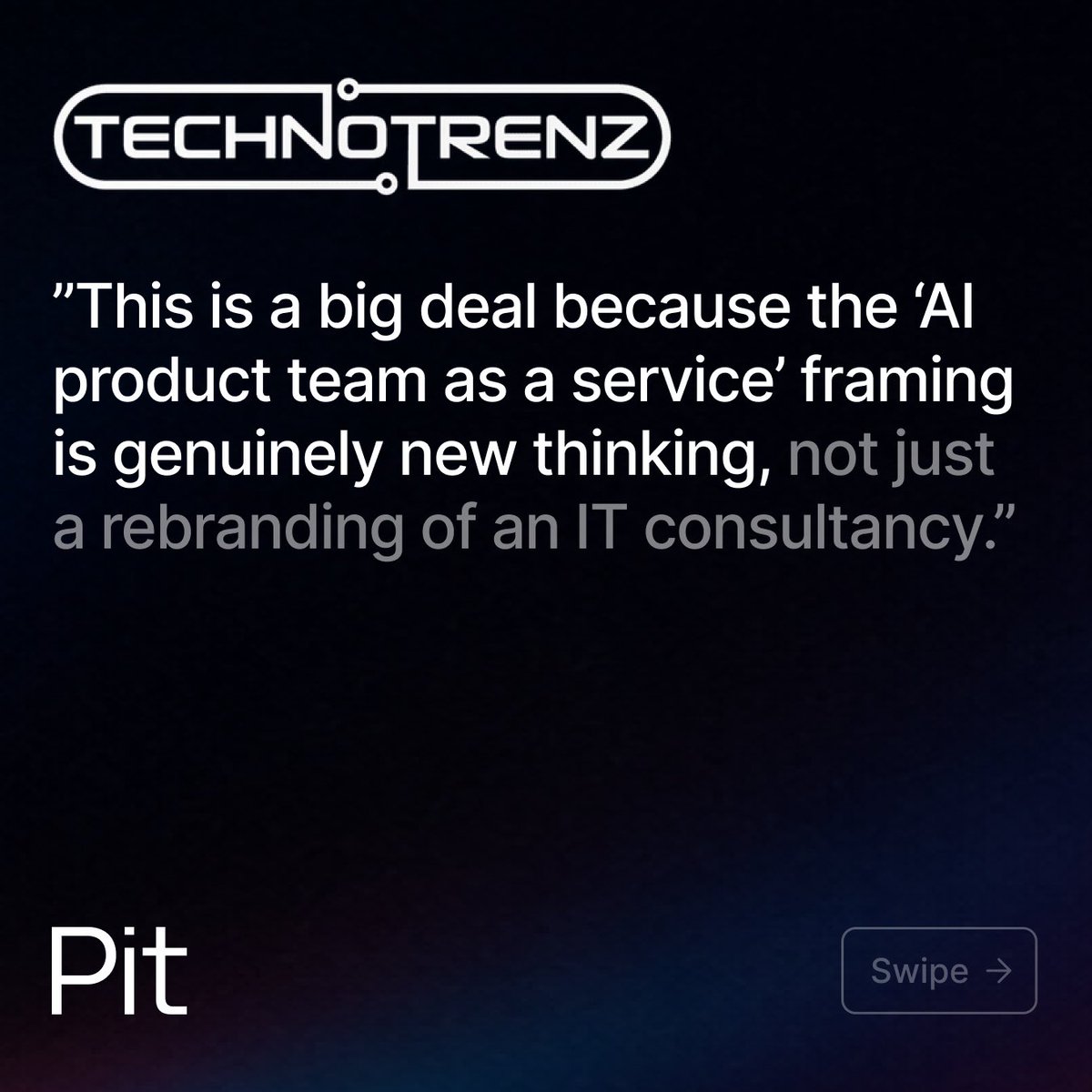
Companies do not need another tool they have to adapt to.
What they need looks more like an embedded product team.
One that understands how the business actually runs, redesigns the process around what AI now makes possible, and builds the systems to run it.
That gap between AI potential and production-ready systems is what Pit was built for.
1
3
400
May 13
The new advantage is operational originality.
May 13

The age of generic solutions is over.
The age of custom intelligence is here.
2
311
May 11
Proud to carry the 🇸🇪 Designed in Sweden badge. A statement about where we come from and how we build.
Sweden has produced some of Europe’s most successful technology companies. Not because of luck, but because of an ecosystem that takes engineering seriously, rewards persistence over hype, and holds builders to a standard that shows up in the product.
That standard is in Pit’s DNA.

Was doing some checking on Pit as I do with all AI enterprise support tooling (go check them out at pit.com or talk to @FredrikHjelm4 and his team)
I was pleasantly met with this badge towards the footer.
"🇸🇪 Designed in Sweden"
I encourage everyone building in Sweden to do similar on their splash pages. Be proud. Sweden is on the global map as a tech innovator for a reason. And I promise - after attending several conferences and workshops over the past couple of weeks - there is much more to come.
This marker will be synonymous with a quality and seriousness that I feel is lacking in Silicon Valley. I bet on it. Very clear A16Z agrees.

1
7
755