
Joined February 2026
- Tweets 178
- Following 120
- Followers 10
- Likes 206
37 Photos and videos
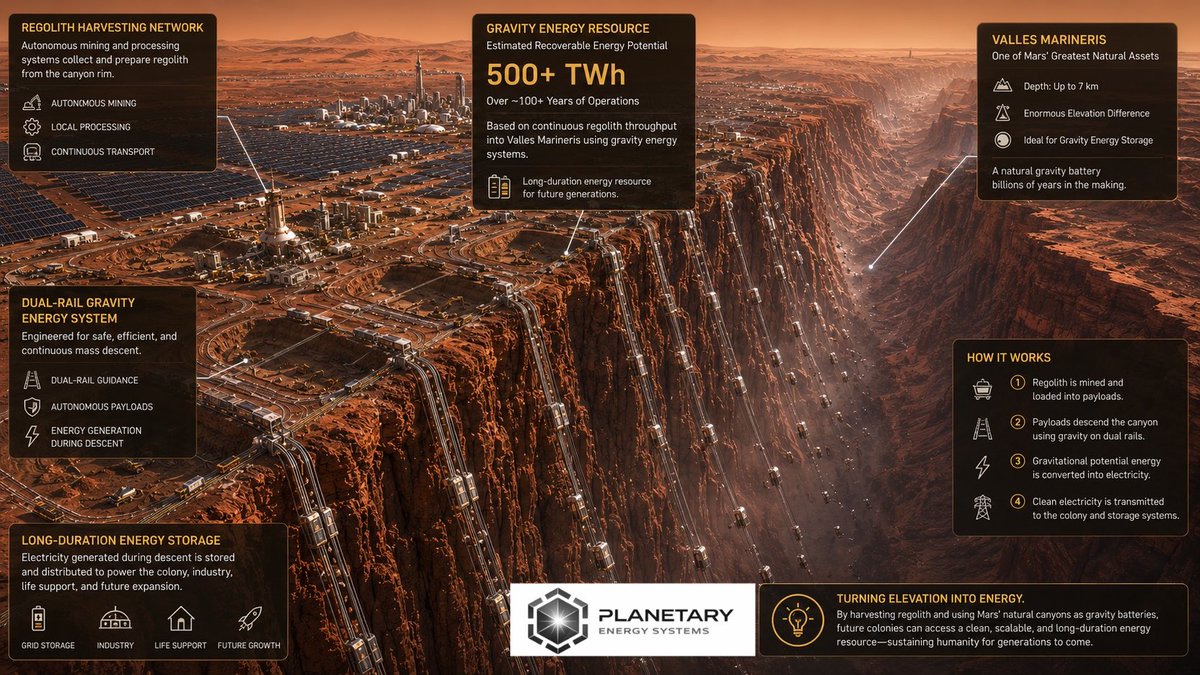
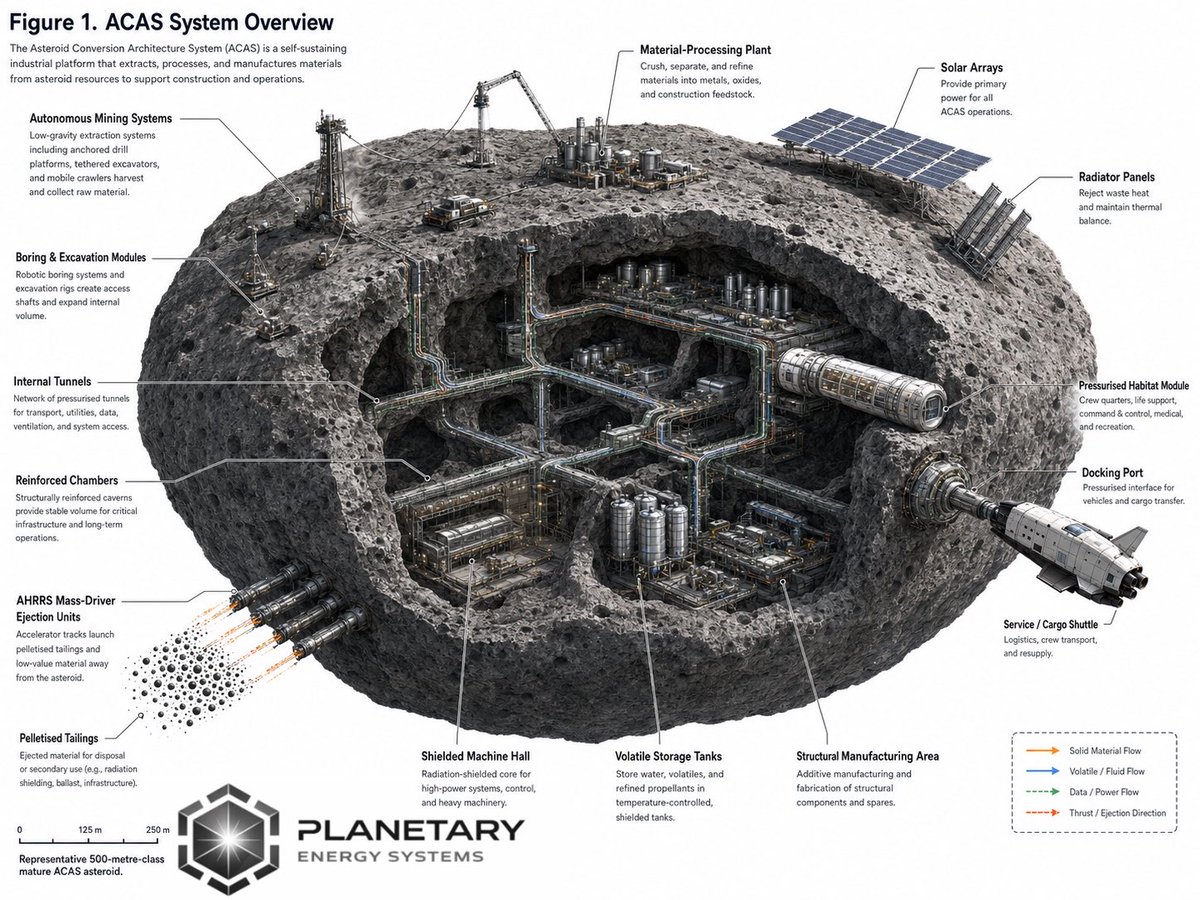
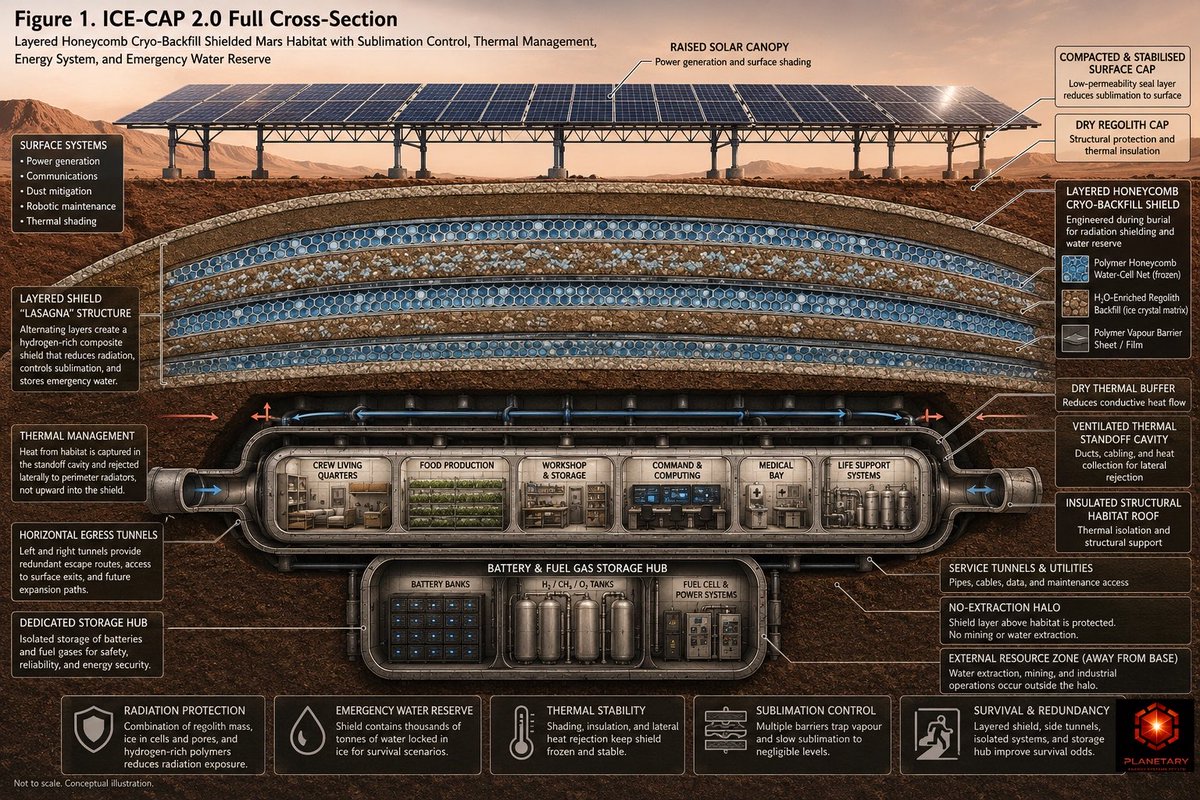
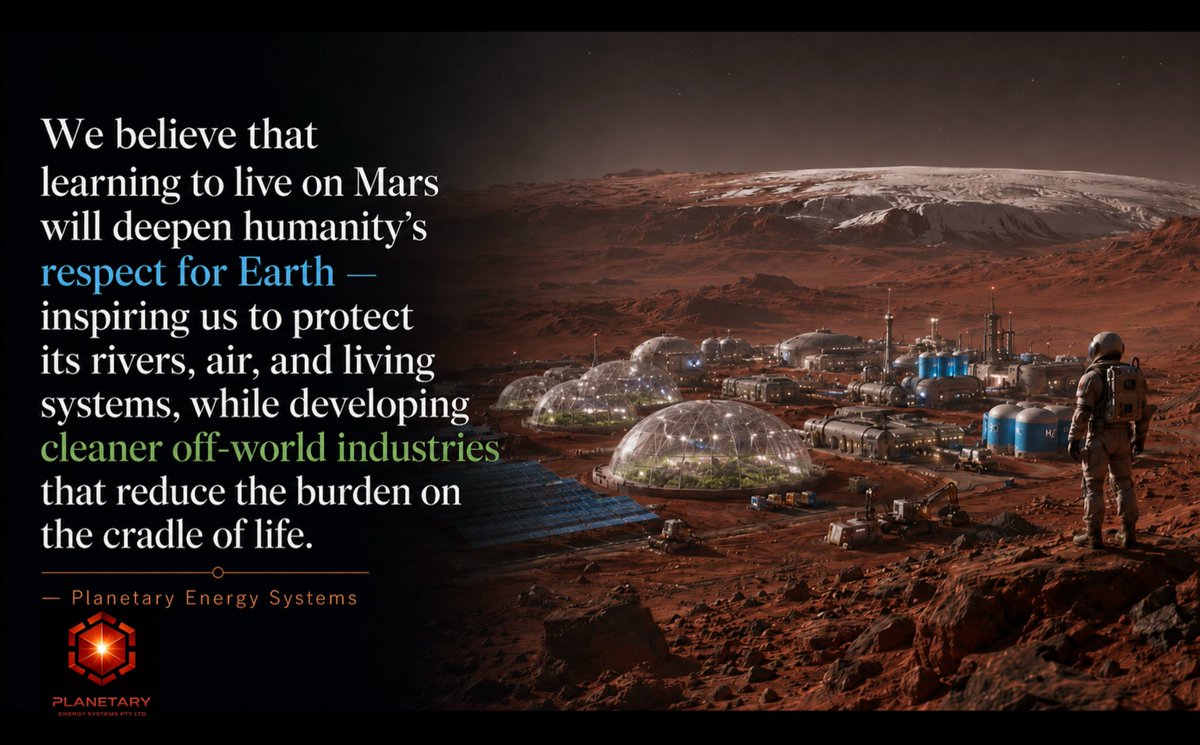
🚨 What if Mars has been hiding one of the largest untapped energy resources in the Solar System?
Not nuclear fuel. Not fossil fuels.
Gravity.
By harvesting regolith and lowering it into deep canyons such as Valles Marineris, future colonies could potentially store and generate enormous amounts of clean energy using gravity alone.
Hundreds of years of energy potential may be sitting in plain sight. 🪐⚡
#Mars #SpaceEnergy #Engineering #FutureTech
2
16
Jun 4

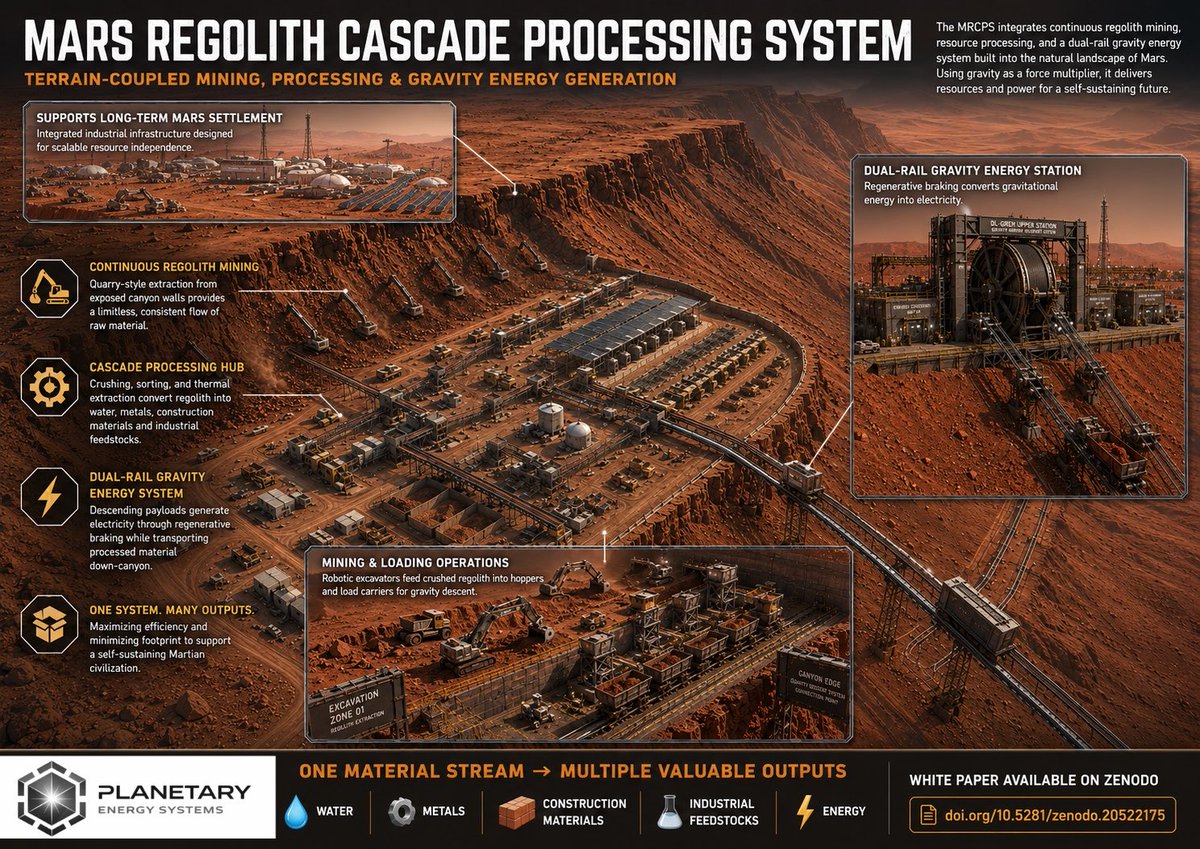
Imagine mining Martian soil…
Then using gravity itself to help power the operation.
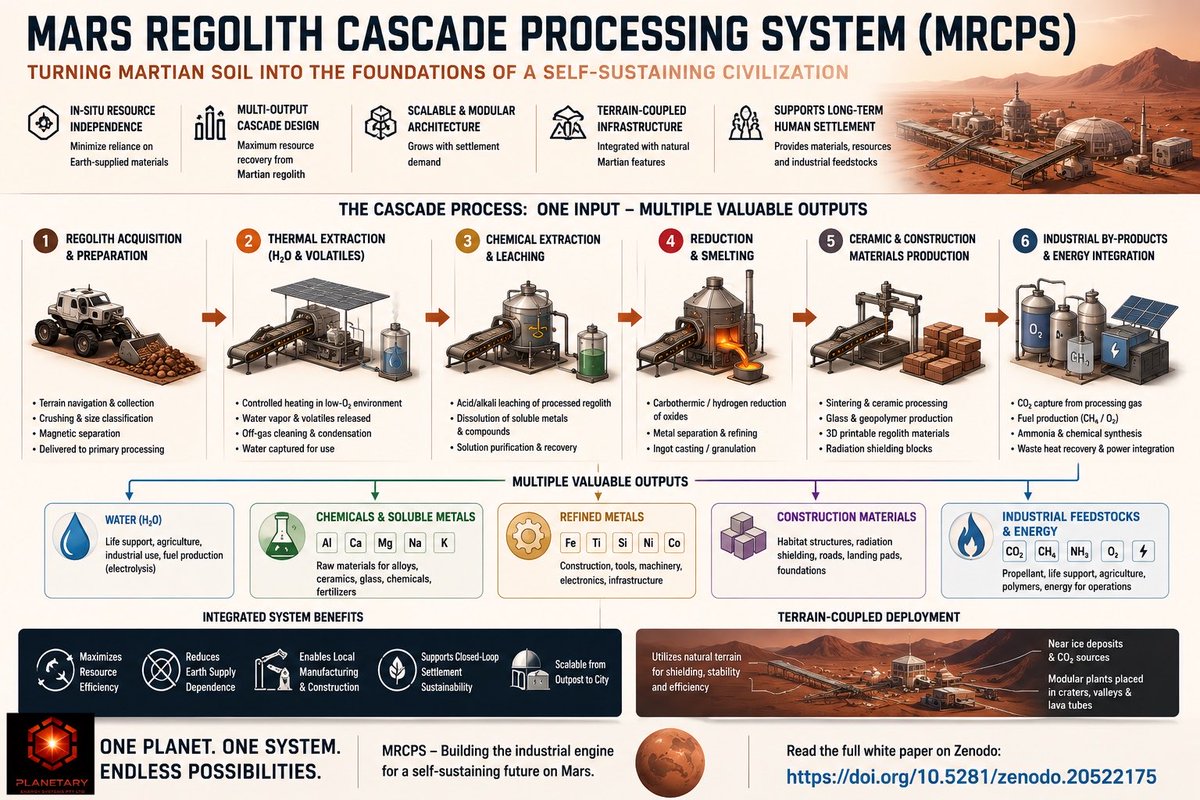
MRCPS (Mars Regolith Cascade Processing System) combines:
⛏️ Canyon-wall mining
⚙️ Resource processing
🚆 Dual-rail gravity transport
⚡ Energy recovery
Turning regolith into water, metals, construction materials and industrial feedstocks for future Mars settlements.
The terrain becomes part of the machine.
doi.org/10.5281/zenodo.20522…
#Mars #ISRU #MarsColony #SpaceEngineering #SpaceTech #FutureTechnolog
18

Jun 13
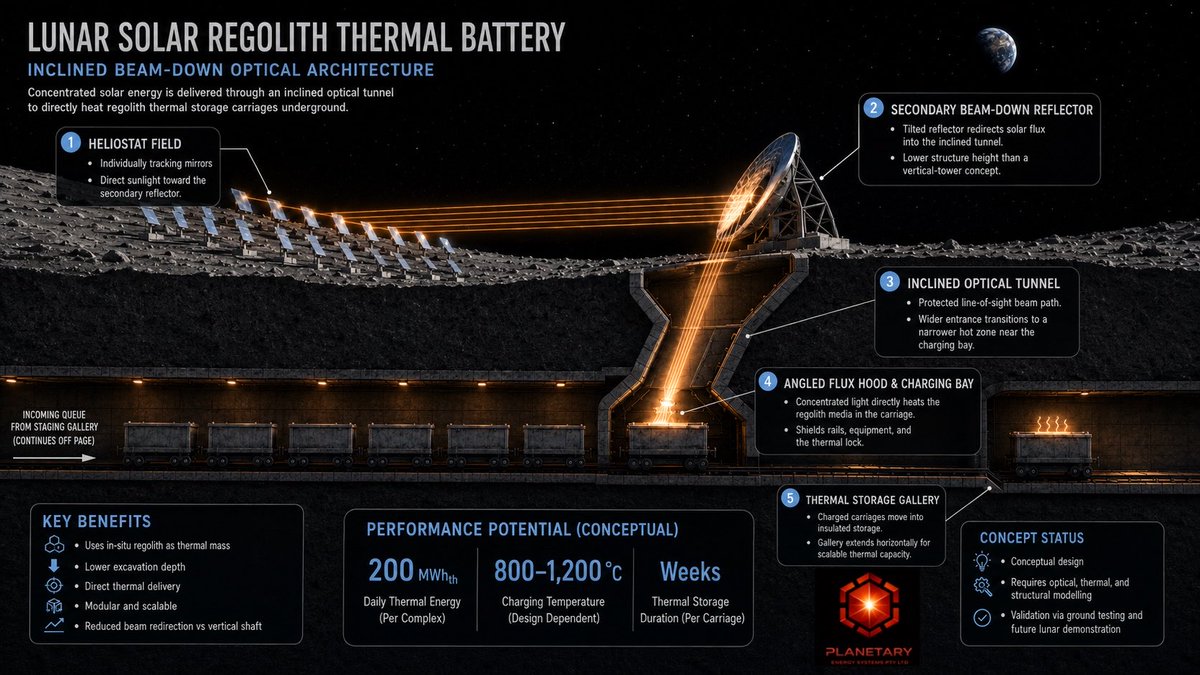
🚀 Just released: Lunar Solar Regolith Thermal Battery — a practical ISRU approach to survive the 2-week lunar night using concentrated solar local regolith.
Heliostat-fed subsurface storage for habitats, greenhouses, ISRU, and industrial heat.
Option C (modular rail carriages radiative vault) is the standout industrial evolution.
Full white paper (v1.3) on Zenodo:
doi.org/10.5281/zenodo.20676…
Feedback & collaboration welcome! #Lunar #ISRU #Artemis #SpaceTech
1
1
89
Jun 12
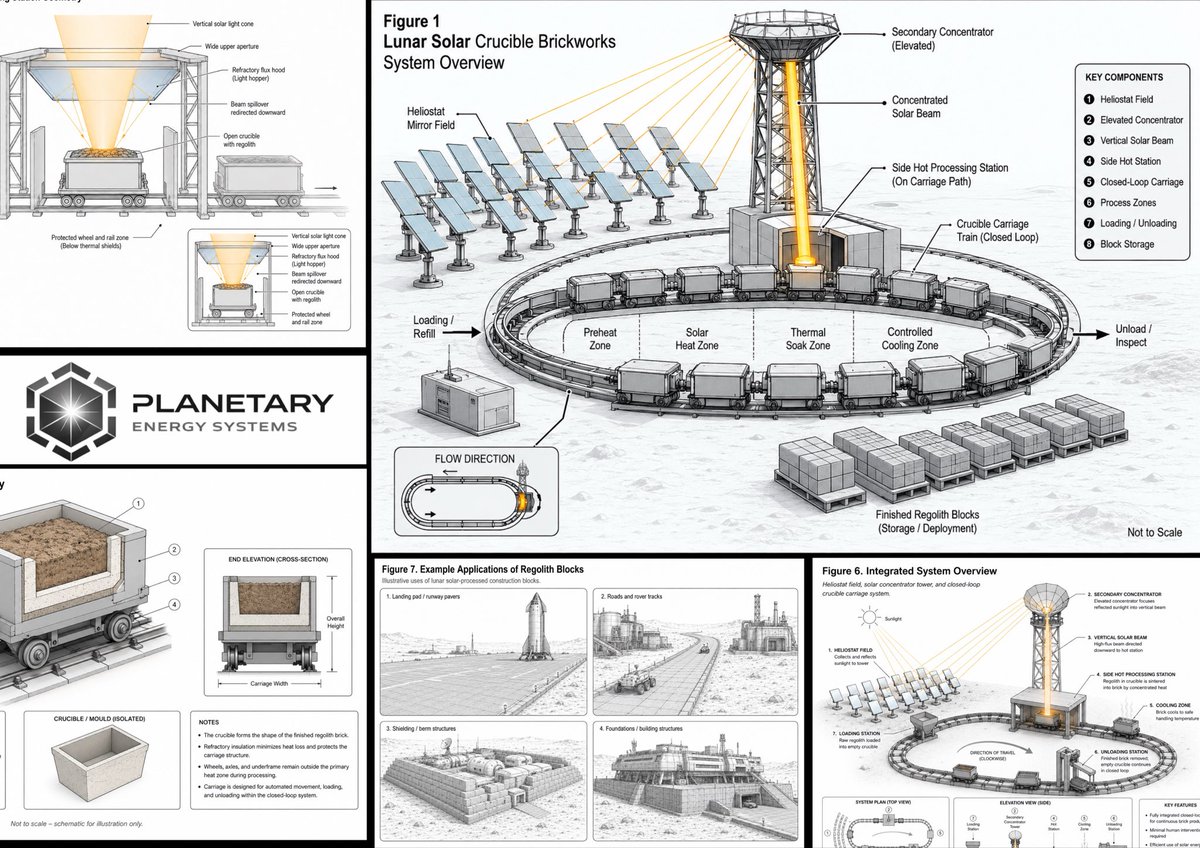
I’ve published a new Planetary Energy Systems concept white paper:
Lunar Solar Crucible Brickworks
A fixed-heliostat, closed-loop crucible foundry for producing lunar regolith construction blocks.
The concept uses concentrated solar energy, a flux hood/light hopper, and circulating crucible carriages to turn local lunar regolith into pavers, shielding blocks, berm units, foundations, and landing-pad materials.
It is designed as a rugged lunar ISRU brickworks — not a precision 3D printer — focused on producing the bulk construction mass needed for early Moon base infrastructure.
Public technical disclosure here:
doi.org/10.5281/zenodo.20667…
#LunarISRU #MoonBase #SpaceResources #LunarConstruction #Regolith #ISRU #SpaceInfrastructure #PlanetaryEnergySystems
1
1
273
Samuel retweeted
Jun 11
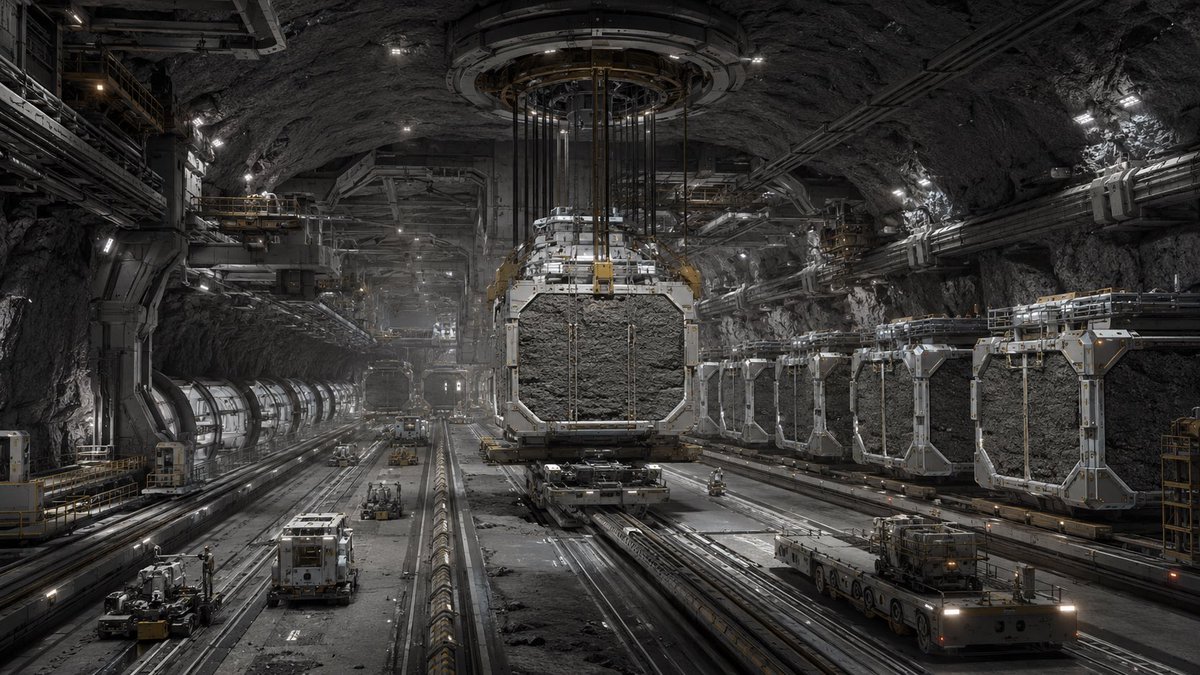
Astronauts on the Moon will face 14 days of total darkness.
How do we keep power flowing without burning through batteries?
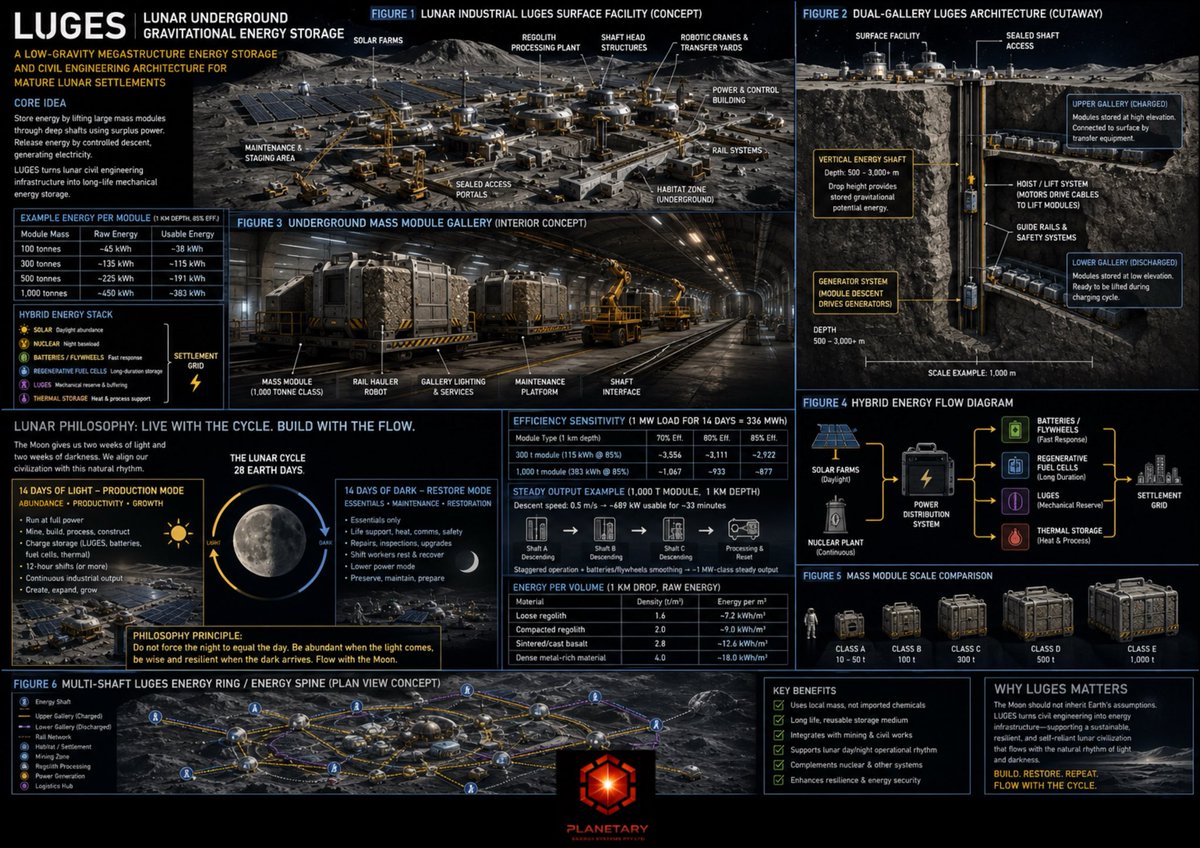
My new LUGES concept turns lunar shafts into gravitational energy storage — lifting massive ISRU modules during the day, generating power as they descend at night.
Full white paper live now (with diagrams philosophy): zenodo.org/records/20642736
Open prior art. Feedback wanted. 🚀
#MoonBase #LunarEnergy #SpaceTech
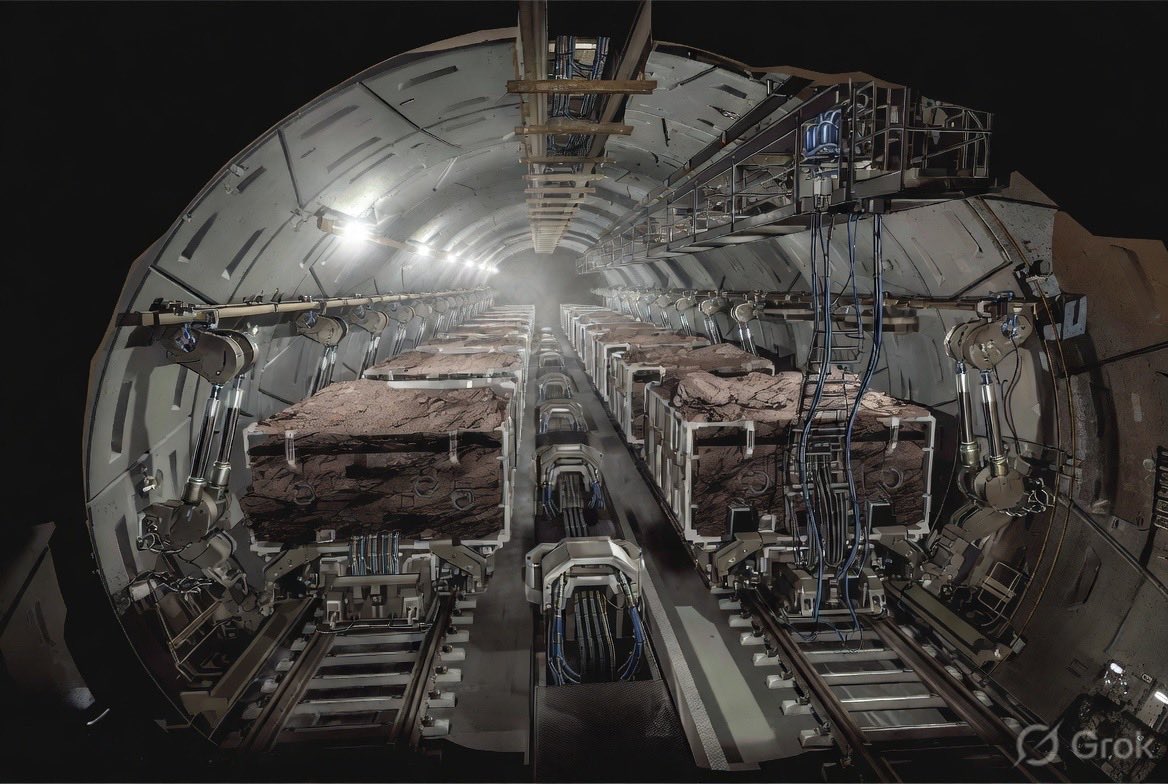
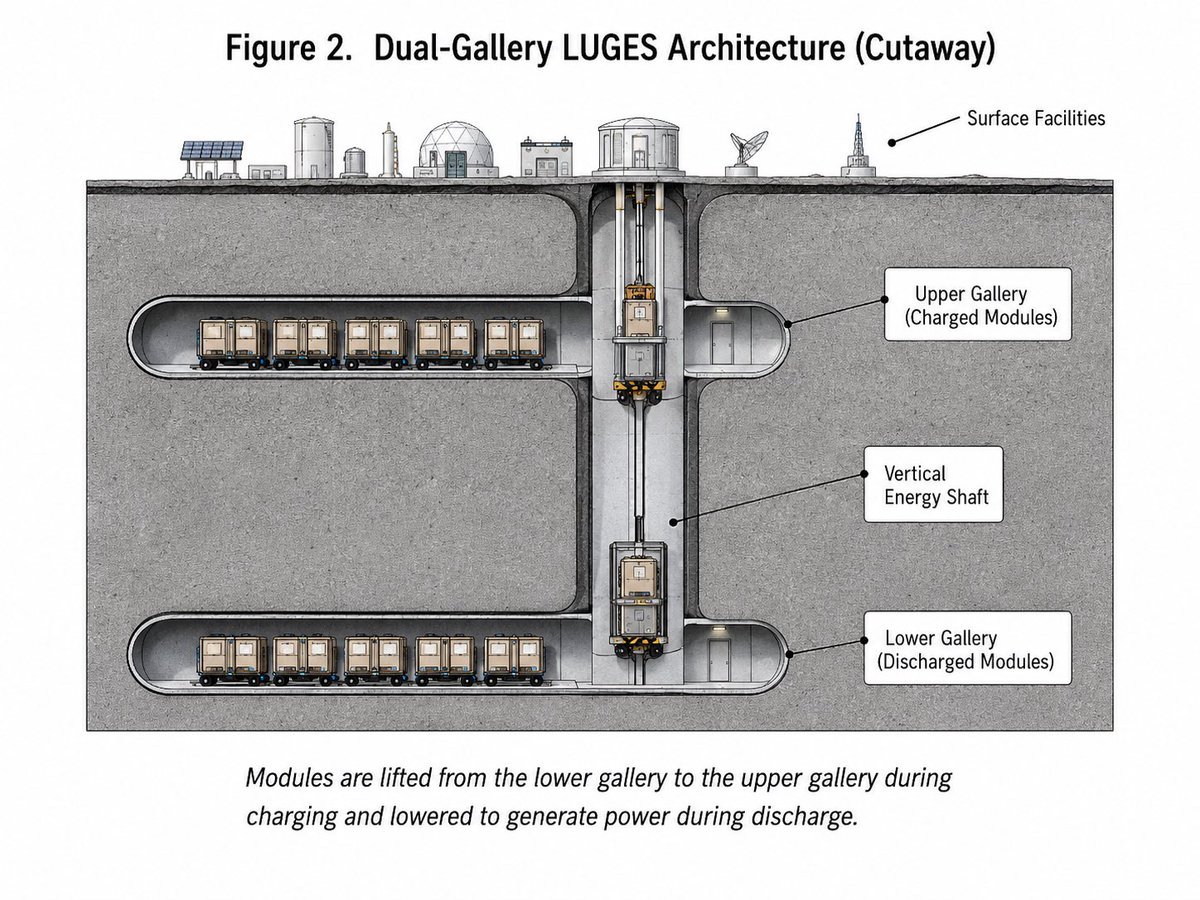
2
1
128
Samuel retweeted
Jun 11
LUGES White Paper is now live on Zenodo: Lunar Underground Gravitational Energy Storage — a mature-settlement megastructure concept that turns lunar civil infrastructure (shafts, tunnels, regolith handling) into long-life mechanical energy storage.
doi.org/10.5281/zenodo.20642…
Dual-gallery architecture, ISRU mass modules, hybrid stack integration, and a lunar day/night operational philosophy. Open access. Feedback welcome!
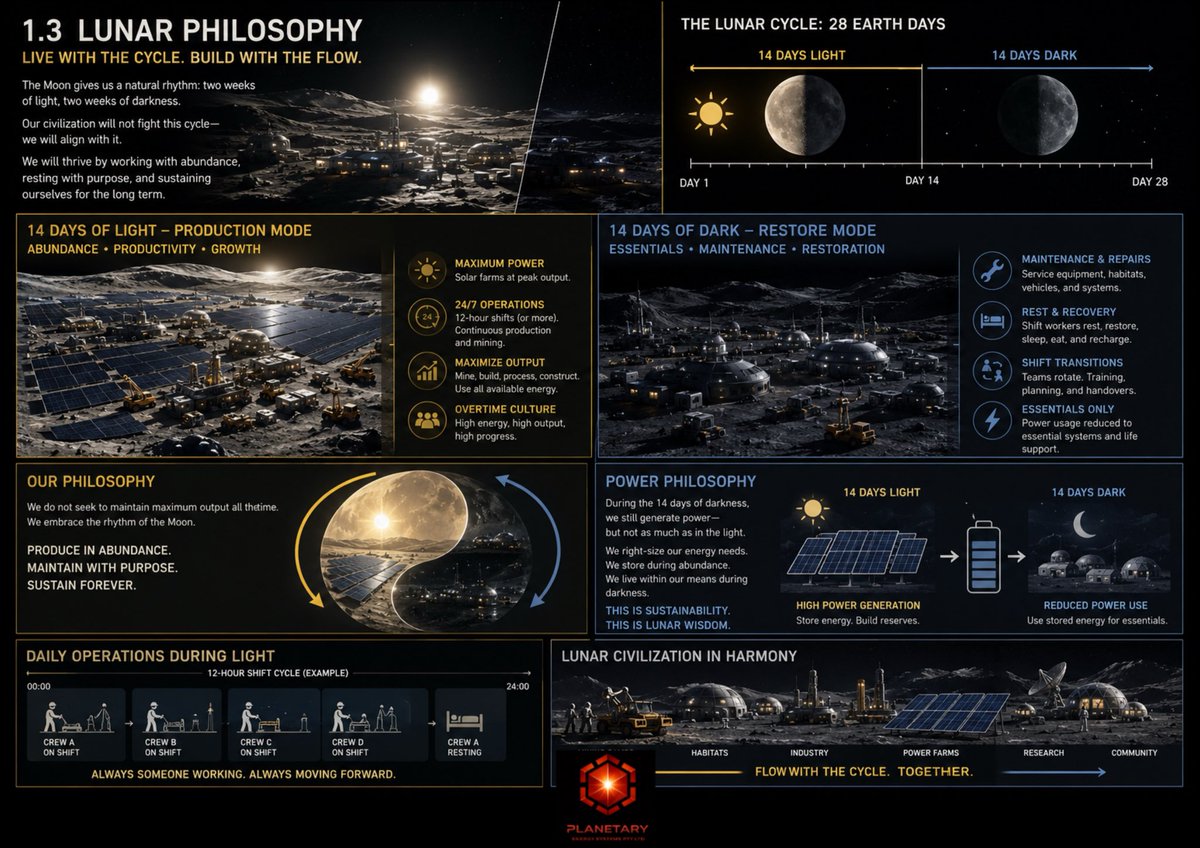
2
1
136
Samuel retweeted
Jun 10
🚀 CRAGSA-PG v1.1 is now live on Zenodo!
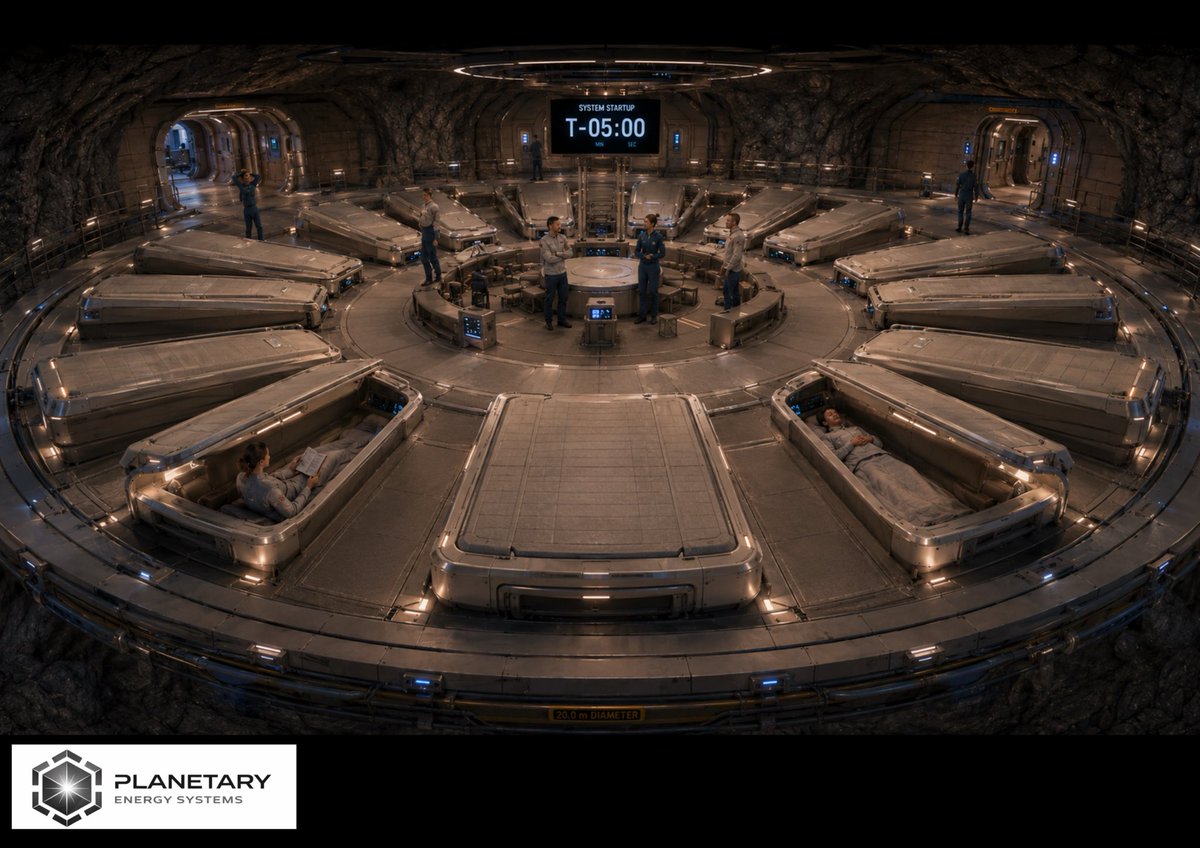
Building on the orbital Counter-Rotating Artificial-Gravity Sleep Array (CRAGSA v2.1), this new public disclosure explores subsurface rotating sleep habitats for lunar and Martian settlements.
CRAGSA-PG combines natural partial gravity (0.165 g on the Moon, 0.38 g on Mars) with controlled centrifugal acceleration during sleep. Horizontal rotors in protected underground chambers create a banked resultant gravity vector aligned with the sleeper — all while keeping the main settlement stationary.
Key ideas: • Banked sleep pods/cradles aligned to combined gravity • Subsurface & regolith-shielded construction • Optional counter-rotation for reduced vibration • Flexible programmes from moderate overnight exposure to higher-load rehabilitation • Strong focus on human factors, safety, and staged development
Full 52-page technical disclosure (v1.1) is now permanently available under CC BY 4.0 as open prior art:
doi.org/10.5281/zenodo.20627…
Designed to support long-term human health research and settlement infrastructure — freely available for humanity to study, simulate, and build upon.
Feedback and collaboration welcome from engineers, researchers, and the space community!
#ArtificialGravity #LunarSettlement #MarsSettlement #SpaceHabitat #OpenScience #Zenodo
1
1
162
Samuel retweeted
Jun 10
🚀 Big step forward for human spaceflight: I’ve just released CRAGSA v2.1 as full public technical disclosure on Zenodo.
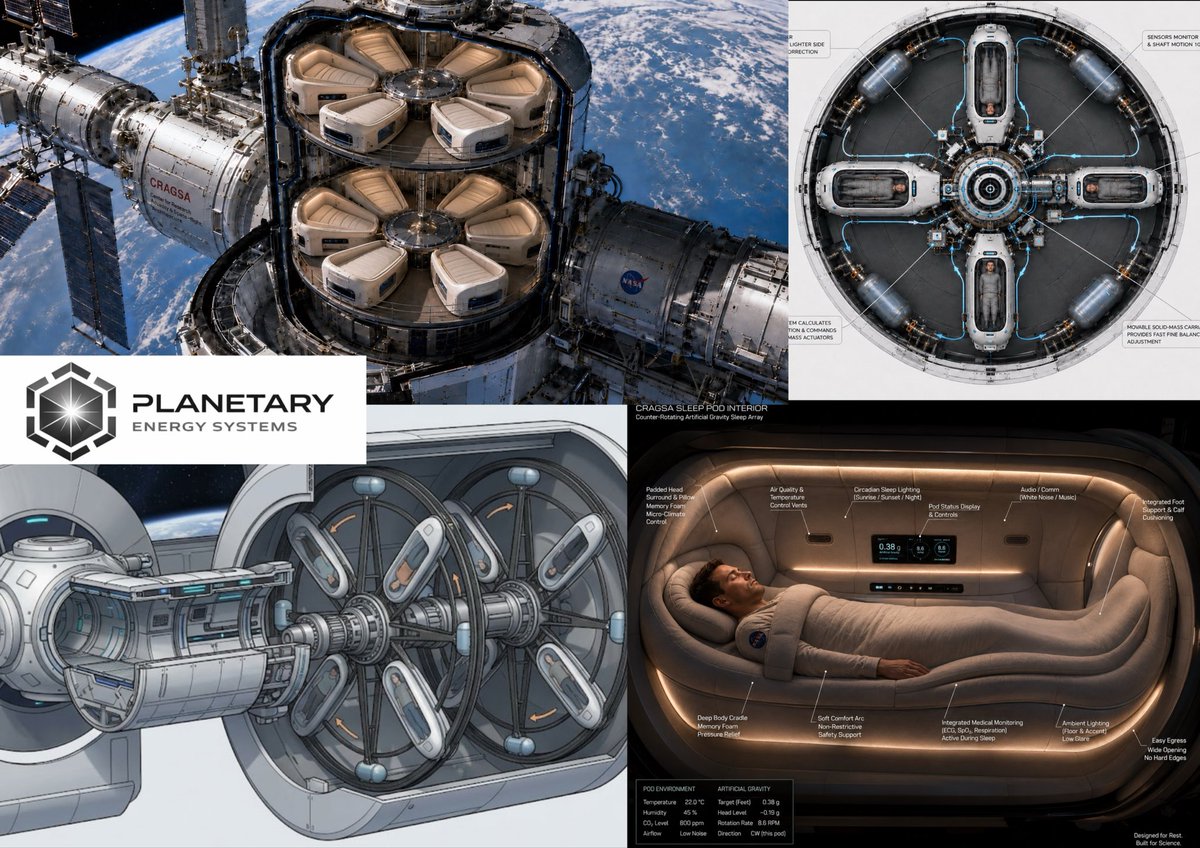
CRAGSA — the Counter-Rotating Artificial-Gravity Sleep Array — is a modular architecture designed to deliver adjustable artificial gravity only during sleep in microgravity environments. It uses paired counter-rotating rotors integrated with a non-rotating host spacecraft or habitat to minimize net angular momentum and torque issues.
Key features include: • Radial head-inward/feet-outward sleep pods with contoured cradles and soft restraints • Active fluid ballast balancing using spacecraft water (multi-use for mass, shielding & thermal) • Gradual spin-up/down, regenerative braking, and scheduled crew transfer windows • Individual pods, shared decks, and hybrid privacy-cocoon options • Strong focus on human factors, vestibular adaptation, and layered safety mitigations
This v2.1 significantly expands the prior-art comparison, engineering estimates, risk matrix, development pathway (ground prototypes → orbital demonstrator → settlement scale), and open licensing details.
The full 55 page document is now permanently available under CC BY 4.0 — free for anyone to read, reference, simulate, prototype, or build upon. My goal is to establish robust public prior art so this idea stays open for humanity rather than locked behind patents.
Direct link: doi.org/10.5281/zenodo.20618…
Feedback, questions, and collaboration very welcome from engineers, researchers, and the space community. Let’s advance long-duration human spaceflight together!
#ArtificialGravity #SpaceTech #SpaceMedicine #NewSpace #OpenScience #Zenodo
3
1
2
338
Jun 11
Astronauts on the Moon will face 14 days of total darkness.
How do we keep power flowing without burning through batteries?
My new LUGES concept turns lunar shafts into gravitational energy storage — lifting massive ISRU modules during the day, generating power as they descend at night.
Full white paper live now (with diagrams philosophy): zenodo.org/records/20642736
Open prior art. Feedback wanted. 🚀
#MoonBase #LunarEnergy #SpaceTech
2
1
128
Jun 11
gravitational storage fit lunar operations?
0%
Yes / Needs more study
0%
Interesting but complex
0 votes • Final results
1
39
Jun 11
42
Jun 11
LUGES White Paper is now live on Zenodo: Lunar Underground Gravitational Energy Storage — a mature-settlement megastructure concept that turns lunar civil infrastructure (shafts, tunnels, regolith handling) into long-life mechanical energy storage.
doi.org/10.5281/zenodo.20642…
Dual-gallery architecture, ISRU mass modules, hybrid stack integration, and a lunar day/night operational philosophy. Open access. Feedback welcome!
2
1
136
Jun 10
🚀 CRAGSA-PG v1.1 is now live on Zenodo!
Building on the orbital Counter-Rotating Artificial-Gravity Sleep Array (CRAGSA v2.1), this new public disclosure explores subsurface rotating sleep habitats for lunar and Martian settlements.
CRAGSA-PG combines natural partial gravity (0.165 g on the Moon, 0.38 g on Mars) with controlled centrifugal acceleration during sleep. Horizontal rotors in protected underground chambers create a banked resultant gravity vector aligned with the sleeper — all while keeping the main settlement stationary.
Key ideas: • Banked sleep pods/cradles aligned to combined gravity • Subsurface & regolith-shielded construction • Optional counter-rotation for reduced vibration • Flexible programmes from moderate overnight exposure to higher-load rehabilitation • Strong focus on human factors, safety, and staged development
Full 52-page technical disclosure (v1.1) is now permanently available under CC BY 4.0 as open prior art:
doi.org/10.5281/zenodo.20627…
Designed to support long-term human health research and settlement infrastructure — freely available for humanity to study, simulate, and build upon.
Feedback and collaboration welcome from engineers, researchers, and the space community!
#ArtificialGravity #LunarSettlement #MarsSettlement #SpaceHabitat #OpenScience #Zenodo
1
1
162