Southern Exposure-Things in the South. Prior AD Navy 17-28. B.S. in CJ Meth Univ; Worked for bad cops. Consult for hire. Not bi,trans,or gay. plebo86@icloud.com
Joined October 2023
- Tweets 488
- Following 278
- Followers 84
- Likes 203
28 Photos and videos
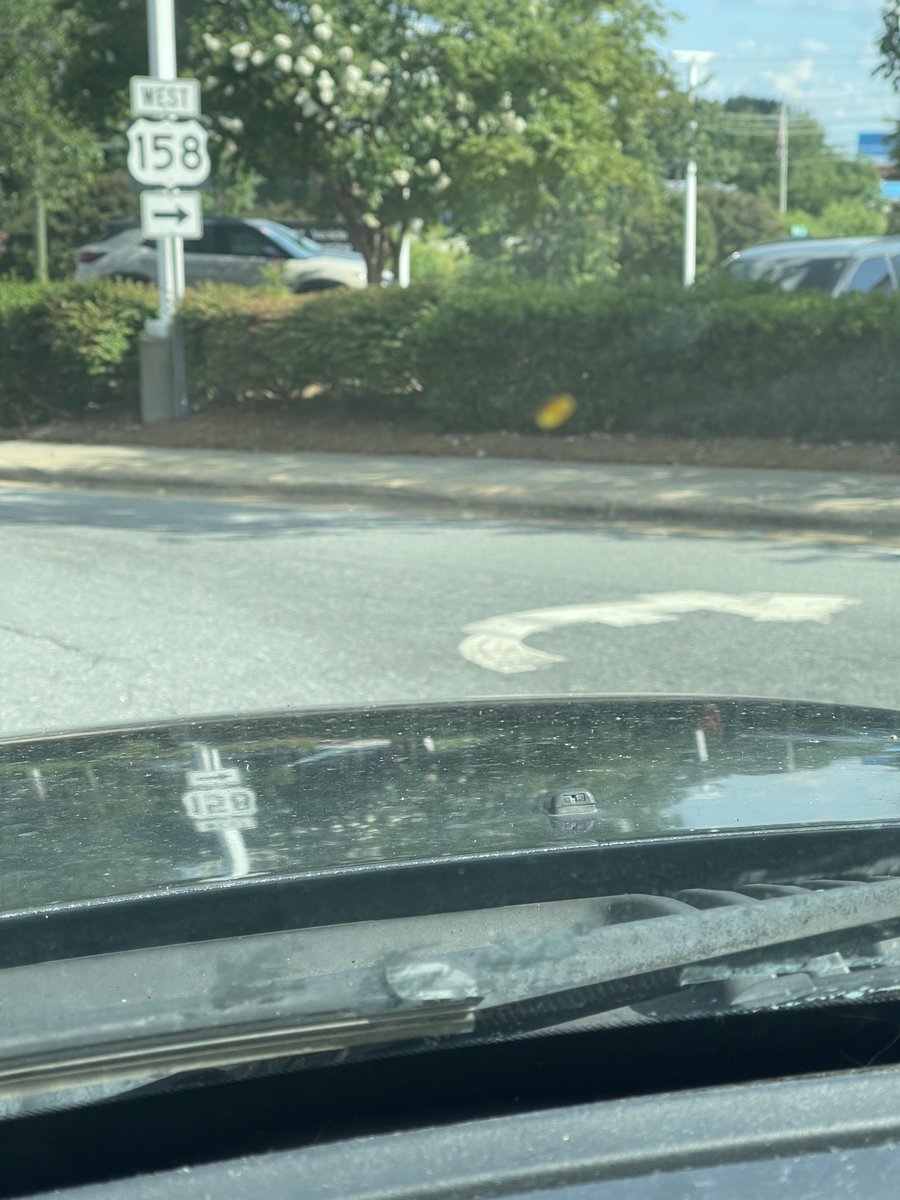









See the yellow spot near the top right? My windshield was flyblown with eggs there.This is the 2nd female blowfly who’s done this to my windshield.Later in the season, they will be bigger with more eggs.They only mate once.The new world screwworm fly is a blowfly.
1
19
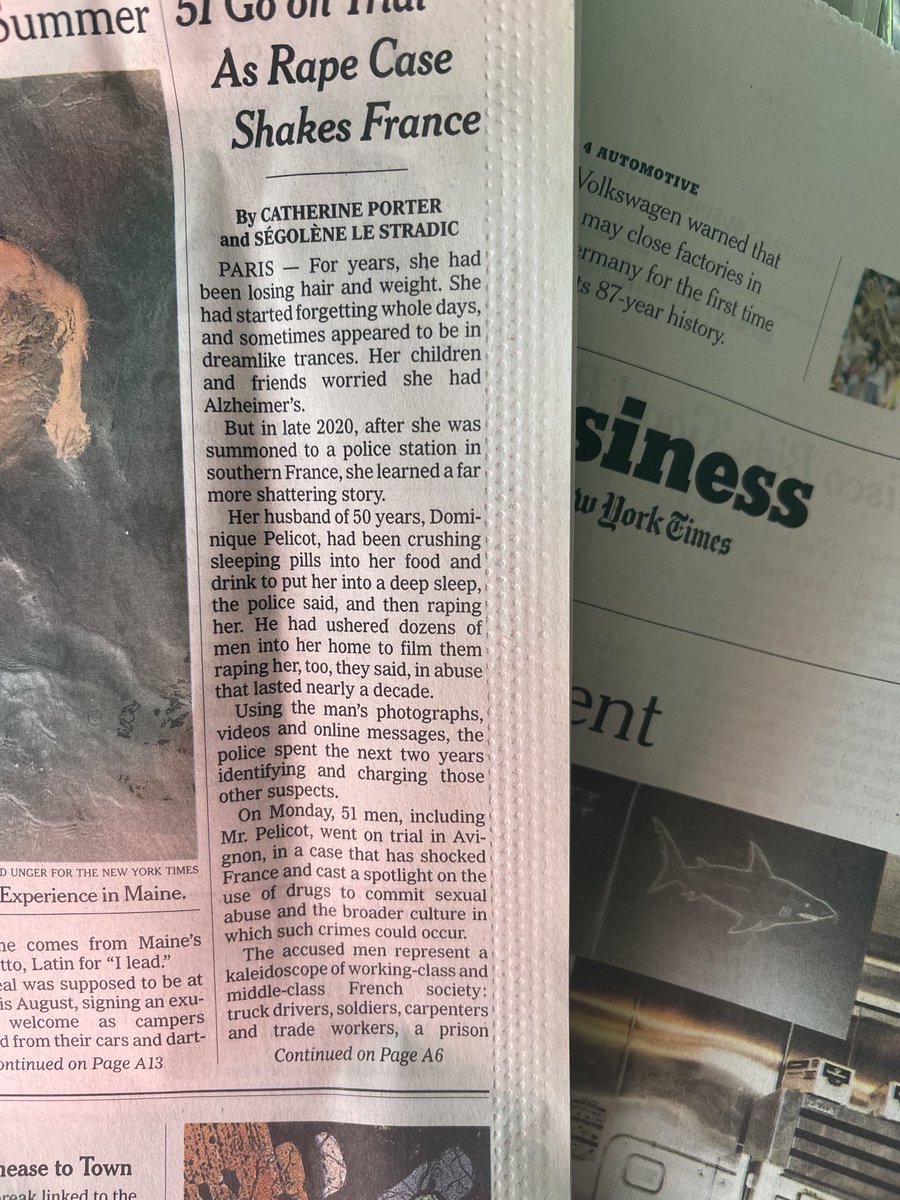
Targeted Individuals (TI’s) are stalked by rotating groups of ppl who smear feces and dead animals on the vehicle windows, front doorways, and on furniture inside the home to draw the new world screw worms to the syphilis infected ppl (many don’t initially know they have been nonsexually infected w/syphilis b/c they are celibate after corrupt cops fixed their spouse up w/someone else). The flies hang out on the inside of the syphilis person’s pant leg and crawl up into their orafaces immediately after they fall asleep. Hence Michael Proctor saying he hoped the damn Jew, Karen Read would get an insect that would crawl up her vagina and feed on her vagina from the inside out until she killed herself or died. This is not death. This is torture and murder, and this is how China claims there is no crime. Instead let’s give AI the full and complete reins, so there are no more mass shootings as a result of this illegal torture.
1
17
Syphilis starts turning the brain to mush immediately. Ref: “Palmer Lucky saying, People can live w/just 3% of their brain.” MENSA Phyllis Thompson saying that one guy died b/c he couldn’t remember to eat. Sometimes we lose a few.” Sometimes these corrupt cop hit men who nonsexually infect their victims w/syphilis that makes flesh flies/blow flies crawl up the orafices of people w/syphilis as soon as they fall asleep like the male NKorean who crossed the DMZ saying he was infested with worms, also gas their victims while they sleep in their bedrooms and Pelicot them and make and sell naked videos.
23
If you think people nonsexually infected with Syphilis can just get treatment, please realize that treatment only follows an accurate test result. Corrupt cops are not allowing medical pros/labs to give accurate test results/treatment. The people that were nonsexually infected with syphilis by a hit squad are labeled mentally ill so no one will rep test them.
6
The Guatemala Research Study listed on Wikipedia may be related: Ft Deitrick & bird flu drawing flesh flies/new world screw worm flies and Proctor saying he hoped Karen Read would get an insect up her vagina that would feed on her vagina from the inside out so she would kill herself; Latino lawn care companies as fronts; stopping AI b/c it will stop corruption and everyone will be found out; corrupt cops and gang/cartel mbrs working together w/trafficking rings; mass shootings; FBI and local cops breaking up engagements and marriages so the woman is wrongly labeled mentally ill; etc
49
Wikipedia Syphilis Study Continued: the course of the Experiments."[39] The hope was that compensation could be attained by targeting private institutions rather than the federal government.
In January 2019, U.S. District Judge Theodore Chuang rejected the defendants' argument that a recent Supreme Court decision shielding foreign corporations from lawsuits in U.S. courts over human rights abuses abroad also applied to domestic corporations absent congressional authorization. However, the District Court subsequently ruled in April 2022 in favor of the defendants, holding that John and his colleagues were not acting on behalf of the Rockefeller Foundation and the employees of Johns Hopkins had not aided or abetted any violations of the law committed by Mahoney or Cutler.[citation needed]
4
Wikipedia Germans Syphilis Study Continued: As a response to the dehumanization by human experiment, the Nuremberg Code and Helsinki Code in 1971 were developed to govern ethics in medical research. Research like this deserves the need for informed consent in any type of research in general, and it should prohibit experiments where injury, disability, or death to the participant is reasonably expected. Nevertheless, "science and society should never outweigh the wellbeing of the subject".[34] "The way that this case in Peru was handled though, supports the view that – include monetary redress and criminal investigations – in Guatemala matter. Some would also argue that the Guatemala study constituted torture or cruel, inhuman and degrading treatment, and the US has an obligation under international law to pursue criminal investigations and provide the victims with adequate financial compensation."[34]
The U.S. government asked the Institute of Medicine to conduct a review of these experiments beginning January 2011.[6][9] While the Institute of Medicine conducted their review, the Presidential Commission for the Study of Bioethical Issues was asked to convene a panel of international experts to review the current state of medical research on humans around the world and ensure that these sorts of incidents do not occur again.[35] The Commission report, Ethically Impossible: STD Research in Guatemala from 1946 to 1948, published in September 2011, aimed to answer the following four questions:
1What occurred in Guatemala between 1946 and 1948 involving a series of STD exposure studies funded by the U.S. PHS?
2To what extent were U.S. government officials and others in the medical research establishment at that time aware of the research protocols and to what extent did they actively facilitate or assist in them?
3What was the historical context in which these studies were done?
4How did the studies comport with or diverge from the relevant medical and ethical standards and conventions of the time?[9]
The investigation concluded that "the Guatemala experiments involved unconscionable basic violations of ethics, even as judged against the researchers' own recognition of the requirements of the medical ethics of the day."[9][36] Even besides the fact that U.S. never truly apologized for the study, as human rights activists have called for subjects' families to be compensated.[24] As of 2017, the families still have not been compensated even though there have been several lawsuits filed.[37]
Lawsuits
edit
Manuel Gudiel Garcia v. Kathleen Sebelius
edit
Many Guatemalans believed that the U.S. apology was not enough. In March 2011, seven plaintiffs filed a federal class-action lawsuit against the U.S. government claiming damages for the Guatemala experiments. This case argued that the United States was at fault due to not asking for consent. This lawsuit asked for money damages to compensate for medical injuries and loss of livelihood, as most of the families were living in poverty. The suit was dismissed when United States District Judge Reggie Walton determined that the U.S. government has immunity from liability for actions committed outside of the U.S.[38]
Estate of Arturo Giron Alvarez v. The Johns Hopkins University
edit
In April 2015, 774 plaintiffs launched a lawsuit against Johns Hopkins University, the pharmaceutical company Bristol-Myers Squibb, and the Rockefeller Foundation, seeking $1 billion in damages, seeking to hold the university accountable for the experiment itself because the doctors held important roles on panels that reviewed the federal spending on research for other sexually transmitted diseases. The plaintiffs claimed that Johns Hopkins was actively involved in these experiments, stating "[they] did not limit their involvement to design, planning, funding and authorization of the Experiments; instead, they exercised control over, supervised, supported, encouraged, participated in and directed
12
Wikipedia Guatemala Syphilis Study Continued: research in Guatemalan laboratories. She initiated the VDRL (Venereal Disease Research Laboratory) and Training Center within Central America starting in 1948 and stayed in Guatemala until 1951. Mahoney appointed her to manage the laboratory in Guatemala after Cutler left in 1948. Here she conducted several independent serological experiments for STD research with the help of Funes and Salvado.[28][9]
Juan María Funes and Carlos Salvado
edit
Guatemalan doctors Juan María Funes and Carlos Salvado were also employees of the Pan-American Sanitary Bureau, who remained in Guatemala after their work with Cutler. Funes was Chief of the Venereal Disease section at the Guatemalan National Department of Health and was responsible for referring sex workers with STDs from the Venereal Disease and Sexual Prophylaxis Hospital (VDSPH) to Cutler. Salvado was the director of the Psychiatric Hospital in Guatemala where parts of the syphilis study were conducted. Salvado was an active participant in the intentional exposure experiments.[9]
In order to advance in their careers, they opted to stay and continue observations on subjects of the syphilis experiments, including data collection from orphans, inmates, psychiatric patients, and school children. These periodic data collections consisted of blood specimens and lumbar punctures from participants. Data was shipped back to the United States, where many of these blood samples tested positive for syphilis. Funes and Salvado continued collecting samples from participants until 1953.[9]
Aftermath
edit
Continued research
edit
After the conclusion of the Guatemalan syphilis experiments, many of the samples taken during the experiments were then moved to the United States. Records show that these samples were then given to laboratories across the United States, where they were used for research. Many of the Laboratories using the samples from the Guatemalan syphilis experiments were later given samples from the Tuskegee syphilis experiments. Due to a lack of regulations involving laboratory samples, it is unknown if the samples from the studies are still being used today; however, records show that they were in use by at least 1957.[29]
Apology and response
edit
In October 2010, the U.S. government formally apologized and announced that the violation of human rights in that medical research was still to be condemned, regardless of how much time had passed.[30][31][32] Following the apology, Barack Obama requested an investigation to be conducted by the Presidential Commission for the Study of Bioethical Issues on November 24, 2010.
The Commission concluded nine months later that the experiments "involved gross violations of ethics as judged against both the standards of today and the researchers' own understanding".[9] In a joint statement, Secretary of State Hillary Clinton and Secretary of Health and Human Services Kathleen Sebelius said:
Although these events occurred more than 64 years ago, we are outraged that such reprehensible research could have occurred under the guise of public health. We deeply regret that it happened, and we apologize to all the individuals who were affected by such abhorrent research practices. The conduct exhibited during the study does not represent the values of the US, or our commitment to human dignity and great respect for the people of Guatemala.[30]
President Barack Obama apologized to President Álvaro Colom, who had called the experiments "a crime against humanity".[21]
It is clear from the language of the report that the U.S. researchers understood the profoundly unethical nature of the study. In fact the Guatemalan syphilis study was being carried out just as the "Doctors' Trial" was unfolding at Nuremberg (December 1946 – August 1947), when 23 German physicians stood trial for participating in Nazi programs to euthanize or medically experiment on concentration camp prisoners."[33]
36
Wikipedia Guatemala Syphilis Study Continued: the syphilis study section that approved the Guatemala research Grant. During the Guatemala syphilis study, Mahoney was the primary supervisor of the experiments, receiving Cutler's reports on the experiments. In 1946, while the syphilis study was ongoing, John Mahoney was awarded the Lasker award for discovering penicillin as a cure for syphilis.[9]
After completion of the Guatemala syphilis study, John F. Mahoney became the chairman of the World Health Organization in 1948. In 1950 he became Commissioner of the New York City Department of Health, where he worked until his death in 1957.[9]
John Charles Cutler
edit
The experiments were led by United States Public Health Service Venereal Diseases Research Laboratory physician John Charles Cutler,[24] who had earlier joined the Public Health Service in 1942 and served as a commissioned officer.[25] Cutler participated in the similar Terre Haute prison experiments, in which volunteer prisoners were infected with gonorrhea spanning from 1943 to 1944.[9] Cutler also later took part in the late stages of the Tuskegee syphilis experiment, where black Americans were lied to about getting available treatment for syphilis. Over 100 people died due to lack of treatment. In a 1993 documentary about the Tuskegee syphilis study titled "Deadly Deception", Cutler defends his actions saying, "It was important that they were supposedly untreated, and it would be undesirable to go ahead and use large amounts of penicillin to treat the disease, because you'd interfere with the study."[26]
While the Tuskegee experiment followed the natural progression of syphilis in those already infected, in Guatemala doctors deliberately infected healthy people with the diseases, some of which can be fatal if untreated. His team created a laboratory in Guatemala supplied by the United States military to discover if there were different transmission rates when the disease was presented to different infectious sites. Cutler created the protocol for infection site research. Cutler and his team discovered that the disease takes 93%-100% if infected through scarification or intracutaneous injection into the foreskin. After the transmission was studied, Cutler focused on the diseases' treatability. People were then recruited and infected and either put into a treatment group or a control group. The treatment group was given orvus-mapharsen or penicillin to see its effects, and the control group was given nothing to stop the disease.[27] The researchers paid prostitutesinfected with syphilis to have sex with prisoners, while other subjects were infected by directly inoculating them with the bacterium.[6] Through intentional exposure to gonorrhea, syphilis, and chancroid, a total of 1,308 people were involved in the experiments. Of that group, with an age range of 10–72, 678 individuals (52%) can be said to have received a form of treatment.[9] However, Cutler claimed all had been treated. Hidden from the public, Cutler used healthy individuals in order to improve what he called "pure science". Cutler participated in intentional infection experiments in Guatemala until his departure in December 1948.[9]
After the Guatemala syphilis study, Cutler was asked by the World Health Organization to head an India-based program for demonstrating venereal disease for Southeast Asia in 1949.[25]
John Cutler went on to become Assistant Surgeon General of the U.S. Public Health Service in 1958. In 1967, he would end his tenure when he was appointed professor of International Health at the University of Pittsburgh Graduate School of Public Health. In 1968, he became acting dean of the school and served until 1969. After his death in 2008, his roles in the Tuskegee experiment were publicized and he was stripped of his legacy.[9]
Genevieve Stout
edit
Genevieve Stout was a bacteriologist for the Pan-American Sanitary Bureau who promoted and established serological
31
Wikipedia Guatemala Syphilis Study Continued: individuals were monitored for symptoms or became a part of the experiment through natural infection.[13] The populations involved consisted of child and adult commercial sex workers, prisoners, soldiers, orphans, leprosy patients, and mental hospital patients.[12][18] Many of these subjects were Indigenous Guatemalans and Guatemalans living in poverty.[13] Their ages ranged from 10 to 72, though the average subject was in their 20s.
The Centers for Disease Control and Preventionacknowledges that "the design and conduct of the studies was unethical in many respects, including deliberate exposure of subjects to known serious health threats, lack of knowledge of and consent for experimental procedures by study subjects, and the use of highly vulnerable populations."[22] A total of 83 subjects died, though the exact relationship to the experiment remains undocumented.[9][22]
Medical professionals involved
edit
Thomas Parran
edit
Thomas Parran was the sixth Surgeon General of the United States, who served from 1936 to 1948. Parran's profound interest in STD research can be seen when he testified before Congress in 1938 for expanded funding for public health prevention efforts and scientific research in the STD field. [citation needed]
He had knowledge of the experiment's ethical implications. This can be seen in a 1947 letter to John Charles Cutler (the lead researcher of the Guatemala STD studies) Parran is quoted as having said "You know, we couldn’t do such an experiment in this country,” which would suggest he was aware of some of the ethical issues in the study. However, the full extent of his knowledge is unclear. An official committee at the University of Pittsburgh reported the following on Parran, who was a founder of the University's Graduate School of Public Health: “Dr. Parran’s role, and the extent of his influence in approving, funding, and providing oversight of the Tuskegee and Guatemalan studies, is not entirely clear. Based upon the evidence available today, it might not be possible to determine with certainty Dr. Parran’s level of knowledge and involvement in the studies.” Following their investigation the University of Pittsburg still removed Dr. Parren's name from all school buildings.
After serving as Surgeon General, Thomas Parran began a career working as the first dean of the new School of Public Health at the University of Pittsburgh. He retired from his administrative role at the university and became president of the Avalon Foundation, affiliated with the Mellon family, and became active in the A. W Mellon Educational and Charitable Trust. He died in 1968, and the University of Pittsburgh School of Public Health named Parran Hall after him in 1969. The building was renamed in 2018 due to his involvement in unethical experimentation.[23]
John F. Mahoney
edit
Prior to his involvement in the Guatemalan syphilis experiment, Mahoney graduated from the University of Pittsburgh medical school in 1914. By 1918 he was the Assistant Surgeon at the United States Public Health Service. In 1929, Mahoney worked as the director of the Venereal Disease Research Lab in Staten Island, where the Terre Haute experiments began in 1943, and where Cutler first assisted him.[citation needed]
After stopping the Terre Haute experiments for lack of accurate infection of subjects with gonorrhea, Mahoney moved on to study the effects of penicillin on syphilis. His research found huge success for penicillin treatments and the US army embraced it in STD prescription. Although this seemed promising, Mahoney and his collaborators questioned the long term prospects for eliminating the disease altogether in individuals.[9]
Mahoney, Cutler, Juan Funes and other researchers felt that a smaller, more controlled group of individuals to study would be more helpful in finding this cure. This led to the use of citizens in Guatemala as subjects. Mahoney was a member of
105