
Joined July 2013
- Tweets 30,788
- Following 1,294
- Followers 4,235
- Likes 1,076
4,872 Photos and videos















Pinned Tweet

Ludzi powaliło.
3
1
17
Za pięć lat liczba mieszkań w Polsce będzie w pełni zabezpieczać potrzeby mieszkaniowe Polaków - twierdzi resort rozwoju i wyhamowuje wydawanie pozwoleń na budowę. W najbliższych latach liczba gniazdowników może się nawet zmniejszać.
Jun 10

Za pięć lat liczba lekarzy w Polsce będzie w pełni zabezpieczać potrzeby medyczne Polaków - twierdzi resort zdrowia i wyhamowuje limity miejsc na studiach lekarskich. W najbliższych latach liczba wakatów może się nawet zmniejszać. Więcej: next.gazeta.pl/next/7,151003…

4
6
57
3,497
"europa jest zamurzyniona przez zydow i lewactwo i chuj ci w dupe"
Poeci są wszędzie wokół nas, nie trzeba im dopłacać do składek ZUS, żeby się rodzili.
Jun 8

Czlowieku ja nie głosuje na platforme lewice czy pis zeby sluchac politykow tak jak wy to robicie xd zachod jest zlewaczaly wiec nie jest nawet zgnity. Jebie mnie kto gdzie ma dom i gdzie dzieci wysyla. Wiem ze eurpa jest zamurzyniona przez zydow i lewactwo i chuj ci w dupe.
3
316
Tutaj działa rozwiązanie brzegowe. Jeśli populacja Polski spadnie do zera, to będzie wiadomo, ile wynosi. Zero.
Jun 1

Ciekawe czy państwu polskiemu kiedyś uda się ustalić kto i gdzie w nim mieszka
2
11
1,066
Pozwoliłem algorytmowi zanurzyć mnie w szurskich bagnach Facebooka i dostaję wspaniały kontent.
1
41
1,994
Jest rok 2055: Prezydent Barron Trump w noworocznym orędziu na platformie MAGAverse poinformował, że rozmowy z Iranem w sprawie otwarcia Cieśniny Ormuz są bardzo zaawansowane. Przełom był możliwy dzięki deklaracji Izraela o nieprzekraczaniu linii Wan-Erbil-Bagdad-Nowa Basra.
2
16
785
Rok temu Rafał Trzaskowski dokonał rzeczy niemożliwej: spektakularnie przerżnął wybory prezydenckie, wprowadził prawicę w stan fałszywego poczucia bezpieczeństwa, wpędził w pułapkę i spektakularnie zdetonował swoją karierę polityczną, zadając PiS cios. Cześć i chwała bohaterowi.
7
5
94
5,208
Warto wydawać 3% PKB na naukę przede wszystkim po to, żeby Maciej Gdula już nigdy nie musiał kandydować w wyborach.
3
2
58
2,200
W lolsce pierwszeństwo mają w pierwszej kolejności: szybszy samochód, większy samochód, droższy samochód i samochód z mocniejszym silnikiem. Reszta to didaskalia i pierdoły dla zawalidróg, świętych krów, lamerów i biedaków.

Komentarze pod tym wpisem to absolutne dno. Dziewczynka zginęła, bo jakiś baran uznał, że nie musi się rozglądać, jak skręca, a komentujący widzą winę dziewczynki, która miała zielone światło. Co za ściek.
23
863
Prawda jest taka, że dziennikarze udają, że nie rozumieją o o chodzi w tej dyskusji i krytyce tego pomysłu, bo: (a) fantomowy etos inteligenta każe się solidaryzować z artystami, nie z pracownikami innych sektorów; (b) liczą na to, że ktoś im w przyszłości dosypie do ich emerytur
May 28

Prawda jest taka, że w tej dyskusji chodzi po prostu o niechęć do artystów. I głębszy problem - kliniczną nienawiść do humanistyki.
Pomysł dopłacania do emerytur bezrobotnym całe życie nie wzbudziłby ułamka takiego sprzeciwu jak dopłacanie pracującym całe życie artystom.
6
8
79
2,548
Butelka coli bez cukru kosztuje tyle, co dwa piwa. Co my właściwie wyprawiamy?
56
6
738
45,696
Wielką tragedią Polski jest to, że w dalszym ciągu nie mamy alternatywy dla USA, jakkolwiek kapryśny i chaotyczny ten partner by nie był. Ludzie uważający, że w kwestiach bezpieczeństwa Europa jest wiarygodniejsza, są naiwni i padli ofiarą polaryzacji afektywnej na skalę globalną

Trump on Taiwan: When you look at the odds, China is very, very powerful, big country. That's a very small island. Think of it, it's 59 miles away. We're 9500 miles away. That's a little bit of a difficult problem. Taiwan was developed because we had presidents that didn't know what the hell they were doing. They stole our chip industry.
12
1
20
2,154
Tą przyczyną są oczywiście artykuły w kobieta.onet.pl o zaletach podróżowania.
May 15

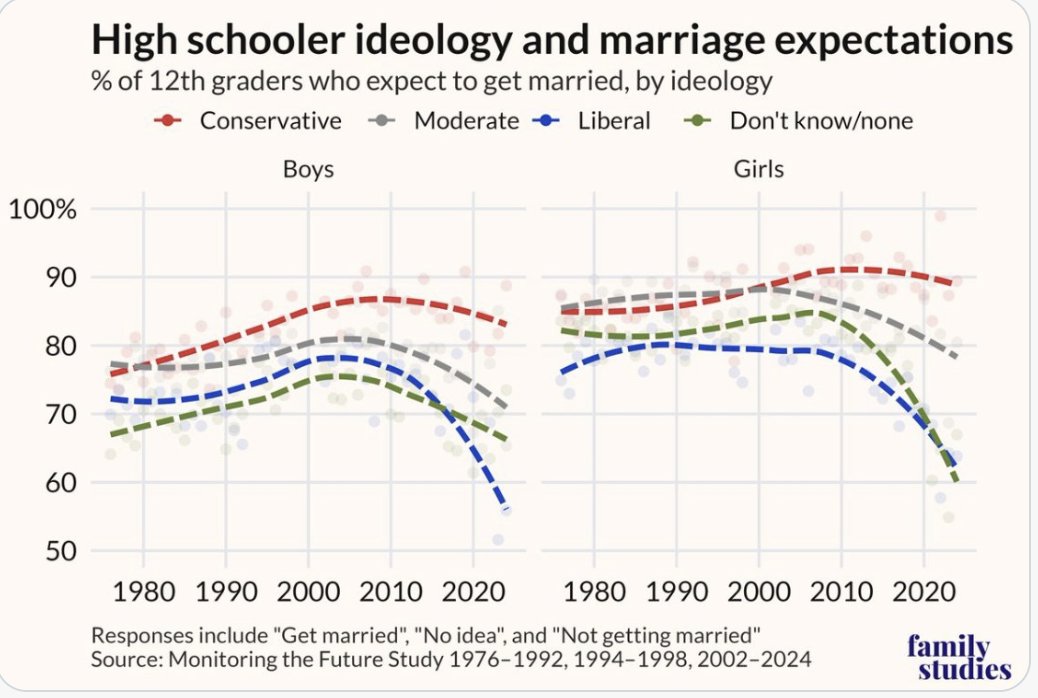
Any theory of what's happening to human beings re: marriage and fertility has to explain why young Chinese people and young Americans both became deep marriage-and-family pessimists across the 2010s:

1
11
1,160
XXXXXXDDDDDDDDDDDDD

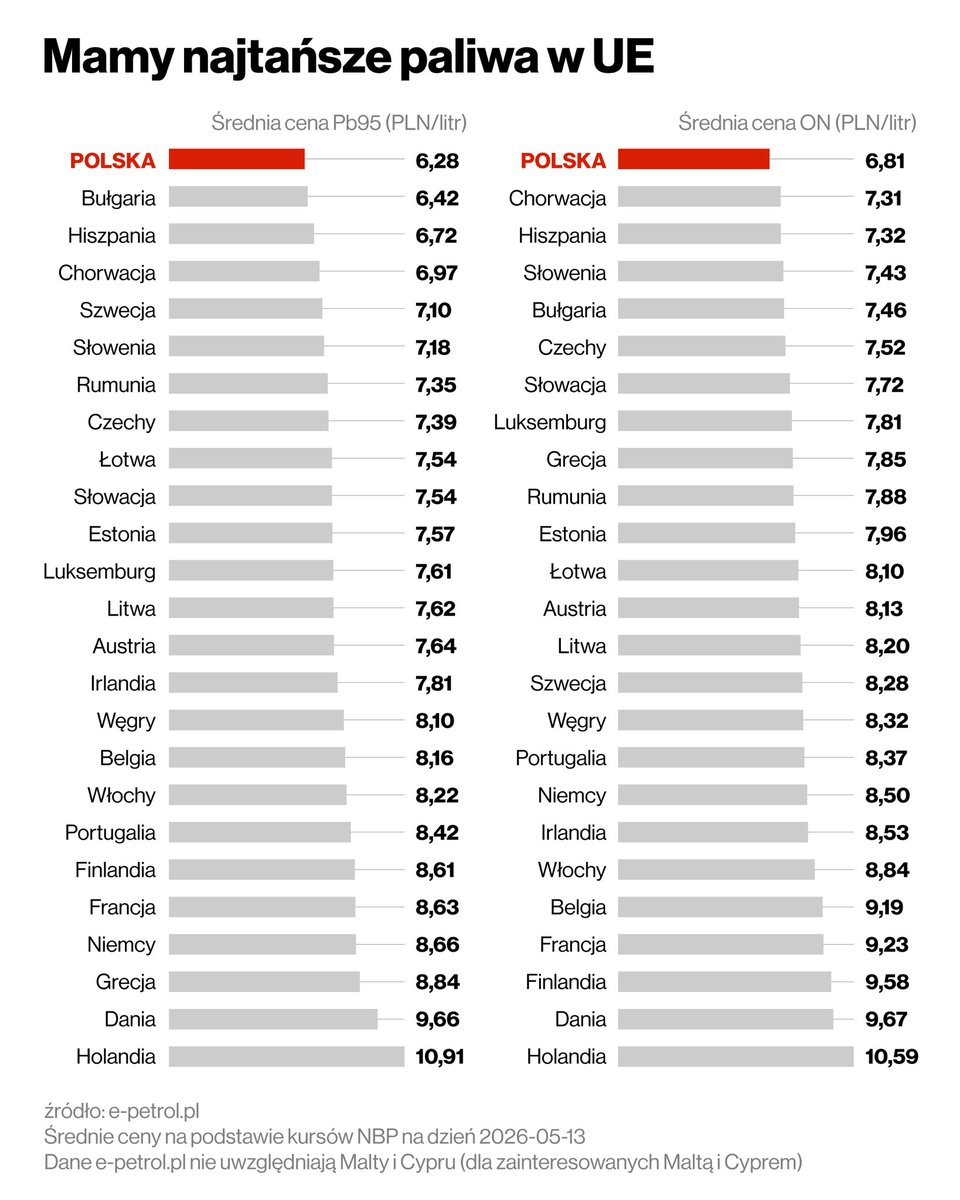
W Polsce nie mówimy CPN-srepeen. W Polsce mówimy: najtańsze paliwa w UE
1
4
530
hear me out: 3% PKB na naukę, ale nie mówimy, z którego roku to PKB

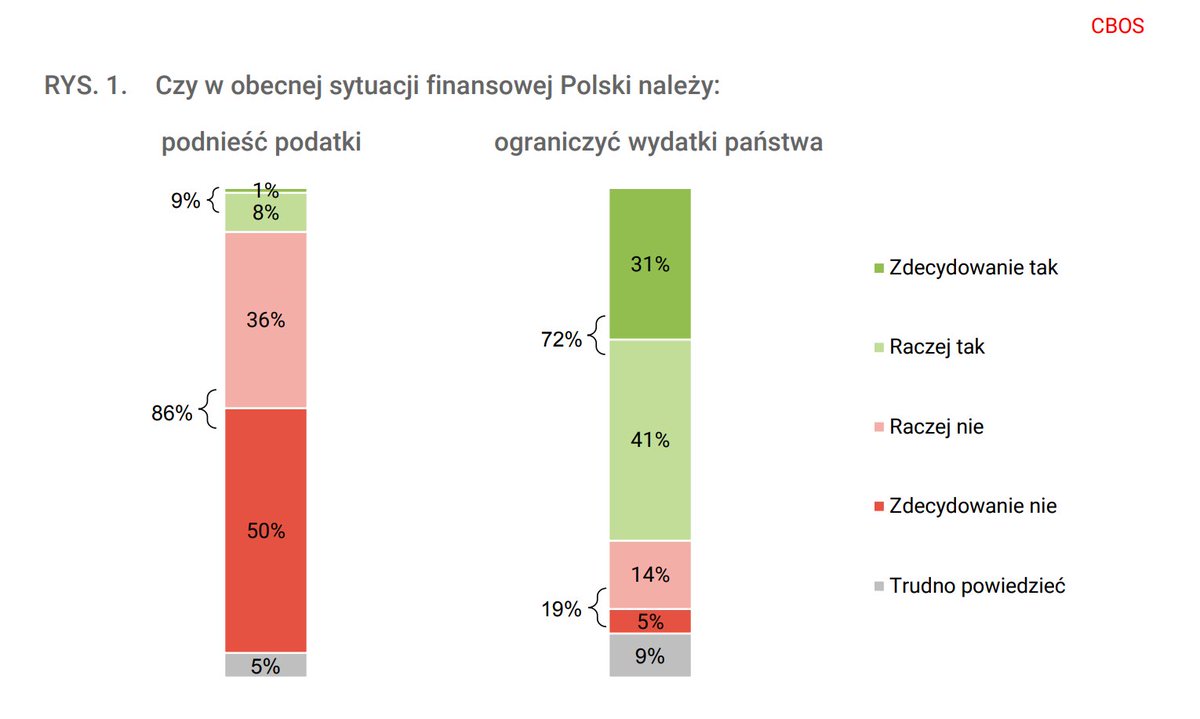
Przy pomysłach z gatunku 3% PKB na naukę, 7% PKB na zdrowie, 3% PKB na obronność zawsze zastanawiam się a) czy kiedyś przebijemy na sumie 100%, b) po cholerę nam gospodarka rynkowa skoro coraz więcej chcemy alokować ustawowo.
15
1,166
Read this book and give it to all your friends.
Survival of civilization depends on it!
May 14

Read this book and give it to all your friends.
Survival of civilization depends on it!

1
413
Skeptical Economist, prof. Collegium Mesozoicum retweeted

May 12
We stopped everything to write an answer (link below) to Paul Krugman's two posts of today (one informal, one with a simple model) arguing that Europe is broadly not falling behind the United States.
The change measured by the Draghi report, he argues, is mostly due to growth in the technology industry, which has distorted GDP numbers without actually leading to higher standards of living. We should believe our eyes when we walk around France and walk around Mississippi.
Krugman is wrong. The measures he uses understate European stagnation. This matters enormously. Divergence with the United States is the strongest evidence for reform in Europe.
1. The growth numbers
Krugman compares the United States, France, and Germany at purchasing power parity in current prices. On that measure, France's and Germany's position relative to America has been roughly constant since 2000.
But current price comparisons miss productivity gains in sectors where prices fall. If America produces twice as much software while the price of each unit halves, the value of American software output looks unchanged even though the volume has doubled.
Most economists therefore use constant prices, which fix the base-year PPP level and apply each country's real output growth on top of it. American output growth has concentrated in tech, where prices have fallen tremendously as productivity rises. In terms of the volume of things produced, America has pulled away from Europe.
2. Is it all the tech industry?
Krugman concedes this tech divergence but says it is not welfare-relevant. The American growth lead is an accounting artefact of measuring more iPhones at base-year prices, not a sign that Americans are actually richer, because Europeans buy the same iPhones at the same world prices.
This is not the right way to think about the world today, as an earlier Paul Krugman would have argued.
His model assumes tradable goods, interchangeable workers, marginal-cost pricing, and no profits. Each assumption fails.
Most of what households buy is non-tradable: housing, healthcare, childcare, education. When American tech firms bid workers from haircutting to coding, American haircut wages rise. Germany has no growing tech sector to do the bidding, so German wages stay flat.
Technology is not priced at marginal cost. Apple's margins are around 40 percent. Anthropic's inference margins are at 70 percent. The major platforms enjoy network effects, switching costs, and lock-in that hold prices well above what a competitive market would deliver. A large share of the productivity gains in technology stays as profit.
A lot of the value of American technology dominance shows up in equity, not in wages. Apple, Microsoft, Nvidia, Alphabet, Meta, and Amazon together are worth $21 trillion, more than the entire combined stock market value of all European stock markets. Around 60 percent of US equity is held by American households. The median French or Spanish household holds almost no equity.
The median employee at Meta, a company with almost 80,000 employees, earned $388,000 in 2025.
This advantage is not going to go away. Krugman's own 1991 paper, cited in his Nobel prize, showed that comparative advantage in modern industries is produced by increasing returns to scale, specialized labor markets, supplier networks and the agglomeration of suppliers, workers, and ideas in particular places. Once an industry concentrates somewhere, the concentration is self-reinforcing. Europe is being pushed away from the next round of technology industries (AI!).
3. What about inequality?
Another retort is that GDP per capita hides substantial inequality, and so even if America is rich on average, this is mostly due to the super wealthy.
But despite the US's high pre-tax income inequality, it also achieves higher median incomes than Europe, in part because of such a high base, and in part because it actually redistributes more than many European countries.
The cleanest comparison is median equivalised disposable household income: income after cash taxes and transfers, adjusted for household size and purchasing power. According to the OECD's 2021 numbers, the median American earns 30 percent more than the median Dutchman, about 31 percent more than the median German, and about 52 percent more than the median Frenchman.
4. What about hours worked?
Krugman points out that while American GDP per person is higher, most of this is because Americans work more. For this divergence to be an hours worked story, Americans must work more relative to Europeans now than they did in 2000.
The opposite has happened. Birinci, Karabarbounis, and See in a 2026 NBER paper show that about half of the American-European hours gap that existed in the 1990s has reversed by the end of the 2010s. Americans work fewer hours per person than they did in 2000, while most Europeans work more.
5. Is America not a bad place to live?
Walk around Alabama and France: surely the former cannot be substantially richer than the latter?
American cities often have poorer centres and richer suburbs or exurbs. European cities preserve richer and more attractive historic cores. A visit to a city as a tourist in America compared with a city in France will leave one having seen different spots on the income distribution. Americans in Europe go to the nicest and richest European cities.
Rather than a walking around test, do a driving around test. Go to the periphery of any modern American city and see a level of new-built material wealth that is extremely uncommon in Europe, with thousands of enormous four- or five-bedroom homes. In the South, in places like Nashville and Austin, drive around the downtowns to see hundreds of luxury apartment buildings springing from the ground. This construction boom is replicated virtually nowhere in Europe today.
The other question is generational. Housing often costs more in Europe than in the United States, despite the quality of the housing stock generally being much better. Europe has nice city cores but these are inaccessible to young Europeans.
Consider the salaries available to entry-level workers. The starting pay for a London police officer is $57,000. In Washington, DC, $75,000. The entry-level Deloitte consultant job in Madrid pays around €28,000, roughly $33,000 per year. In Charlotte, the entry-level Deloitte job pays $63,000.
There are many things to dislike about life in America. But relative to 25 years ago, the gap in material wealth has shifted dramatically in America's favor.
siliconcontinent.com/p/europ…
96
512
2,179
1,056,029
Marcin, gdy po przerwie pisze wątek, w którym nic się nie zgadza i nigdzie nie ma racji. Diament.

1/ Dlaczego żłobki to zło, które niestety bywa konieczne; dlaczego to getta i zatruty owoc kapitalizmu; dlaczego tak trudno w ogóle rozmawiać o żłobkach i wreszcie dlaczego są alternatywy dla żłobka, które nie oznaczają zamknięcia matki w domu. Zapraszam tym razem na dłuższą 🧵
2
1
17
864
Powodem zapaści demograficznej jest to, że laska sobie robi jaja na TikToku a przedwcześnie zdziadziały działacz ZBOWiDu pisze na ten temat elaborat na Twitterze premium. Oboje oczywiście powinni mnożyć się i czynić sobie ziemię poddaną.
May 11

Uwielbiam, gdy wskazuje się problem niedostępności mieszkań jako przyczynę niskiej dzietności w Polsce. Poniżej jeden z nieco lepszych powodów zapaści demograficznej w Polsce.
Dziewczynie przeszkadza, bo chłop zaprosił ją na piknik. Nie wiem, może jestem stary – ale naprawdę to lepiej, że chłop ma jakąś większą wyobraźnię niż wyjście na kawę. Film ma ponad 10 tysięcy polubień na TikToku i ponad 450 komentarzy, a sama dziewczyna ponad 250 tysięcy obserwujących. Jeżeli ktoś ma ładowane takie rzeczy do głowy, to w końcu zacznie robić tak samo.
Podobnych profili jest coraz więcej i kręcą niesamowite liczby. Mam wrażenie, że nie jest to do końca przypadek, ale chciałbym się mylić.
Obawiam się, że w Polsce coraz bliżej jest powtórzenia się „scenariusza koreańskiego”. Czyli doprowadzenie do walki płci, a w efekcie do jeszcze niższej dzietności, która i tak była niska przez koreańskie podejście do życia i pracy.
Potem Ci sami ludzie odpowiedzą w ankietach, że nie mają dzieci przez brak mieszkań.
1
8
1,118

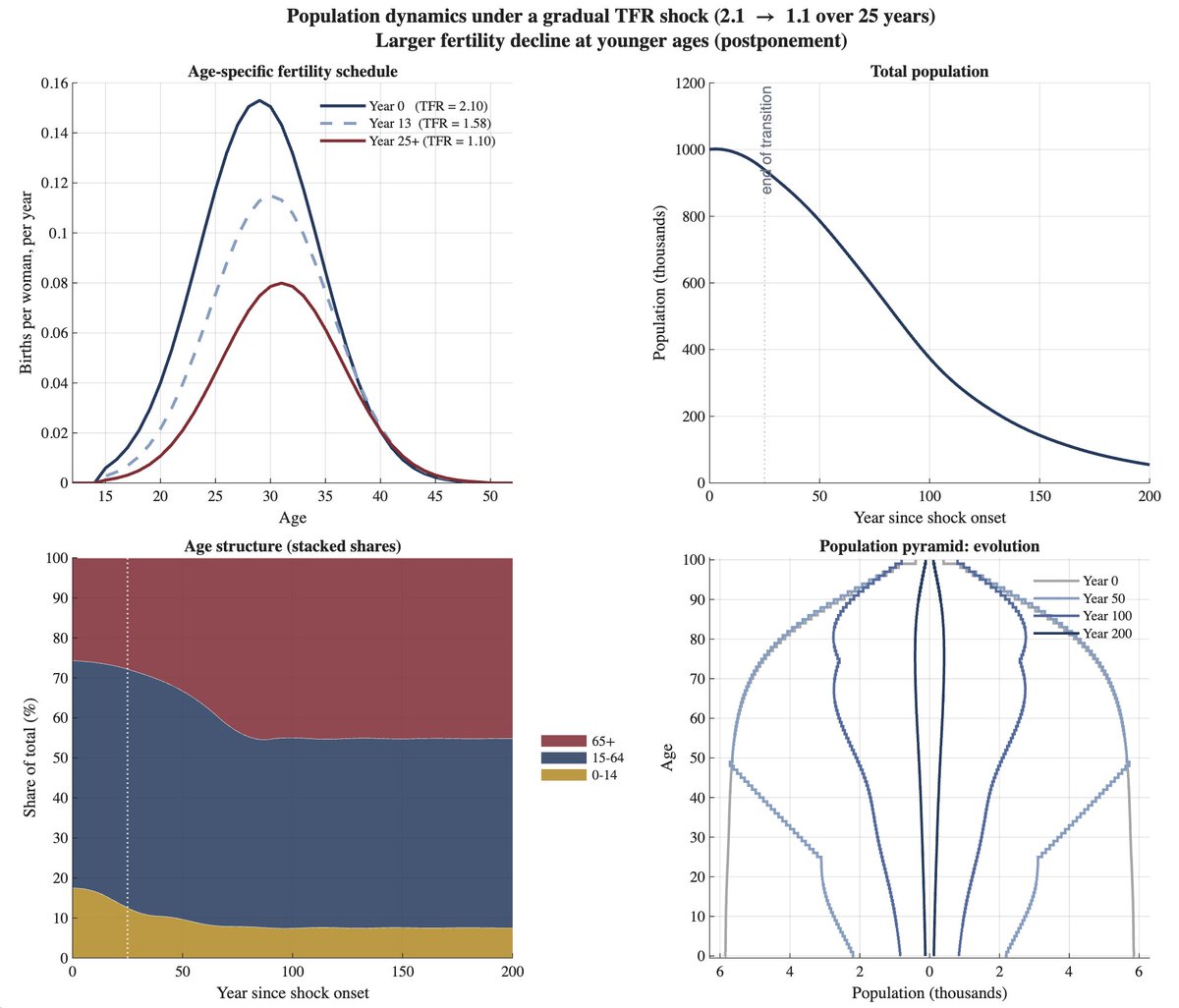
When I write about the long-run consequences of population decline, I’ve noticed that most people cannot grasp what a total fertility rate (TFR) of 1.1 means. Many of my readers look at 1.1 and treat it as not that different from 2.1. This is the wrong way to think about it: TFRs are like interest rates; they compound over time.
To make the point, I ran the following simulation. I built the population structure of a country with 1 million inhabitants, a TFR of 2.1 (just at replacement level), and a life expectancy of 85 (with realistic survival rates). Thus, this country has a stationary population over time.
I then hit this country with a reduction in the TFR from 2.1 to 1.1. The reduction, which takes 25 years to complete, is similar in size and duration to what we’ve seen in many advanced and middle-income economies. It is also concentrated among younger women, with fertility postponed to later years. I plot the initial, middle, and final TFR in the top-left panel of the figure.
I then simulate the next 200 years of this population. By the year 200, the original 1 million has fallen to 54,900, a 95.5% reduction. The top-right panel illustrates this evolution. This is not a minor adjustment: it means closing 95 of every 100 universities, hospitals, and shops. Since the population is likely to concentrate in a few remaining cities, nearly the whole country becomes a population desert.
The bottom two panels show the population structure and pyramids. The population stabilizes at a median age of 61 and an old-age dependency ratio of 95.21%.
You might argue that TFR is unlikely to remain at 1.1 for so long because higher-fertility subgroups (e.g., the highly religious) would grow as a share of the population. Fair enough. But I am not offering this simulation as a forecast. I am illustrating how, at current rates, countries of 50 million people (roughly South Korea or Spain) would become countries of 2.75 million, ignoring immigration.
These are the issues for the next century.
650
> ten wykres jest jest błędny i manipulancki
> przygotowuje swój wykres
> jest niemal identyczny
> zaorane
> pora na CSa (CroiSsanta)
1
581