
Author of The Four Foundations of Golf ➜ amzn.to/4afNDr9 I Co-Host of The Sweet Spot 🎙️I PGA Tour Coach I Golfer ⛳️
Joined January 2015
- Tweets 51,998
- Following 388
- Followers 96,101
- Likes 39,433
8,424 Photos and videos






Pinned Tweet

22 Jun 2022
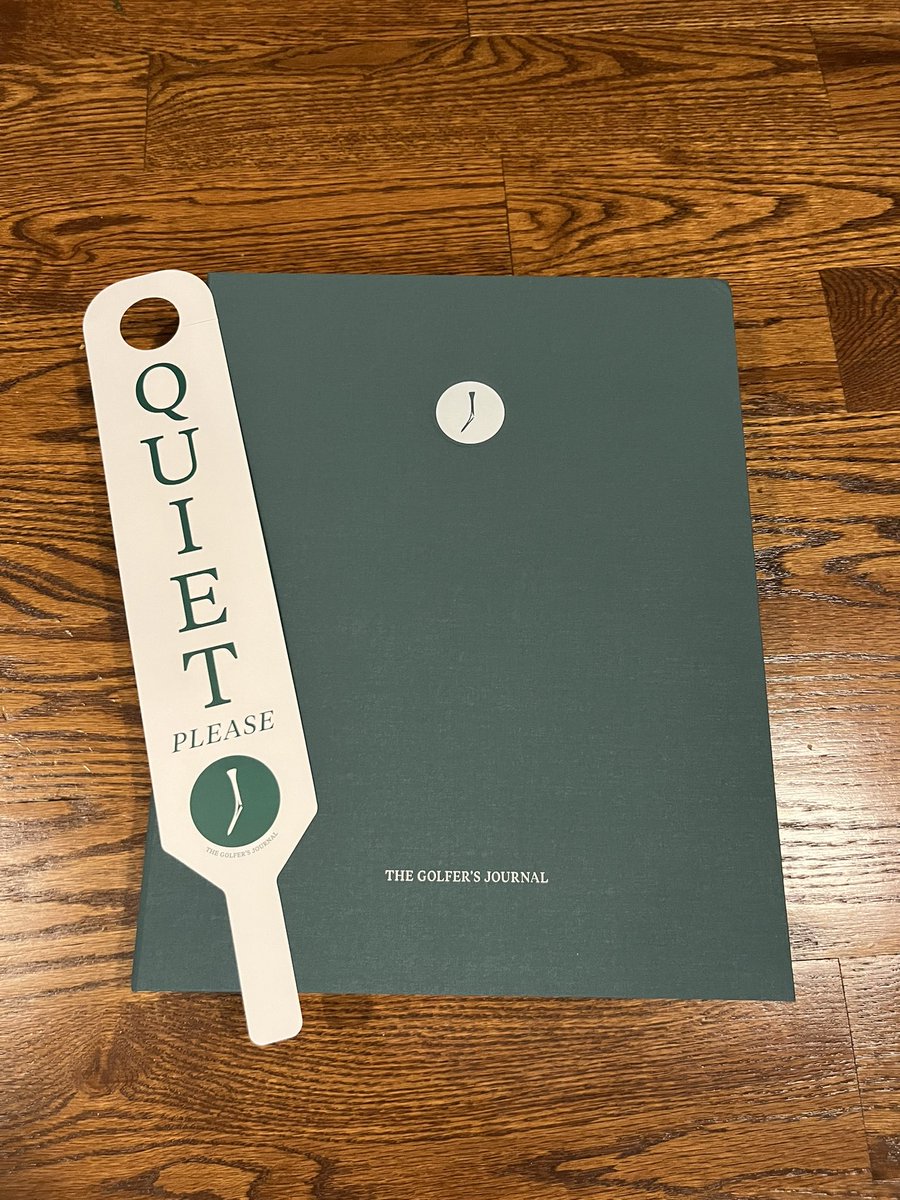
I spent 10,000 hours practicing and studying the game of golf.
I’ve distilled everything I know into a book, which I’m proud to announce has launched today.
This is my life’s work.
Enjoy!
amzn.to/3nnoqot
206
527
1,542
Apr 29
If you are serious about your golf game, you should check out @jaredtendler new book, Everyday Golf Psychology.
It provides actionable advice on many common problems golfers face.
But the reason I think it's a must-read is that this isn't the same old generic info. He goes deeper than just surface-level advice.
This is easily one of my favorite golf books ever, and I think it's really going to help people. Great job, Jared!
Link to purchase below 👇
7
6
86
34,349
Apr 29
1
1
12
5,085
Apr 2
I'm excited to announce that I've launched a second YouTube Channel called Golf Gear Explained
The goal is simple - to educate golfers on how equipment really works, so you can look past the marketing claims.
This channel is a collaboration with @PetesgolfshopNY, a Top 100 Clubfitter.
Golf Gear Explained is now live with our first two videos, and we have plenty more coming this year, so make sure you are subscribed!
(follow the channel in post below)
6
7
86
11,488
Apr 2
2
3
17
6,968
Jon Sherman retweeted

In a new column for The Met Golfer, author and coach Jon Sherman (@practicalgolf) shares how most golfers misunderstand their scores with mismanaged expectations.
The Long Game: hubs.la/Q03_MgvK0
3
10
5,555
12 Dec 2025
Most golfers think they’re working on their game. In reality, the way they structure it guarantees they’ll stay stuck.
Here are a few common types of players:
1) The “tip chaser” - tries something new every week from YouTube.
2) The “just play golfer” - never practices, then wonders why nothing changes.
3) The “wrong fix golfer” - works on things that don’t even connect to their misses (like trying to change club path when the real issue is strike location).
If you want real improvement, you need a feedback loop.
Here’s how:
1) Track what’s actually costing you shots.
Don’t walk off the course saying, “I hit it bad.” That’s useless.
Instead, note things like:
• Thin, fat, toe, or heel strikes
• Face control misses (left/right)
• Mental/strategy errors: wrong club, poor wind judgment, lack of commitment.
Try to look for patterns. If it only happened once or twice, then it's just the "variability" of golf. Look for consistent errors.
(and don't forget to internalize your good shots!)
2) Build “if/then” fixes for your common issues.
You need a toolbox of adjustments you trust.
This is why having a laser focus on your faults from your rounds while practicing is so important!
You might discover things like:
• Shanks: Stand farther, focus on heel contact.
• Fat shots: Shift pressure to lead side
• Thin wedges: Feel more rotation with the chest, not the hands.
• Pulls with the putter: Keep the face slightly more open on the backstroke.
The point is to know, "if X miss shows up, then I do Y."
Without this, you’ll always be guessing.
3) Match practice to context.
Most golfers live in block practice - using the same club and the same target. Sometimes, that hides your ball striking "truth."
Add variety:
• Random practice: new target, new club every shot.
• Simulated games: play a “round” on the range with full routines.
• On-course reps: throw extra balls down in problem areas (like tricky wedge lies).
4) Transfer it to the course
It’s not enough to fix something on the range. Test it under pressure:
Add consequences (don’t leave until you hole three in a row).
Track whether your fixes hold up when you only get one chance.
The formula is simple:
Track → Fix → Transfer
Do that consistently, and you’ll avoid the trap most golfers fall into - staying the same year after year and working on the wrong things.
19
17
183
53,110
12 Dec 2025
If you want to see more posts like this, don't miss them and sign up for my weekly newsletter here:
practical-golf.kit.com/newsl…
1
3
5
5,910
11 Dec 2025
Recently, I re-read Harvey Penick's Little Red Book. It had been a long time, and I was struck again by the timeless wisdom.
Here are some of my favorite quotes that reinforce many of the topics I enjoy discussing.
On Impact Location...
“Many average golfers are not sure which part of their clubface is striking the ball. It’s very simple to find out. Take a can of talcum powder with you to the range. Powder the ball. Hit it. Look at the clubface.”
“Try conscientiously to hit every iron shot on the toe of the club until you stop shanking.”
On Clubface Control...
“The face of the club going off the line produces more poor shots than anything I know of”
“When teaching or learning what is wrong with a swing, first decide if the thing to work on is the swing itself or the angle of the clubface at impact”
On Swing Tips...
“When I ask you to take an aspirin, please don’t take the whole bottle."
On Putting...
“Never allow yourself to think about what is riding on the putt.”
"I hate the old saying, never up, never in. It's true that a ball that never reaches the cup never goes in, but neither does a ball that goes past it."
"Once you adopt a good system for putting, the rest of it is mental. Stay with your system."
On competing...
“In competition, you must be yourself. If you're the joking sort, go ahead and joke. If you're the serious sort, there's no need to pretend not to be."
“You should avoid new or different things that will distract your mind from your normal routine.”
Some of my other favorites...
“Golfers must make every effort to maintain good physical condition. Walk at every opportunity.”
“Keeping the head down prevents a good follow-through because the golfer can’t swing past hip-high with the head still down and not give up something good in the finish to do it.”
“The average golfer seldom hit’s a middle-iron approach shot past the pin”
“These days there is a growing feeling that high-tech equipment, the juiced-up ball and the powerful swing of the touring pros are making many of our finest old golf courses obsolete.”
“Playing golf you learn a form of meditation. For the four hours you are on the course, you learn to focus on the game and clean your mind of worrisome thoughts. Golf has probably kept more people sane than psychiatrists have.”
“Get a system of some kind in playing. Any kind of a system beats trusting to luck.”
I hope you enjoyed these, and I encourage you to read the book!
20
17
387
41,608
10 Dec 2025
Most golfers don't realize their score is controlled by one silent habit - the questions they ask themselves during a round.
If I asked most players what they're trying to do on each hole, I'd get answers like "well, I'm trying to make a par or a birdie here."
Of course, that's what we want! Those are good scores, and it's natural to desire them.
So on some level, every decision we make and how we react to each shot is in the context of that question, "What can I do to make a par or birdie on this hole?"
But a round of golf is usually never straightforward. Things can change quickly.
For example, you might be humming along after 6 or 7 holes and playing quite nicely without any major mistakes.
But then one swing changes everything.
Your heart rate jumps. Your plans start to disappear.
And without noticing, you start chasing the score you wanted, instead of managing the situation you have.
For the past 11 years, I've been drilling the same point into golfers... getting to the next scoring level is more about limiting double bogeys (or worse) on your scorecard than it is about making more pars and birdies.
So when we get into situations on the course, it's very hard to quickly change our perspective.
Our brain still wants that par. But the circumstances are saying otherwise.
Here's the better question to ask in these moments:
"What can I do to make a good bogey?"
It's not glamorous. But it's the most powerful scoring question in golf for many.
Golfers who can make that quick shift in their thinking are better at scoring and get more out of their games.
They understand the nuance and odds of the situations they're in.
And the good news is that you can be that kind of golfer too; it's not a matter of physical ability. It's just making better choices.
Give this some thought and reflect on your rounds. I'm sure many of you will start to realize you've been asking the wrong question quite often.
21
15
201
42,904
10 Dec 2025
If you enjoyed this, it was from my newsletter this week.
Sign up here so you don't miss them:
practical-golf.kit.com/newsl…
1
5
5,640
9 Dec 2025
What's a sign (other than score) that you are getting better at golf?
441
1
73
42,959
9 Dec 2025
One of my favorite responses to this question when I've asked it before...
"Getting better at golf is like diligently investing your money in low cost index funds while simultaneously playing gas station scratch-offs"
3
4
51
6,409
4 Dec 2025
I get the most bizarre pitches for guests on our podcast from PR people.
They usually go something like this
"I enjoyed your last episode about (golf topic). And it got me thinking about nuclear physics. Would you be interested in having Dr. X on to discuss fission as a renewable energy source?"
8
2
25
8,391
4 Dec 2025
Working on the script for my next YT video and including one of my favorite mantras from my dad:
"It's hard to smell the roses in the middle of a 💩 storm"
He's not a golfer, but damn, that hits.
5
2
26
7,946
2 Dec 2025
New YouTube is now live!
9 Brutal Truths About Golf No One Tells You
youtu.be/5S7bEteVmdM
3
1
17
12,880
1 Dec 2025
What mini-habits do you feel have improved your game the most?
It could be placing a range bucket behind you to force you to take time between shots.
Doing a post-round review for 5-10 minutes.
What are the small things that have become a part of your game?
57
32
30,559
26 Nov 2025
I have a recurring nightmare that involves me in a tournament stuck on a tee box not able to find the right tee height.
Everyone is staring at me and I can’t pull the trigger.
Had it last night. It’s terrifying 😂
50
2
140
14,515
Jon Sherman retweeted

26 Nov 2025
MIND CADDIE PODCAST
Why do we find the SIMPLE approach so complicated ?
Fantastic episode with Jon Sherman and Adam Young
Perfect to listen to at this time of year.
podcasts.apple.com/gb/podcas…
@adamyounggolf @practicalgolf
1
2
7
4,582