
⠀⠀⠀
Joined August 2025
- Tweets 1,109
- Following 67
- Followers 70
- Likes 1,410
21 Photos and videos














Pinned Tweet

Feb 20
41
42
1,214
𝐊. retweeted
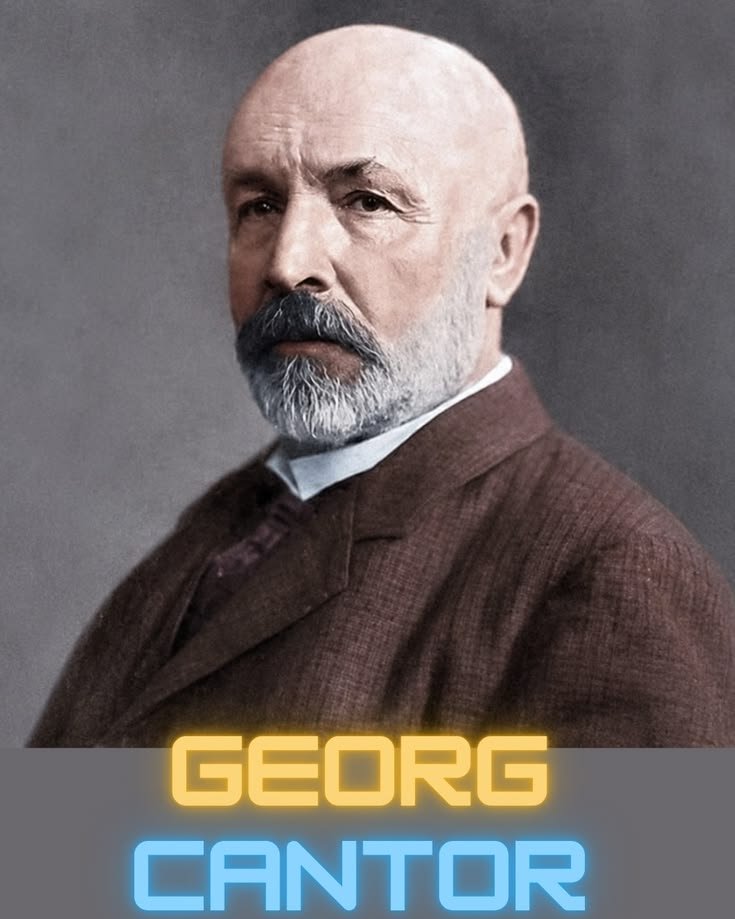
One of the most beautiful ideas in mathematics is: some infinities are bigger than others.
Though it sounds strange, it is far from obvious. In the 1870s, Georg Cantor proved that the set of real numbers is larger than the set of natural numbers. No matter how you try to pair them, some real numbers are always left unmatched.
Even more surprising, from any infinite set, we can construct a larger one. In other words:
for every infinity, there exists a greater infinity.
In 1900, David Hilbert praised this discovery, saying:
“Nothing will remove us from the paradise that Cantor has created for us.”
10
18
111
5,416
𝐊. retweeted

Jun 15
no puede ser q acabo de escuchar a un profesor referirse a la muerte de su tío cómo "convergió a cero"
12
173
3,629
87,951
15h
llevo 20 minutos resolviendo problemas de caída libre por culpa de nikolai. no es que me esté quejando.
232
𝐊. retweeted
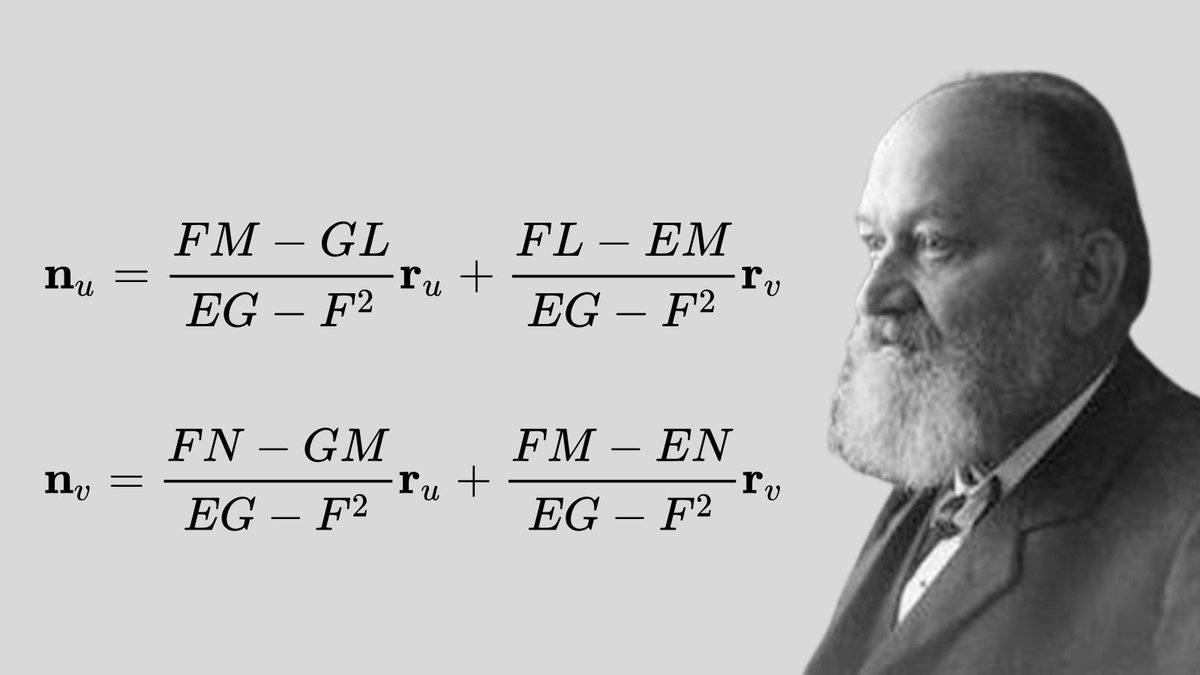
Today we remember Julius Weingarten (25 March 1836 – 16 June 1910), a brilliant mathematician whose work shaped the differential geometry of surfaces.
Despite humble beginnings and financial struggles, he made lasting contributions, including the famous Weingarten equations and the study of curvature. His work on surfaces of constant mean and Gaussian curvature continues to influence mathematics today.
9
49
3,794

𝐊. retweeted

Jun 15
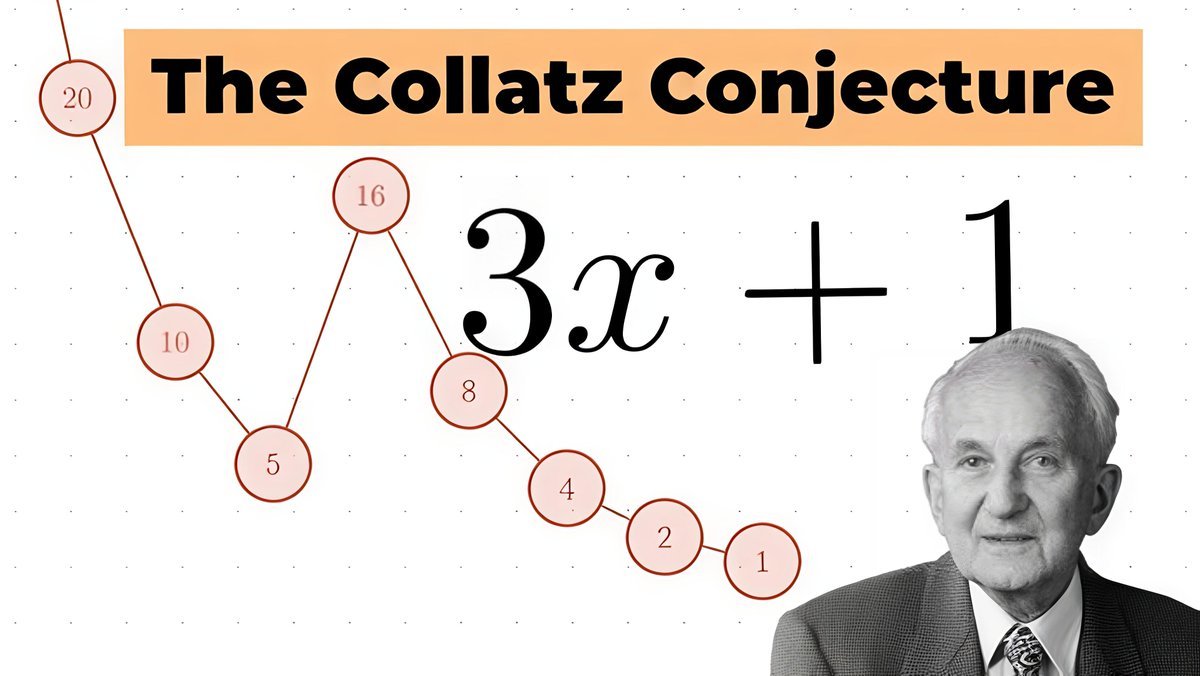
Legendary mathematician Paul Erdős once remarked that mathematics is not yet ready to solve the 3n 1 problem.
Known as the Collatz conjecture, it begins with a simple rule. Take any positive integer. If it is even, divide it by two. If it is odd, multiply it by three and add one. Repeat the process. The claim is that every starting number eventually reaches one.
Despite its simplicity, no complete proof exists. Yet modern progress offers strong hints. In 2019, Terence Tao showed that for almost all starting values, the sequence eventually drops significantly. This suggests that most trajectories do not grow without bound.
Probabilistic reasoning points in the same direction. On average, the sequence tends to shrink over time, making convergence to one highly likely.
Meanwhile, computers have verified the conjecture for numbers up to 2^68. Every tested case reaches one.
A simple problem, still unsolved, continues to challenge the limits of mathematics.
4
24
118
11,214


Jun 14
feliz cumpleaños colin maclaurin.
Jun 14

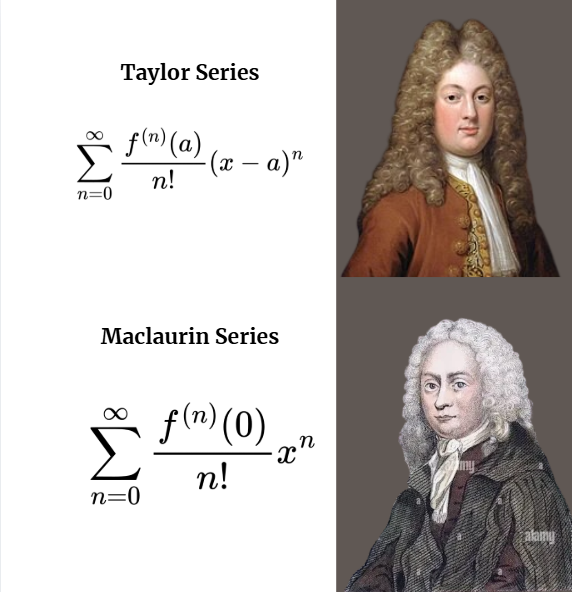
Today is the birthday of Colin Maclaurin, who set a = 0 in the Taylor series to obtain what is now known as the Maclaurin series.
1
44
May 30
va a llegar un punto en el que no podré borrar a nadie de mis seguidores y desaparecerá para siempre el 69.
1
75
𝐊. retweeted

May 29
TODOS 😭 SOLO SOMOS 3 PENDEJOS LOS ABUELOS YO Y EL AMOR DE MI VIDA AKA KUNIKIDA
May 29


1
1
101
𝐊. retweeted

May 28




3
362
1,167
7,376
May 29
21


𝐊. retweeted
Apr 24
I have a math joke but I’m 2² to say it
35
184
1,642
133,866