
PSI focuses (in part) on the development and application of global MHD models of the Sun's corona and heliosphere to answer fundamental scientific questions.
Joined September 2015
- Tweets 169
- Following 65
- Followers 761
- Likes 13
76 Photos and videos
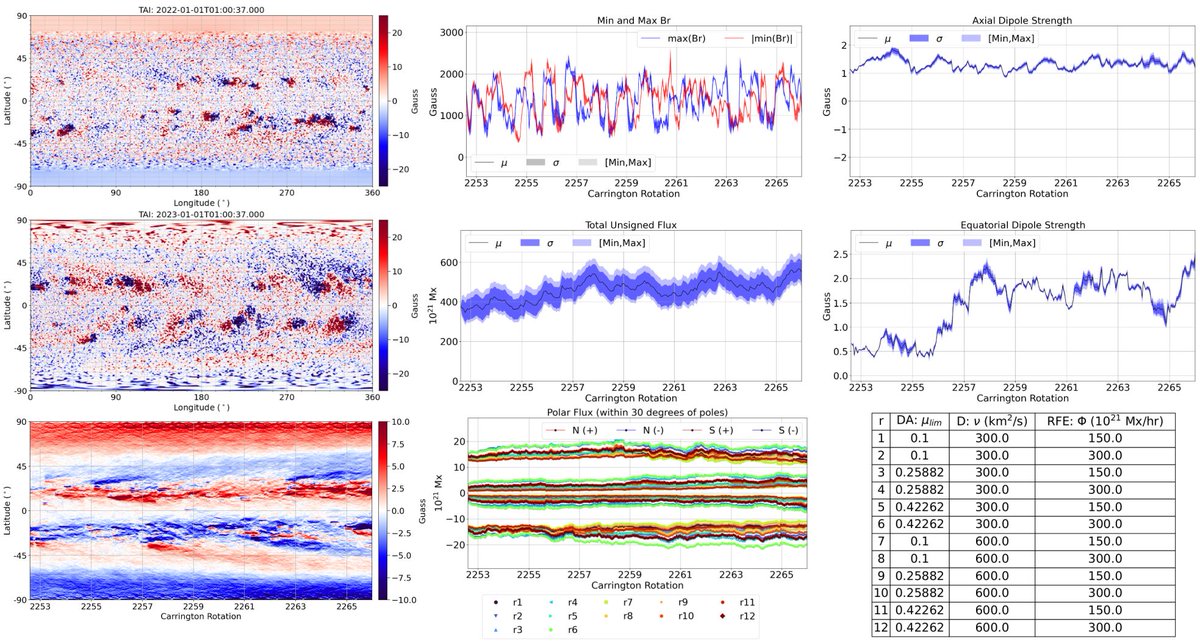






Our POT3D code (buff.ly/QtRzBJc), which is part of SWiG, has been accepted and released as part of the new SPEC CPU 2026 Benchmark suite!
More details here: buff.ly/6qmq6lS
1
9
103
🚨 New paper alert! 🚨
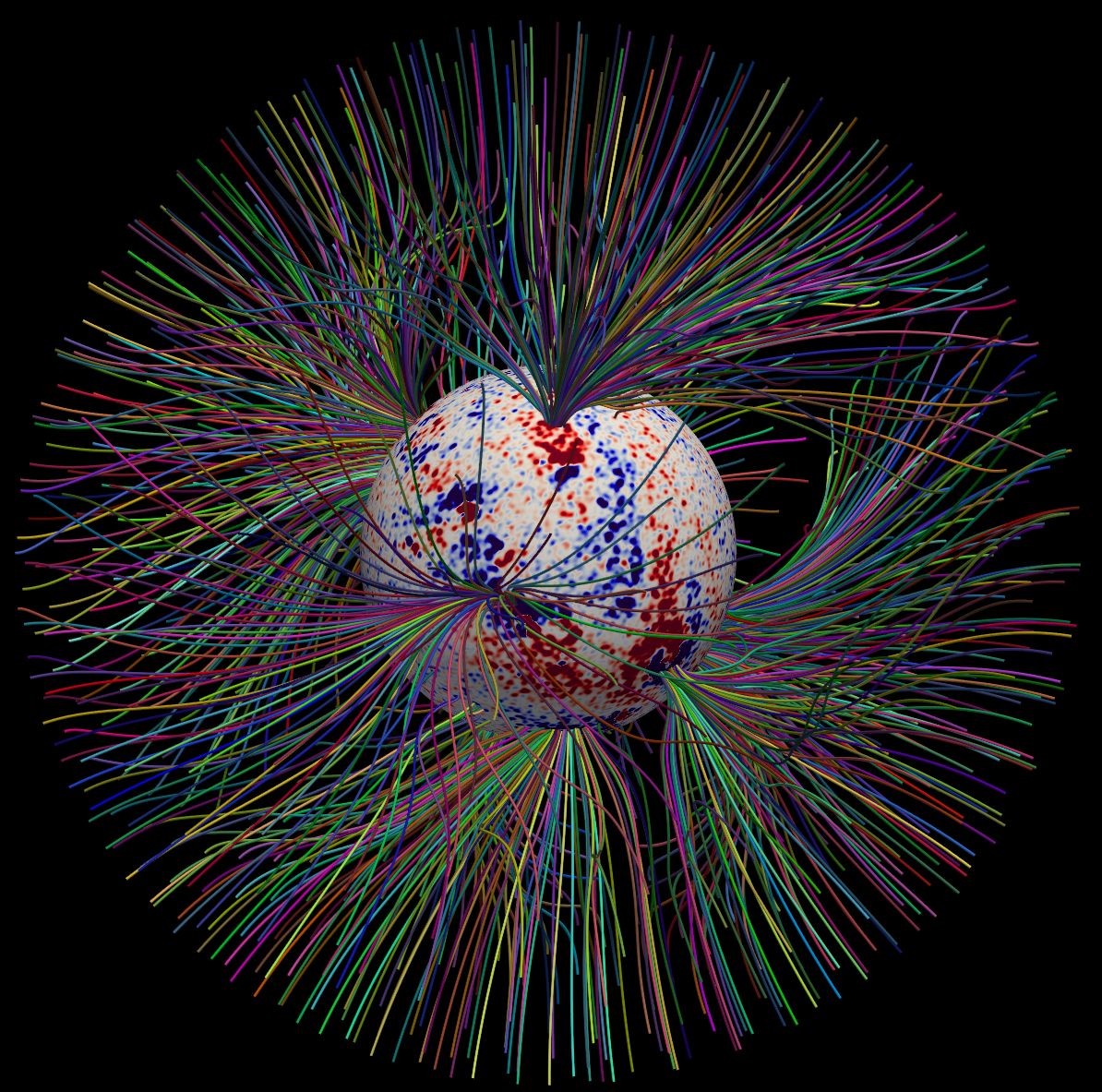
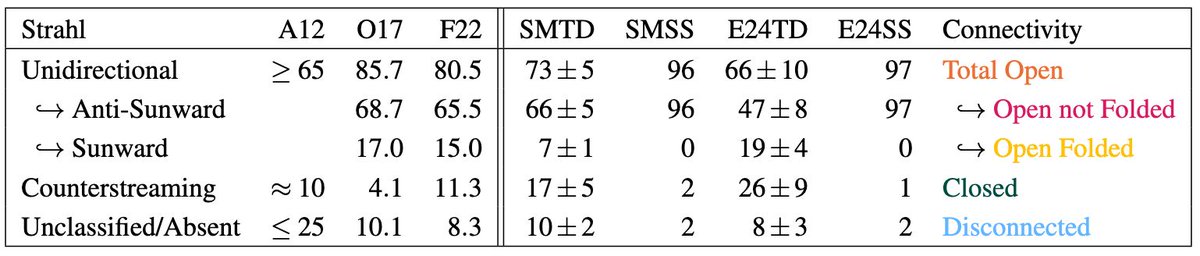
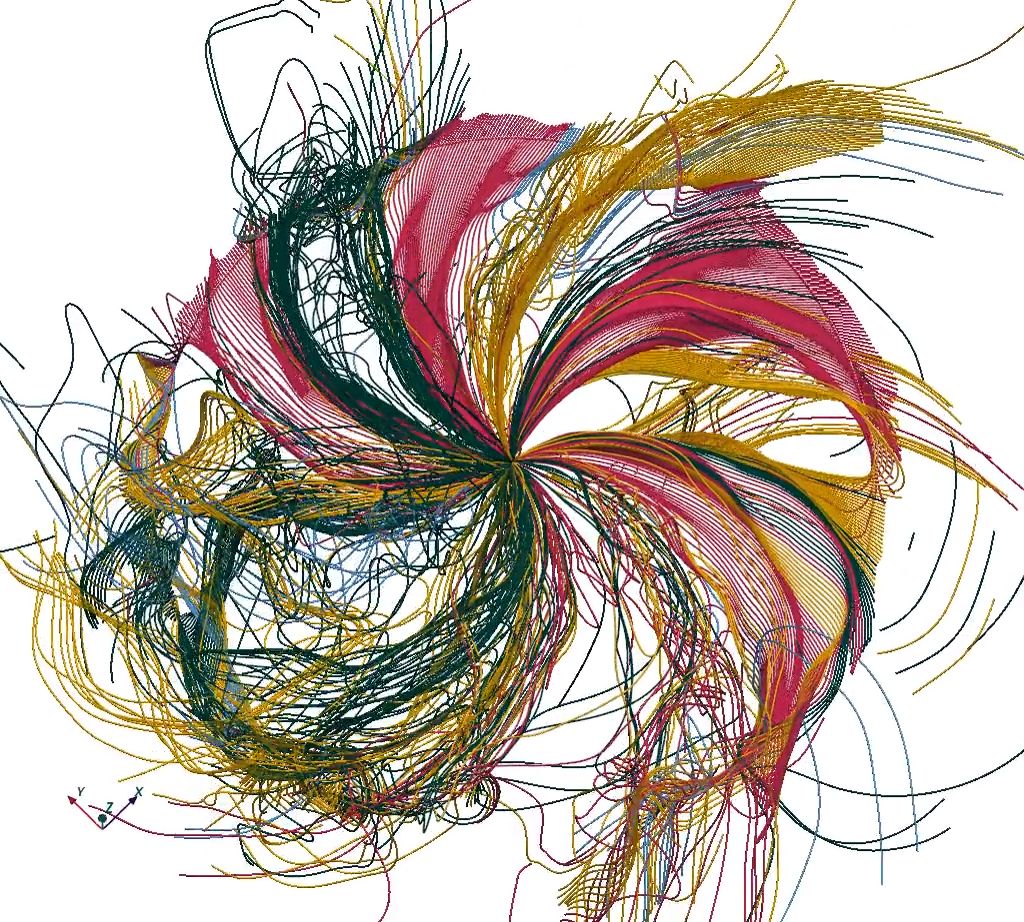
PSI's Roberto Lionello led a team (including U of Reading's Matt Owens) to investigate the magnetic connectivity of the corona/heliosphere system under busy (solar maximum) and quiet (solar minimum) conditions. Details below!
buff.ly/lBbygiz
1
1
4
125
Lionello et al. developed a method to identify folded field lines in the models, allowing for easy comparison with in-situ strahl statistics. The time-dependent runs agree well with ACE/WIND data, while the steady-state runs contain too little disconnected and folded flux.
1
44
While other effects (e.g., electron scattering) must also be accounted for when comparing simulations to in-situ data, these results underline the importance of including surface magnetic flux evolution when investigating magnetic connectivity of the corona and heliosphere.
28
Attending the Solar Orbiter workshop? Don't miss our talks!
3/17 @ 10:05: "Comparison of Predicted Solar Polar Fields with Solar Orbiter Observations" (Jon Linker, C. Downs, R. Caplan, J. Turtle, P. Riley, G. Valori, Solar Orbiter PHI Team)
buff.ly/AJIjRMe
1
1
2
103
3/18 @ 09:45: "Global MHD Modelling of CME Evolution as Context for Multi-Spacecraft Observations" (Erika Palmerio, C. Downs, R.M. Caplan, P. Hess, R.C. Colaninno, A. Sahade, C. Mac Cormack)
buff.ly/9o58HJn
1
1
53
3/19 @ 11:20: "Understanding How Small-scale Photospheric Magnetic Fields Influence the Global Solar Corona and Solar Wind" (Cooper Downs, C.L. Evans, D. Schmit, J.A. Linker, V.S. Titov)
buff.ly/qdoFp49
1
49
Want to generate full-Sun magnetic maps with a surface flux transport model?
Check out PSI's Open-source Flux Transport (OFT): github.com/predsci/oft
Read on for details!
1
3
68
OFT contains everything you need to acquire and process data from HMI (MagMAP), generate convective flow profiles (ConFlow), and run the flux transport model (HipFT).
1
1
44
Key capabilities include: generating ensembles across model parameters; post-processing analysis; a user-friendly front-end wrapper script for space weather applications (oftswa.py); and high performance, with HipFT able to run on NVIDIA, Intel, and AMD GPUs!
1
40
🚨 New paper alert! 🚨
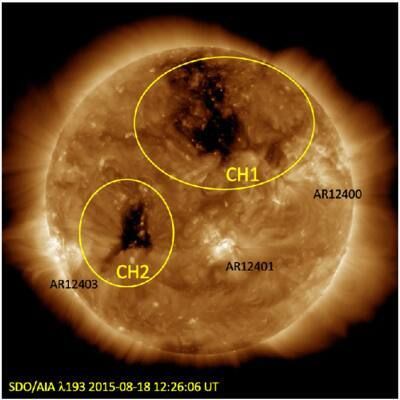
Yuan-Kuen Ko and co-authors (including PSI's Pete Riley and Roberto Lionello) deep dive into two coronal holes to present evidence for a surprisingly thick coronal hole boundary, and its implications for the "slow" solar wind.
buff.ly/J7vBHYG
1
1
3
104
Using EUV and magnetic field observations and MHD modeling, the team found large areas around the holes likely contained both open & closed magnetic fields. This area's size could help explain the origin of 75% of the solar wind, & help solve the so-called "open flux problem."
29
This week, we're showcasing another component of our in-house -- but open source -- suite of modeling tools...the Solar Wind Generator (SWiG)! If you need to rapidly generate WSA-like solar wind outputs, SWiG is a must-have.
buff.ly/27eESkx
1
1
2
70
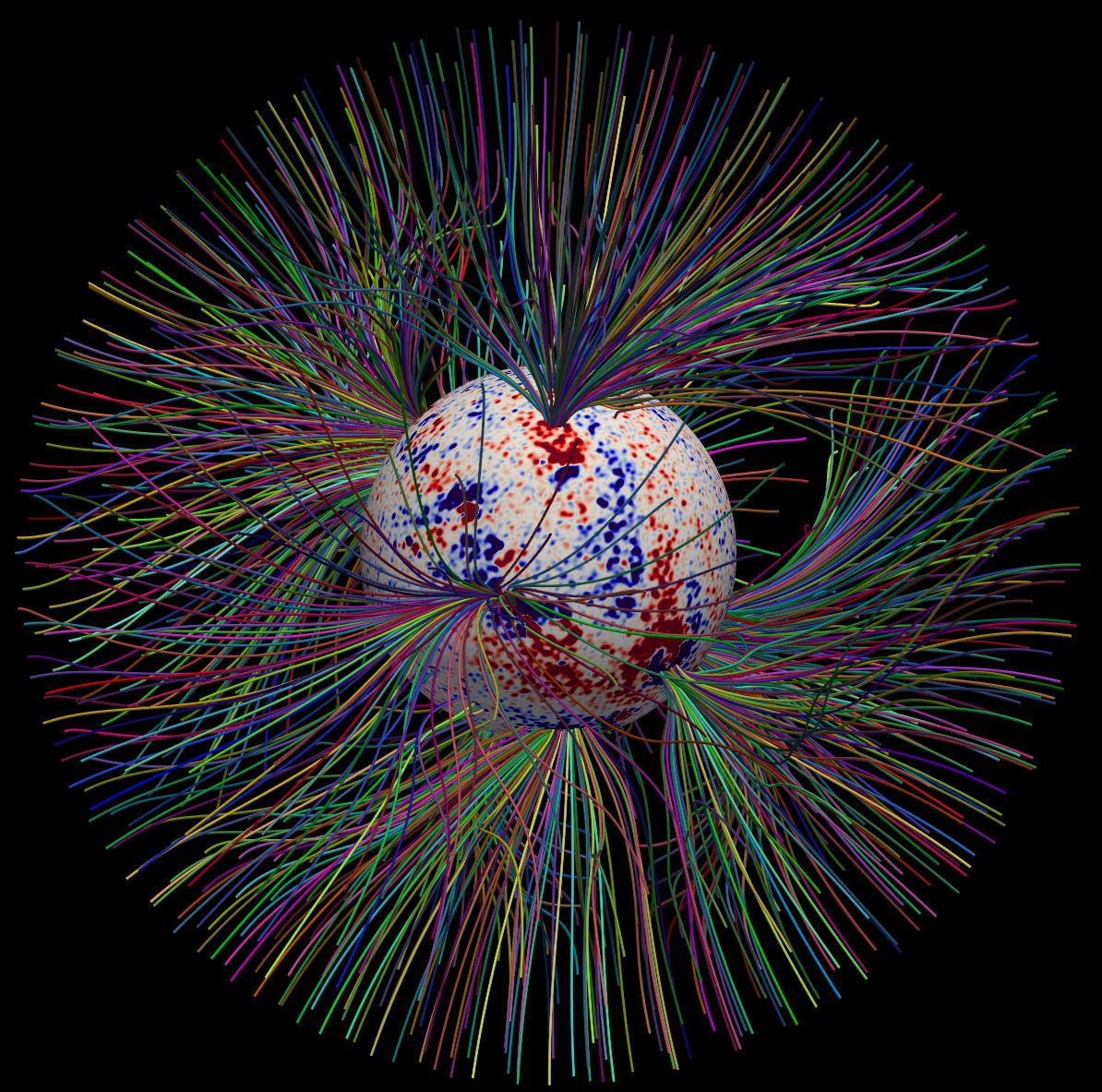
SWiG uses several of our tools (including POT3D and MapFL), to solve for the solar wind and allow field line tracing. The entire ecosystem is purely science-driven and, thanks to SWiG's GPU compatibility, you can get results (including summary plots) in about a minute!
2
28
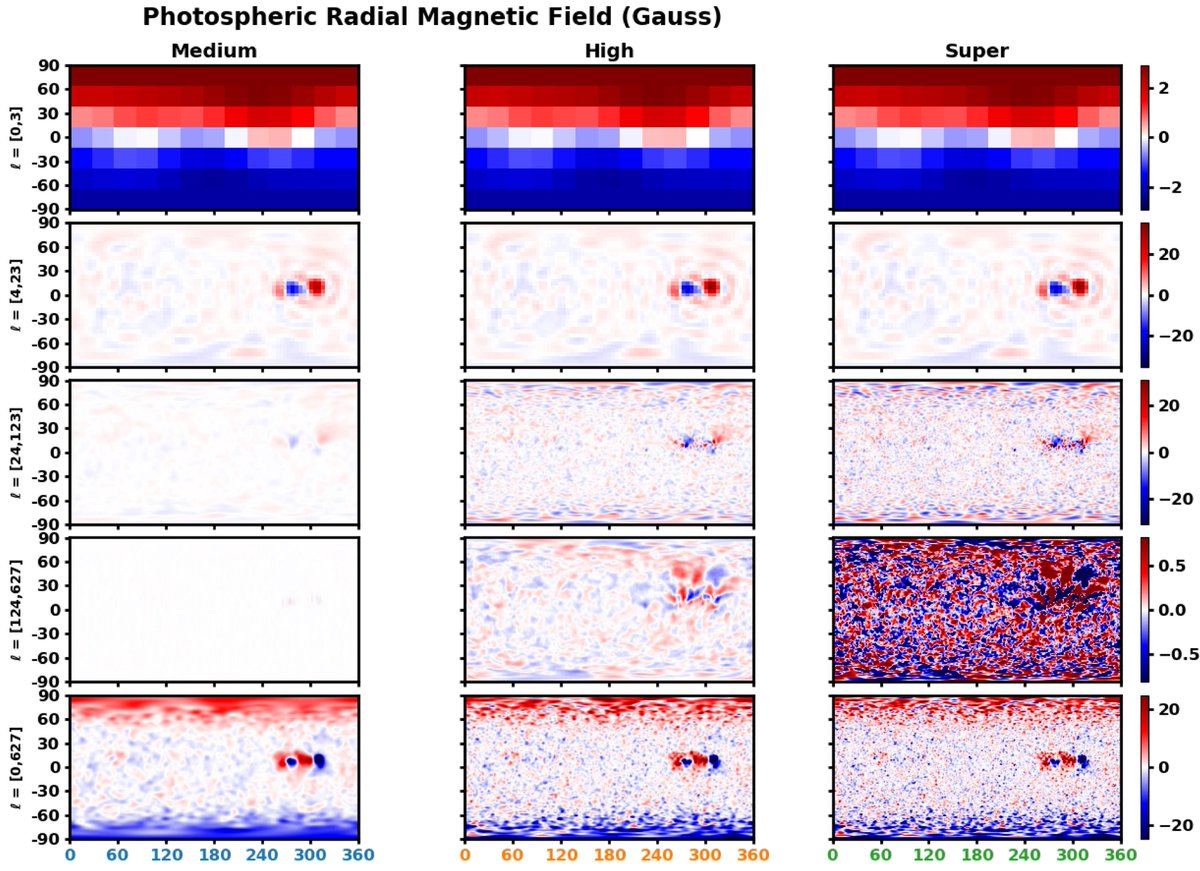
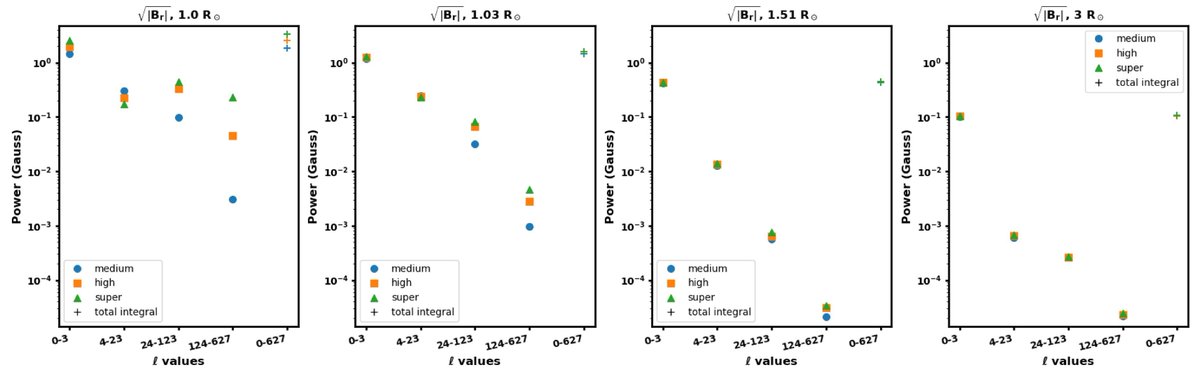
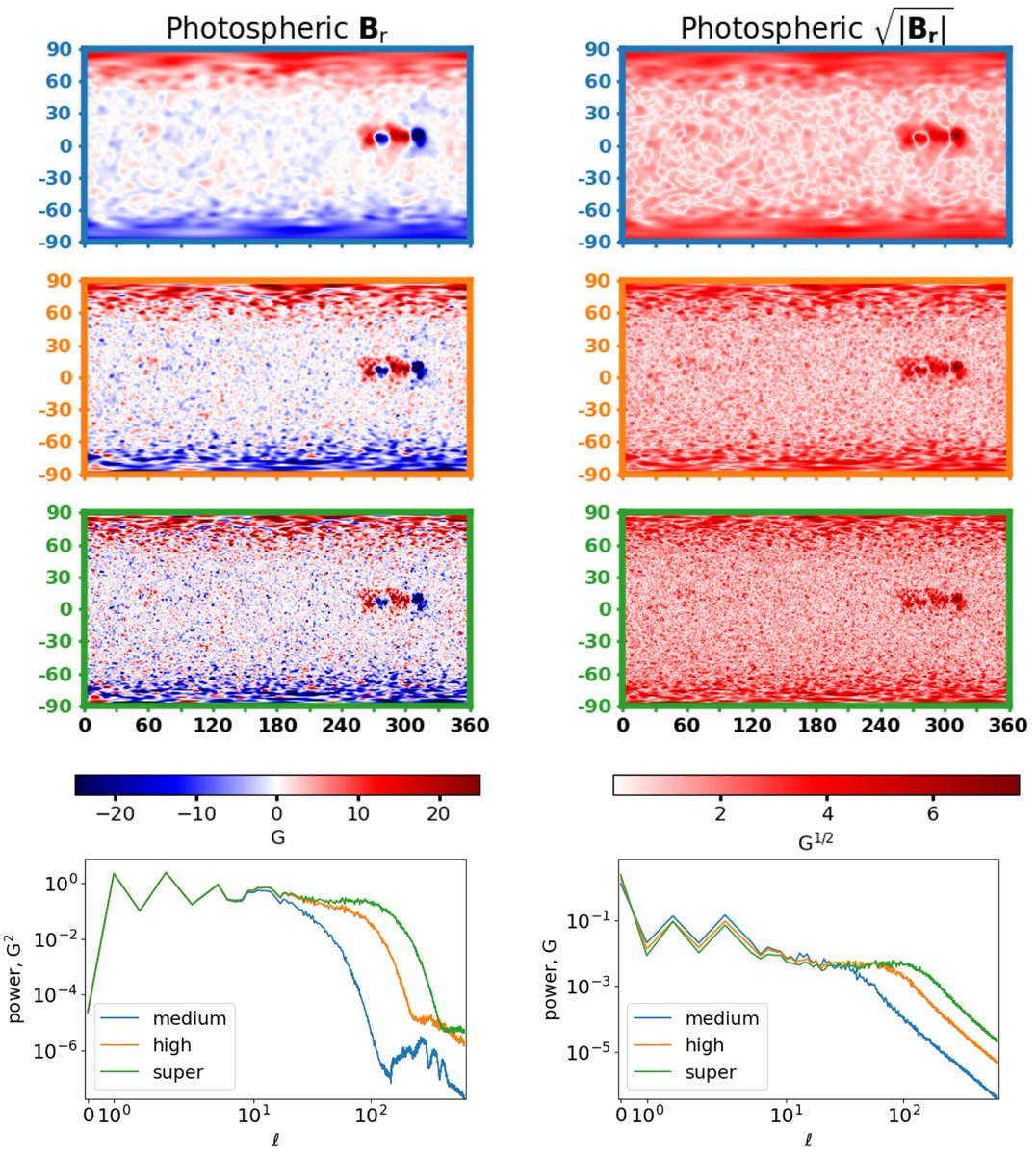
In @carolinevans04, Cooper Downs, and Don Schmit's new #ApJ paper, a series of simulations at increasing resolution uncover the correlation between magnetic complexity and coronal heating. The MAS model acted as a lab to probe difficult-to-observe scales.
buff.ly/ls2p29Z
1
2
5
139
The team also showed that a highly structured surface magnetic field meant that more heat was injected into the corona overall. This is related to the total unsigned flux, as well as changes in flux-tube expansion that attenuates the waves that reflect within coronal loops.
1
3
75
Introducing spherical harmonics to analyze the dominant spatial scales of the magnetic field in each run allowed Caroline to quantify the structure and draw concrete, compelling correlations. This work is part of Caroline's PhD thesis work; more of her fascinating is coming soon!
1
58
🚨📄 New paper alert! 📄🚨
In their new paper published in @AGUSpWx, PSI's Pete Riley and Michal Ben-Nun find that the chances of an extreme #spaceweather event depends strongly on the strength of the #solar cycle.
What does this mean? Read on below!
buff.ly/aAXGAg2
1
1
66