🌊 Founder @zothdotio |@StanfordGSB,
Joined June 2009
- Tweets 3,478
- Following 6,703
- Followers 6,631
- Likes 12,582
288 Photos and videos




Pinned Tweet

@zothdotio now FINTRAC-registered as an MSB in Canada.
This anchors our stablecoin rails in North America and wires them directly into the highest-growth corridors of the Global South, where $700B in cross-border volume moves on infrastructure that's slow, costly, and barely compliant.
Every license we secure unlocks another corridor, another liquidity route, another step toward instant, compliant money movement on-chain.
Scaling and moving one step closer each day with every milestone. $1B in annual total payments volume soon....
Jun 2

Zoth secured FINTRAC MSB registration in Canada, strengthening our North American payment infrastructure and connecting it to high growth corridors across the Global South.
Regulated infrastructure is what lets us move money at scale, across emerging markets and more partners, and every license we secure brings us closer to seamless, compliant settlement worldwide.
1
1
10
554
Never give up
1
6
184
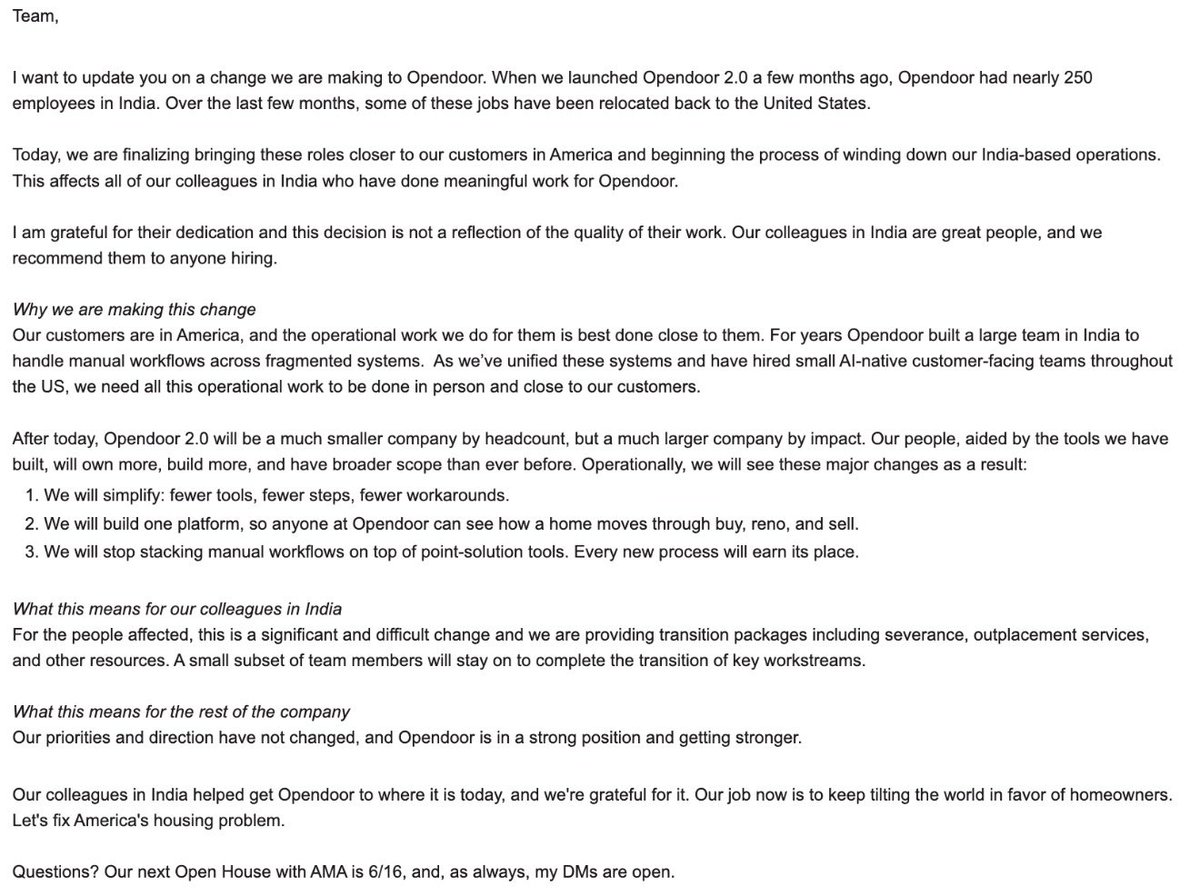
250 jobs cut in India today by one memo @Opendoor
Feel for every person affected. But the lesson isn’t fear — it’s speed.
@zothdotio , 7 people move $50M in global payments/ month .
AI routing engine our ZAI agentic framework. That ratio was impossible 3 years ago.
Fable 5 just raised the bar again.
If you’re in IT services or ops: the train is leaving. Get on it.
Drive the change, or be driven by it.
1
8
427
My journey of building @zothdotio i had a fair share experiences .Some were just world class and some were just worst of the breed.
We have just kept moving ahead . Neither a rejection /attack could stop us.
I believe every rejection adds a chip on our shoulder.. To win… To prove those who wrote us off wrong.. till that we will not rest.
Jun 5

During a pitch a prominent VC once told us the market size for global logistics was only $6B.
My CFO’s response: “So you’re saying it’s smaller than the market for USB cables?”
5
11
706
I am screwed.. explains my recent graying of hair
Jun 5

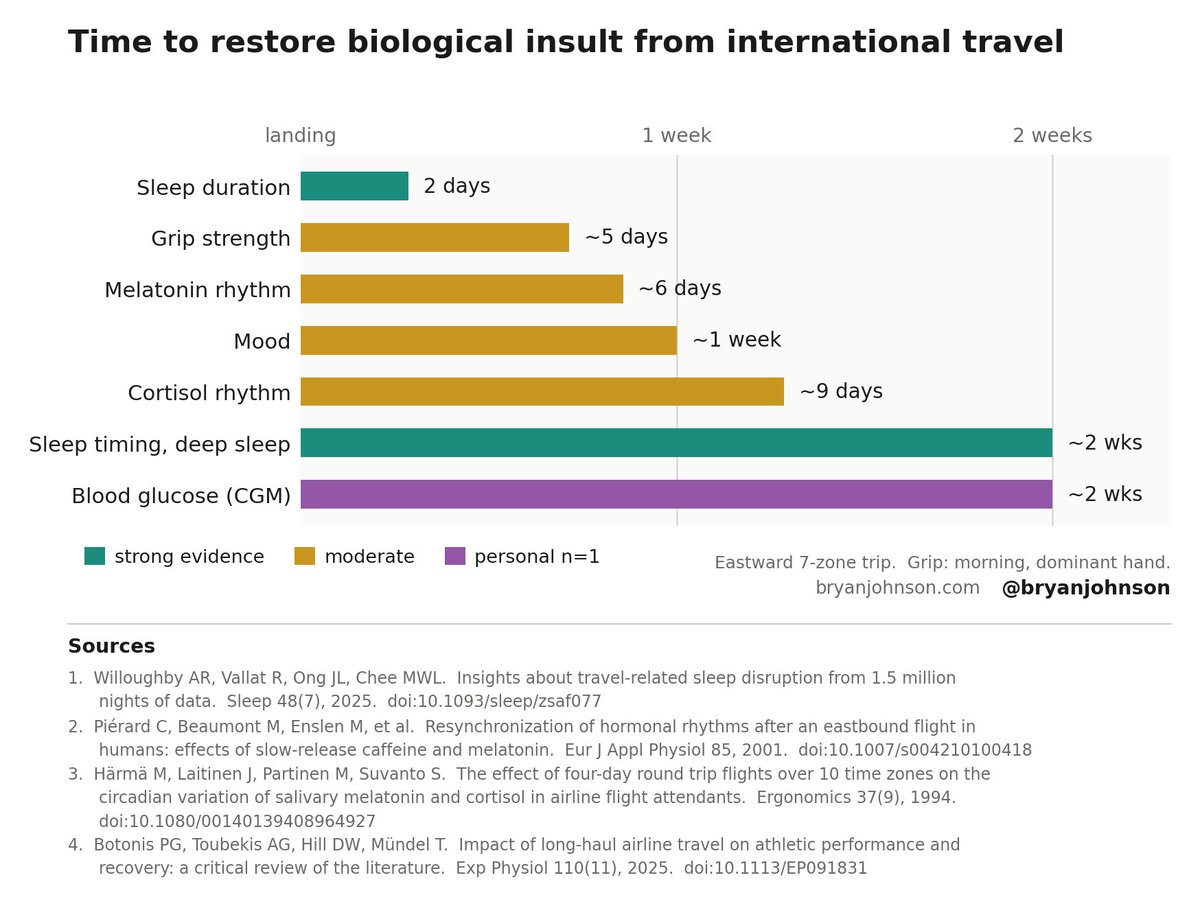
Here's a snapshot of the biological insult from international travel. It takes your body over two weeks to fully recover.
It's a big price tag.
One international trip per quarter is a reasonable balance.
Time to recover:
> sleep duration: 2 days
> grip strength: 5 days
> mood: 1 wk
> cortisol: 9 days
> sleep quality: 2 wks
> blood glucose: 2 wks
1
3
301
So true
Jun 3

Weekly reminder to play long term games with long term people
1
3
141
A founder messaged me at 11pm last week. Payroll was due in 36 hours. His treasury was in USDC, and his off-ramp had just gone quiet in a compliance review.
Forty people were expecting their salary on the 1st. He had dollars sitting on-chain and no clear path into the bank in time.
He didn't have a rate problem. He had a settlement problem and after building stablecoin payment rails for years, I can tell you he's far from the only one.
Here's what changed. As of June 1, UAE salaries are due on the 1st of the month. The old "pay sometime before the 15th" buffer is gone. For most companies that's a calendar adjustment. But if your money lives in stablecoins, your off-ramp just quietly became the most important step in your payroll.
And it's never only payroll. The same off-ramp carries your supplier payments, your cross-border settlements, your global money movement across time zones. When that one leg is slow or unpredictable, the whole business feels it not just on the 1st.
That's what we built @zothdotio to do. Stablecoin reserves into AED, settled the same day, documented for your books, through VARA-licensed partners, at under 0.2%. So the off-ramp stops being a monthly gamble and becomes the thing you never think about.
And off-ramp is just the start. This is what we're building at Zoth: borderless money movement for every business the legacy system left behind.
3
1
15
434
Its hard but its worth it
Jun 1

It’s pretty insane to see founders having to juggle fundraising, managing runway, making product decisions, traveling to the edges of the earth to meet customers, managing board expectations, keeping the culture alive.. all with utmost composure like everything is going to be okay.
Very few jobs have that much context switching, chaos, competing priorities, and uncertainty.
Just superhuman stuff.
6
298
Such a joke @coinbase and some experts have made of themselves :)
Jun 1

Factually incorrect: A lot of Indian crypto exchanges including @CoinDCX have had INR rails for many years now.
Coinbase is the first foreign exchange to launch direct IMPS-based INR rails.
And we are glad to see them enter the Indian market. Will definitely increase crypto adoption in India and make it more mainstream!
1
3
400
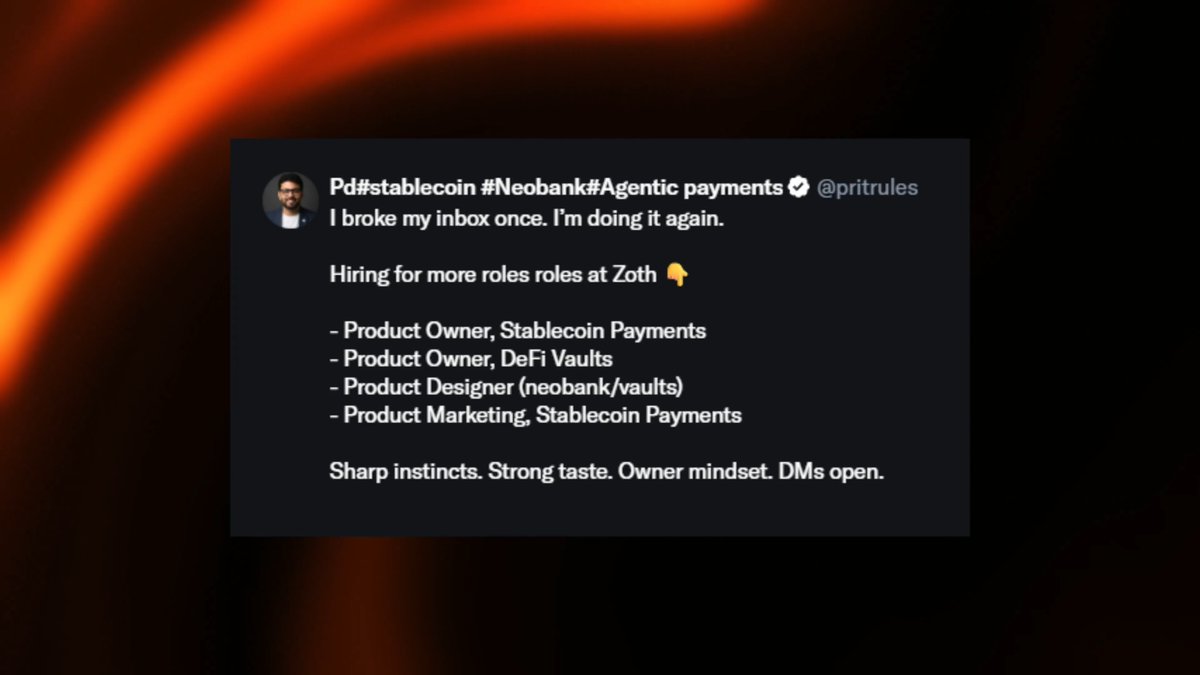
HIRING again: we broke our inbox once, we're doing it again.
3 days. 10,000 applications. 200,000 impressions.
I posted one job. The internet responded like Wildfire.
But here's what that moment really told me, people are exhausted from building things that don't matter. They want to work on something the world is already moving toward whether it's ready or not.
At Zoth, we're not building a feature. We're building a full-stack stablecoin neobank with payments, vaults, yield, cards, compliance, and agentic financial infrastructure.
It's chaotic, high-stakes, and deeply unglamorous some days. We need people who see a hard problem and think "finally, mine" not people who wait for tickets to drop.
So we're opening more seats:
- Product Owner, Stablecoin Payments
- Product Owner, DeFi Vaults
- Product - Designer (neobank or vaults experience)
- Product Marketing, Stablecoin Payments
If you have sharp product instincts, strong taste, fresh ideas, and an owner's mindset. DM me directly with a video of why you're a fit for any of the above roles.
The Chief of Staff role taught me there are thousands of people ready to go all in on the right thing.
This is the right thing. Are you the right person?
2
2
14
637
We will reimagine the financial ecosystem and Zoth will be listed in NYSE soon.
May 27
Excited to see the @zothdotio x @Bakkt partnership getting global recognition.
A strong milestone as we continue scaling Zoth’s total payments volume toward $1B annually.
4
3
12
606
I'm looking for a hungry, smart, high EQ future-founder to work side-by-side with me in Dubai as my Chief of Staff.
DM me a <2 minute video about why you want this role.
You are good for this role if your friends think of you as
- trustworthy
- mature
- a force of nature
- the smartest person they’ve met
- kind & helpful
- quick at learning new things
If I was 24 -27 right now, this would have been my dream job - front row seats to a rollercoaster of a lifetime :)
8
2
25
2,684
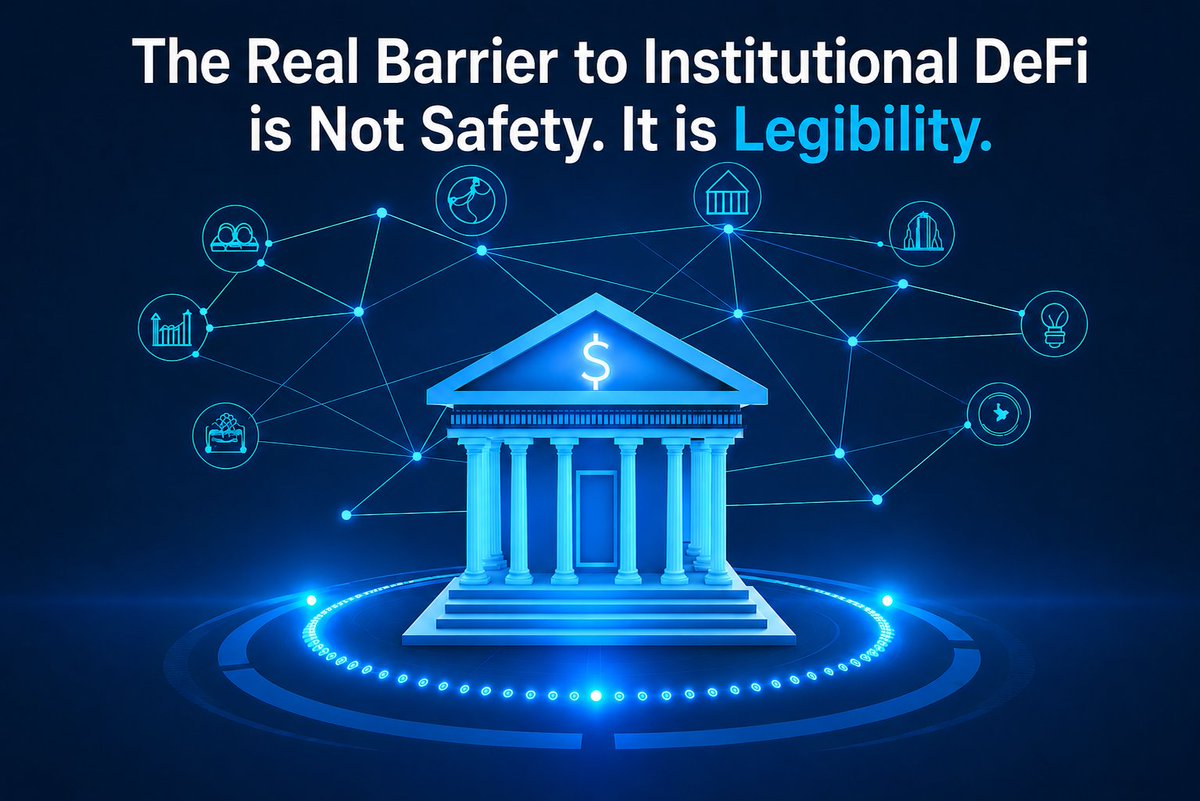
Institutions are not waiting for DeFi to become safe. They are waiting for it to become legible. That's the real adoption gap.
Over the last 18 months, I've had conversations with banks, asset managers, and sovereign funds, and the same concern keeps coming up: "We don't know what we're signing."
It's not fear of blockchain. It's the inability to understand, audit, and govern what happens on-chain.
DeFi built incredible infrastructure, AMMs, liquidity pools, lending protocols, but most of it was designed for anonymous users and code-native trust. Institutions operate differently. Every transaction needs accountability, compliance, auditability, and regulatory clarity. Programmable money without programmable compliance just doesn't scale for institutional capital.
This is why stablecoins matter. Not because they're simple, but because they're understandable. A regulated, dollar-denominated stablecoin is something a CFO can explain to a board, a compliance team can audit, and a regulator can evaluate. They're not the final destination, they're the first sentence of a new financial language that institutions are only beginning to speak.
The fastest movers aren't chasing yield. They're building settlement rails, on-chain identity, programmable compliance, tokenized collateral, institutional-grade infrastructure.
The next phase of DeFi won't be won by protocols with the highest APY. It'll be won by the systems institutions trust enough to actually move capital through.
The future of finance isn't just decentralized. It's regulated, programmable, and on-chain.
16
6
26
458
Its never the class Toppers or the most intelligent ones who win in life.
It’s always the most resilient ones
@zothdotio post our March 2025 security incident we made a clear choice:-
Choose people with long term mindset and resilience.
High IQ’s isn’t enough
May 20

It's the biggest bullshit metric in Venture. Period
4
1
11
344
So true
May 20
A bad co-founder is more expensive than no co-founder.
2
3
255
When we started @zothdotio , I told the team one thing: “We will ring the NYSE bell one day.”
Some smiled. Some doubted. Some left.
The believers stayed.
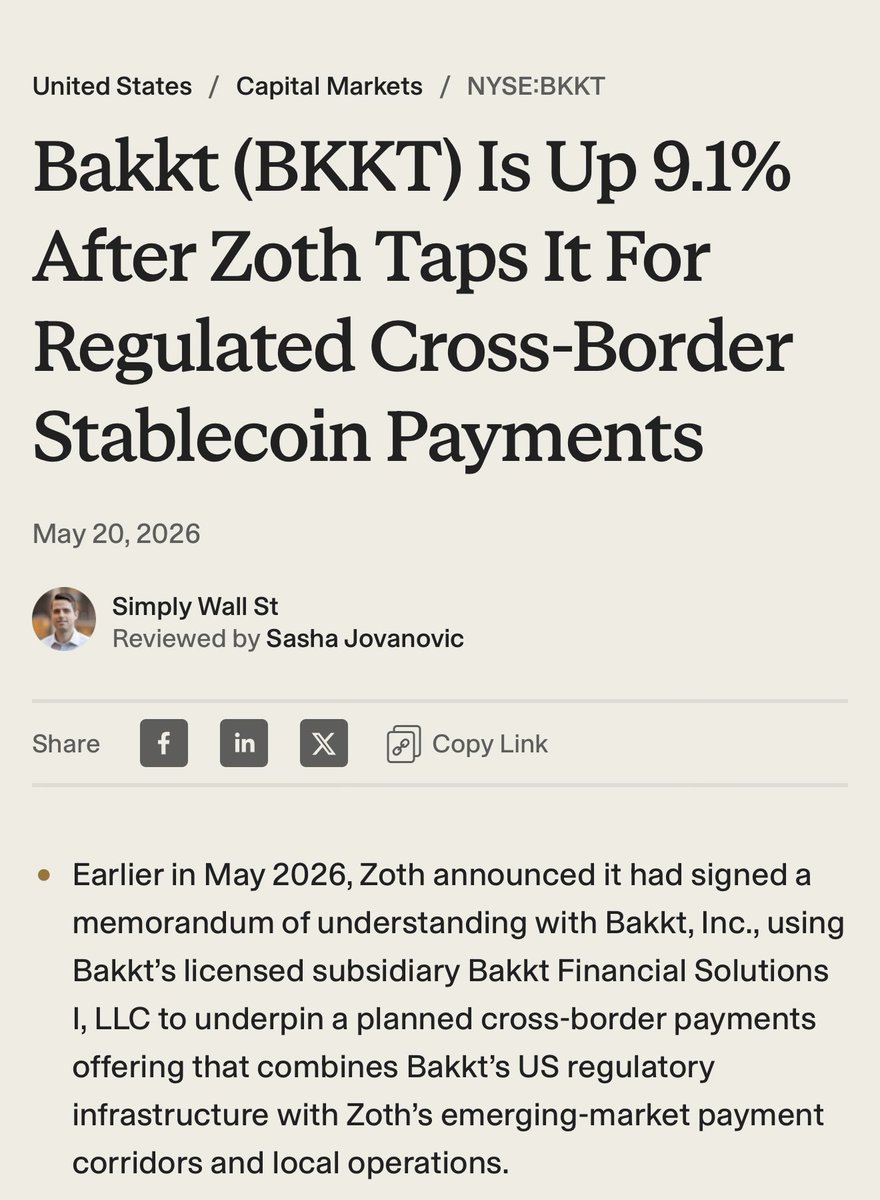
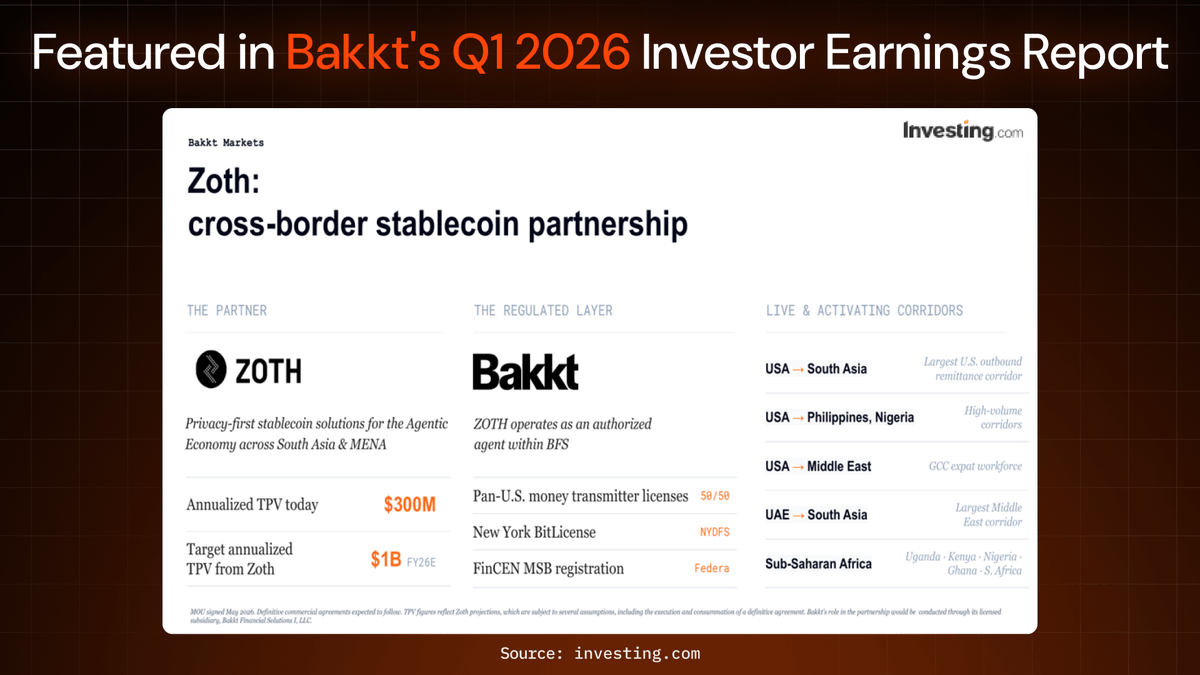
Today, Zoth appears in the Q1 2026 earnings deck of US-listed public company Bakkt (NYSE: BKKT) as a strategic partner powering compliant cross-border stablecoin payments.
For us, this is not a headline moment. It is validation that the infrastructure being built for the next era of finance is real, global, and already in motion.
The corridors are live today. Real businesses are already moving value across borders through compliant stablecoin rails.
But this is only the beginning.
Zoth is building toward a much larger vision, a privacy-first financial operating system for the Global South, where access to stable, programmable, and globally connected financial services is no longer limited by geography.
To every person who stayed through the hardest chapters, the rebuilds, the setbacks, the long nights, and the uncertainty, this milestone belongs to you.
We still have a long road ahead. Stablecoins will rewire trillions in legacy payment infrastructure. The Global South will build its own financial future. And one day, Zoth will ring that bell.
May 15
Zoth got featured in @investingcom in the Q1 2026 earnings deck of USA listed public company Bakkt (NYSE: BKKT), as a strategic partner powering compliant cross-border stablecoin payments.
Zoth is building toward something much larger: a privacy-first, one-stop neobank for the Global South, designed for a world where stable, accessible, and programmable financial services are no longer limited by geography. Our long-term vision is to bridge fragmented financial ecosystems through compliant digital rails, embedded liquidity, and user-owned financial access.
This milestone marks another step on a much longer road, one focused on building durable financial infrastructure for the regions and businesses that need it the most.
Read more: in.investing.com/news/compan…
4
3
18
936
Closure happens 1:1.. just pick up phone and call

Deal Closing and Communication
Jumping on a call is the fastest way to get a deal done and remove useless back and forth. But this only works when you are proficient in oral communication and listening.
The fetish of “taking back your time” has corrected too much to the point that it’s performative now. The value in the phone call is to remove the topical friction points and dig into the deeper friction points.
Sure, if you’re Mark Cuban, then you can only do email. But until then, pick up the goddamn phone and dial.
Don’t fall for the introvert propaganda.
Get those reps in.
3
141
As you get older you stop thinking about what makes others happy but what makes you happy inside.
May 14
The older I get, the shorter my list of fucks to give.
Hard pass on: pointless meetings, travel for the sake of it, hotels, conferences, small talk, fake interest, forced anything, bullies, dickheads, ego merchants.
All in on: my wife, my kids, parents, old loyal friends. People who teach me things. Storytellers. A good pint. Gym. Meditation. Tech. Games. Sarcasm. People who can laugh at themselves. Water. Scenic routes. Giving more than I take.
Don't see the problem.
5
121
From Indian dna to building for the world.
May 13

Counter intuitive as it may sound, the most ambitious Indian founders probably shouldn’t build for India. They should build just for the world. India becomes another country on the world map.
India’s biggest tech success stories weren’t created by solving local inefficiencies alone. Infosys and TCS went after global markets, competed with the world’s best, and in the process built one of India’s largest export engines. India’s IT exports are >$250Bn annually. Software and services became one of the country’s most important sources of dollar inflows, white-collar employment, and global influence.
There are already thousands of founders solving for India’s fragmentation and inefficiencies. That matters. But the exceptional founders — especially in AI and deep & emerging tech — should aim bigger. They should build products that can win in New York, Singapore, London and Tokyo. Price globally. Compete globally. Hire globally.
1
6
255
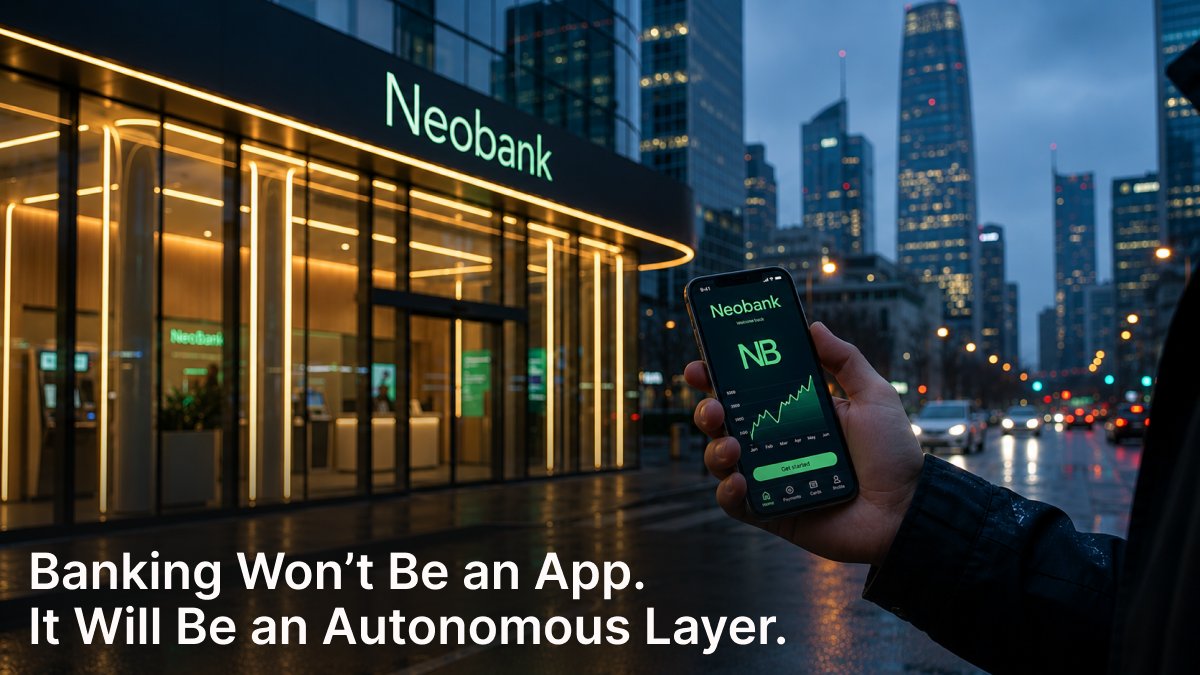
In 10 years, your bank account won't be a place you log into. It will be a layer of intelligence that runs underneath your life.
Here's what I see from where I'm standing, not as a prediction, but as the direction the builders shaping this future are already moving toward.
Money becomes programmable by default. Not for developers only. For everyone. You'll set rules like "pay rent first, invest 20%, hold 3 months of expenses as a buffer," and the system enforces them. Automatically, continuously, without willpower.
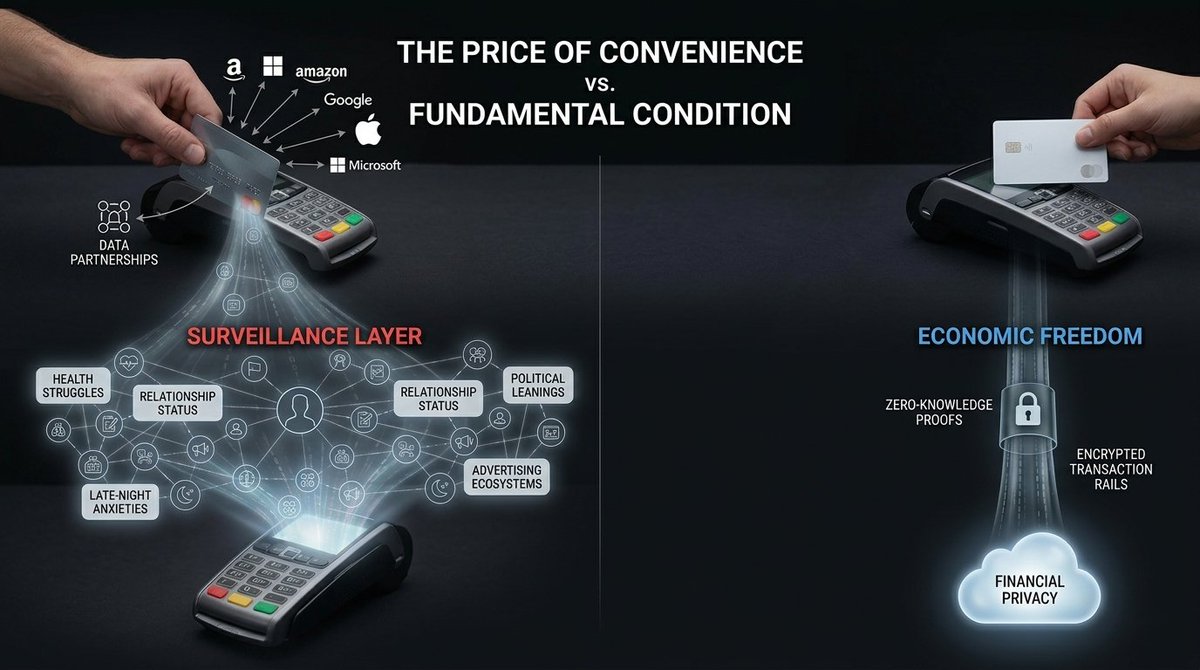
Privacy becomes infrastructure, not a premium. The default state of financial data will be encrypted and selective. You'll prove you meet a threshold without revealing the number. You'll verify identity without exposing it.
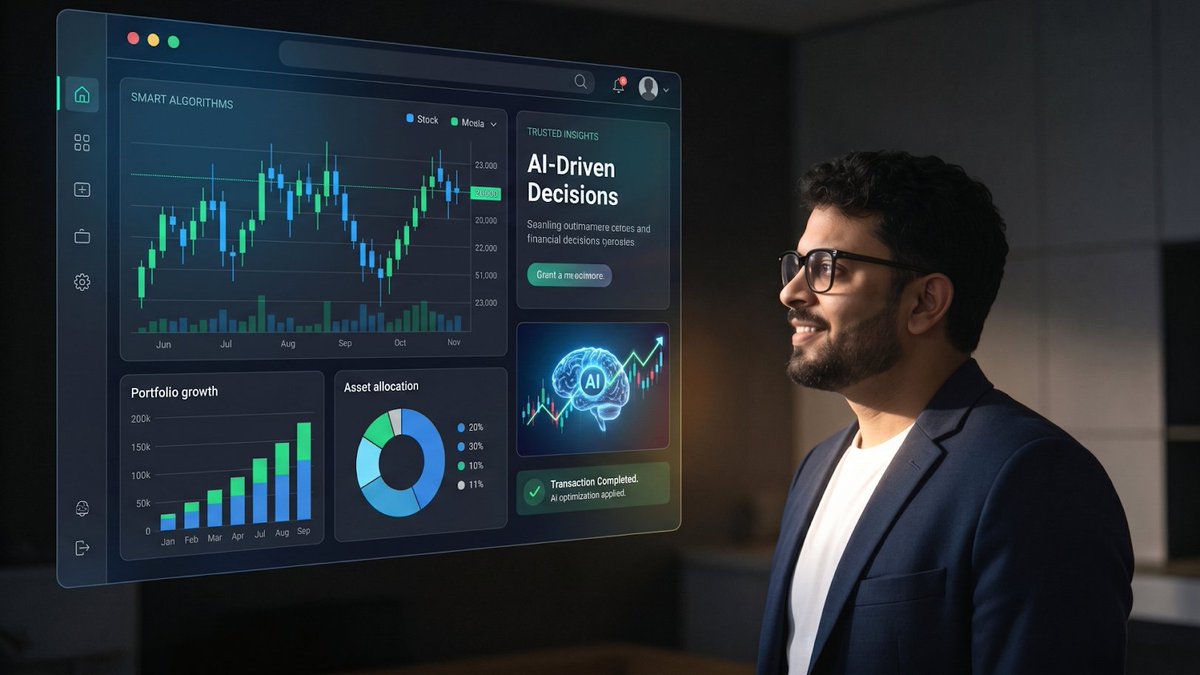
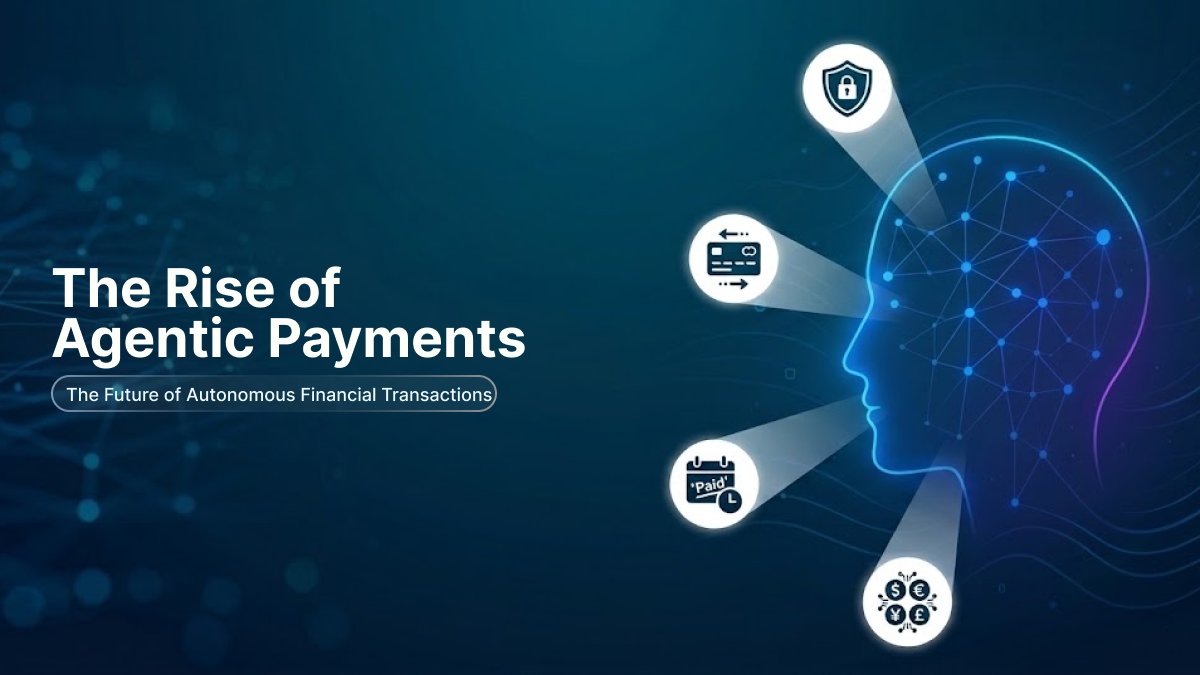
AI agents handle routine financial operations. Not chatbots. But actual agents. Paying, reconciling, investing, hedging, all delegated to a system that knows your goals and executes without friction. The human stays in the loop for values and direction. The machine handles execution.
Settlement becomes invisible and instant. The 2–5 day window disappears. Cross-border becomes as fast as local. FX costs compress toward zero. The experience of "international transfer" becomes indistinguishable from a local tap.
Financial inclusion becomes structural, not charitable. The 1.4 billion unbanked people in the world aren't outside the system because they lack documents. They're outside because the system was never designed for them. New infrastructure, stablecoin rails, onchain identity, programmable accounts, all reach them directly.
This future isn't inevitable. It gets built by people willing to work on the unglamorous parts, the rails, the compliance, the infrastructure nobody sees.
3
1
9
388