
Всего понемногу
Joined December 2011
- Tweets 12,066
- Following 205
- Followers 228
- Likes 10,284
1,481 Photos and videos
Лена как река 🇬🇪 retweeted

ママ〜猫拾ったよー 見て〜
1,252
6,352
67,278
4,642,289
Лена как река 🇬🇪 retweeted

25 Dec 2025
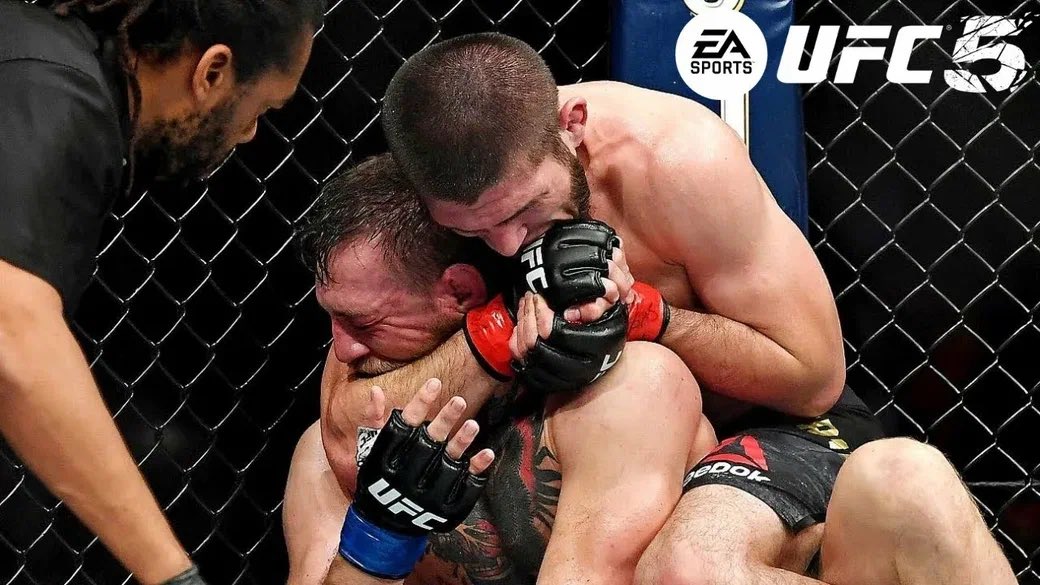
Khabib is a handsome man! Orcs are the most beautiful and powerful on the planet!💥💥💥

2
3
1,303

Лена как река 🇬🇪 retweeted

20 Dec 2025
The Russian frozen assets heist was foiled for now, largely due to the brave resistance of the Belgian PM @Bart_DeWever, who put his country’s interests before those of the pro-war lobby — a rare stance in today’s Europe.
But there is little to celebrate: in its desperate push to keep the war going, the Commission and the pro-war lobby succeeded in pushing through a massive €90-billion loan to Ukraine, backed by the EU budget and underwritten by all member states except three (Hungary, Slovakia and the Czech Republic), which were granted opt-outs.
In effect, the political obstacle was bypassed not by changing strategy, but by shifting the financial risk directly onto European taxpayers. As von der Leyen made clear in advance of the summit, there was little room for dissent: “No one will leave the EU summit until the issue of Ukraine’s financing is resolved”.
Incredibly, the deal foresees that the loan will have to be repaid by Ukraine only if and when Russia agrees to pay war reparations — effectively transforming hypothetical future reparations into immediate financing. This idea is, at best, wishful thinking. It is highly unlikely that Russia would accept binding reparations even in the event of a peace deal, meaning that there is little chance Ukraine will ever repay the loan, leaving EU governments — and taxpayers — to foot the bill.
This episode illustrates how the EU operates: by manufacturing false binaries that foreclose genuine political choice. Member states were presented with a stark alternative — either agree to confiscate Russia’s frozen assets or be prepared to collectively underwrite a massive new loan. What was never seriously considered was a third option: to stop pouring money into a demonstrably failed strategy and instead work to bring the war to an end through negotiations.
Yet it’s easy to see why the EU can’t afford to confront the failure of its Ukraine strategy — one that has inflicted immense economic damage on Europe while delivering nothing on the battlefield, and that has left Ukraine in a worse position than at the start of the war. Acknowledging this reality would carry enormous political costs for EU elites, particularly those most invested in the victory-at-all-costs narrative — hence their determination to keep the war going at all costs.
This is why, even after failing to agree on confiscation, Brussels pushed through a massive, budget-backed loan as a substitute. The consequences will be dear: Ukrainians will continue to suffer and die in an unwinnable war, while Europe will remain entrenched in a permanent state of economic warfare and military-by-proxy confrontation with Russia, with a constant risk of escalation into direct conflict.
If there is a silver lining to this grim trajectory, it is that the recklessness of these choices will only exacerbate the contradictions of a project that is pushing the continent to the brink, ultimately forcing a reckoning — within member states and among Europe’s citizens alike. Indeed, the Commission may have succeeded in avoiding a catastrophic humiliation, but in doing so it exposed the increasingly authoritarian nature of the Union, willing to override national interests and discard legal constraints, democratic norms and basic economic rationality in pursuit of ideological crusades.
Meanwhile, the enormous financial burden imposed by the latest deal will only deepen internal fractures and push national budgets to the breaking point — especially when it becomes clear that it will entail yet more resources diverted from Europe’s own crumbling infrastructure, underfunded hospitals and overstretched schools.
As the contradictions within the EU continue to accumulate, it is increasingly difficult to see how Brussels can manage the backlash for much longer. The Union is beginning to resemble a crumbling empire, reliant not only on repression, censorship and electoral manipulation to maintain control, but also on ever more aggressive tactics directed even against pro-EU governments themselves. By forcing through ever more reckless commitments in the name of unity, it is simply setting the stage for an even more catastrophic implosion down the road.
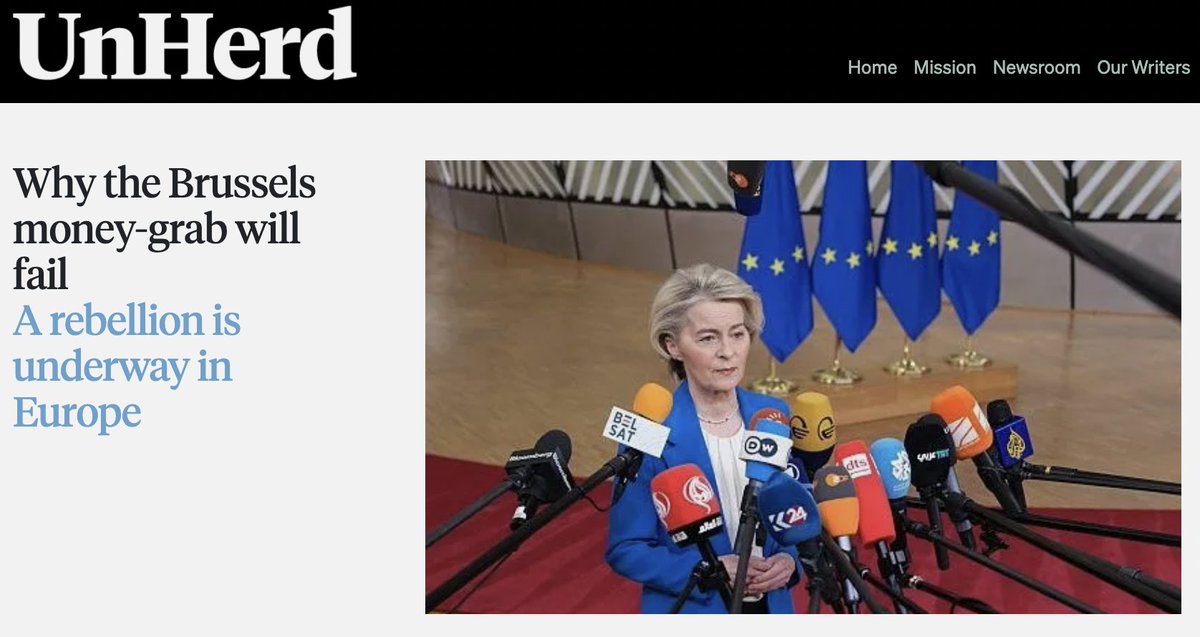
Read my latest article here: unherd.com/2025/12/why-the-b…
46
345
871
107,029








Лена как река 🇬🇪 retweeted
11 Dec 2025
Hello community, this is Anfisa! Anfisa, this is the community!)
1
2
3
30
Лена как река 🇬🇪 retweeted

23 Nov 2025
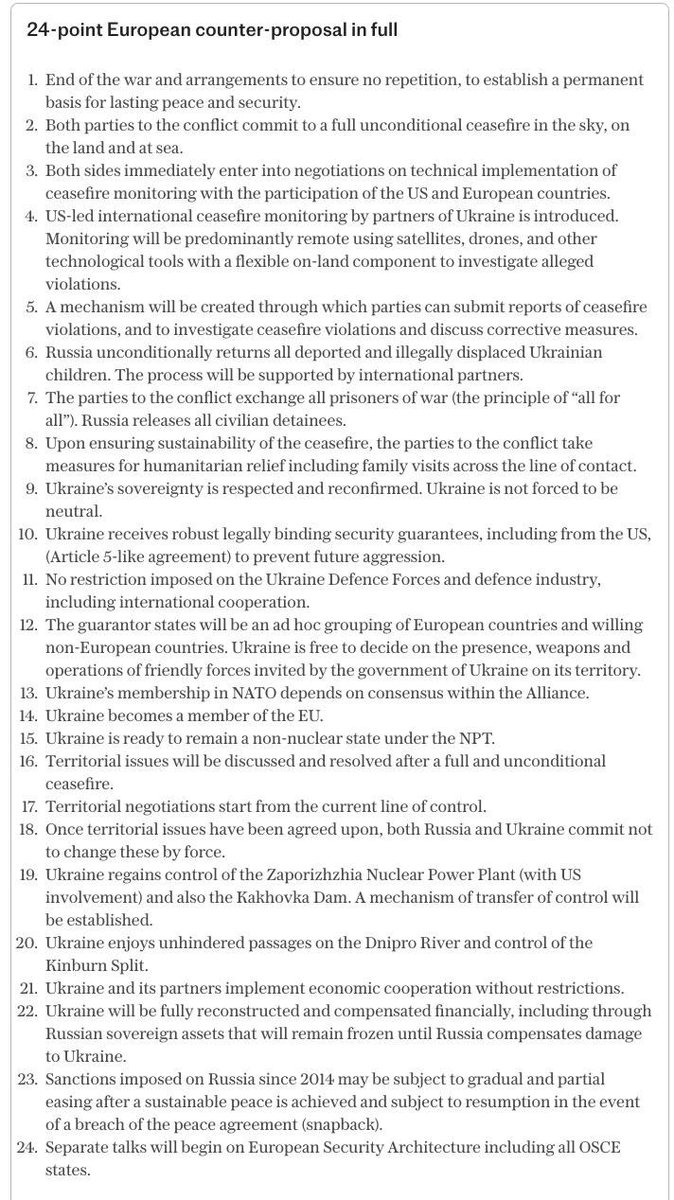
Here's Europe's “peace plan” in full and it reads like a blueprint for WWIII. NATO membership. Ukrainian conscripts still bleeding. Sanctions still locked and loaded. Not one inch of humility. Not one lesson learned. Just the same arrogant script that burned Ukraine to the ground.
23 Nov 2025

Europe’s “peace plan” is pure fan fiction: unlimited Ukrainian army, NATO doors wide open, foreign troops invited in, sanctions snapped on and off like Christmas lights — and not one inch of territory ceded. In other words, the exact blueprint that created the war… now repackaged as the path to end it. And still, not a single EU leader has the courage to say this to Trump’s face.
The Europeans have finally placed their “rival plan” on the table and it reads like a suicide pact masquerading as diplomacy. Not a roadmap to peace, but the most dangerous piece of political fiction since the Iraq WMD dossier. It wasn’t written to end the war. It was crafted to re-ignite it, by technocrats who’ve never seen a trench, never buried a son, yet now presume to redraw a battlefield they’ve never fought on.
This plan would destroy what’s left of Ukraine and plunge Europe into permanent instability, if not outright war. Ursula von der Leyen all but confessed it: no territorial concessions, no limits on Ukraine’s army, no neutrality, no restrictions on NATO membership, foreign troops invited in, and automatic sanctions ready to snap back the moment Russia exhales wrong. And somehow, the EU, which sabotaged every past peace initiative, nsists it must be “central” to peace.
This isn’t a peace plan. It’s a maximalist war doctrine written by bureaucrats who will never bleed from the consequences.
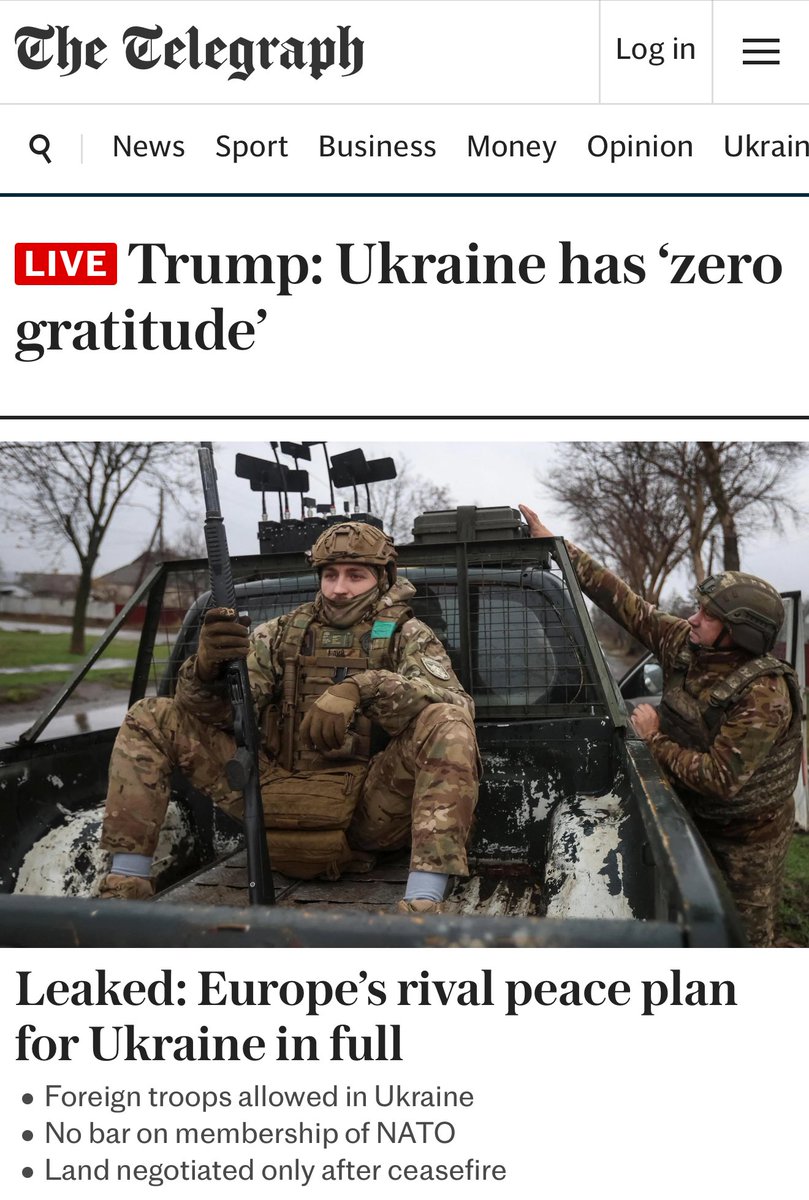
The most telling part isn’t what’s in the plan, it’s how they delivered it. Not one European leader dared present it to Trump. They leaked it to the Telegraph. As they fled to Geneva like anxious interns hoping to edit the final copy after the boss signs off. They want to appear defiant in print but remain submissive in practice and that’s exactly why Washington cut them out of the real talks.
Let’s break it down. Europe insists Ukraine must be free to expand its army, despite mass mobilization revolt, conscription kidnappings, and a collapsing population. They want NATO’s door flung wide open, ignoring that this is what triggered the war to begin with. They want British, French, and Polish troops operating openly in Ukraine, daring Moscow to escalate. No acknowledgment of battlefield reality. No constitutional neutrality.
In short: the same terms that created the war, now repackaged as conditions for peace.
They even demand the right to sanction Russia unilaterally, automatically, on political impulse. That’s not diplomacy, it’s legal sabotage disguised as guarantees. The West breaks ceasefires, then blames Russia for retaliating.
Contrast that with the Trump plan. Russia calls it “a good foundation.” Not a solution. Not a surrender. A basis. Strategic language. Meanwhile, Europe throws a tantrum dressed in treaty clothes and calls it moral clarity.
Why? Because they’re terrified. If Trump imposes his plan, they’ll be left holding the corpse of Project Ukraine. The debts. The migration. The economic wreckage. The shame. And the guilt of having helped destroy the very country they claimed to protect.
That’s why they say “mitigate” and not No. That’s why they leak, not leading with courage. That’s why they moralize, not negotiate. “Mitigate” is the word a slave uses when asking their master to reconsider the terms of obdience.
Imagine it: most a continent reduced to lobbying for softer language in its own obituary.
And what of Ukraine? They’re not being offered peace. They’re being strapped to a corpse and ordered to march. Told to rebuild with men they no longer have. Told they’ll be shielded by allies who already condemned them, and now don’t even have the courage to confront the one man actually trying to end the war.
This isn’t a plan. It’s a guarantee of frozen conflict, a remilitarized Ukraine, a re-mobilized NATO, and permanent confrontation with Russia. No autonomy for Europe. No sovereignty for Ukraine. No peace for anyone.
History offered Europe a seat at the table. It chose to be seated. On command. And only when spoken to.
72
206
557
37,600
Лена как река 🇬🇪 retweeted

17 Nov 2025
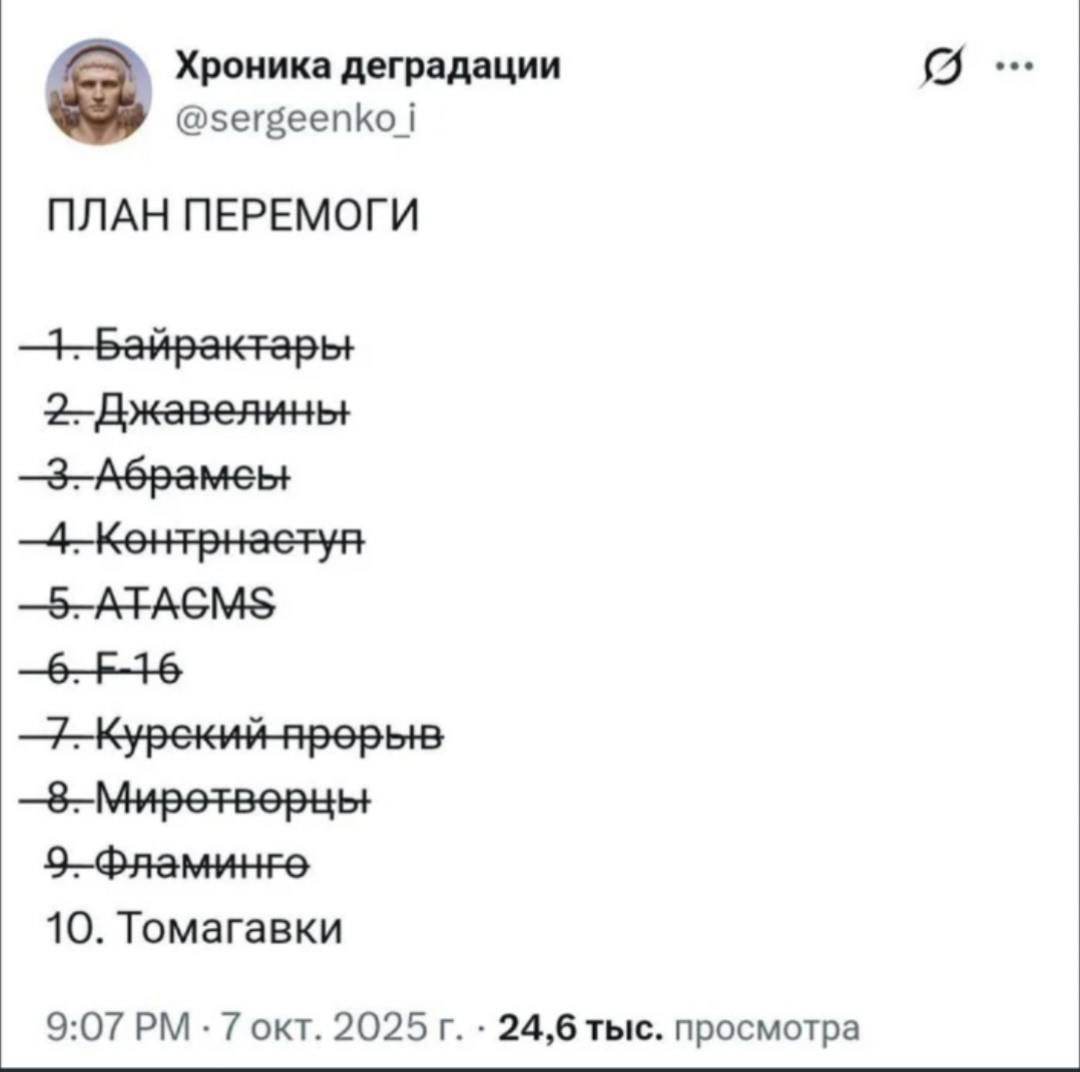
Подождите, мы не успеваем зачеркивать
8
3
233
5,720

Лена как река 🇬🇪 retweeted
15 Nov 2025
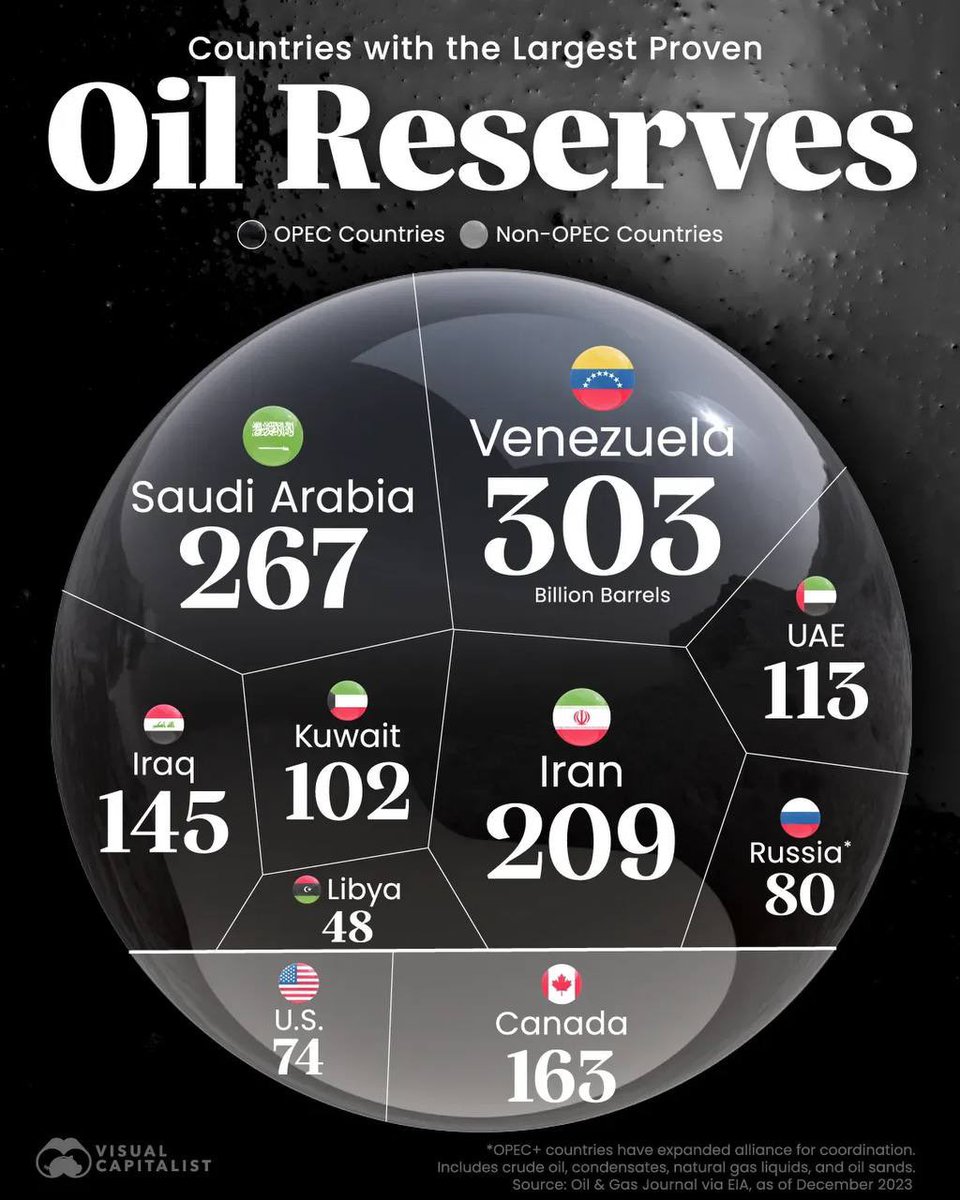
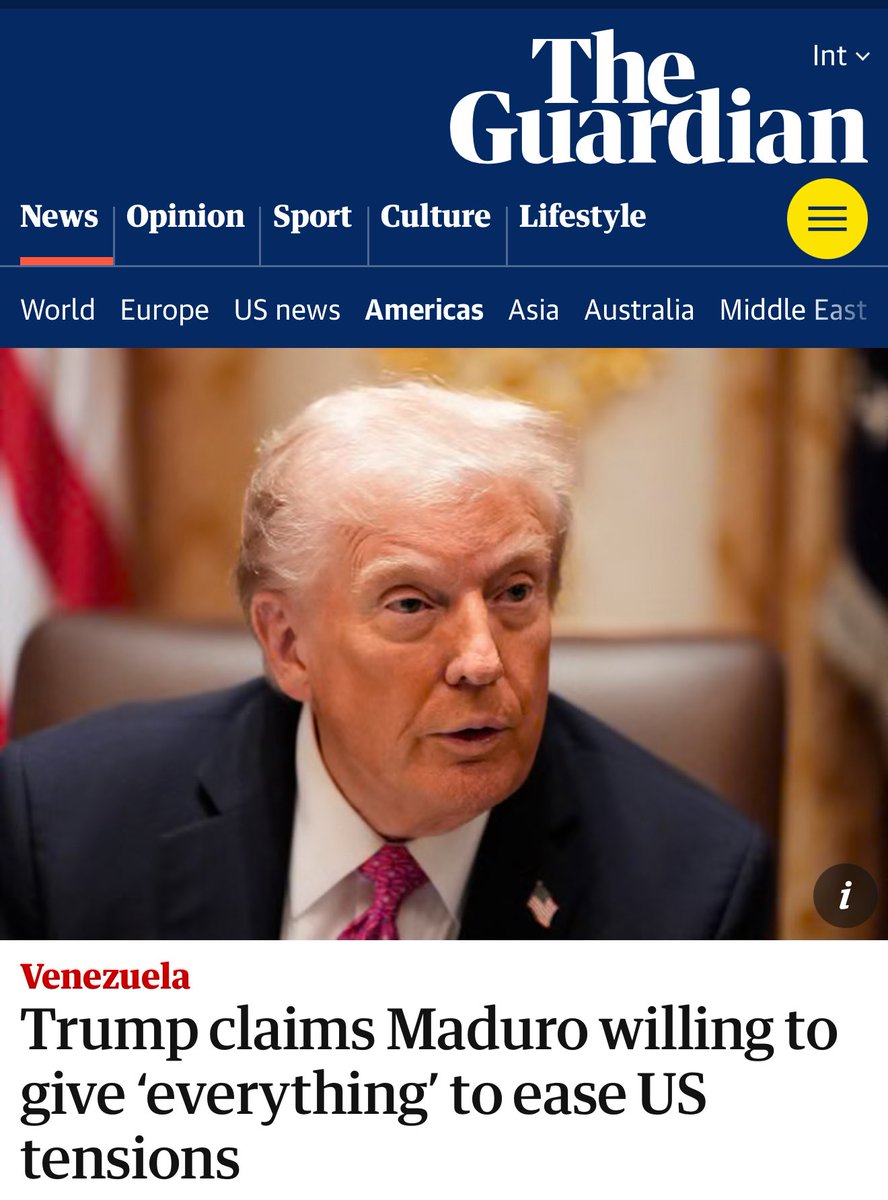
DC's sudden obsession with Venezuela isn’t about narco-terrorism. Spare us the fairy tales. Look at the infographic: 303 billion barrels of proven oil, the largest reserves on Earth. And when Maduro reportedly offered the U.S. access to its natural resources wealth, to ease pressure, Trump bragged about turning it down… and sailed the world’s largest aircraft carrier toward Caracas instead. Gangsterism, but with better branding.
Of course it’s about the oil. Of course it’s about the rare earths. Of course it’s about the last untamed energy bank on the planet — 303B barrels in Venezuela, 267B in Saudi Arabia, 209B in Iran, and 80B in Russia, that awkward constellation of countries that Washington can’t control, intimidate, or buy outright.
The infographic doesn’t lie. It exposes the entire geopolitical script.
The U.S. sits on 74B barrels. Venezuela has four times that, Iran has nearly triple, and every major reserve holder outside Arabia now lives in a strategic ecosystem that increasingly trades with, or leans toward, Russia, China, and BRICS . That’s the real panic in Washington. Not ideology. Not “democracy.” Not narcoterrorism. Market share.
Apparently, Maduro floated the unthinkable, opening “all Venezuelan oil and gold projects” to the U.S., even reducing dependence on China, Trump admitted he walked away. That was a message:
“We don’t want your permission. We want your submission.”
Washington acts like a debt-ridden fading empire in a hurry. It sends the Gerald R. Ford, a floating city of steel, to “fight drugs,” but somehow parks it near the country with the largest oil reserves on Earth. Because when sanctions can’t break a nation, aircraft carriers are sent to “remind” them who writes the rules.
And yet... The U.S. won’t tolerate a Monroe Doctrine for Russia or China in their own regions, but expects the whole world to respect a Monroe Doctrine for itself. If Moscow or Beijing sailed their biggest carriers to Cuba, Mexico, or Puerto Rico under the excuse of “counter-narcotics,” Washington would treat it as an act of war.
If the U.S. won’t acknowledge spheres of security for others, the global majority will return the favour. Open season, indeed.
And here’s the question that no one in legacy media wants to ask:
Is it worth another humiliating defeat?
What exactly are the last four U.S. imperial ventures known for?
•Iraq: Trillions spent, no victory.
•Afghanistan: 18-year occupation ending in a runway evacuation.
•Syria: A failed regime-change war, rescued only by supporting their favourite franchise, Al-Qaeda.
•Ukraine: The biggest geopolitical boomerang and humiliation in modern history, strengthening Russia economically, militarily, diplomatically, while draining NATO dry.
No need to address the humiliation of Vietnam. The empire is running on IOUs and hubris.
Venezuela, with its militias, jungle terrain, hardened military, and alliances with Russia, Iran, and China, would not be “a quick operation.” It could become another graveyard for imperial fantasies.
If the motivation were truly humanitarian, it would have snapped up Maduro’s offer to hand over massive oil concessions. Instead, it preferred pressure over prosperity, force over negotiation, coercion over coexistence.
Oil, lithium, rare earths, the entire extractive basket, that’s the real story.
And every time the U.S. tries to tighten control over the hemisphere, the multipolar world tightens its coordination.
The question isn’t whether Washington can take Venezuela. The question is whether it can survive the consequences of trying.
So go ahead, turn the Caribbean into another graveyard of hubris. Send your trillion-dollar toys to menace a country sitting on a mountain of oil you’ll never truly control.
But remember: the last empires didn’t fall from invasion, they collapsed from arrogance, rot, and the lies they told themselves. And when this one breaks, no one will weep. They’ll only ask why it took so damn long.
15
65
145
14,715
Лена как река 🇬🇪 retweeted

Я хуею в этих бурьянах😂🇺🇦Коррупция является неотъемлемой частью современной экономики-Подоляк о коррупционном скандал в окружении Зеленского.По его словам, "такие дела возникают в демократических системах"и "коррупция является неотъемлемой частью современной экономики"
104
50
324
22,769