
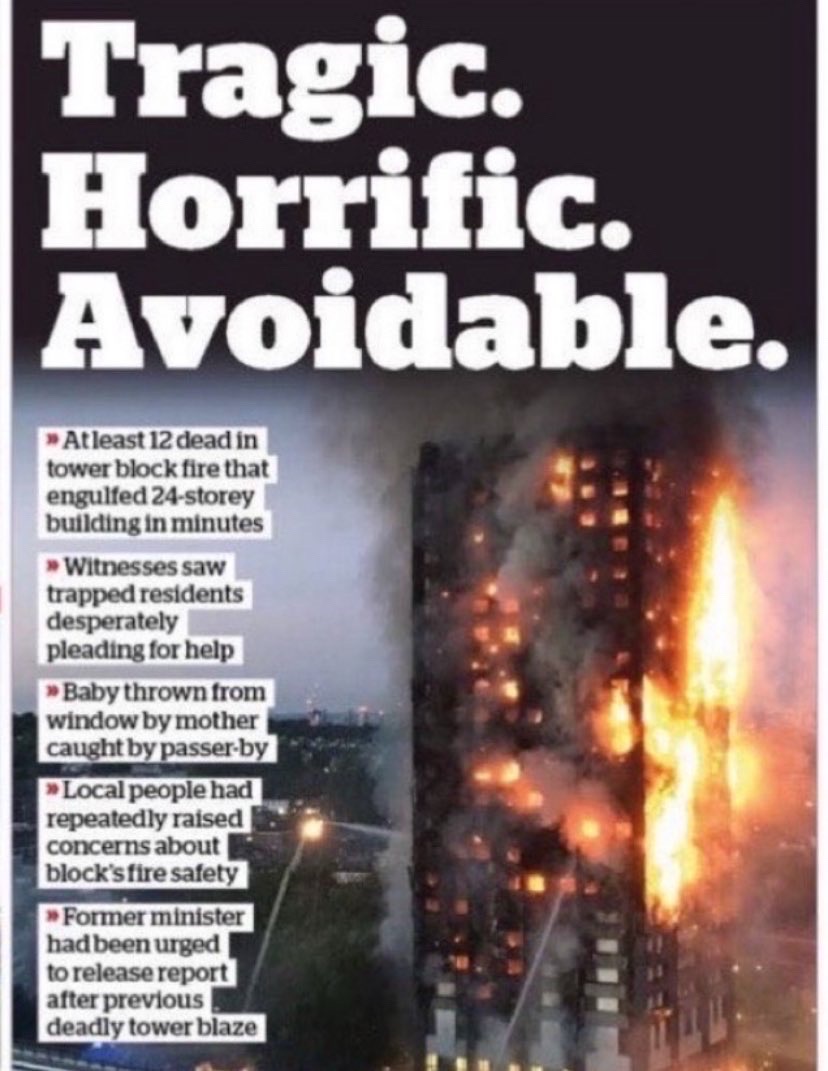










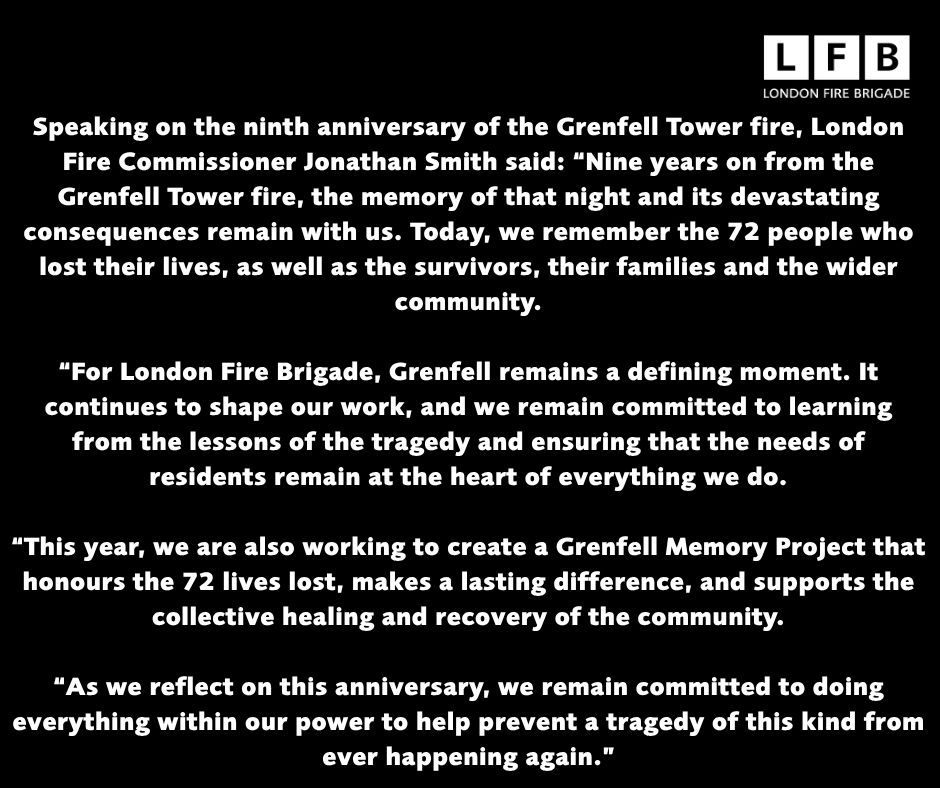
ALT Speaking on the ninth anniversary of the Grenfell Tower fire, London Fire Commissioner Jonathan Smith said: “Nine years on from the Grenfell Tower fire, the memory of that night and its devastating consequences remain with us. Today, we remember the 72 people who lost their lives, as well as the survivors, their families and the wider community. “For London Fire Brigade, Grenfell remains a defining moment. It continues to shape our work, and we remain committed to learning from the lessons of the tragedy and ensuring that the needs of residents remain at the heart of everything we do. “This year, we are also working to create a Grenfell Memory Project that honours the 72 lives lost, makes a lasting difference, and supports the collective healing and recovery of the community. “As we reflect on this anniversary, we remain committed to doing everything within our power to help prevent a tragedy of this kind from ever happening again.”