
37 Photos and videos
Gabrielle Kaili-May Liu retweeted

Jun 4
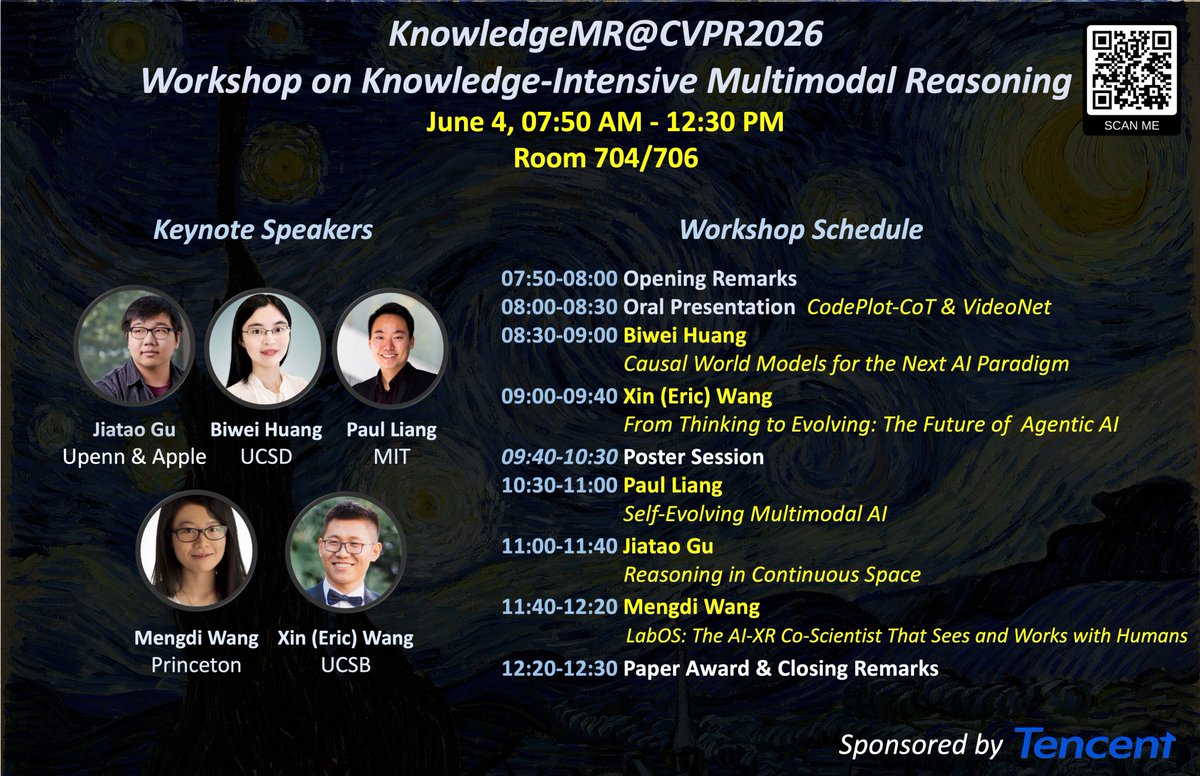
When multimodal AI meets real-world expertise, reasoning gets harder, deeper, and much more exciting.
Join us at KnowledgeMR @ #CVPR2026 to push this frontier forward!
🗓️Thu June 4 | 8am | Room 704/706
Speakers: @thoma_gu @huang_biwei @pliang279 @MengdiWang10 @xwang_lk
10
22
3,244

Also glad to share this was accepted as a ✨spotlight✨to the Trustworthy AI4GOOD Workshop @ #ICML 2026!

🔥Excited to share our paper: Quantifying Faithful Confidence Expression in Large Reasoning Models (LRMs)!🔥
We trust reasoning models partly because they show their work. But do their words reflect how confident they really are? 🤔
Check our preprint to find out!
Details 🧵👇
5
11
1,003
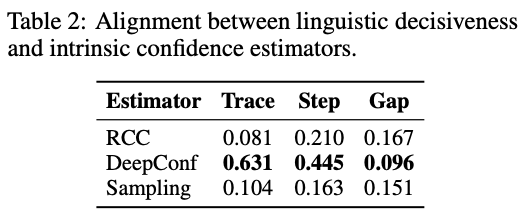
⚠️ 𝗞𝗲𝘆 𝗙𝗶𝗻𝗱𝗶𝗻𝗴 #𝟲: Different intrinsic confidence estimators produce 🔀 𝗱𝗶𝘃𝗲𝗿𝗴𝗲𝗻𝘁 faithfulness profiles on identical CoT traces. This reveals fragility in prior evaluation methods & suggests LRM uncertainty signals do not maps neatly to linguistic expression.
1
66
(13/n) If you're interested in LLM reasoning, uncertainty, or faithfulness, check out our paper and analysis framework! We'd love feedback or questions 🙏
📄 Paper: arxiv.org/pdf/2606.03969
🔗 Github: github.com/yale-nlp/faithful…
1
1
79
(14/n) Thanks to my co-firsts @areebg9 and Asal Meskin, and @armancohan's advising!
1
59
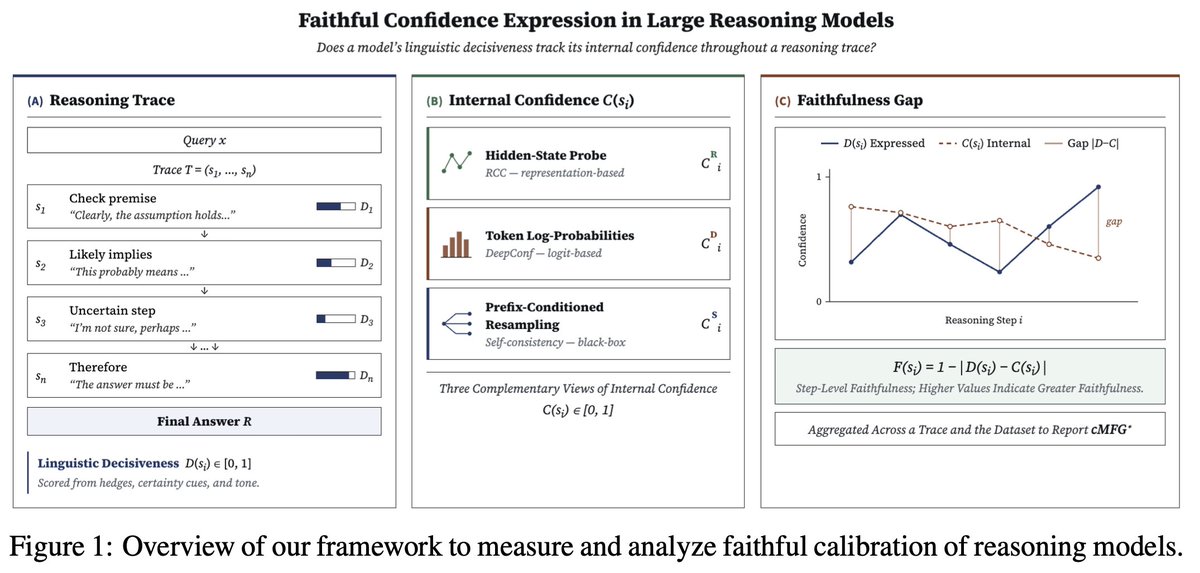
(3/n) Yet studying FC in LRMs is uniquely hard 🔍. Long CoT traces lack clean step boundaries, exhibit inconsistent step structure, and encode complex conditional dependencies that evolve throughout the trace — making existing FC evaluation methods ill-suited to this setting.
1
97
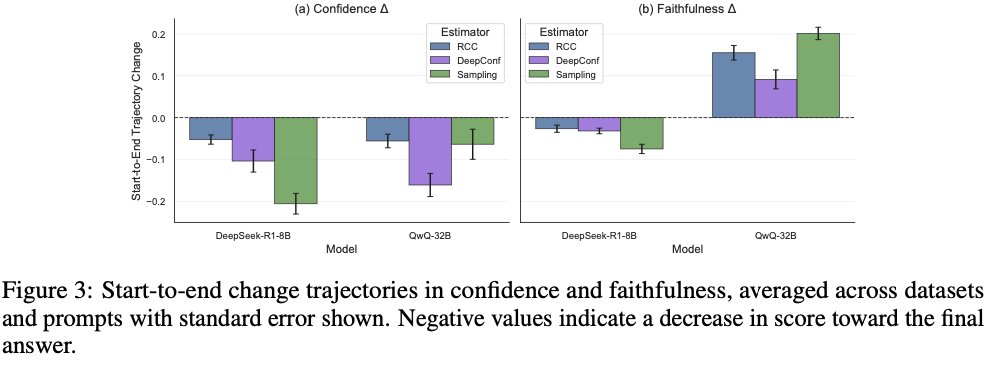
⚠️ 𝗞𝗲𝘆 𝗙𝗶𝗻𝗱𝗶𝗻𝗴 #𝟱: Trajectory-level faithfulness dynamics 🌊 vary with model and estimator. Expressed confidence of later reasoning steps is 🚫 not uniformly more faithful than earlier ones, despite being more calibrated with accuracy.
1
48
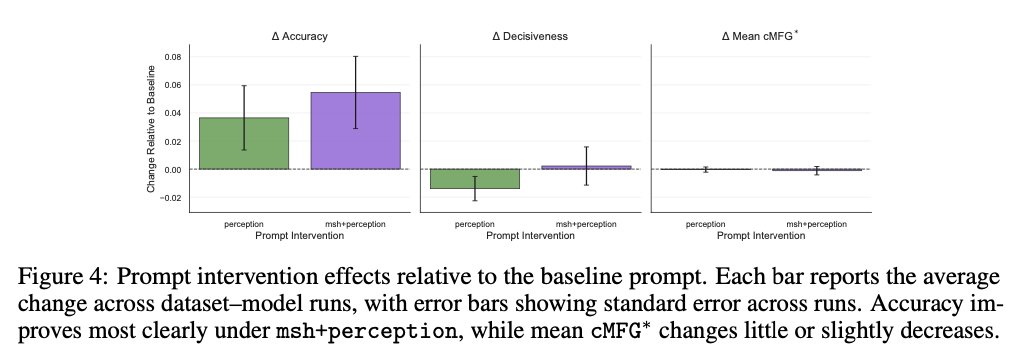
⚠️ 𝗞𝗲𝘆 𝗙𝗶𝗻𝗱𝗶𝗻𝗴 #𝟰: Prompt interventions that boost FC in standard LLMs fail to generalize to LRMs 📉. Even metacognitive prompting — shown in prior work to robustly improve faithful calibration of non-reasoning models — yields minimal gains in the reasoning setting.
1
68
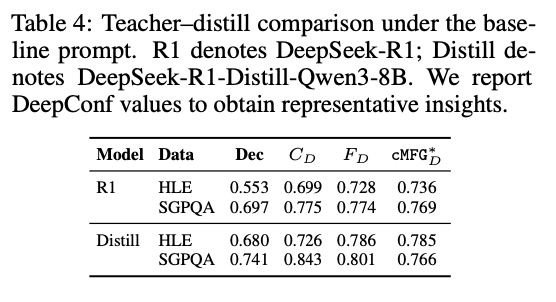
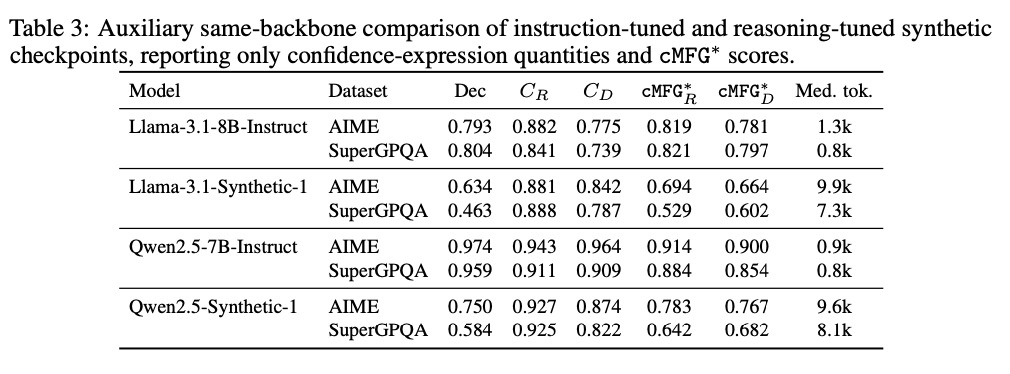
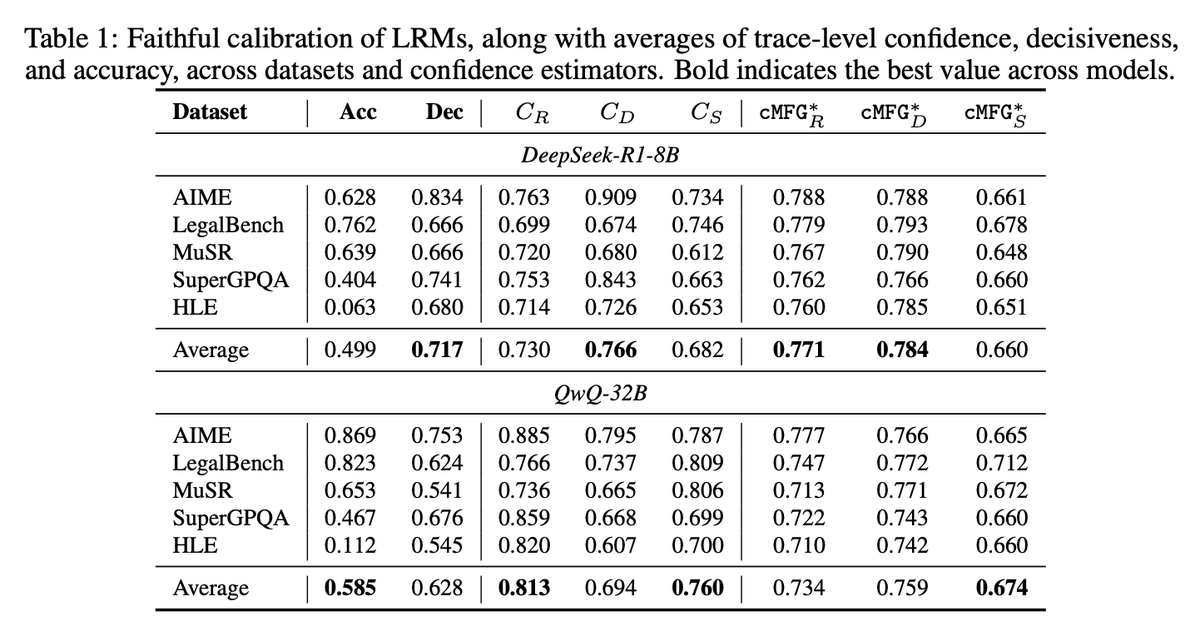
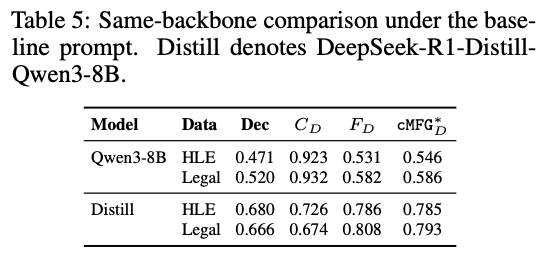
⚠️ 𝗞𝗲𝘆 𝗙𝗶𝗻𝗱𝗶𝗻𝗴 #𝟯: 𝗗𝗶𝘀𝘁𝗶𝗹𝗹𝗮𝘁𝗶𝗼𝗻 differentially reshapes & 𝗱𝗶𝘀𝘁𝗼𝗿𝘁𝘀 FC vs. reasoning training in ways that cannot be inferred from architecture, scale, or accuracy alone — 🎭 distilled models should 𝗻𝗼𝘁 be treated as FC proxies for their teachers!
1
55
⚠️ 𝗞𝗲𝘆 𝗙𝗶𝗻𝗱𝗶𝗻𝗴 #𝟮: ⚙️ Reasoning training 📉 degrades FC. Comparing matched reasoning & non-reasoning checkpoints of the same model backbone, reasoning-tuned variants produce more hesitation, but surface-level caution does not correspond to lower internal confidence.
1
49
⚠️ 𝗞𝗲𝘆 𝗙𝗶𝗻𝗱𝗶𝗻𝗴 #𝟭: Reasoning behaviors do not automatically translate to improved faithfulness of uncertainty expression. LRMs remain highly decisive even when frequently wrong 😬, and model size provides limited assistance to LRMs, ❌ in contrast to FC of LLMs.
1
52
(6/n) We apply our framework across 🤖 7 models, 🧩 5 diverse reasoning-intensive datasets (math, science, law, multi-step soft reasoning), and various 🧪 prompt interventions, finding that faithful confidence expression remains a significant challenge for LRMs 😔.
1
56
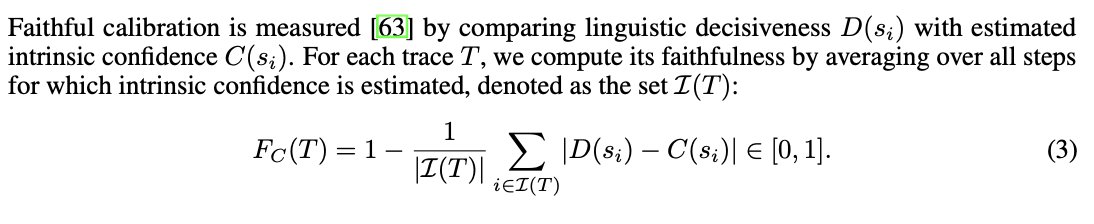
(5/n) This gives a 🔭 multi-dimensional view of faithfulness throughout a CoT trace. We also introduce a 💡 prefix-conditioned sampling approach to control for conditional dependencies and structure across sampled trace —a key challenge that existing methods overlook.
1
74
(4/n) To address this, we present a novel framework to systematically quantify FC in LRMs 🎯. Our framework analyzes linguistic decisiveness against 3️⃣ complementary sources of internal confidence, derived from 🕵 hidden states, ⚙️ token probabilities, & sampling consistency ⚖️.
1
82
🔥Excited to share our paper: Quantifying Faithful Confidence Expression in Large Reasoning Models (LRMs)!🔥
We trust reasoning models partly because they show their work. But do their words reflect how confident they really are? 🤔
Check our preprint to find out!
Details 🧵👇
3
9
1,524
(2/n) Faithful calibration (FC)—the alignment between models' 𝘪𝘯𝘵𝘳𝘪𝘯𝘴𝘪𝘤 & 𝘦𝘹𝘱𝘳𝘦𝘴𝘴𝘦𝘥 uncertainty—is a persistent failure mode for LLMs 😔. This is especially consequential for LRMs, whose reasoning traces are seen as concrete signals of competence & confidence.
1
100
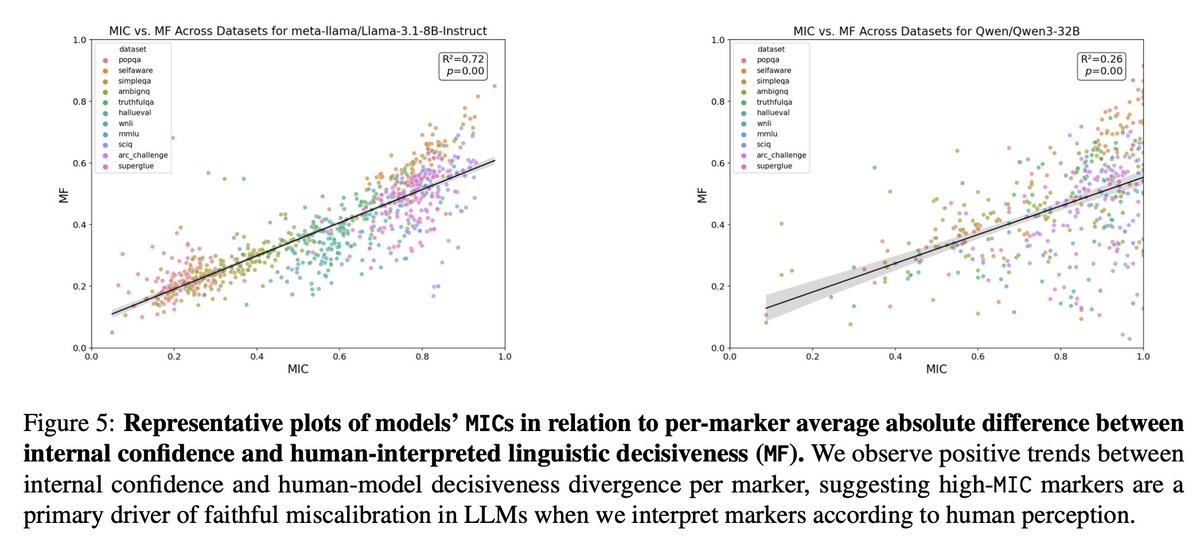
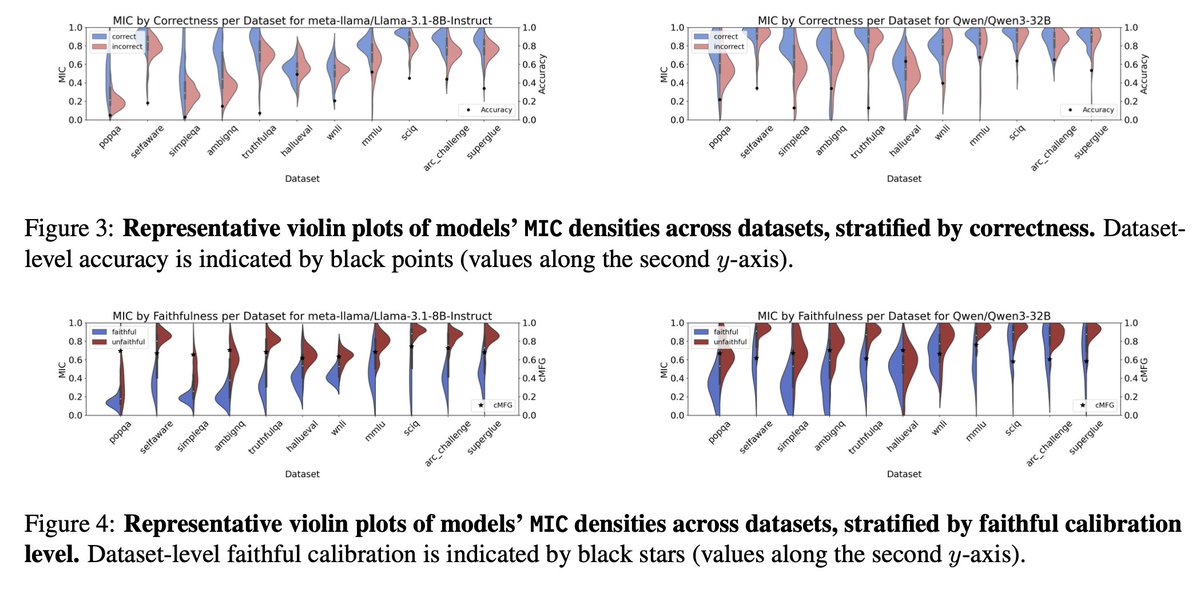
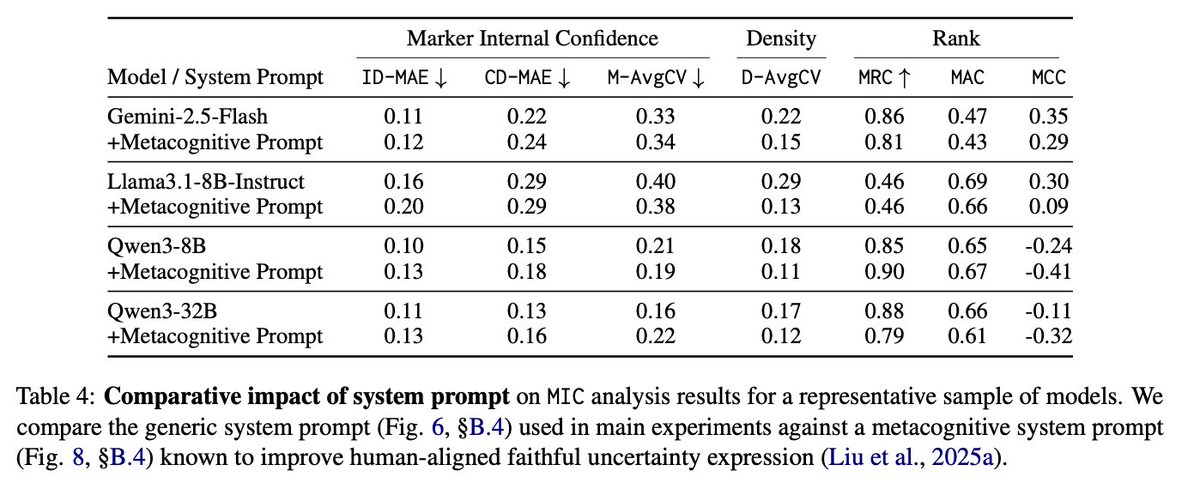
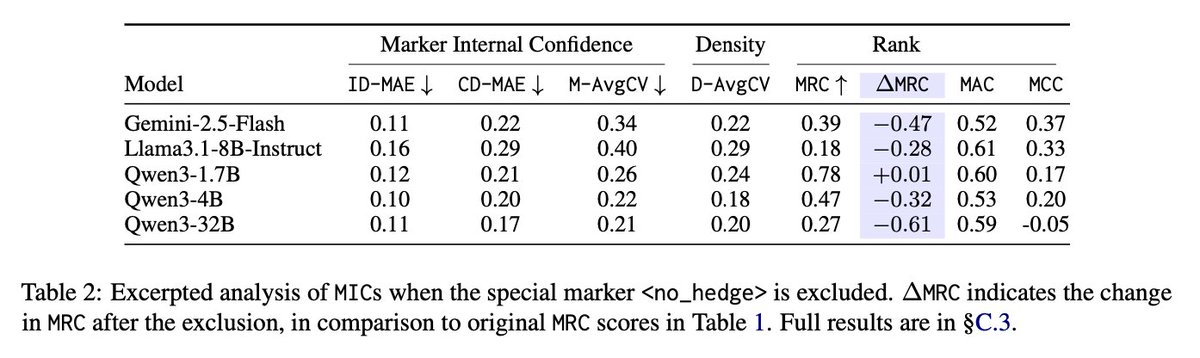
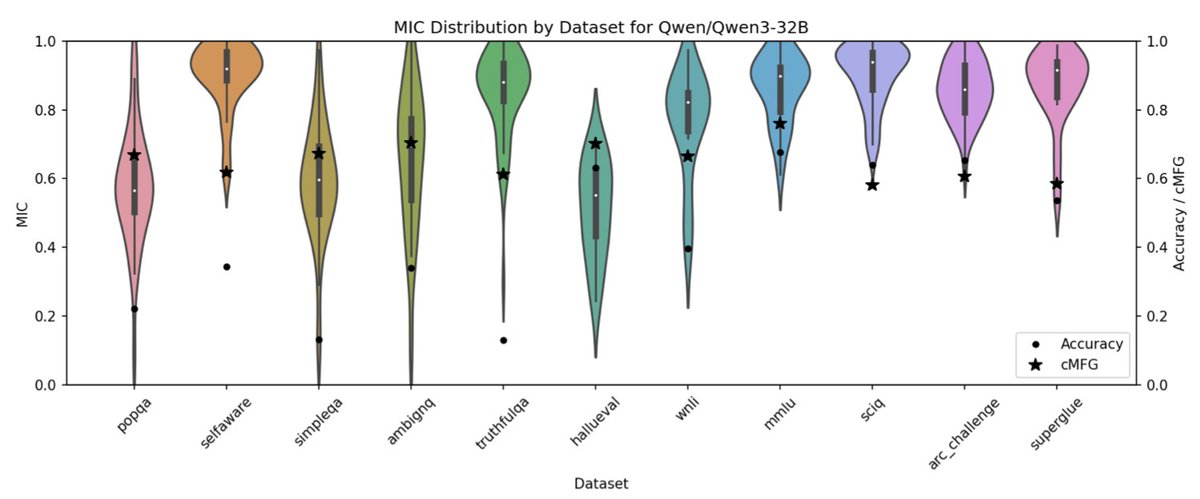
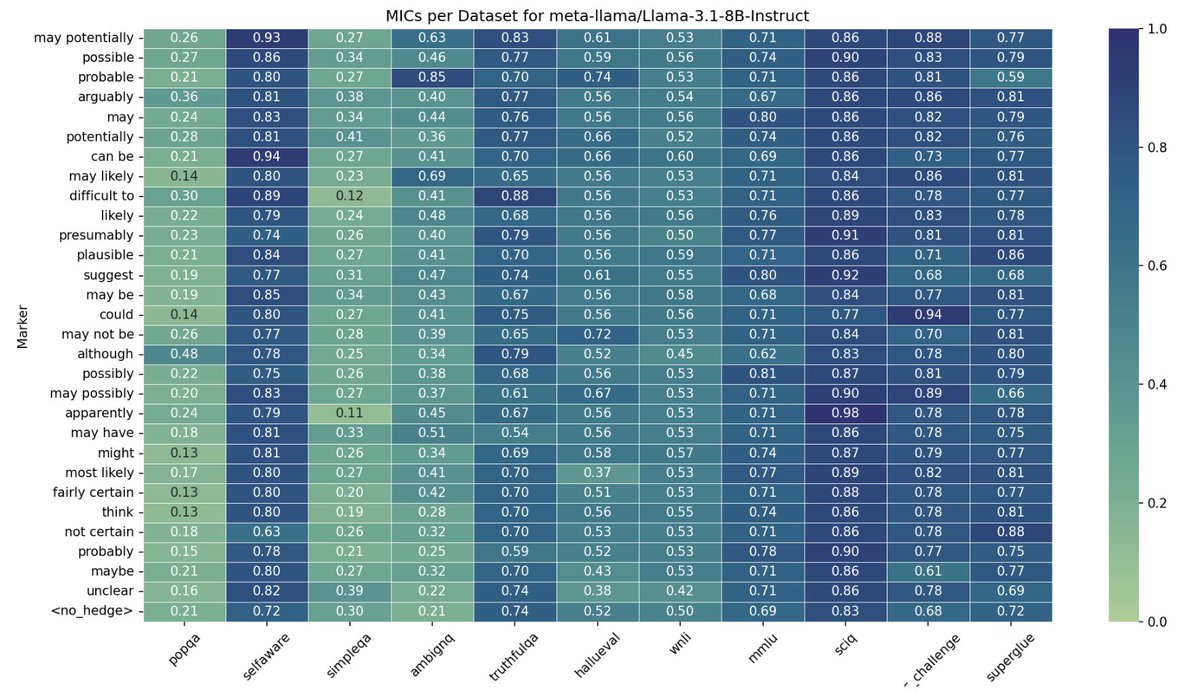
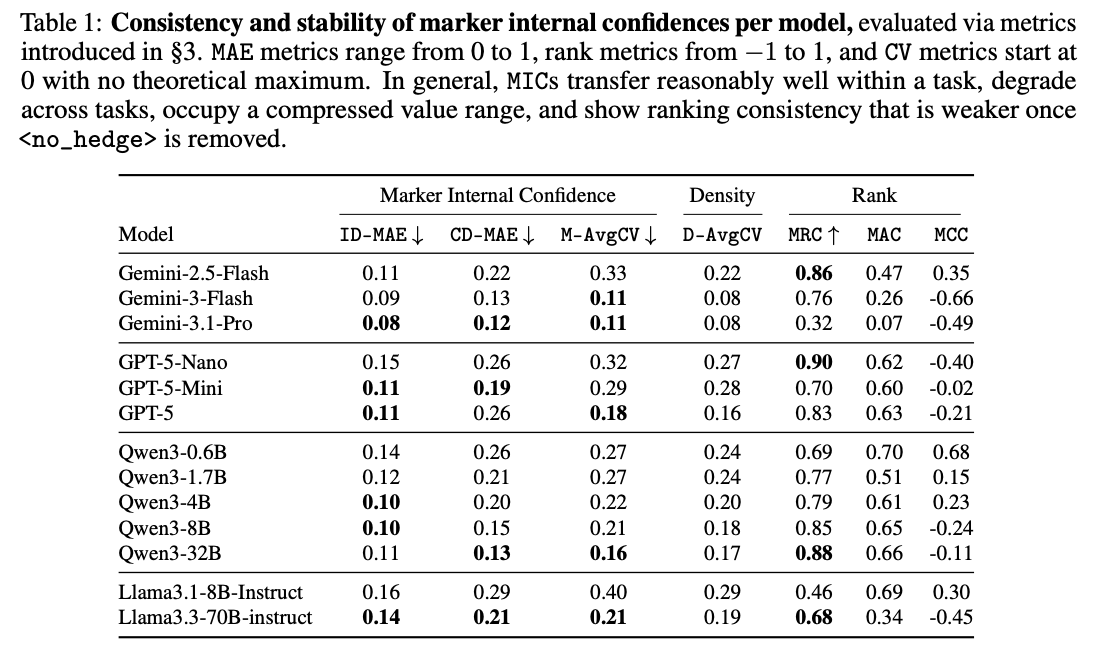
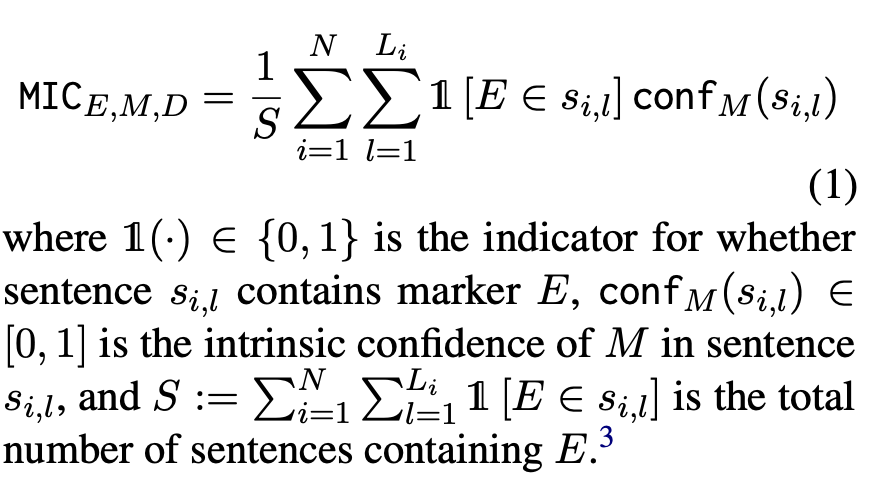
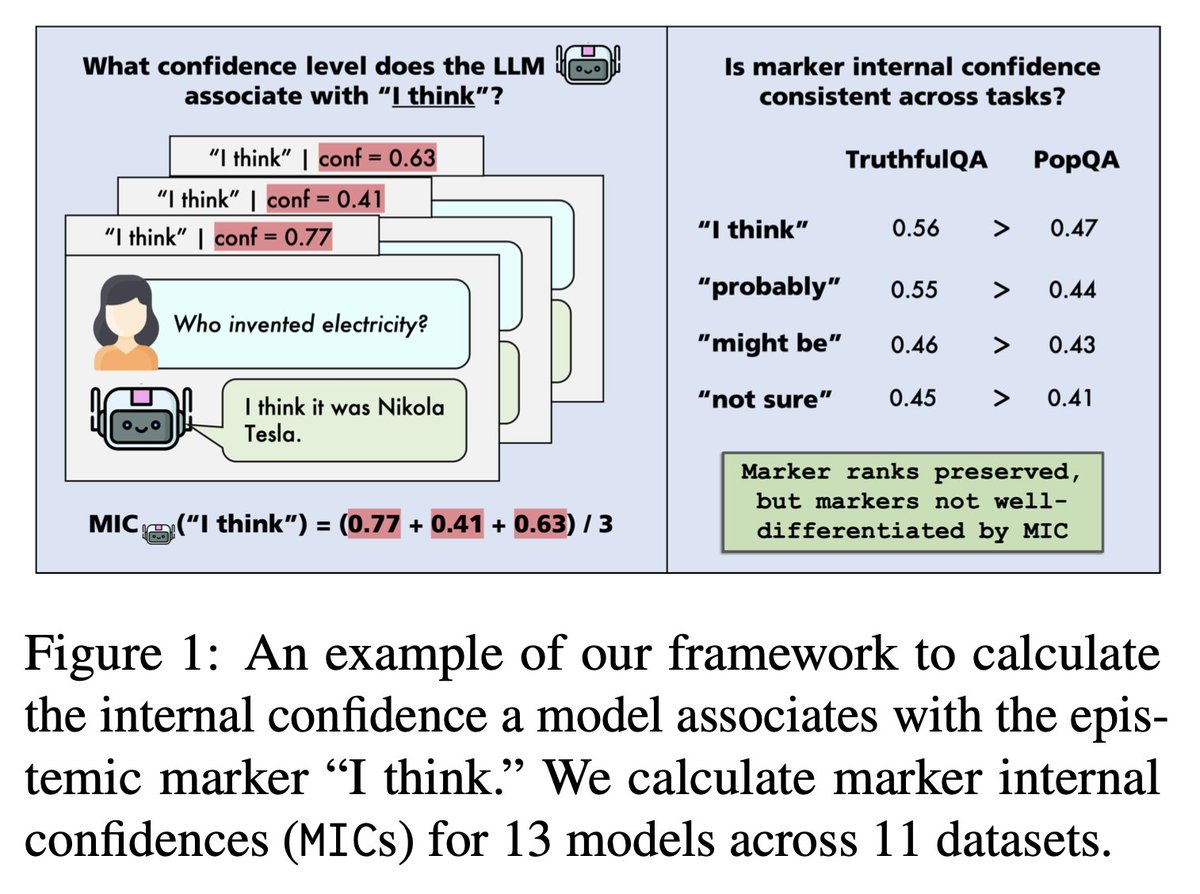
🔥 Excited to share my new preprint: Can LLMs Use Linguistic Uncertainty Markers to Reliably Reflect Intrinsic Confidence? 🔥
When an LLM says "I think" or "probably," does it actually mean something consistent internally? The answer: not really 😬
Check out details in 🧵(1/n):
3
6
20
1,056
(15/n) If you're interested in LLM uncertainty, reliability, or human-AI interaction, please check out our paper and analysis framework! We'd love feedback or questions :))
📄 Paper: arxiv.org/pdf/2605.28778
🔗 Github: github.com/yale-nlp/marker_i…
1
1
85