
neuroscientist (@harvard / @oxford) building brain-first tech for women @samphireneuro
Joined July 2020
- Tweets 27
- Following 208
- Followers 92
- Likes 17
3 Photos and videos

Pinned Tweet
If you’re long humans, you should be long chronic health.
There’s been a lot of discussion in tech about human capital, human-first companies, and being “long humans” — from @satyanadella, @ThriveHoldings and others.
But the conversation is missing something basic:
the future human-capital economy will not be built on idealized workers with perfect energy, perfect cognition, perfect sleep, and no chronic disease.
It will be built — or limited — by the health of actual humans.
According to @CDCgov, ~76% of US adults report at least one chronic condition.
That is not a marginal issue.
That is the baseline operating condition of the economy.
So I wrote about why the “long humans” thesis needs a chronic health thesis — and why AI, productivity, medical innovation, women’s health, clinical trials, devices, and chronic disease are all part of the same future-of-work conversation.
x.com/radytee/status/2066683…

1
1
50
If you’re long humans, you should be long chronic health.
There’s been a lot of discussion in tech about human capital, human-first companies, and being “long humans” — from @satyanadella, @ThriveHoldings and others.
But the conversation is missing something basic:
the future human-capital economy will not be built on idealized workers with perfect energy, perfect cognition, perfect sleep, and no chronic disease.
It will be built — or limited — by the health of actual humans.
According to @CDCgov, ~76% of US adults report at least one chronic condition.
That is not a marginal issue.
That is the baseline operating condition of the economy.
So I wrote about why the “long humans” thesis needs a chronic health thesis — and why AI, productivity, medical innovation, women’s health, clinical trials, devices, and chronic disease are all part of the same future-of-work conversation.
x.com/radytee/status/2066683…
1
1
50
1/ The “long humans” thesis has a missing piece:
chronic health.
If AI is going to augment humans, we need to understand the humans it is augmenting.
And most humans are not operating at 100%.
2/ According to @CDCgov data, ~76% of US adults report at least one chronic condition.
That is more than 194 million people. Roughly 3 in 4 adults.
It is the baseline operating condition of the economy.
3/ A lot of AI productivity tooling assumes a worker with:
stable energy
stable mood
stable cognition
good sleep
no chronic pain
no caregiving demands
no major health constraints
That worker is not most people.
4/ Actual humans are often managing some combination of:
depression
anxiety
ADHD
chronic pain
endometriosis
PMDD
adenomyosis
autoimmune disease
poor sleep
metabolic dysfunction
caregiving
brain fog
fluctuating capacity
5/ Better workflow tools are useful.
But if someone is in pain, sleep-deprived, depressed, hormonally dysregulated, cognitively foggy, anxious, or exhausted from caregiving, tooling is not the whole bottleneck.
Often the constraint is biological.
6/ This is why chronic health is not a healthcare side quest.
It is economic infrastructure.
If people are too sick, exhausted, inflamed, unsupported, or in pain to participate fully in education, training, work, care, or creativity, human capital becomes a health problem.
7/ AI productivity software is easier to build and fund than chronic health.
The loops are faster.
The products are easier to ship.
The margins are cleaner.
The regulatory pathways are lighter.
The customers are often easier to sell to.
8/ Chronic health is the opposite.
Messy.
Multifactorial.
Regulated.
Clinically complex.
Emotionally loaded.
Full of patients who have often been dismissed for years.
But that is exactly why the opportunity matters.
9/ If 3 in 4 US adults live with at least one chronic condition, chronic health is one of the largest constraints on human potential.
Less sexy than frontier AI tooling?
Yes.
More economically central than people admit?
Also yes.
10/ The next wave of human-first technology needs to design around biological variability:
fluctuating energy
fluctuating cognition
symptom cycles
caregiving loads
mental health
pain
sleep
recovery
Not the fantasy of 100% daily output.
11/ That means:
AI tools designed around variable capacity.
Medical devices that meet people outside clinics.
Clinical trials that reflect real populations.
Women’s health products that are not rebranded wellness.
Pain management that is not an afterthought.
12/ My biased view after 10 years working across mental health, chronic health, and women’s health:
the long-term AI economy only works if we invest just as seriously in the health of the humans expected to use it.
Maybe more seriously.
13/ So yes, be long humans.
But if you are long humans, you should be long chronic health.
Full piece: x.com/radytee/status/2066684…
If you’re long humans, you should be long chronic health.
There’s been a lot of discussion in tech about human capital, human-first companies, and being “long humans” — from @satyanadella, @ThriveHoldings and others.
But the conversation is missing something basic:
the future human-capital economy will not be built on idealized workers with perfect energy, perfect cognition, perfect sleep, and no chronic disease.
It will be built — or limited — by the health of actual humans.
According to @CDCgov, ~76% of US adults report at least one chronic condition.
That is not a marginal issue.
That is the baseline operating condition of the economy.
So I wrote about why the “long humans” thesis needs a chronic health thesis — and why AI, productivity, medical innovation, women’s health, clinical trials, devices, and chronic disease are all part of the same future-of-work conversation.
x.com/radytee/status/2066683…
31

Jun 2
women live 10 years longer than men - isn't it obvious they have actually figured out the ultimate longevity hack?! @_katetolo @bryan_johnson
30
Emilė Radytė, PhD retweeted

🔜
6/9 - Festival: Celebrating humanity in the age of AI luma.com/dkivkyav
6/10 - Cafe Cursor San Francisco luma.com/i0v6a23s
6/10 - AI Monetization Salon luma.com/stripe-monetization…
6/11 - Wiki x AI: a salon en.wikipedia.org/wiki/Event:…
6/12 - Harness Engineering Hack luma.com/harnesshack
6/15 - Equinox Optimized. Volume Two: Control Your Cycle with Samphire Neuroscience luma.com/af6x8a6h
1
2
4
1,658
May 1
1:15 pm innovation lane at @acog - come see my talk on our research portfolio the mechanism of action behind neurostim for women’s health

18
Apr 29
nytimes.com/2026/04/28/healt… --> Wrong question, but right intention. The brain runs on electricity. The pill-only era is ending. We're building the same thesis at @SamphireNeuro for hormonal neuroscience.
17
Emilė Radytė, PhD retweeted

29 Nov 2023
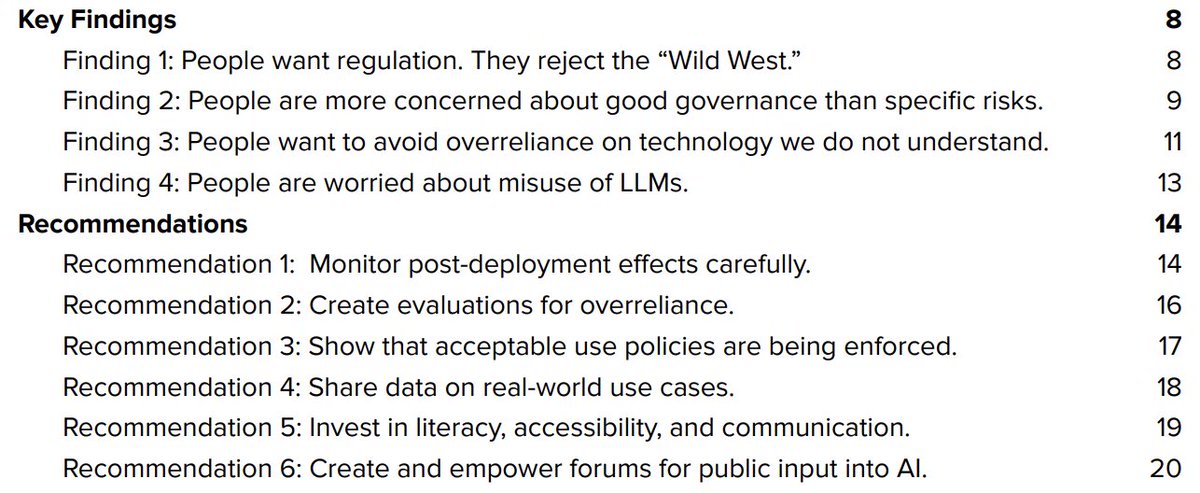
I'm really proud of our key findings and recommendations from this public input process.
Would be really excited to learn about projects that are working along the veins of post-deployment monitoring, overreliance evaluations, real-world use case data sharing, and more!
22 Nov 2023

Recent events have made it clear that we desperately need better mechanisms to govern AI - by and for people.
There is another way. We’re excited to be sharing the report from our third major Alignment Assembly, in collaboration with @OpenAI. Thread below 👇
1
11
43
5,063
Emilė Radytė, PhD retweeted

16 Oct 2023
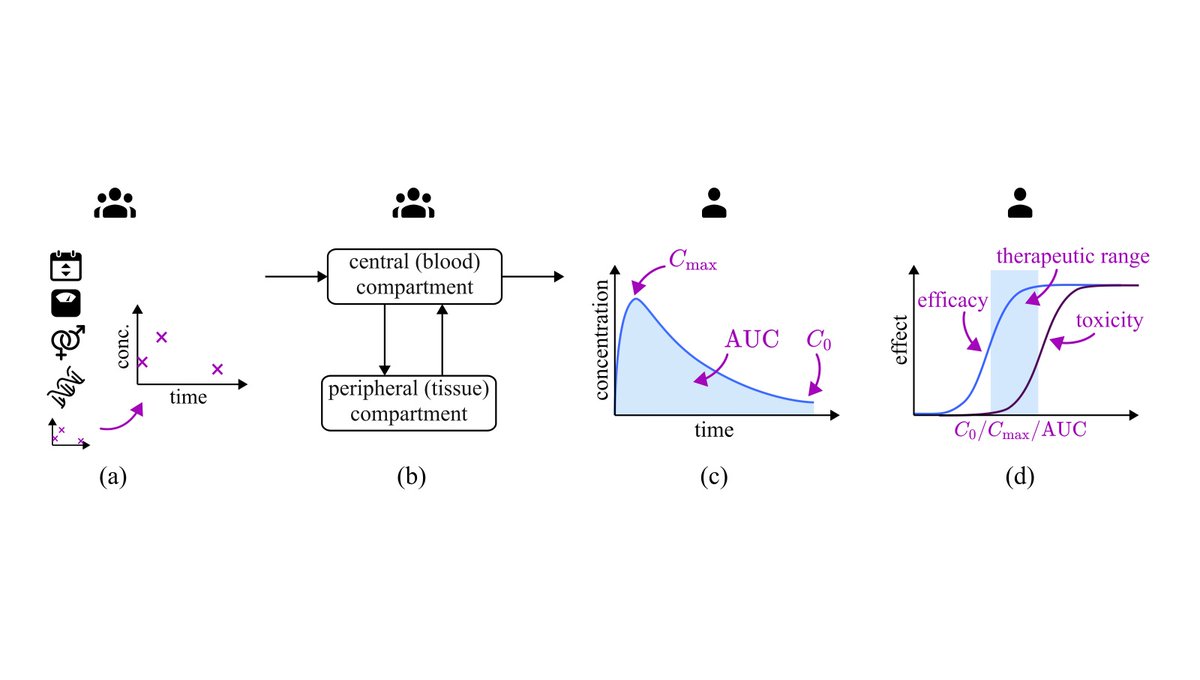
Bridging the worlds of pharmacometrics and machine learning! 🧪🤖
To help experts collaboratively advance precision medicine, our new paper reviews the challenges in pharmacometrics, and presents machine learning strategies to address them:
rdcu.be/doDQc
2
7
56
8,464
5 Aug 2022
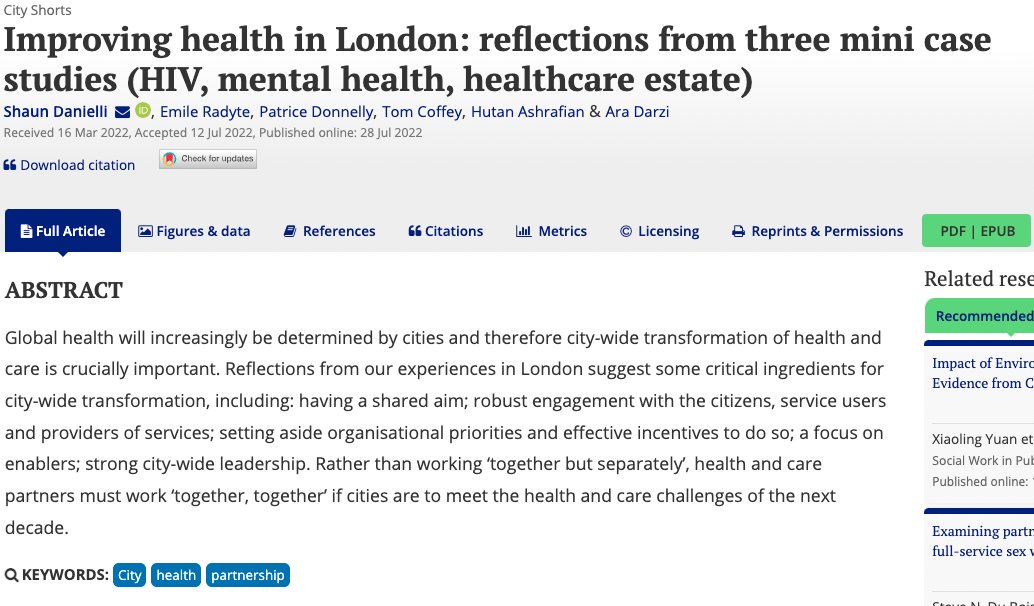
Excited for this to finally be out, from some work I had the pleasure of doing alongside @shaundanielli and others at @HealthyLDN in 2019🍀 #cities #urban #Health
x.com/shaundanielli/status/1…
29 Jul 2022

Latest manuscript, reflections on improving health and partnership working in London. Critical parts: a shared aim; engagement; effective incentives; strong city leadership. bit.ly/3OHAf42 applicable for #cities #urban #Health

ALT London skyline
2
5
Emilė Radytė, PhD retweeted

29 Jul 2022
Latest manuscript, reflections on improving health and partnership working in London. Critical parts: a shared aim; engagement; effective incentives; strong city leadership. bit.ly/3OHAf42 applicable for #cities #urban #Health
ALT London skyline
2
3
Emilė Radytė, PhD retweeted

22 Sep 2020
Human exploit structural knowledge to infer the existence of unobserved transitions and choose a preferable policy. We suggest a computational mechanism of representing and inferring this complex structural knowledge. @moran_rani @behrenstimb nature.com/articles/s41467-0…
5
63
189
Emilė Radytė, PhD retweeted

27 Sep 2020
I need to learn much more about memory. This paper is terrific, very clear position. Rosemary Cowell @morganbarense Patrick Sadil "A Roadmap for Understanding Memory: Decomposing Cognitive Processes into Operations and Representations" eneuro.org/content/6/4/ENEUR…
3
48
216
Emilė Radytė, PhD retweeted

22 Sep 2020
My Chrome extension for displaying probabilistic gender on paper searches is now on the Chrome extension store chrome.google.com/webstore/d…!
The hope is that having this information embedded in Google Scholar and PubMed will help researchers cite equitably.
Please RT! :)
6
93
172
Emilė Radytė, PhD retweeted

24 Aug 2020
Latest preprint from the lab now online!
Led by Kristian (@KJHerr23), we looked at how larval zebrafish avoid salt water at behavioral, brain-wide, and sensory levels- where we see that they smell salt!
biorxiv.org/content/10.1101/…
Check out Kristian's thread for a quick summary:
20 Aug 2020

My preprint on salt avoidance in zebrafish with @EngertLab, @DrGuggiana and Thomas Panier is up!
bit.ly/3hgjpch
TL;DR: Using brain-wide imaging, like in this video, we now believe fish avoid swimming into salty water because they really do not like the way it smells
5
24
Emilė Radytė, PhD retweeted

3 Aug 2020
My first medium article about what I did as a Computational Biologist in Biotech. Hopefully it'll help folks who are thinking about getting into comp bio in industry. link.medium.com/ISxptRrjE8
#Biotech #computationalbiology #Bioinformatics
1
2
Emilė Radytė, PhD retweeted

17 Sep 2020
Small note. Defunding didn't happen.


143
26,691
127,990
Emilė Radytė, PhD retweeted

19 Sep 2020
Best known for her advocacy for equality between the sexes, Justice Ruth Bader Ginsburg was also thought of as a reliable vote for environmental interests that argued before the high court. In practice, her jurisprudence was much more complex. scientificamerican.com/artic…
8
102
343