
that’s the way it crumbles, cookie-wise
Joined November 2021
- Tweets 2,999
- Following 859
- Followers 873
- Likes 8,823
105 Photos and videos














eric siu 🐈⬛ retweeted

Jun 2
Economic alignment is the design of the games and institutions around AI agents.
Once agents act economically, alignment is not only about what a model does. It is about what the surrounding system can measure, reward, verify, remember, and route.
Essay: cgi.md/essays/economic-align…
1
6
31
3,108
eric siu 🐈⬛ retweeted

Jun 1
Vitalik shared his perspective on where @ethereumfndn is heading. Here is mine, another part of the same story.
The EF Mandate from the board was something I proposed late last year. Two main things prompted me. First, debates that were meant to be technical had started to become political and personal, and at times shaped by quieter incentives. Second, as EF grew, more and more versions of "what EF should be" began pulling at the core of the organization from every direction at once. I became convinced that trying to satisfy all of them would leave us achieving nothing at all. It was time for us to restate our role and underlying principles clearly, both the parts that have been clear from the start and those that have been informed by over a decade of experience.
We have said it many times: EF is one of many nodes in Ethereum. I know that is hard to hear for some, because EF was the first group, and in the early years it was essential for making things happen. But it was never meant to stay that way.
I have been in crypto since 2012, before it became an "industry." I joined Kraken in 2013, shortly before the implosion of Mt. Gox, which I helped to clean up. I am very aware of how real growth works, and also aware of the real risks of centralization. So when I became ED in 2018, I understood that Ethereum growing beyond EF would be essential to fulfill its real promise as a public blockchain. The goal I set for myself was to ensure that this happens.
The opposite path has always been untenable: Ethereum's future is too big for any single organization to bring about. So EF made deliberate choices to distribute power. We did incubate and release, like Uniswap and ENS. Support to seed a new norm, like ETHGlobal and the hackathons that are now everywhere. Funding the funders, like Gitcoin and Moloch. We always asked the same question: how does this stand on its own, without us?
Those experiments, alongside the work of countless others, contributed to where we are today. Ethereum is now far bigger than anything EF could coordinate alone. EF now holds less than 0.2% of all ETH, and the return on all of that shared work, together with extraordinary people across the ecosystem, has been beyond anything we could have built by ourselves.
That is exactly why a focused EF is possible now. The Mandate states simply the one thing EF must keep carrying: preserving and accelerating the properties and goals that keep Ethereum uniquely valuable, competitive, and worth building on. That is: CROPS - for the sake of inalienable user self-sovereignty and self-sovereign coordination. We cannot do it alone, and we do not intend to. But defining this as the north star for the mission, and coordinating with the allies who share it, is the responsibility we are keeping.
None of this means EF stops caring about adoption, for everyday users or for institutions. The opposite is true: everything we do is ultimately for the people who use Ethereum. Supporting adoption, including institutional adoption, remains part of our work, pursued in the ways that fit our mission. The value proposition of Ethereum for both everyday users and institutions rests heavily on this.
As EF becomes more focused and more opinionated, the team naturally becomes smaller and more concentrated. That is part of the choice. New leaders are already stepping into this mission and growing within it, and you will hear more from our management in the coming weeks, about what they are doing, and about the new structure and strategy taking shape.
The mission we carry is not a smaller one, but a clearer one. Special thanks to those who have stepped in to support, defend and advance it.
May 24

Some of my perspective on where the @ethereumfndn is going.
First of all, this is only my own view. The board is not just me, and I have no extra special powers on the board that the other board members do not. @aerugoettinea is the one executing much of this transition. My input has been largely on technical questions. The board is in the process of expanding, and my own power within the org will continue to decrease, which is honestly what I want.
The 2025 era brought many important improvements to EF and its ability to execute. Many issues were resolved, and EF continues to benefit from its improved efficiency and greater focus on concrete goals to this day. And so with those problems resolved, early this year, the largest remaining hole that I perceived was something different nagging at me: I would regularly spot people saying things like "vitalik says these beautiful things about ethereum needing to be decentralized, and have privacy, and be a sanctuary technology, but why do the EF's actions not reflect that?"
Now, you may have been hearing something different. You may not have been sensing a feeling of crisis at all, and maybe were hearing people saying that finally we were taking execution and BD seriously and the main task for us is to keep going that way and be even better and faster. Then probably there is genuine difference between you and me, in what kinds of criticism I take most seriously, and what kinds of critics through their criticism are most able to make me feel pain.
As an analogy, let's briefly switch over to a different domain.
One belief you can have about Google is that it is a success story, and has brought a lot of good to humanity in organizing the world's information. Another belief you can have about Google is that they had a beautiful idealistic beginning, but at some point the corruption of mainstream corporate attitudes seeped in, and they slowly bit by bit completely abandoned the "don't be evil" slogan.
My belief on Google specifically is probably somewhere between the two. BUT, if you had taken me back in time to ~2008, and offered me a button to press to make Google one or two standard deviations more "dogmatic", eg. give Richard Stallman permanent veto power over some key policies, I would immediately press it.
Why? Because a choice for one company is not a choice for the world, or even one country. Google existed and exists in the context of a technology industry generally drifting away from early idealistic don't-be-evil roots and toward greed for financial gain, totalizing visions of accelerated superintelligence, infiltration by sociopaths, and craven capitulation to (or worse, active participation in) government pressure for ideological control, surveillance and war. And so *one company* doing something different, positioning itself to be what George Bernard Shaw calls the Unreasonable Man, resisting the trend of the times, would have been better for freedom, balance of power and stability of society as a whole, than *all* large companies bending to dominant trends. This is a part of my version of pluralism.
This line of thinking is not just mine, but I also is not too far off from what Aya and others had in mind with the Mandate.
Now how does this all get to the role of the EF?
EF is not a "center of Ethereum", rather EF is "one node, with a defined purpose, alongside other nodes". We've always said that the EF should be the latter, but many in the Ethereum ecosystem (and even within the EF) wanted us to be the former. Now, we are taking action to ensure that we will be the latter.
This is particularly important because EF is a limited organization, with limited resources and limited organizational capacity. The EF has only ~0.16% of all ETH (less than many other individual ETH holders), whereas among other blockchains it's common for "the central foundation" to have 10-50%. Fiscally, the EF was originally designed to fulfill a limited work scope defined in the token sale docs and other pre-launch materials (building the chain software; getting through Frontier, Homestead, Metropolis, Serenity), which was fully completed in 2022; it was not designed to be an eternal steward.
And so today, the EF is choosing to use its remaining resources to pursue longevity over breadth (yes, this means we sell less ETH). The EF focuses *specifically* on those activities critical to the success of ethereum as a censorship/capture-resistant, open, private and secure system, that would not happen otherwise. This means making hard choices, and in some cases even activities that we highly approve of and people that we highly respect becoming outside of the EF. People of great technical talent, public respect and even alignment with the mission and CROPS being outside of the EF is in fact necessary if we want important tasks to be able to attract outside capital. This also means the EF taking opinionated stands culturally.
This is all intended in cooperation with all other parts of ethereum. We recognize that many other parts of the ethereum world highly respect CROPS and related values. But highly respecting is not the same as choosing to specialize and totally dedicate to a domain (Compare in a different domain: I think reducing animal cruelty is important, and I like vegan food, but am not full unconditional vegan myself)
EF is still in a transition period, and we expect its new long-term form to stabilize over the next few months. What are the guiding principles of this new form? Again, I am only one person, but I can give my answer from a technical perspective (there are also critical non-technical aspects).
At the core, *Ethereum must be impressive*. We are living in an age of highly intelligent AI and all kinds of other technological acceleration. "Status quo EVM, with a hard fork or two a year to optimize for short-term needs of users" is not interesting.
To some, "impressive" means: 250ms latency and 1M TPS. I think Ethereum trying to go that route is a mistake. Being as fast and as scalable as possible, and only a small epsilon more decentralized than the others, is a route to mediocrity, and if we try it we will lose.
I think Ethereum should scale. But I think Ethereum should strive the hardest to be deeply impressive in a different dimension: the CROPS dimension. This means things like:
* Provably bug-free Ethereum. This is a goal that all cybersecurity researchers would have thought is absurd and impossible, up until roughly 6 months ago. Now, it's on the cusp of being possible, thanks to AI-assisted formal verification. So we should be frontrunners in doing this.
* Available chain consensus. Ethereum is, and with lean consensus will cotninue to be, the ONLY chain that has both (i) traditional-BFT style properties that it's safe under asynchrony up to a high level of fault tolerance, and (ii) the bitcoin PoW-style property that under synchrony it's safe up to 49% attackers. As far as I can tell, literally no other chain has this or is planning for it; bitcoin goes for (ii) only and most other chains go for (i) only. Some will remember I fought hard for this, Unreasonably insisting that it is not OK for ethereum to rely on social consensus and hard forks to rescue ethereum from 34% of nodes going offline. It's OK for chains like hyperledger, bnb, solana, tempo, etc. It's not OK for bitcoin or ethereum or eg. zcash.
* Intermediary minimization. The fact that smart contract wallets, protocols like railgun, etc have to send transactions through intermediaries to get included onchain is honestly embarrassing, and it's a constant point of fragility. Hence the work on FOCIL and EIP-8141 (and 7701 and years of work before) to make transaction sending intermediary-minimized with public mempool and strong inclusion properties, in a truly general-purpose way, that covers not just eg. secp256r1, but also privacy protocols and much more. Kohaku is pushing intermediary minimization at the user layer, pulling Ethereum away from the dystopian status quo world where our wallets don't even verify the chain, send our private data out to a dozen third-party servers, and toward a brighter CROPS future.
Some of these goals are Unreasonable - maybe Ethereum would be "fine" getting only 50% of the way - what if we depend on intermediaries, but make it easy to switch? But going 50% of the way would not make Ethereum Deeply Impressive in the CROPS way. So we push for 100%.
Fortunately all these goals are compatible with high TPS, this is a major focus of research (esp. on scaling the state). Well-designed L2s can also help, especially L2s optimized for specific applications (eg. high-volume trading, privacy...). These goals are even compatible with significantly lower slot times, thanks to Raul's work on erasure-coded P2P, and many other optimizations.
The most high-value "product" of the ethereum blockchain, financially speaking, is ETH the asset. Ethereum secures $250 billion of ETH. The types of properties of Ethereum that I mentioned above are very good for ETH the asset. Nearly 90% of my net worth is in ETH, and most of the remainder is ~$40m of onchain fiat of which every dollar has already been allocated for some open-source biotech or software or hardware initiative. That said, there are aspects of supporting ETH the asset - *necessary* aspects even - that are outside the scope of the EF. This is where we need other heroes (some of whom hold more ETH than the EF does) to step in and help. EF has been recently thinking more about how it will relate to other such organizations, and give them needed initial support.
EF will be a smaller ship than in previous years, a more opinionated one - in some cases more opinionated in ways that might be difficult to comprehend - but a longer-lasting one, and one suited to making sure that ethereum brings something meaningful to the world. We are grateful to all those inside and outside the EF who are helping to make this happen.
123
129
707
182,502
eric siu 🐈⬛ retweeted

May 29
Thanks to you, the project will live on.
Session now has a clear path forward.
youtube.com/watch?v=rpMsr6_M…
31
71
436
78,352
eric siu 🐈⬛ retweeted

Feb 13
I am stepping into the role of interim co-ED @ethereumfndn to continue the progress that Tomasz has made over the last year.
Tomasz brought an energy and urgency that the EF needed at a critical time, and I join the community in thanking him for his work on behalf of the Foundation and the network.
This task isn't something that I take on lightly, knowing the weight of responsibility of the role through seeing it up close for some time, but it is one that I am prepared to handle.
I've served in a management position at the EF over many years, working closely with Hsiao-Wei, Tomasz, Josh Stark, Danny Ryan, Aya, and Vitalik at different points in time. My focus has been deliberately on illegible but essential work, helping management try to make well-informed decisions, working with EF's team leads, considering budgets, articulating strategy, setting priorities, and more.
The decisions I make will be guided by a principled insistence on the properties of what we're building (censorship resistance, open source, privacy, security). These properties are what make Ethereum relevant and competitive, and they are the foundation of Ethereum's value proposition to the world and everything the world builds on it; just as Ether is the foundational store-of-value that underpins every transaction across it; and just as both are indispensable to the EF's own treasury.
The mandate of the EF is to make sure that real permissionless infrastructure, cypherpunk at its core, is what gets built. Ethereum should outlast us, and it has been our job from the beginning to make sure it is robust enough to do so. I, and the rest of the EF, will work alongside other members of the community - core protocol contributors, researchers and client implementers, auditors and whitehats, incident responders, spec authors, solo stakers and validator operators, node runners, MEV gremlins, rollup and L2 teams, bridge and interoperability integrators, UX and product builders, infra providers and tooling maintainers, educators, community organizers, forum crews, lurkers, and free software advocates, grant-givers and culture-makers, artists, memers, cypherpunks, cyberanarchists, Landian accelerationists, financepunks, femboys, soundcloud rappers, transgenders, disinformationalists, cyborgs, anons, revolutionaries, shitposters, trolls, federal lists, hypebeasts, pirates, preppers, the bros, incels - to make it last 1000 years or more.
216
122
1,050
371,988
eric siu 🐈⬛ retweeted

Feb 3
This is amazing. I've always believed in organizations that are truth seeking and accept mistakes. My biggest criticism of Ethereum was that it lacked a feedback loop for acknowledging mistakes and improving decision making. I think this post shows we're moving in that direction.
5
2
261
25,755
eric siu 🐈⬛ retweeted

Jan 27
This is now official, we proposed FOCIL (EIP-7805) as a headliner for Hegota 🎉
👇🔗
18
23
119
13,437
eric siu 🐈⬛ retweeted
24 Dec 2025
1/ LLMs encode the past through training data.
Prediction markets aggregate beliefs about the future through economic incentives.
LLMs reason from what was. Prediction markets price what's coming.
Together: a complete epistemic system. I call it cognitive finance.
24 Dec 2025

25
13
152
51,466

22 Dec 2025
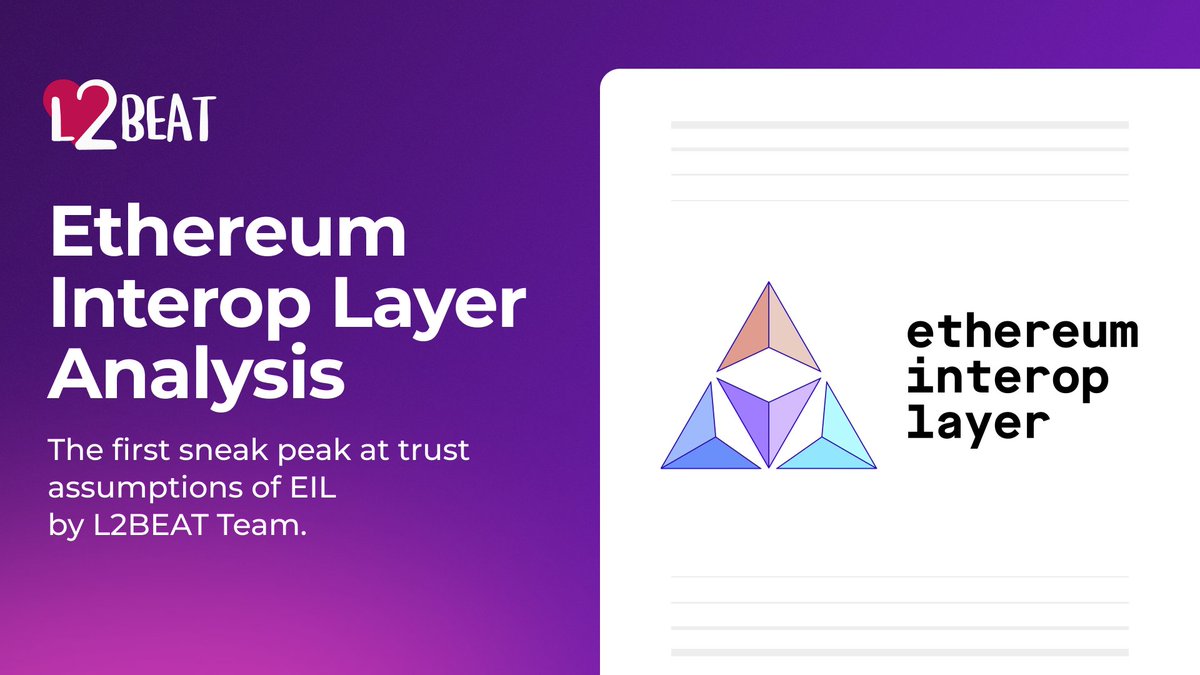
trustlessness is not a nice to have. it’s the entire point. kudos to @ethinteroplayer team and contributors for making ethereum cypherpunk again

At DevConnect Buenos Aires, the details of EIL @ethinteroplayer - Ethereum Interoperability Layer were unveiled.
We’ve been deep-diving interop protocols for months and our initial assessment of EIL contracts (deployed on testnets already) is following 🧵👇
5
4
15
911
eric siu 🐈⬛ retweeted

17 Dec 2025
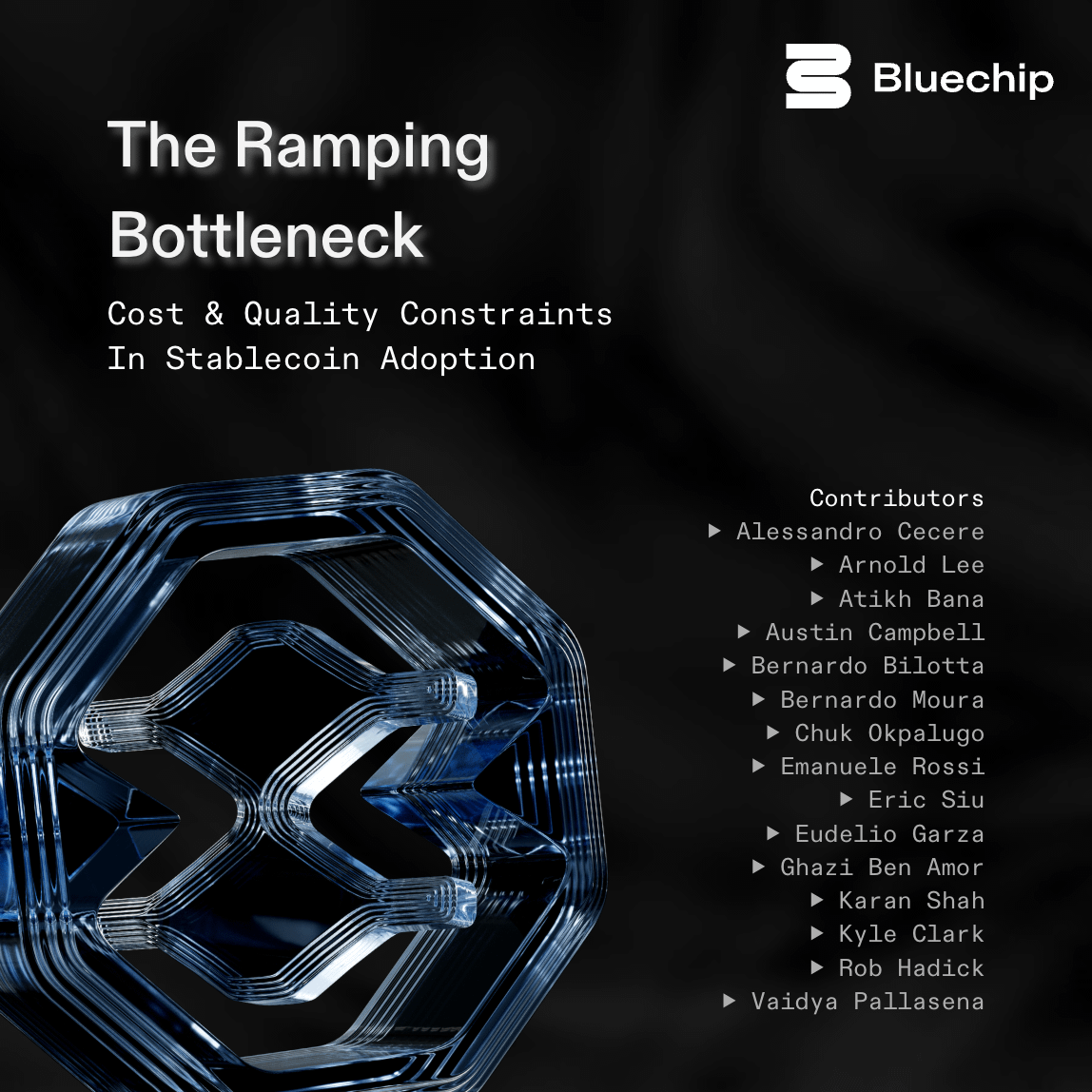
We are excited to share our new report on stablecoin ramps – published under a grant from @EthereumFndn.
Stablecoins move money faster & cheaper than traditional channels. But the real bottleneck to adoption is the cost & quality of on/off ramps.
Read the report below. ⬇️
15
37
126
44,860
eric siu 🐈⬛ retweeted

3 Sep 2025
ETHEREALIZE'S NEXT CHAPTER
We were born as a marketing and BD arm for Ethereum.
Today, we're excited to announce that we’re expanding our mission:
Etherealize is building for the next era of finance—where Wall Street merges with Ethereum.
(1/12)
204
294
1,816
221,634
eric siu 🐈⬛ retweeted

22 Aug 2025
Some composite thoughts on DATs, which I wanted to get down while the going was still good.
1 - The most logical mNAV for any DAT to trade at is slightly negative to deeply negative.
2 - While (in theory) there is a way for a DAT to add sustained value, we haven't seen anyone do it yet, and the vast majority won't.
3- Bitcoin is the hardest treasury asset for a DAT to add value to because it's already ubiquitous and you can't do much with it.
4 - Leverage is not a source of alpha, it's beta, and most likely misapplied by public company CEOs cosplaying as hedge fund managers.
5 - The main motivation for launching an alt-coin DAT is to give exit liquidity to founders/Labs/Foundations/VCs, sometimes via "locked" tokens, proving once and for all how farcical that concept always was, and how little scruples many in this industry have.
Remember that when the underperformance of some altcoins accelerate - they sold already.
6 - Public companies have significant operating costs and executives get high compensation. Who do you think pays for that?
7 - The asset management deals some of these sign (which I didn't even know about until the great work by @BitMEXResearch) seem shady.
8 - A lot of the people doing these--the investors, token contributors, managers, etc--behave the way somebody does when they expect a high return with little risk. That's always a red flag.
18
10
54
15,149

Welcome home.
15 Aug 2025

Ronin is coming home to Ethereum.
Ready Layer Two ⚔️
Four years ago, we built Ronin because Axie Infinity needed a faster, more efficient network. Ethereum was still early in its scaling roadmap. Necessity was the mother of our invention.
However, things are different now. Ethereum is BACK. Transaction costs and speeds are better than ever. We’re early to a new era of growth, and Ronin is ready to rise.
Gaming will always be in our DNA, but we’re setting our sights on fulfilling a larger prophecy: becoming the gamification engine of Ethereum.
Ronin will become a full-fledged, Ethereum-aligned L2 by next year, and this is how it’s going to happen 👇
277
567
2,774
2,087,280
8 Aug 2025
😳
8 Aug 2025
It's interesting how Visa was created with decentralist ideals so similar to those that gave rise to modern DAOs, and yet today many of us perceive it as extractive and/or oppressive.
Certainly some good insights to learn from there.
3
565
eric siu 🐈⬛ retweeted

1 Aug 2025
As part of efforts to ensure long-term sustainability, Lido Labs, Lido Ecosystem, and Lido Alliance have made the hard decision to reduce the size of their contributor teams, impacting around 15% of the workforce.
This decision was about costs — not performance. It affects incredibly talented people who helped shape the protocol and community. If you're hiring and want to connect with outstanding talent, DM @maxpavier on Telegram — he’s facilitating intros.
This is a difficult decision, but one rooted in long-term resilience. While it may seem counterintuitive amid a market upswing, the move reflects a deliberate commitment to sustainable growth, operational focus, and alignment with the priorities of LDO tokenholders. Lido is building for the decades ahead — and this change helps reinforce that foundation.
To everyone affected: thank you. You’ve left your mark on Lido and I am grateful for your contribution.
14
16
143
34,818
eric siu 🐈⬛ retweeted

28 Jul 2025
hello we built a rollup
Signet does what a rollup should
And nothing else
@signetsh testnet is live and features built-in instant cross-chain trades, using conditional transactions
signet.sh/updates/introducin…
30
39
241
31,932

eric siu 🐈⬛ retweeted

14 Jul 2025
BuilderNet was supposed to fix Ethereum's exclusive orderflow problem. Instead: exclusive deals with OFAs, 12-hour network outages, shared infrastructure dependencies. We haven't escaped the old model—we've just added more layers of indirection.
eigenphi.substack.com/p/buil…

14 Jul 2025

Excited for my 2nd guest post published on @EigenPhi's substack: eigenphi.substack.com/p/buil…
I found that BuilderNet had been down during the Pectra upgrade on May 23 for 17 hours before the 12-hour outage in June.
1
6
1,170
eric siu 🐈⬛ retweeted

10 Jul 2025
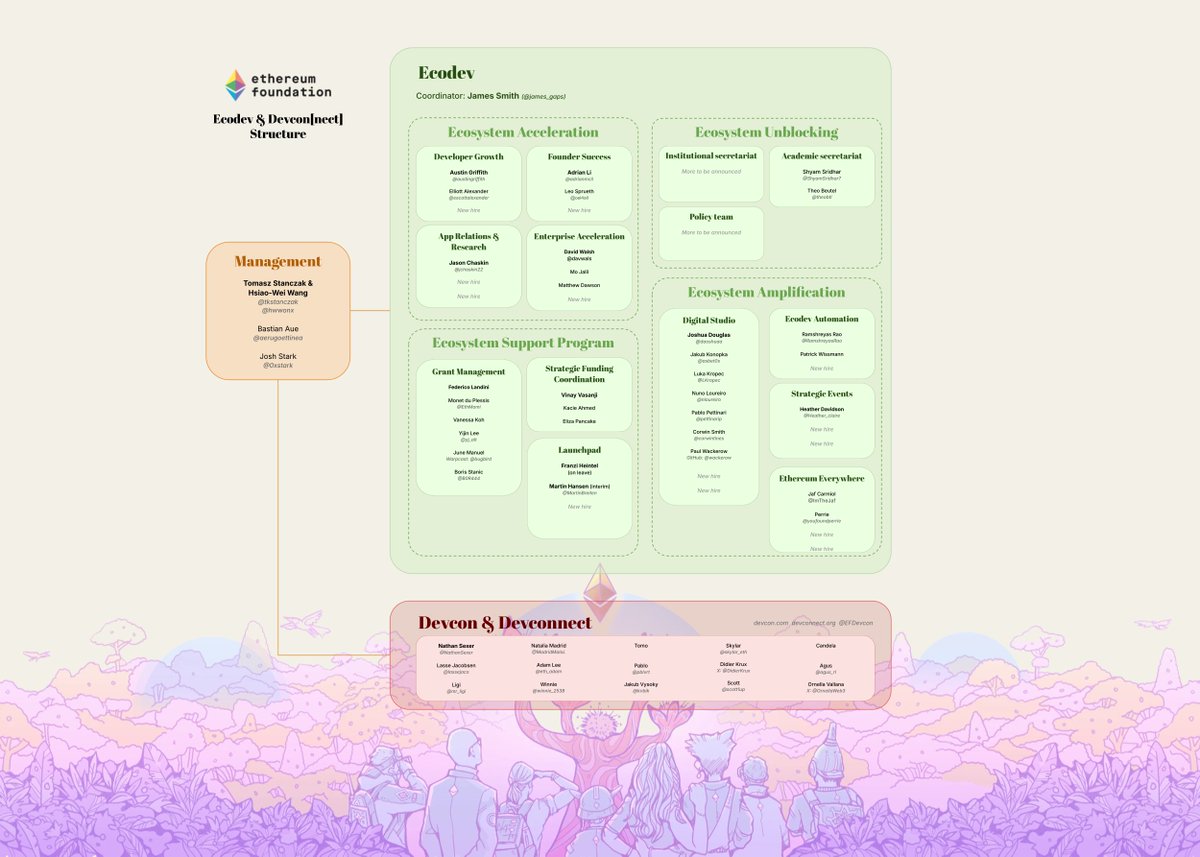
Big changes are coming to @EthereumFndn’s ecosystem development cluster to support real-world adoption.
Here’s what’s changing and why it matters🧵
109
125
781
141,190
eric siu 🐈⬛ retweeted

7 Jul 2025
Idk man but the real threat to Ethereum isn't the state actually (at least not today). It's the VCs & protocol careerists trying to neuter it into a shiny fintech playground for "safe", compliant DeFi. Hear me out: They don't want unstoppable code. They don't want resistance. They want fucking _control_. Because deep down, they know what Ethereum could become if it's left unchained: a censorship-resistant, privacy-first global execution layer that no state, no corp, no cartel of suits could ever fucking stop. Let's make this a reality.
30
53
359
20,423
eric siu 🐈⬛ retweeted

7 Jul 2025
New grant unlocked: @ethereumfndn will support us in Mapping Ethereum privacy ecosystem.
Our goal is to create an ecosystem snapshot covering different players within privacy scene from L2s like @aztecnetwork to Stealth addresses like @fluidkey
Ecosystem approach will help researchers, projects, developers, activists and enthusiasts have a helicopter view on Ethereum privacy scene plus useful names, links and stats in one place.
23
15
153
13,274