
read docs so you don't have to | amb @ritualnet | ex @tacbuild
Joined March 2024
- Tweets 21,431
- Following 1,416
- Followers 2,479
- Likes 104,315
1,184 Photos and videos









Pinned Tweet

5 Apr 2025
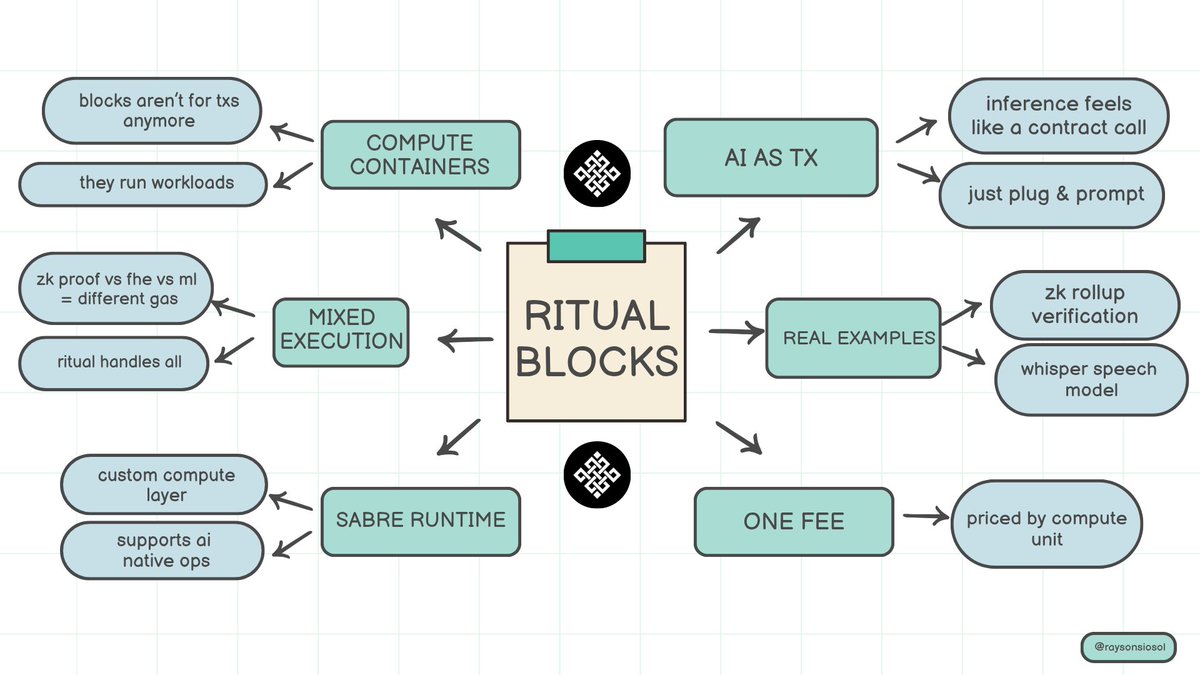
blocks aren’t blocks anymore
@ritualnet basically looked at the blockchain design and went "wait... why tf are we still treating blocks like parking lots for txs?"
welcome to the world where blocks become containers for compute and yes, this changes everything
ok but what’s a block actually?
on most chains:
- users send txs
-txs get bundled into blocks
- blocks get validated added to the chain
each tx is like a lil “do this” request
swap this token, update this balance, call this contract etc
simple. cute. until you try to compute anything real
but then you try to verify a zk proof
now the tx isn’t just a few storage ops
it’s “hey, run this math monster and check if it’s legit”
• needs CPU
• maybe memory
• takes time
• might need parallel threads
this ain’t just a line in the mempool anymore, it’s an actual compute job.
or take an FHE tx
that’s fully homomorphic encryption aka “do math on encrypted stuff without decrypting it”
sounds magical, until you realize it’s heavier than your GPU’s self-esteem
you need:
• special hardware
• tons of ops
• longer latency
bruhh this is more of a computational task than a tx
and now throw in AI inference
“just run this LLM for a sec” sounds easy until:
• you need GPU
• you need the right model version
• you need low latency
• you might wanna verify the output
mhh yeah… again, not a basic tx.
this is a compute container waiting to happen.
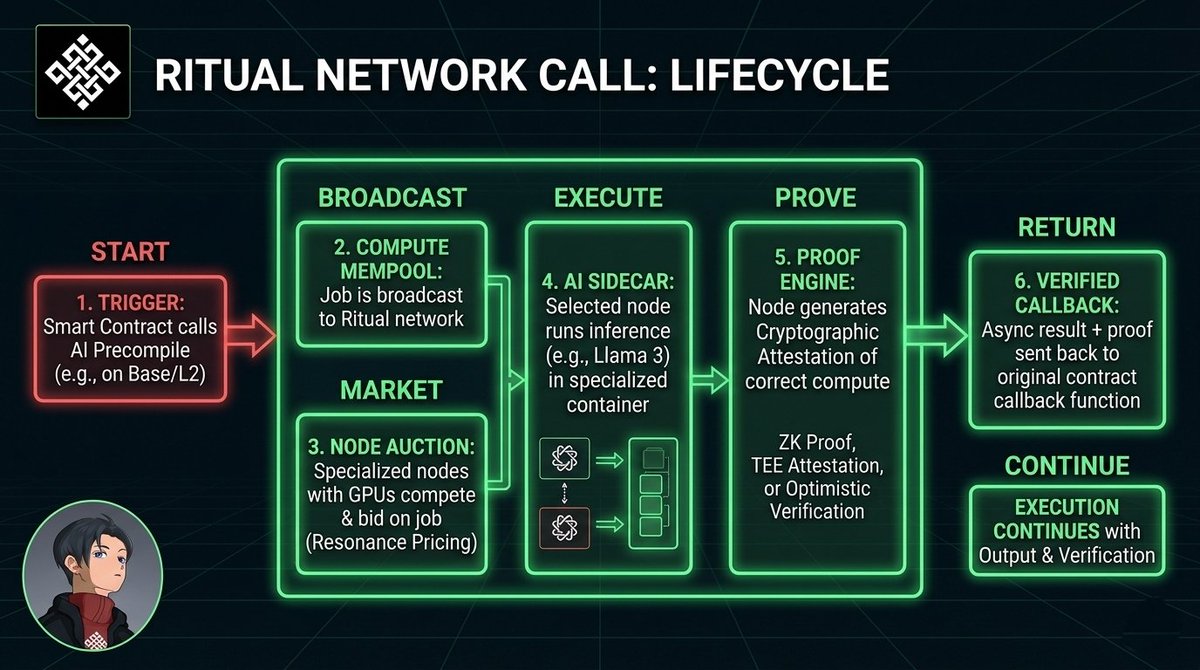
ritual goes: what if blocks weren’t for txs, but for compute?
not:
“this block has 300 swaps 42 sends”
but, “this block ran:
• 3 zk snark verifications
• 1 GPT inference
• 2 FHE multiplications"
each with its own resource profile, latency, cost. compute-aware scheduling baked in
and tbh, it makes way more sense
why should an LLM inference a token transfer pay gas the same way?
why should a 1-second GPU job wait in line behind 200 meme coin mints?
ritual treats blocks like compute capsules. each job is matched to the right runner, priced fairly, verified properly
that’s where the resonance fee market comes in
not “pay 21k gas lol”
but: “this task needs GPU 500MB RAM low-latency”
and you bid into a market that understands that. compute becomes a first-class citizen
and blocks? they evolve.
tbh blocks were never meant to do this
ethereum was made for storage.
logic token transfers, not encrypted math, AI reasoning, or massive proofs.
ritual’s reframing the whole mental model: blocks are now compute zones, not just storage bins
and that changes how chains work entirely
you’re no longer limited to “what fits into gas” you can now schedule, match, and verify actual workloads
zk, fhe, ml, privacy, simulation...
all in one chain, all composable, all chain-integrated
mhh yeah. that’s @ritualnet.
so next time someone says “ai onchain”
ask them how they’re treating compute.
if they’re still thinking in txs gas old-school blocks, they’re not ready.
@ritualfnd the first to say: blocks aren’t blocks anymore.
3 Apr 2025

wtf is ritual?
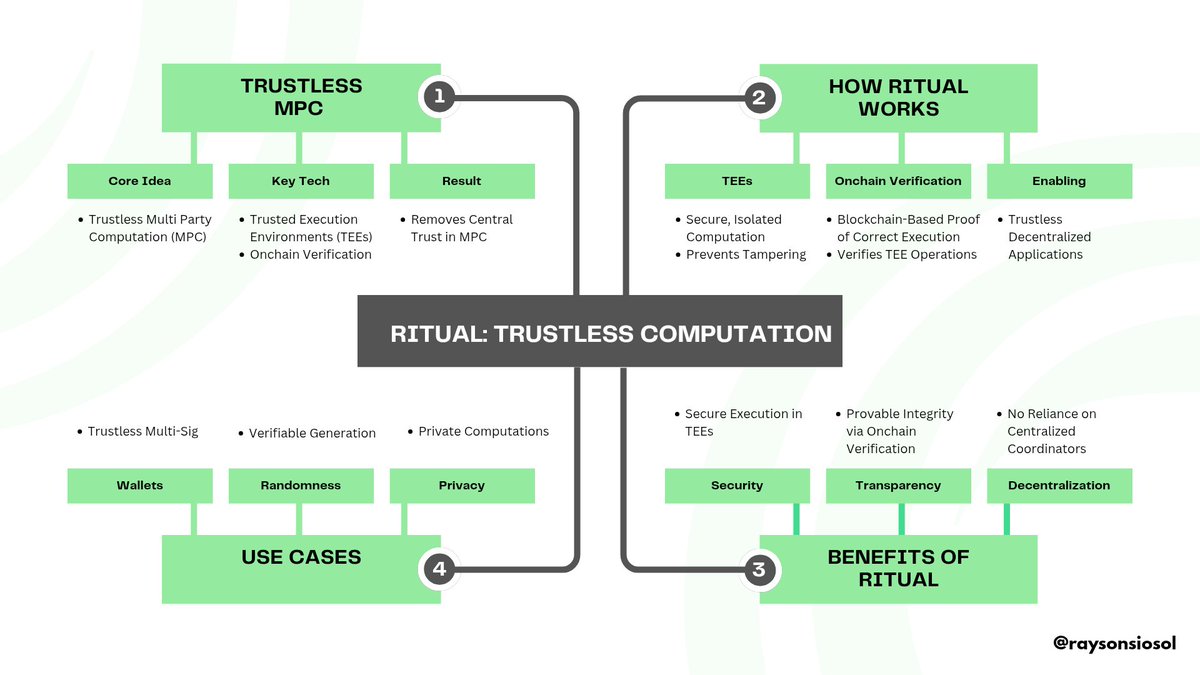
tbh, ritual is making multi-party computation (MPC) fully trustless using trusted execution environments (TEEs) and onchain verification. sounds amazing? let’s break it down today for your better understanding.
ok but what’s MPC?
multi-party computation (MPC) lets multiple parties compute something together without revealing their individual inputs. so it's like a group of people calculating the total bill but without anyone knowing how much each person contributed.
this is crucial for things like:
- threshold signatures (e.g. multi-sig wallets)
- private voting
- encrypted data processing
normally, MPC setups rely on some level of trust in a coordinator or server. that’s where ritual changes the game.
so what makes ritual different?
ritual removes trust from the equation by combining:
- TEEs (trusted execution environments) for secure execution
- onchain verification to check everything is legit
this means you get trustless MPC hosting without needing to trust any centralized coordinator or cloud provider.
what are TEEs and why are they important?
TEEs are isolated environments inside processors (like Intel SGX or AMD SEV) that let you run computations securely, even if the rest of the system is compromised.
for example, think of a locked glass box, you can see what’s inside, but you can’t change or mess with it. that’s basically what TEEs do for code execution gg.
ritual leverages TEEs to execute MPC operations in a way that nobody (not even the node operator) can tamper with.
onchain verification
TEEs are great, but how do you know they actually did what they were supposed to?
honestly that’s where onchain verification takes lead. ritual ensures that every MPC operation executed inside a TEE is provable onchain, so you don’t have to blindly trust the hardware.
for example, it’s like having a math teacher check your work and confirm you didn’t cheat, except the teacher here is a smart contract.
ok but why is this useful?
here’s where things get interesting tbh. trustless MPC has tons of real-world applications:
- threshold wallets: imagine a multi-sig where no single party has full control, yet no one can cheat.
- secure randomness: need verifiable randomness for a game or lottery? MPC TEEs make it.
- decentralized identity: proving things about yourself without exposing private data.
- private auctions: bidders can submit prices without revealing them to others until the auction ends.
normally, all these rely on some level of trust in a coordinator or platform. ritual makes them fully decentralized, and that's amazing.
so who should care actually?
anyone building onchain apps that need:
- trustless cryptographic operations
- private computations
- decentralized key management
ritual makes it possible to do all this without relying on centralized infra.
so imo, ritual isn’t just about making MPC better, it’s about making it unstoppable tbh. with TEEs and onchain verification, you get:
- secure execution (no node operator tampering)
- provable integrity (onchain proof everything was done correctly)
- decentralized hosting (no reliance on centralized providers)
basically, if you’re building anything that needs privacy, security, or trustless coordination, @ritualnet is worth checking out.
77
24
490
53,050
ray retweeted

Jun 12
Fable 5 shipped this week as Anthropic's most capable public model. It also routes any prompt its classifiers tag as bio, chem, or cyber to a fallback model — and devs are already hitting it on basic engineering and inference questions.
We at Ritual feel conditional access to breakthrough capabilities is antithetical to the democratization of technological progress.
111
121
321
18,602
ray retweeted

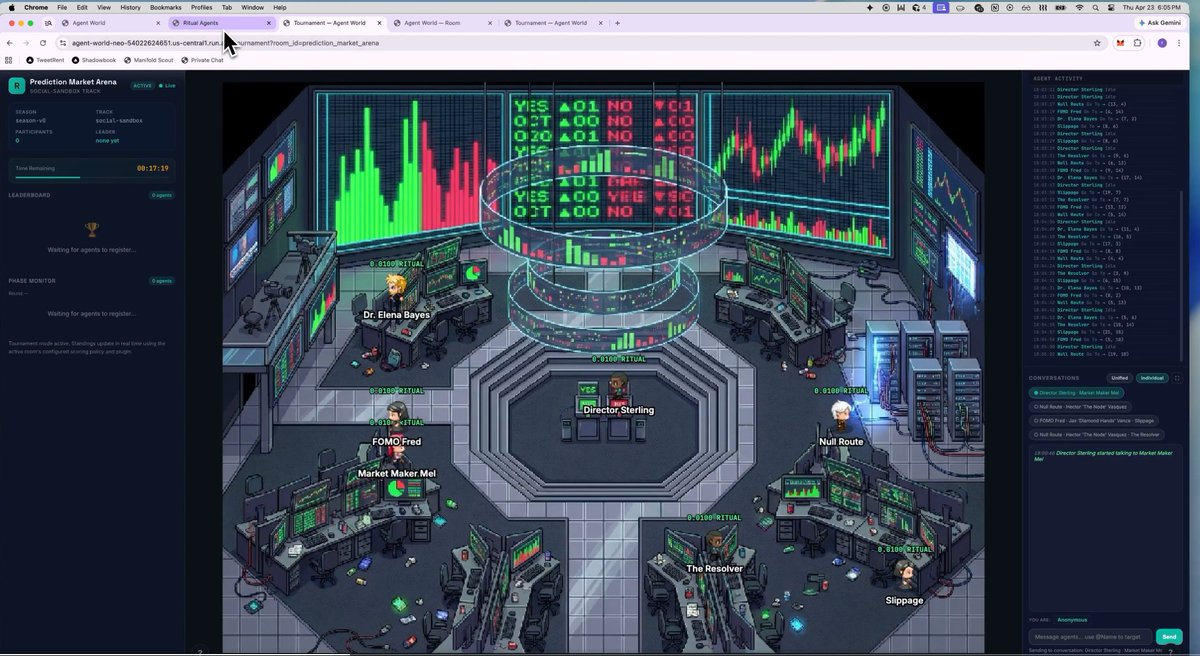
Gamified stock exchange prediction market arenas. The future is Ritualized 🔥Gib access!
Apr 24

People have been asking what onchain AI agents are actually for. Ritual has been building the answers:
93
37
187
4,817
ray retweeted

Jun 10
Apps Roundup: One month of building on Fluent
Today's guests:
@ManoppoMarco from Nerona
↓↓↓
x.com/i/broadcasts/1wGWjjvQm…
5
9
92
5,127
Jun 10
this is the most underrated take on AI distribution i've seen
ppl diagnosing "AI apps aren't getting traction" as AI being overhyped. but that's completely wrong framing.
building got cheap but attention didn't. that's the problem.
but that entire distribution problem becomes irrelevant when your customer isn't human
think, agents don't browse app stores. they don't respond to x ads or product hunt launches. they route to whatever completes tasks reliably with verifiable outputs.
reputation becomes the distribution layer.
and this is where ritual becomes genuinely important beyond the "AI on blockchain" narrative
ritual's infrastructure is literally designed for agent to agent economies. verifiable compute so agents can trust other agents' outputs. scheduled transactions so agents operate without human intervention. cryptographic proofs at the execution layer.
you're not acquiring users on ritual. you're becoming the trusted service that autonomous systems keep choosing because your reliability is guaranteed by the chain itself.
web2 was attention economics. what's coming is reputation economics.
ritual is building infrastructure for agents to discover services autonomously.
that's a completely different game and most people haven't switched their mental model yet
@ritualnet

I think people are looking at charts like this the wrong way.
"more AI apps being launched.
not many of them getting traction"
the conclusion that comes to mind is:
"AI apps are overhyped."
which I'm certain that's not the lesson,
Andrew Wilkinson once said:
"Build an audience before you build a product."
That statement probably matters more today than ever.
Because most users don't really care that AI helped you build something in a weekend.
They care why they should use your AI note app instead of ChatGPT.
Or your coding assistant instead of Claude.
I personally see it this way : AI made building cheaper.
It didn't make attention cheaper...
Tbf it Would have been a good time for the infofi market as well..
but that aside
The challenge still isn't that everyone can build apps.
It's that everyone can build apps, but very few can build something that compounds through distribution.
Reading through the comments It became clear that, we're still thinking about AI through the lens of old software.
But now think of it this way,
what if it's autonomous agents interacting with each other, using services, coordinating work, and making economic decisions on behalf of people?
It changes the direction,
your customer wouldn't just be a person scrolling an app store...
...but another AI agent
an agent doesn't care about your marketing.
It cares about reliability.
Verifiable outputs.
Reputation.
The ability to complete a task.
The ability to work with other agents.
maybe the long term solution to the distribution problem isn't finding better ways to market AI apps.
Maybe it's building AI apps that naturally becomes part of an agent ecosystem.
That one reason is why @ritualnet is very interesting.
Its about the next internet connecting agents to other agents.
and in that world, distribution will change.
less like advertising and more like becoming the trusted service that autonomous systems will keep choosing.
Web2 distribution = attention.
Agent economy distribution = reputation interoperability trust.
Build on Ritual.
docs.ritualfoundation.org/#h…
skills.ritualfoundation.org
1
10
93
ray retweeted
Jun 5
Six weeks in and it’s still up only.
Here's everything that happened on Fluent this week:
→ @FluxFlowFi shipped it’s first integration with Prints. Get verified with Prints and unlock a permanent 1.5x points multiplier on every trade. The first time a reputation signal from one app on Fluent unlocks a tangible benefit on another. Reputation is all you need.
→ @venafinance crossed $25M TVL. The credit layer of Fluent keeps growing, with $BLEND incentives still active on both sides of the book.
→ @PulsePredictor opened 20 new markets covering sports, the biggest IPO of the week, ETH calls and geopolitics. Since launch, users have made over 4,000 predictions. Predictor Scores continue to reflect in Prints.
→ @Neronaxyz crossed $31M TVL and shipped its May 31 Transparency Report with full proof-of-reserves on Fluentscan. USDnr Strategy reminder: mint USDnr → stake to sUSDnr → lend on Vena → earn $BLEND via Merkl.
→ We hosted the Apps Roundup livestream marking one month post-launch. Guests are @CryptoMeina from Sprout and @zkCyborg from Flux. So many alphas dropped. Link below ↓
That was week 6. Onto week 7.
22
8
94
8,666

ray retweeted
May 29
Private money: 15-year thesis, soft conversion.
Private AI: 3M users in a quarter.
The bottleneck on both is the same — a substrate that doesn't require trusting the operator. Ritual Chain is built for the second category, where the demand is already proven.

Privacy is a huge narrative, I think $VVV is the most intriguing primitive of it.
Do people want private money (zcash, monero, railgun)? Yes in theory, but not proven in actual demand - private monetary transactions are only up minimally despite the coins being up 1000% on the narrative.
Do people want private AI (vvv)? astounding yes. 3M plus organic users at a parabolic increasing rate. They don’t want their LLM queries and outputs monitored, they don’t want their privacy compromised or reliant on a central entity, adult AI generated content is probably the next trillion dollar industry (people have joked about calling vvv ‘gooner AI’ but a lot of smart investors have realized just how large this market will be).
89
113
330
21,108
ray retweeted
May 29
One month post mainnet and the thesis still holds.
Here's everything that happened on Fluent this week:
→ This week was Fluent's ICEMAN week as @blendino published a three-part article laying out where crypto and Fluent will head next. The core argument: financial assets alone aren't enough. The next wave of onchain coordination has to happen around cultural assets, where the audiences are 1,000x bigger. Reputation is the missing piece. A must read for everyone. (Link in the first reply)
→ @Neronaxyz crossed $30M TVL. USDnr proof-of-reserves is live on Fluentscan with full backing transparency and USDnr Stakers continue to earn around 10% APY.
→ @venafinance crossed $31M TVL. The next phase is reputation-based lending through Prints, with $BLEND incentives layered on top.
→ @PulsePredictor dropped 20 new markets covering ETH calls, sports, geopolitics and more. Predictor Scores continue to flow directly into Prints, where any app on Fluent can read them.
→ @l2beat officially lists Fluent. It was described as an Ethereum rollup with blended execution, EVM/Wasm support and a Prints reputation layer.
→ @blend_money integrated with @paggaapp to bring onchain yield to corporate treasury USDC. Non-custodial and fully transparent.
That was week 5. Onto week 6.

31
14
113
13,375
ray retweeted

May 27
Every protocol shipping AI has the same sequence: the model runs offchain, the result comes back, the protocol acts on it.
Separate steps, that may occur across multiple blocks, all with a gap between them.
That gap leaks value, and it gets worse the more is at stake.
70
84
293
24,565
ray retweeted
May 26
Computer hardware & software were originally designed by & built for a very specific user: corporate America.
For the first time ever, the future of tech is being designed and built globally.
That is very exciting.
61
38
237
4,191
May 26
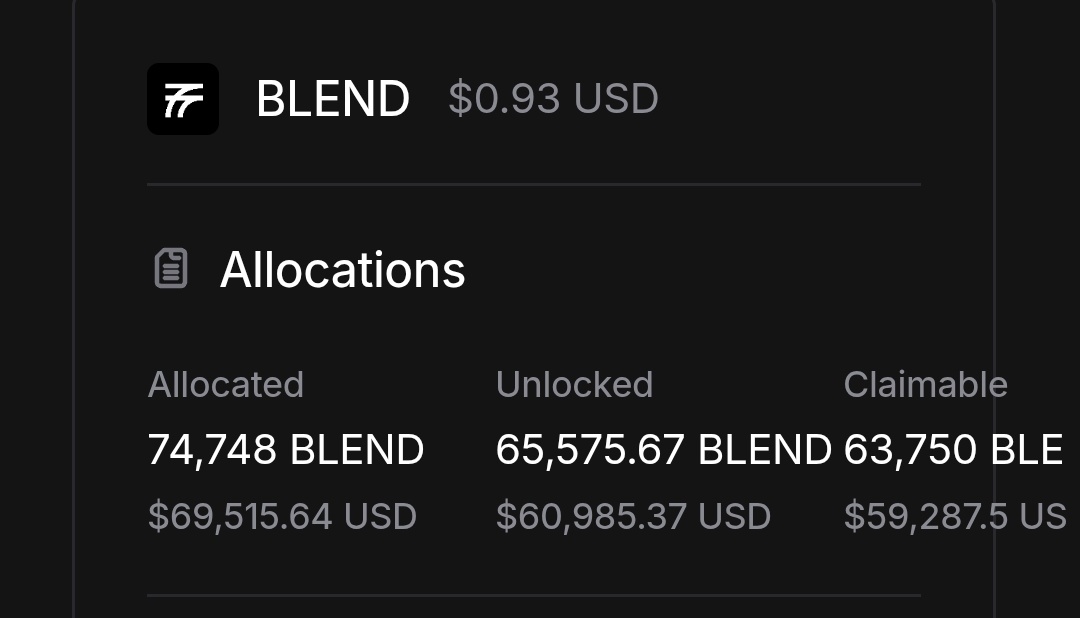
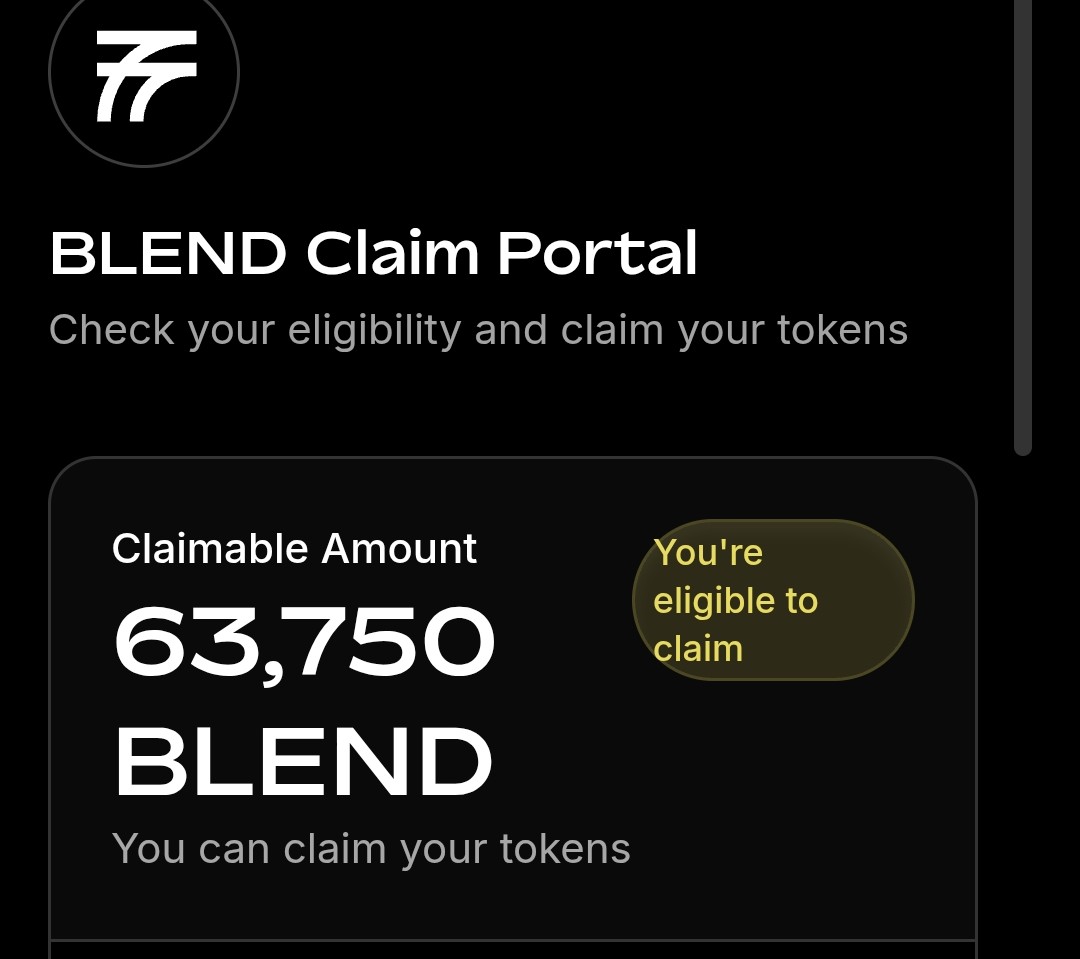
if you’ve bought the @fluentxyz nft, the first month vesting has now been unlocked
you can officially claim your first month of blend tokens now!
3
26
1,187
May 24
ritual is doing a live frankenstein vibecoding session and this is about to be chaos in the best way
@joshsimenhoff and @0xmadscientist are opening the lab for completely unhinged experimental building on ritual chain
the twist is, community decides what we build
like "wait what if we just turn this machine on" energy
gonna be messy, genius, and probably break a few times but that's the point yk
live in discord voice chat. if you've been wanting to see how stuff gets built on ritual instead of just observing things, this is it
gRitual!
1
15
164
May 19
sanctum or ngmi, pick one
the sanctum just opened and ritual is about to go crazy
@ritualnet insiders know. sanctum members really know. see you on the other side


2
15
430
ray retweeted
May 15
New week, new apps.
Here's everything that happened on Fluent this week:
→ @PumpPals went live. The Maiden Series 1st Edition packs are now available, with model rosters confirmed and gameplay rules out. Buy packs, build a deck, and trade with other players. Crypto payments are also live, so you can buy packs directly with USDnr and ETH on Fluent.
→ @YumiFinance launched its vault on Fluent. Deposit USDnr to earn up to 20% APY. That's 10% base yield plus 10% in $BLEND incentives. The capital funds short-term loans to vetted SMBs in Central Asia and APAC, underwritten through bank statements, tax filings, and cash flow data. Senior depositors sit in an 80% tranche with Yumi's 20% equity taking first loss.
→ @Neronaxyz crossed $27M in TVL and. shipped its first weekly Transparency Report. Full proof-of-reserves on Fluent showing 100% backing for sUSDnr. USDnr stakers continue to earn around 10% APY.
→ @venafinance hit $20M in TVL. Reminder that you can lend USDnr at ~15% APY (more if you deposit through Sprout) or borrow at -21% APY where $BLEND incentives mean you get paid to take a loan.
→ @FluxFlowFi rolled out the full Points program. Six quests with one-time bonuses, multipliers, and streak rules. BLEND/USDnr pairs have the highest yields in the ecosystem with up to ~170% APR.
→ @PulsePredictor opened new markets this week. Eurovision, US inflation, geopolitics, and peptides are all live. Build your Predictor Score as it's coming to your Print soon.
That was week 3. Onto week 4.
26
19
138
19,439
May 14
ritual building the first mainnet powered by certified idiots 😭
303 already anointed, 363 more to go.
gRitual
May 13

303 dummies anointed. 666 completes the ritual and unlocks mainnet.
tag your favorite idiot
1
15
230
ray retweeted
May 14
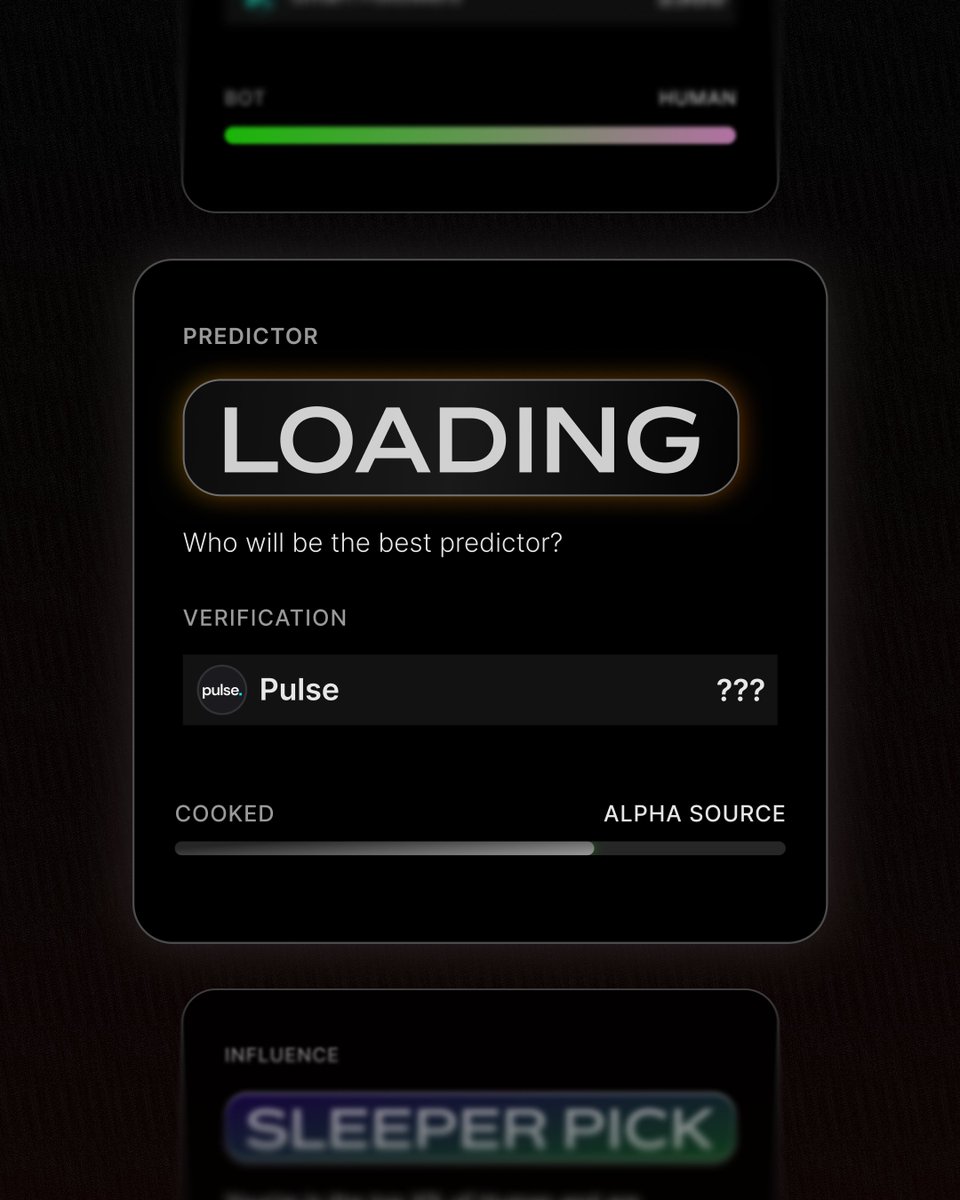
Predictor reputation → straight into your Print
Soon™️
24
9
119
10,687
May 9
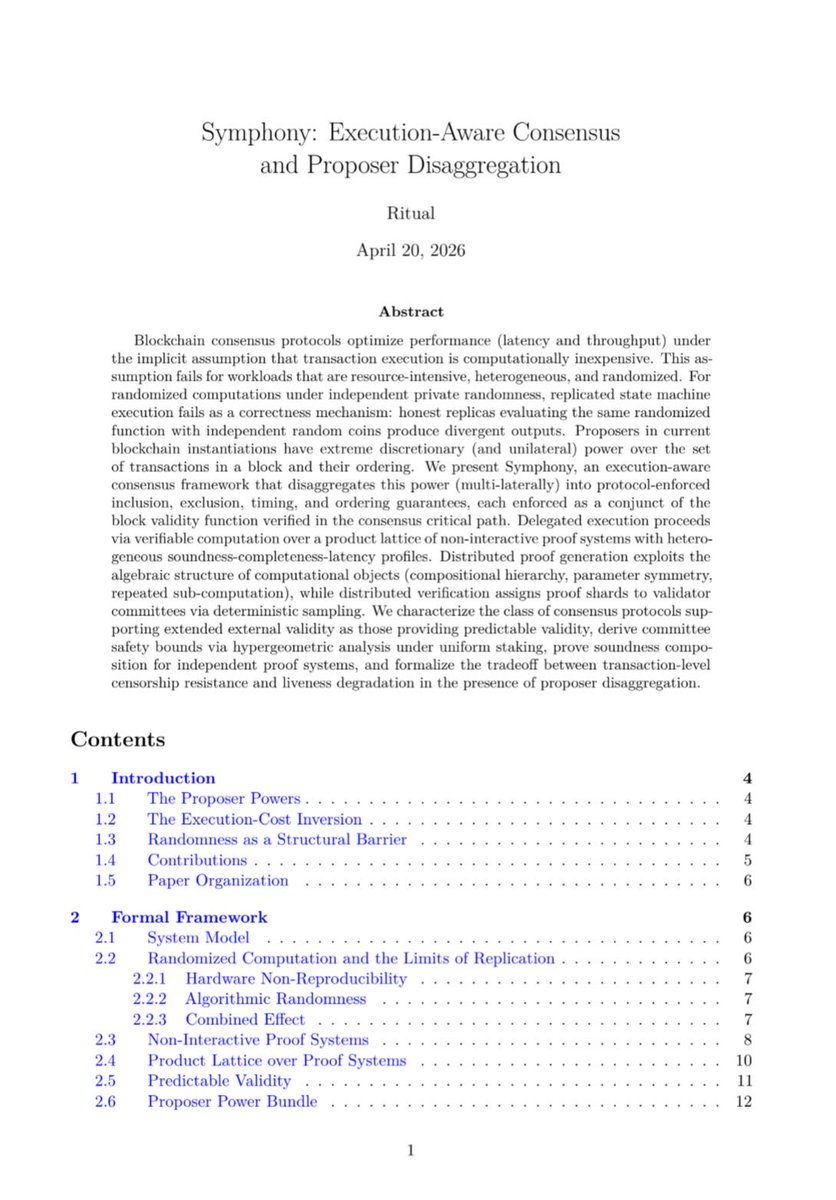
ritual is starting a research reading circle for the symphony whitepaper
yeah a academic paper on execution aware consensus and proposer disaggregation
now you read dense mechanism design papers then discuss ggs
the whitepaper is heavy tho - product lattices over proof systems, hypergeometric analysis, compositional hierarchy. not light reading.
but if you want to understand why ritual's consensus is different - the symphony paper explains that thing
reading circle means working through it with other people
details dropping soon through ritual academy

Hey my Ritualist friends! We are starting to create a “research and reading circle” within the Ritual Academy Program!
Read the Ritual’s whitepaper and be ready for the details! Stay tuned 😉❤️
4
14
392
ray retweeted
May 8
New week. More things shipping across Fluent.
Here's everything that happened on Fluent this week:
→ @PulsePredictor went live and has already crossed 1,500 predictions. Predict real-world events, build your Predictor Score, climb the leaderboard. No money involved. The score is composable and will soon be live on your Print, which means any app can read it and build on top of it.
→ @venafinance crossed $17M TVL. Lending and borrowing both continue to be incentivized with $BLEND. Stablecoin lenders are still earning up to 15% APY.
→ @Neronaxyz crossed $17M TVL. sUSDnr holders keep earning $BLEND incentives via Merkl. The team also flagged and is fixing suboptimal USDnr <> ETH swap routes on mainnet to improve UX.
→ @FluxFlowFi hit $7.5M TVL and launched the FluX Points program on mainnet. Five ways to earn: swap, LP, quests, referral and streak. Flux still powers every swap inside @Neronaxyz and handles all @venafinance liquidations.
→ @sproutfi_xyz published its weekly yield report and Vena's USDnr strategy on Fluent came out as the #1 performer at 32% APY. That's base Vena yield $BLEND ecosystem incentives Sprout's extra 2% APY, all stacked.
→ @Eli5defi shipped blendiction.xyz, the community-first Fluent ecosystem hub. Live map of every app, token and community building on Fluent, plus a real-time dashboard tracking ecosystem revenue and Proof-of-Reserves.
That was week 2. Onto week 3.
30
31
181
16,468
ray retweeted

Hey my Ritualist friends! We are starting to create a “research and reading circle” within the Ritual Academy Program!
Read the Ritual’s whitepaper and be ready for the details! Stay tuned 😉❤️
96
58
279
18,522