
Patriot | Tech Enthusiast | Former Competitive FPS Pro | RPG/MMO Fanatic
Joined January 2019
- Tweets 3,691
- Following 118
- Followers 165
- Likes 10,605
327 Photos and videos












Carnasis retweeted

Jun 10
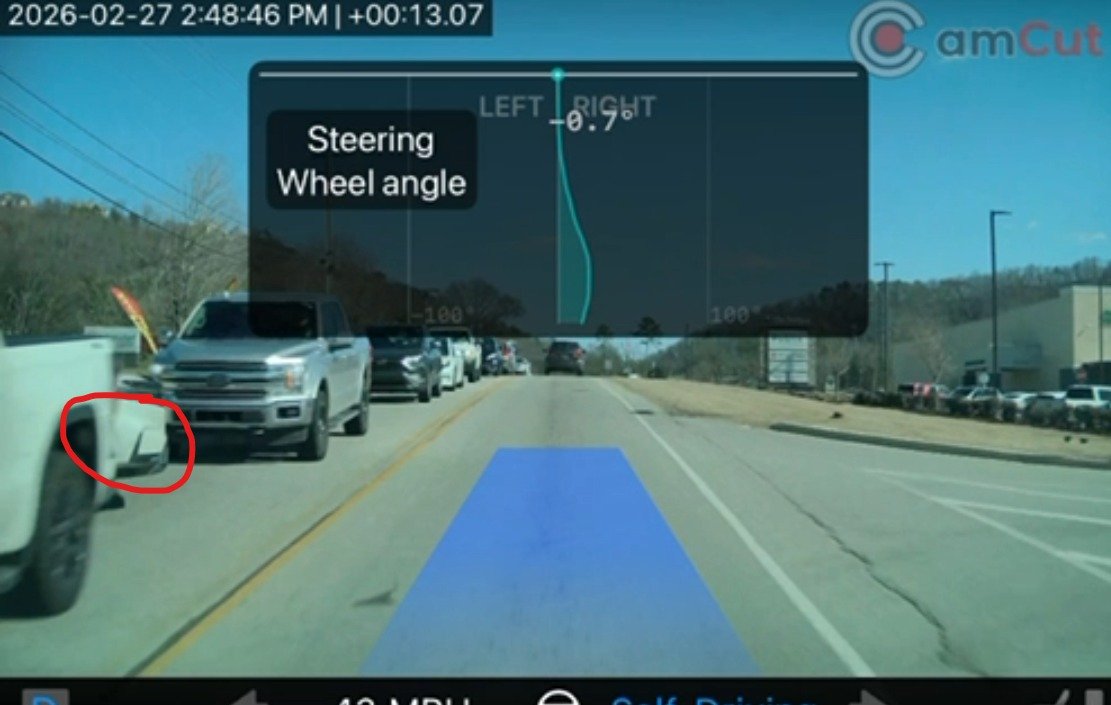
Another user @realCarnasis submitted this crash footage of his Tesla being T-boned while FSD was engaged. Raw video analyzed using @CamCutApp telemetry visualization.
The other driver was ultimately found at fault after entering the roadway and colliding with the Tesla while FSD v14.2.2.5 was engaged.
What makes this crash interesting is that there appear to be multiple contributing factors:
• The driver was pressing the accelerator before the collision, causing the vehicle to accelerate to roughly 40 mph. Had the throttle not been overridden, FSD may have approached the area at a lower speed.
• A portion of the striking vehicle was visible between the stopped cars before it fully emerged into the roadway. FSD did not react until the vehicle entered its path, leaving only a few hundred milliseconds to respond.
By the time emergency braking began, there simply wasn’t enough distance left to avoid the collision.
The other driver caused the crash, but it’s an interesting example of how throttle overrides, speed, and anticipation of partially occluded vehicles can all influence the outcome.
@Tesla_AI
64
9
406
61,631

May 20
I hope this Massie loss doesn’t cause overconfidence in the midterms later this year.
1
4
103
Carnasis retweeted

May 15
All the haters can kiss my ass
8,849
3,370
36,480
6,435,612
Carnasis retweeted

May 10
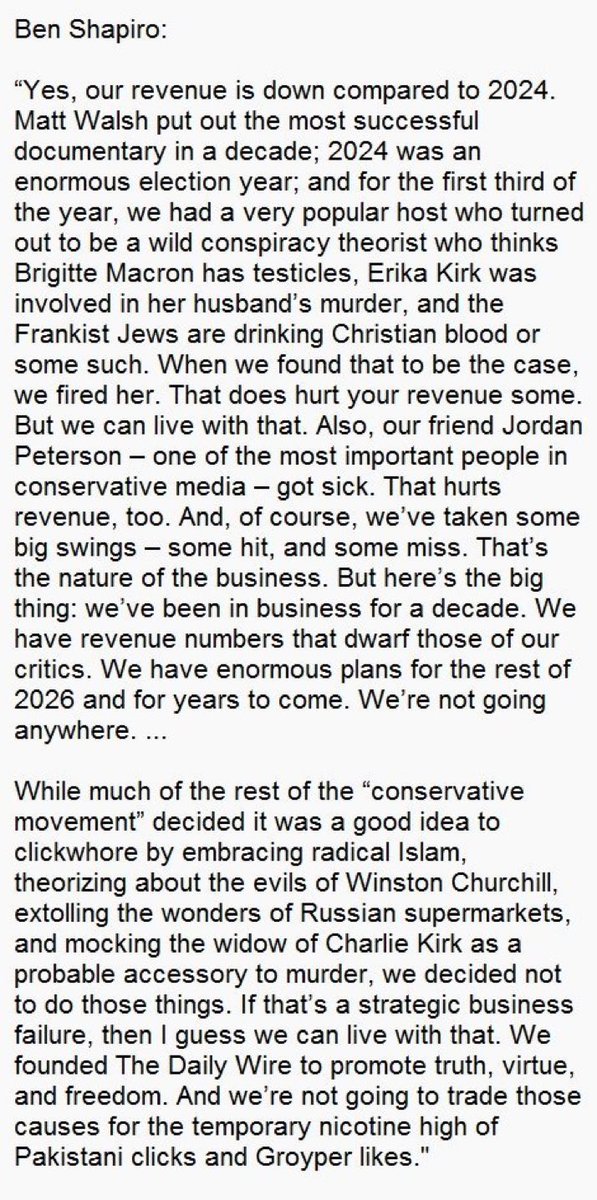
Ben Shapiro rips into WaPo and the lies they’re pushing.
53
437
4,910
89,057
May 6
Marco Rubio is just so much better than JD Vance at everything and it’s not remotely close.
4
80
May 1
The Great Sort will re-introduce Federalism: Blue states getting way bluer, Red states redder as people vote with their feet and move. Feds keep expanding power but can’t govern a nation this divided from DC. The result? Power gets forced back down to the states by default. Federalism reborn from pure necessity.
2
94
Apr 23
What a thorough analysis by @JeremyDBoreing , share this with your friends & family who don’t know any better.
youtu.be/MYrvBO7gukE?si=XlGr…
3
143
Carnasis retweeted

Apr 20
If you love America but support Israel, you're "Israel First."
If you love America but don't hate Israel, you're still "Israel First."
The only way to be "America First," it would seem, is to openly hate Israel. The problem is that this group is dominated by America-hating Nazis, America-hating Islamists, and America-hating progressives. It's an Anti-American movement wearing the flag as a disguise, like a transgender wearing a dress.
1,302
1,281
9,627
330,852
Carnasis retweeted

Apr 18
In general, if you want to know what team someone is heading towards... don't listen to what they say, watch which direction they fire their bullets.
207
989
5,508
193,613
Carnasis retweeted
Apr 17
Have started to get more questions about why I do stuff like this. Quick response...
1) Not every pastor should, and not saying I'm doing it perfectly. Guarantee I'm not.
2) I've come think of discipleship in terms of "Air War" and "Ground War."
- Air War = applying the Word to PEOPLE and FAMILIES "down there"
- Ground War = applying the Word to culture "up there"
Just like in a military conflict, if you have no Air War it doesn't matter how many battles you win on the ground, the Enemy just flies in, bombs your wins, and un-does everything you did.
I feel like that happens with Christians: If we don't combat the lies they are inundated with in culture, Enemy "air war superiority" is undoing for the next 6 days (via social media, journalism, entertainment media, higher ed, etc) what we did on 1 day.
3) Many of the "false teachers" of this era are not in pulpits. They are on podcasts, YouTube pages, Twitch streams, etc doing reverse-discipleship and frequently twisting the Scriptures to do so.
In 1960 a pastor could generally keep his sheep from wolves by controlling who he allowed in his pulpit. In 2026, people are carrying entire packs of "wolves" in their pockets... so as a shepherd I'm trying to go there too.
4) I refuse to let my pulpit get hijacked by the issue of the week. On weekends I'm preaching verse by verse through books. Stuff like this gives me the ability to combat bad teaching my people are hearing without letting my pulpit get hijacked.
(Not saying everything Tucker said in this clip I reacted to = bad teaching, listen to ep)
5) If pastors refuse to help their people think Biblically through the issues of the day, someone else will help them think UNbiblically about them.
If godly people don't, godless people will.
6) It is counterintuitively an avenue for evangelism. One takeaway I had from watching the effect of Charlie Kirk's life was that what is often called "the culture war" can be a PLATFORM for the gospel, rather than a distraction from it.
7) Last year I read a book that touched on church leadership and pastoral ministry during the era of the American founding. Pastors leveraged Sundays to preach through books of the Bible, but many leveraged the mid-week gathering to teach their people about "Christian statesmanship" (applying Biblical principles to society, local politics, culture, etc.)
We accidentally backed into doing that with Live Free.
*All that to say, I GUARANTEE I'm doing it imperfectly and this is not going to be every pastor's "thing." I've always been drawn to "Christ and culture" thinking.
But I'm doing my imperfect best for the above reasons.

182
250
1,995
84,406
Carnasis retweeted

Apr 16
"By sticking with @realDonaldTrump, the @realDailyWire is offering an alternative to many of its top competitors. Staying constant means it’s actually zigging while much of the country is zagging. Maybe that’s a winning strategy."
bloomberg.com/news/newslette…
289
173
1,947
218,951
Apr 15
.@nikitabier When I block words or phrases on X, can you also please make sure I don't ever see them in my "Today's News" or "What's Happening" sections?
1
34
Apr 14
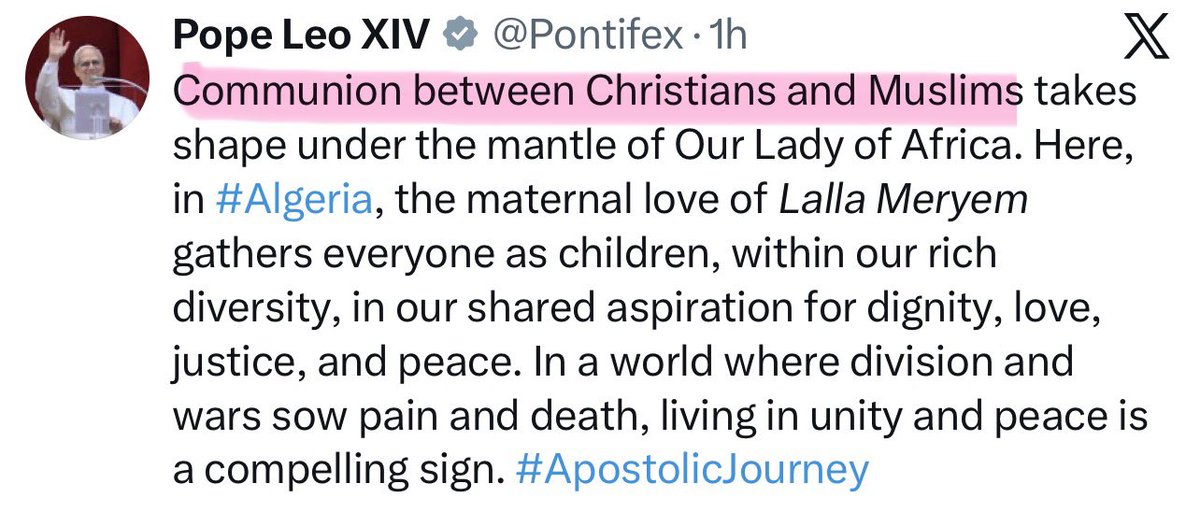
Trump’s AI meme was bad, and this Pope is also off his rocker.

42
Carnasis retweeted
Apr 10
Felt like a good day to repost this.
Shabbat Shalom!
1,496
1,177
10,330
456,553
Carnasis retweeted

Apr 10
‘We must crush the Iranian regime now so it can't come back and spread terror.’ @nypost nypost.com/2026/04/09/opinio…
1,310
3,204
14,762
251,860
Apr 9
Wouldn’t have to care about the Strait of Hormuz if we all drove EVs, just sayin. I know they aren’t perfect for every need yet, but I’d argue 95% of the world could be driving a Tesla Model Y/3 and have all of their needs met.
1
1
1
68
Carnasis retweeted

Apr 5
People hating on EVs for being too fast are literally the most brainwashed consumers alive
Legacy automakers charged us $150k for a 0-60 under 3 seconds for DECADES
Tesla said here you go bro, a $50k Model 3 Performance 0-60 in 2.9 seconds ..
Tesla brought supercar speed to the people and you are mad about it lmfao
76
42
885
30,541