
We screen 50 senior devs to place 1. They join your Slack, your standups, your timezone. AI code review on every PR. Human QA before a feature reaches you
Joined December 2023
- Tweets 129
- Following 13
- Followers 790
- Likes 41
17 Photos and videos





Pinned Tweet

23 Jul 2025
Allow us to reintroduce ourselves.
We’re Reduzer Technologies - a product and engineering partner built to help teams move smarter, move faster, and build with more clarity, especially when the odds feel stacked.
Here’s what drives us. ↓
3
4
32
6,726
If you came out of a bootcamp knowing how to write code, but still feeling unsure about how to work inside a real engineering team, that does not mean you failed. It may mean the training gave you syntax, assignments, and projects, but did not give you enough time inside the kind of environment where software engineering actually happens.
1
4
65
That is the standard we have to start training for. The future of African tech talent should be built around engineers who can understand the work, own the work, and grow with the responsibility that comes with it.
This is the kind of training standard Reduzer School is built around. Applications for the next cohort open soon. Follow us on LinkedIn so you do not miss the details.
1
15
You could hand a developer with imposter syndrome the trophy they earned, and their first thought would still be, “Are we sure this is mine?”
They earned the role, the client trust, the promotion, the seat at the table, the good feedback, and somehow their mind will still find a way to question it all.
1
1
5
81
Maybe the work is not to convince your mind all at once that you are worthy. Maybe the work is to stop letting fear make every decision before you do. You can still feel unsure and ask the question. You can still feel exposed and send the PR. You can still feel the doubt and choose to participate anyway.
1
1
28
At some point, you have to let the evidence count. The trust counts. The approved work counts. The hard thing you learned counts. The fact that you still have room to grow does not cancel the fact that you are already growing.
Read the full article on LinkedIn, see which imposter syndrome hat feels a little too familiar, and what it can look like to start moving past it. -linkedin.com/pulse/why-capab…
1
25
From learning syntax to understanding systems.
From building alone to working in a team.
From tutorials to real project responsibility.
From uncertainty to the confidence that comes with time, support, and practice.
That is the kind of transition Reduzer School is built for.
Students are not only learning how to code.
They are learning how to think, build, communicate, and work inside real engineering environments.
The goal is not to rush through tutorials and tasks. It is to give students enough time, structure, support, and practice to grow real confidence with code.
The current cohort is now working on real-world projects through the Reduzer talent pipeline. Next month, they will begin onboarding into Reduzer client projects, where the work moves even closer to real delivery expectations.
Applications for the next Reduzer School cohort open next week.
More details coming soon.
Follow us on LinkedIn to keep up with the application details and the next updates.
6
152
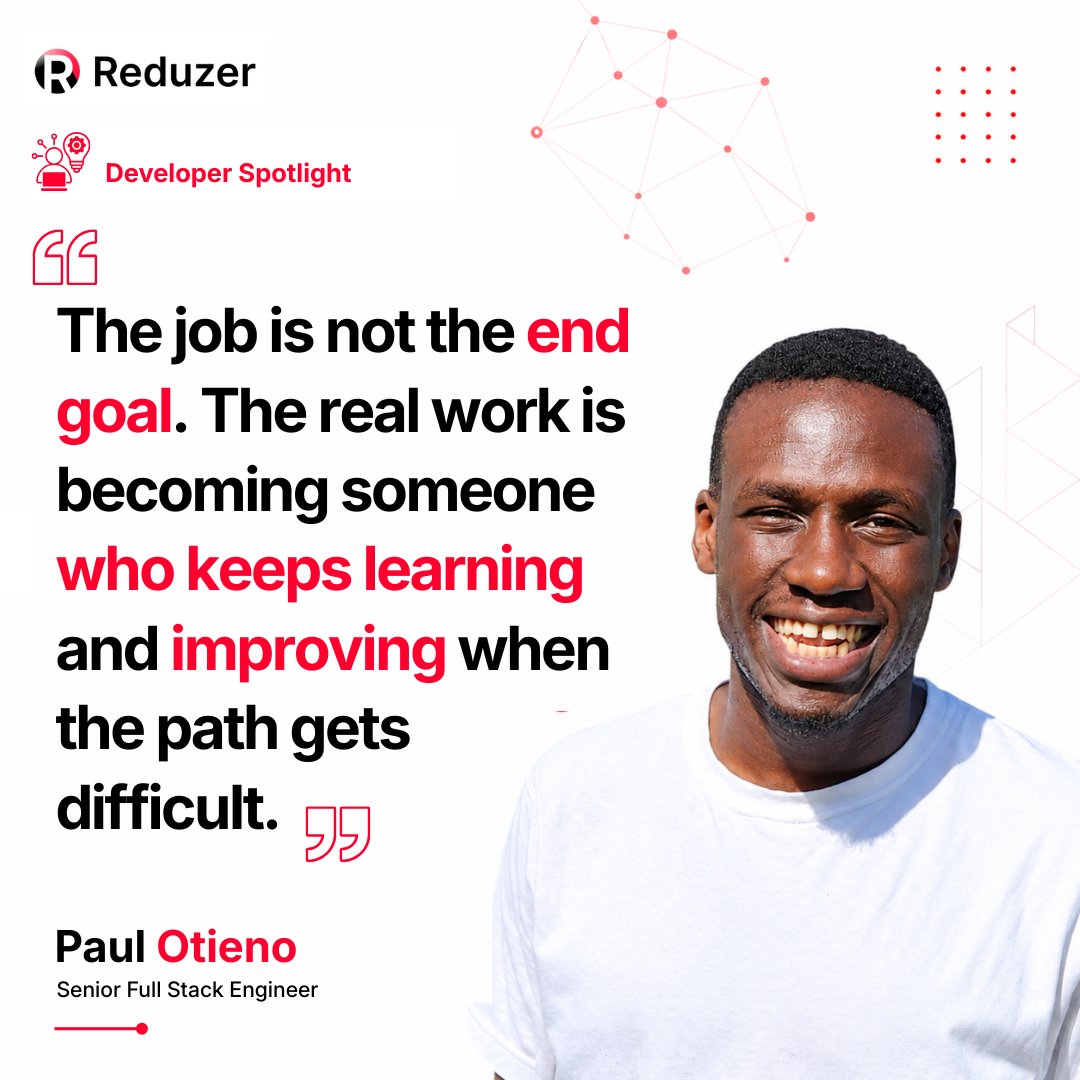
Behind Paul Otieno’s journey into software is a story of time, patience, imposter syndrome, and real work. He started without the traditional background, stayed through the hard beginning, and learned that growth is not just about getting hired, but becoming someone who can keep learning, keep solving, and keep improving when the path gets difficult.
This is the kind of developer growth we value - skill built through real work, structure, feedback, and the patience to become dependable in the work.
Read the full story linkedin.com/feed/update/urn…
2
6
18
4,289
Today is a celebration of what becomes possible when people have the freedom to imagine more, build more, and shape the future with their own hands.
We celebrate the people who choose to build, solve, learn, improve, and leave things better than they found them.
Happy Madaraka Day from all of us at Reduzer.
1
9
944
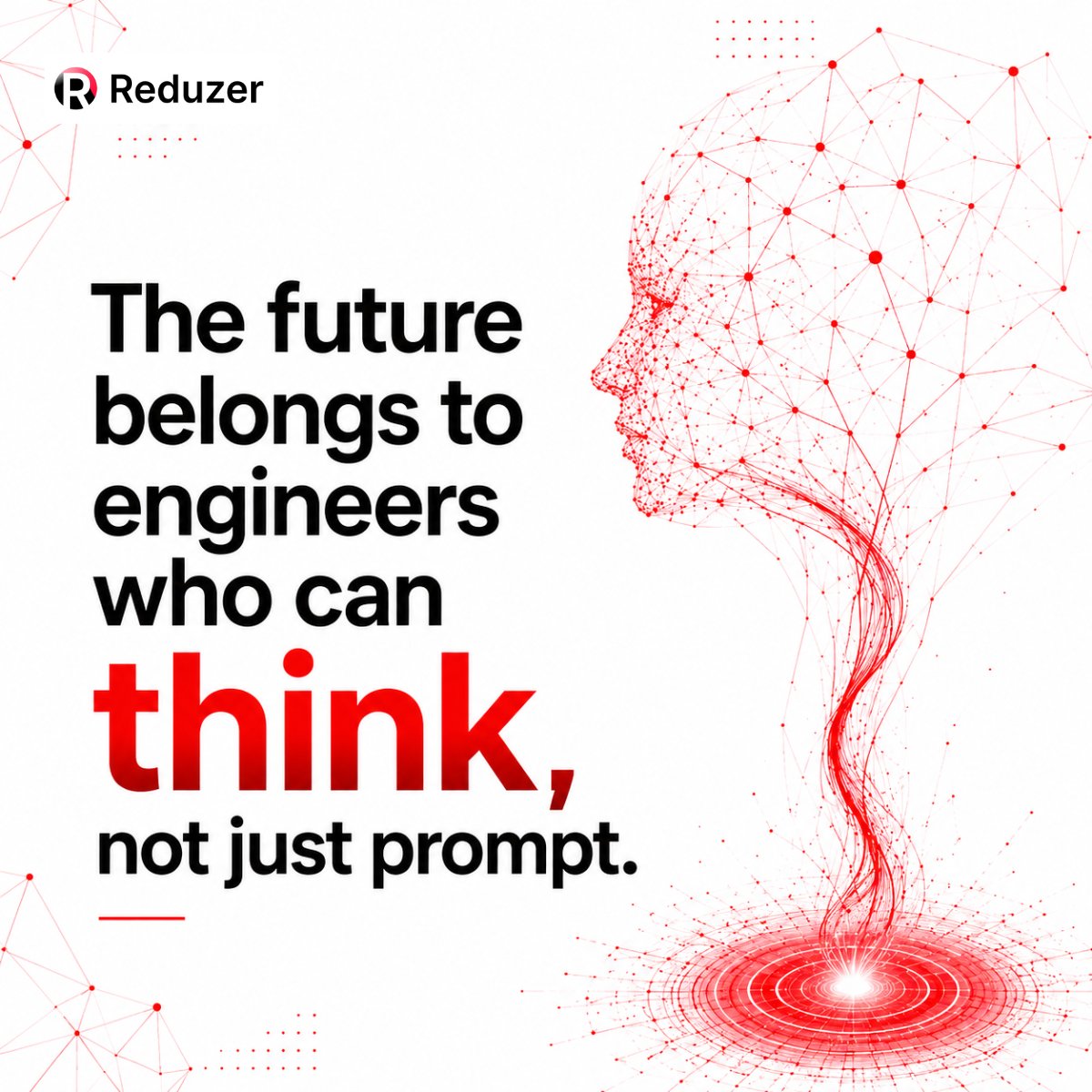
Let’s go back to 2020, when half the world was locked inside and everyone suddenly had a laptop, a dream, and a freeCodeCamp tab open.
People were learning JavaScript at 2 a.m. with tired eyes and cheap coffee, pausing tutorials to Google errors they did not understand yet. Back then, becoming a developer had a kind of friction to it.
You had to sit with confusion for longer. You had to read documentation you did not want to read. You had to break things and not immediately know why. There was no machine beside you, ready to finish the thought.
So you learned to wrestle. That friction shaped a different kind of developer. Read the full post on why the future still belongs to engineers who can think, not just prompt here -
linkedin.com/feed/update/urn…
1
3
5
772
Eid ul-Adha Mubarak from all of us at Reduzer.
May this season bring you more inspiration, renewed passion for your projects, and meaningful progress in the work ahead.
1
4
671
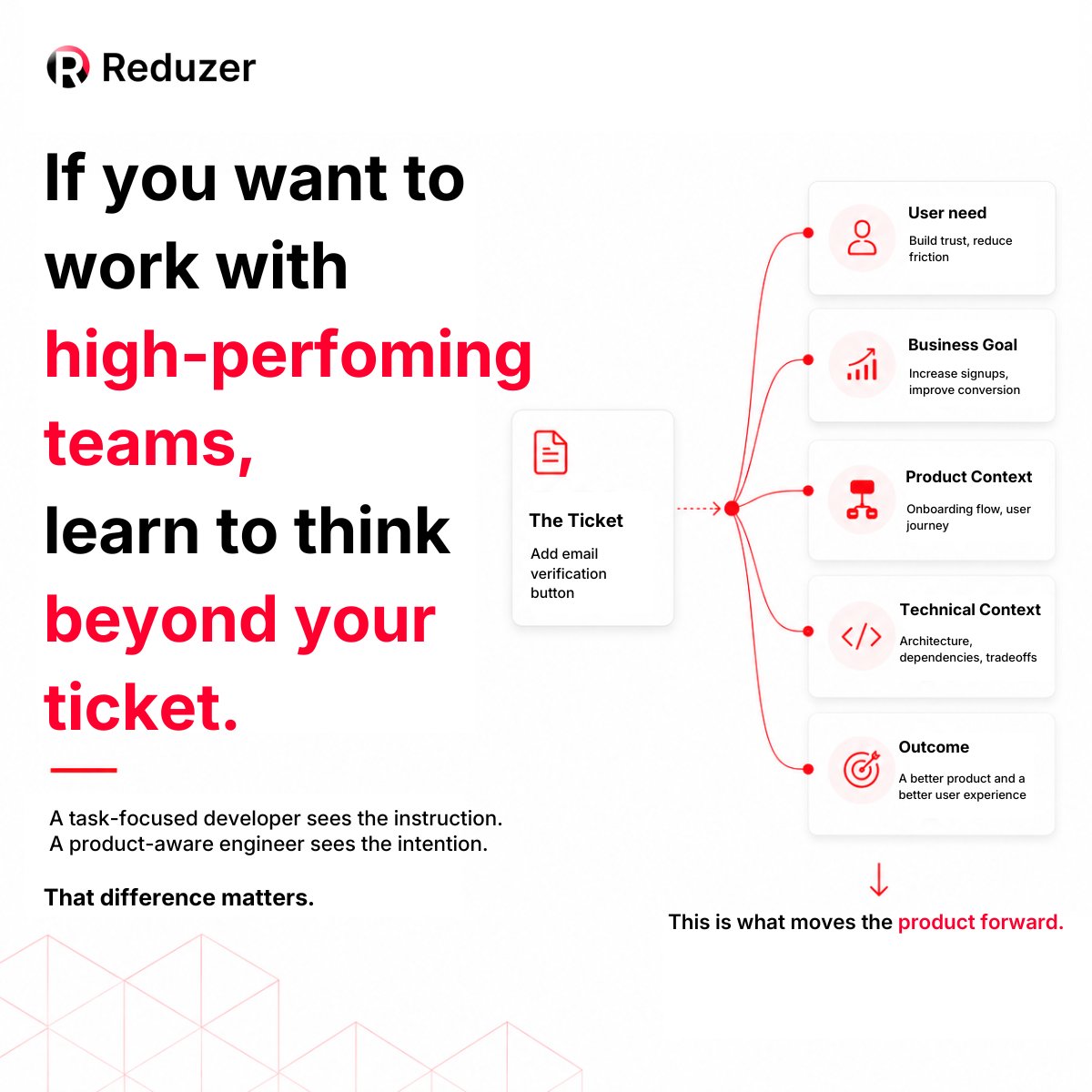
When you only think in terms of “what has been assigned to me,” you limit your own value. You may complete the work well, but miss the deeper opportunity to understand the product, the users, the priorities, and the reasoning behind the decisions.
A task-focused developer sees the instruction.
A product-aware engineer sees the intention.
That difference matters.
1
2
12
650
The developers who grow fastest are usually not the ones who wait to be given more responsibility before they start thinking bigger. They start thinking bigger first. Then responsibility follows.
So yes, complete the ticket. But also understand the story around it - the user need, the business reason, the product flow, the technical context, the tradeoffs, and the outcome.
1
2
294
High-performing teams do not only look for developers who can execute instructions. They look for engineers who can understand what the work is really trying to move forward.
Anyone can read a task and start coding. Stronger developers pause long enough to understand the world around the task.
3
266