
Funding innovative researchers studying the biology and mechanisms of disease which has the long term goal of changing clinical practice for treating disease.
Joined August 2018
- Tweets 45
- Following 42
- Followers 117
- Likes 71
27 Photos and videos












Professor Lorenzetti studies the neurobiology of substance use and addiction to identify those most vulnerable to brain and mental health harms, and develops brain-based interventions to reduce addiction-related harm. Learn more about her research 👇.
@vale_addiction @HBMRC_ACU
3
6
469
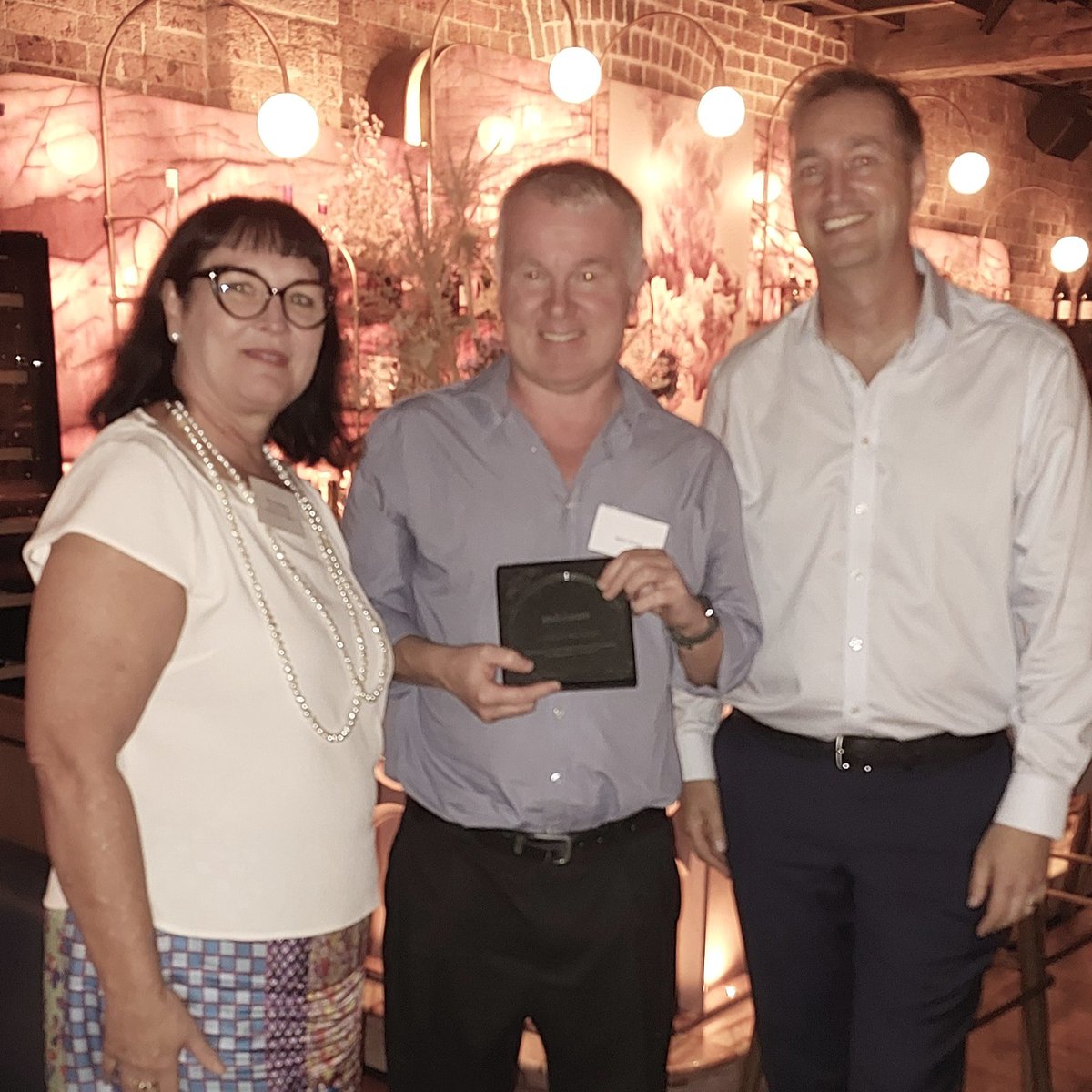
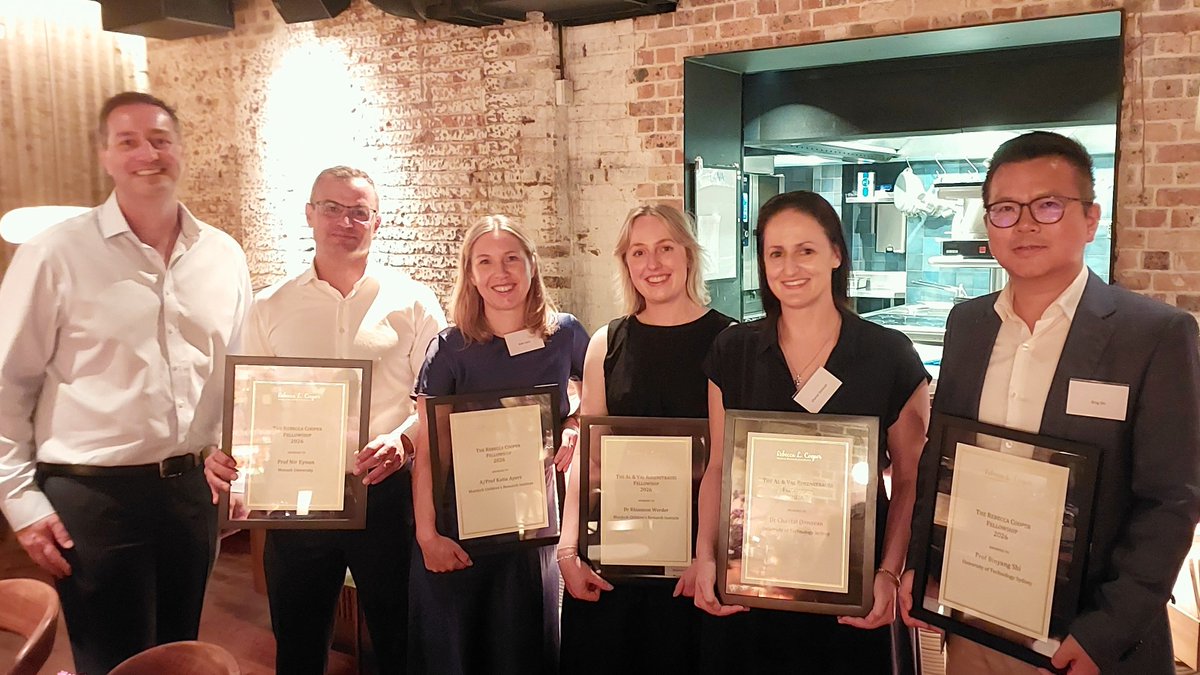
What a wonderful evening with such passionate researchers. Congratulations to our new Fellows — @nir_eynon, Katie Ayers, Bingyang Shi, @Chantal_Donovan and @RhiannonWerder (and Alice Kane). Special recognition to Prof Mark Cooper for outstanding service to the Foundation.
2
6
200
Congrats to A/Prof Katie Ayers, #MCRI and @nir_eynon, @ARMI_Labs, on receiving 2026 Rebecca Cooper Fellowships. This outstanding achievement recognises them as leaders in their respective fields of Medical Research, whose work exemplifies excellence and innovation.👏👏👏

5
66
Big congratulations to our 2026 Al & Val Rosenstrauss Fellows📷 @Chantal_Donovan @UTSEngage; @RhiannonWerder @MCRI_for_kids; and Dr Alice Kane, @Sydney_Uni who have demonstrated remarkable innovation and leadership in their respective fields.
2
99
A/Prof Reed aims to use genomics to transform the diagnosis and treatment of autoimmune disease and has a particular focus on Sjogren’s syndrome. @WestmeadInst Find out more about her research here 👇
1
117
A/Prof Susanna Park's translational neurology research program is develop clinically relevant biomarkers to enable earlier diagnosis and targeted therapeutic interventions for patients with Chemotherapy-Induced Peripheral Neuropathy (CIPN). @BrainMind_Usyd Find out more 👇
3
120
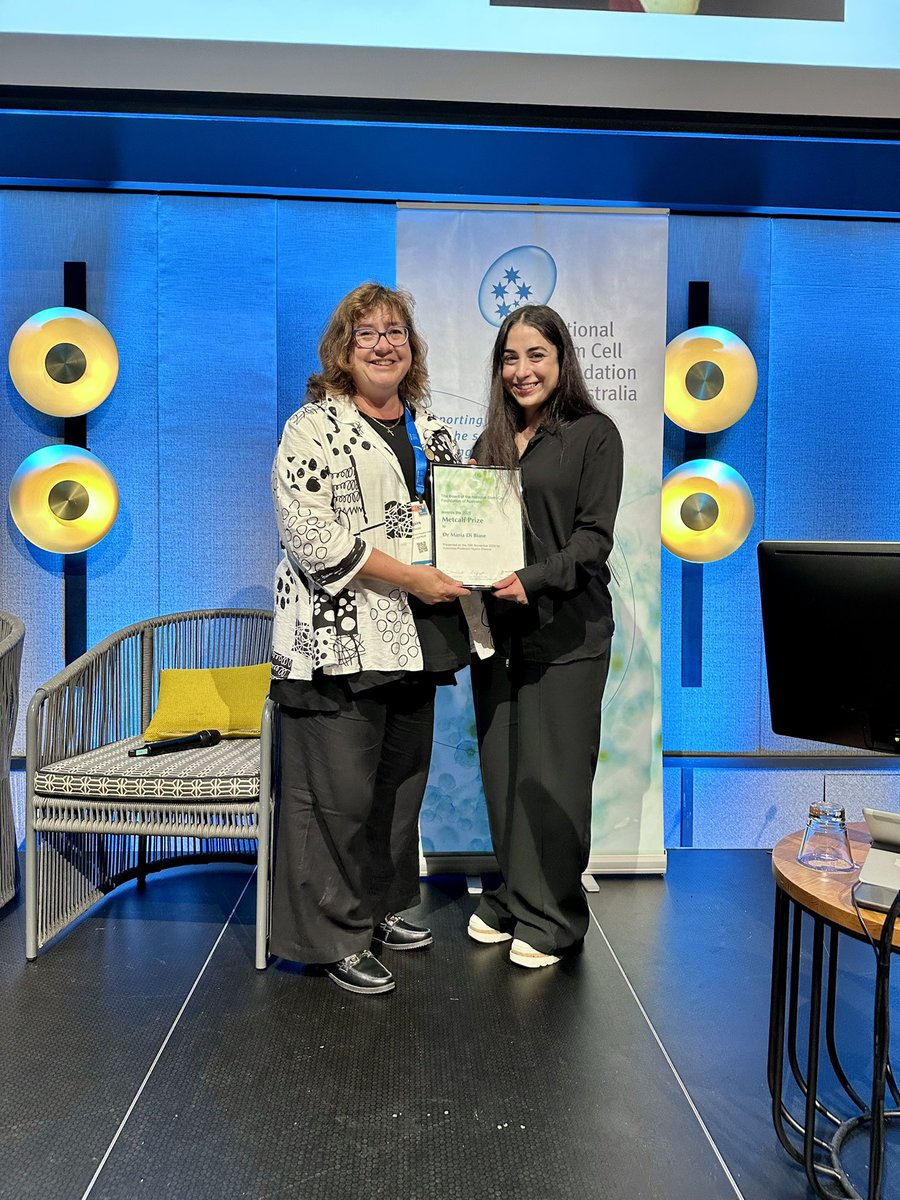
Big congrats to Maria Di Biase 👏👏, our Al & Val Rosenstrauss Fellow, on being awarded the #MetcalfPrizes by the National Stem Cell Foundation of Australia in recognition of her leadership in stem cell research. You can read more about Maria’s work at stemcellfoundation.net.au/ma…
10 Nov 2025

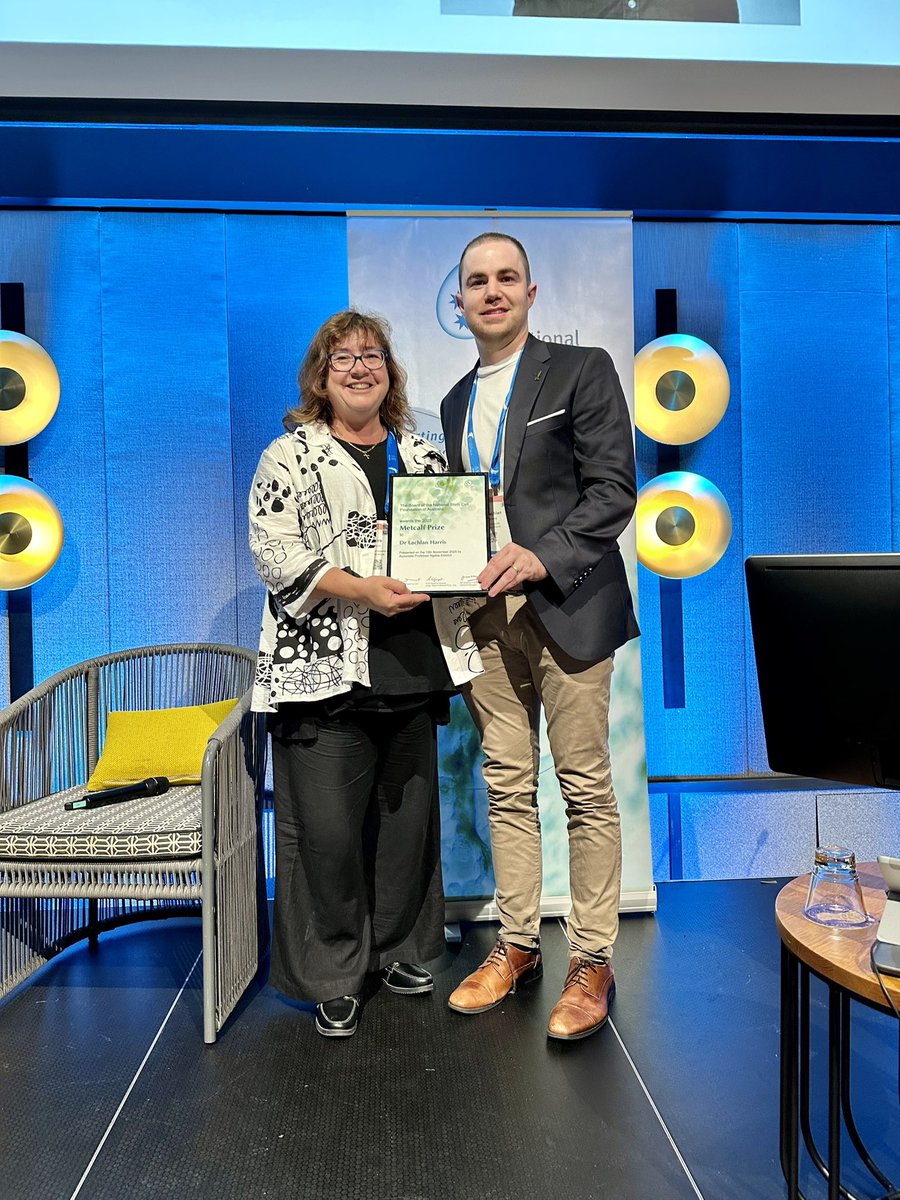
Maria Di Biase @UniMelbMDHS and Lachlan Harris @QIMRB_Institute formally receive their #MetcalfPrizes from Foundation director @ngaire_elwood at #asscr2025
1
47
Prof Lazarou’s ground-breaking research aims to develop therapeutics that target mitochondrial dysfunction in diseases ranging from Parkinson’s Disease (PD) and beyond. @LazarouLab Find out more about his research here👇
3
1,459
Gang Liu aims to identify new therapies for Idiopathic Lung Fibrosis (IPF), a chronic and progressive disease which currently has a poor prognosis for those suffering the disease. Find out more about his research 👇
1
2
125
Dr Maria Di Biase @UniMelb discusses her novel research which aims to pioneer personalised treatment interventions for individuals with schizophrenia by incorporating their unique genetic, molecular, and functional illness profiles. 👇
3
66
Congratulations to A/Prof Susanna Park @BrainMind_Usyd on being awarded the 2025 Rebecca Cooper Fellowship! With $1.5 mil in support, A/Prof Park will propel her groundbreaking research to understand how chemotherapy produces nerve damage, to improve diagnosis and treatment.
1
7
609
Al & Val Rosenstrauss Fellowships have been awarded to Dr Maria Di Biase, @UniMelb @MNC_Psychiatry ; @Dr_GangLiu , @UTSEngage and @JiaoJiaoLi_Syd, @UTSEngage . We are delighted to support these talented early-career researchers for the next five years!
3
12
1,514
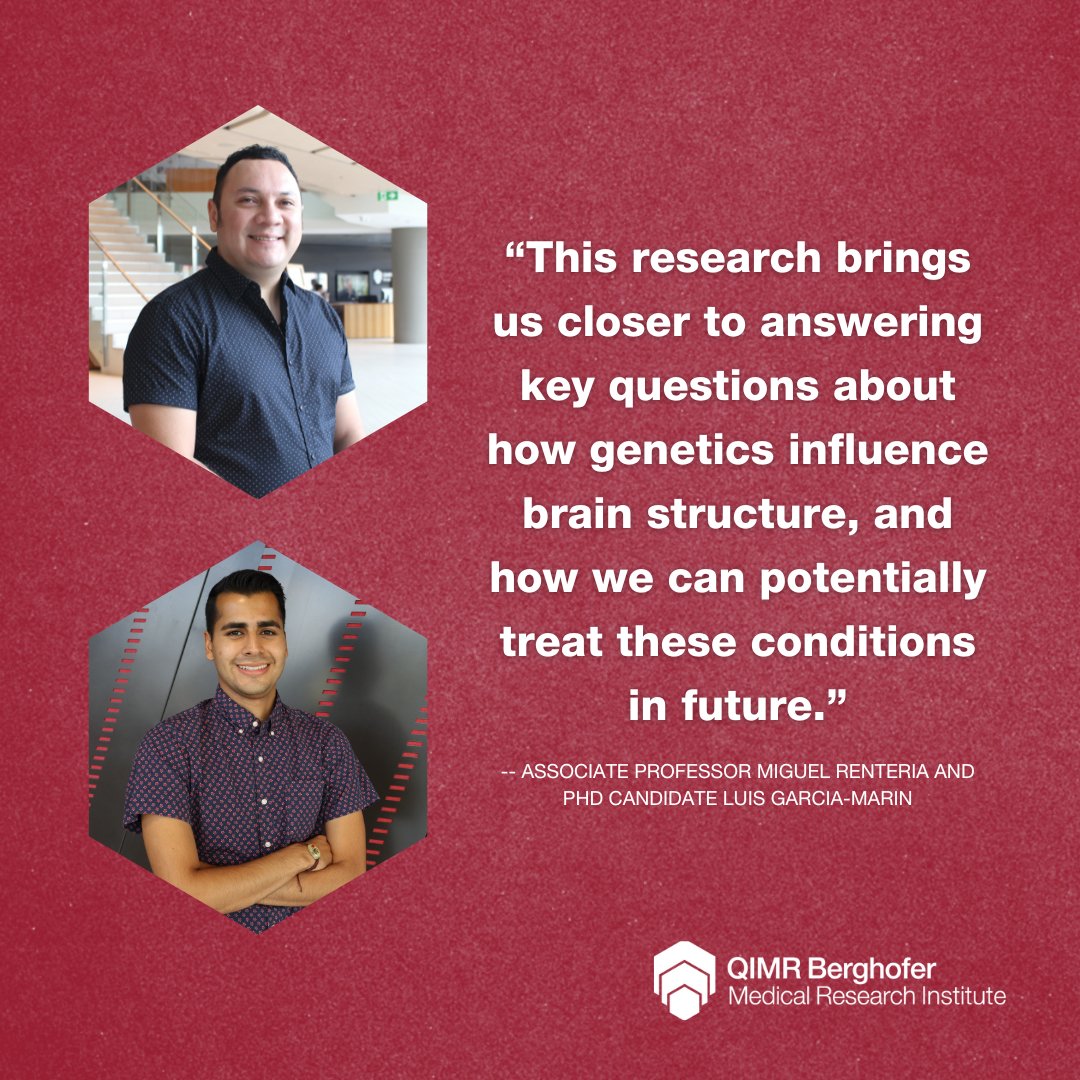
Very proud of our Al & Val Rosenstrauss Fellow, A/Prof Miguel Renteria, who has published a landmark paper in Nature Genetics which provides an insight into the intricate relationship between our genetic makeup and brain health.
21 Oct 2024

Paper in Nature Genetics 👉 nature.com/articles/s41588-0…
Read the full story 👉 qimrberghofer.edu.au/news/wo…
1
203
The Rebecca L. Cooper Medical Research Foundation retweeted

21 Oct 2024
Brain Breakthrough 🧠 The world’s largest study of #brain volume published now in @NatureGenet has revealed genetic links to #ADHD and #Parkinson’s Disease. Read the full story 👉 qimrberghofer.edu.au/news/wo… #research #ENIGMA @USCLONI
1
3
3
531
The Rebecca L. Cooper Medical Research Foundation retweeted

27 Aug 2024
Q&A about my journey from engineering to neuroscience/psychiatry my thoughts on issues in psychiatry research:
rdcu.be/dR0rf
Thanks for the opportunity Natalia Gass, Senior Editor, Nature Mental Health - a fabulous journal with a smooth & fast editorial process.
20
67
6,430
A/Prof Tamsyn Van Rheenen chats about her research which aims to identify the cognitive profile of bipolar disorder and develop intervention strategies 👇
3
348
Prof Sylvia Gustin's research targets recovery from spinal cord injury and chronic pain. Hear more about her innovative research 👇
1
4
431
The Rebecca L. Cooper Medical Research Foundation retweeted

28 Jun 2024
NEW TREATMENT OPTIONS UNDER INVESTIGATION FOR PELVIC ORGAN PROLAPSE Design of next generation meshes using degradable polymers and stem cell based surgical constructs
Pelvic organ prolapse (POP) develops when tissues, pelvic floor muscles and ligaments that support the pelvic organs (bladder, uterus and bowel) are damaged, usually in childbirth. This injury causes the organs to shift, or ‘drop’, into the vagina or event outside of the body. This can lead to debilitating symptoms including poor bladder or bowel control and pain during sex
POP Facts
-1 in 4 women globally in their 40s live with POP
- 1 in 2 women over 50 years of age live with POP
- $200 million annual cost to the Australian healthcare system
POP is a lifelong, potentially debilitating condition. Despite the high prevalence, there is no cure for POP.
Dr Shayanti Mukherjee @M5Shay , Research Group Head, Translational Tissue Engineering at the with her team at Hudson Institute of Medical Research @Hudson_Research is developing new ways to prevent and potential cure pelvic organ prolapse (POP). The technology aims to ultimately lead to safer and more effective treatment for women with pelvic organ prolapse (POP) using a woman’s own stem cells to boost the effectiveness of a degradable mesh.
Dr Shayanti Mukherjee specialises in innovative cell-based therapies for pelvic floor disorders and birth trauma injuries.
Dr Mukherjee’s research uses a woman’s own stem cells to create a 3D-printed degradable mesh, promising to avoid the complications that have plagued previous synthetic non-degradable meshes.
“By integrating cutting-edge techniques like electrospinning and 3D printing of materials and cells, I aim to revolutionise maternal urogynaecological health, offering transformative solutions and improving the wellbeing of women affected by this prevalent issue.”
“This research has the potential to revolutionise therapies for pelvic floor regeneration and enable personalised medicine for women,” she said.
“By advancing innovative cell-based therapies, we are on the brink of transforming the landscape of maternal urogynaecological health, promising a brighter and healthier future for women across the globe,” said Dr Mukherjee.
Source: Hudson Institute of Medical Research
3
3
382
In a series of videos that we will release over the course of the year, our talented Fellows give you a snapshot of their innovative research programs.
Check out the video below to hear what @samkbarton7 is working on.
1
8
374
The Rebecca L. Cooper Medical Research Foundation retweeted
Our peer review process is critical to ensuring that there is scientific rigour behind our funding decisions. Watch this video to find out more about our Scientific Advisory Committee.
1
6
842