
I contribute to global trends.
Joined December 2017
- Tweets 5,466
- Following 231
- Followers 540
- Likes 5,715
725 Photos and videos






Jun 11
While my agents work I can enjoy these incredible documentary
youtube.com/watch?v=v1wZwxY3…
26
Jun 11
Last night I woke up at 3 AM after a really vivid dream.
It involved my family and places from my childhood. I described it to ChatGPT, mostly out of curiosity, and some of the connections it made with things happening in my life right now were surprisingly on point.
A random dream became a small moment of reflection.
15
Jun 4
One of the most frustrating parts of using @metabase for serious dashboards is managing SQL query variables manually.
When you build dashboards with several SQL questions, you often reuse the same filters across multiple cards: company, date, customer, category, etc.
The problem is that every variable configuration still needs to be handled manually: field mapping, widget type, label, dropdown behavior, single/multiple values.
This becomes painful fast.
I opened a feature request suggesting a better way to bulk-manage query variables, possibly through reusable presets, dashboard-level schemas, or JSON import/export.
Discourse discussion: discourse.metabase.com/t/met…
GitHub issue:
github.com/metabase/metabase…
49
Jun 3
Manually debugged a data mismatch between a SaaS platform and a data warehouse through @metabase . With @OpenAI Codex, I could inspect the API responses directly, compare them against the DB state, and trace the issue back to the sync logic: we were upserting records but not replacing stale snapshots.
Human judgment AI-assisted debugging = found the real bug, not just the symptom.
1
4
256
Jun 3
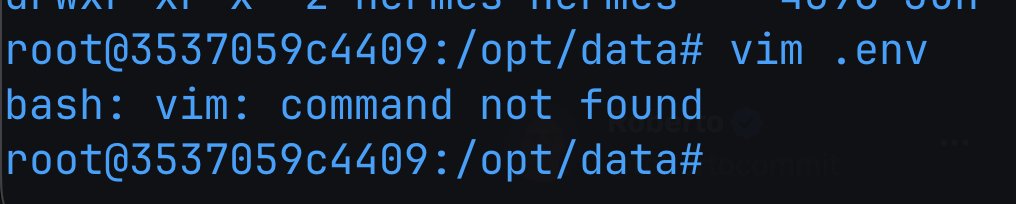
who is the genius that decided to avoid having vim pre-installed inside a docker container?
2
38
Jun 1
You don’t hire me.
You hire me the €100/month Codex monster in my terminal.
Data, strategy, content, security, marketing, distribution.
Everything goes through it now.
1
89
Jun 1
Monday morning dedicated to cold outreach. Four businesses reached so far. As first touch point I call the person to speak directly. Then I send an email. It's an hard job.
1
27
May 29
My opinion about the @Ferrari Luce is that they decided to disrupt two things at the same time: the engine and the design. I would have chosen a slower approach, introducing an electric engine with a timeless design, or the other way around. Just not those two things at the same time.
73
May 28
Walking in Schöneberg, around Hauptstraße.
A man was walking a few meters ahead of me.
He passed over a rolled €20 bill lying on the ground without noticing it.
The moment he passed, he turned around and realized it, but by then I had already picked it up.
Our eyes crossed.
We kept walking.
A few seconds later I opened my wallet, took out a €10 bill, reached him and said: “10-10.”
He smiled, thanked me, and we both continued on our way.
1
2
84
May 28
I’m updating my resume and removing so much unnecessary stuff from it. So much satisfaction in letting things go.
1
2
50
May 15
Running with ChatGPT5.5 ExtraHigh my first cyber security analysis.
Here is the prompt
"""""""""""""""""""""""
"""""""""""""""""""""""
You are acting as a senior application security reviewer.
Context:
This is an authorized defensive security review of the XXXXXXX codebase. The goal is to identify vulnerabilities, insecure patterns, and architectural risks before they can be exploited. Do not perform any destructive actions, do not exfiltrate data, do not run exploit payloads against external systems, and do not modify files unless explicitly asked.
Scope:
- Review the repository source code, configuration, Docker files, CI/CD files, database-related code, authentication, authorization, API routes, deployment logic, secret handling, and dependency usage.
- Focus especially on risks relevant to a self-hosted PaaS/deployment platform: tenant isolation, app isolation, environment variable leakage, container escape risks, database credential separation, SSRF, command injection, path traversal, unsafe file writes, exposed internal services, weak auth boundaries, privilege escalation, insecure defaults, and supply-chain risks.
Tasks:
1. First, map the codebase structure and identify the main security-sensitive components.
2. Build a threat model for XXXXXXX:
- external attacker
- authenticated user
- malicious project/repository owner
- compromised deployed app
- compromised worker/container
- attacker with limited database access
3. Review the code for concrete vulnerability candidates.
4. For every finding, provide:
- title
- severity: Critical / High / Medium / Low / Informational
- affected files and functions
- why it matters
- realistic attack scenario
- evidence from the code
- recommended fix
- whether the finding is confirmed or only suspicious
5. Prioritize findings that could affect:
- host system security
- customer data isolation
- secrets and environment variables
- deployment pipeline integrity
- database isolation
- authentication and authorization
6. Avoid noisy generic advice. Only report issues grounded in actual code or configuration.
7. Do not suggest public disclosure. This is a private internal review.
Output format:
Start with an executive summary, then a ranked findings table, then detailed findings, then quick wins, then deeper architectural recommendations.
1
114
May 13
This morning I wrote a SQL query by hand and now I need a week of holiday to recover
1
6
93
May 11
Hey guys, @eSignaturescom , on a contract page, such as "esignatures.com/contracts/XX…", please allow me to simply "See the contract" without having to download it
Thanks!
102