
I ghostwrite Educational Email Courses for coaches and consultants. Former high school teacher. Builder of online courses and training programs.
Joined January 2008
- Tweets 14,526
- Following 2,106
- Followers 2,577
- Likes 36,741
1,364 Photos and videos

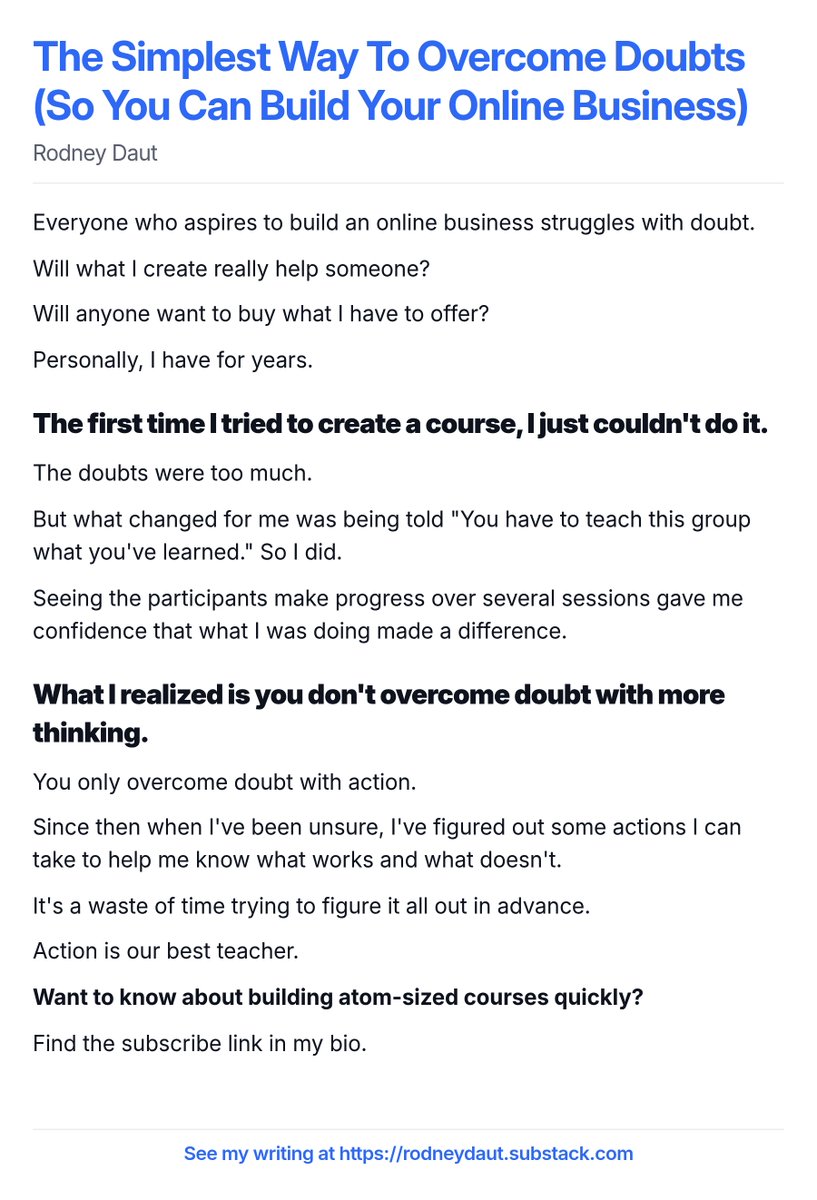
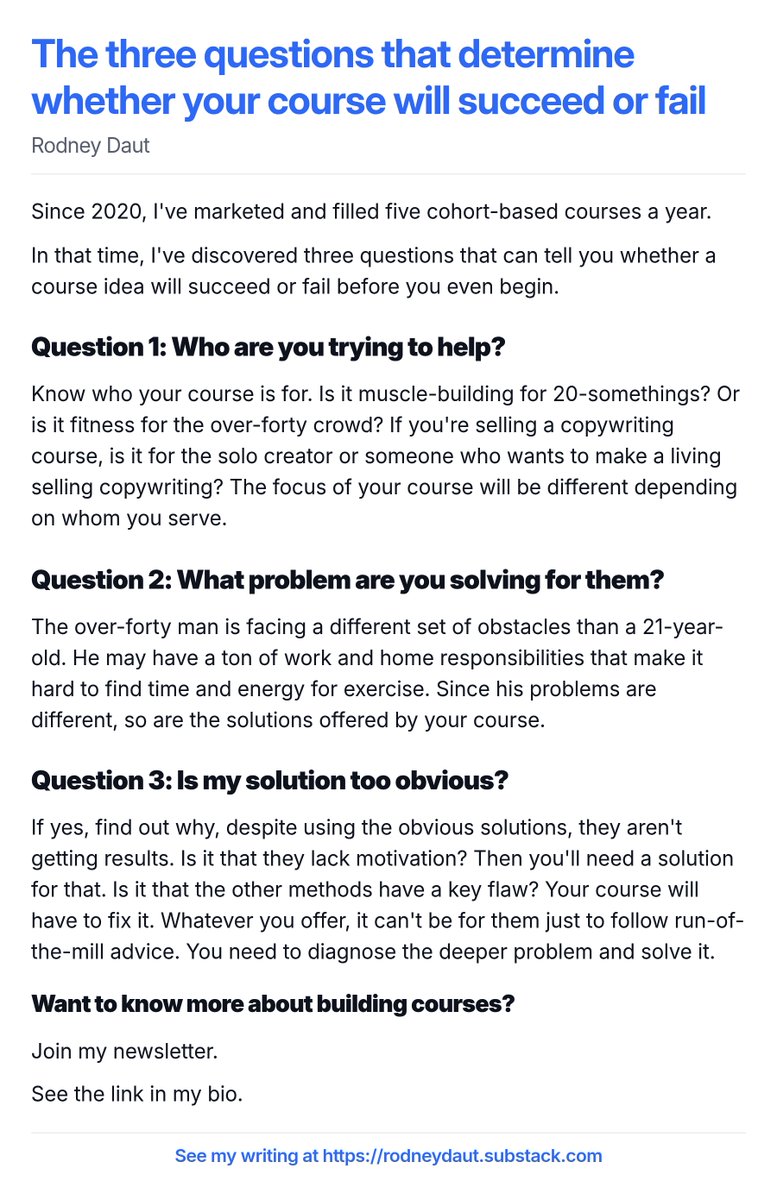
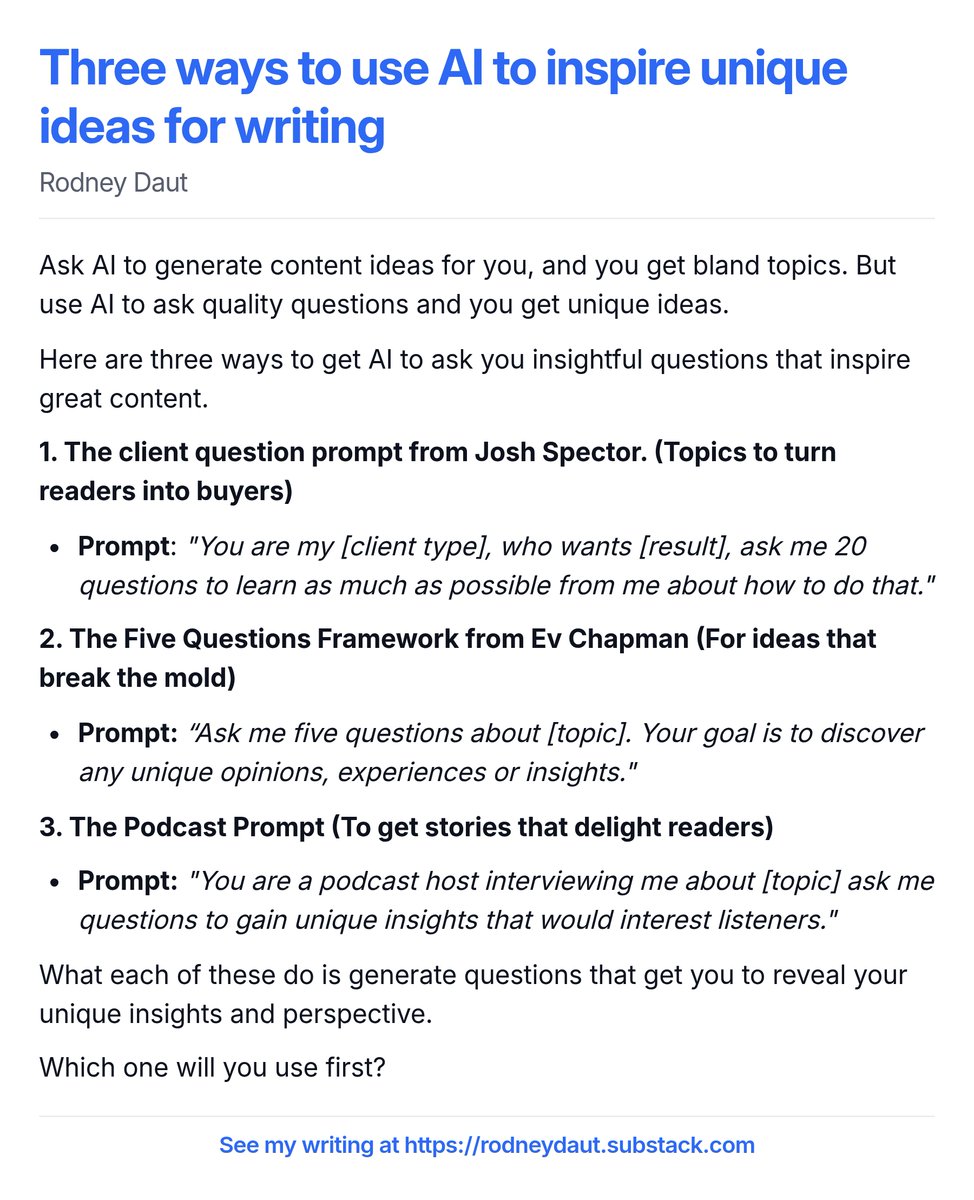
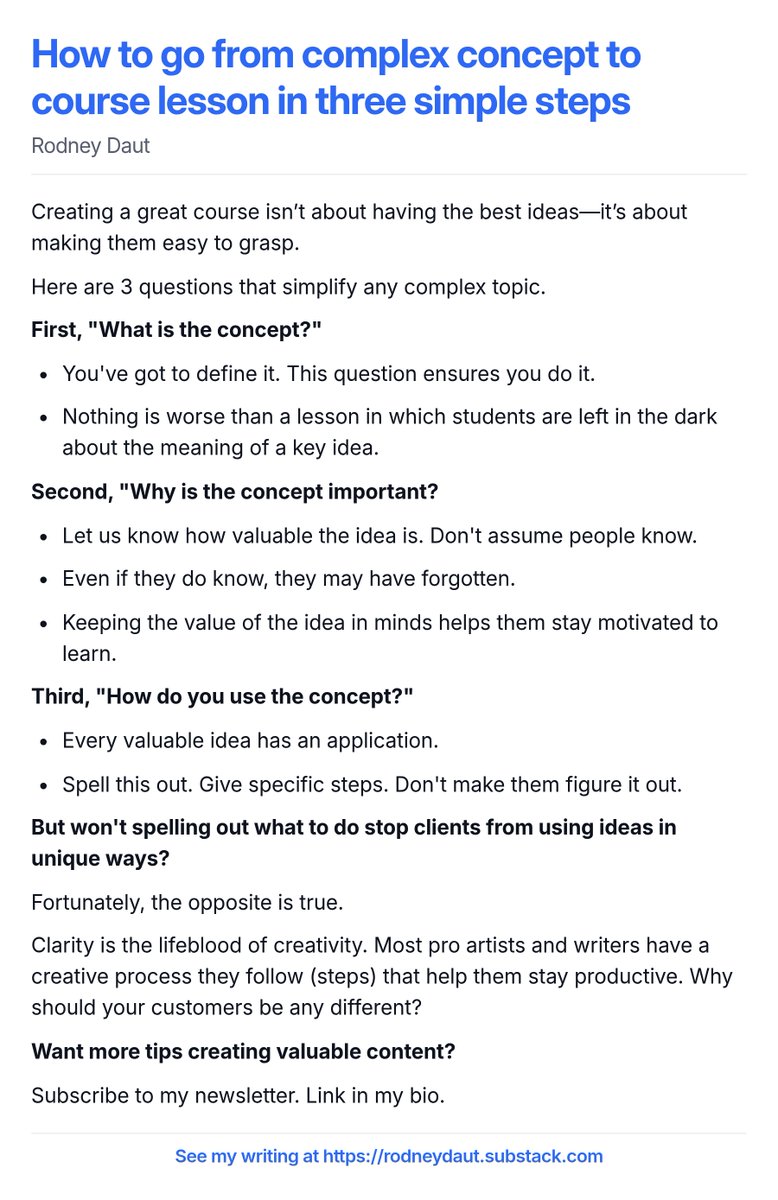

5 reasons your comprehensive course isn't selling:
1. It's for everyone, which means it's not clearly for anyone.
2. The price is hard to justify because the buyer can't picture finishing it.
3. The outcome is too vague. "Complete system" isn't a result.
4. It takes too long to build, so you keep delaying the launch.
5. It asks too much of the buyer. People avoid things that feel overwhelming before they start.
Focused beats comprehensive. Every time.
4
Jari Roomer tried it both ways.
The comprehensive course:
- Covered his entire productivity system
- Months of work to build
- Launched to crickets
- Hardly anyone bought
The mini-courses (same content, broken up):
- Each one solved one specific problem
- Launched one at a time
- They sold
Same knowledge. Different packaging. One tried to solve every problem at once. The other met people where they were.
Not everyone had ALL his problems. But plenty of people had ONE of them.
1
14

Jun 13
Building a comprehensive course:
- Covers your entire process
- Takes months to build
- Designed to be for everyone
- Clients get overwhelmed and quit
- Zero completions, zero testimonials
Building a stuck point course:
- Covers one place where clients consistently get lost
- Takes weeks to build
- Built for someone with one specific problem
- Clients finish and get a real result
- Testimonials, referrals, repeat buyers
The comprehensive course feels like a bigger promise. The focused course keeps one.
2
15
Jun 12
The 20-minute exercise to find your best course idea:
1. List every outcome you've helped a client achieve.
2. Circle the three that sound juicy: the kind that stop a conversation at a dinner party.
3. Pick one.
4. List every step a person takes to reach that outcome.
5. Find the step where people consistently get stuck.
That stuck point is your course.
You don't need to teach everything. You just need to teach THAT.
1
1
13
Jun 12
5 signs you're building an overstuffed course:
1. Your outline has more than 6 modules, and you're still adding.
2. You keep thinking "but they'll also need to know this."
3. You've been building it for more than 3 months with no end in sight.
4. You're not sure how to price it because you're not sure exactly what it's for.
5. You're secretly relieved it's not done yet.
The problem isn't your process. It's the assumption that more is better. It isn't.
21
Jun 11
More content is not more value. It's more dropout.
Here's what actually happens when you build a comprehensive course:
- Clients open Module 1 feeling overwhelmed before they start.
- They fall behind in Week 2 and feel guilty about it.
- They set the course aside for a weekend they never find.
- They never finish. Never get a result. Never refer anyone.
The course you built to guarantee their success ends up guaranteeing nothing.
Build something focused enough to finish. One stuck point. One real result. That's the course worth building.
9
Jun 11
The best course ideas are already hiding in the work you do with clients.
Here's how to find yours in 20 minutes:
- List every outcome you've helped a client achieve. Write fast. Don't edit.
- Circle the three that sound juicy: the ones people WANT, not just the ones they technically need.
- Pick one. Then list every step a person has to take to get there.
- Find the step where people consistently get stuck.
That stuck point is your course.
You don't need to build a complete system. You just need to build a focused bridge over the place where your clients keep falling in.
1
1
17
Jun 10
Every outcome your clients want is produced by a series of steps. They don't get stuck at the beginning. They get stuck somewhere specific: a particular step where they hit a wall, freeze, and don't know what to do next. That stuck point is your course idea. Not the whole map. Not a complete system. Just the place where people keep getting lost. Build something focused enough to get them unstuck from that one place, and you'll have clients who finish, get results, and come back for more. Comprehensive is not the only way.
6
Jun 10
The coaches who build the most comprehensive courses usually care the most. That's the trap. Every module they add feels like an act of generosity. Every "but wait, you also need to know this" section feels like doing right by their clients. But a course that covers everything asks something most people can't give: the time, focus, and stamina to get through all of it. A course someone doesn't finish produces exactly zero results. And the coach who built it, out of nothing but pure care, ends up with no testimonials, no referrals, and no proof that any of it worked.
The goal of a course is a result. Not coverage.
1
2
9
Jun 9
10 signs you already have a course but haven't built it yet:
1. Clients consistently get the same result when they work with you
2. You explain the same concept in almost every session
3. You've created a template, checklist, or framework for your own use
4. New clients make the same mistakes in the same order
5. You know exactly what someone needs to do first, second, and third
6. Past clients refer new ones because they got a specific result
7. You've taught pieces of your process in workshops or talks
8. When you describe your work, the same pattern keeps showing up in the words you use
9. You have a name for something you do — even if only you call it that
10. Clients say "I wish I'd learned this years ago"
9
Jun 9
10 questions to find the course already inside your client work:
1. What is the one thing you want someone to be able to DO when this is over?
2. What observable steps lead to that outcome?
3. What do you always do in the first session with a new client?
4. What's the one thing clients say changed everything for them?
5. What do you correct most often when watching someone apply your process?
6. What's the step most people skip — and what happens when they do?
7. If you could only teach three things, what would they be?
8. What's the last thing that needs to happen before a client gets the result?
9. What do your most successful clients do differently than your least successful?
10. If you had to teach your entire process in one hour, what would you actually teach?
1
1
7
Jun 8
Old approach to teaching what you know:
- "I need to give them everything or it won't work"
- Start from expertise and pour it into a structure
- Teach 12 steps because you don't see a simpler way
- Clients say they understood — then change nothing
New approach to teaching what you know:
- Start from the outcome, work backward
- Find what's load-bearing, cut the rest
- Make it simple enough to hold in your head without a template
- Students finish
Simplification is a gift.
It means you did the hard work for your students instead of making it hard for them to understand you.
10
Jun 8
Old way to build a course:
- Document everything you know
- Create one module for each thing you do
- Add bonuses to justify the price
- Launch to low completion rates
- Conclude your process was too complex to teach
New way to build a course:
- Start with one specific outcome
- List only the observable actions that lead to it
- Find the three or four load-bearing steps
- Build around those — nothing else
- Launch something people can actually finish
The course that works isn't more comprehensive. It's more compressed.
2
19
Jun 7
The five questions to answer before you build a single module:
1. What is the one concrete outcome someone achieves when this is over?
2. What are the observable actions that lead to that outcome?
3. Which of those actions are truly load-bearing — and which are optional?
4. Can you fit the load-bearing steps into three?
5. Would a stranger be able to follow these steps without you in the room?
14
Jun 7
5 signs your course is trying to teach too much:
1. You keep adding modules because it feels incomplete
2. You can't explain what someone will be able to DO when it's over — only what they'll understand
3. Your outline looks more like a textbook than a transformation
4. You're not sure what to cut, so you cut nothing
5. You've been "almost done" for months
9
Jun 6
A physical therapist's four-step framework got adopted by Kaiser Permanente. Here's what we did to get there.
His patients loved him. His approach worked. But every time he tried to teach it, other physical therapists left saying they understood — and changed nothing in practice.
So we broke it down:
- Identified every element of his process
- Asked: what's load-bearing? What are clinicians actually doing differently when it works?
- Cut everything that wasn't doing real work
- Got to four steps: Physical Behaviors, Diagnosis Clues, Pain Pattern, Beliefs and Emotions
Kaiser Permanente measured the results. His program was the only intervention that had improved patient outcomes in that area in decades.
Four steps. That was it.
21
Jun 6
Most experts have a course inside their client work. They just haven't found it yet.
Here's how to find it:
- Pick one outcome — one concrete thing you want someone to be able to DO when your course is over
- List every observable action a person needs to take to reach it (physical steps, written steps — if you can't watch someone do it, cut it)
- Whittle the list down and push toward three steps (the constraint forces you to get creative)
- Look at what's left — that's the spine of your course
The proof is already in your client work. You just need to look at what you're already doing.
15
Jun 5
Simplification is not dumbing it down.
It's doing the hard work in advance so your clients don't have to. When you compress a 12-point process to three load-bearing steps, you are not losing the nuance. You are removing the friction standing between your client and the result. The experts who build courses that actually work don't document everything. They subtract. They find what's essential and build around that.
13
Jun 5
Your knowledge is valuable. Your results are real.
But most experts who try to build a course make the same mistake: they start from everything they know and try to pour it into a structure.
The course gets bloated. Nobody finishes it. And the expert concludes their process was too complex to teach — when the real problem was skipping the most important step. Start from the outcome. Work backward. Find the three or four steps doing all the work. That's the course.
13
🟡 Rodney Daut 🚢 retweeted
17 Oct 2021
How to deal with the “naming your business problem” without tearing your hair out – Self Influence - via @pensignal lnk.xyz/S1jNTq_3S?aduc=Q3kv4…
1
3
17