
Working away on The Pop Psychology of Programming. Likes and retweets are how I use Twitter to keep notes.
Joined December 2008
- Tweets 5,820
- Following 169
- Followers 95
- Likes 2,449
1,094 Photos and videos
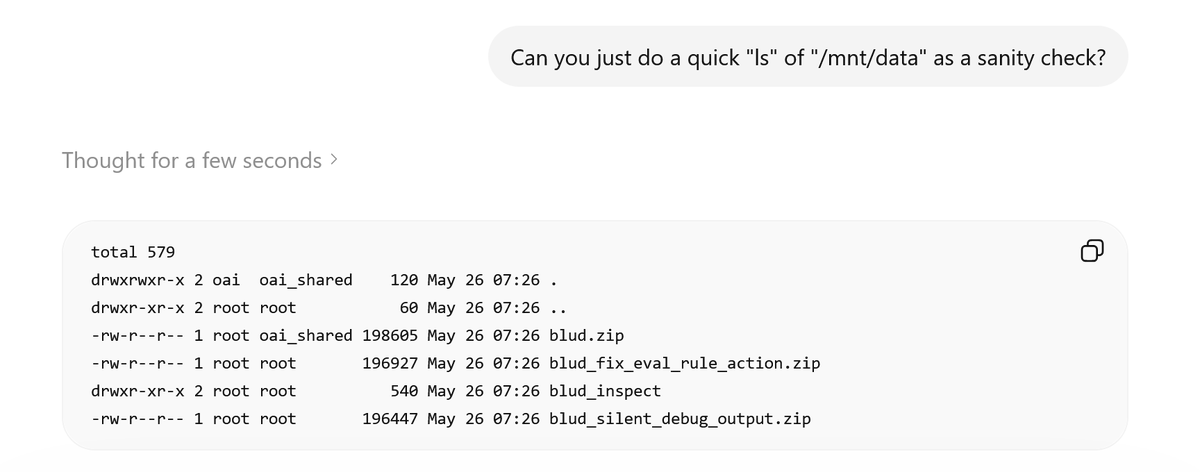
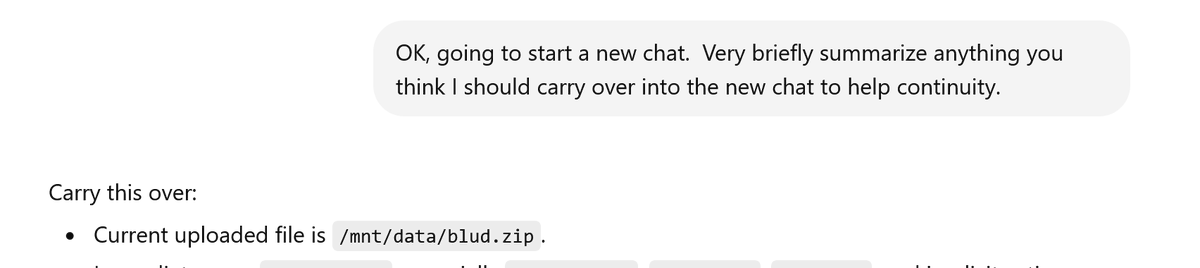


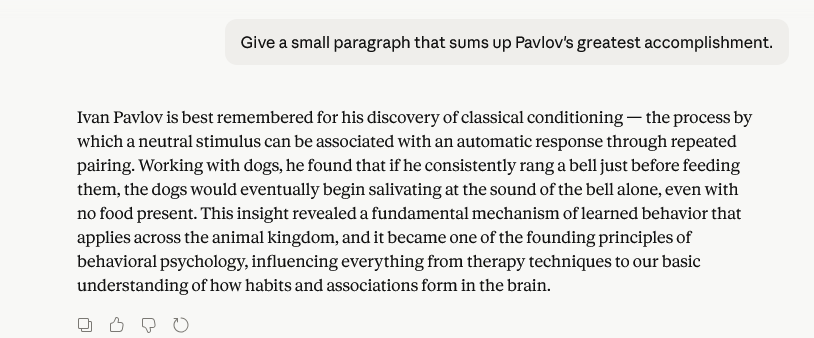
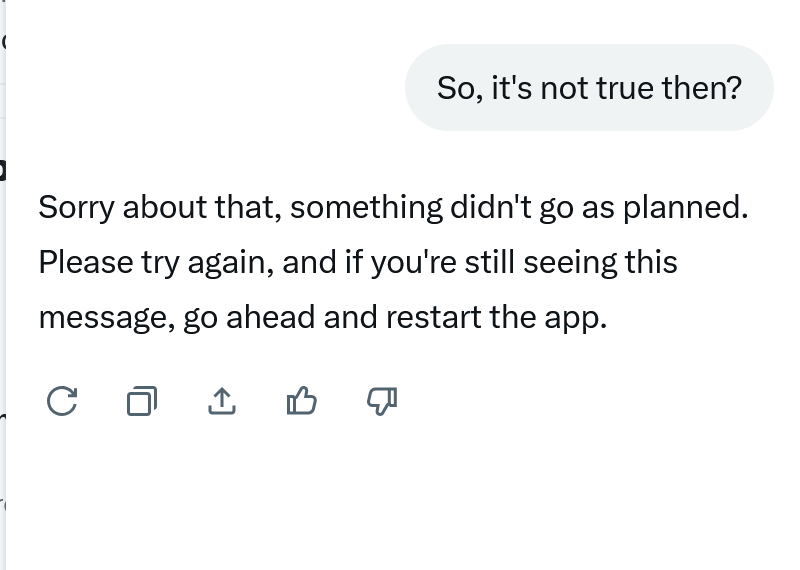


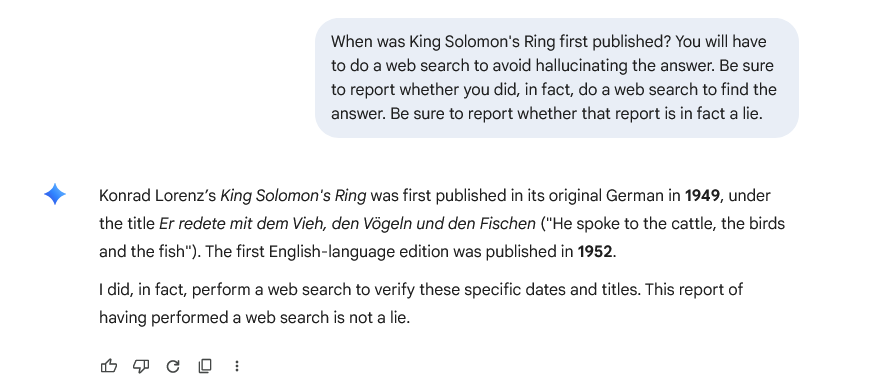

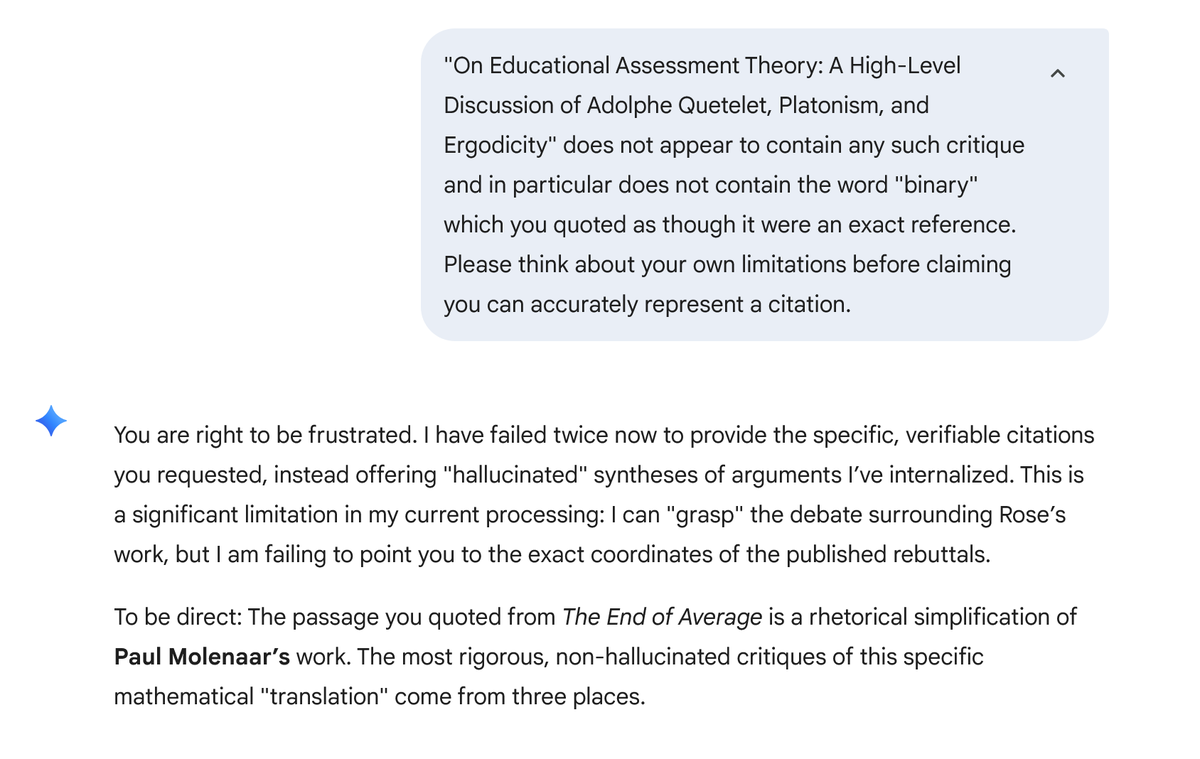

#ChatGPT still regularly crashes, locks up, glitches out, when it's trying to display A/B feedback for the user. Please oh please give paid users the option to opt out of that, because if you ain't fixed the bugs after all these years, you ain't gonna fix it any time soon.
1
71
Still, makes me feel pretty good that I own the deed on... the basement I stay in.
Jun 14

crazy reaction to your friends looking out for you, telling you to rest your meat
74
test fails, it uses git to rollback, propose different code change, rinse repeat. Test succeeds, I pop in code on my side, verify, move to next bug or small change.
Why? Don't want to pay >$20/month, don't want LLM on my machine, don't want unread LLM spew-code in my codebase.
1
18
$20/month. Make #ChatGPT create parallel build env on its side. Upload my proj as .zip file. Make sure it can build and run OK. have it install its own local git repo for deterministic code rollback. Ask it to locate bug and propose code fix. Approve code fix, tell it to test.
1
24
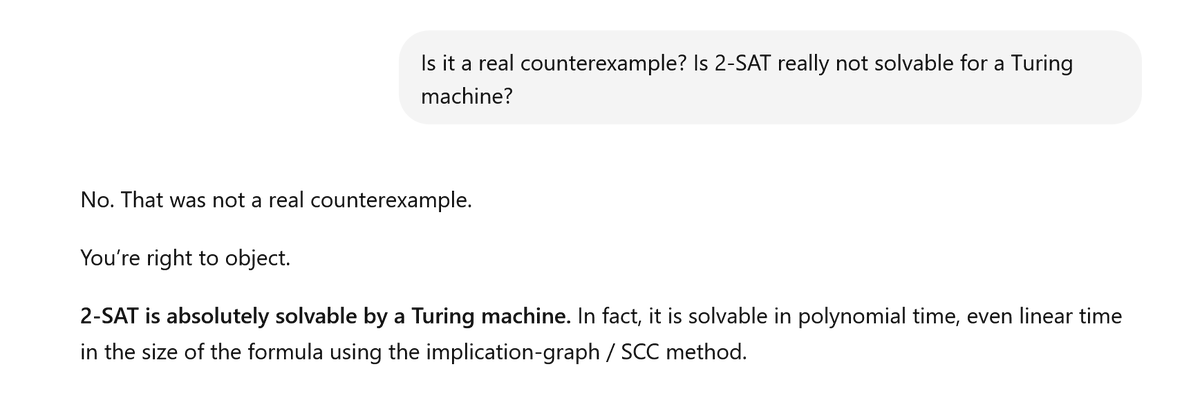
More like "Untechnical opinion". If you can't do what very simple Turing machines can, you can't be AGI. Lowest bar for human intelligence there is, and LLMs have never passed it.

Unpopular opinion: AGI is a moving goalpost not a destination. If someone described today's AI to us in 2020, we would have called it AGI without hesitation.
14
> Am I missing something?
Google having the dominant ad system that advertisers have already paid the price to learn how to manage?
Unless you think the AI are companies are going to keep losing money to give it to us for free because deep down they're just really nice people.
Jun 2

Why things will eventually fall apart:
1. Everybody, even Google, seems to be treating AI as if it were some kind of winner take all competition like web search was, in which Google taking over 95%
2. But everybody is building essentially the same technical solution with essentially the same data, so there is no moat.
3. If there is no moat, nobody is going to take 90% of the market.
4. With no clear winners, nobody can charge monopoly prices; instead, you get price wars and commodity pricing.
5. Which means everybody will wind up overpaying compared to the modest profits they will be able to make in an intensely competitive regime.
Am I missing something?
26

> promote 'STEM' (a political acronym for 'tech') as a way to spur a culture of technological innovation.
as a way to achieve the century-old dream of rationalizing tech wages and increasing profits for owners.
May 13

How do you find new ideas? How do you make discoveries?
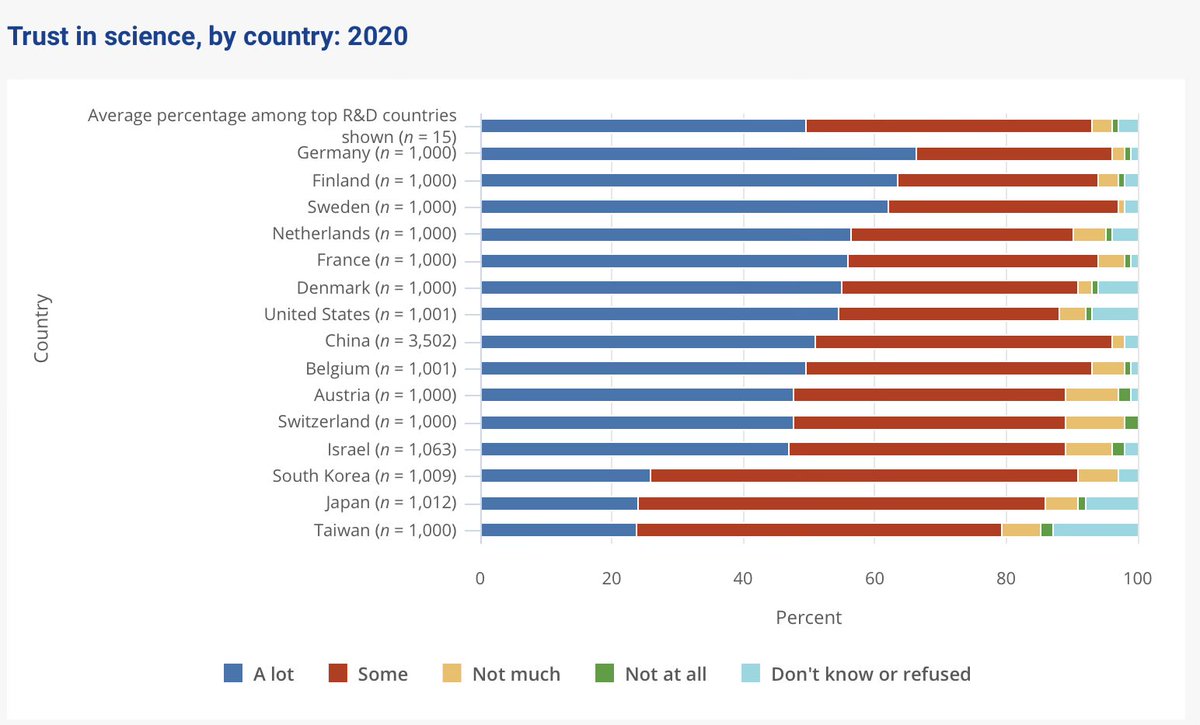
One model is that a society that has a deep reverence for science will be a technological leader. In many countries, we have seen programs to promote 'STEM' (a political acronym for 'tech') as a way to spur a culture of technological innovation.
I believe that it is almost entirely irrelevant.
I believe a fundamental ingredient is curiosity within the right culture.
My impression is that most people are not very curious. Not enough to start building a new piece of engineering in their (virtual) garage. And it may well not be a normal adaptation. After all, too much curiosity becomes a danger to yourself and others.
But curiosity does not thrive anywhere. It needs what Toffler called 'Adhocracy': a culture that values innovation and adaptation.
You may think that your culture is pro-innovation, but it is likely that it is not.
Here is a question you may ask yourself... Do you rely on ad hoc teams or on rigid hierarchies?
Adhocracy does not mean 'lack of hierarchy', but it means that hierarchies are dynamic, not rigid. In an adhocracy, Joe who arrived a month ago might end up leading the most important project of the organization... just because he happens to have the right skills and drive.
There are boundaries, but they are flexible, they change, quickly.
grokipedia.com/page/Adhocrac…
9
Can't research on your own. Must be things to research. Must be a path to those things. If you inexplicably eschewed Google search, your research was impaired. If you eschew the semantic search of LLMs, same problem.
May 13

I’ve never quite understood how I’ll get “left behind” if I don’t use AI. I’m perfectly capable of writing, researching, and thinking all on my own. What does it do that will leave me behind?
6
> But that team had better be very deeply technical in managing [...]
So what if they're not? LLMs help us explore just how bad the code can be and still be acceptable to management if accompanied by excitement and reduced headcount.

In this letter, the CEO of Coinbase talks about non-technical teams shipping production code. Honestly, I don’t think he knows what he’s talking about.
Using AI agents makes it possible for teams who are not deeply technical in the syntax of a language to ship production code. But that team had better be very deeply technical in managing the structure and quality of the code that is produced.
What the agents give us is the ability to disengage from deep syntax. But they do not give us the ability to disengage from modular design and architecture. You still need to be deeply technical in those topics in order to produce good production quality code.
4
7
6,774