Joined September 2008
- Tweets 1,274
- Following 348
- Followers 17,461
- Likes 2,921
43 Photos and videos
Pinned Tweet

Mar 30
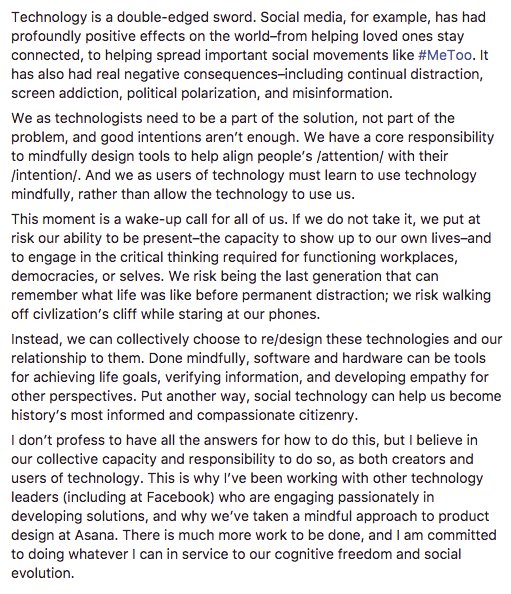
I helped build Facebook. I watched it become a machine for addicting people. Because addiction was more profitable.
Now the same logic is driving AI. I wrote about what we do about it. 🧵
108
240
2,914
2,817,101
Jun 4
I’ve been at the nexus of tech and philanthropy for a long time, and wow: the coming wave of AI-fueled philanthropy gives us a real shot at ending the need for philanthropy. But only if it takes a radically different approach.
@nanransohoff did the math and estimates between $37-$100B of new philanthropy per year will come from the OpenAI Foundation, Anthropic founders, and Anthropic employees. That’s a 6-17% increase in annual U.S. philanthropy. She argues we’re not prepared to absorb it, because there aren’t enough good philanthropic opportunities.
But that's only if you inherit an assumption from earlier waves: that philanthropy should accept the current economic system as fixed and exist to plug its holes. Conservation to protect the lands the system would destroy. Malaria nets for those it leaves behind.
This new wave of capital can do something radically different: change the rules of the game, so that philanthropy is no longer necessary for a flourishing society.
You get what you incentivize. I saw Facebook turn into an addiction machine because that’s what our economic system rewards. Food is laced with sugar, trees are cut down, wages are squeezed. Because that’s what the system rewards. The things the system doesn’t reward, like clean air and water, or arts and universities, are left to the tiny sliver of the economy that is philanthropy. If the whole economy is producing the problems, no amount of traditional philanthropy can solve them.
Instead, philanthropy can catalyze a democratic economy that’s aligned with the public interest. Where the whole economy works in service to the things currently left to philanthropy. And because AI will supercharge whatever economy it lives within, aligning the economy is essential to aligning AI.
I’ve invested more than $100M of my own money into this work via my non-profit @oneproject. They’ve funded 80 organizations that have generated 400 policy victories, moved $2B of capital into community control, and more. Which is how I know that the field of economic democracy can absorb vastly more money: Nearly every day, we come across great organizations and talent that could be highly effective if only they had the money.
The most ambitious thing this wave could do isn't to get better at the endless fight for good. It's to actually win. To dare to win the structural changes that create a better world, rather than playing eternal crisis whack-a-mole.
If you’re about to join this new philanthropic (phil-Anthropic?) class, winning economic democracy is the most leveraged thing your philanthropy can possibly do, because it ends the need for philanthropy.
Philanthropy has always treated symptoms. The AI wave should cure the disease.
1
2
5
565
Apr 14
A bad future with AI isn't inevitable. Neither is a good one. It's a political choice. Here's what I told POLITICO: politico.com/newsletters/dig…
2
9
520
Apr 14
AI is built on all of us: every book ever written, every idea ever published, generations of collective human culture. Companies are adding a thin layer of math on top and capturing trillions in value. The public deserves a stake in the wealth and ownership that follows.
1
2
2
220
Apr 14
The public isn’t checked out. They’re locked out. And when 66% of Americans agree on anything in this country, leaders should pay attention. This isn’t politically impossible. It’s the beginning of a mandate.
1
178
Apr 1
My 5 year old daughter Evie asked what my Fortune piece is about.
I said, "We need to change what AI companies get money for. And have that get decided by everyone. Because currently, companies can get money for hurting the world."
She looked at me like this was crazy: “Wait, we give people money for hurting the world? We should do the opposite.”
fortune.com/2026/03/29/regul…
1
2
6
545
Mar 31
Great question about non-compliant actors.
This is the same objection people raised about nuclear arms control. But the answer wasn't 'since some actors won't comply, nobody should have rules.' It was 'build a verification regime that makes defection detectable and costly.' We need the same for AI, and democratic governance is what gives those rules legitimacy across borders.
Fortunately, at least for now, the most consequential AI capabilities — training frontier models, economy-scale automation — require advanced compute: chips, data centers, energy. A small number of democratic states control that supply chain. That's a real enforcement lever.
This won't solve every problem. But it solves a bunch of the ones that matter most.

There's a harder question your post doesn't fully wrestle with.
Regulations govern the willing.
The Anthropics and OpenAIs of the world will follow democratic frameworks — they have investors, headquarters, and reputations that governments can actually reach. Compliance is baked into their survival.
The actors who won't follow the rules are precisely the ones capable of the most damage. Rogue states. Well-funded criminal networks. Researchers operating outside any jurisdiction. And here's the uncomfortable part — *they'll have a competitive advantage* because they're not slowed down by compliance.
7
519
Mar 31
66% of Americans support citizen panels on AI rules.
Trump voters, Biden voters, swing voters: nearly identical.
After years working on this — digging into the research, talking to people across the country — I've landed in the same place.
Here's a plan for public control of AI: oneproject.org/how-to-make-a…
@davidshor @tedlieu @_KarenHao
1
2
14
453
Mar 30
I helped build Facebook. I watched it become a machine for addicting people. Because addiction was more profitable.
Now the same logic is driving AI. I wrote about what we do about it. 🧵
108
240
2,914
2,817,101
Mar 30
The White House wants to let the companies sort it out. We know how that ends.
The question is whether we demand democratic governance before AI goes the way of social media.
Fortune op-ed: fortune.com/2026/03/29/regul…
2
3
47
7,015
Mar 30
And here's a deeper dive on how it would work in practice: oneproject.org/how-to-make-a…
6
4
49
5,070

We're honored to be named #15 on @FastCompany's #FCMostInnovative Companies list & #1 in the Workplace category! Thank you #teamasana who always puts our customers first—we're proud to be pioneering the future of work & empowering the world's teams. asa.na/7cg
2
10
27
18 Nov 2020
The more I've studied the nature of our current economic system, the more I've started to see its bugs, its security holes. It's as if you were trying to run a modern civilization on Windows 95.
🙏 @samfragoso @TalkEasyPod talkeasypod.com/artist/justi…
9
15
92
24 Oct 2020
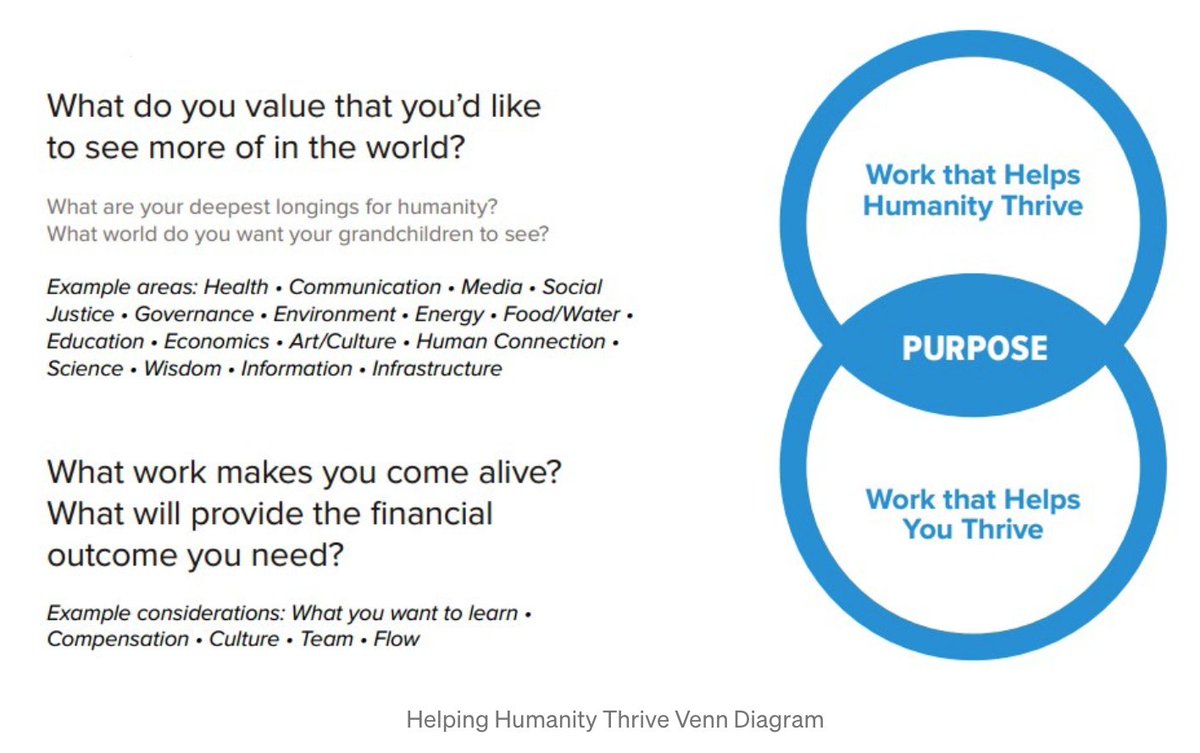
thank you, @rubenharris 🙏🏾. helping humanity thrive is something everyone can participate in, and also what we aspire to be and do at @oneproject oneproject.org/
20 Oct 2020

A simple framework is:
What products are "nice to have vs. need to have" during a bear market?
What companies are solving problems further down Maslow's Hierarchy of Needs?
medium.com/breaking-into-sta…
I also like @rosenstein's "helping humanity thrive" concept
7
39
22 Oct 2020
this is amazing. thank you 🙏
25 Sep 2020

I’m the founder of @somewhere__good, a new Black-owned social platform.
We’re a team of Black, Latinx & queer folks building an online world that’s a reflection who we are, what we love & what we want to see in the world. ✨
Join the future:
somewheregood.com
1
2
27