
A practical Rust course by @chatsidhartha, especially for JavaScript developers. Preorders open!
Joined May 2022
- Tweets 52
- Following 7
- Followers 2,099
- Likes 98
2 Photos and videos

Rustを始めるなら必ずこれを買いたいとずっと思っている。いつになるかはわからないけど😅
rustforjs.dev/
@rustforjsdev
1
3
14
17,117

Hey you should buy my book: amazon.com/Rust-Atomics-Lock…
57
83
1,045
173,824

22 Jan 2023
Rust’s ownership rules
1. Every value in Rust must have a single owner
2. A value can have any number of immutable references
3. You can only create a single mutable reference to a value
4. If there’s a mutable reference to a value, you cannot have an immutable reference to it
3
6
45
7,078
Rust for JavaScript Developers retweeted

20 Jan 2023
Rust is re-defining Infrastructure engineering. We're seeing the foundations of our tools and services get refactored to it, from CLI to Cloud.
Very excited about resources like @rustforjsdev that make it more accessible to everyone!
20 Jan 2023

It’s exciting how much of modern JavaScript tooling is adopting Rust!
There’s swc, turbopack, turborepo rewrite (nice work @vercel friends), the new parcel CSS compiler and now the new Tailwind compiler.
It’s great to see.
1
9
87
24,589
Rust for JavaScript Developers retweeted

19 Jan 2023
I'm beyond excited to announce that CodeSandbox now has support for the most loved language... @rustlang!! 🦀🦀
Start a new Rust VM in 2 seconds, with:
📦 crates.io support
🦀 @rust_analyzer autocomplete
💡 code actions
💅 auto-formatting
codesandbox.io/blog/announci…
9
87
589
84,930
20 Jan 2023
It’s exciting how much of modern JavaScript tooling is adopting Rust!
There’s swc, turbopack, turborepo rewrite (nice work @vercel friends), the new parcel CSS compiler and now the new Tailwind compiler.
It’s great to see.
19 Jan 2023

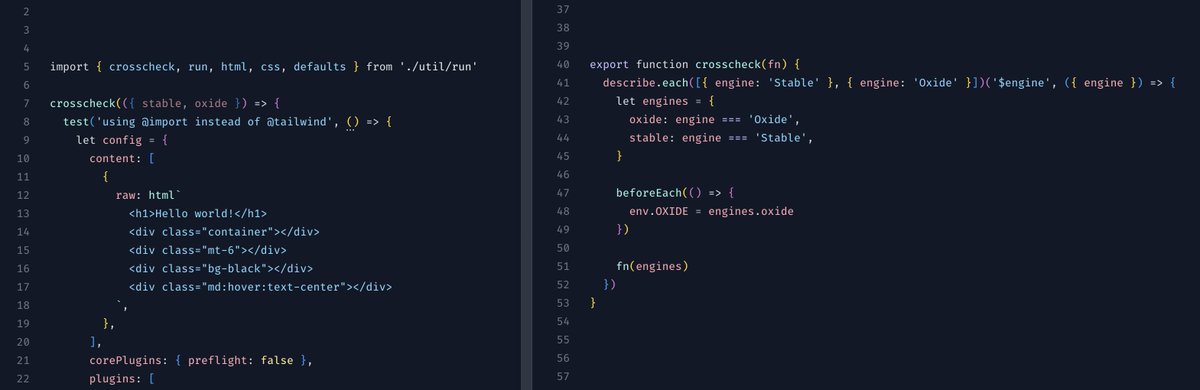
Whipped up a tiny abstraction to make it easier to run the Tailwind test suite against both our stable engine and the new Rust stuff... Couldn't resist the name 🏒🥅
2
3
30
30,293
20 Jan 2023
Getting the finishing touches in on the Building an API server module.
We’re going to build an API that runs on @flydotio and persists answers to Postgres for quiz questions for the course.
Coming next week!
1
1
12
2,005
Rust for JavaScript Developers retweeted

16 Jan 2023
A lot of folks have wanted to check out a sample lesson in @rustforjsdev
Here's the lesson on Lifetimes in Rust!
app.rust-for-js.dev/posts/12…
11
43
278
42,385
Rust for JavaScript Developers retweeted
15 Jan 2023
Considering making a lesson in @rustforjsdev public so folks can get a taste of it, which one?
22%
Hello, Rust!
37%
Lifetimes
21%
Traits
20%
Borrow Checker
153 votes • Final results
1
1
5
4,234
13 Jan 2023
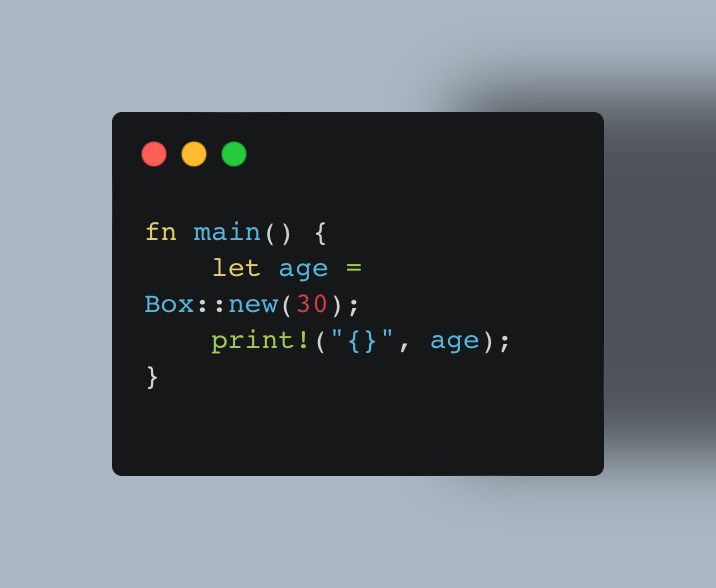
In Rust, it is possible to force-ably allocate values on the heap using the Box type, here is an example of an i32 value allocated on the heap.
age is now a pointer to a heap allocated i32.
1
5
1,555
9 Jan 2023
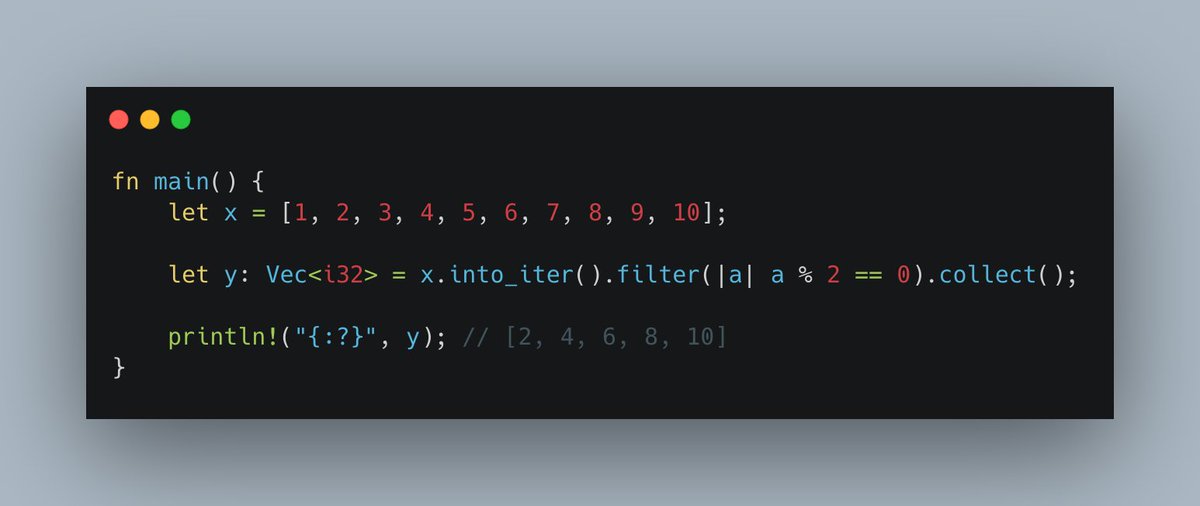
Rust lets you iterate through something iterable using an Iterator. Here's an example of filtering an array for even numbers.
We create an Iterator from our array using into_iter in this case, a version of iter that moves ownership of each value into our closure.
ALT fn main() { let x = [1, 2, 3, 4, 5, 6, 7, 8, 9, 10]; let y: Vec<i32> = x.into_iter().filter(|a| a % 2 == 0).collect(); println!("{:?}", y); // [2, 4, 6, 8, 10] }
4
11
2,107
8 Jan 2023
In Rust, unwrap is a quick and easy way to get a Some value from within an Option when you know for sure that a value is present (because it will panic if the Option is None)
1
2
8
3,478
8 Jan 2023
unwrap is fine for code in development or tests but for production, you should probably be calling unwrap_or which lets you set a default for when the value is None instead of panicking!
4
1,183
Rust for JavaScript Developers retweeted
8 Jan 2023
I'm quite happy with how search turned out for @rustforjsdev
It's fully accessible, works with Command K as well and is fast as hell
Shipping this to production now
9
13
189
32,646
Rust for JavaScript Developers retweeted

6 Jan 2023
Just preordered Rust for JavaScript Developers by @chatsidhartha and I'm excited to start learning 🦀 rustforjs.dev via @rustforjsdev
3
9
1,410
Rust for JavaScript Developers retweeted

5 Jan 2023
In Rust, Option<Box<T>> uses the same memory layout as Box<T>, e.g. Option takes no space. The Rust compiler knows that pointers cannot be null, so uses the null bit pattern to encode None.
4
28
512
51,494
Rust for JavaScript Developers retweeted
14 Sep 2022
When someone asks if Rust powers production software
14 Sep 2022

Today we are excited to talk about Pingora, a new HTTP proxy we’ve built in-house using Rust that serves over 1 trillion requests a day, boosts our performance, and enables many new features for Cloudflare customers. Read all the details: cfl.re/3qHoIb3
3
2
38