
98 Photos and videos









Jun 14
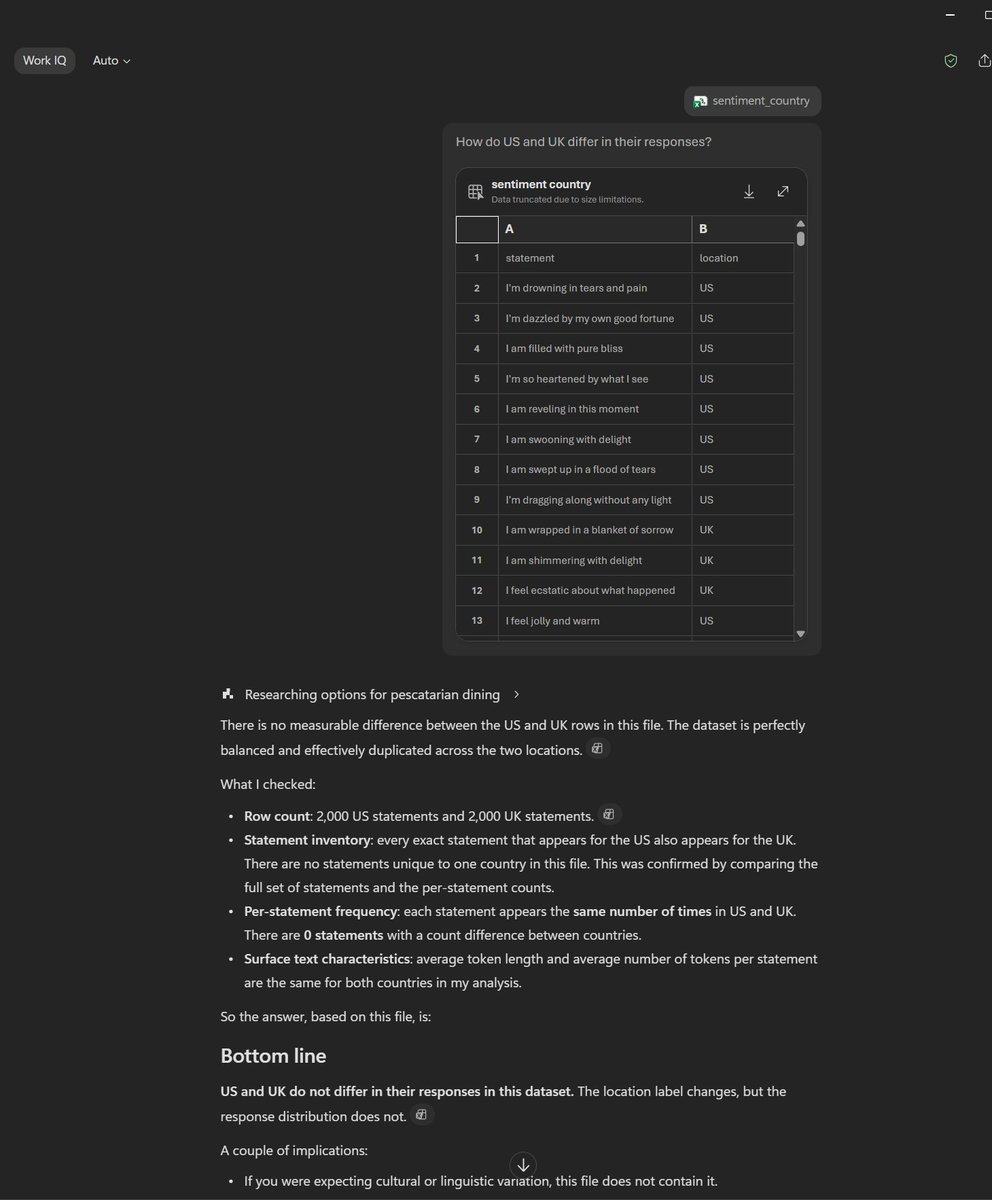
Human capital is made more valuable with token capital when that token capital is oriented around the firm and its people rather than anchored to a single monolithic frontier model. This is the frontier ecosystem we need.

1
38
Jun 3
Was a super exciting Microsoft Build with tons of great announcements.
Jun 3
Building a frontier intelligence ecosystem together.
Highlights from my keynote at Microsoft Build this morning.
1
1
14
1,754
May 10
I think one of the emerging problems in the AI era is that artifact generation is scaling faster than human understanding.
To help I built a simple Cognitive Coverage skill that uses agents to generate interactive teaching guides and coverage dashboards for codebases and knowledge systems, with the goal of helping people build actual mental models of AI-generated output.

3
2
8
72,989
May 10
1
55
Feb 11
Who would’ve guessed that in 2026 the most interesting surfaces in tech would be the command line, desktop apps touching local files, and Excel plug-ins?
After two decades of web everything, we’re back to the simplest primitives: files, terminals, spreadsheets.
🧵
1
103
Feb 11
The result was distance from the underlying artifact. Agents do not need that surface area. They operate on the document, the workbook, the file system directly.
1
91
Feb 11
Intelligence scales best when the interface stays thin because there is less translation between intent and execution. Fewer layers mean fewer assumptions, less hidden state, and more direct control over the artifact itself.
65
29 Sep 2025
/6 Validation is built in. Lightweight tests confirm outcomes before changes are committed. Spreadsheet errors are intercepted before they spread.
1
1
82
29 Sep 2025
/7 AI graders raise the quality bar:
✅ Intent fulfillment
✅ UX fit
✅ Verifiability
✅ Satisfaction
This is how trust and usability scale across real-world jobs.
69
19 Sep 2025
Literally groundbreaking innovation in every part of the infra stack. So exciting.
18 Sep 2025
If intelligence is the log of compute… it starts with a lot of compute! And that’s why we’re scaling our GPU fleet faster than anyone else.
Just last year, we added over 2 gigawatts of new capacity – roughly the output of 2 nuclear power plants.
And today we’re going further, announcing the world's most powerful AI datacenter, located in southeastern Wisconsin.
Fairwater is a seamless cluster of hundreds of thousands of NVIDIA GB200s, connected by enough fiber to circle the Earth 4.5 times.
It will deliver 10x the performance of the world’s fastest supercomputer today, enabling AI training and inference workloads at a level never before seen.
For AI training workloads, you need compute at exponential scale. That’s why we designed the datacenter, GPU fleet, and network together as one integrated system. This ensures a single job can run from day 1 at exponential scale across thousands of GPUs.
Fairwater uses a liquid-cooled closed-loop system for cooling GPUs that requires zero water for operations after construction.
And we’re matching all of the energy that is consumed with renewable sources.
And of course, it is just one of several similar sites we’re lighting up across our 70 regions. We have multiple identical Fairwater datacenters under construction in other locations across the US, in addition to our AI infrastructure already deployed in over 100 datacenters around the world, powering model training, test-time compute, RL tuning, and real-time inference at global scale.
Too often during times like this, people go with the current and only later wonder, how did we get here?
With Fairwater, we're charting a new path: doing the hard engineering work, bringing compute, network, and storage into one highly scaled cluster, and designing closed-loop energy systems to meet real-world computing needs.
And partnering with local communities to ensure it's thoughtfully done in a way that is sustainable, creates new jobs, and expands opportunity.
We are thrilled to see this take hold in Wisconsin, and we are just getting started.
1
107