
Joined February 2018
- Tweets 4,836
- Following 878
- Followers 360
- Likes 42,635
86 Photos and videos




Sander Muller retweeted

I liked the quote from @aarondfrancis newsletter.
"Pessimists sound smart, but optimists get rich."
So next time you wanna comment something negative about a new idea/tool, think twice.
Maybe that idea will take off just because the author believes in it more than you do.
2
3
29
2,737
Sander Muller retweeted

Jun 12
This is important: if you have 15 minutes to spare, fill in the State of PHP survey. Also share it with as many people as possible: thephp.foundation/blog/2026/…
1
7
31
1,612
Sander Muller retweeted

Jun 2
The gap between having an idea and putting it in front of real users keeps getting smaller.
If there's a side project you've been sitting on, build it.
If you've never tried Laravel and want to give it a shot, we made a prompt for you to paste into your agent. It tells the agent how to get started with Laravel, and even how to install PHP if necessary: laravel.com/docs/13.x#gettin…

16
50
395
19,144

You can’t outwork the whole world. There’s always going to be someone somewhere willing to work as hard as you. Someone just as hungry. Or hungrier.
Assuming you can work harder and longer than someone else is giving yourself too much credit for your effort and not enough for theirs. Putting in 1,001 hours to someone else’s 1,000 isn’t going to tip the scale in your favor.
What’s worse is when management holds up certain people as having a great “work ethic” because they’re always around, always available, always working. That’s a terrible example of a work ethic and a great example of someone who’s overworked.
A great work ethic isn’t about working whenever you’re called upon. It’s about doing what you say you’re going to do, putting in a fair day’s work, respecting the work, respecting the customer, respecting coworkers, not wasting time, not creating unnecessary work for other people, and not being a bottleneck. Work ethic is about being a fundamentally good person that others can count on and enjoy working with.
So how do people get ahead if it’s not about outworking everyone else?
People make it because they’re talented, they’re lucky, they’re in the right place at the right time, they know how to work with other people, they know how to sell an idea, they know what moves people, they can tell a story, they know which details matter and which don’t, they can see the big and small pictures in every situation, and they know how to do something with an opportunity. And for so many other reasons.
So get the outwork myth out of your head. Stop equating work ethic with excessive work hours. Neither is going to get you ahead or help you find calm.
[The Outwork Myth — It Doesn't Have To Be Crazy At Work, 2018]
180
656
6,612
419,830

It's a very sunny and hot weekend here 🥵
But I've got new badges to show off, including a surprise one I wanted to try that's not for your packages but for you!
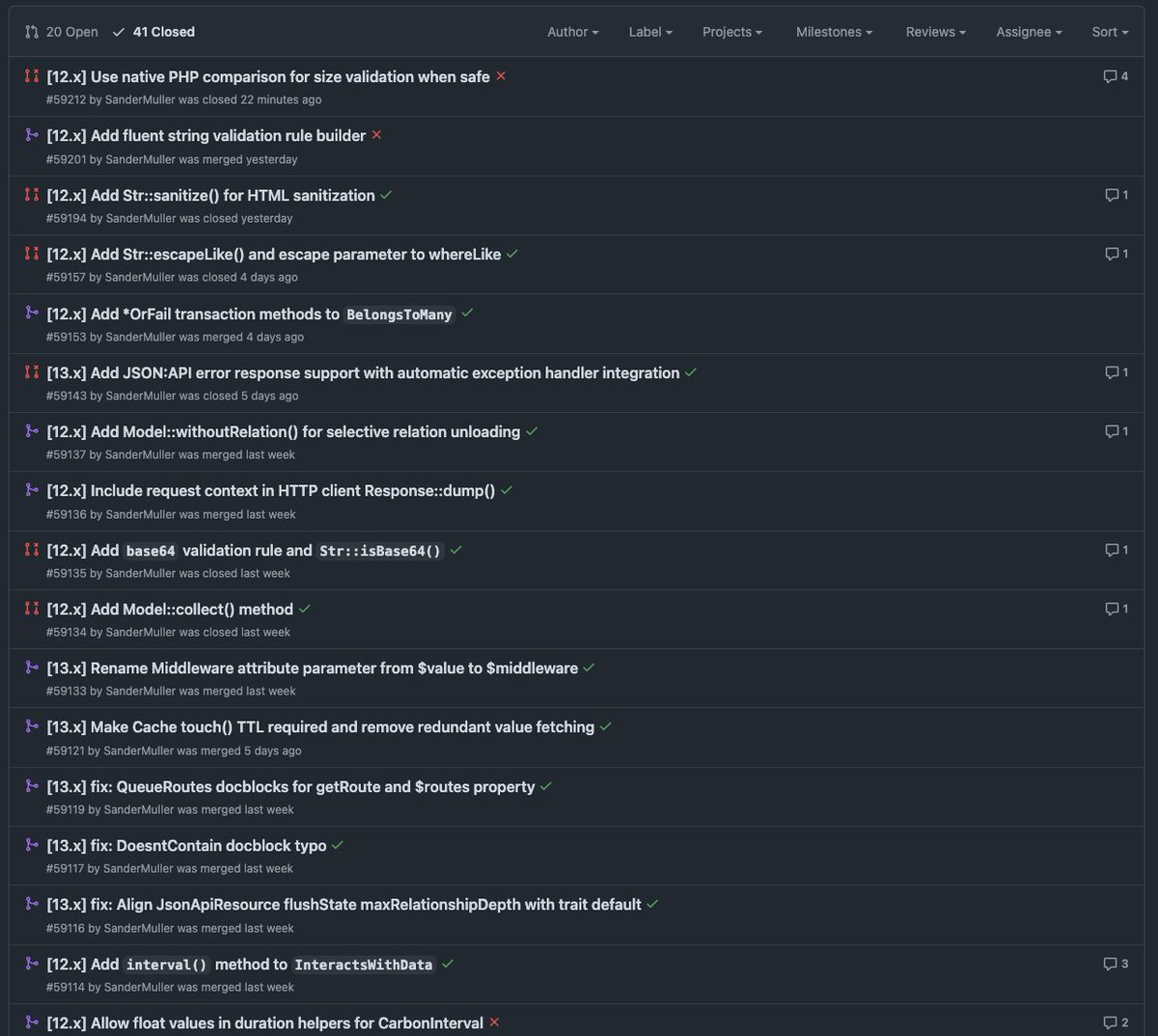
There's now a badge you can put on your GitHub Profile README.md that shows off how many contributions you've made to the core Laravel packages.
Don't worry, my next badge is going to be showing off the little pink alien 😂
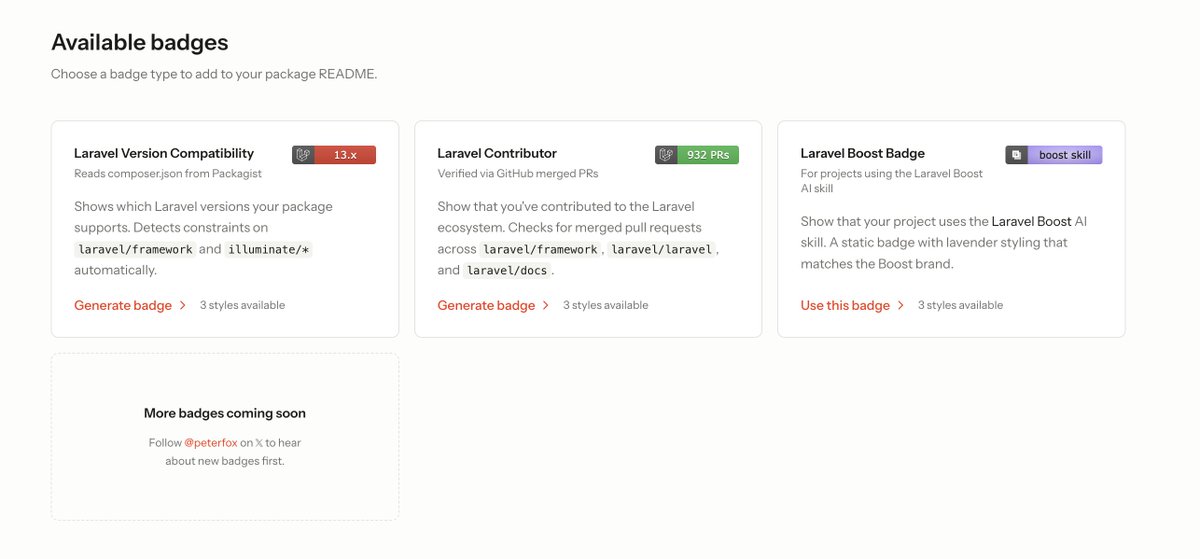
ALT Four Laravel badge options are presented, detailing their functions and styles available for package README integration.
2
1
1
373
Sander Muller retweeted

Apr 27
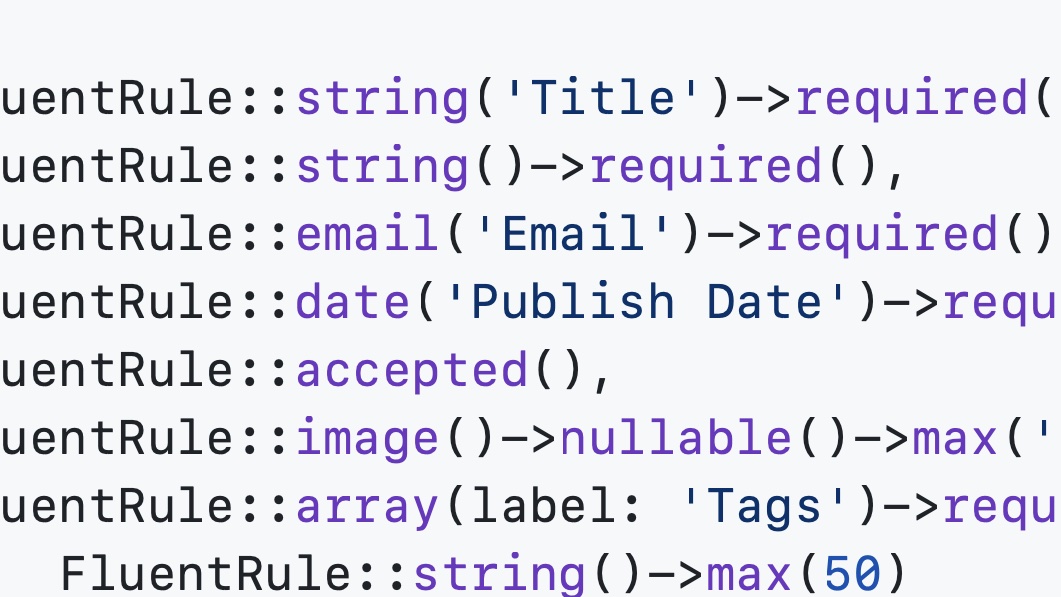
my chat just sent me a link to a GitHub package that adds fluent validation to laravel.. looks awesome! should i do a video about this?
11
4
73
8,140
Sander Muller retweeted
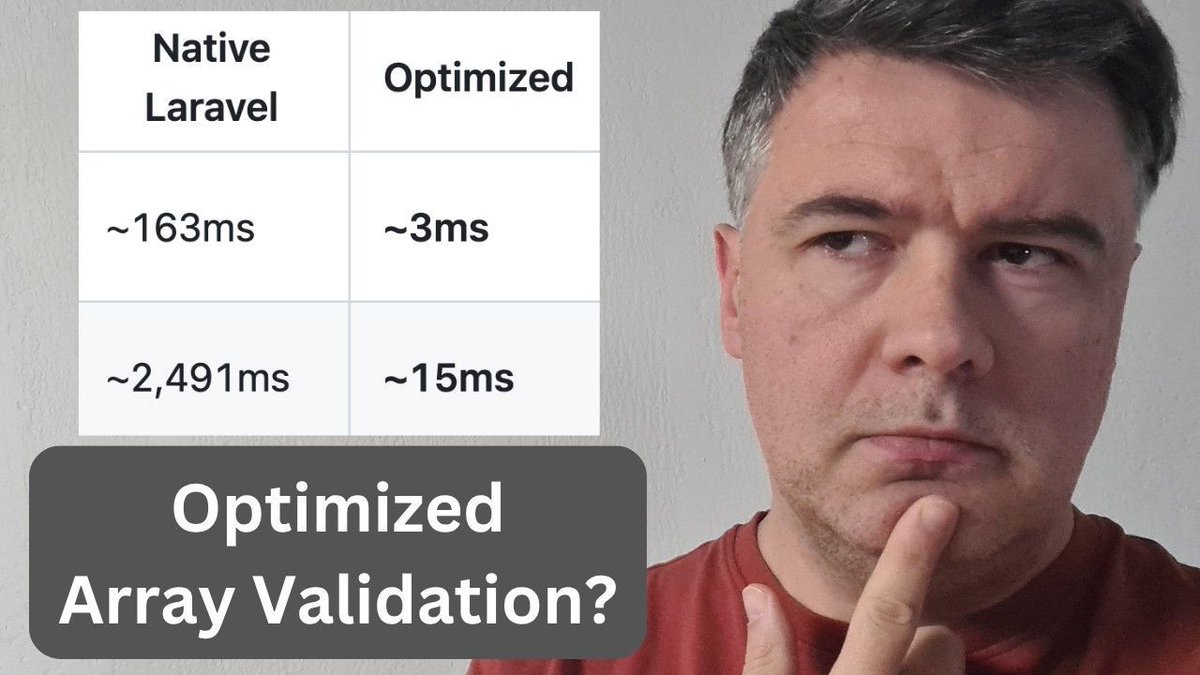
My new video on Laravel Daily channel.
New Package: Laravel Fluent Validation - Performance Demo (Before/After) youtube.com/watch?v=WClB1fCT…
1
2
9
1,206

Apr 26
Spent a session redesigning the render of my Stopwatch package with ui.sh. Before / after. The iteration loop is genuinely incredible.
1
64
Sander Muller retweeted

About Fluent and extremely fast validation for Laravel
laravel-news.com/link/17456
2
5
454
Sander Muller retweeted

Apr 19
Great article on improving Laravel validation performance by @sander_scode. Have rolled a few of these ideas into Hypervel 0.4's new validation package. x.com/sander_scode/status/20…

"Laravel's wildcard validation is O(n ) — here's how to fix it" #DEVCommunity dev.to/sandermuller/laravels…
1
2
169
Apr 14
"Building and battle-testing a Laravel package with AI peers" #DEVCommunity dev.to/sandermuller/building…
45
Sander Muller retweeted
New Laravel package!
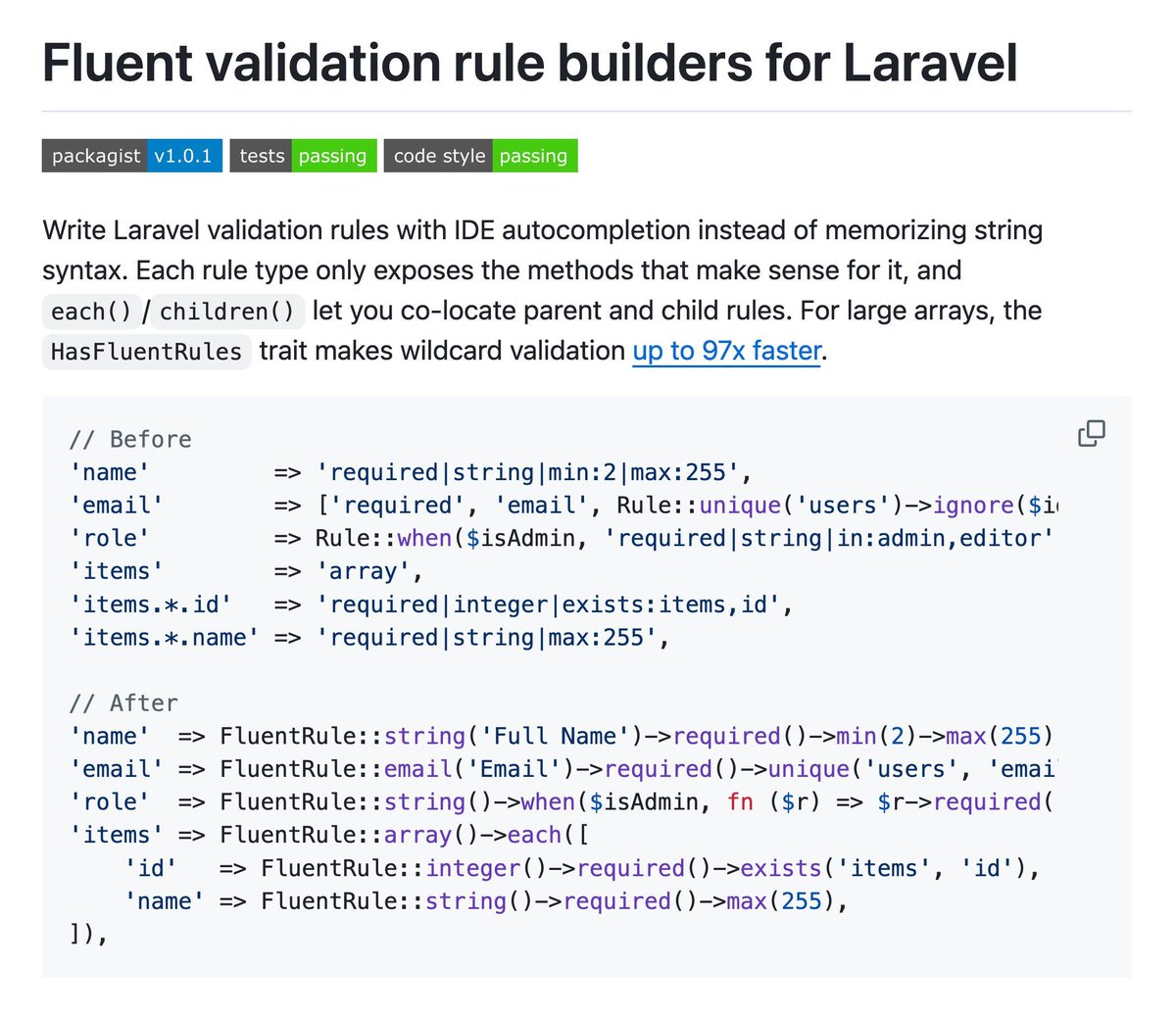
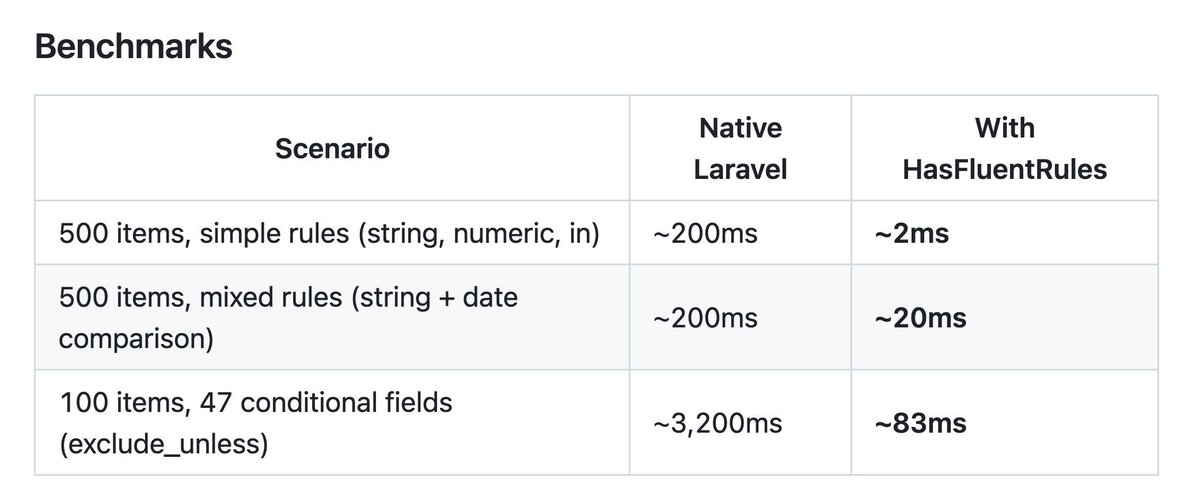
SanderMuller/laravel-fluent-validation: Fluent and extremely fast validation for Laravel github.com/SanderMuller/lara…
For large arrays, the HasFluentRules trait makes wildcard validation up to 97x faster.
3
11
80
6,226
"Laravel's wildcard validation is O(n ) — here's how to fix it" #DEVCommunity dev.to/sandermuller/laravels…
1
228
Mar 22
My Stopwatch package just got support for tracking queries and memory usage (on top of request duration) and Server-Timing header injection to add browser devtools support. Give it a shot if you want to find performance bottlenecks in your application with a great DX
1
65

Reflections on this bill from a Dutch citizen who has closely followed this process for years.
First: the old system. It was pretty simple: the government assumed that you make ~5% return on your assets per year. That return is then taxed (~35%). Assets include savings, stocks, crypto, etc. There is an exemption of ~€55.000 per person. Assets are measured on the 1st of January every year.
Imagine you hold one bitcoin worth €75,000. Subtracting the exemption leaves €20,000 taxable. The government presumes a €1,000 return (5%), resulting in €360 tax (35%).
In summary, this system is:
- Very simple to understand
- Low administrative burden
- Advantageous to investors where ROI >5%
- Disadvantageous to investors where ROI <5%
Savers fall into that latter group. Years of sub-5% interest rates led the government to overestimate savers' returns.
In 2021, the Supreme Court ruled that this was unlawful and that this needed to change. The government should calculate taxes based on the actual return on investment instead of the assumed return.
At this point, I want to make a few things clear:
- I don't mind paying taxes
- I think the Supreme Court's decision was correct
What I do mind is:
- Tax on paper gains
- Added administrative complexity for tax filings
- The Government is not listening to the advice of the Netherlands’ highest advisory body on legislation
- That the Tax Authority is pressuring the legislative process to make a quick decision
- Making obviously bad legislative decisions
And these are exactly the things that are happening.
For some reason, the Government decided against a capital gains-like system and chose an unrealized capital gains system.
This means that you pay tax on the paper profit you made during the year.
Let's say you have one Bitcoin on January 1st, valued at €70.000. On December 31st, Bitcoin is at €115.000. A return of €45.000. Taxes to pay: €15.750 (35%). No exemption in the new bill.
The problem: all your money is in Bitcoin.
But that is not a problem! That is what I want! That is why I stacked every single Satoshi I could since 2016. The same goes for stocks, gold, silver, or real estate: the goal is to have as little fiat as possible!
But in the short term, I have to pay €15.750 in taxes. In this example, it means I have to sell some of my Bitcoin (0.137 BTC, to be precise). After the tax, I'm left with 0.863 BTC (€99.245).
So on paper I'm doing fine (from €70.000 to €99.245 in a year). But my underlying assets are diminishing (1BTC to 0.863 BTC). The amount of Bitcoin, stocks, and gold in my portfolio is decreasing each year.
This creates a dilemma: I don’t want to sell. I expect bitcoin, stocks, and gold to rise over time. But I have to, because the Government demands it.
The obvious better choice was to tax when people decide to take a profit. I don't really have a problem with paying taxes on my realized profit. When I decide to sell, instead of being forced to sell when I don't want to.
I'm not the only one who thinks there are better options. The Council of State (the Netherlands’ highest advisory body on legislation):
"Don't do it. It's too complex (for both the tax authority and the citizens). Look for alternatives."
And still, the government marches on. And the House of Representatives 'reluctantly agrees'. What the fuck does that even mean?
"Yeah, we also don't like this bill, but we still are going to sign it into law."
It's batshit crazy. But it's where we are. That's what the quoted tweet is about.
Not all is lost, though:
- House of Representatives (2e kamer) still has to approve this bill (quote tweet is wrong here).
- Senate (1e kamer) still has to approve.
- The Tax Authority is unable to comply with this bill (too complex)
- Complexity makes this bill filled with loopholes
So, to sum it up: hopefully, Parliament comes to their senses and stops this monstrosity of a bill, and chooses one of the better options instead.
Jan 20

NETHERLANDS TO TAX UNREALIZED BITCOIN GAINS
Netherlands is moving toward taxing unrealized capital gains on bitcoin, stocks, bonds, and other assets after parliament voted to overhaul annual income tax filings.
Under the new system, investors will owe tax each year based on changes in asset value, even if nothing has been sold.
The reform, known as Wet werkelijk rendement Box 3, is scheduled for 2028 and will tax actual returns by measuring the difference between an asset’s value at the start and end of the year, plus any income received.
That means both realized and unrealized gains will be taxed.
Critics warn the shift could create serious liquidity problems, forcing investors to pay taxes on paper gains without having cashed out.

194
268
1,550
211,850
Sander Muller retweeted

Jan 20
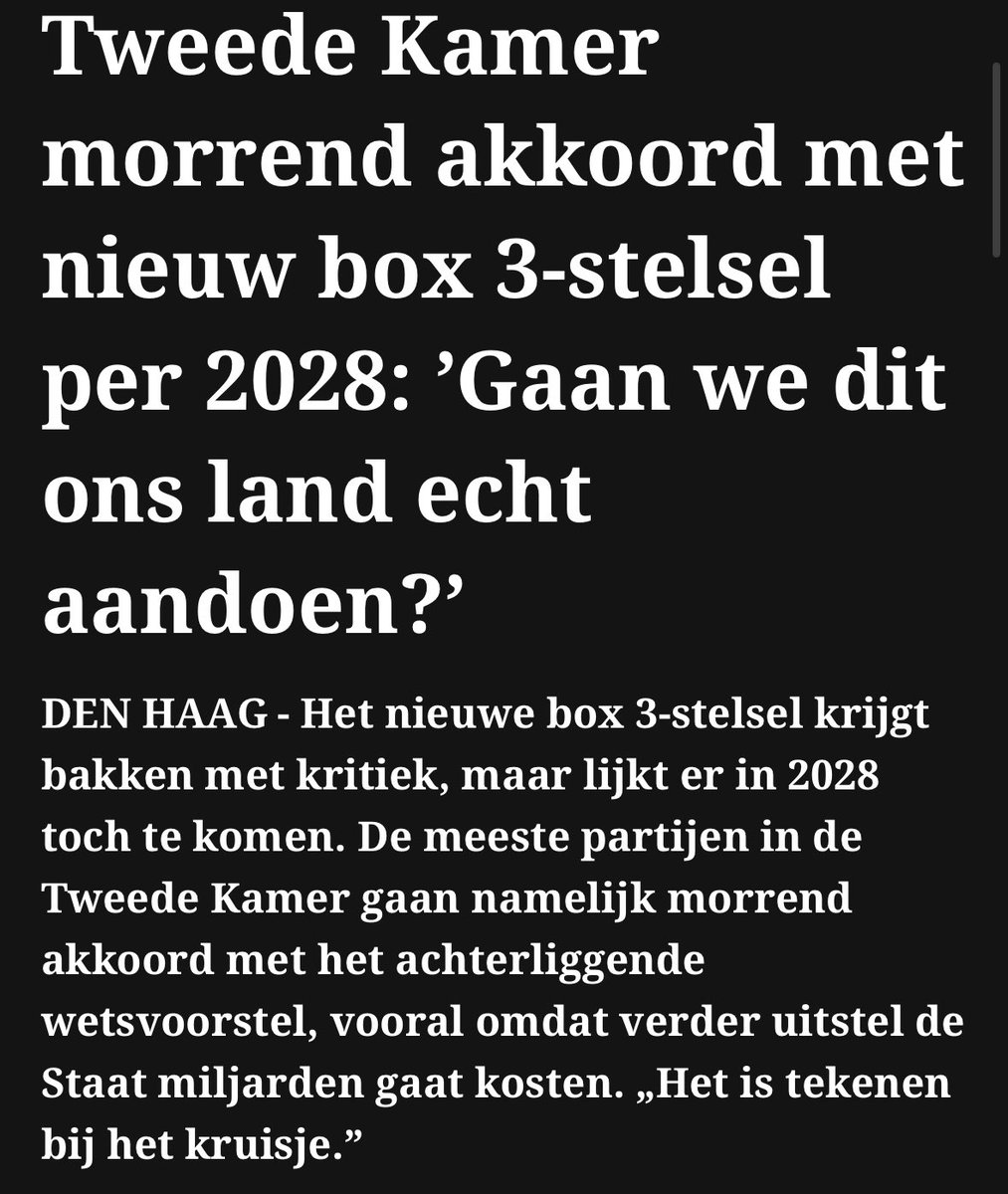
De Tweede Kamer is akkoord met de wet op box 3 die in 2028 moet in gaan.
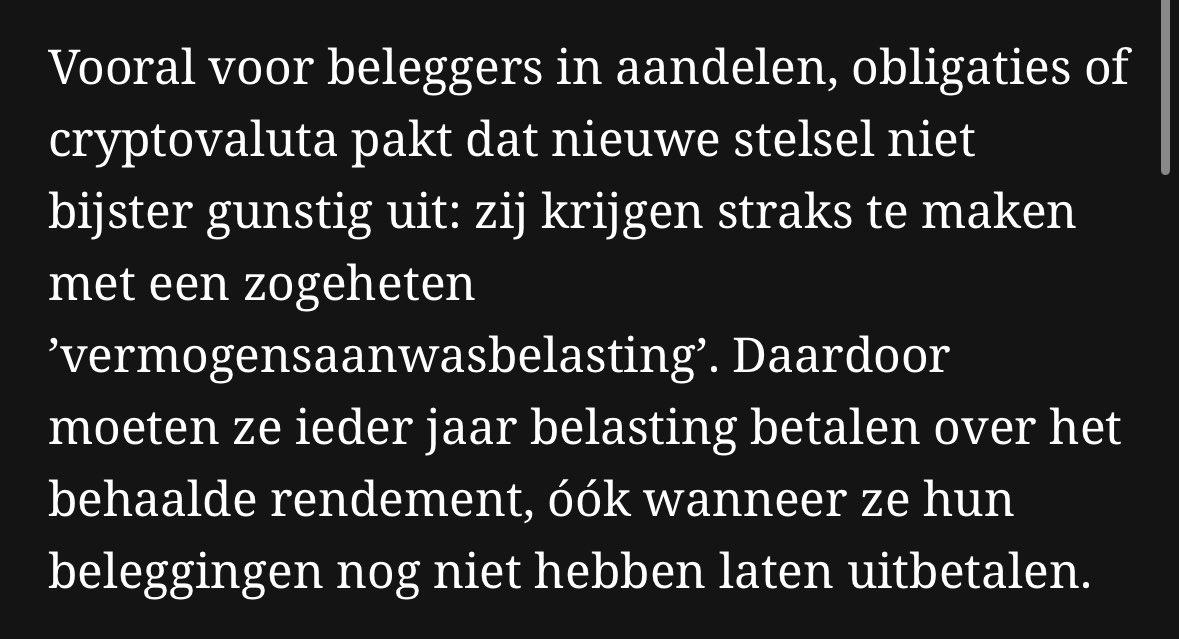
Vooral voor beleggers in aandelen, obligatie én cryptovaluta vervelend: zij krijgen te maken met vermogensaanwas belasting waardoor ze ieder jaar belasting betalen over ongerealiseerde winsten.
446
290
1,143
334,090
Sander Muller retweeted

24 Oct 2025
PHP needs a rebrand.
Not a community design competition.
A full overhaul of the brand, positioning, and strategy. Done by external professionals.
PHP as a product is fantastic. The way it’s packaged and presented is frightful.
This isn’t the only step, but it’s a big one.

I think we, as Laravel/PHP community, have a problem.
I don't see many new/young devs starting with Laravel.
I also heard the same topic expressed by Taylor, Jeffrey, Nuno in podcasts.
Question: what can I/we do to promote PHP/Laravel to outsiders?
Let's brainstorm.
75
58
652
114,690