Cognitive scientist at Harvard.
Joined January 2010
- Tweets 16,436
- Following 87
- Followers 857,550
- Likes 4
1,277 Photos and videos






Pinned Tweet

Jan 31
Why Our Longing to Matter Drives and Divides Us | Amanpour and Company youtu.be/LTkNwAFtb9w?si=uwsG… via @YouTube
1
111
420
646,257
RT @sapinker: From deconstructionism to destructive. open.substack.com/pub/quille…
7
RT @sapinker: Life imitates game theory. Here’s a true story: I’m flying into New York from Paris today, and Rebecca is going in from Bosto…
7
RT @sapinker: Actually, the SAT Was Necessary After All - The Atlantic theatlantic.com/ideas/2026/0…
35
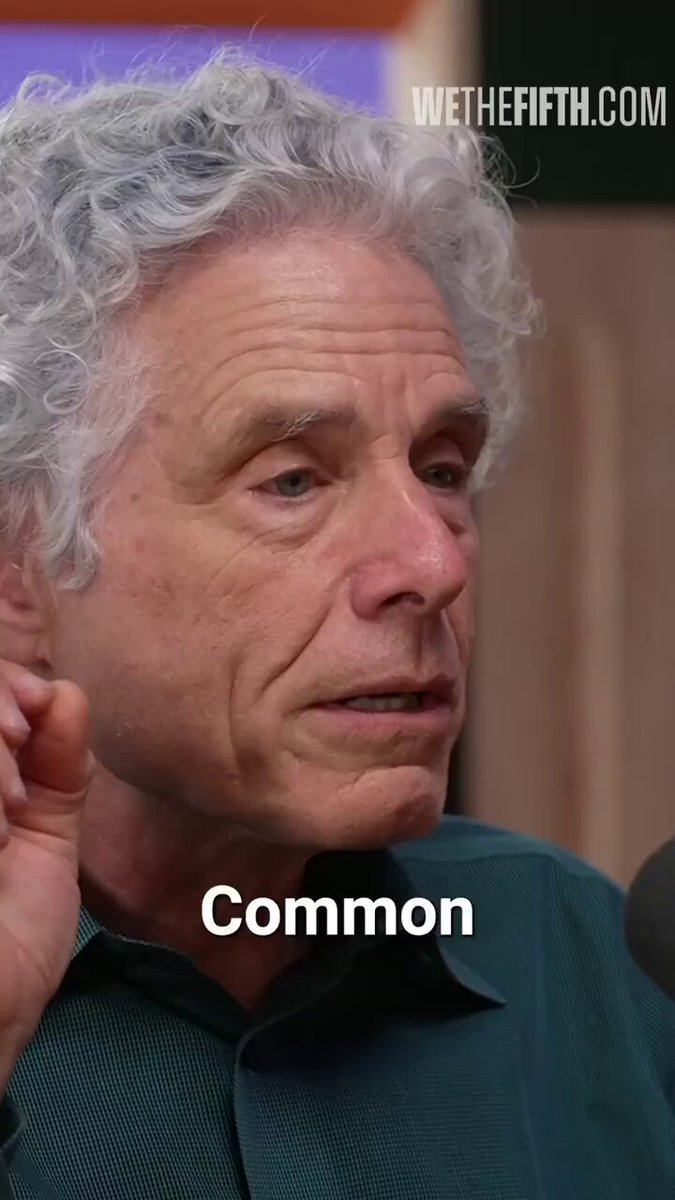
With @wethefifth talking about common knowledge:
“Common knowledge can be generated at a stroke when something is witnessed in a forum where you can witness other people witnessing it. So if something just happens in public and you can see everyone else seeing it, that gives you an instant intuition that there’s common knowledge.
Humor, I suggest in one of the chapters, is a common-knowledge generator, usually of some infirmity or indignity or weakness in someone or something. And the laughter, which is conspicuous—you can hear it when someone is laughing; it interrupts their speech and breathing—at the moment of laughter, suddenly becomes common knowledge. Everyone who gets the joke suddenly realizes that someone has been taken down, and they realize that everyone else realizes it.
And that’s why freedom of speech and freedom of assembly are suppressed in autocracies. The joke from the Soviet era is about the man handing out leaflets in Red Square. Of course, the KGB arrest him, take him down to headquarters, only to discover that the leaflets are blank sheets of paper. They say, ‘What is the meaning of this?’ And he says, ‘What’s there to say? It’s so obvious.’
And the reason that it was subversive is that he was generating common knowledge. Just the mere fact of trying to make something public, even if you don’t have to stipulate what it is, can generate the coordination—everyone acting together to bring down a regime.”
1
10
58
13,003
When Everyone Knows That Everyone Knows . . .: Common Knowledge and the Mysteries of Money, Power, and Everyday Life:
amazon.com/When-Everyone-Kno…
9
4,956
Steven Pinker retweeted

May 14
The spiral of silence may explain more about public opinion than ideology does.
Steven Pinker (@sapinker) joins us on the new Fifth Column, out now.
4
12
44
8,596
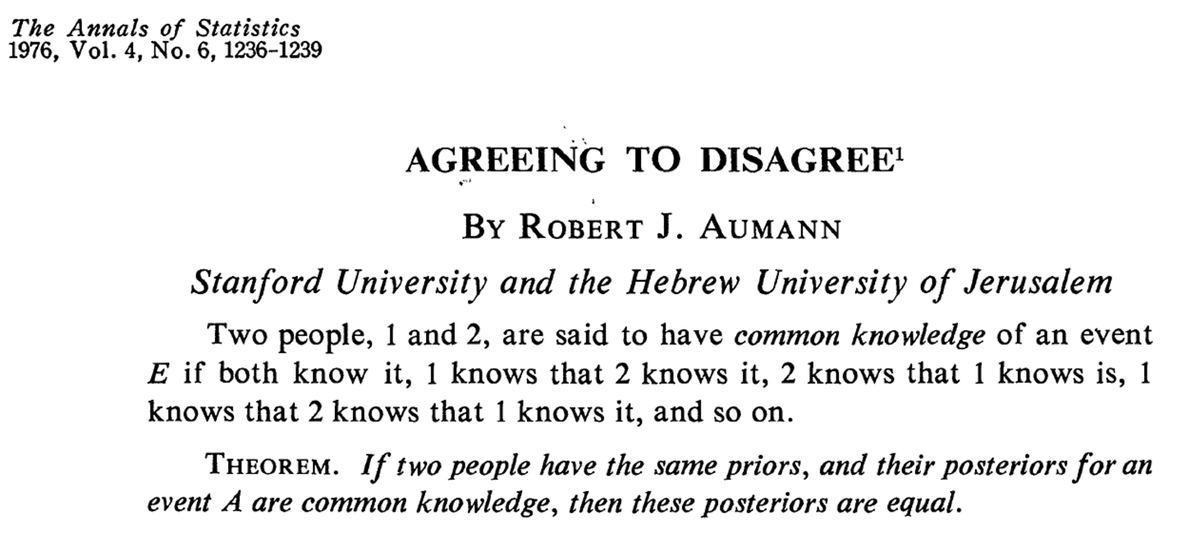
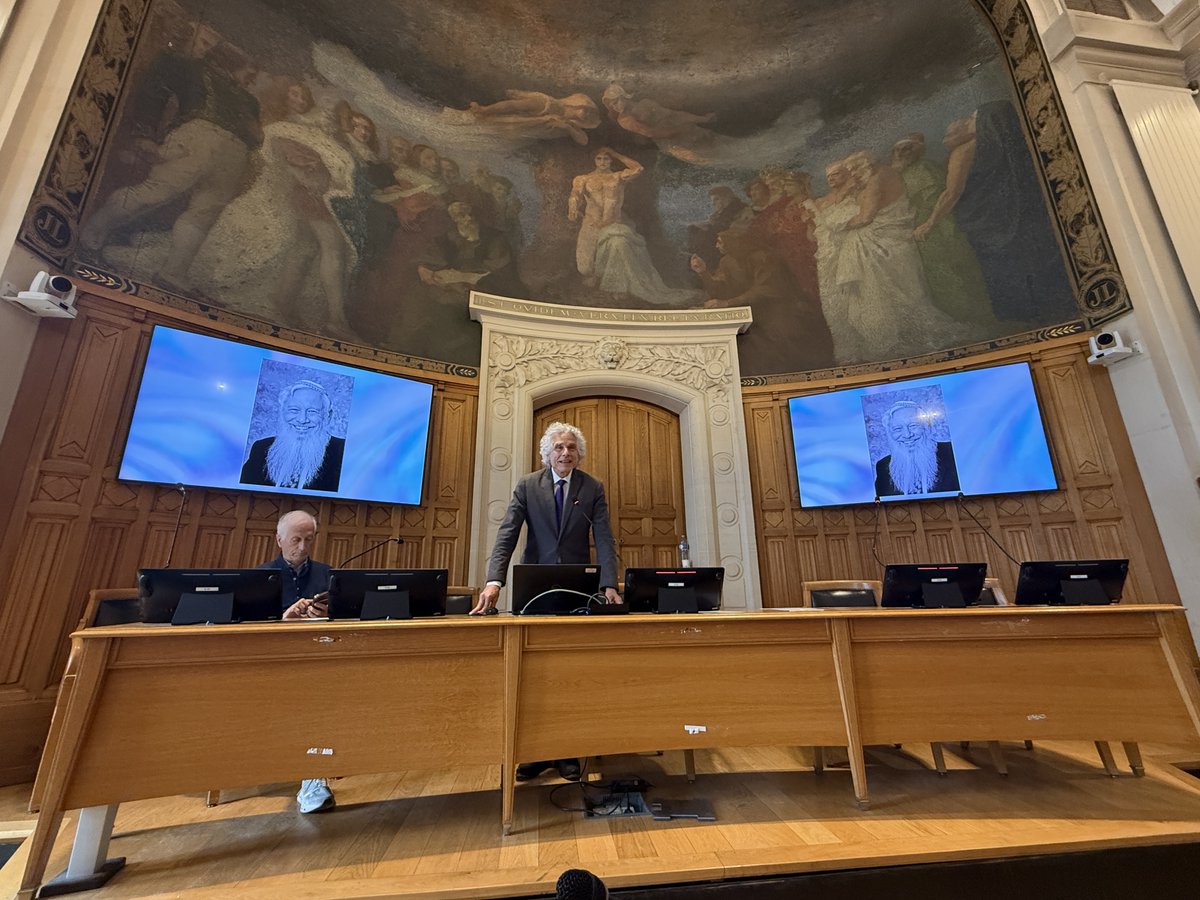
RT @sapinker: Fifty Years of "Agreeing to Disagree": Honored to have spoken today at a conference at the Sorbonne marking the 50th annivers…
19
RT @sapinker: Why Our Longing to Matter Drives and Divides Us | Amanpour and Company youtu.be/LTkNwAFtb9w?si=uwsG… via @YouTube
111
RT @sapinker: Together with his brilliance, Aumann is a mensch, and was generous and patient in helping me explain his counterintuitive the…
4
RT @sapinker: "To embrace the poisonous nonsense of degrowth now — to shut down nuclear power plants, to regulate the AI industry out of ex…
68
RT @sapinker: Every moral philosophy student learns the contrast between utilitarian & deontological approaches to morality, & many more we…
23
RT @sapinker: My own alleged optimism bears on an important issue that came up in the conference to mark the 50th anniversary of Aumann's t…
6
RT @sapinker: Parisian monument to L'Abee de L'Epee, the Enlightenment-era priest who observed deaf children signing, invented his own sign…
20
RT @sapinker: Indeed, but cultural and intellectual publications (especially those with "New York" in their title) are consistently unintel…
115
RT @sapinker: Sam Harris explains: "Why I Won’t Debate Critics of Israel" open.substack.com/pub/samhar…
49
"To embrace the poisonous nonsense of degrowth now — to shut down nuclear power plants, to regulate the AI industry out of existence, to forcibly shorten working hours, to bar the construction of houses and factories, etc. — would be to cripple one of the last few remaining economic engines of the free world, at precisely the time when it’s under its greatest external challenge." @Noahpinion open.substack.com/pub/noahpi…
68
338
28,418
"There is a real resistance to standardized testing that has broken the brains of some folks. They interpret evidence completely backwards (like this NYMagazine article)."
Jun 12

There is a real resistence to standardized testing that has broken the brains of some folks. They interpret evidence completely backwards (like this NYMagazine article). What is clear evidence of predictive validty gets spun as clear evidence of a failure.
I've seen this for too many years, with SAT and GRE tests too, to believe it's an isolated error. Instead, it's a systemic ideological failure. People are unwilling to look at the evidence in an open-minded way and draw accurate conclusions. And they don't have the institutional checks and balances to root out biases.
This is a serious problem that extends beyond magazines to our leading universities that repealed standardized tests and are now dealing all the problems this has created. It also reduces public trust in these institutions. I have a subscription to NYMagazine and this issue makes me trust the magazine less.
The only solution is that these institutions and organizations need to issue a correction, re-examine their editorial policies, hire staff who have the analytic skills to evaluate this type of data, and then listen to those staff. This is what it will take to earn and sustain the trust of the public. Making the same mistake over and over again only reveals that they don't care about accuracy.
7
95
16,161
Sam Harris explains: "Why I Won’t Debate Critics of Israel" open.substack.com/pub/samhar…
49
411
22,570
"Residual functional capacity may persist in late-stage neurodegeneration and may become transiently accessible under specific neuromodulatory conditions." Further refutation of the ludicrous argument by Charles Murray and others that "terminal lucidity" in dying patients is evidence for an immaterial soul re-entering the body to say a last goodbye to loved ones. frontiersin.org/journals/neu…
9
50
7,990
What If AI Chatbots Are Saving Lives? Don't ban them based on anecotes, say @adamomaryphd and Jennifer Huddleston open.substack.com/pub/humanp…
11
41
9,934