
السعودية تحت المجهر نشرة الكترونية تغطي الأخبار والمقالات والأحداث عن السعودية خاصة و الشرق الأوسط والعالم كافة بما يهم السعودية .
Joined September 2009
- Tweets 26,192
- Following 297
- Followers 1,915
- Likes 238
643 Photos and videos


إلى أبصرت بالدنيا تكدّر لي الصافي
تعذر زماني ما حصل صاحبٍ صافي
أفيّض عليه أسرار ما التج بالحشا
وكل شعيب له مفيضٍ إلى طافي
ومن عاش ماله في زمانه امنادم
تجرهم عمار رايه على جرف ميهافي
تخير من أجناسك رفيق توده
وثيق غميق يفهم العلم عرافي
يحتمل زلاتك ويبصرك ما خفى
للقلب دربيل للأبعاد كشافي
ومن طاول أطول منه ما استر ساعه
يجاهد جنود ينقسم رايه انصافي
والعوسجة لو هي على النيل ما اثمرت
بورد ويقوى الشوك والغصن غريافي
وكم جاهل صوّل على غيره القضا
ويجرم بفعله مسلم غافل غافي
وكم بخيل فرش الناس ماله
وهو منه محروم على نفسه اتلافي
كوصف إبرة عريانة دب دهرها
وهي تكسي المخلوق من قمش الأصنافي
2
7
11
3,359

Jun 13
Netanyahu’s Leadership and the Challenges to Sustainable Peace in the Middle East
Benjamin Netanyahu’s extended leadership has long prompted concerns regarding its implications for Israel’s long-term security, the Jewish diaspora, and regional stability in the Middle East concerns articulated by analysts since at least 2015. Despite promises of “total victory,” his policies have fallen short on several key fronts and appear oriented toward narrow domestic political and international interests rather than durable peace.
In the post-World War II era, as British influence receded, the United States assumed a dominant role in the Middle East, often supporting aligned regimes to advance its strategic objectives. In the current context, Netanyahu’s military operations in Gaza have generated widespread international criticism. The extensive destruction of civilian infrastructure, including hospitals, schools, and residential areas, coupled with acute famine risks, has led human rights organizations, scholars, and former Israeli officials to characterize aspects of the campaign as potential genocide. These outcomes are linked to a consistent rejection of substantive peace negotiations, a viable Palestinian state, or ceasefires that fall short of Hamas’s complete elimination.
This stance aligns with a longer-term pattern of territorial consolidation suggestive of a “Greater Israel” vision, consistent with historical examples of expansion amid regional turmoil. The scale and nature of the response after following the October 7, 2023, attacks, risk eroding international support and contributing to a resurgence of global antisemitism. These policies remain heavily dependent on substantial U.S. military and diplomatic assistance, resources that could otherwise address critical domestic priorities such as housing, healthcare, and education in both Israel and the United States.
In the absence of robust international oversight and accountability consistent with appeals from Amnesty International and the International Court of Justice such approaches may further undermine Palestinian sovereignty and exacerbate instability amid evolving geopolitics. Effective Middle East leadership necessitates a commitment to justice, strategic restraint, and pragmatic diplomacy, rather than prolonged conflict that privileges short-term interests over collective human security.
👉 Sustainable peace represents not a concession, but the sole enduring victory worthy of future generations.
To read the comment of Dr. Turki Faisal Al Rasheed
foreignpolicy.com/2026/06/12…
16
Jun 13
Netanyahu’s Leadership and the Challenges to Sustainable Peace in the Middle East
Benjamin Netanyahu’s extended leadership has long prompted concerns regarding its implications for Israel’s long-term security, the Jewish diaspora, and regional stability in the Middle East concerns articulated by analysts since at least 2015. Despite promises of “total victory,” his policies have fallen short on several key fronts and appear oriented toward narrow domestic political and international interests rather than durable peace.
In the post-World War II era, as British influence receded, the United States assumed a dominant role in the Middle East, often supporting aligned regimes to advance its strategic objectives. In the current context, Netanyahu’s military operations in Gaza have generated widespread international criticism. The extensive destruction of civilian infrastructure, including hospitals, schools, and residential areas, coupled with acute famine risks, has led human rights organizations, scholars, and former Israeli officials to characterize aspects of the campaign as potential genocide. These outcomes are linked to a consistent rejection of substantive peace negotiations, a viable Palestinian state, or ceasefires that fall short of Hamas’s complete elimination.
This stance aligns with a longer-term pattern of territorial consolidation suggestive of a “Greater Israel” vision, consistent with historical examples of expansion amid regional turmoil. The scale and nature of the response after following the October 7, 2023, attacks, risk eroding international support and contributing to a resurgence of global antisemitism. These policies remain heavily dependent on substantial U.S. military and diplomatic assistance, resources that could otherwise address critical domestic priorities such as housing, healthcare, and education in both Israel and the United States.
In the absence of robust international oversight and accountability consistent with appeals from Amnesty International and the International Court of Justice such approaches may further undermine Palestinian sovereignty and exacerbate instability amid evolving geopolitics. Effective Middle East leadership necessitates a commitment to justice, strategic restraint, and pragmatic diplomacy, rather than prolonged conflict that privileges short-term interests over collective human security.
Sustainable peace represents not a concession, but the sole enduring victory worthy of future generations.
To read the comment of Dr. Turki Faisal Al Rasheed
foreignpolicy.com/2026/06/12…
Jun 13

Netanyahu has been motivated by more than just strategic considerations. foreignpolicy.com/2026/06/12…
14
Jun 13
اكتتاب «سبايس إكس»... ثراء تاريخي لماسك وتحوُّل في صراع التكنولوجيا بين واشنطن وبكين
استبعاد الصين... رسالة جيوسياسية
الجانب الأكثر دلالة في الاكتتاب هو استبعاد المستثمرين من الصين وهونغ كونغ. وبحسب صحيفة «نيويورك تايمز»، فهذا القرار لا يبدو إجراءً تقنياً عابراً، بل مؤشراً إلى مرحلة جديدة من فك الارتباط بين الولايات المتحدة والصين، لا في التجارة فقط، بل في التكنولوجيا ورأس المال أيضاً.
aawsat.com/node/5283265
24
Jun 13
نهاية «نيوستارت» والحقبة النووية الثالثة
الصينيون يخيفون الجميع نووياً، بتجارب جديدة، وبحلم امتلاك ألف رأس نووي بحلول عام 2030، وكأن القطبية الأممية لا تكتمل إلا بالأسلحة النووية.
فيما أميركا تعمل جهاراً وسراً على تحديث ترسانتها النووية، ويكفي أن يشير المرء إلى قنبلة الجاذبية النووية «B61-13»، تلك التي تفوق قوتها التدميرية قنبلة «هيروشيما» بنحو 24 مرة.
الشركات الاستثمارية ترفع شعاراً مخيفاً «لا أخلاقيات» في مواجهة «تهديدات الموت النووي»، ما يعني أن الحقبة النووية الثالثة ستكون حكماً أخطر من سابقتيها، والبقية تأتي.
aawsat.com/node/5283452
12
Jun 13
هل أصبح النفوذ الإيراني عبئاً عليها؟
التاريخ السياسي يقدم أمثلة عديدة على أن الدول لا تفاوض فقط حول خلافاتها المباشرة، بل حول نفوذها أيضاً. ففي عدد من الاتفاقات الدولية لم يكن المطلوب من الدولة الجالسة على الطاولة تغيير سلوكها فحسب، بل استخدام نفوذها لتغيير سلوك حلفائها، أو الأطراف المرتبطة بها. والسبب أن القوة في السياسة لا تقاس فقط بما تملكه الدولة من إمكانات عسكرية، بل أيضاً بقدرتها على التأثير في الآخرين.
من هنا يصبح مفهوم النفوذ جزءاً أساسياً من أي مفاوضات كبرى. فإذا كانت دولة ما تدعي امتلاك نفوذ على جماعات أو دول أخرى، فإن الطرف المقابل سوف يسعى إلى اختبار هذا النفوذ وتحويله إلى التزامات عملية. أما إذا تبين أن النفوذ أقل مما يُعلن، فإن قيمة الورقة التفاوضية نفسها تتراجع.
في هذا السياق يبرز السؤال المتكرر حول قدرة الولايات المتحدة على فرض إرادتها على إسرائيل. والإجابة ليست بنعم مطلقة، أو لا مطلقة.
لكن النفوذ ليس مرادفاً للسيطرة الكاملة.
عند الربط بين هذه القضايا الأربع تتضح صورة أكثر شمولاً. فالمفاوضات الحالية لا تدور فقط حول أجهزة الطرد المركزي أو العقوبات الاقتصادية، بل حول النفوذ والقدرة على التأثير والإرادة السياسية وعامل الزمن. والسؤال الذي يواجه جميع الأطراف ليس: مَن يملك أوراقاً أكثر، بل مَن يستطيع تحويل أوراقه إلى مكاسب مستدامة قبل أن تتحول تلك الأوراق نفسها إلى عبء.
آخر الكلام: قد يأتي يوم تكتشف فيه الدول أنَّ أصعب ما في بناء النفوذ ليس توسيعه، بل تحمل تكلفته.
aawsat.com/node/5283455
16
Jun 13
أوكرانيا تستهدف بالمسيّرات العمق الروسي وإمدادات الوقود المتجهة إلى القرم aawsat.com/node/5283358
1
14
Jun 13
أزمة العدالة والعنف في فرنسا
كما أنه لا توجد دراسات سوسيولوجية علمية تمكن من فهم ظاهرة العنف الأسري التي تجعلنا نفقه لماذا يستعمل الزوج قوته البدنية لإنهاء حياة شريكته، ولماذا تصل العلاقة الزوجية إلى مثل هاته الدرجة في العنف، علماً بأن رافعي راية الحضارة الغربية دائماً في الحوارات العلمية مع «الآخر» اللاغربي يمدح ويمجد المستوى الحضاري للعلاقة بين الأفراد داخل مجتمعاتهم، وبالضبط بين الأزواج وفي العلاقات الأسرية؛ ولكن عندما تطلع على ما فوق حشائش وتحت حشائش هاته العلاقات فستطلع على حقائق مرعبة؛ ومما يقوي الحيرة هو عندما نتساءل مع آخرين عن جدوى الميكانزمات القانونية، وهل ستوقف النزيف المجتمعي؟ ولماذا لم تفعّل القوانين الموجودة سلفاً؟ فها هي إحدى البرلمانيات تسخر من أي تعزيز للترسانة القمعية، فالقوانين موجودة وكافية، ولكن ما ينقص، إنما هي مسألة التفعيل والوقاية، والأموال اللازمة لذلك؛ وأزيد من جهتي أنه يجب تجفيف مصادر العنف من المجتمع انطلاقاً من إعادة النظر في منظومة القيم والتعليم والردع وإيقاف مسألة الاستعلاء الذكوري التسلطي، انطلاقاً من الاستثمار في الناحية التربوية أكثر منه في الناحية القانونية.
aawsat.com/node/5283082
19
Jun 13
القرار السعودي استئناف صادرات لبنان ينعش الآمال الاقتصادية والزراعية aawsat.com/node/5282953
13
Jun 13
نتنياهو ورؤساء أميركا في 30 سنة: مَن رئيس الدولة العظمى هنا؟
في صحبة ترمب: لا بد من ثمن
مع عودة ترمب إلى الحكم مجدداً في 2024 كان نتنياهو مختلفاً، مجروحاً وضعيفاً، وأصبح متهماً في 3 قضايا فساد، تُهدِّد بسقوطه عن الحكم.
وأمام الخطر في انتهاء المحكمة بإدانته والإلقاء به إلى السجن، راح يدير معركةً للانقلاب على منظومة الحكم والجهاز القضائي، ويقود إسرائيل في حروب على جبهات عدة لا يبدو أن لها نهاية؛ حيث يحارب بجيشه الضخم تنظيماً صغيراً مسلحاً مثل حركة «حماس»، أو «حزب الله»، لشهور طويلة «من دون حسم»، فوجد في البيت الأبيض رئيساً مستعداً لمناصرته بشكل غير مسبوق، وبلغ حدَّ التوجيه العلني للرئيس الإسرائيلي بإلغاء المحاكمة، ووعد نتنياهو بعمل كل شيء حتى يُنتخب من جديد رئيساً للحكومة.
كما ألغى ترمب كل القيود التي فرضها بايدن، وحرَّر الأسلحة التي طلبها نتنياهو، وشنَّ حرباً على محكمتَي لاهاي، وعاقب قضاتها؛ بسبب أمرهم باعتقال نتنياهو، ثم سمح لنتنياهو بضرب إيران في يونيو (حزيران) الماضي، وتَوَّج الحرب بضربة أميركية، ثم شنَّ حرباً أخرى على إيران، وهذه المرة بشراكة تامة بين الجيشين الإسرائيلي والأميركي.
وتعرف جيش نتنياهو على أسرار كثيرة لجيش ترمب، واستخدما معاً أسلحةً جديدةً. وباشرت الحكومتان محادثات للانتقال من «دعم من الأخ الأكبر للأخ الأصغر، إلى شراكة الند للند، في المجالات العسكرية والتكنولوجية والسياسية والاقتصادية».
وفي «أميركا ترمب»، كما أميركا غيره لا بد من ثمن يُدفع؛ والإسرائيليون لا يحبون ولا يسارعون إلى دفع الثمن.... وليس هذا فحسب، بل إن نتنياهو يطمح إلى أن يعزِّز ترمب مكانة إسرائيل بوصفها دولة عظمى إقليمياً، تتميَّز عن الدول الكبرى والقوية في الشرق الأوسط.
كما يريد نتنياهو أن يعفيه ترمب من مستلزمات قضية السلام التي يطرحها، رغم أنَّ مسؤولين أميركيين يحذِّرون من تملص نتنياهو من التزاماته بهذا الشأن.
وأدخلت هذه القضية إسرائيل إلى نقاشات داخلية حادة، اتُّهم فيها نتنياهو بتحويل الدولة العبرية إلى «دولة وصاية» ترضخ لـ«إملاءات» الرئيس الأميركي، وانفلتت أحزاب المعارضة ضد نتنياهو، وراحت تتحدَّث عن الولايات المتحدة، بوصفها دولةً أجنبيةً تدوس على استقلال إسرائيل.
والرئيس ترمب مستاء جداً من هذا الوضع، هو أصلاً غاضب على يهود الولايات المتحدة، وسبق أن نعتهم بالغباء لأنهم لا يرون أنه الأفضل لليهود ولإسرائيل، ويهاجمهم لأنَّهم يمنحون غالبية أصواتهم للحزب الديمقراطي، كما فعلوا عند التصويت لعمدة نيويورك زهران ممداني.
والآن يرى الرئيس الأميركي أنَّ خصوم نتنياهو، يعدّون ولاءه لترمب عيباً، ويعدُّ ذلك نكراناً للجميل، ولا يكتفي من نتنياهو بذلك، فهو يشعر بأنه - أي نتنياهو - حتى من ناحية شخصية ضعيف؛ وهذا الضعف لا يساعد ترمب على تحقيق «أهدافه الكبيرة» لمنطقة الشرق الأوسط.
إنه - وفق تقييمات الإسرائيليين - يريد من نتنياهو أن ينتفض وينهض لسحق المعارضة، ويبني معه خطة لتقويته في الانتخابات، ويلوح له بزيارة لإسرائيل في سبتمبر المقبل لمناصرته في عز معركته الانتخابية، ويعلن معه النصر على الأعداء المشتركين.
aawsat.com/node/5282929
282
Jun 13
Heat accelerates shift to smarter farming in MENA region
Controlled-environment and water-efficient systems are helping reshape food production
Jumana Khamis
DUBAI: Extreme heat is becoming a defining challenge for global food production, with the Middle East among the most exposed regions.
A joint report by the Food and Agriculture Organization and the World Meteorological Organization warns that rising temperatures are no longer a seasonal issue but a structural threat to food systems, putting the livelihoods of more than 1.23 billion people at risk.
The report describes heat as a “risk multiplier,” intensifying drought, water scarcity and crop losses while increasing pressure on farmers and rural workers.
The agricultural impact is already visible. According to the FAO-WMO report, crop productivity declines sharply once temperatures exceed around 30°C, while heat stress is reducing the number of hours farm workers can safely operate outdoors.
In some cases, conditions are becoming unsafe for work for large parts of the year, raising questions not only about yields but about the long-term viability of farming in high-temperature regions.
For Saudi Arabia, where summer temperatures regularly exceed 45°C and water resources are extremely limited, these pressures are particularly acute.
The Kingdom has long faced the constraints of arid agriculture, but rising heat is accelerating the shift toward climate-resilient farming, improved water efficiency and controlled-environment production.
“Saudi Arabia is warming faster than most countries globally, including others in the MENA region,” said Yoshihide Wada, a professor of water resources and climate change at King Abdullah University of Science and Technology.
He noted that parts of the Kingdom are already experiencing 1.5°C to 2°C of warming compared to pre-industrial levels.
According to KAUST’s Climate Futures Report, yields of key crops — including wheat, barley, dates and vegetables — are projected to decline by more than 10 percent as temperatures rise and rainfall patterns shift.
In Qassim, one of Saudi Arabia’s main agricultural regions, crop water demand is expected to rise by around 10 percent this century, adding pressure to a system already heavily dependent on irrigation.
More than 90 percent of Saudi crops rely on groundwater, much of it non-renewable, meaning reduced availability translates directly into lower productivity.
“Current agricultural water extraction routinely exceeds 18 billion cubic meters annually against an annual groundwater recharge of less than 1 billion cubic meters,” Wada told Arab News, adding that around 80 percent of fossil groundwater reserves have already been depleted.
Saudi Arabia is increasingly relying on desalination to meet water demand, with capacity doubling over the past decade to about 2.2 billion cubic meters per year, according to KAUST research.
However, desalination is energy-intensive and already accounts for nearly 20 percent of the Kingdom’s emissions, adding economic and environmental pressure.
Wada’s research also highlights rising costs across the agricultural system as heat increases both irrigation demand and energy use.
Under a 2-4°C warming scenario, agricultural water requirements could rise by 5 to 15 percent simply to maintain current output levels.
Without significant adaptation, KAUST projections suggest that heat and water stress could constrain the long-term sustainability of food production in the Kingdom.
Yara Elborolosy, a researcher at KAUST, said rising temperatures are increasing demand across sectors simultaneously.
“Heat stress increases water demand across all sectors simultaneously, causing the need for more cooling, more irrigation, and more industrial use.”
This creates competing pressure on limited water resources, complicating long-term planning as agriculture, energy and urban systems draw from the same supply.
Saudi Arabia’s heavy reliance on food imports adds further vulnerability.
“Saudi Arabia imports more than 80 percent of its food supply,” Elborolosy said.
She added that this exposure leaves the country vulnerable to global shocks, noting that wheat prices surged by more than 50 percent during the Russia-Ukraine conflict, highlighting the link between climate stress and geopolitical disruption.
Across the MENA region, similar patterns are emerging as heat, drought and water scarcity increasingly strain agriculture and food systems.
In Morocco, the FAO-WMO report notes that repeated droughts and extreme heat have significantly reduced output, with cereal yields falling by more than 40 percent in some recent seasons.
The country has also endured six consecutive years of drought, with falling rainfall and depleted reservoirs further constraining production.
In Iraq, rising temperatures are accelerating water loss from already strained river systems. FAO data cited in the report shows declining crop yields and shrinking arable land, particularly in central and southern regions. Nearly 40 percent of land is affected by desertification, according to UN estimates.
In Syria, where agriculture has been weakened by more than a decade of conflict, climate stress is deepening existing vulnerabilities, with wheat production falling to some of its lowest levels in decades during recent droughts.
In Yemen and Sudan, both already facing severe food insecurity, extreme heat is worsening conditions by reducing yields, increasing water scarcity and further straining fragile food systems. More than 17 million people in Yemen and nearly 25 million in Sudan are currently food insecure, according to UN and FAO-linked assessments.
Across these countries, the issue is no longer just reduced productivity but whether food can be produced at all.
In response, Saudi Arabia is gradually shifting from water-intensive open-field farming to controlled-environment agriculture and high-tech systems, including hydroponics, greenhouse farming and seawater-based solutions.
Across the region, similar systems are emerging as a way to stabilize production under extreme heat.
Mehlam Murtaza, director of UNS Vertical Farms, said controlled-environment agriculture is becoming an essential component of food systems rather than a replacement for traditional farming.
At UNS Farms’ facility in Al Ain in the UAE, AI-powered greenhouse systems regulate temperature, shading and airflow to enable year-round production despite extreme external heat.
He said the approach shifts farming from reacting to climate conditions to engineering around them, ensuring more consistent yields.
Water efficiency is central to the model. Through hydroponics and closed-loop irrigation, the facility reduces water use by up to 90 percent compared with conventional farming, a key advantage in a water-scarce region.
However, scaling such systems across MENA remains difficult, especially in lower-income and conflict-affected countries.
“The path forward lies in integration — combining traditional agriculture with advanced, climate-adaptive systems to create a more resilient and future-ready food production ecosystem,” Murtaza told Arab News.
“The model is scalable in principle, but implementation in more vulnerable markets comes with challenges,” he added.
He noted that controlled-environment agriculture requires significant investment, technical expertise and reliable infrastructure, with broader adoption dependent on sustained funding and institutional support.
As extreme heat intensifies, the central question is not whether food systems will be affected, but how far they can adapt before strain becomes breakdown.
arab.news/5re8x
127
السعودية تحت المجهر retweeted

Jun 10
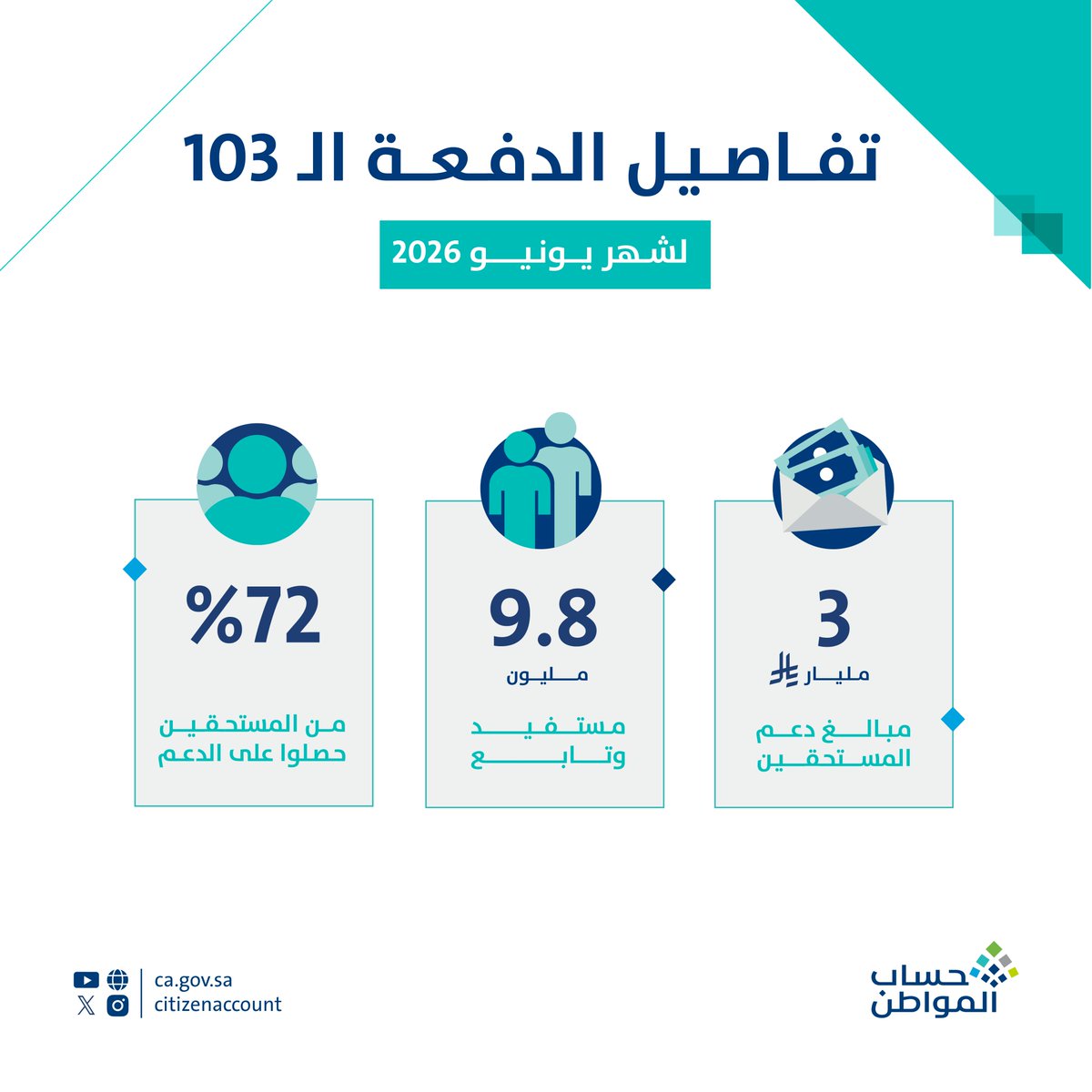
تفاصيل الدفعة الـ 103 | 3 مليار ريال لـ 9.8 مليون مستفيد وتابع شملهم الدعم في برنامج #حساب_المواطن لشهر يونيو.
115
11
53
33,153
Jun 10
لعبة الحرب والسلام منذ يونيو 1967
حرب العام 1967، أنتجت مناخاً مواتياً لنمو المقاومة الفلسطينية، وتعاظم فعلها في قلب الدولة «المنتصرة»، وفرضت على الدول «التي انهزمت» استعداداتٍ أكثر جديّةٍ وجدوى، ظهرت مفاعيلها في حرب أكتوبر (تشرين الأول) 1973، التي أفضت إلى تسوياتٍ مع مصر والأردن، سُوّقت في حينها على أنها ستكون نهايةً لحروب الجيوش، وبدايةً لإنهاء الصراع العربي - الإسرائيلي، غير أن ما حدث أنتج حقيقةً تُشبه ما أنتجت حرب يونيو، وهي أن الاتفاقات السياسية والتعاقدية مع دولتين محوريتين في الصراع مع إسرائيل، وإن حققت إنهاء حالة الحرب بينها، فإنها لم تُغلق الأبواب أمام اندلاع حروبٍ جديدة، أي أنَّ غياب حلٍ شاملٍ لقضايا الصراع العربي - الإسرائيلي، يعني منطقياً وعملياً غياب السلام الشامل عن المنطقة.
فهل تعود الحاضنة الأميركية المتبقية لها إلى العمل في الشرق الأوسط وفق مبدأ «أنقذوا إسرائيل من نفسها»؟ فإن فعلت ذلك بدعم التسوية التي طرحها العالم في مؤتمر نيويورك، فستجد نفسها خرجت وأخرجت إسرائيل معها من خطيئة سوء إدارة لعبة الحرب والسلام، وإن لم تفعل فكل ما تم التوصل إليه أو سيتم من تسوياتٍ جزئيةٍ ومتفرقةٍ كأنه لم يكن.
aawsat.com/node/5282270
27
ماكيندر الذي فجّر الحروب والصراعات حول قلب الأرض
لم يكن ماكيندر من نوعية العلماء الذين يكتفون بالتنظير، بل آمن بأن الجغرافي يجب أن يختبر بنفسه خرائط الأرض (مكتبة مدرسة لندن للاقتصاد والعلوم السياسية)
"مَن يحكم أوروبا الشرقية يسيطر على قلب الأرض، ومَن يحكم قلب الأرض يسيطر على جزيرة العالم، ومَن يحكم جزيرة العالم يسيطر على العالم بأسره".
في شتاء عام 1904، وقف الجغرافي البريطاني هالفورد ماكيندر أمام الجمعية الجغرافية الملكية في لندن، حاملا خريطة ملوّنة بخطوط نظريته الشهيرة عن "قلب العالم"، عارضا تصوّره على العالم بوصفه كيانا منقسما إلى قلب قاري صلب وأطراف بحرية لينة.
القلب الصلب -وفق رؤية ماكيندر- تُمثِّله الكتلة الأوراسية، الممتدة من شرق أوروبا إلى سيبيريا، وهي أرض مترابطة بريا، غنية بالموارد، عصيّة على الغزو من البحر، وتُعَدُّ مركز الثقل البري للحضارة. في المقابل، تمتد الأطراف البحرية حولها كطوق مائي واسع من أوروبا الغربية إلى الشرق الأوسط وجنوب شرق آسيا، وهي مناطق منفتحة على البحر، سهلة الاختراق، تتأرجح دوما بين ضغط القوى البرية من الداخل والقوى البحرية من الخارج.
في هذا السياق، أطلق ماكيندر مقولته الشهيرة، التي أكد خلالها الرابط بين السيطرة على منطقة شرق أوروبا والهيمنة العالمية، وتحولت مع مرور الوقت إلى عقيدة إستراتيجية لكبار صُنّاع القرار.
كانت رؤيته بسيطة في بنيتها، لكنها زلزلت مفاهيم القوة التقليدية، إذ قلبت المعادلة التي جعلت من البحر رمزا للهيمنة طيلة قرون، فالقوة الحقيقية، كما رأى، لا تنبع من السفن والأساطيل، بل من السيطرة على الكتلة الأرضية المترابطة التي تختزن الثروة والسكان والعمق الإستراتيجي.
ورغم أن العالم يومها لم يكن قد عرف بعد الحروب العالمية ولا الطائرات المقاتلة ولا الأقمار الصناعية، فإن نظريته ظلت حاضرة في عقل كل إمبراطورية لاحقة، من برلين وهتلر إلى واشنطن ونيكسون، وصولا إلى موسكو وبوتين، كأنها دليل يُرشد مَن يسعى إلى السيطرة على التاريخ من بوابة الجغرافيا، وحافز لا مرئي تسبب في إشعال ما تلاها من حروب.
ماكيندر الذي فجّر الحروب والصراعات حول قلب الأرض aja.ws/nw0hrv via @AJArabic
156
رغم رياح هرمز... «رالي» استثماري مرتقب بين الرياض واستوكهولم
التكنولوجيا النظيفة والجيل الخامس
وفيما يتعلق بمحاور التعاون الراهنة، أشارت ميناندر إلى أن الشراكة تتجذر باستمرار في قطاعات نوعية ذات قيمة مضافة عالية، وفي مقدمتها التحول الرقمي، وصناعة الاتصالات عبر شبكات الجيل الخامس، ودعم التحول الأخضر من خلال تطوير وتوسيع شبكة الكهرباء الوطنية بالاعتماد على التقنيات السويدية الرائدة.
وزادت السفيرة السويدية: «إن الوضوح الحاسم في أهداف المملكة يمثل الوقود الحقيقي لهذا التعاون؛ فالأهداف الاستراتيجية السعودية المتمثلة في الوصول إلى 50 في المائة من الكهرباء المتجددة بحلول عام 2030، وتحقيق اقتصاد خالٍ من الانبعاثات الكربونية بحلول عام 2060، تحفز وتجذب الاستثمارات المستندة إلى الحلول الهندسية السويدية المتقدمة، وكفاءة الطاقة».
ووفق ميناندر، فإن الشركات السويدية تشارك بقوة في قطاعات الاتصالات، والبنية التحتية الكبرى «للمشاريع الضخمة»، والطاقة، فضلاً عن التنمية الحضرية الذكية، والمستدامة، وقطاعات جودة الحياة، مثل الرعاية الصحية، والتعليم -المشاركة في بعض هذه المجالات منذ ما بين 50 - 60 عاماً-؛ بجانب الحضور البارز لعلامات تجارية شهيرة، مثل «إيكيا»، و«إتش آند إم»، والتي تلعب دوراً ملموساً في توطين الوظائف، وخلق فرص عمل واعدة للكفاءات السعودية من الجنسين.
#العلاقات_السعودية_السويدية
aawsat.com/node/5281604
237
السعودية تؤهل 24 شركة عالمية ومحلية لرخص الكشف عن الذهب والمعادن aawsat.com/node/5282162
27