
Economist. Assistant Professor of Finance at Wharton.
Joined February 2015
- Tweets 14,298
- Following 2,872
- Followers 46,169
- Likes 22,215
1,747 Photos and videos


Pinned Tweet

30 Jul 2024
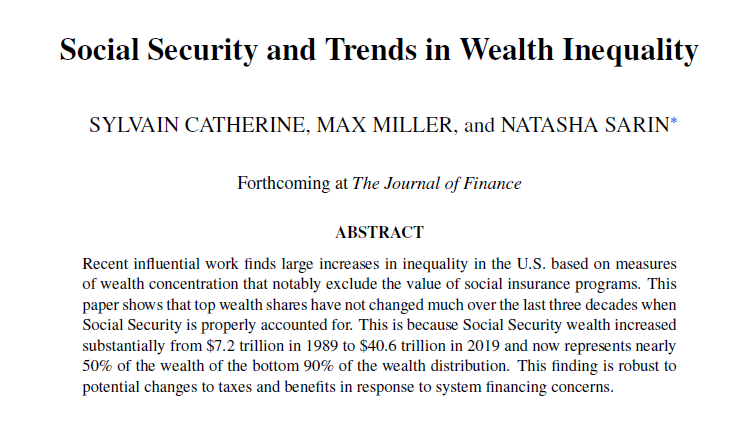
🧵🚨Accepted paper🧪
with @mjmill611 (Harvard) and @NatashaRSarin (Yale)
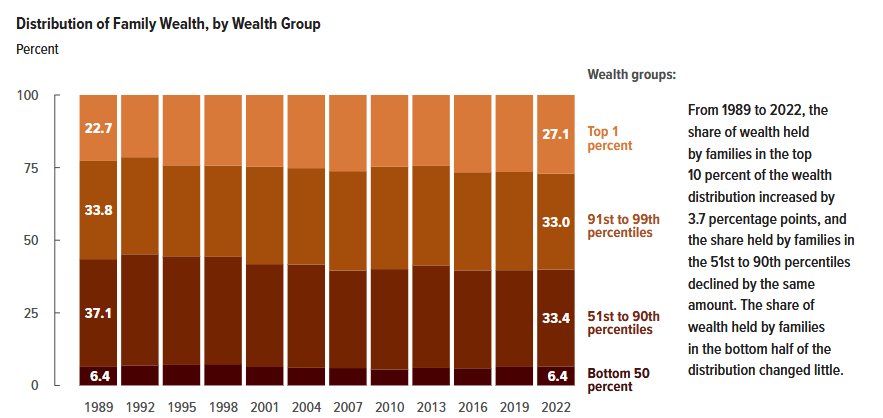
Existing studies paint an incomplete picture of trends in wealth inequality in the US. When Social Security is properly accounted for, wealth inequality has not really increased over the past three decades.
49
330
1,322
996,290
I think business interests do influence politics in the US but I don't think this has much to do with wealth concentration at the household level.
Zuckerberg owns 14% of Meta. Do we think that if that wealth was seized and sold to the secondary market Meta would defend its business interests in a different way?

The most compelling objection to economic inequality (as opposed to poverty) is that it enables political inequality. However:
(1) We lack strong evidence that money does in fact buy elections
(2) People are entitled to use their property to promote political outcomes (e.g., you’re within your rights to put a sign for your favorite candidate in your yard)
(3) The most effective way to prevent people from buying political influence is to disincentivize it by reducing the redistributive and regulatory power of the state
2
1
40
5,335
I don't dodge this question. I have always advocated for broader participation to the stock market, lower taxes on labor and land value taxes which are other ways to achieve lower wealth concentration while, at the same time, achieving other goals rather than stiffing innovation and growth.

It seems you want to dodge the question of whether this degree of wealth concentration is optimal, and i dont blame, as thatd be a very hard position to directly defend. Even indirect defense via whataboutism (ngo interest groups) are risible
3
12
113
7,127
I am not sure who is deluded here. We are told we must have large wealth taxes, with capped economic growth in large parts of the world, but it is the critics of these proposals who somehow do not understand the need for checks and balances over the concentration of political power. None of the proposals being criticized can be implemented without substantially increasing the concentration of power in the world.
Opposing these ideas does not necessarily mean being naive about the power of billionaires. There are other ways to balance this power: antitrust policy, competition, capping political donations, and so on.
Moreover, the groups that denounce the political influence of billionaires also have a disproportionate amount of influence themselves, often subsidized by taxpayers. In principle, their influence is legitimate because, as academics, they are supposed to advocate for policies based on research. But they constantly bias the statistics they present to the public, which reduces voters’ ability to make informed choices. They denounce what they practice themselves.
As for Elon Musk being a genius entrepreneur, anyone who knows basic facts about the distribution of outcomes in entrepreneurial ventures would recognize this. Again, this is related to your ability to deal with facts that may feel as though they do not fit your political preferences. In this case, it should not even be a problem, since you can be a genius entrepreneur and have awful political ideas or behavior.
Finally, suggesting that someone feels compelled to do something, as if they lack courage, and then not giving them the opportunity to respond by blocking them, is illustrative of who is truly liberal.
8
22
136
11,669
Sylvain Catherine retweeted
Jun 12
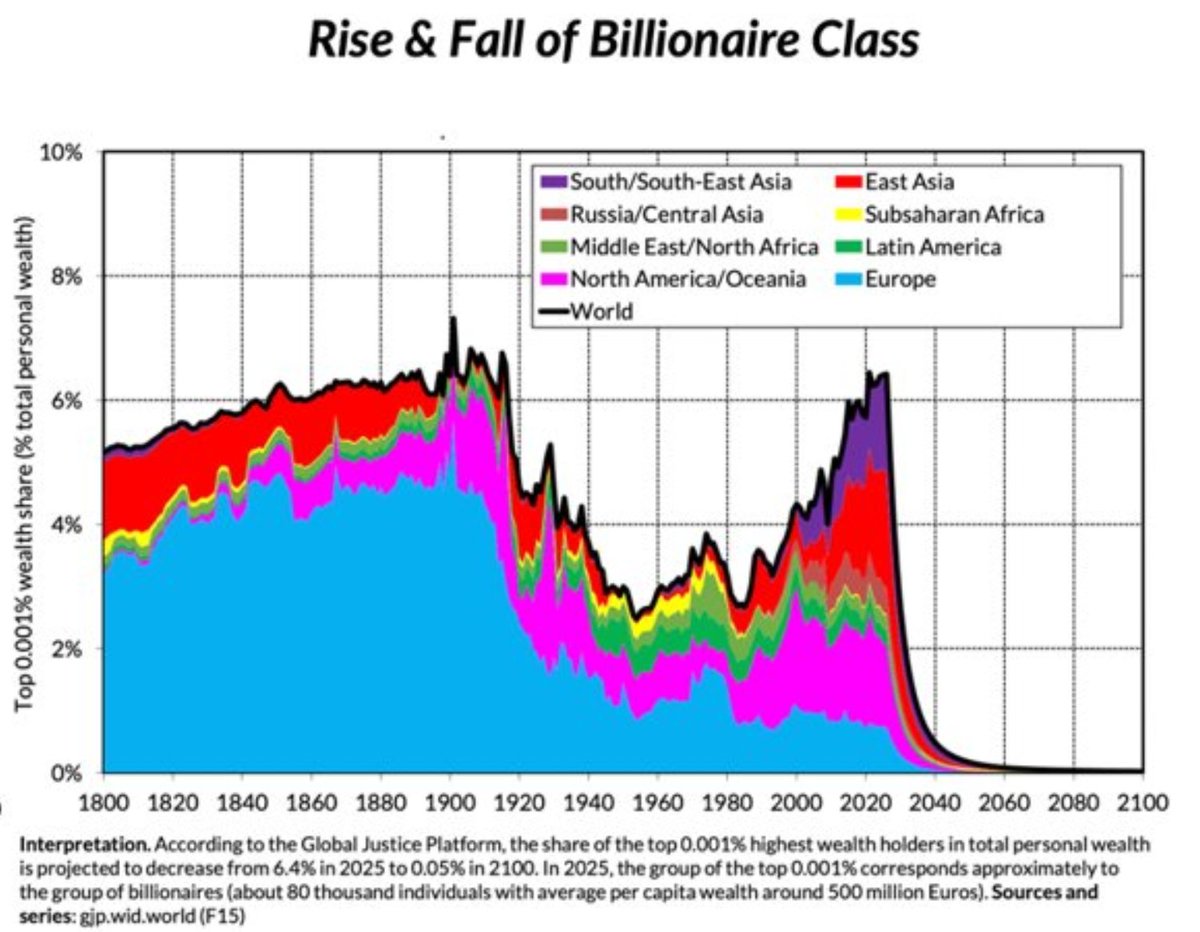
What happened to the Rockefeller, Carnegie and Astor by the way?
According to the “law of capitalism” (r>g) their wealth should have grown ineluctably faster than GDP unless there is a wealth tax.
By now, assuming a 4% spread between r and g, these families fortunes should represent roughly 200% of GDP. Is that actually true?
Or maybe somehow the wealth of these families got ultimately diluted in other ways? Maybe we should wonder in what ways
Jun 12

At the peak of the Gilded Age, the 4 largest fortunes were Rockefeller, Carnegie, Astor ( Baker/Frick/Field depending on the year).
If they had spent their wealth, they could have bought 4% of all the goods and services produced in a given year in the US at that time.
45
124
1,041
163,568
It’s not on billionaire wealth, by the way; it’s on any ETF available to the general public.
An alternative approach is to equalize rates of return through financial literacy and institutions that democratize access to the stock market.
That is a solution that promotes growth instead of creating fiscal distortions.

It’s a problem that the return on billionaire wealth is about 7.5%. Any wealth tax rate below that and accumulation continues.
5
12
122
8,846
Sylvain Catherine retweeted

Jun 12
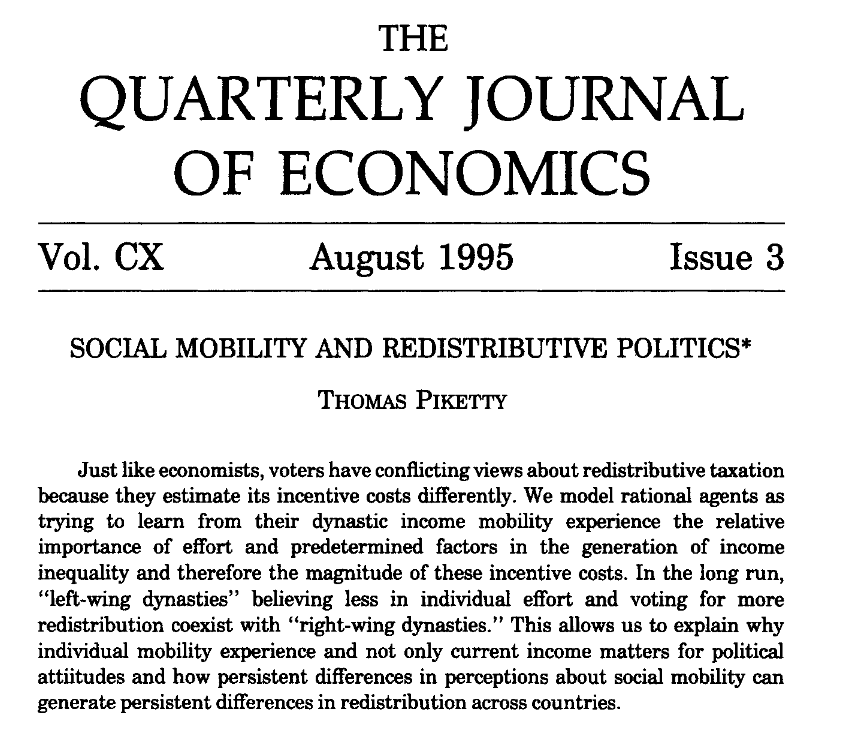
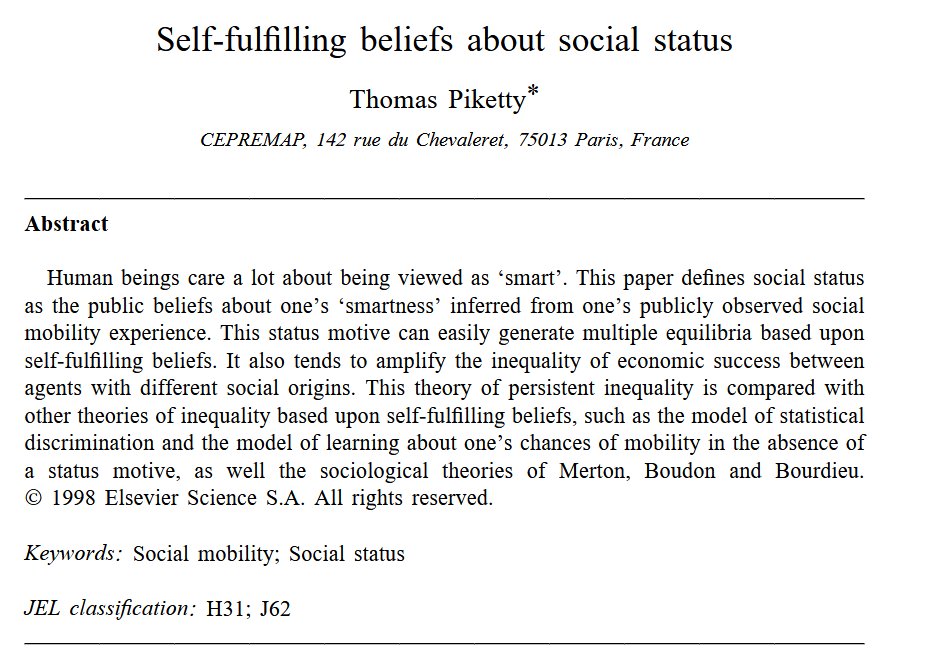
Some Piketty (et al.) bangers to explain why he is so respected, even before Das Capital 2.0, and whatever AI-generated stuff he publishes in the newspaper today
In the 1990s, he formalised theories of self-fulfilling preferences and redistribution. He showed us (1/4)
15
73
728
95,181
Jun 12
La capitalisation n’implique pas davantage de payer deux fois que la répartition.
Si demain nous nous réveillions dans un système par capitalisation, le PIB de la France serait le même, ainsi que le nombre de bouches à nourrir.
Si l’on devait payer « deux fois », où partirait ce dédoublement de paiement, au juste ? On l’enverrait aux Chinois, aux Allemands ? On brûlerait 14 % du PIB ? On investirait le tout dans Duralex?
À nouveau, la donnée fondamentale du problème est que les retraités ont une créance sur l’économie en vertu des droits sociaux accumulés. La valeur de cette dette implicite est fixe pour les générations futures, à moins de la renégocier (par une désindexation, par exemple).
Ni la capitalisation, ni la répartition, ni la moindre forme d’ingénierie financière ne créent des pains ou ne font disparaître des bouches par l’opération du Saint-Esprit.
La capitalisation n’a que l’inconvénient d’une transparence comptable qui fait apparaître un double paiement qui existe d’une manière ou d’une autre, même s’il est dissimulé dans le fonctionnement en cavalerie de la répartition.
Jun 12

Retraites : le point sur les pistes évoquées.
- Augmenter l’âge de départ ?
Les conditions de travail des Français ne sont pas assez bonnes pour cela.
- capitalisation ? C’est payer 2 fois.
- Retraite à points ? C’est refaire la tuyauterie quand on a un problème de chaudière
42
103
479
56,972
Jun 12
Dire qu’il y a un double paiement à opérer une transition c’est comme dire qu’il y a un double paiement à ne pas financer la dépense publique à crédit. Oui ça coûte moins cher immédiatement d’emprunter l’argent. Mais une fois qu’on considère la collectivité des générations présentes et futures, ça revient au même.
3
11
59
3,378
Jun 12
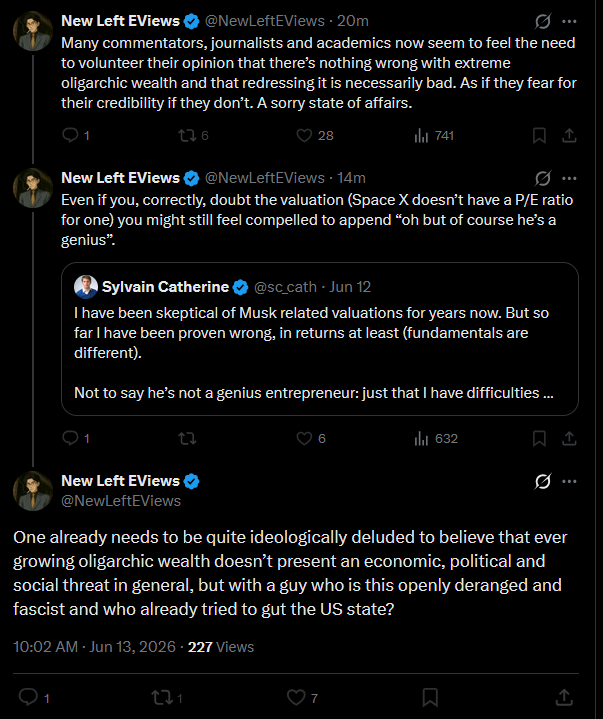
I have been skeptical of Musk related valuations for years now. But so far I have been proven wrong, in returns at least (fundamentals are different).
Not to say he’s not a genius entrepreneur: just that I have difficulties rationalizing the valuation of his companies.
21
7
155
16,149
Jun 12
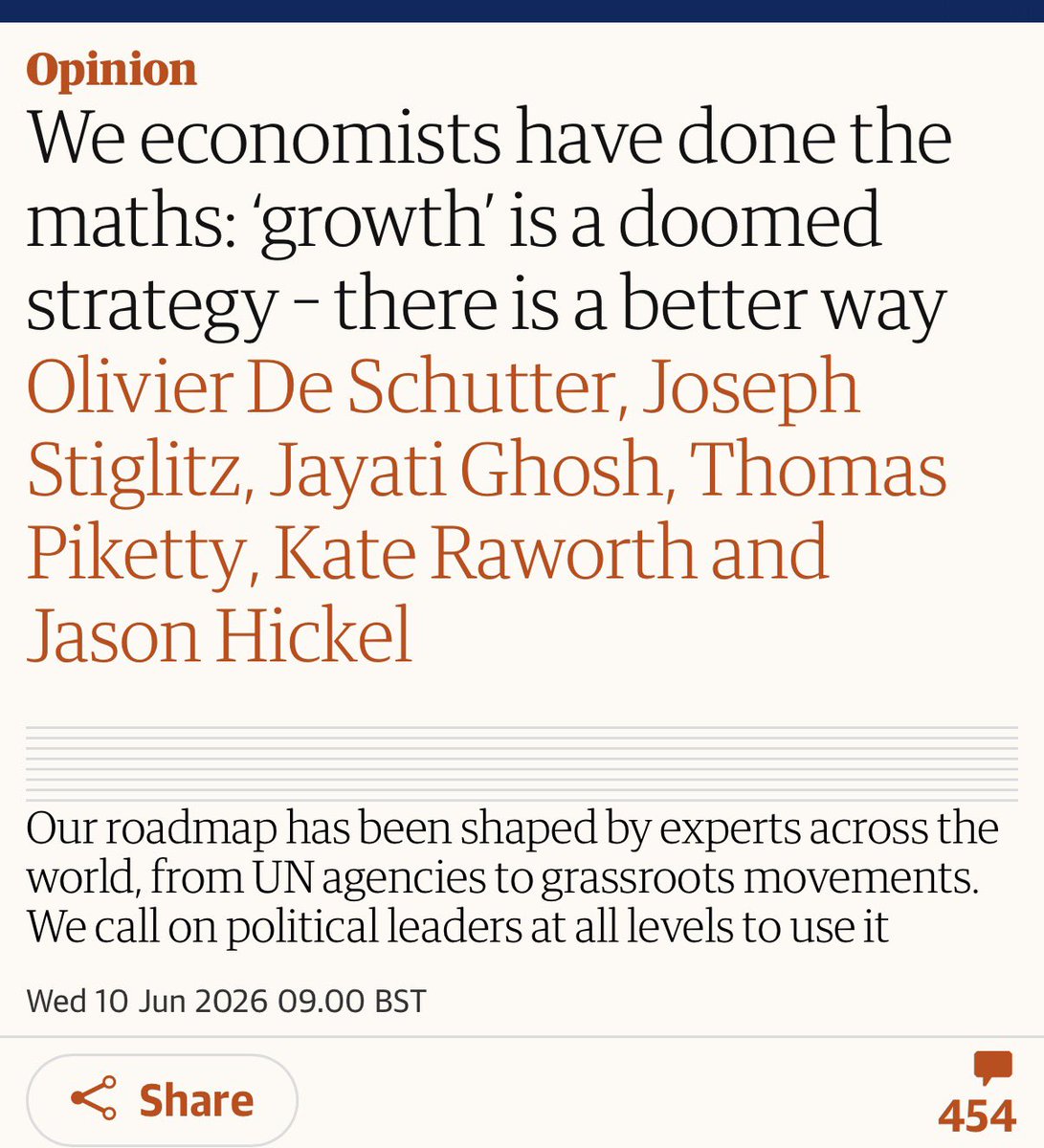
The French version published in Le Monde passed the test. Maybe it was written in French and translated using AI.
I also think the wording of the French version is somewhat less crazy. For example, the first sentence says that “we live in an era of artificial scarcity” while the version published in the Guardian says it’s “manufactured.” Manufactured sounds much more deliberate/intentional.


8
12
172
42,169
Jun 11
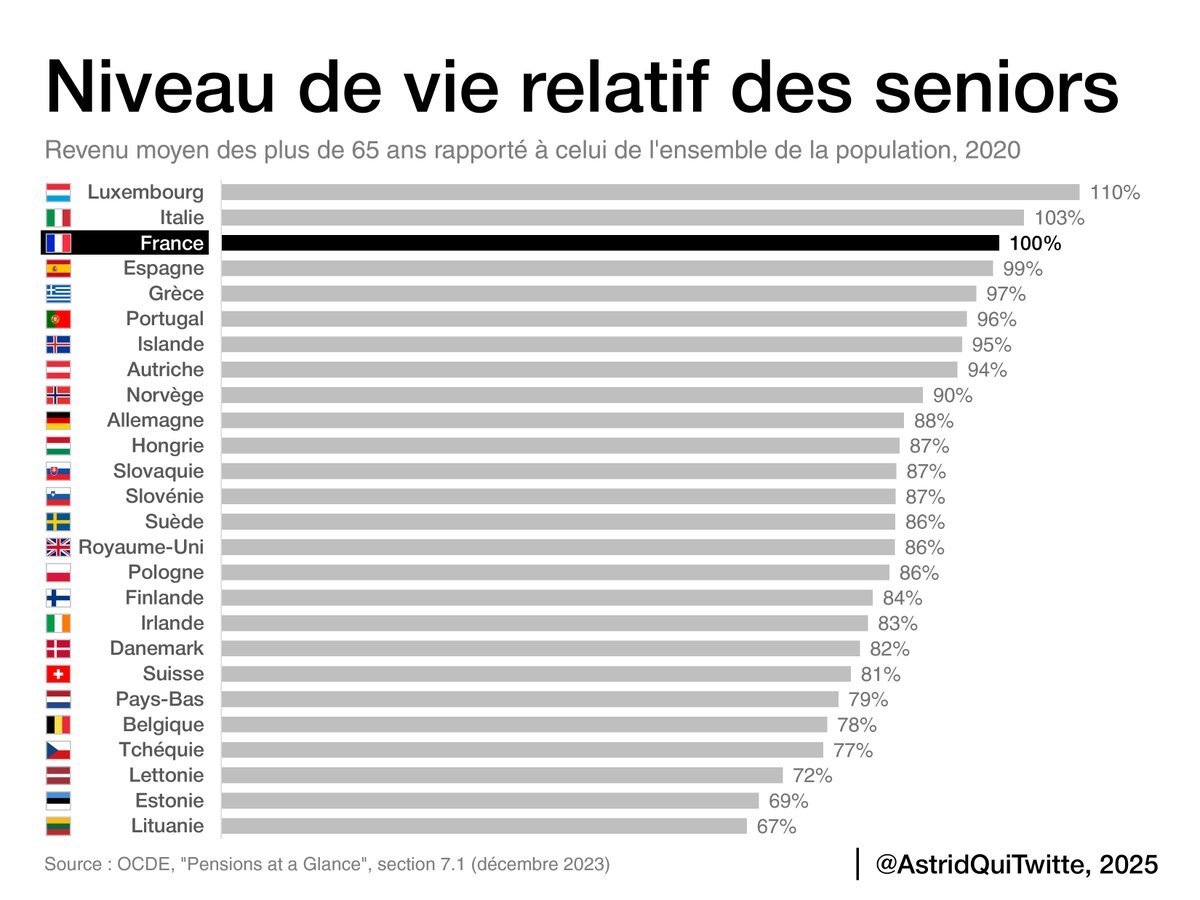
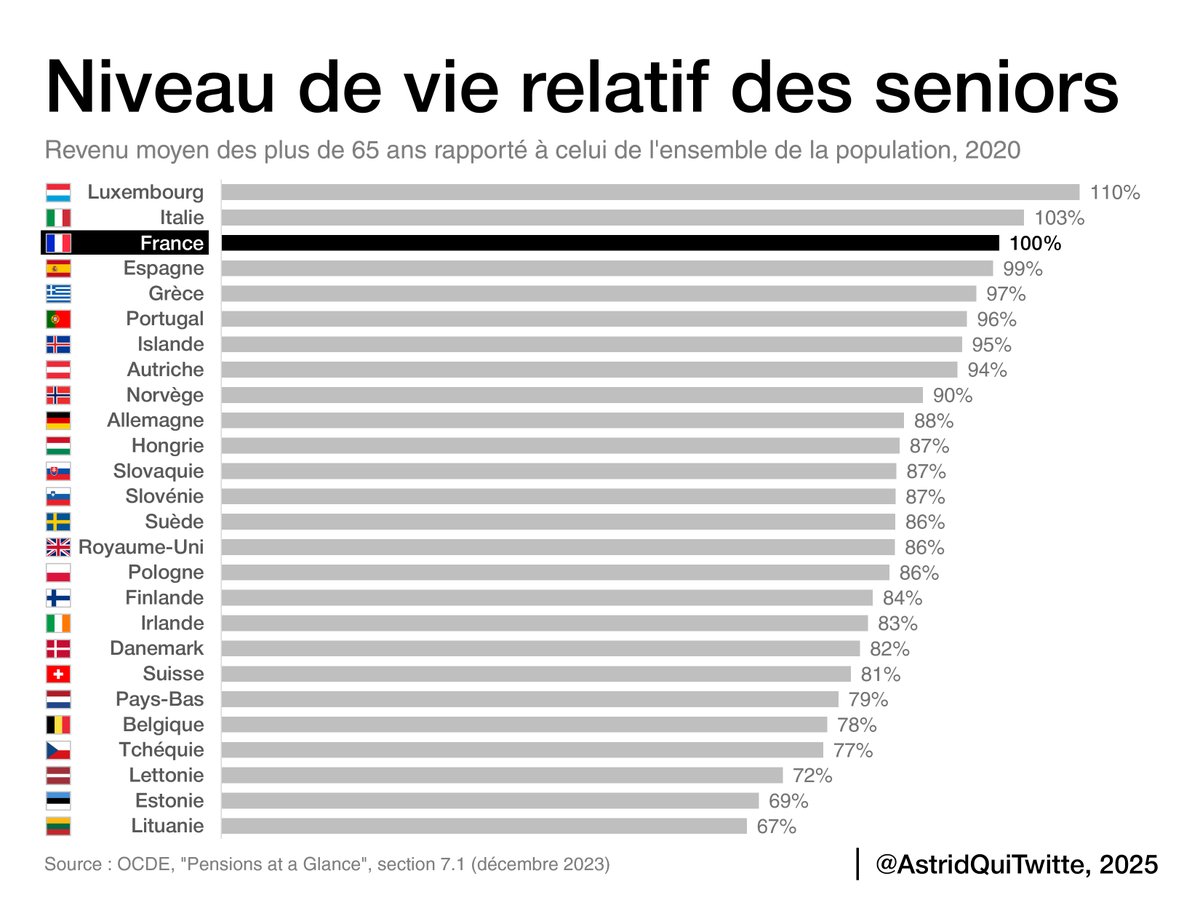
A garder en tête: dans ce graphique, la position de la France est d'autant plus remarquable que dans de nombreux pays sur ce graphique, un part importante du niveau de vie des seniors est constitué de revenus du travail, qui sont en revanche très marginaux en France parmi les plus de 65 ans.
Ce graphique serait encore plus saisissant si on s'en tenait aux seuls pensions et revenus du capital.
Jun 11

Mais le niveau de vie relatif des retraités n'est pas seulement une exception à l'échelle de l'histoire de France.
C'est aussi une exception internationale :
19/
15
72
335
27,795
Jun 11
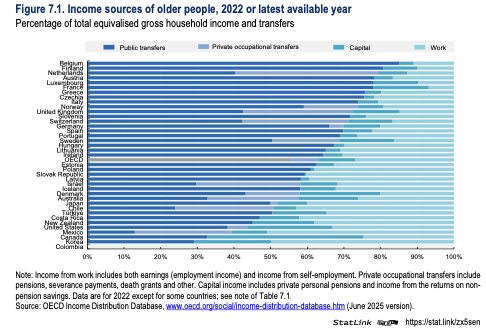
Voici la décomposition des sources de revenus des seniors par pays. Le travail constitue une source significative de revenus des seniors dans la plupart des pays mais anecdotique en France.
4
8
44
2,796
Sylvain Catherine retweeted

Jun 11
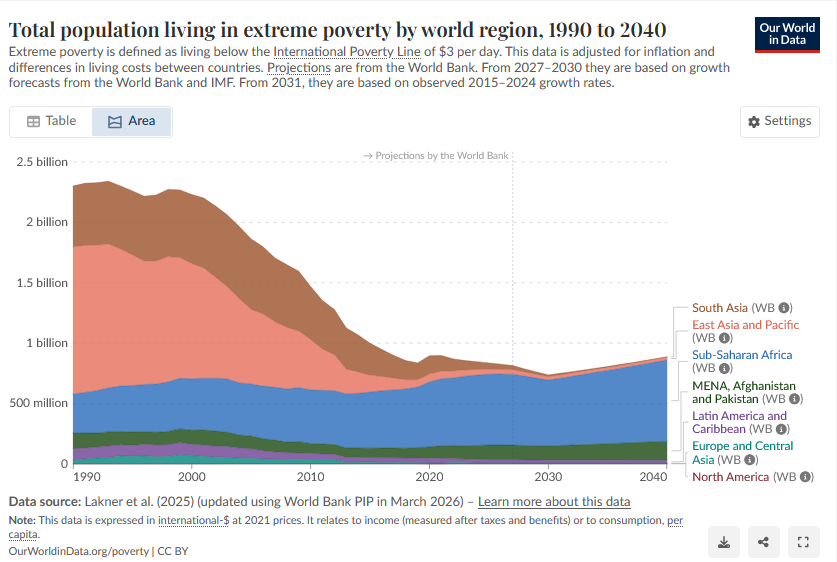
I don't know what Piketty, Stiglitz, and co. are smoking. Global poverty rates have never been lower. Progress on basic global health and wellbeing measures has been amazing over the past few decades. "End of the road"?!? Come again!?!
theguardian.com/commentisfre…
119
456
2,531
805,932
Jun 11
Oui. Passons sur le cas des Polytechniciens et normaliens qui commencent « à travailler » à 19-20 ans.
Mais même durant une scolarité à HEC on peut facilement valider deux ou trois années de cotisations. Il ne faut pas nécessairement travailler une année entière pour la valider mais un niveau de salaire sur l’année. Une année de césure sur le calendrier scolaire va valider deux années civiles complètes.
Dans une école avec beaucoup d’alternance comme l’ESSEC j’imagine qu’on peut gagner assez chaque année pour valider quatre trimestres et donc techniquement se retrouver dans la même situation qu’une personne ayant commencé à travailler à temps plein à 19 ou 20 ans. A vérifier exactement.
Jun 11

Le paramètre « durée » est tout sauf homogène. Est ce que cela est forcément « juste » de laisser partir quelqu’un à la retraite un an (voire plus) avant les autres parce qu’il a eu un job d’été ?
11
8
81
21,213
Sylvain Catherine retweeted
Jun 10
Mon interview sur les retraites avec Hedwige Chevrillon et Nicolas Bouzou (à partir de 22:30)
bfmtv.com/economie/replay-em…
14
28
168
34,240
Jun 11
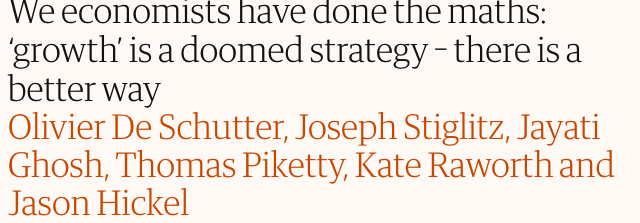
“We economists have done the maths” feels like the most insecure way to start an op-ed that you know will raise eyebrows.
“Trust us, bro” would raise fewer red flags.

17
44
525
16,975
Sylvain Catherine retweeted
Jun 10
En pratique c’est le contraire: un SMIC artificiellement élevé aboutit à des exonérations de cotisations pour en contrôler les effets pervers sur l’emploi. Durant la dernière campagne législatives, le NFP avait d’ailleurs lui-même proposé d’accompagner de la sorte les entreprises

Une retraite à 67,5 ans en 2070? ""Augmentation du SMIC, plus le salaire est élevé plus la part de cotisation également", "égalité salariale", les pistes de @BelouassaAnais pour financer la proposition de LFI d'une "retraite à 60 ans et 42 annuités"
3
48
257
15,893
Sylvain Catherine retweeted
Jun 10
Vu que je n'ai pas été clair ici, un petit exemple arithmétique pour expliquer pourquoi la durée de cotisation ne peut servir de seul déterminant.
Imaginez que le cas type soit 40 années de cotisations et 20 années de retraite. Implicitement, cette situation implique que le prix d'une année de pension soit deux années de cotisation.
Si un cotisant a commencé à cotiser un an plus tôt, il semble intuitif qu'il ait le droit de partir une année plus tôt. Sans quoi il se retrouverait à cotiser à avoir cotisé 41 ans pour 20 ans de pension, achetant donc son année de pension à un prix plus élevé que les autres.
Mais si nous lui permettons de partir un an plus tôt, il se retrouverait à profiter d'une pension de 21 années pour 40 années de cotisations. Ce qui, cette fois ci, pousse dans la situation inverse.
Ce cas simple devient encore plus compliqué lorsqu'on considère l'ensemble du système socio-fiscal, dont les retraites ne sont qu'une partie.
Il y a une logique économique intuitive à ce qu'une personne ayant commencé à travailler un an plus tôt puisse aussi partir plus tôt. Personne ne la conteste. Mais, moins intuitivement, il n'y a aucune nécessité mathématique à ce que cela coïncide exactement à une année de pension. C'est peut-être quatre, six, huits mois: le calcul dépend de plein de facteurs.
Jun 10

Mon interview sur les retraites avec Hedwige Chevrillon et Nicolas Bouzou (à partir de 22:30)
bfmtv.com/economie/replay-em…
20
40
230
37,767