
Joined October 2008
- Tweets 13,609
- Following 219
- Followers 1,201
- Likes 37,355
4,522 Photos and videos













Pinned Tweet

May 18
Cate Blanchett wondered why #MeToo got “killed very quickly,” and honestly, people are acting like we didn’t all just watch @blakelively help put the final nail in it.
Lively’s fantastical sexual harassment claims got tossed by Judge Liman, yet the public is somehow still expected to applaud the performance like it was some fearless act of truth-telling… 🤡🤡
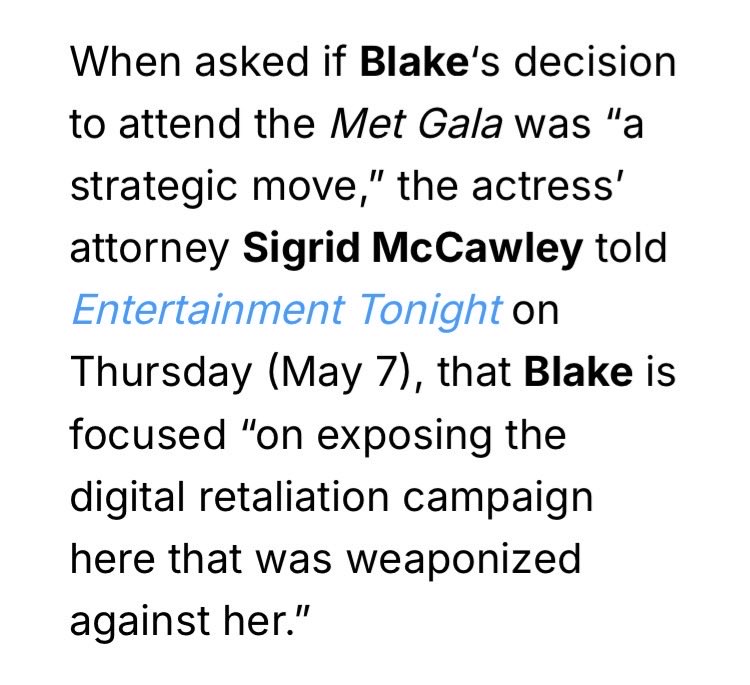
Her attorney, Sigrid McCawley, said Lively was focused on “exposing the digital retaliation campaign here that was weaponised against her.” Great — and the ideal place to expose the alleged retaliatory campaign would’ve been… court. You know, that inconvenient little place where evidence gets examined instead of curated through entertainment outlets and Instagram captions.
But somehow this “exposing” turned into dropping the claim, settling the lawsuit by @blakelively and then speed-running to the Met Gala three hours later dressed like the curtains from a condemned Versailles timeshare. Nothing says “I’m determined to expose the digital retaliation campaign” quite like abandoning the battlefield and immediately posing for Vogue photographers under chandelier lighting.
@blakelively doesn’t get to brand herself as bravely fighting injustice and then quietly exit before having to prove any of it under oath. At some point, people stop seeing Lively’s activism and start seeing luxury victimhood with a glam team attached.
You suck #blakelively / xoxo

Cate Blanchett in #Cannes:
"It's very disconcerting if you've found that you've worked with someone or are working with someone who has behaved in ways that are reprehensible."
20
75
785
108,139
Roman Schatow retweeted

the official LAPD story is that an officer feared for his life from a Labradoodle.
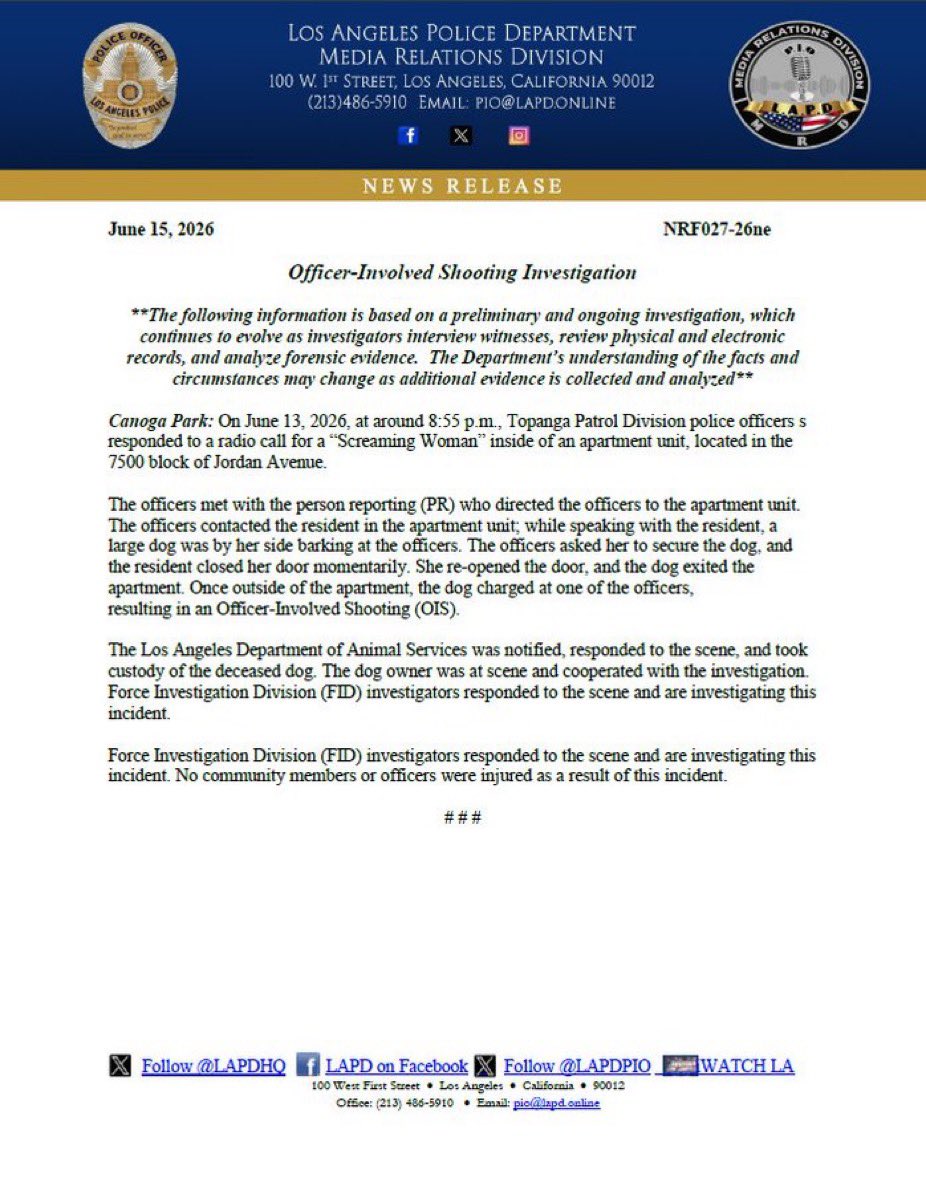
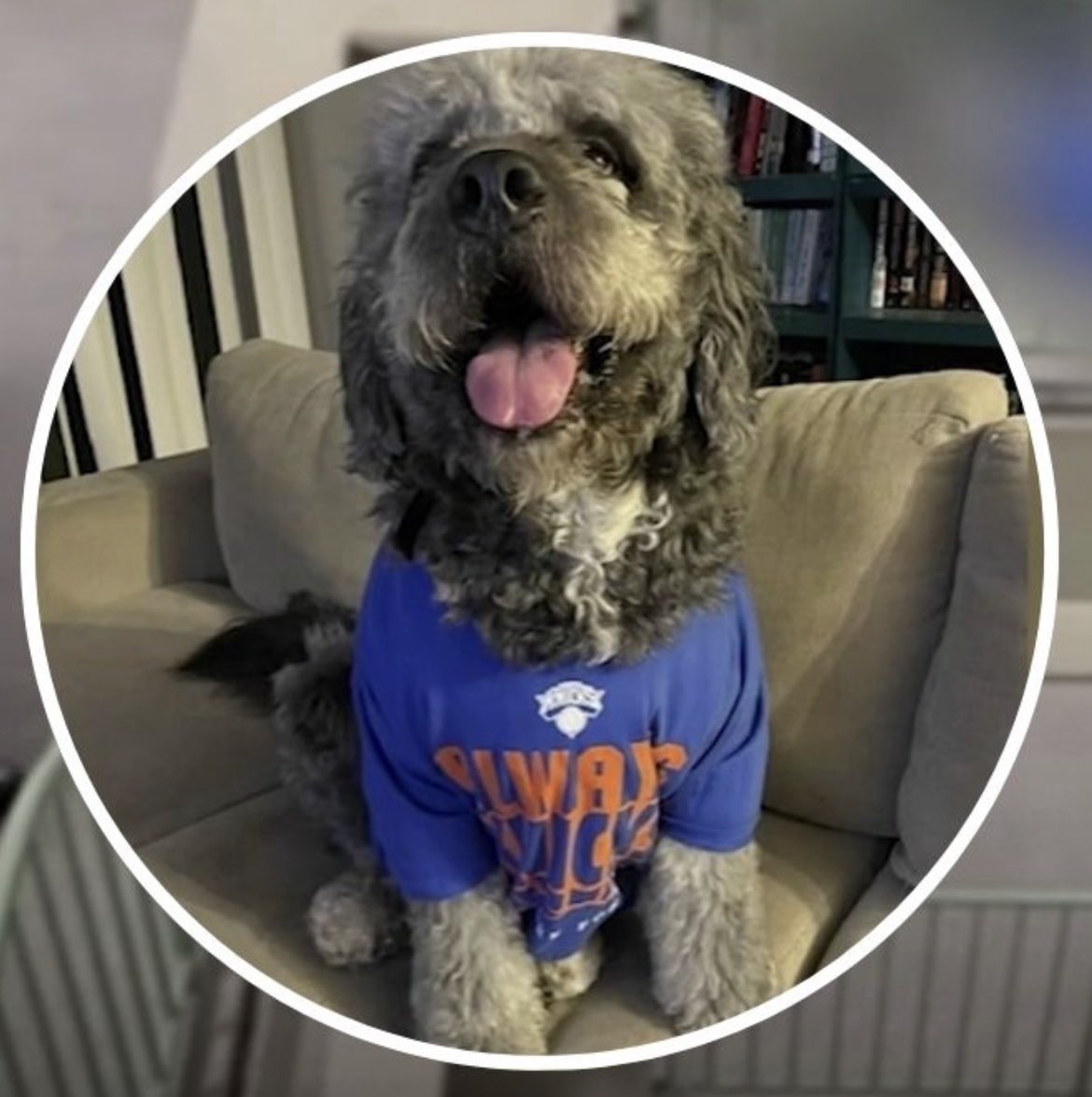

LAPD shoots and kills a dog as the owner celebrates the Knicks' NBA championship.
🎥: FOX 11 Los Angeles
34
607
6,374
168,849
Roman Schatow retweeted
I guess thanks, X ☻ ☻... Still trying to figure out how I made the "relevant people" list when I haven't posted a single thing about the settlement, but thanks for thinking of me anyway.
And over to you, @blakelively.
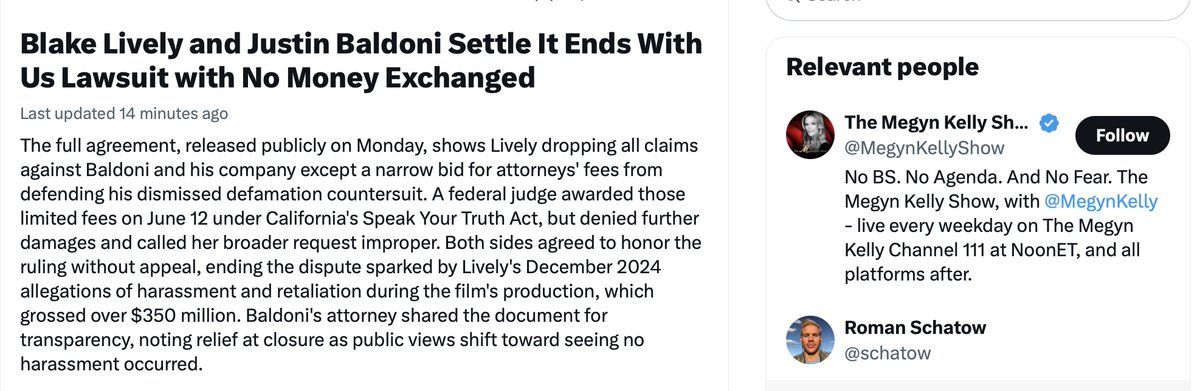
After all the headlines, all the public accusations, and all the money spent on attorneys, the Wayfarer Defendants aren't paying a cent of the $300 million in damages that was being sought. No admission of wrongdoing. No finding of liability. No determination that Baldoni or Wayfarer orchestrated the alleged smear campaign.
For a case that generated endless media coverage, the results speak for themselves.
And as for the case, I couldn't agree more with Bryan Freedman is of the belief that it’s now “time to move on.”
#blakelively #justinbaldoni #livelyvsbaldoni
2
4
53
1,193
Roman Schatow retweeted

A California Employment Attorney is breaking down the Blake Lively vs Wayfarer (Justin Baldoni studio) settlement. As pro-Lively’s PR machine spreading misleading headlines in the past few days, the release of the settlement agreement was necessary
youtu.be/ILwaXAKQxmg

Wake up babe! Blake Lively vs Justin Baldoni’s full settlement agreement is out! She got ZERO dollar after DEMANDING $300 M and claiming consistently “she is ready for her trial” to present her “mountain of evidence.” A true resounding defeat!
9
42
3,430
BILLING DOCUMENTATION FOR THE MATTER “WAYFARER V. THE NEW YORK TIMES”
Outside Counsel Fees: The NYT retained experienced media lawyers at competitive rates, supervised their work for efficiency, and paid $153,074.70 in fees for the federal defense.
In-House Counsel Fees: The NYT seeks additional fees for its in-house lawyers who prepared and litigated the current fee action.
Total Sought: The NYT requests a total of $181,622.70, contending this is reasonable and well-documented.
Motion to dismiss: 127.90 hours allocated to the motion to dismiss.
Timekeeper summary totals: Multiple time entries in the same invoice expressly reference drafting, revising, cite-checking, responding, and e-filing the Motion to Dismiss and related filings, tying those hours to the motion-to-dismiss work reflected in the summary total. The invoice’s timekeeper summary shows a combined total of 127.90 hours across all billed roles on the matter (partner, associate, paralegal, billable staff).
Invoice amount tied to motion-to-dismiss work: The invoice that contains extensive Motion to Dismiss drafting/revision/cite-checking and filing work shows a Total Amount of $94,167.70.
Supporting detail—hours billed on that invoice: That reflects 127.90 hours billed for the work reflected in the invoice (which includes the motion-to-dismiss tasks).
Remember that Wayfarer’s Lawsuit: Wayfarer and affiliated parties sued the NYT for defamation and related torts in federal court, asserting four causes of action: defamation, false light, promissory fraud, and breach of implied contract.
#blakelively #justinbaldoni #livelyvsbaldoni

#LivelyvWayfarer
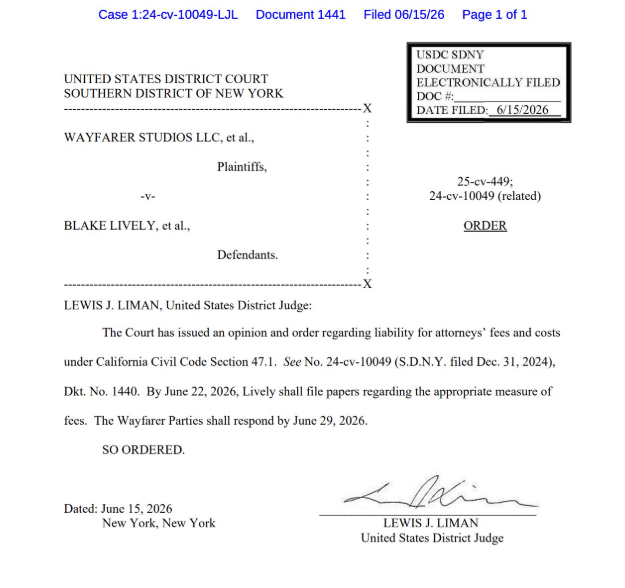
Judge Liman has issued a new order requiring Lively to file documents regarding the amount of attorney's fees she seeks. See below. It will be interesting to see how much Lively's lawyers will claim.
The one thing Lively's lawyers should bear in mind is that they don't want to lose credibility with the judge by seeking a ridiculous amount. As I have pointed out in a previous post, they sought $800,000 in the Texas case against Wallace for essentially the same thing. The New York Times is seeking to recover more than $150,000 in attorney’s fees and costs for prevailing in the same/similar defamation suit. Thus, it would be tough for Lively's lawyers to justify seeking "millions" in attorney's fees for the same defamation action.
1
4
41
3,882
Roman Schatow retweeted
#LivelyvWayfarer
Judge Liman has issued a new order requiring Lively to file documents regarding the amount of attorney's fees she seeks. See below. It will be interesting to see how much Lively's lawyers will claim.
The one thing Lively's lawyers should bear in mind is that they don't want to lose credibility with the judge by seeking a ridiculous amount. As I have pointed out in a previous post, they sought $800,000 in the Texas case against Wallace for essentially the same thing. The New York Times is seeking to recover more than $150,000 in attorney’s fees and costs for prevailing in the same/similar defamation suit. Thus, it would be tough for Lively's lawyers to justify seeking "millions" in attorney's fees for the same defamation action.
10
12
98
8,672
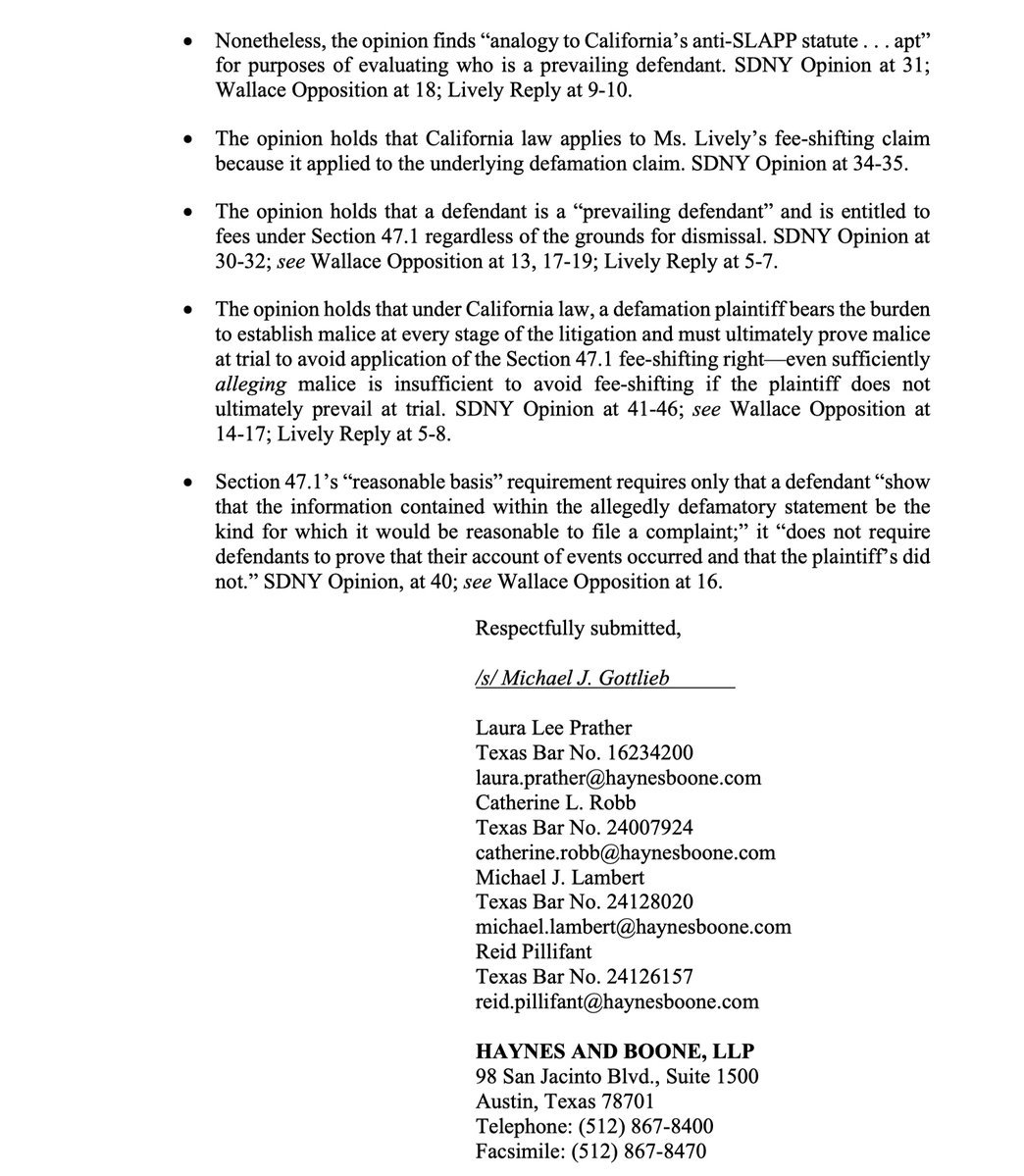
BL’S NOTICE TO THE JUDGE IN TEXAS
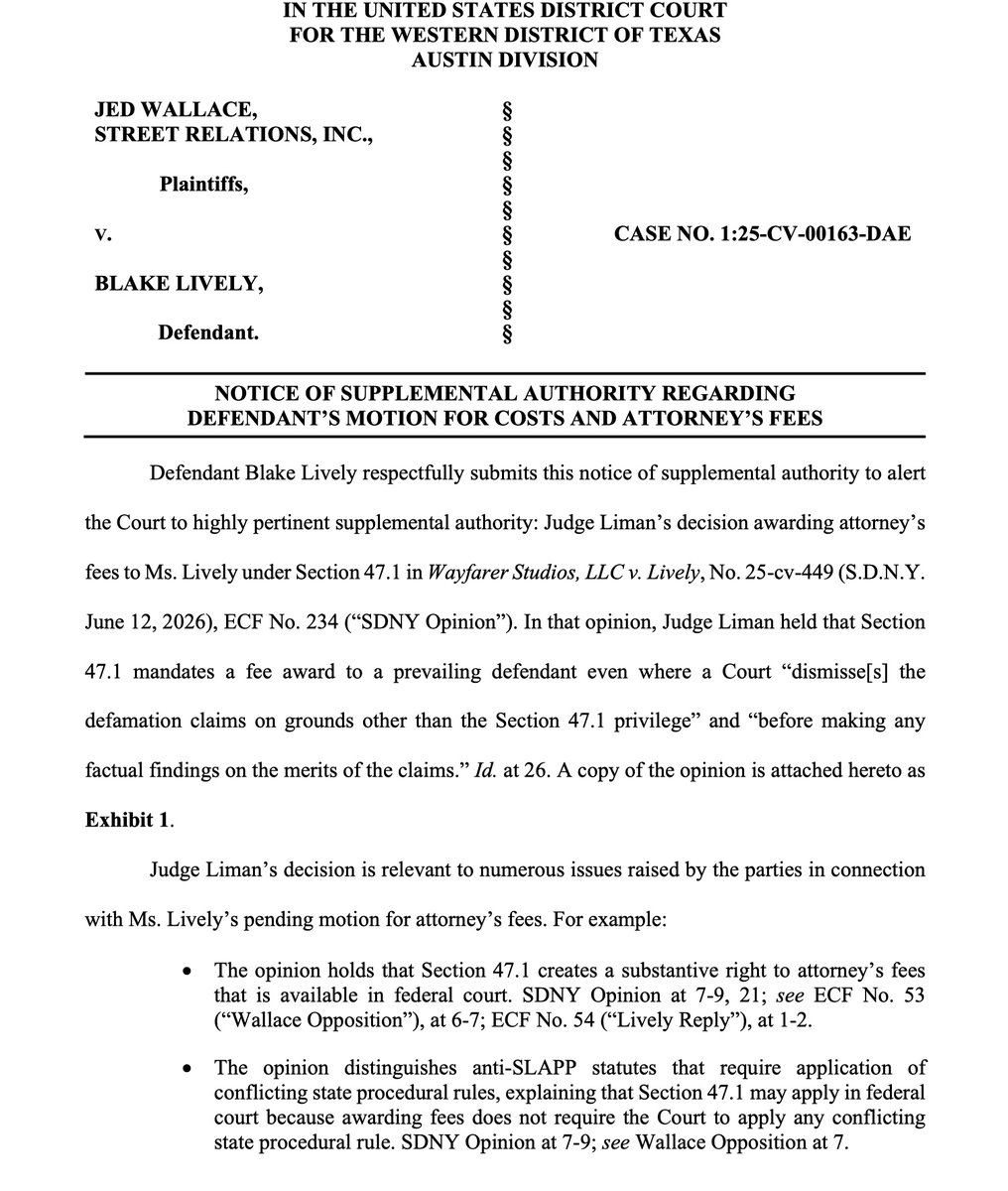
@blakelively (BL) notifies the Western District of Texas that supplemental authority supports defendant BL's motion for costs and attorney's fees under Texas Civil Practice Section 47.1, citing a recent SDNY decision awarding fees to a prevailing defendant even when dismissal occurred on non-Section 47.1 grounds.
But again, #MichaelGottlieb is dishonestly misleading, once again 👇🏽👇🏽
The SDNY opinion applied California law to the fee-shifting issue because California law governed the underlying defamation claim, and that was the choice-of-law framework the parties litigated under (including the Wayfarer Parties invoking California law in their defamation arguments).
Why that makes the “California law applies” point potentially misleading
Saying “California law applies” without context can sound like an independent, neutral selection by Judge Liman.
Judge Liman's application of California law to the fee-shifting claim was derivative of the fact that California law applied to the defamation claim, which the parties (including the Wayfarer Parties) themselves pressed.
What the notice accurately says vs. what it leaves out
Accurate: BL's notice accurately reports the holding that California law applies to BL's fee-shifting claim because it applied to the underlying defamation claim.
Omitted context: The notice does not spell out that California law applied in that litigation posture because the Wayfarer Parties invoked/relied on California law in their defamation claims—so presenting it as a standalone takeaway can read as less candid than it could be. (This specific “invoked California” detail is not stated in the provided snippets.)
#blakelively #jedwallace #wallacevslively
Jun 12

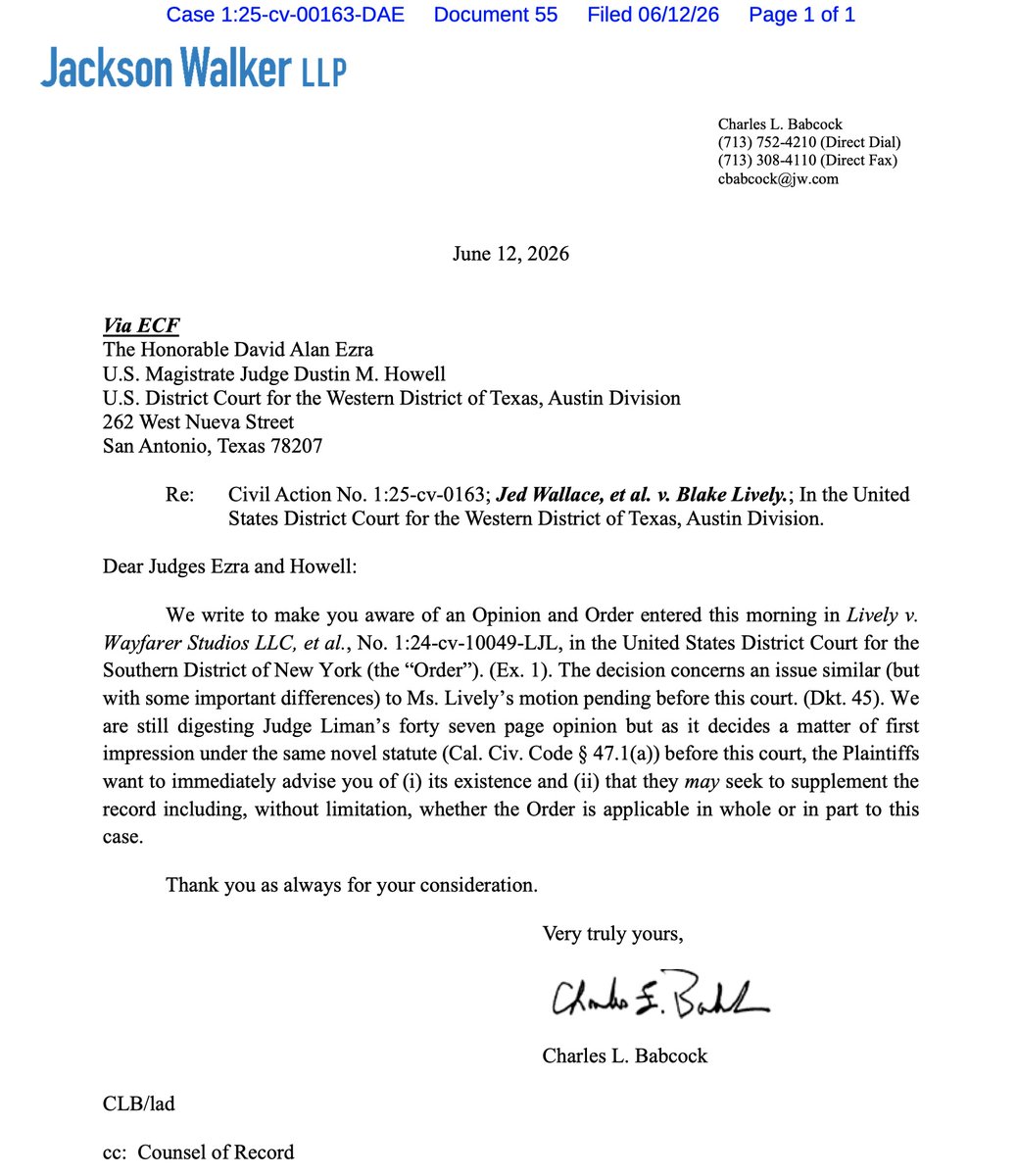
JD’S NOTICE TO THE JUDGE IN TEXAS
Plaintiffs—Jed Wallace, et al. (JW) notify the Western District of Texas about a new Southern District of New York order that may affect a pending motion involving the same statute → SDNY order interpreting Cal. Civ. Code § 47.1(a).
Relevance to pending motion is that the SDNY order addresses an issue similar (with important differences) to @blakelively's motion pending in this case (Dkt. # 45).
Potential next step is that JW may seek to supplement the record, including whether the SDNY order applies in whole or in part to this case.
#jedwallace #blakelively #wallacevslively
6
5
76
6,807
Related to the future Queen of Norway, surrounded by privilege and opportunity—and still ending up with a son sentenced to four years in prison.
Proof that a family tree can be impressive, while some branches remain a problem 👀👀

BREAKING:
Marius Borg Høiby, son of Norway’s Crown Princess (and good friend of Jeffrey Epstein) Mette-Marit, was just sentenced to 4 years in prison for rape

1
3
418
Roman Schatow retweeted
Sorry for bombarding you with questions, but perhaps I'm being "EU-stupid" and having my Patsy-moment 😁😁
1. How can Blake Lively rely on California Civil Code § 47.1 against Jed Wallace?
Wallace's position seems straightforward: there was no meaningful relationship between him and Lively concerning the alleged misconduct. They never met, Wallace was not involved in the events Lively described, and Lively never alleged that Wallace sexually harassed her or retaliated against her. Nor did she assert any sexual-harassment claim against Wallace in Texas.
I mean Lively cannot simply beam all of her allegations from New York into a completely different dispute and suddenly have them apply to him. This is not Star Trek; legal claims do not travel by transporter.
After all, Wallace was dismissed from the New York action for lack of personal jurisdiction, and Lively's claims against Wallace in Texas were likewise dismissed for lack of personal jurisdiction.
2. The choice-of-law issue still puzzles me.
I understand Judge Liman's reasoning that California law was relevant because the Wayfarer parties themselves invoked California law as the basis for several of their claims.
But Wallace's situation appears different. His claims focus on Lively's alleged publication and promotion of accusations to the media, the resulting reputational harm, and the consequences he allegedly suffered in Texas. The conduct giving rise to Wallace's claims was not merely the filing of a California complaint, but the alleged dissemination of those allegations afterward, much of which allegedly occurred elsewhere.
Viewed through a relationship-centered choice-of-law analysis, I'm struggling to see why California necessarily has the strongest connection. In my admittedly non-American legal brain, that factor seems neutral at best, or perhaps points more toward New York or Texas than California.
3. Isn't there a significant difference between a dismissal for lack of personal jurisdiction and a dismissal for failure to state a claim?
Those seem like entirely different planets in the procedural galaxy, yet BL sometimes treats them as if they are the same thing.
4. Rule 54 and Wallace's opposition to the fee request
One aspect that caught my attention is that Judge Liman specifically requested briefing regarding § 47.1 pursuant to Rule 54.
Wallace's lawyers seem to have anticipated a possible fallback argument. In opposing Lively's § 47.1 fee motion, they argue that Lively is not entitled to recover costs under Rule 54(d)(1) because she never sought costs on that basis in her motion. In other words, even if the court rejects the substantial attorneys' fees requested under § 47.1, Wallace argues that she cannot suddenly engage the warp drive and switch to a Rule 54 costs theory later because that argument was never properly presented in the first place.
3
2
17
437
Roman Schatow retweeted

Jun 13
#LivelyvWayfarer: Amount of Attorney's Fees:
In the wake of Judge Liman's decision on attorney's fees, Wayfarer's lawyer, Freedman, issued a statement which I criticized. I would've preferred a low-key vanilla statement since the amount of attorney's fees has not been decided.
For their part, Lively lawyers issued an even more unwise statement. Something in their statement caught my eye. They said that someone who didn't do anything wrong (Wayfarer) doesn't pay millions in attorney's fees and that this is where the case is headed. This is an unwise and presumptuous statement. Even if they request millions of dollars in attorney's fees for defending the defamation count, you cannot presume that the Judge would award the requested amount. You don't want to piss off a judge by presuming that he will award you millions for defending a single count in a seven-count complaint.
Courts vary in how strict they are in scrutinizing attorney's fee requests. The bottom line is that the attorney's fee amount must be reasonable. It would be interesting to see if Wayfarer contests the reasonableness of the amount being sought by Lively's lawyers.
Timeframe: Case was filed on 1/16/2025 and was dismissed on June 9, 2025.
Notes: Note that the billable items may include the preparation and filing of the attorney's fees motion.
The amount of attorney's fees depends largely on the amount of work done, the number of lawyers and other staff who worked on the case, the amount of time involved, the complexity of the work, the lawyer's fee structure, the lawyer's hourly rate, the jurisdiction in question, etc. Things are more expensive in New York.
Billable items include filing court documents, research, writing and other preparation related to the filings. Consultations and conferences related to the filings are billable.
Another billable category is court appearances. This would include the time for preparation, travel time, and the actual time spend in court, including waiting for the case to be called.
Reviewing the court documents filed by the other party is also billable. The lawyer also has to review court orders/opinions in a case to determine whether there are any appealable issues. That can be a billable review.
In terms of major court filings that Lively's lawyers had to review, we have these: 1. The original complaint in the defamation case. 2. The First Amended Complaint. 3. Wayfarer's Opposition to Lively's Motion to Dismiss. 4. Court order granting motion to Dismiss. 5. Reviewing the Judge Liman's order requesting additional briefing, and reviewing Judge Liman's order granting attorney's fees.
In terms of court filings, these are the major billable filings: 1. The Motion to Dismiss. 2. Reply to Wayfarer's opposition to the motion to dismiss. 3. The Section 47.1 Motion for Attorney's fees. 4. Filings urging the Court to accept additional briefing on the Section 47.1 issue. 5. Response to Judge Liman's request for additional briefing.
Court appearances: Any court appearances relating to Wayfarer v Lively would be billable. This includes preparation associated with such appearances.
The Amount: I cannot predict the actual amount Lively will request or whether judge will grant the entire request. Even though things are expensive in NY, including the lawyers' hourly rates, it would seem unreasonable to award millions of dollars in attorney's fees here. Defamation was one out of seven counts. The case never proceeded to discovery. It was dismissed at one of the earliest possible stages pursuant to Rule 12(b)(6). If it costs millions to defend the defamation count, how much did it cost to defend the other 6 six counts for which attorney's fees cannot be recovered? I think Lively's lawyers have to be careful not to make a ridiculous fee request.
Compare (the possible request of millions in NY to the fee request in the Texas case which was $800,000. Even though it is cheaper to litigate in Texas than in NY, the Texas case involved an additional issue not present in the NY case. The Texas dismissal involved a motion to dismiss under Rule 12(b)(2) (lack of personal jurisdiction) and under Rule 12(b)(6)(failure to state a claim). By contrast, the NY dismissal only involved Rule 12(b)(6).
Admittedly, the NY case involved more attorneys, more bickering by the lawyers, and more hearings. However, I don't see why the attorney's fees should be in the millions for defending a single defamation action that never got to discovery and was dismissed pursuant to 12(b)(6). The key would be whether Wayfarer challenges the fee amount. If it would be covered by insurance, I don't anticipate Wayfarer challenging the amount very strongly. Of course, Judge Liman can adopt a lenient approach in determining the amount of attorney's fees. One last point: if it cost Lively millions of dollars to defend 1 out of 7 counts in a case that never reached discovery, how much did it cost Lively to prosecute her own complaint (which began with 15 counts), proceeded through multiple amendments, motions for judgment on the pleadings, and motion for summary judgment before being dismissed on the eve of trial? It must have cost a very staggering sum of money!
7
7
66
5,920
Roman Schatow retweeted
Jun 13
How huge is it 🧐🧐
@blakelively was awarded only limited attorney’s fees and costs on a single claim in a case that lasted just a matter of months—nothing more.
Her allegations of sexual harassment, retaliation, and a smear campaign were never substantiated, adding that @blakelively sought more than $300 million in damages, had 10 of her 13 claims dismissed, ultimately settled, and received no damages.
After months of headlines, accusations, and a nine-figure damages demand, the final result seems remarkably modest: limited attorney’s fees and costs.
And if reports about tens of millions @blakelively spent on legal fees, it raises the obvious question: was all of this worth it?
2
6
80
1,467
Jun 12
Jun 12

It finally ends! Federal Judge Orders Wayfarer to Pay Blake Lively’s Legal Fees… But Not Millions More..
Justin Baldoni’s attorney, Bryan Freedman, tells us:
“We fought and won against a coordinated effort built on allegations of sexual harassment, retaliation, and a smear campaign that never happened. Ms. Lively demanded over 300 million in fees and damages, had 10 of her 13 claims dismissed, she then chose to settle and received nothing.
Notwithstanding that all of her sexual harassment and defamation claims were thrown out by the court, Ms. Lively then pivoted to exploit a California law that was established to protect real victims in what proved to be a fruitless mission to obtain damages. Once again, she failed.
My clients got blindsided by a Pulitzer-prize winning journalist and was threatened by one of the most famous movie stars, who tried to rip away their life’s work and pristine reputations. Not only were we successful in exposing the truth of their actions, but by the consistent dissemination of facts and evidence, we made sure that justice prevailed.
Ms. Lively was only awarded limited attorney fees for a single claim as part of a case that lasted only a matter of months, nothing more.
Throughout this process, innocent people had their reputations unfairly tarnished. There was no sexual harassment. There was no retaliation. There was no smear campaign. The court recognized it, the record reflects it, and we have maintained it from the very beginning. We would not hesitate to stand up for the truth again.”
Full story lamag.com/lawsuits/federal-j…
38
1,674
Roman Schatow retweeted
Jun 12
1
3
45
847
Jun 12
Jun 12
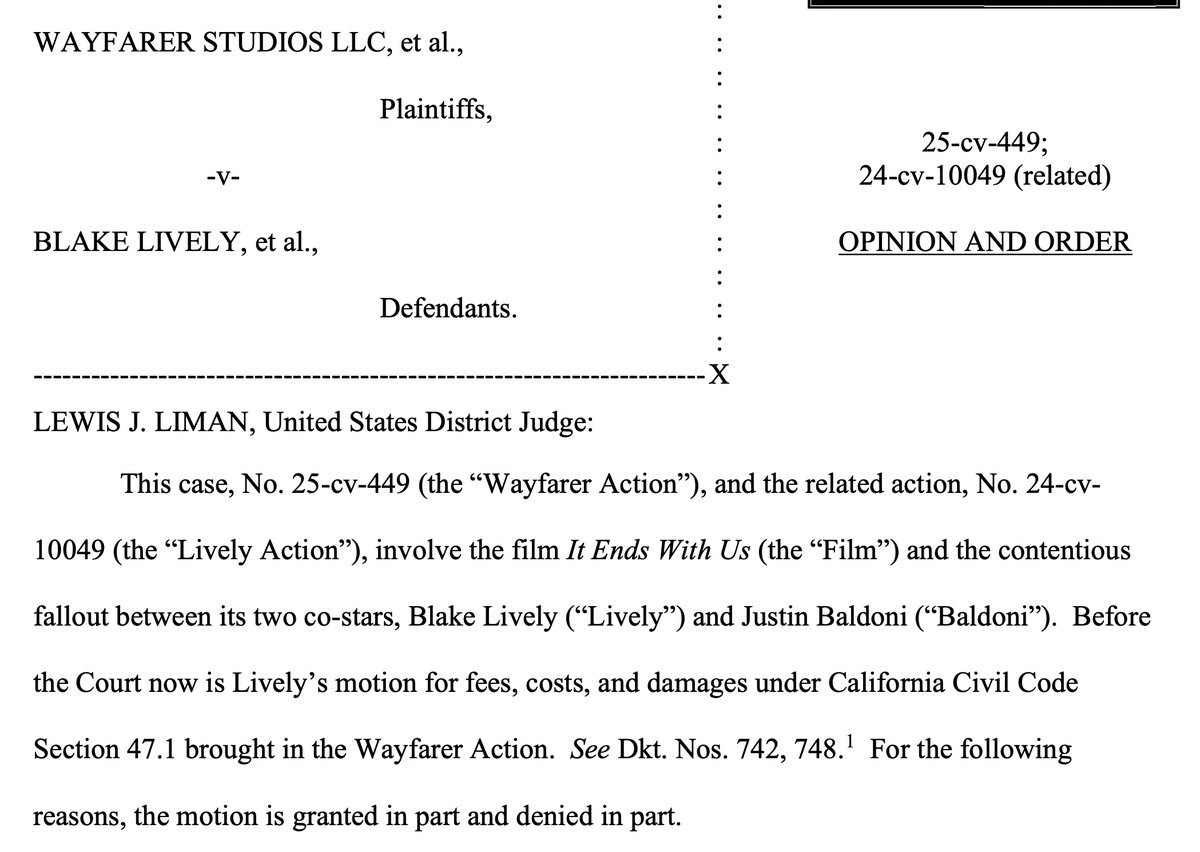
ORDER RE: BL'S 47.1 FEE MOTION
URL (ORDER re: MOTION for Attorney Fees, Treble Damages, and Punitive Damages Under California Civil Code Section 47.1): ⬇️
storage.courtlistener.com/re…
#blakelively #justinbaldoni #livelyvsbaldoni
2
4
46
1,559
Jun 12
1
3
45
847
Jun 12
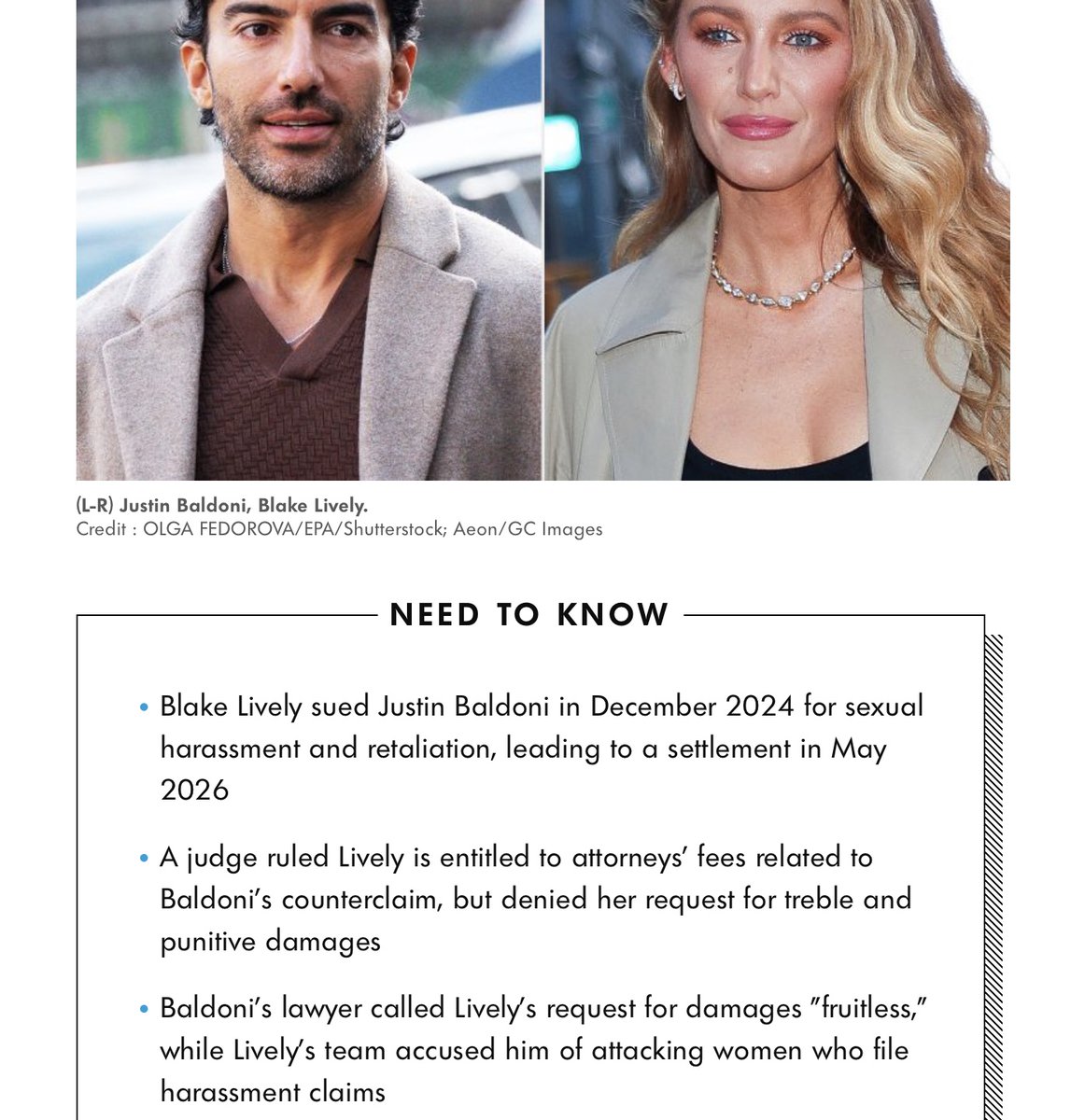
Justin Baldoni's Lawyer Issues Fiery Response After Blake Lively Wins Bid for Legal Fees: 'She Failed'
Justin Baldoni's lawyer, Bryan Freedman, has issued a fiery response after a federal judge ruled that @blakelively was entitled to attorneys' fees and litigation costs in her legal battle against the It Ends with Us director and costar.
On Friday, June 12, U.S. District Judge Lewis J. Liman partially granted Lively's request for relief under California Civil Code Section 47.1, finding that she is entitled to attorneys' fees and litigation costs while denying her bid for treble damages and punitive damages.
Lively "was only awarded limited attorney fees for a single claim as part of a case that lasted only a matter of months, nothing more," said Freedman in a statement following the decision.
"We fought and won against a coordinated effort built on allegations of sexual harassment, retaliation, and a smear campaign that never happened," the statement continued. "Ms. Lively demanded over 300 million in fees and damages, had 10 of her 13 claims dismissed, she then chose to settle and received nothing."
Freedman deemed Liman's decision not to award damages a failure for Lively's team.
"Not withstanding that all of her sexual harassment and defamation claims were thrown out by the court, Ms. Lively then pivoted to exploit a California law that was established to protect real victims in what proved to be a fruitless mission to obtain damages. Once again, she failed," said Freedman.
In response, Lively's legal team said in a statement that "Bryan Freedman and his clients resorted to a DARVO [Deny, Attack, Reverse Victim and Offender] statement that is a pack of lies."
"Just a few weeks ago, they said Blake Lively's claims 'deserved to be heard,'" the statement continued. "Now it seems Justin Baldoni thinks women who bring claims of sexual harassment and retaliation in good faith, without malice, should be sued into oblivion."
"Thankfully, there's a law against that, and the Court applied it today. People who do nothing wrong don't have to pay millions of dollars, which is where this is headed now," said the statement.
#blakelively #justinbaldoni #livelyvsbaldoni
URL: ⬇️
people.com/justin-baldoni-s-…
Jun 12
ORDER RE: BL'S 47.1 FEE MOTION
URL (ORDER re: MOTION for Attorney Fees, Treble Damages, and Punitive Damages Under California Civil Code Section 47.1): ⬇️
storage.courtlistener.com/re…
#blakelively #justinbaldoni #livelyvsbaldoni
2
18
112
4,894
Jun 12
JD’S NOTICE TO THE JUDGE IN TEXAS
Plaintiffs—Jed Wallace, et al. (JW) notify the Western District of Texas about a new Southern District of New York order that may affect a pending motion involving the same statute → SDNY order interpreting Cal. Civ. Code § 47.1(a).
Relevance to pending motion is that the SDNY order addresses an issue similar (with important differences) to @blakelively's motion pending in this case (Dkt. # 45).
Potential next step is that JW may seek to supplement the record, including whether the SDNY order applies in whole or in part to this case.
#jedwallace #blakelively #wallacevslively
May 19
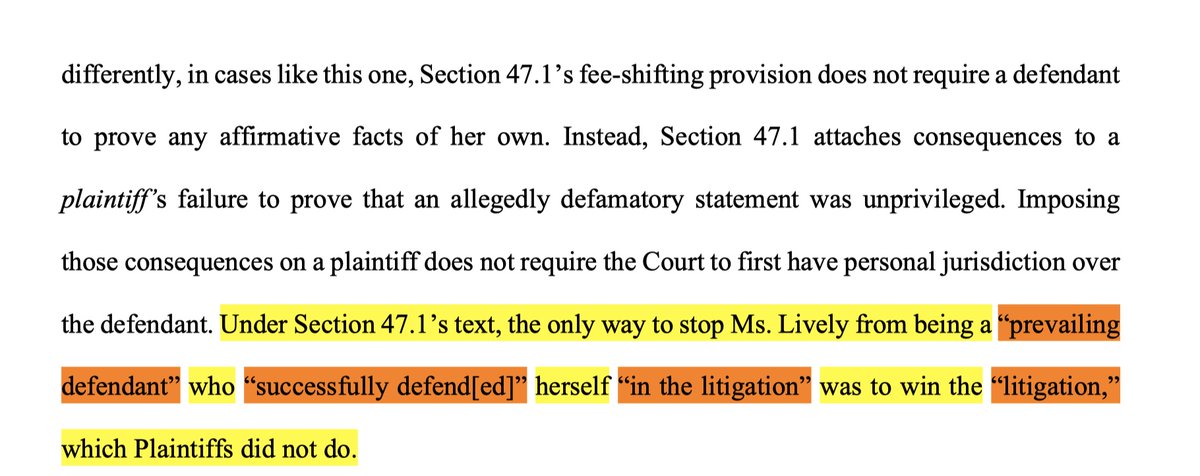
BL’S REPLY TO JW’S RESPONSE TO BL’S MOTION FOR COSTS & ATTORNEYS’ FEES RE: 41.7
@blakelively (BL) is still arguing that she is entitled to costs and attorney’s fees under California Civil Code §47.1 after Jed Wallace appealed the district court’s dismissal for lack of personal jurisdiction in the defamation suit brought by Wallace & Street Relations, Inc (JW) 🤦🏼🤦🏼
What I find misleading is the way BL frames the statute. Her argument repeatedly isolates phrases like “prevailing defendant,” “successfully defended,” and “in the litigation,” as though merely obtaining a jurisdictional dismissal automatically satisfies §47.1. But that is not what the statute actually says when read as a whole.
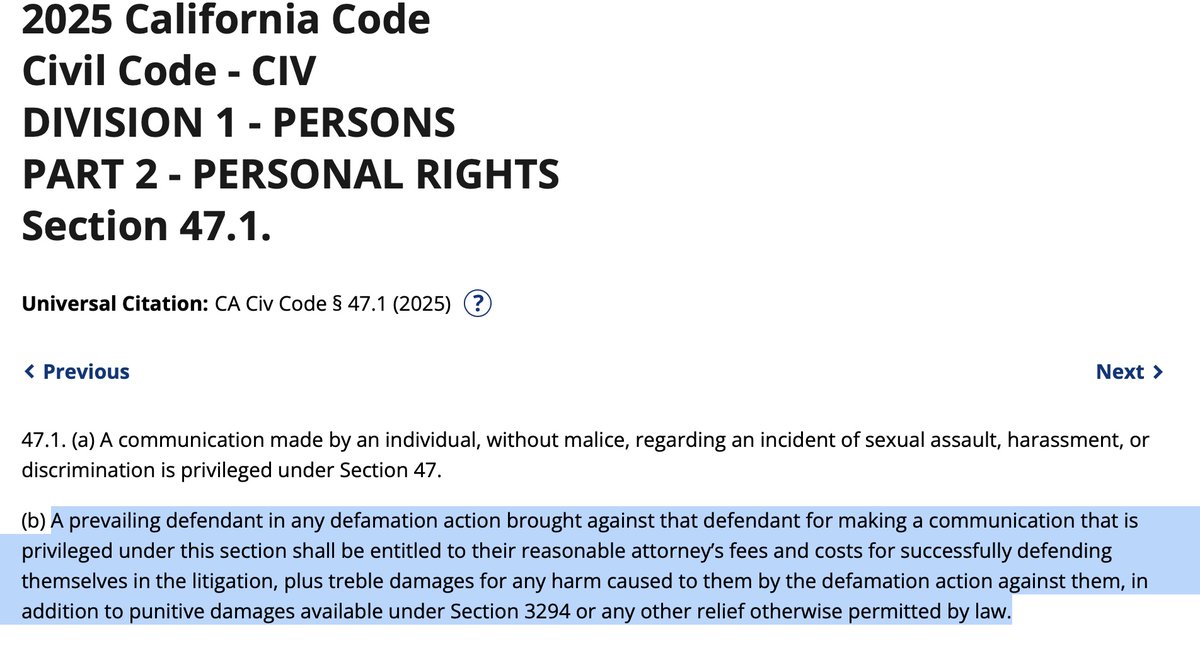
The full text provides:
“A prevailing defendant in any defamation action brought against that defendant for making a communication that is privileged under this section shall be entitled to their reasonable attorney’s fees and costs for successfully defending themselves in the litigation…”
The key language BL keeps glossing over is “for making a communication that is privileged under this section.” You cannot read “prevailing defendant” in isolation while severing it from the condition attached to it. The statute does not award fees simply because a defendant obtains a procedural dismissal. It ties fee-shifting to a defendant prevailing on the basis that the communication at issue was privileged under §47.1.
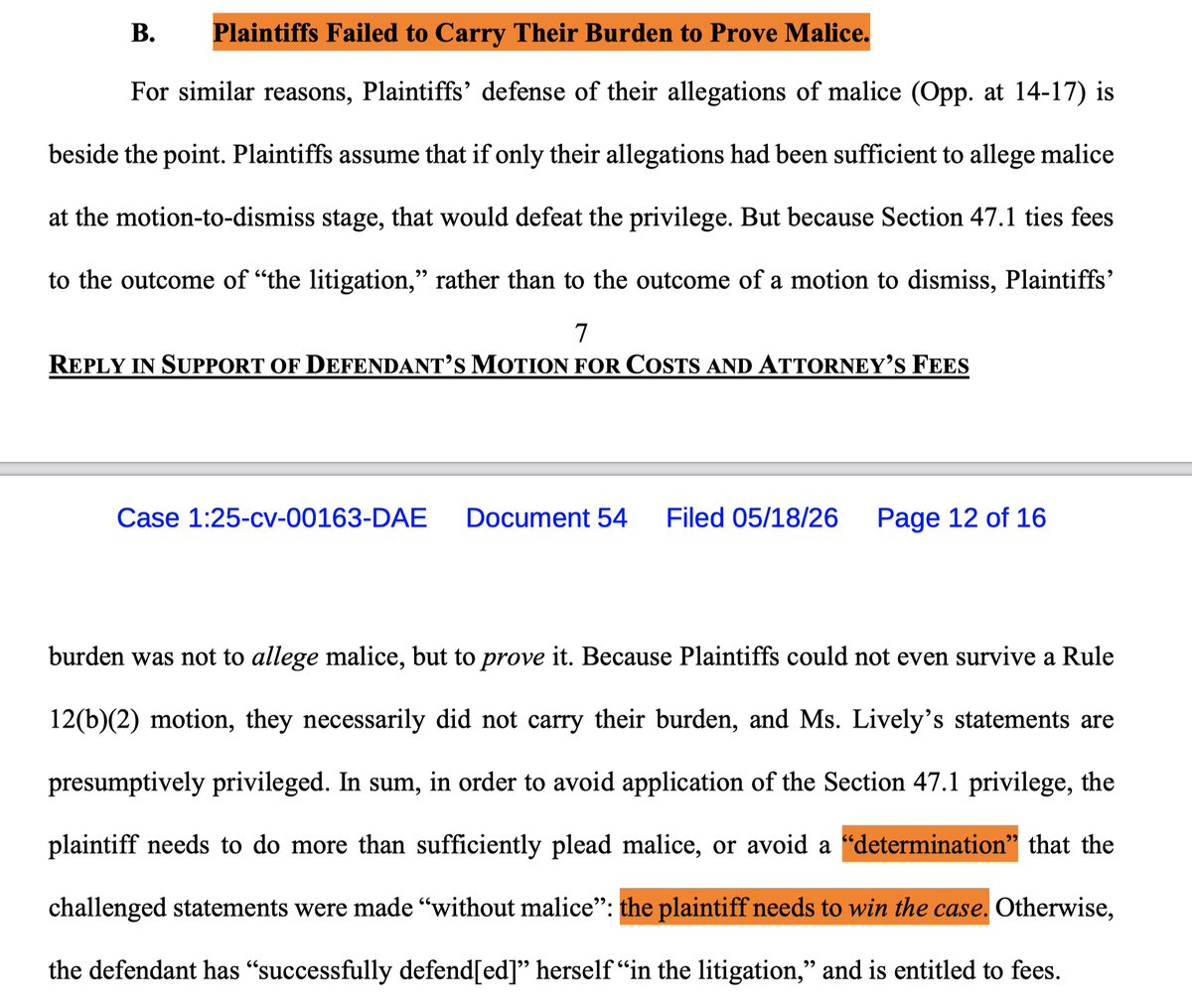
What makes this even more striking is that BL now argues JW “failed to carry their burden to prove malice,” even though the court never reached that issue. The dismissal was based solely on lack of personal jurisdiction, and the court expressly declined to address the remaining grounds. That means there was no judicial finding that the statements were privileged, no ruling on malice, and no merits determination at all. JW, meanwhile, argues that he pleaded malice in detail and that, at the relevant motion stage, those allegations had to be accepted as true. Whether those allegations ultimately succeed is a separate question — but the court never adjudicated them because it stopped at jurisdiction.
BL also argues that, in order to avoid application of the §47.1 privilege, a plaintiff must do more than sufficiently plead malice or avoid a “determination” that the challenged statements were made “without malice” — according to her argument, the plaintiff effectively must win the case. But that framing is odd in itself because the word “determination” does not even appear in §47.1. The statute speaks about privileged communications and prevailing defendants; it does not say that a court must make some affirmative “determination” of no malice before a plaintiff can proceed.
And frankly, how can BL claim she has already “won” when JW has appealed the dismissal itself? The underlying jurisdictional ruling is still being challenged. Calling yourself the “prevailing defendant” while the appeal is pending — especially where there has been no merits ruling at all — is mind-boggling 🤯🤯
That is exactly why JW’s lawyer stated that courts lacking personal jurisdiction “cannot—and do not—determine the merits” and that the court did not determine the claims were “meritless.”
Reading isolated words out of context while omitting the qualifying language of the statute is not persuasive statutory interpretation. It is cherry-picking.
#blakelively #jedwallace #wallacevslively
URL (REPLY IN SUPPORT OF DEFENDANT’S MOTION FOR COSTS AND ATTORNEY’S FEES): ⬇️
storage.courtlistener.com/re…
1
2
39
9,630
Jun 12
THIS IS UNRELATED TO BL v. WF: JUDGE LIMAN'S ORDER RE: FEE-AND-COSTS DISPUTE
This is from an order resolving a fee-and-costs dispute following sanctions imposed on Plaintiff Robert Barbera for discovery violations in litigation against Grailed, LLC (JUDGE LIMAN case).
Fee-application process: Defendant was directed to submit a fee application, with plaintiff permitted to respond and defendant permitted to reply.
1️⃣ Amount sought vs. amount awarded
Requested: $73,406.55
— $65,309.25 attorneys’ fees
— $8,097.30 costs
Awarded: $66,832.95
— $58,735.65 attorneys’ fees
— $8,097.30 costs
2️⃣ Legal standard: lodestar governs even when fees are awarded as sanctions
Judge Liman emphasised that — even though this is a sanctions award rather than a statutory fee-shifting award—the analysis is the same:
— compute a lodestar: reasonable hourly rate × reasonable hours.
— the fee applicant bears the burden of proving reasonableness of the rates.
— the “reasonable hourly rate” is what a paying client would pay, mindful that a reasonable client seeks to spend the minimum necessary to litigate effectively.
— courts may “do rough justice” and can apply percentage cuts rather than litigating every line item.
☞ Judge Liman is not merely reimbursing whatever was billed; it is independently determining a “presumptively reasonable fee” anchored in market rates and necessity.
In considering a reasonable hourly rate, the Second Circuit has instructed courts to consider:
factors including, but not limited to the complexity and difficulty of the case, the available expertise and capacity of the client’s other counsel (if any), the resources required to prosecute the case effectively (taking account of the resources being marshaled on the other side but not endorsing scorched earth tactics), the timing demands of the case, whether an attorney might have an interest (independent of that of his client) in achieving the ends of the litigation or might initiate the representation himself, whether an attorney might have initially acted pro bono (such that a client might be aware that the attorney expected low or non-existent remuneration), and other returns (such as reputation, etc.) that an attorney might expect from the representation.
Courts can also consider the following twelve factors:
(1) the time and labor required; (2) the novelty and difficulty of the questions; (3) the level of skill required to perform the legal service properly; (4) the preclusion of employment by the attorney due to acceptance of the case; (5) the attorney’s customary hourly rate; (6) whether the fee is fixed or contingent; (7) the time limitations imposed by the client or the circumstances; (8) the amount involved in the case and the results obtained; (9) the experience, reputation, and ability of the attorneys; (10) the “undesirability” of the case; (11) the nature and length of the professional relationship with the client; and (12) awards in similar cases.
3️⃣ Hourly rates: Judge Liman partially discounted them, but not as aggressively as Plaintiff urged
Claimed rates and staffing
Grailed’s counsel (MSK) sought fees based on:
— Eleanor M. Lackman: 19.5 hours at $832.50/hr
— Andrew Nietes: 90.6 hours at $517.50/hr
— Dalton Kniss (paralegal): 7.5 hours at $292/hr
Plaintiff argued these should be reduced to:
— $550/hr (Lackman), $300/hr (Nietes), $125/hr (Kniss).
Rates Judge Liman found reasonable
He set:
— Lackman: $775/hr
— Nietes: $517.50/hr (no reduction)
— Kniss: $200/hr
He anchored these rates to experience and role:
— Lackman: partner, long-standing copyright/trademark focus, lead counsel, Chambers recognition.
— Nietes: associate with strong IP academic credentials and handled day-to-day tasks.
— Kniss: paralegal with 10 years’ experience.
URL (Declaration in Support of Motion): ⬇️
storage.courtlistener.com/re…
URL (Invoice of Costs for 10/11 Deposition): ⬇️
storage.courtlistener.com/re…
URL (Invoice of Costs for 3/28 Deposition): ⬇️
storage.courtlistener.com/re…
#blakelively #livelyvsbaldoni
Jun 12
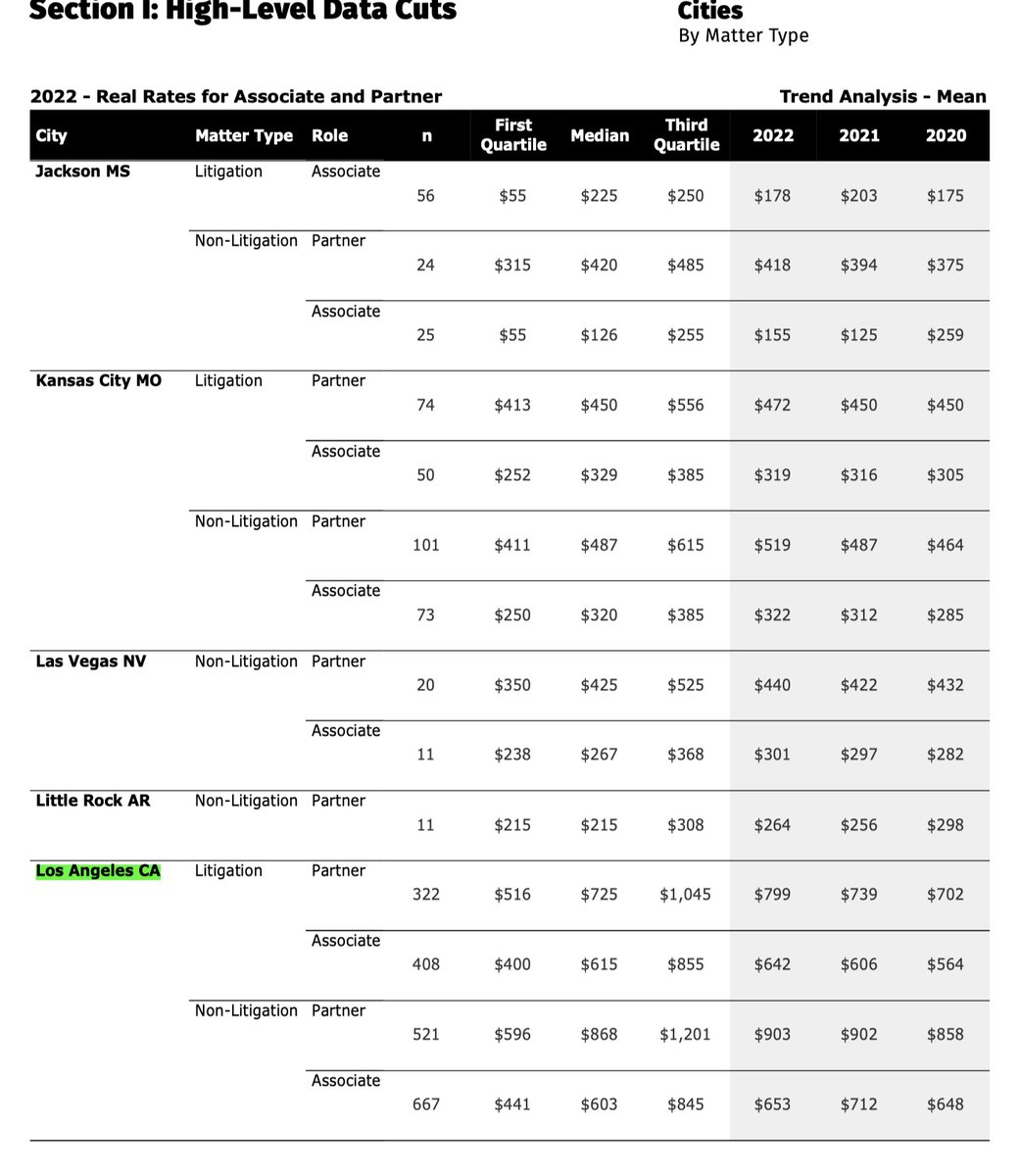
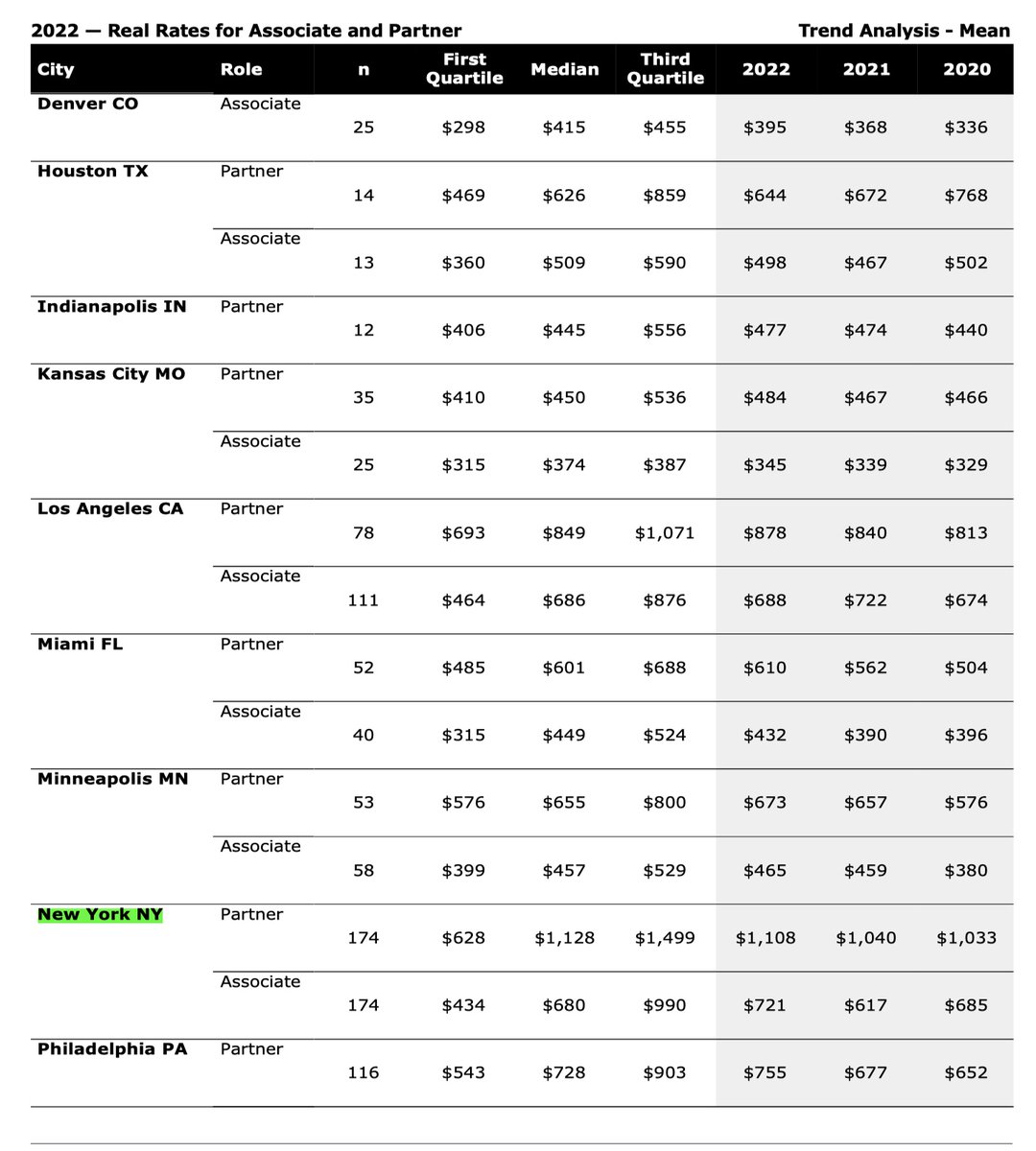
Remember, the judge is not naïve. Courts routinely evaluate billing rates based on multiple factors, including geographic location, attorney experience, firm size, practice area, industry specialisation, and the role of the timekeeper (partner, associate, or paralegal).
The court is well aware that rates are not one-size-fits-all and will assess any fee request in that context. Moreover, whatever BL submits will not go unchallenged — WF will almost certainly scrutinise and oppose any excessive or unsupported billing requests. The judge will ultimately decide after reading BL's motion and WF's opposition.
16
1,228
Jun 12
THE SELF-EXPLANATORY VIDEO ABOUT ⬇️
REMEMBER: Judge Liman granted @blakelively attorneys’ fees and costs under California Civil Code § 47.1, but denied treble and punitive damages because they cannot be pursued through a post-judgment Rule 54(d) motion.
REMEMEBER: Only defamation cause of action.
#blakelively #justinbaldoni #livelyvsbaldoni
Jun 12
ORDER RE: BL'S 47.1 FEE MOTION
URL (ORDER re: MOTION for Attorney Fees, Treble Damages, and Punitive Damages Under California Civil Code Section 47.1): ⬇️
storage.courtlistener.com/re…
#blakelively #justinbaldoni #livelyvsbaldoni
7
21
153
10,236
Roman Schatow retweeted
Jun 12
#LivelyvWayfarer: Section 47.1: Judge Liman Denies Lively's Motion of Punitive and Treble Damages but GRANTS her motion for attorney's fees and costs.
My quick reactions:
1. It is a reasonable decision under the circumstances. He essentially split the baby.
2. Wayfarer actually won because the compensatory damages (multiplied by 3) and the punitive damages would've been astronomical.
3. Wayfarer and their lawyers dodged a bullet. The judge gave them a hint that there is an issue regarding whether F.R.Civ.P. 54 is the proper mechanism to seek treble and punitive damages. Both in their filings and at oral argument, Wayfarer never really addressed this issue fully. Interestingly, the Rule 54 issue was the main reason Judge Liman denied Lively's request for treble and punitive damages.
4. Judge Liman decided that the attorney's fees provision of Section 47.1 is severable from the provision regarding treble damages and punitive damages. This explains why he granted in part and denied in part (under Rule 54). Respectfully, Judge Liman is wrong in this conclusion. Nothing in the statute indicates severability. Having said that, Judge Liman's decision to award attorney's fees and costs is reasonable when you consider the huge favor he did for the Wayfarer parties by fully exploring the Rule 54 issue.
5. The battle will now shift to the determination of the amount of attorney's fees. Consistent with Section 47.1, the attorney's fees and costs should only relate to the defamation count of Wayfarer's complaint. If one is being technical or pinching pennies, one can question the actual amount of the fees since Lively's motion to dismiss was almost identical to the motions filed by Reynolds and others earlier on by the same lawyer. Thus, it is likely that no new research or writing was done for Lively's motion.
6. I don't recommend pinching pennies. Just pay the attorney's fees and costs and move on. Afterwards, the next phase is the PR battle.
7. With the exception of the severability issue, I am glad that Judge Liman did not make precedential proclamations about Section 47.1. Lively's case would've been the wrong case for such pronouncements.
8. In terms of lawyering, I think Wayfarer should've challenged the issue of whether Lively was the prevailing party.
9. Wayfarer also did not challenge the issue of whether Lively made a communication as defined in Section 47.1. As I see it, the communication must be about violations of California law. The incidents that Lively "communicated" about occurred in New Jersey in possible violation of NJ law.
10. Judge Liman appeared to place the burden on Wayfarer to prove that Lively made the communication with malice. In my opinion, it should've been Lively's burden to show that she made the communication without malice. In ruling that Lively didn't make the communication malice, the judge kinda ignored much of the info that was garnered through discovery regarding Lively's plan to take over the movie. The judge is not at fault: Wayfarer simply did not present that evidence or make that case with respect to this motion.
***Conclusion: Reasonable outcome.
8
8
71
4,405