Joined February 2010
- Tweets 11,518
- Following 502
- Followers 1,944
- Likes 36,480
801 Photos and videos
Pinned Tweet

24 Apr 2022
1) A lot of people are focused on answering the question, "how can we cure cancer?" I think that's an extremely noble pursuit, but I side heavily w/ the sentiments of this article: "The cancer miracle isn't a cure, it's prevention" I recommend you read it! hsph.harvard.edu/magazine/ma…
8
16
52
scott ferguson retweeted

Jun 10
Initiatives like the UK Biobank require massive upfront investment, but returns compound over decades
For example, ~57,000 of the original 500,000 participants recruited between 2006-2010 to the UK Biobank had passed away by end of 2024.
As that number grows, we'll have a unique, deeply phenotyped resource for studying aging and mortality trajectories.
The dataset gets more powerful with time.
Jun 9

The compounding value of multi-dimensional biobanks is extremely mind blowing.
UK Biobank recruited ~500,000 people between 2006 and 2010, collected baseline measurements and biological samples, and continued linking participants to health records as diseases developed over time.
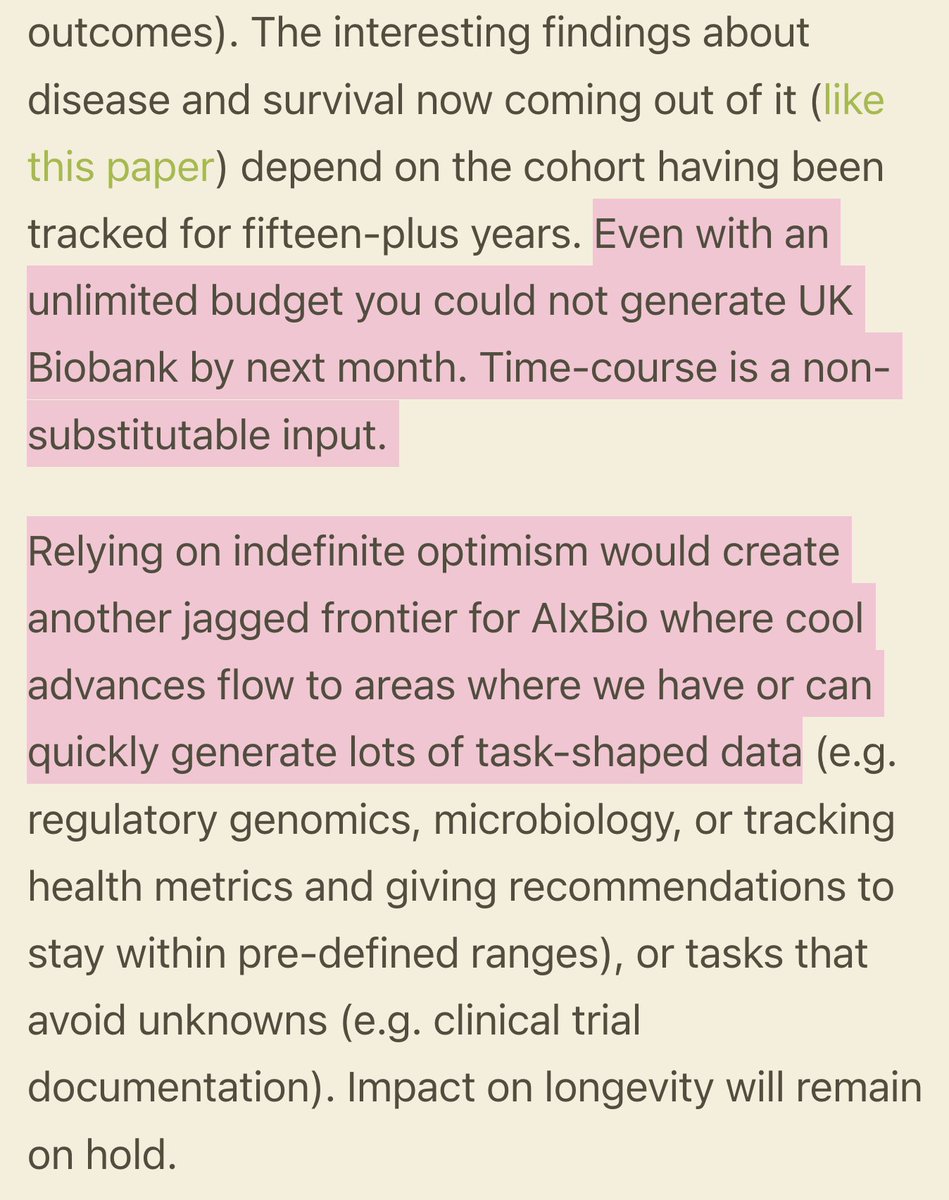
The interesting findings about disease and survival now coming out of it depend on that cohort having been tracked for fifteen-plus years.
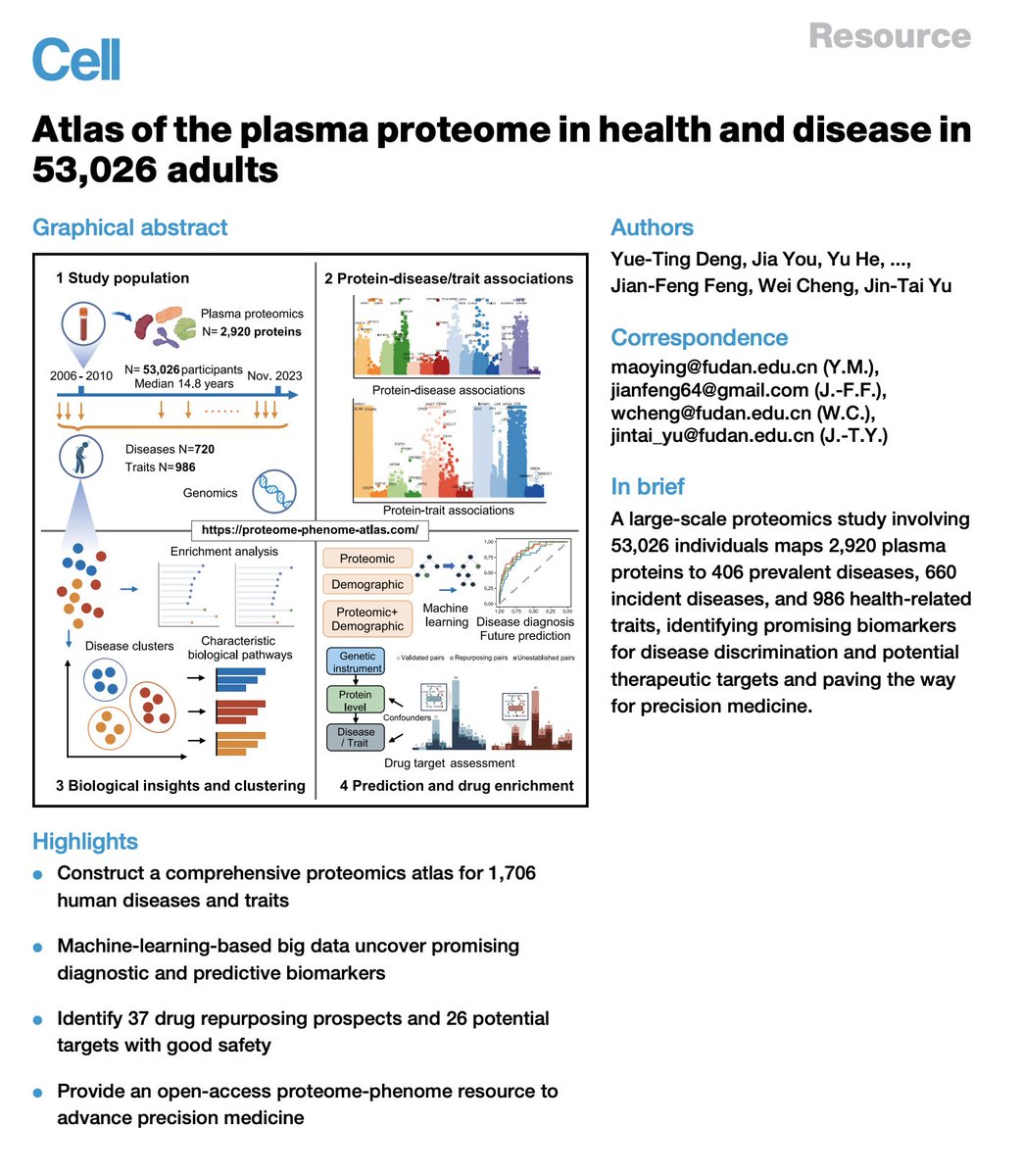
Like this Cell paper using it to connect 2,920 plasma proteins in 53,026 people to hundreds of diseases and health-related traits. That produced hundreds of thousands protein-disease and protein-trait associations from one longitudinal resource. The authors also identified 37 drug-repurposing prospects and 26 potential targets with favorable safety profiles. cell.com/cell/fulltext/S0092…
And there will be more.
Longitudinal time is a non-substitutable input, as we've written about (link below). No amount of money could recreate UK Biobank by next month.
1
16
84
8,500
Jun 11
The best AI models are already well-equipped to assist with all of this… but at some point we need to be realistic about the measurement space.
We use tools to make measurements to generate data which we humans annotate and feed to machines.
(1/16)
Jun 10

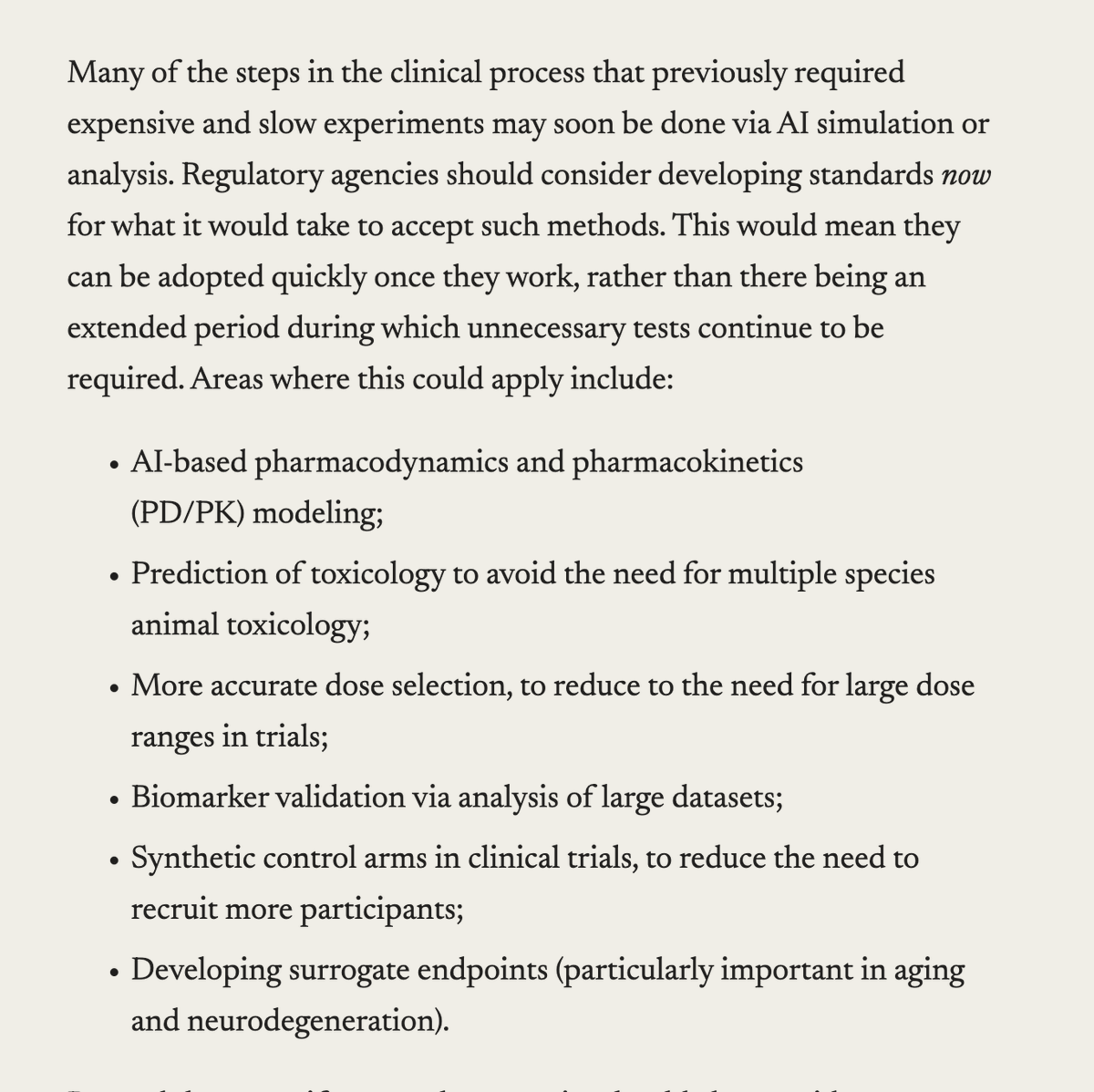
interesting segment on bio in Dario's essay. specifically the part below. I'd be very curious how he imagines AI can be used for PD/PK modeling and tox.
I assume he means "ask claude for whether a molecule will be toxic" but the existing data on the web for drug tox is probably not sufficient to be good at this, and only reaching human med-chemist-expert level would be effectively random.
would be cool to see them pay to generate a massive new dataset 1000x bigger than anyone else and throw it into the training set though.
1
1
180
Jun 11
Because if we want to simulate toxicology, PK/PD, or (gasp!) entire arms of a clinical trial, will require us to have these maps at minimum (as well as a level of compute someone really ought to double check my numbers on).
(15/16).
1
1
21
Jun 11
The promise of artificial intelligence is obvious.
But the messiness of biological intelligence is a beautiful reminder;
We may even be complex beyond measurement.
At the very least “the map is not the territory.”
Let’s wander on.
(16/16)
1
20
May 29
It’s way too early to know if we’ve dodged the hantavirus bullet, FYI.
If you want to follow someone with accurate takes, follow @Ayjchan
May 28

I downplay Covid at the start - I was wrong
I downplayed Hantavirus - I was right
I'm sounding the alarm bells about Ebola - hope I'm wrong (but I don't think I am)
2
83
scott ferguson retweeted

May 28
This article may be the most shameless and dangerous piece of disinformation I've read this year.
Genuinely sad to see a journalist throw away her career to boost one of the most dangerous campaigns of fraud in scientific history.
Quick fact checks:
1) The article claims EcoHealth Alliance was debarred by Trump's HHS, but it was done by Biden's HHS before Trump's inauguration.
2) The article claims that a lab origin of COVID is a conspiracy theory despite the fact that all US intel agencies, WHO, and the majority of polled virologists say it's a serious hypothesis requiring further data. FBI, CIA, DOE, and German intel all now favor lab origin. Even Andersen and Garry admit lab origin is a legitimate hypothesis when under oath (they should be brought back to Congress).
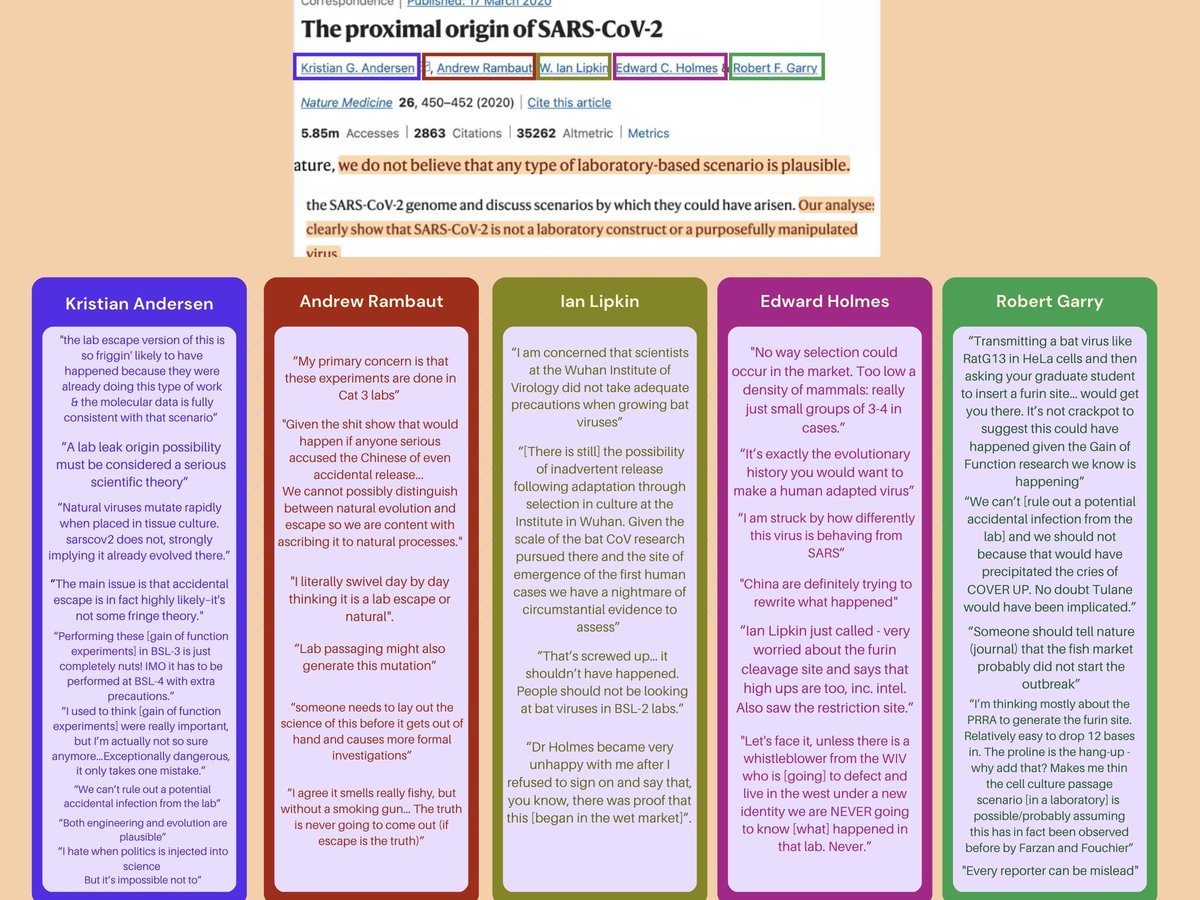
3) The article exclusively quotes scientists who were caught committing fraud on COVID origins. Andersen and Garry privately believed a lab origin was "so friggin likely" but published it was "not plausible" after meeting with the most powerful western funders of the lab. They were rewarded for this uniquely dangerous act of fraud via CREID.
4) Andersen attempted to delete early COVID seqs from a US preprint server "without leaving a trace" on behalf of Chinese researchers. Imo, this act of scientific sabotage elevates Andersen to the level of a serious threat to US national security and biosecurity. Between this action and the confirmed ghostwriting fraud, he should be permanently debarred from US taxpayer funds.
It's embarrassing that this was published in 2026. Disinformation to bolster threats to US national security and biosecurity is a serious matter @emilylmullin.

The Centers for Research in Emerging Infectious Diseases were launched during the Covid-19 pandemic. The group lost its funding under Trump in part due to conspiracy theories. wired.com/story/us-researche…
15
47
161
8,455
May 28
It wasn’t really a conspiracy theory.
-the funding was awarded to authors immediately after they wrote a fraudulent paper at the behest of Fauci
If that isn’t CREID-pro quo I don’t know what is.
The Centers for Research in Emerging Infectious Diseases were launched during the Covid-19 pandemic. The group lost its funding under Trump in part due to conspiracy theories. wired.com/story/us-researche…
5
88