
the real thing. backend @Tplus_cx
Joined September 2023
- Tweets 2,240
- Following 1,206
- Followers 649
- Likes 14,003
196 Photos and videos





THE ULTIMATE WARLORD retweeted

Jun 13
The US government, citing national security authorities, has issued an export control directive to suspend all access to Fable 5 and Mythos 5 by any foreign national, whether inside or outside the United States, including foreign national Anthropic employees.
The net effect of this order is that we must abruptly disable Fable 5 and Mythos 5 for all our customers to ensure compliance.
Access to all other Claude models is not affected.
We apologize for this disruption to our customers. We believe this is a misunderstanding and are working to restore access as soon as possible.
Read our full statement: anthropic.com/news/fable-myt…
12,555
25,761
87,979
89,825,683
THE ULTIMATE WARLORD retweeted

Jun 11
One Nation should spend the 2 million buying the rights to Little Dark Age and just run 30 sec Aus Wave edits made by anons on network television for the next 2 years.
13
8
303
7,308

Jun 10
by design
Jun 10

europe is gonna enter a civil war at some point. barcelona streets at night are fucking crazy in some areas. i don’t get how police doesn’t do anything
2
78
When I first learnt Rust I'd come from C (with some C ofc) so I felt that surfacing complexity to the programmer was a net good. I still think this but sometimes I go to compare two floats and wince. It's even worse when I do this in front of quants / scientists who use Python.

I like Rust but it is just maddening how sometimes doing basic stuff requires threading the needle between insane amounts of bureaucracy and intractable 9-year-old GitHub issues. This time it's trying to fill an uninitialised byte buffer. How hard can it be?
1
209
Jun 8

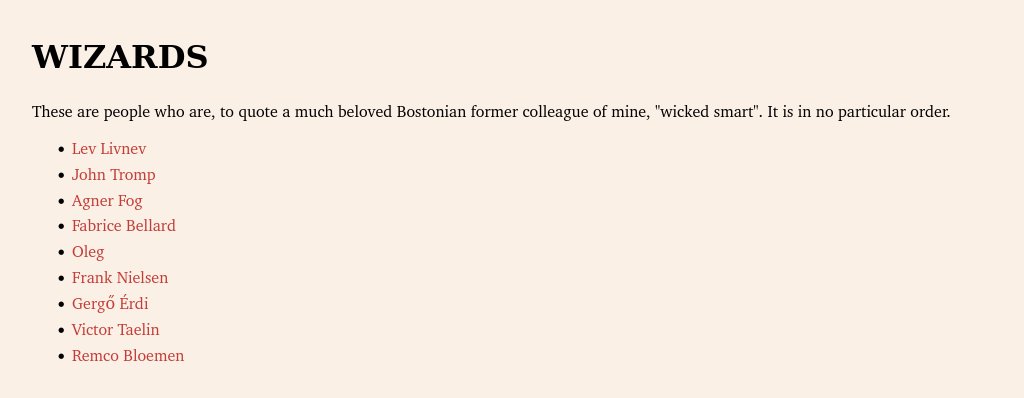
A French engineer who lives quietly in Paris has spent 30 years writing software that the entire internet now runs on without knowing his name.
He wrote the code that streams every YouTube video, every Netflix show, every TikTok clip. He wrote the code that runs the virtual servers underneath AWS, Google Cloud, and Microsoft Azure. He calculated more digits of pi than anyone in history. He has no Twitter. He has no marketing. He just keeps shipping.
His name is Fabrice Bellard.
Here is the story, because almost nobody outside the systems programming world knows what one man has built.
Fabrice was born in 1972 in Grenoble, France. He studied at École Polytechnique, the top French engineering school. He never went to Silicon Valley. He never built a startup empire. He just wrote code.
In 2000 he started a project called FFmpeg, an open-source multimedia framework for encoding, decoding, and streaming video. He was 28. The project did one thing nobody else had done well. It handled every video and audio format that existed, in one library, on every operating system. He led it himself for years.
Today FFmpeg is the invisible engine of the internet. YouTube uses it. Netflix uses it. VLC uses it. Chrome and Firefox use parts of it. Every Android phone, every iPhone, every smart TV, every video editing tool you have ever touched runs FFmpeg somewhere underneath. If you have watched a video on a screen in the last 20 years, Fabrice's code processed it.
He was not done.
In 2003 he started QEMU, a machine emulator and virtualizer. He wrote it solo until version 0.7.1 in 2005. QEMU lets you run any operating system on any other operating system. It became the foundation of modern virtualization. KVM, the Linux kernel hypervisor, runs on top of QEMU. Every major cloud provider, AWS, Google Cloud, Microsoft Azure, IBM Cloud, runs virtual machines on infrastructure built around it. The Quick Emulator is the most cited piece of cloud infrastructure code on Earth.
He kept going.
In 2001 he won the International Obfuscated C Code Contest with a small C compiler that grew into TCC, the Tiny C Compiler. TCC can compile and boot a Linux kernel from source in under 15 seconds. In 2004 he calculated the most digits of pi ever computed at the time, using a personal desktop computer and an algorithm he derived himself called Bellard's formula. In 2011 he wrote a complete PC emulator in pure JavaScript that runs Linux in your browser, a project called JSLinux that engineers still cannot believe is real.
In 2019 he released QuickJS, a small but complete JavaScript engine that fits where V8 cannot. In 2021 he released NNCP, a neural network based lossless data compressor that immediately took the lead on the Large Text Compression Benchmark.
Then he turned his attention to large language models. He built TextSynth Server, a web server with a REST API for running LLMs locally. He released ts_zip and ts_sms, compression utilities that use language models to compress text and short messages at ratios traditional algorithms cannot reach. He released TSAC, a very low bitrate audio compression system. In December 2025 he released Micro QuickJS, a new JavaScript engine for microcontrollers, separate from QuickJS, designed for environments with almost no memory.
Fabrice co-founded a telecom company called Amarisoft in 2012, where he serves as CTO. Amarisoft builds 4G and 5G base station software used by carriers and labs around the world. He has been running it for over a decade while continuing to ship personal projects from his own home page at bellard dot org
He has no Twitter. He has no Instagram. He gives almost no interviews. His personal website is a flat list of projects with no styling, no fonts, no marketing copy. Just titles and links.
A quiet French engineer who never moved to Silicon Valley wrote the code that quietly runs the internet.
He is still shipping.

3
8
126
12,152
THE ULTIMATE WARLORD retweeted

Jun 8
I can’t stand anyone who complains about how “expensive” things have gotten. Potatoes are $5/pound. Eat a potato for every meal. Boom. Your job sucks. Become a neurosurgeon. There’s tons of YouTube videos. Boom. No excuses.
84
1,375
29,227
318,572
THE ULTIMATE WARLORD retweeted

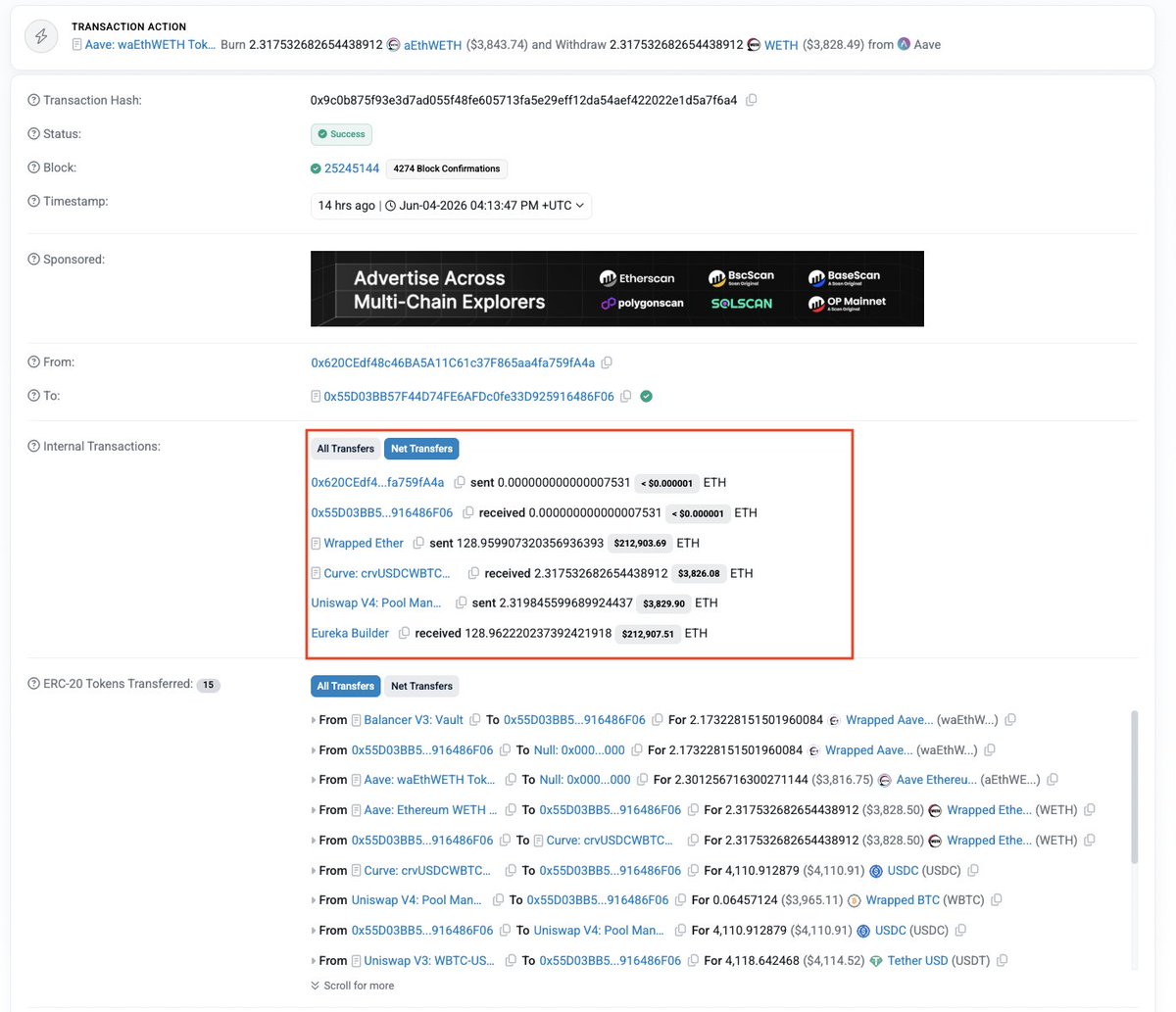
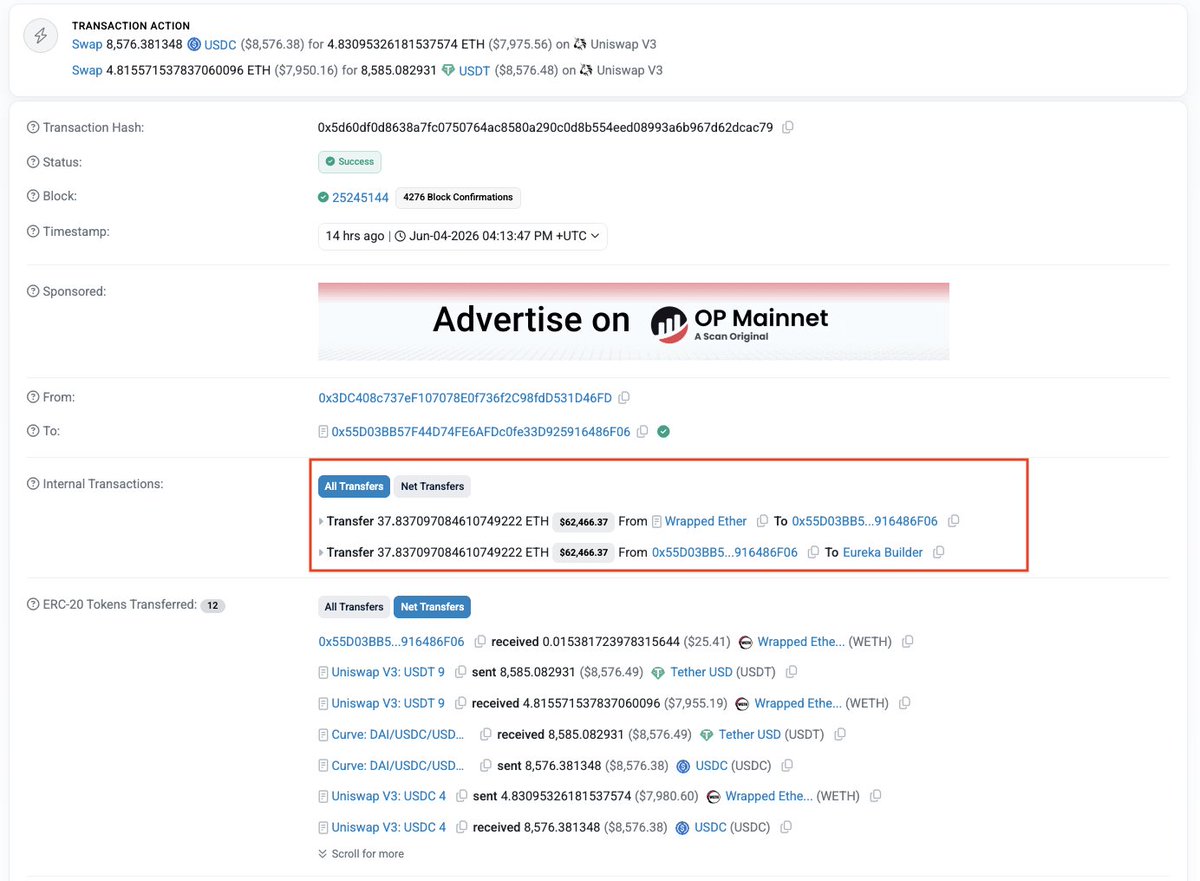
#PeckShieldAlert An Ethereum MEV bot just accidentally tipped a random user 167 $ETH (worth ~$300K)
15
16
127
17,373
THE ULTIMATE WARLORD retweeted

Jun 3
easy answer: i would shoot the computer

3
4
47
4,599

"Attention is just a special case of <abstract math thing> so we generalized it by <neglecting the other 30 abstractions and conditions required for frontier architecture> and we found it performed <p hacking> compared to <naive baseline>"
14
51
948
37,688
THE ULTIMATE WARLORD retweeted

Jun 1
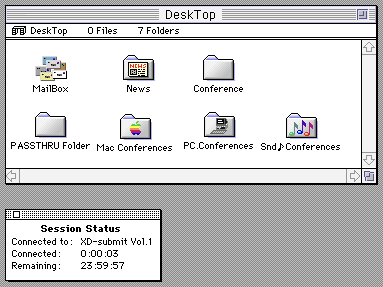
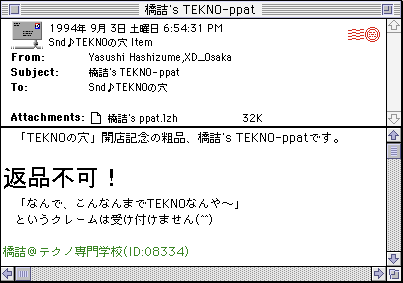
XD, a 1990s BBS that used the desktop metaphor as its UI. Some S-tier Japanese design.


6
21
209
6,746
Jun 1

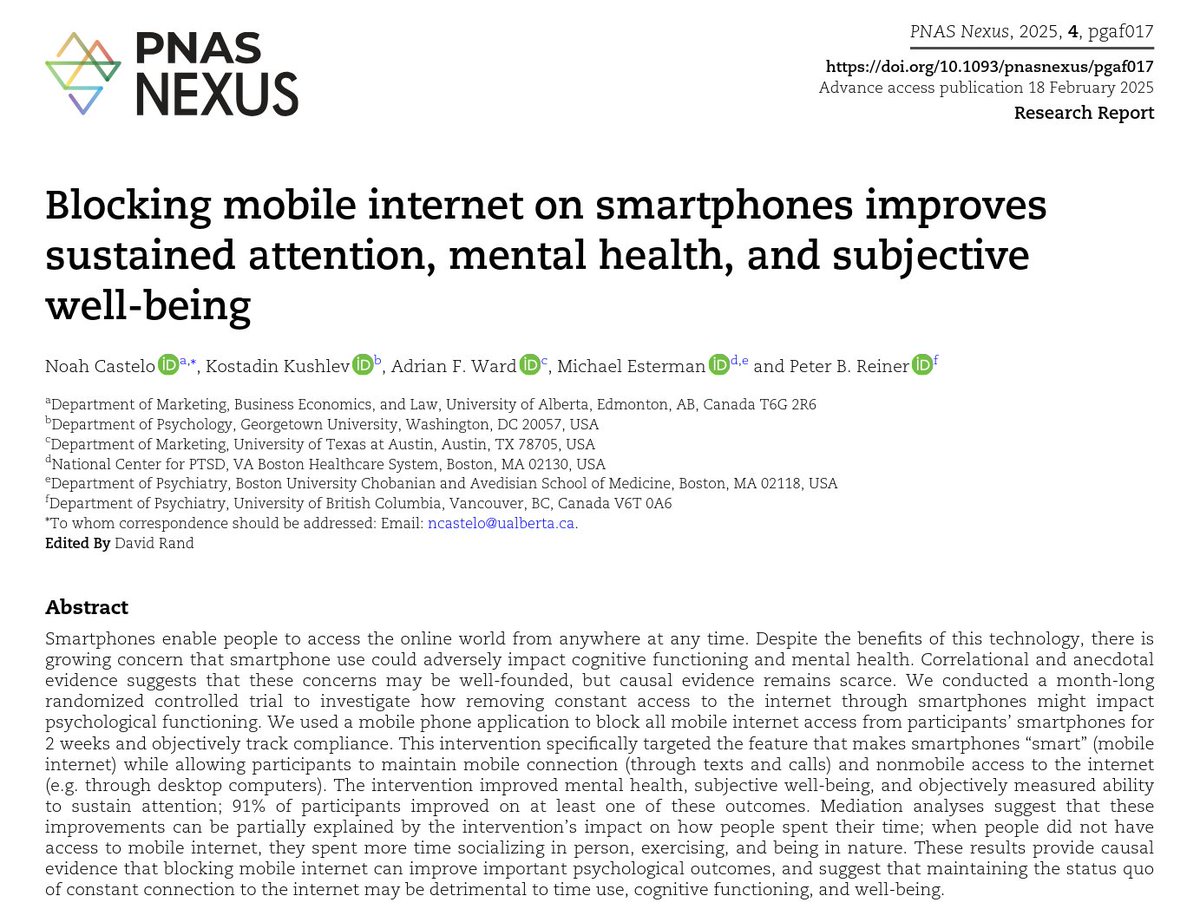
a life hack that will change your life; stop watching reels/short form content or delete Instagram completely from your phone if youve no control. reels are a neurological plague, meant to kill our attention spans. once you stop consuming them youll suddenly discover new interests, meaningful hobbies and connections, become 10x more productive and youll feel more content.
1
108
48

found a stack out-of-bounds read in the Linux kernel's nftables pipapo set backend (CVE-2026-43453, CVSS 7.1). I found it by looking for a specific pattern that I think is underhunted, so I want to talk about the methodology as much as the bug.
the pattern: function calls where one argument is a boundary-dependent expression and another argument is a flag that makes the callee skip using it. in C, this is a trap. the callee's early return makes every reviewer think the dangerous argument is inert. it is not. C evaluates all arguments at the call site before the function is invoked. the callee's control flow has no jurisdiction over argument evaluation. so you get these call sites that look safe, that have been reviewed and re-reviewed and look safe every time, because the question everyone asks is "is this value used?" and the answer is no. the question that matters is "is this value evaluated?" and nobody asks it because in most languages it's the same question.
so I started grepping function calls where an argument indexes an array, and a separate argument is a boolean that triggers an early return in the callee. the kind of code where someone wrote a guard clause and everyone downstream trusted it to cover the arguments too. it doesn't. it can't. the arguments are already computed.
pipapo_drop() in nft_set_pipapo.c:
pipapo_unmap(f->mt, f->rules, rulemap[i].to, rulemap[i].n, rulemap[i 1].n, i == m->field_count - 1)
on the last iteration, i == field_count - 1. rulemap[i 1].n reads past the end of a stack-allocated array of 16 entries. pipapo_unmap() checks is_last, returns immediately, never touches the value. the value is already read. the OOB is in the caller's scope. five years of this code in production and every review pass concluded "the function doesn't use it" which is true and also completely beside the point.
the reason I think this pattern is underhunted: static analyzers flag unused variables and unchecked return values but I haven't seen one that asks "is this argument expression legal in the caller's scope given that the callee might not use it?" the safety of the expression depends on the callee's behavior, but the evaluation of the expression doesn't. that gap is where bugs live for years. maybe decades. the callee being careful is what makes the bug invisible. the better the function handles its arguments, the longer the OOB at the call site survives review. that's perverse. the code's own correctness is camouflaging the bug.
when field_count is 16 (NFT_PIPAPO_MAX_FIELDS, the max), rulemap[16].n is real stack OOB. you're reading whatever the kernel left on the stack before your frame. smaller field counts get you uninitialized entries in your own array instead, which is a different flavor of wrong but still wrong. and this isn't some exotic race you trigger with three threads and a prayer. it's the normal path. every element expiration, every deletion. the kernel's own GC walks into it on a timer.
KASAN on 7.0.0-rc2 aarch64 confirmed it: Read of size 4 at addr ffff8000810e71a4. one stack object, [32, 160) 'rulemap', buggy address at offset 164. array is 128 bytes. read is 4 bytes past the end. rulemap[16].n. worked the offset math on paper beforehand.
PoC: pipapo set with NFT_SET_INTERVAL | NFT_SET_CONCAT | NFT_SET_TIMEOUT, 16 concatenated 4-byte fields. insert element, 1-second timeout. wait. insert another to trigger nft_pipapo_commit() → pipapo_gc() → pipapo_drop() → OOB. no heap shaping. no race. the kernel GC walks into it on a schedule.
reported to security@kernel.org. Willy Tarreau forwarded to netfilter maintainers. Florian Westphal reviewed, confirmed, asked for a readability tweak. the fix:
last ? 0 : rulemap[i 1].n, last
I think there are more of these in the kernel. any function that takes a flag argument and an expression argument where the flag makes the expression unnecessary. every one of those call sites is a candidate for an OOB or an uninitialized read that no reviewer will catch because the callee's guard clause is too convincing. the code review feedback loop is broken for this pattern. the only reliable way to find them is to stop reading the callee entirely and ask whether every argument is legal to evaluate in the caller's scope, regardless of what the function plans to do with it.
patched in stable 5.10–6.19.
6
15
127
7,777
THE ULTIMATE WARLORD retweeted

May 31
I just think that we could achieve everything we do today with computers, with a simplified "technical stack" consisting of 98% less stuff ... fewer complexities to deal with when making things on top, thus easier to create the things and the higher-quality they will be (and cheaper, and more robust, etc). But not that many people seem to care about this issue.
16
23
547
21,793
THE ULTIMATE WARLORD retweeted

May 31
It's rare when are.na release a major update, but when it does... well it does.
"Looking ahead, I think the main interface will stay minimal. Most of our work will be about strengthening the platform itself—making it more resilient, easier to build on, and supporting different ways of interacting with it beyond the main platform."
via Cab's interview for nichedesign.press


You might have already noticed but our API got its first major update in over ten years.
This new post on editorial goes into the details.
All hail @dzucconi (the mastermind behind it all).

2
14
2,532
THE ULTIMATE WARLORD retweeted

May 29
Something bad is always happening and I’m so bored hearing it over and over again. Just live. If it ends. it ends.
76
166
6,246
248,231
THE ULTIMATE WARLORD retweeted

7 Nov 2017
I accidentally killed it.
github.com/paritytech/parity…
34
234
723