
Dean’s Chair Associate Professor & Vice-Dean @LKYSch @NUSingapore. China, Infrastructure, Water. Author of Thirsty Cities @CambridgeUP & Rivers of Iron @ucpress
Joined October 2019
- Tweets 286
- Following 653
- Followers 1,279
- Likes 1,603
28 Photos and videos

Pinned Tweet

Jan 2
Our piece in Foreign Affairs just dropped. It’s a call for action to help save multilateralism, leveraging on the strengths and creativity of regions!

Read Monica Herz and @selinalcho on the case for regional institutions in an era of great-power competition:
foreignaffairs.com/south-ame…
1
5
503
Selina Ho retweeted

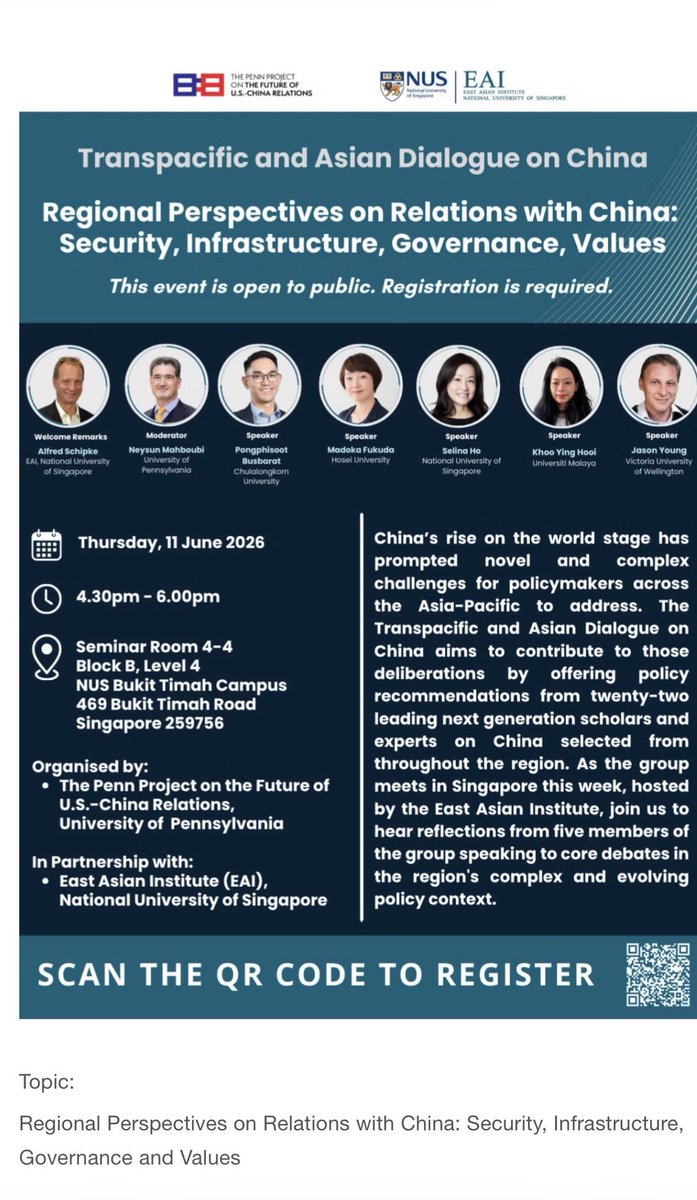
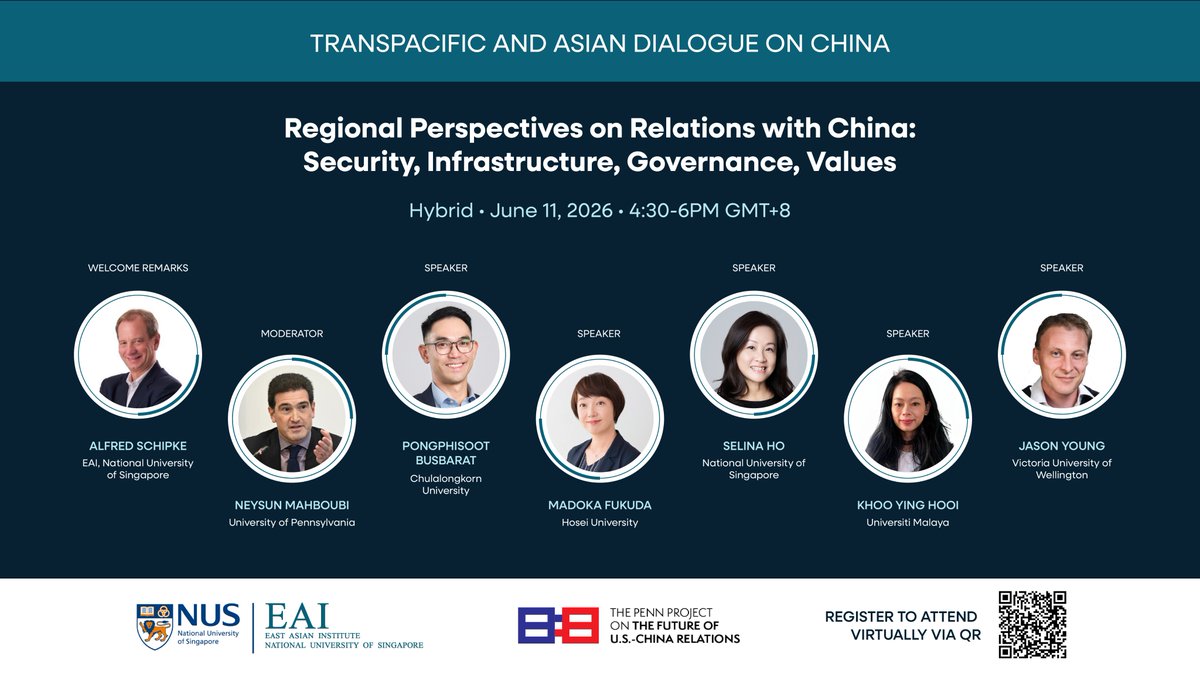
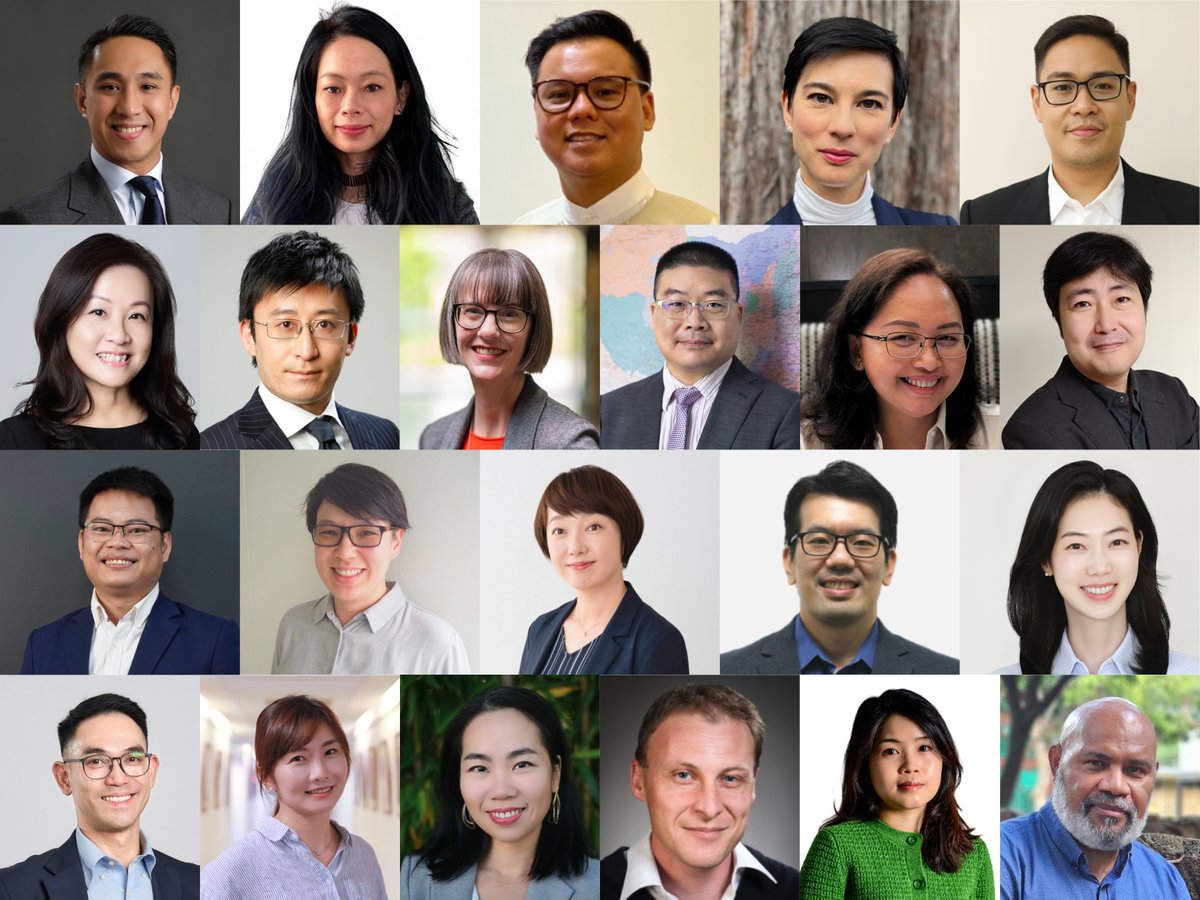
Our new Transpacific & Asian Dialogue on China just completed its first in-person workshop, hosted by @nuseai. Here is the video of Thursday's public event, a timely and wide ranging discussion featuring 5 of the 22 Fellows participating in this initiative
youtube.com/watch?v=YfpcNeZ4…
1
4
9
4,605
Selina Ho retweeted
Our new Transpacific & Asian Dialogue on China is about to hold its first in-person workshop, hosted by @nuseai. Tomorrow, you can join our public event, featuring 5 of the 22 Fellows participating in this initiative, live by registering at research.nus.edu.sg/eai/2020… or vitually at:
3
2
513
Selina Ho retweeted

Mar 26
The latest episode of the #Borderlands Podcast miniseries is out!
Delighted to be joined by Selina Ho @selinalcho and Brian Eyler @aikunming to unpack how China's hydro hegemony is enacted in its borderlands, from cooperation to coercion.
strategicspace.nbr.org/docum…
5
11
863
Selina Ho retweeted

If regional bodies do not step up, the world’s problems will be addressed by great powers seeking spheres of influence—“a mode of global politics that historically has not ended well for small and medium-sized states,” argue Monica Herz and @selinalcho.
foreignaffairs.com/south-ame…
2
12
34
3,406
Selina Ho retweeted
“International forums are faltering, but the world still needs collective action,” write Monica Herz and @selinalcho. “Regional organizations can be a recourse.”
foreignaffairs.com/south-ame…
7
15
3,133
Selina Ho retweeted
Read Monica Herz and @selinalcho on the case for regional institutions in an era of great-power competition:
foreignaffairs.com/south-ame…
1
4
14
4,151
Selina Ho retweeted
“Regional institutions can more quickly course correct when strategies do not work as expected, and they can try novel, untested solutions that an international organization may consider too risky,” write Monica Herz and @selinalcho.
foreignaffairs.com/south-ame…
1
3
13
3,983
Selina Ho retweeted
In an era of weakening multilateralism, regional bodies can lead the way “in free trade, technology, conflict management, and human security,” write Monica Herz and @selinalcho.
foreignaffairs.com/south-ame…
1
6
25
4,486
Jan 2
Very excited that our piece in Foreign Affairs is out! Open access for 30 days. Great experience working with the Foreign Affairs team!
“International forums are faltering, but the world still needs collective action,” write Monica Herz and @selinalcho. “Regional organizations can be a recourse.”
foreignaffairs.com/south-ame…
2
109
29 Dec 2025
Thrilled to be part of this exciting project!

We are thrilled to announce the Fellows of the Transpacific and Asian Dialogue on China, a new initiative designed to contribute to policy deliberations across the Asia-Pacific region over the novel & complex challenges posed by China’s rise. Read more at: global.upenn.edu/future-of-u…
1
2
6
691
20 Jul 2025
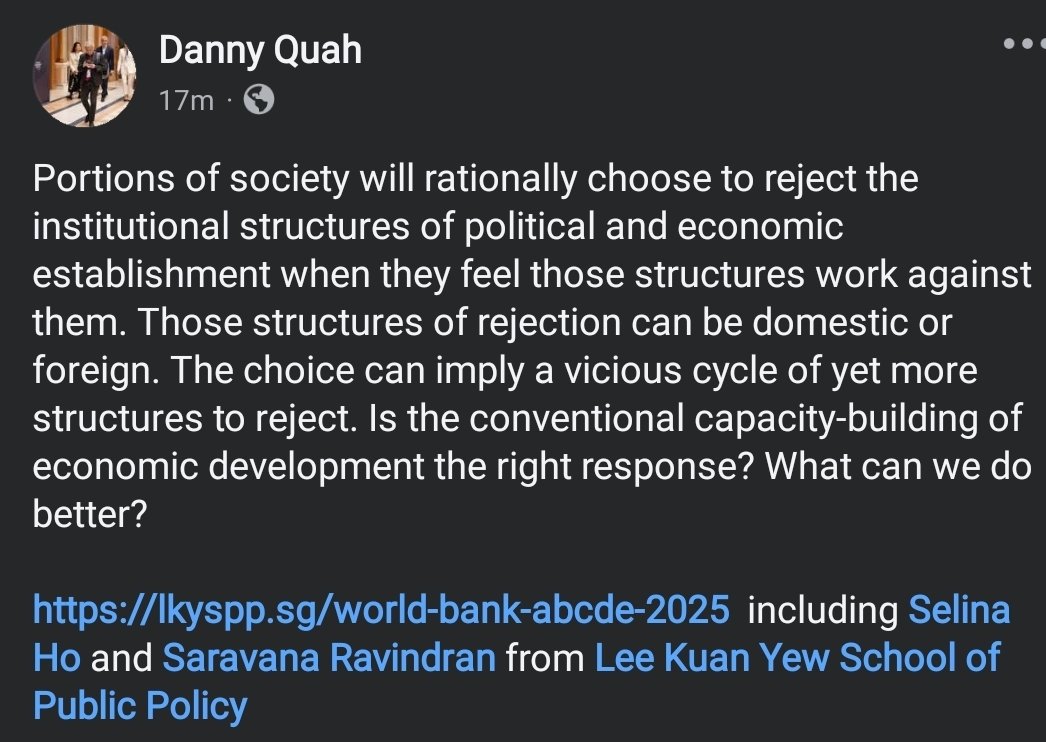
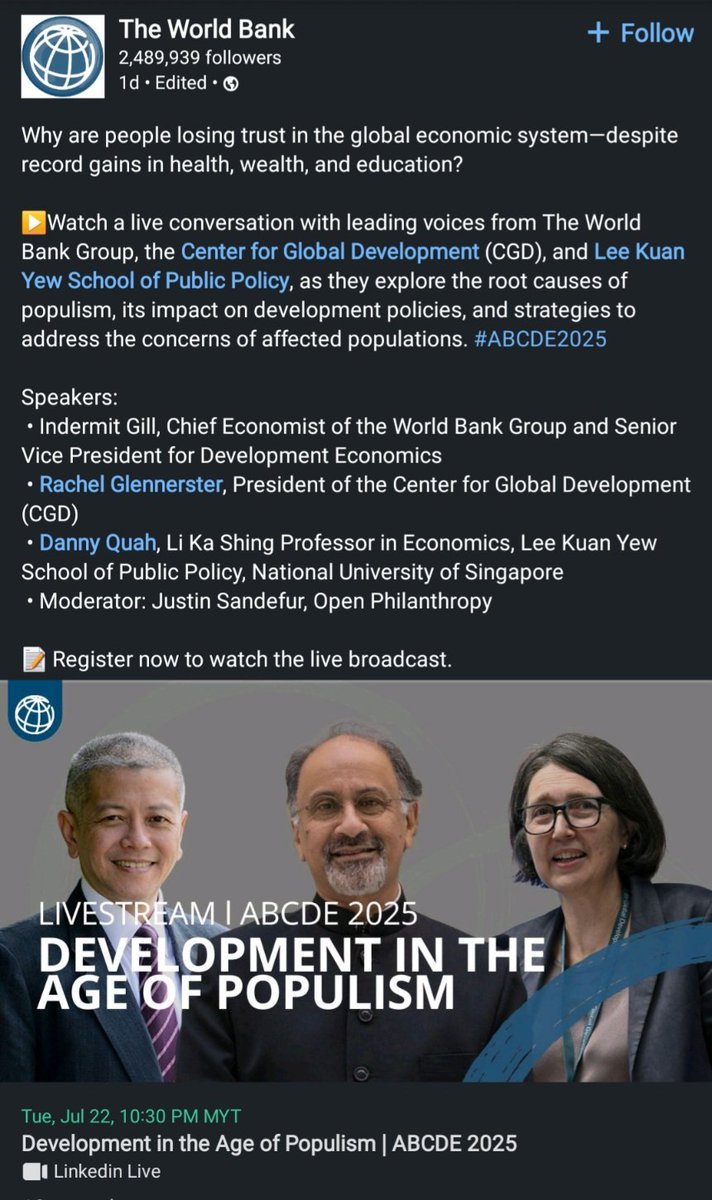
Come join us in person or online as we propose solutions to the problems of multilateralism and development
20 Jul 2025

Is the conventional capacity-building of economic development the right response? What can we do better?
lkyspp.sg/world-bank-abcde-2…
3
340
5 Jul 2025
We are hiring! 4-5 TT positions. We will be at APSA to answer questions.
13
39
7,981
Selina Ho retweeted

21 May 2025
In responding to Southeast Asia's cyber scam centers, "How China intervenes depends on the cooperation of host countries," says @selinalcho of @CAG_LKYSPP
. buff.ly/auA7uK9
2
3
2,128
15 Apr 2025
In a recent podcast with Asia Society Switzerland, I spoke about the tariff wars, China-Southeast Asia relations, Xi’s visit to Southeast Asia, and Chinese foreign policy directions in general. Enjoy the podcast!
buzzsprout.com/1724180/episo…
1
5
579
Selina Ho retweeted

13 Apr 2025
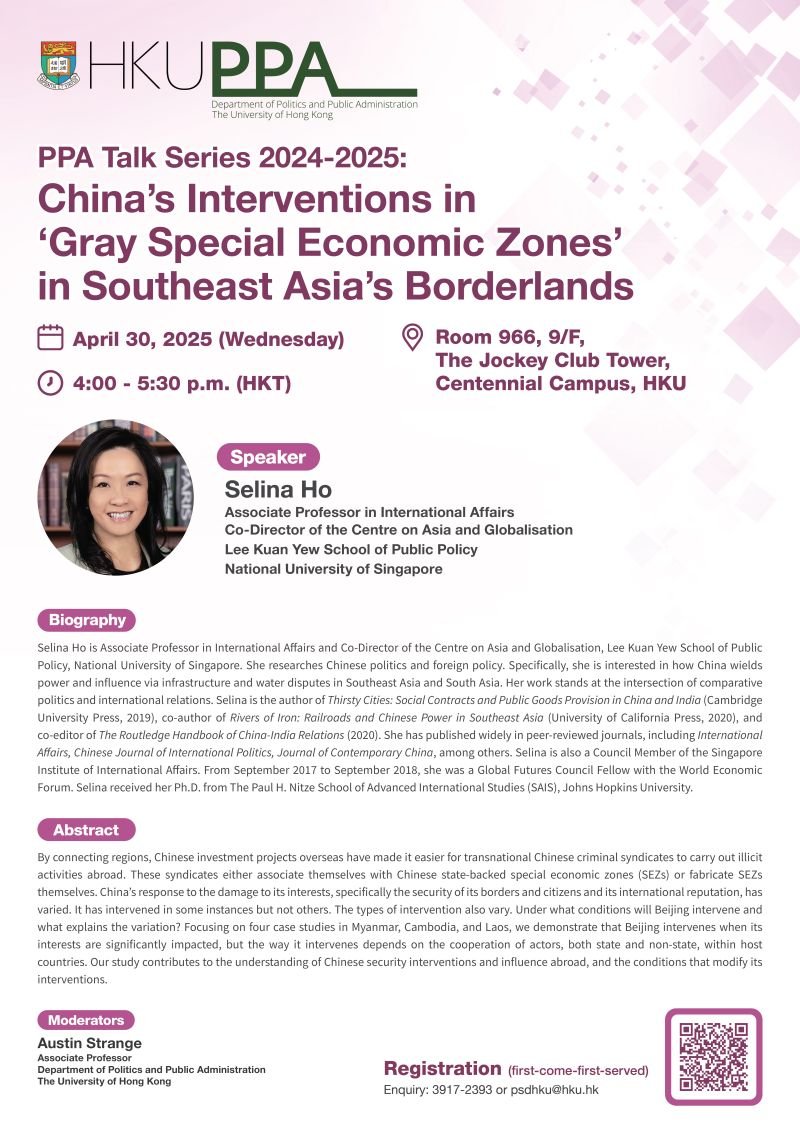
We are looking forward to hosting @selinalcho later this month at @HKUniversity @ppa_hku2024!
If you are in HK, please join us and hear more about this fascinating work on China, SE Asia, and "grey" special economic zones.
Registration details: hkuems1.hku.hk/hkuems/ec_hde…
31 Mar 2025

If you’re in Hong Kong and interested in how China is managing transnational crime and scam centers in Southeast Asia, please come attend my talk hosted by HKU. It’s based on a forthcoming article explaining the varieties of Chinese interventions. linkedin.com/posts/selina-ho…
6
23
2,724
13 Apr 2025
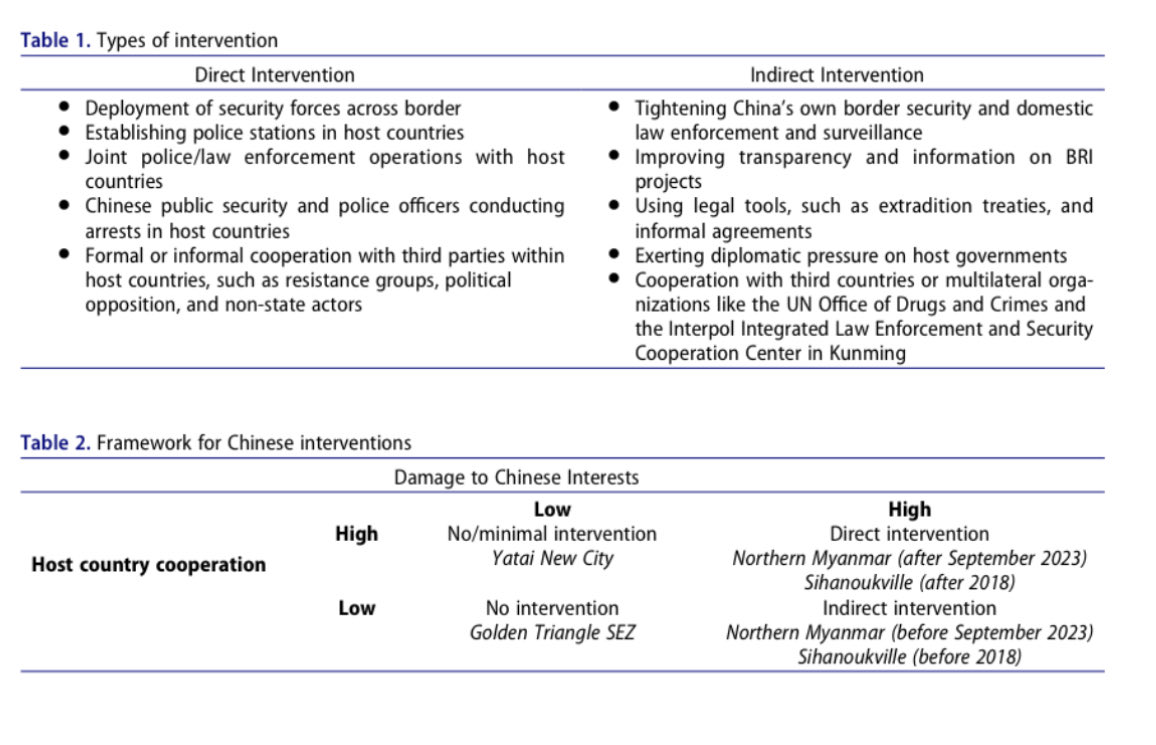
New article: China’s interventions in scam centers run by Chinese syndicates in Myanmar, Cambodia and Laos. An important building block for understanding the evolution of China’s “non-intervention” policy and the forms its security interventions take tandfonline.com/doi/full/10.…
2
30
83
7,536
13 Apr 2025
Enjoyed working with @CarlaPFreeman and Gong Xue. Using cross-case and within-case comparisons, we explain when and why China intervenes and the variations in interventions.
1
381