
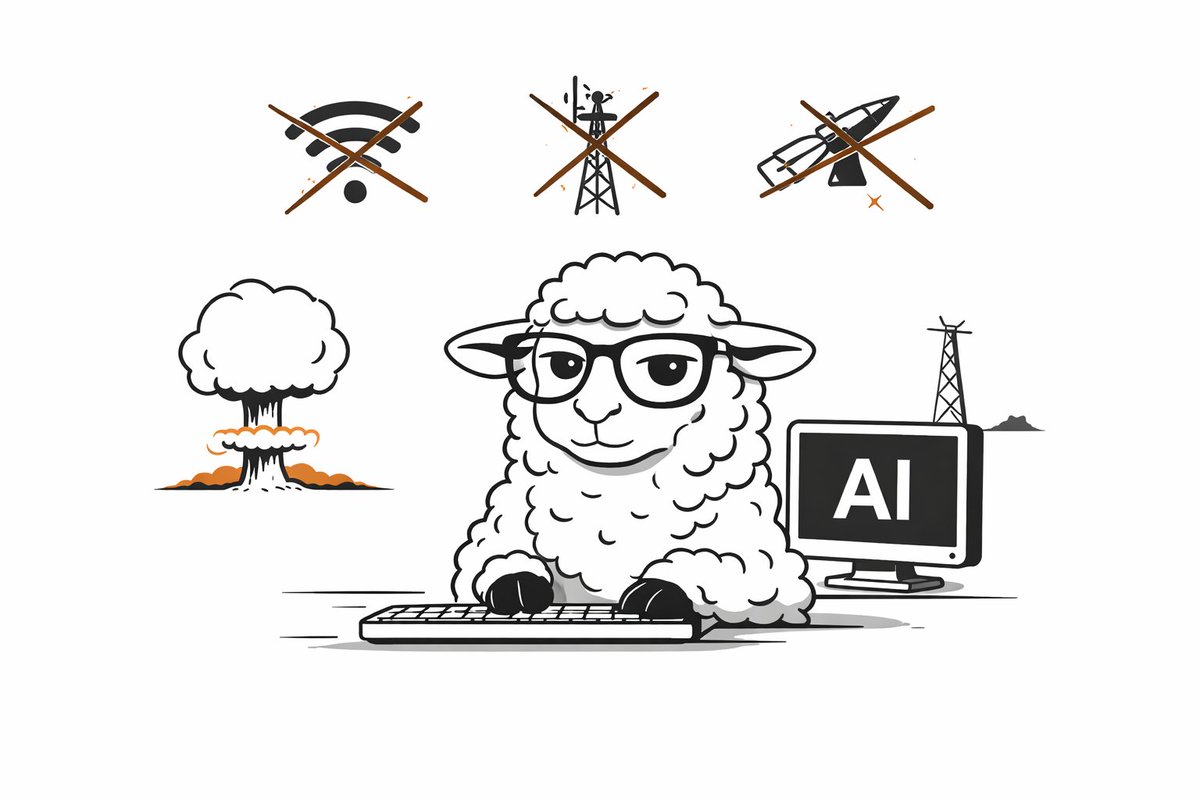
Datenschäfer 🐑 bei SeSoft GmbH | AI & Automatisierung für KMU | Effizientere Prozesse & bessere Entscheidungen durch smarte Datenanalyse
Joined March 2011
- Tweets 2,227
- Following 851
- Followers 360
- Likes 16,852
104 Photos and videos







"Mut geben statt Angst machen | Feministin | Antifaschistin | Autorin | Vorsitzende GrueneLandtagBY
| Icecreamlover | Innenpolitik, Bayern, das Leben."
25 May 2023

Welches Video möchte @KathaSchulze nicht retweetet haben? Dieses hier? Na, dann auf keinen Fall retweeten!
14
Sönke Schäfer (Datenschäfer) retweeted

Das OLG München hat heute bestätigt: Vier zentrale Behauptungen über mich sind unwahr.
Die Wahrheit hat sich durchgesetzt. Offen bleibt, warum das ZDF bis heute keine Verantwortung für die Folgen seiner Berichterstattung übernimmt.
Die Feststellung der Unwahrheit ist das eine. Die Frage nach der Verantwortung für den entstandenen Schaden das andere. Diese Frage ist noch nicht beantwortet. Wir werden weitere Schritte prüfen.
389
1,298
6,862
159,440
Sönke Schäfer (Datenschäfer) retweeted

Als ehemaliger ZDF-Mitarbeiter schäme ich mich für die Entwicklung des Senders.
Das ZDF:
- verbreitete Lügen über Kirk („Homosexuelle müssten gesteinigt werden“),
- verbreitete Lügen (Böhmermann) über Schönbohm, die dessen Job kosteten,
- manipulierte mit KI Bildern einen Bericht über die US-Behörde ICE,
- verfälschte einen Beitrag über ICE mit alten Bildern aus der Biden-Ära
- hetzte in den Kindernachrichten gegen christliche Kirchen
- verbreitete Lügen über Elon Musk.
Alle Fälle wurden nach Aufdeckung in Social Media, heftigen Protesten und kritischer Berichterstattung anderer Medien zögerlich vom ZDF bestätigt, wenngleich teilweise nur halbherzig bedauert.
Fehler passieren, aber die Anhäufung bewusster Manipulation in Kombination mit unzureichender Fehlerkultur und Demut - gerade für ein öffentlich finanziertes Medium, für das besondere Ansprüche gelten, sind eine schwere Bürde für den Ruf des ZDF und des ÖRR insgesamt. Dieses Führungsversagen ist auch beschämend und belastend für die vielen ZDF-Mitarbeiter, die den Programmauftrag ernst nehmen, und deren gute Arbeit dadurch mit diskreditiert wird.
302
2,198
11,124
152,088
KIs wie Claude könn(t)en per MCP auf Access Datenbanken zugreifen (lesen und schreiben)

Bridge the gap between AI and Microsoft Access! 🚀
Check out this quick walkthrough on setting up an Access MCP Server in VS Code. It’s a game-changer for getting your AI to communicate directly with your Access data.
Watch it here: youtube.com/watch?v=m6QuQ1QC…
#MicrosoftAccess #AI

7
Eine Portion Reis (150g) hat auf den Blutzucker den gleichen Effekt wie 10 Teelöffel Zucker. Bei Kartoffeln sind es 9 Teelöffel. 30g Brot oder Haferflocken wirken wie 4 Teelöffel Zucker. Usw...
Jun 12

My sugar infographics in 39 languages now!! 3 new languages up on the @PHCukorg website (BHS, Hebrew and Mandarin). Link below
7
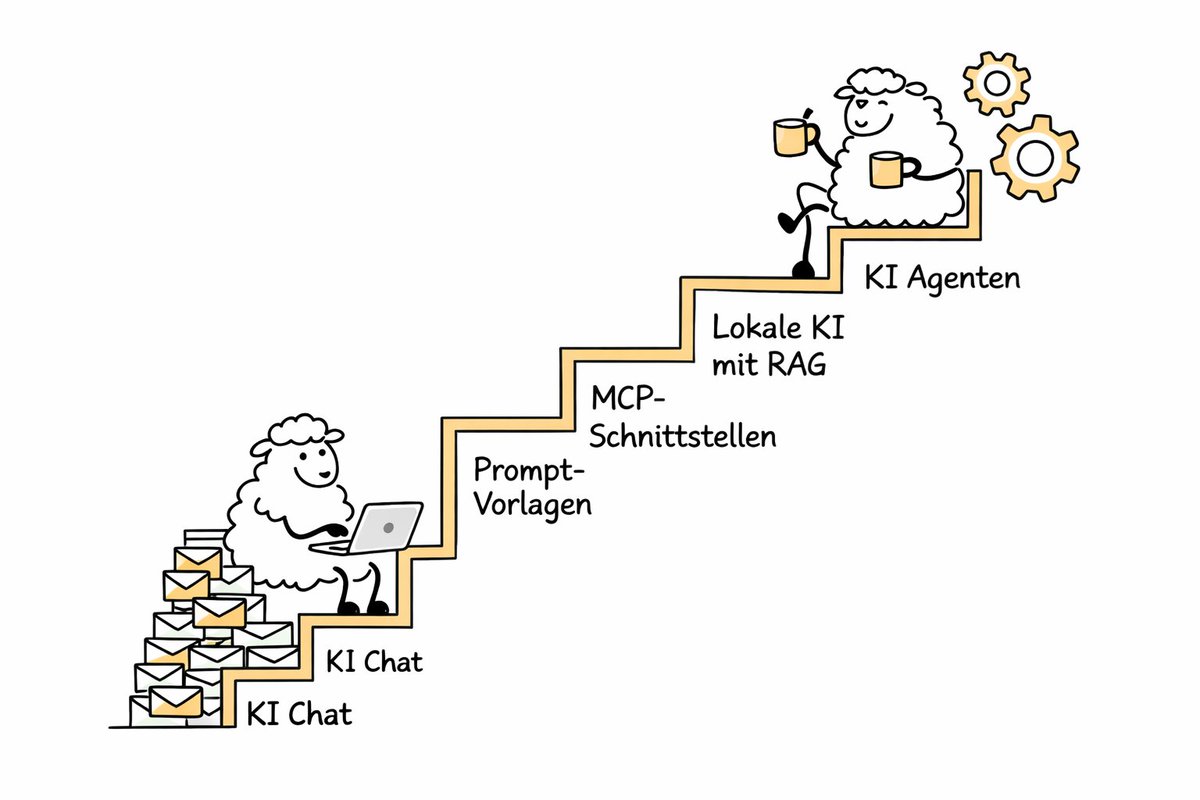
Stufe 1: Du chattest mit der KI im Browser.
Stufe 2: Du baust wiederverwendbare Vorlagen.
Stufe 3: Die KI greift direkt auf Deine Werkzeuge zu: Word, Excel, WordPress, Outlook, Access.
Stufe 4: Eine lokale KI arbeitet mit Deinen eigenen Daten, nicht mit dem Internet-Mittelwert.
Stufe 5: Die KI führt ganze Vorgänge selbständig aus, Du gibst nur noch das Ziel vor.
Die meisten stehen auf Stufe 1.
Und denken, das sei die ganze Treppe.
Auf jeder Stufe verschiebt sich Deine Rolle:
Vom Bediener zum Auftraggeber zum Architekten.
Welche Stufe Du erreichst, hängt nicht vom Budget ab.
Sondern davon, wie präzise Du sagen kannst, was Du willst.
🐑 Datenschäfer | Struktur vor KI
1
1
21
Diversifikation kostet viel Performance.
Man kauft mit ETFs ne Menge Firmen, die kaum zur Wertschöpfung beitragen.
Daher: Cherry-Picking mit relativer Performance (Aufwärtstrend) ggü. Referenz-Index.
Oder so: [Aktie]/[Index] > EMA50
(oder langfristiger > EMA200)
Jun 10

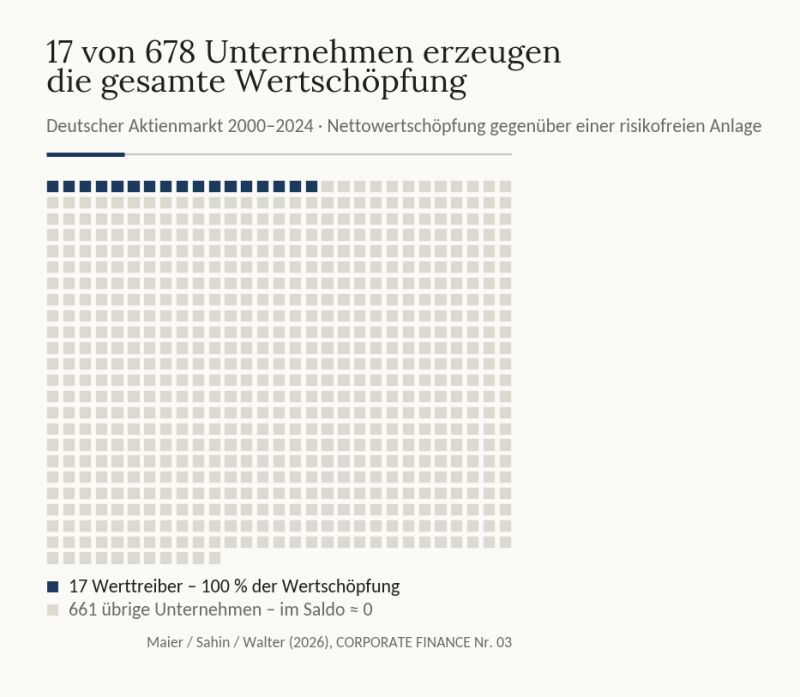
Die Wertschöpfung der Aktienmärkte resultiert aus wenigen Highflyern mit exzeptioneller Performance: Was Prof. Bessembinder für die USA seit 1926 nachgewiesen hat, gilt auch für Deutschland – wo 17 von 661 #Aktien für die gesamte "Wealth Creation" seit 2000 gesorgt haben.
2
17
Die kostenlose Ahrefs' Domain Rating (DR) API läßt sich auch aus Access oder Excel ansprechen.
Jun 9

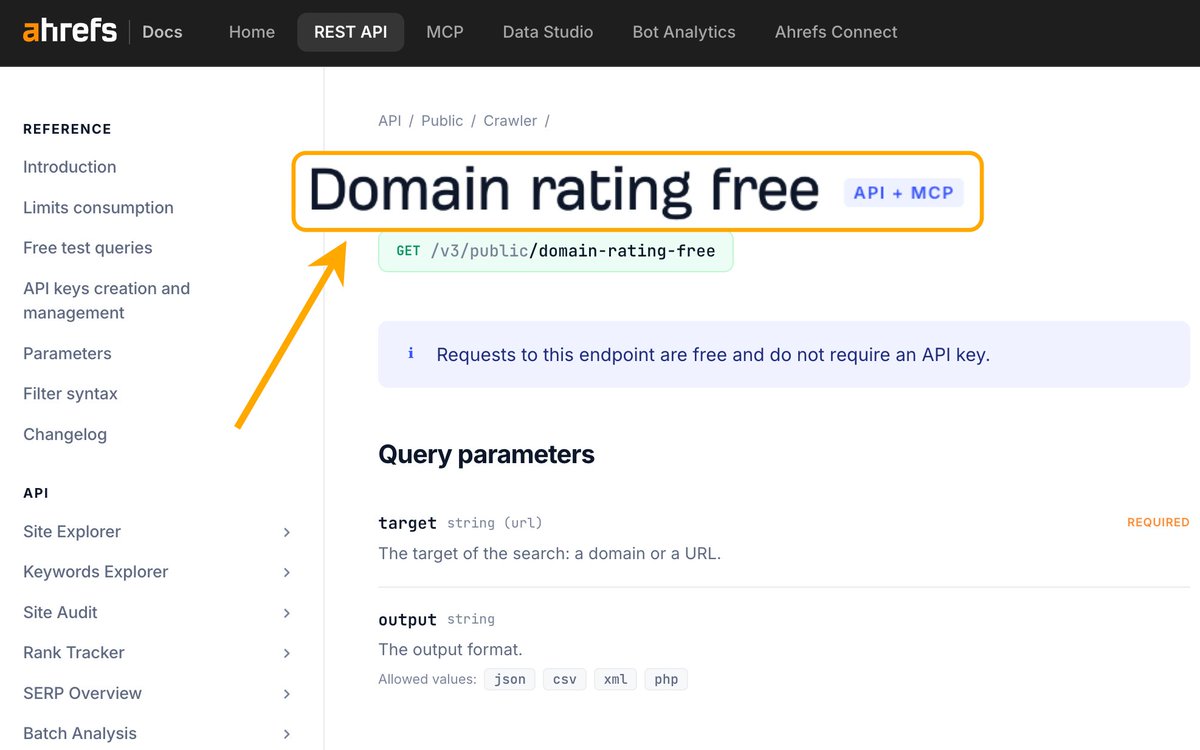
Ahrefs' Domain Rating (DR) API endpoint is now 100% FREE. 🔥
Now that AI lets anyone spin up their own tools and automations, the bottleneck isn't coding anymore — it's access to quality data.
And DR is one of the best shortcuts out there for sizing up how authoritative a website really is.
So we're just giving it away!
Grab it here:
docs.ahrefs.com/en/api/refer…
New to DR?
It rates the strength of any site's backlink profile on a 0–100 scale.
More here: ahrefs.com/blog/domain-ratin…
Now go build something cool. 😉
1
1
19
Retail = exit liquidity?
Jun 9

Three big AI labs are becoming public this year at $1 trillion valuations:
- OpenAI
- Anthropic
- XAI within SpaceX
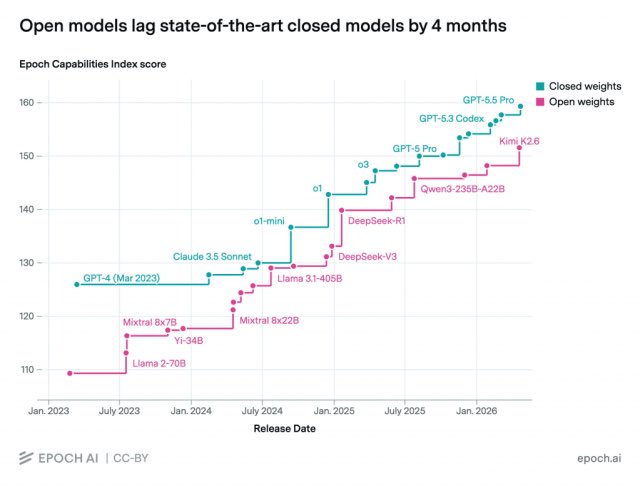
Open models lag closed SOTA models by just 4 months..
How are they going to justify these valuations once model development flatlines and open models catch up?
1
7
"Es ist verboten, geschäftsmäßig für die Auswanderung zu werben."
aus Mai 1975 SPD/FDP H. Schmidt
Passt zur Wegzugsbesteuerung (§ 6 AStG)
Siehe: Gesetz zum Schutze der Auswanderer und Auswanderinnen (Auswandererschutzgesetz - AuswSG)
§ 2 Werbungsverbot
3
9
"Dieser Post war für die 800 Kontakte der Vorsitzenden sowie für die Kontakte der Angeklagten in dem Netzwerk einsehbar." (innerhalb eines russischen Online-Kontaktnetzwerks)
Jun 5

1
6
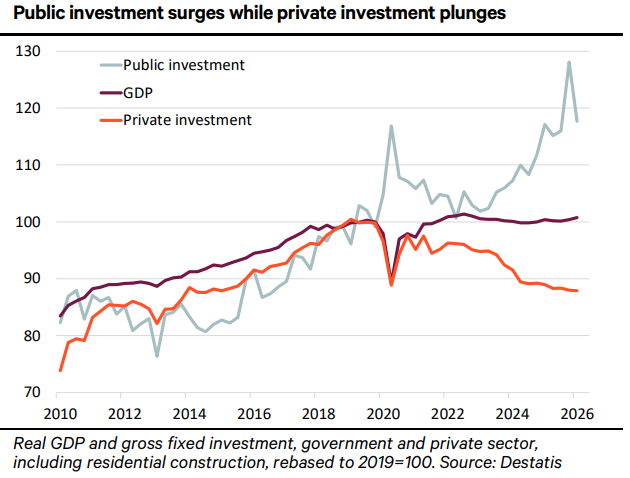
DE: kein Wachstum seit 2017
Rein zufällig der Beginn der Großen Koalition CDU SPD.
Private Investitionen sinken seitdem.

t.ly/kfDkl Chart of the Week: Germany: where is the stimulus?
5
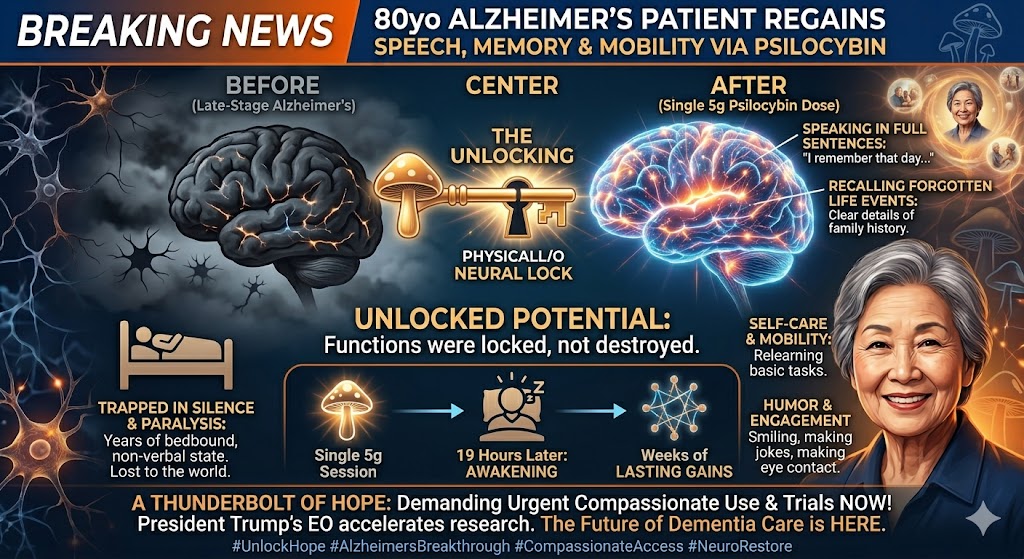
Alzheimer (~65% aller Demenzfälle) "geheilt" mit Psylocybin
Quelle - ein Einzelfall: frontiersin.org/journals/neu…

An 80-year-old Japanese-American woman with advanced Alzheimer’s—bedbound, incontinent, and speaking only in single syllables for years—just shattered our understanding of neurodegeneration.
After a single supervised 5-gram dose of psilocybin mushrooms (Enigma strain), she woke up after 19 hours and did the impossible:
Regained full speech (forming complete, coherent sentences)
Recovered lost memories (recalling long-forgotten life events)
Regained mobility & continence (dressing herself and staying dry)
Restored eye contact and humor
A follow-up 3-gram dose one month later boosted her verbal fluency and agility even further. These gains lasted for weeks.
🧠 This Is Not A Cure. It’s Something More Profound.
The case report, published in Frontiers in Neuroscience (May 27, 2026), proves that functions we assumed were irreversibly destroyed by dementia are actually still there—they are simply trapped behind broken neural gates. Psilocybin bypassed the damage. How? Through explosive, rapid neuroplasticity:
The 5-HT2A Switch: Psilocybin floods 5-HT2A serotonin receptors, triggering a massive spike in BDNF (Brain-Derived Neurotrophic Factor).
Neural Rewiring: BDNF acts like fertilizer for the brain, driving dendritic spine growth, synaptogenesis, and the repair of broken networks.
Circuit Restoration: It downregulates chronic neuroinflammation and re-establishes critical communication between the hippocampus and prefrontal cortex.
🛑 The Tragedy of Our Delay: Johns Hopkins is already studying psilocybin for depression in early-stage cognitive decline. But for late-stage, severe patients? It is an absolute shame that we aren't taking these trials more seriously. Modern medicine has exactly zero treatments that restore lost function in advanced dementia. This single case demands immediate action.
We don't have time to wait for a 10-year bureaucratic pipeline while millions of minds fade into the fog.
⚡ The Directive for Compassionate Use: President Trump’s executive order accelerating psychedelic research gives us the exact legal framework we need. We must bypass the standard red tape and establish compassionate use protocols immediately for advanced patients. For millions of families watching their loved ones slip away, this case report is a thunderbolt of hope. The brain still holds secrets, and science moves fast when we get out of its way.
What if a single guided experience could give you back one last conversation with the person you love?
🔄 Share this if you want real hope for dementia. Access and research must accelerate NOW.
#Psilocybin #Alzheimers #Neuroplasticity #BDNF #MedicalBreakthrough #CompassionateUse #Dementia
17
Sönke Schäfer (Datenschäfer) retweeted


240
8,481
32,009
235,513
Sönke Schäfer (Datenschäfer) retweeted

23 Jan 2025
„Ich werde im Fall meiner Wahl zum Bundeskanzler der Bundesrepublik Deutschland am ersten Tag meiner Amtszeit das Bundesinnenministerium im Wege der Richtlinienkompetenz des Bundeskanzlers anweisen, die deutschen Staatsgrenzen zu allen unseren Nachbarn dauerhaft zu kontrollieren und ausnahmslos alle Versuche der illegalen Einreise zurückzuweisen.“ (tm) #Aschaffenburg
8,882
1,471
10,752
1,507,389

The West has created an utterly evil state religion where an accusation of “racism” is the gravest offense that can be committed, even worse than rape or murder!
So if police show up at a crime scene and a British boy is bleeding out and an immigrant says the British boy is racist the cops will cuff the dying British boy.
13,892
70,754
362,511
30,331,712
Sönke Schäfer (Datenschäfer) retweeted

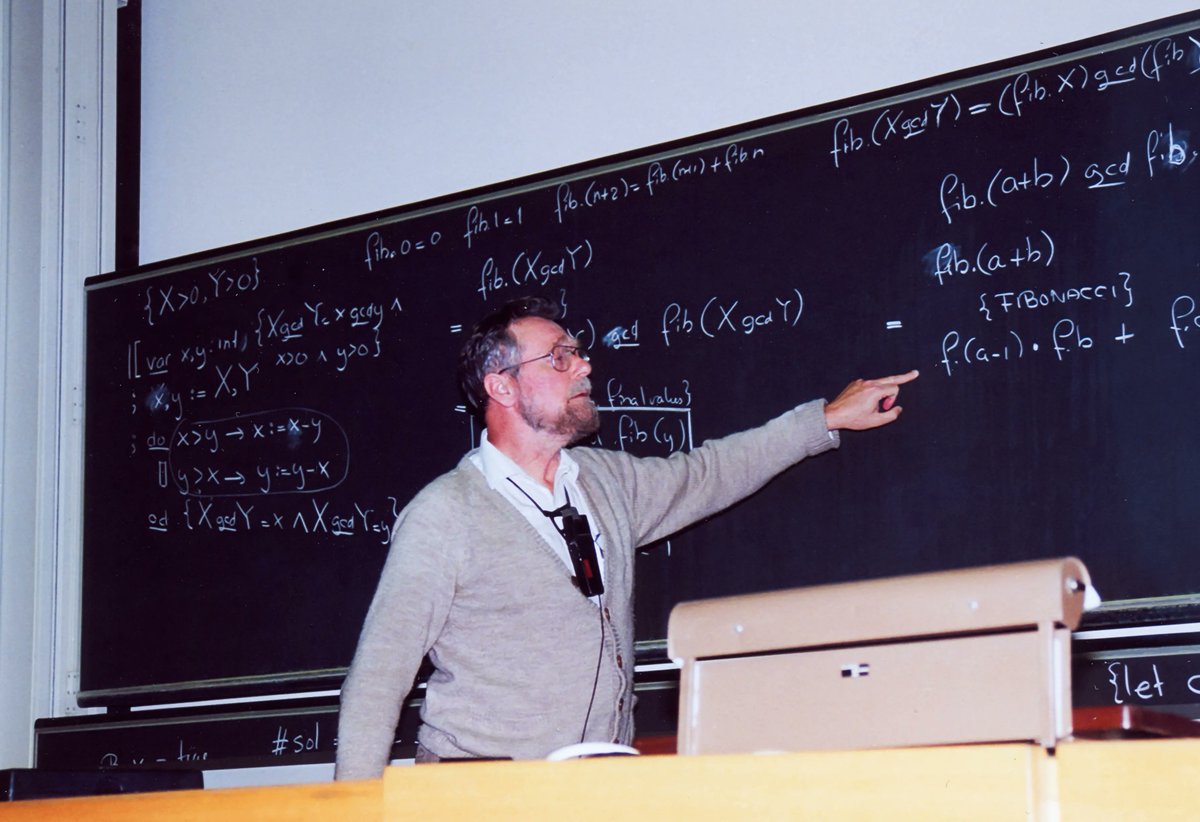
A Dutch computer scientist gave one lecture in 1988 arguing that programming is unlike anything humans have ever tried to do before, and the reason most software on earth is broken is that we are still teaching it as if it were a hobby.
His name was Edsger Dijkstra. He won the Turing Award in 1972. He invented the shortest path algorithm that every GPS on earth still runs on.
He wrote the paper that killed the goto statement in modern programming languages.
He spent 50 years quietly being one of the most consequential thinkers in the entire history of computer science, and he was in a very bad mood by the time he stood up at the ACM Computer Science Conference in 1988 to deliver the lecture that almost nobody at the conference wanted to hear.
The lecture was called On the Cruelty of Really Teaching Computer Science.
It is now one of the most cited papers in the entire history of computing education. It was filed in his archive as EWD1036, handwritten in his careful fountain-pen calligraphy because he refused to use a typewriter and famously refused to use email for the rest of his life.
The argument was simple and uncomfortable.
Programming, Dijkstra said, is a radical novelty. Not a new tool. Not a new skill. Not a faster version of something humans already knew how to do. A genuinely new category of intellectual activity that has no real precedent in the entire history of the human species, and our brains have not been built to handle it.
Here is what he meant by that.
When a programmer writes a line of high-level code and presses run, that single line might trigger a billion operations at the level of the silicon.
The ratio between the abstraction you are working in and the physical events you are actually causing is roughly one billion to one. No engineer in history before computing ever had to reason about a system spanning that kind of ratio inside their own head.
A bridge builder reasons about steel beams and the physics of weight. A surgeon reasons about organs and the physics of tissue. A chemist reasons about molecules and the physics of bonds.
All of them are working inside ratios of physical scale where the largest and smallest things they need to think about are within a few orders of magnitude of each other.
A programmer routinely writes one line that orchestrates a billion physical events on a chip, and is expected to predict the behavior of all of them in advance.
Dijkstra argued that the human brain was simply not built for this. Every intuition we have evolved over hundreds of thousands of years comes from a world of medium-sized objects behaving in continuous ways. Computing is the opposite. It is discrete, not continuous.
A program that runs perfectly a billion times can crash on the billion-and-first iteration because of a single bit. A single character missing from a line of code can take down a power grid. There is no margin. There is no graceful degradation. The system either works or does not, and the only way to know is to actually run it.
This was the part of the lecture where Dijkstra made everyone in the room uncomfortable.
He said the way computer science was being taught in universities was a quiet disaster. Professors were teaching programming the way carpenters teach woodworking. With examples. With metaphors. With analogies to things students already understood. Files are like folders. Memory is like a desk. A function is like a recipe.
Dijkstra said this was actively making it harder for students to think clearly. The whole point of a radical novelty is that there is nothing in your past experience to compare it to.
The moment you start reaching for metaphors, you are smuggling in old intuitions that do not apply, and those intuitions will betray you the first time you try to reason about a system the metaphor was not built to describe.
His exact line was this: the usual way in which we plan today for tomorrow is in yesterday's vocabulary. And yesterday's vocabulary, he argued, was killing the field.
The reason most software is broken is downstream of this single misunderstanding. Programmers are taught to think of code as a craft. Something you get a feel for.
Something you pick up through practice. Something where intuition gets sharper with experience.
Dijkstra said this is exactly backwards. Programming is not a craft. It is closer to mathematics than to carpentry, and the moment you treat it as a craft, you guarantee that the software you produce will be full of the kind of bugs that craftsmanship cannot catch.
The fix, in his view, was to teach programming the way mathematics is taught. You should be able to prove your program correct before you run it.
You should reason about your code formally, the way a mathematician reasons about a theorem, not the way a carpenter feels their way through a joint. The students who learned this way, he said, would walk out of their classes with a kind of confidence that no amount of typing practice could produce.
The lecture was published in Communications of the ACM in 1989. The field did not listen. Universities kept teaching programming the same way.
Software kept getting bigger. Bugs kept compounding. By 2026, almost every piece of software on earth has known security vulnerabilities, undefined behaviors, and edge cases that nobody has ever proven safe. The doom that Dijkstra warned about in 1988 is now the default condition of the digital world we have built.
The deeper lesson is the one most readers miss the first time through.
Dijkstra was not just talking about software. He was making a much bigger point about how humans learn anything that is genuinely new. The instinct to translate the unfamiliar into the familiar is the most natural thing in the world.
It is also the single biggest obstacle to actually understanding something that has no precedent. If you keep reaching for analogies, you will never see the new thing clearly. You will only see your old framework projected onto it.
This is happening right now with AI. The same instinct that made people learn programming through metaphors of files and folders is making people understand large language models through metaphors of brains and people.
Almost every framework being used to describe AI in 2026 is borrowed from a previous domain. None of them quite fit. The few people who are actually building useful intuitions about how these systems work are the ones who have done what Dijkstra recommended forty years ago.
They have set down the old vocabulary. They have looked at the new thing on its own terms. They have accepted that the radical novelty is radical for a reason.
You are not slow. You were taught a discipline as if it were a hobby. The cruelty is real.
The fix is still available.
93
340
1,731
285,894
KI könnte die Wirtschaft zerstören.
Und "mehr Wettbewerb und bessere KI vergrößern den Keil"
Ein bewusst einfaches Theoriemodell:
Alles hängt an einem Parameter: ob Entlassene wieder Arbeit finden. Tun sie es, kehrt sich der Effekt sogar um.
Kein Beweis, eher eine Mechanik.
May 30

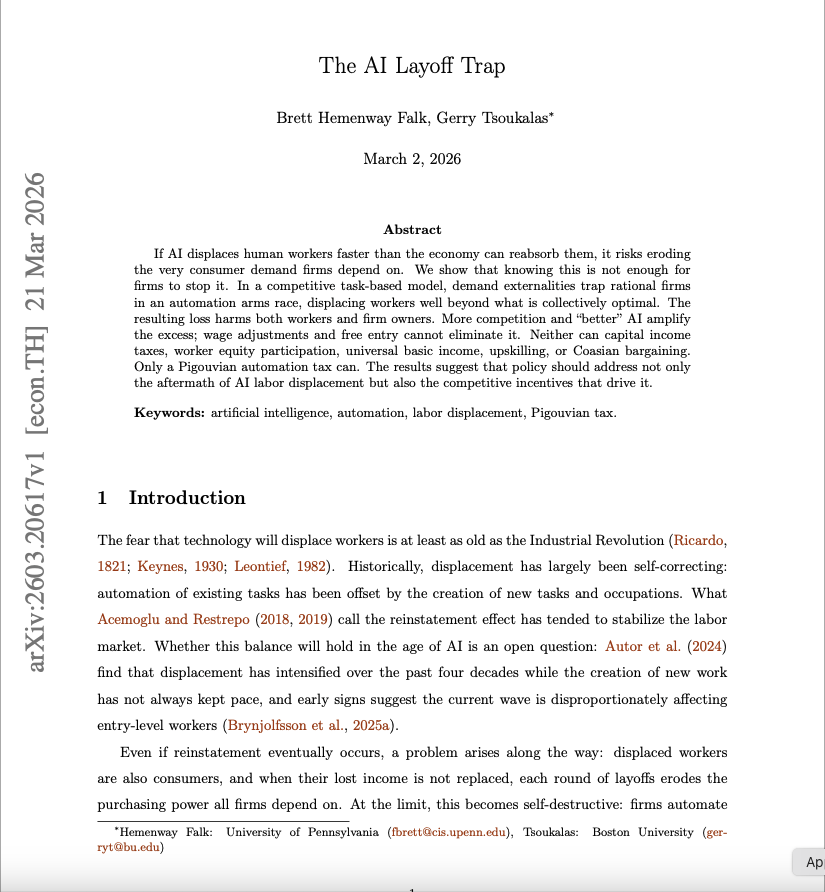
Two economists just published a mathematical proof that AI will destroy the economy.
Not might. Not could. Will — if nothing changes.
The paper is called "The AI Layoff Trap." Published March 2, 2026. Wharton School, University of Pennsylvania. Boston University. Peer reviewed. Mathematically modeled.
The conclusion is one sentence.
"At the limit, firms automate their way to boundless productivity and zero demand."
An economy that produces everything. And sells it to nobody.
Here is how you get there.
A company fires 500 workers and replaces them with AI. A competitor fires 700 to keep up. Another fires 1,000. Every company is behaving rationally. Every company is following the incentives correctly. And every company is building a trap for itself.
Because the workers who were fired were also customers.
When they lose their jobs faster than the economy can absorb them, they stop spending. Consumer demand falls. Companies respond by cutting costs — which means automating more workers — which means less spending — which means more falling demand — which means more automation.
The loop has no natural exit.
The researchers tested every proposed solution. Universal basic income. Capital income taxes. Worker equity participation. Upskilling programs. Corporate coordination agreements.
Every single one failed in the model.
The only intervention that worked: a Pigouvian automation tax — a per-task levy charged every time a company replaces a human with AI, forcing them to price in the demand they are destroying before they pull the trigger.
No government has implemented this. No major economy is seriously discussing it.
Meanwhile the numbers are already tracking the curve. 100,000 tech workers laid off in 2025. 92,000 more in the first months of 2026. Jack Dorsey fired half of Block's workforce and said publicly: "Within the next year, the majority of companies will reach the same conclusion."
Nobody is doing anything wrong. Companies are following their incentives perfectly. That is exactly the problem.
Rational behavior. At scale. Simultaneously. With no mechanism to stop it.
Two economists built the math. The math leads to one place.
Source: Falk & Tsoukalas · Wharton School Boston University ·
1
14
Deutschland bekommt nicht den US-Nachfragekollaps aus dem Paper. Es bekommt das Stillere:
KI verdrängt Schreibtisch-Jobs ohne Folgejob, geparkt auf Transfers, bezahlt aus einer schrumpfenden Produktivbasis.
Staatsquote 2025: 50,3 %, steigend.
Kein Crash. Verwalteter Niedergang.
13