
Partner at @EclipseVentures. Digital and physical worlds are colliding. @Wayve_ai @The_TrueAnomaly @Oxidecomputer @Ursamajortech @foxglove @mytraUS
Joined August 2011
- Tweets 4,765
- Following 1,573
- Followers 3,202
- Likes 15,387
339 Photos and videos







Pinned Tweet
Eleven years ago we started @EclipseVentures and bet everything on atoms. Rockets, robots, chips, factories, power systems, defense. The things civilization actually runs on.
Today, we're announcing $1.3B in new capital to keep building.
The physical world is overdue for transformation. Transportation runs on systems designed decades ago. The energy grid cannot keep up with demand. Healthcare depends on manual procedures that don't scale. Defense development moves at a fraction of the speed threats evolve. These are not software problems. They are full stack engineering and operations problems, and they have been underinvested in for a generation.
But there has never been a better moment to solve them. The best engineers are leaving big tech to build in the physical world. AI is compressing timelines from years to quarters. Policy is aligned. And customers are not waiting — the DoD, the hyperscalers, hospitals, and the Fortune 500 are all desperate for technology that makes physical systems smarter, faster, and more resilient. Talent, capital, technology, policy, and demand are all converging at once.
This is our moment 🇺🇸
We built Eclipse for this exact moment and in doing so, we launched a movement. Today that movement is 100 companies strong (and growing!). These companies supply each other, share customers, and help solve each other's hardest problems. Propulsion systems powering orbital defense. Modern supply chain infrastructure moving the worlds goods. Autonomous vehicles on three continents. Surgical robots performing procedures that used to require the world's best hands. Cloud hardware powering the AI revolution built on American soil. That's not a fund. That's an economy — an Eclipse Economy.
The door is open to rebuild the physical infrastructure of the country. We intend to run through it.
54
30
377
37,388

GM is pushing into stationary electricity storage through a partnership with startup Peak Energy, tapping into both a growing market fueled by demand from AI and investor hype that recently boosted rival Ford's shares bloomberg.com/news/articles/…
5
9
24
14,188
Seth Winterroth 🤖 retweeted

Jun 9
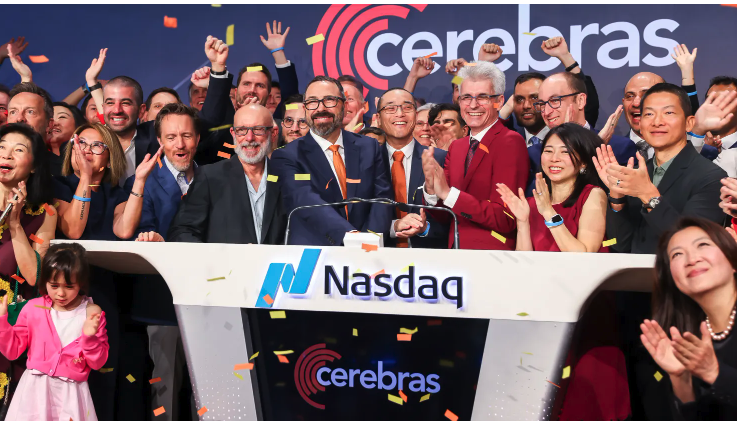
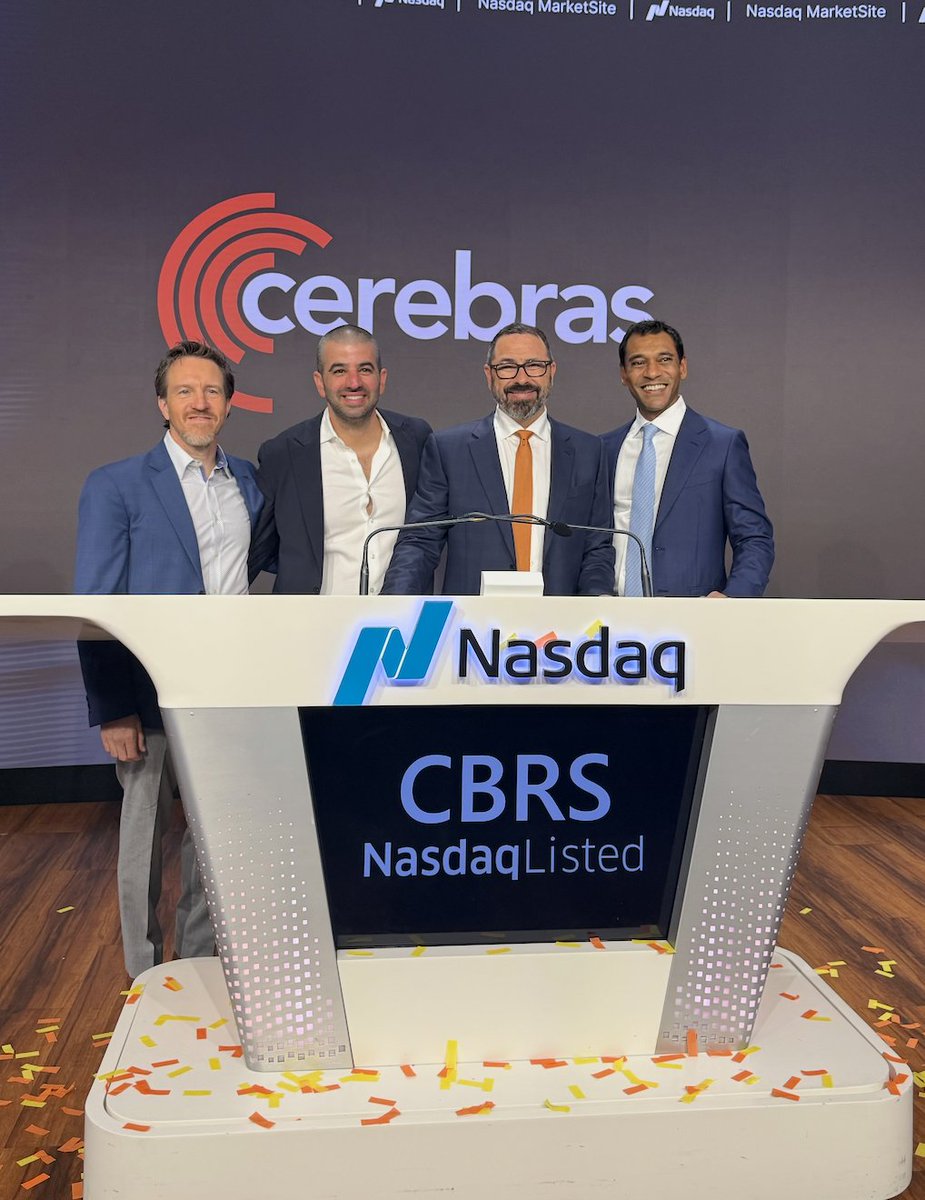
I've served on the @cerebras board since 2016. And in that time, we’ve had our fair share of near death experiences.
Through all of it, I got to sit alongside some remarkable people, who all brought something special to the table.
Pierre Lamond came in through Eclipse. He'd been on Andrew's board at SeaMicro, and Andrew thought the world of him, rightly so. Pierre had been in the Valley for five decades and seen more semiconductor business cycles than most people have had jobs.
But what he really brought was fearlessness. Whatever was on his mind came straight out of his mouth, no filtering, no saving it for the 1:1 after. He intro’d Cerebras to TSMC when they were just a small team. When Cerebras was struggling to hire AI talent, Pierre was direct: this constraint isn't going away, go find new talent pools. Our Toronto office happened after that conversation.
@ericvishria came in from Benchmark. To his credit, he managed to do all his diligence in three and a half days - conviction like I’d never seen. Eric had an uncanny ability to zoom out when the board got lost in the weeds. When someone was grinding on the wrong question he'd just say, look, this company could have gone out of business a few months ago and now it’s worth billions.
Years later, after Pierre retired, Lior Susan took over from him at Eclipse. Israeli military, no patience for credentials, he would often joke “I don’t know why you all collect these silly degrees.”
He just sees a problem and doesn't stop until it's fixed. During the Christmas break, while everyone else was sipping eggnog at home, Lior was working his butt off to help Andrew get the OpenAI deal over the line. That’s just quintessential Lior.
My job was to create space for the uncomfortable questions. And in the earliest days, when things weren’t working and the team probably didn't want to tell a board member how bad it actually was, I'd just show up. Come over on a Friday afternoon and get on the whiteboard.
Everyone brought something different and that's what made it so special.
@andrewdfeldman picked the people - on the board and across the company - and they earned every inch of what Cerebras has become.
It has been the ride of a lifetime. And we’re just getting started.
3
2
53
3,613
Seth Winterroth 🤖 retweeted

Jun 9
We spent a day with JB Straubel to see everything Redwood Materials has been building. And we've put it all together for a glorious podcast meets the factory tour episode.
Drops tomorrow for the subscribers.
5
11
171
15,510

London, your autonomous ride is arriving soon. 🚗
Starting today, Londoners can join the interest list for Wayve autonomous rides on @Uber, ready for when they launch later this year.
Join the interest list today!
uber.com/gb/en/autonomous/wa…

6
17
78
15,288
Seth Winterroth 🤖 retweeted

Jun 8
This will be the first opportunity for the public to experience riding the Wayve. We have a decade of experience teaching our AI to drive and I can't wait for folks to experience how smooth and confident the experience is, from booking on Uber to seeing the Wayve AI Driver do what it does best: respond to tricky scenarios on the fly, navigate varying weather conditions, and seamlessly executing pickups and dropoffs, from our King’s Cross HQ to Heathrow.
What's different from other robotaxi services in USA/China?
1. intelligence - you'll quickly see this with complex interactions or safe navigation around pedestrians and cyclists. My favourite is seeing human like pick-up/drop-offs where our robotaxi finds safe, legal and socially responsible positions all with onboard reasoning
2. no geofence - we don't use HD-maps, so the robotaxi can drive wherever you want to go, urban, highway, wherever
3. it's London - one of the most complex driving environments!
Jun 8

Exciting news to kick off London Tech week: Londoners can now sign up to experience @wayve_ai autonomous rides on @Uber which are launching soon (pending final regulatory approval). 🇬🇧
Join our interest list today: uber.com/gb/en/autonomous/wa…

16
12
117
19,932
Seth Winterroth 🤖 retweeted

Jun 7
Slow Inference Has Zero Market
Andrew Feldman, Co-founder and CEO, Cerebras, interviewed by @saranormous and @eladgil (No Priors)
Summary: Cerebras went public at $63 billion with a $20 billion-plus OpenAI backlog after spending eight years convincing the industry that GPUs were the wrong architecture for AI inference. Andrew Feldman argues that speed creates new business categories. Fast internet turned Netflix into a movie studio. Fast AI will do the same to workflows we now think of as fixed. The lesson for operators: a 20x speedup requires a different architecture, the chasm between technical proof and market demand can be a multi-year burn, and the companies winning right now treat their old "speed of light" assumptions as soft limits.
1. The Netflix Test. Speed creates new business categories, the way fast internet turned a DVD-by-mail company into a movie studio. Bandwidth opened up an entirely different business for Netflix. The market for slow inference will end up where dial-up and slow search ended up: at zero. Right now AI is still in the "deliver DVDs faster" phase of its potential.
2. Wafer-Scale Bet. A 15 to 20x speedup over GPUs requires a fundamentally different architecture. Cerebras built a 46,000 square millimeter chip the size of a dinner plate while every competitor was building chips the size of postage stamps. Gene Amdahl tried wafer-scale and failed; the rest of the industry called it impossible. The general principle: a 20x improvement requires a design that looks unlike anything that came before.
3. The $8m-per-month Years. From 2017 to mid-2019 Cerebras spent $8 million a month with no working chip and held a board meeting every six weeks to report "still not working." Each failure analysis got the team slightly closer. The chip yielded in summer 2019, and the founders sat staring at it for half an hour because no one had ever done it. That is what hardware conviction looks like measured in cash.
4. Two Years Too Early. Cerebras solved one of the hardest problems in the computer industry and then watched two years pass with almost no one caring. Gen 1 sold around a dozen units, Gen 2 around 300, Gen 3 will sell tens of thousands. Being blisteringly fast was worthless while AI was still a novelty, because nobody uses a novelty every day. The gap between "we built it" and "the market wants it" decides whether deep-tech companies live long enough to enjoy being right.
5. Bridging The Chasm. New compute architectures usually start with supercomputer customers who love speed and tolerate immature software. Cerebras ran the table at the National Labs, then won oil and gas and pharma, then sovereign G42 placed a $1 billion order. That capital let them rebuild the supply chain and battle-test at scale, because you cannot put $100 million of your own gear in a QA lab. By the time OpenAI and AWS showed up, the capacity was ready.
6. OpenAI In 4.5 Weeks. A $20 billion-plus deal went from "first conversation with Sam" to signed master agreement in 4.5 weeks. Term sheet the night before Thanksgiving, master agreement on Christmas Eve, working seven days a week with multiple law firms. Feldman's takeaway: many of the timelines he assumed were the speed of light in dealmaking were soft. Operators in this market are compressing M&A, financing, and data-center build-outs at the same time.
7. The Professional David. Cerebras is Feldman's fifth startup, and every one has been a David against a Goliath. He frames it as identity: if his mother could buy the product, he does not want to make it. The hard part is loving the underdog role for a decade, well past where most founders quit. If you do not love being a David, do not pick a fight with Nvidia.
8. $30K Of Tokens Per Engineer. Eight months ago Cerebras spent under $1,000 per engineer per year on inference tokens; today it is $25 to $30,000. The engineers who have figured it out run eight or ten agents around the clock, with their own QA agents to compensate for known coding-model weaknesses. They went from 10x to 100x. Most people, Feldman included, are still limping along trying to figure out the workflow.
9. The IPO Trade. Going public swaps technology-savvy venture investors for "my dad" in exchange for a slightly lower cost of capital and a much heavier compliance burden. The new wrinkle: three or four companies, OpenAI, Anthropic, Databricks, can now raise public-market sums in the private market. Everyone else still needs the IPO for legitimacy and the right to sell into public-company procurement. Cerebras had something no one else could offer: the only AI pure-play on the market, with 100% of revenue coming from this exact category.
10. The 1,000-Person Malaise. Companies between 1,000 and 3,000 people quietly stop taking the risks that built them. The culture shifts from "what extraordinary thing can we attempt" to "what can we ship in the next rev." Feldman's stated preference: rather fail in pursuit of the extraordinary than succeed in the ordinary. The corollary is recruiting discipline, because putting a butt in a seat to clear a req is death.
11. When To Quit. The honest moment to stop is when you laid out hypotheses for what it would take to win and every one came back negative. The trap is doing this sequentially, "let me test one more thing," and the slippery slope is a beast in business the way it is in ethics. The defense is other former CEOs who remember what you committed to a year ago and pull you back from the warm water before it boils. Articulate what has to change, put a time frame on it, and let someone hold you accountable.
12. Open Source As Oxygen. Open source kept AI research alive when closed-source frontier models were too expensive to use, and now it pressures the leading labs to stay ahead of techniques shipped out of Chinese projects. The result is an active ecosystem where other people's ideas do interesting things on your hardware. Feldman's filter: if you do not love watching other people's ideas take flight on what you built, the infrastructure business is not for you. The flame stays alive because someone keeps pushing the closed labs.
36
14
131
27,199
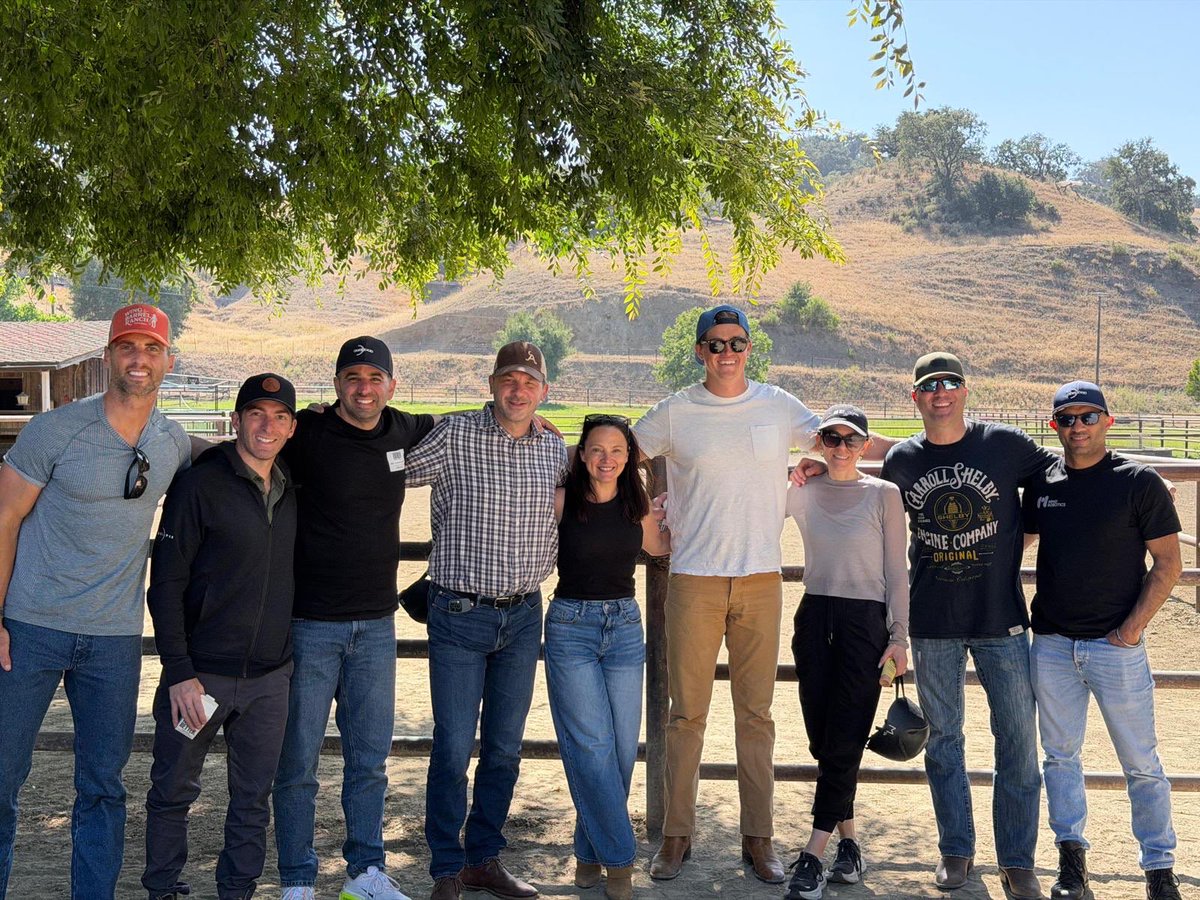
Everyone talks about doing what you love
Not enough people talk about doing it with people you love and respect
That's the secret sauce at @EclipseVentures
(Not pictured, Lior on a horse 😂)
1
1
34
5,739
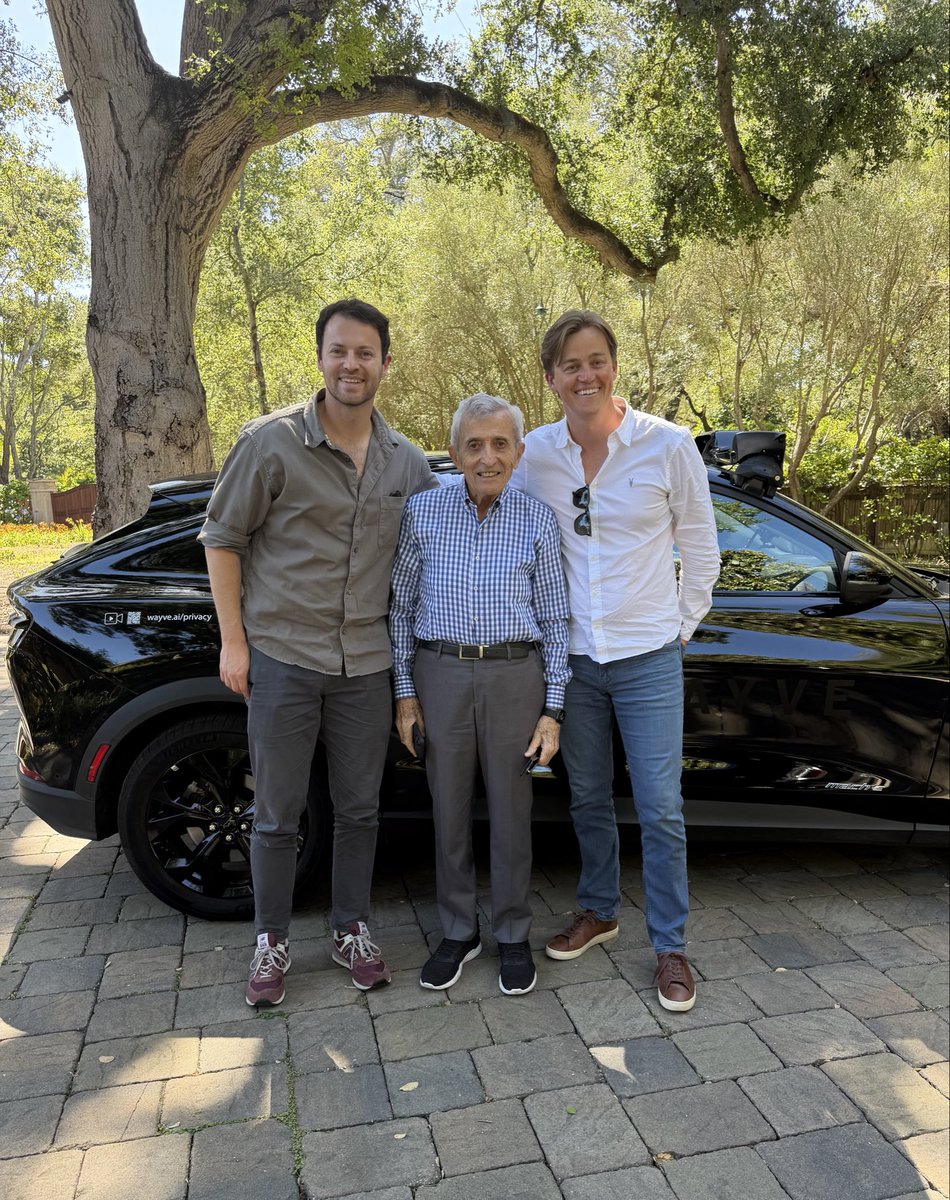
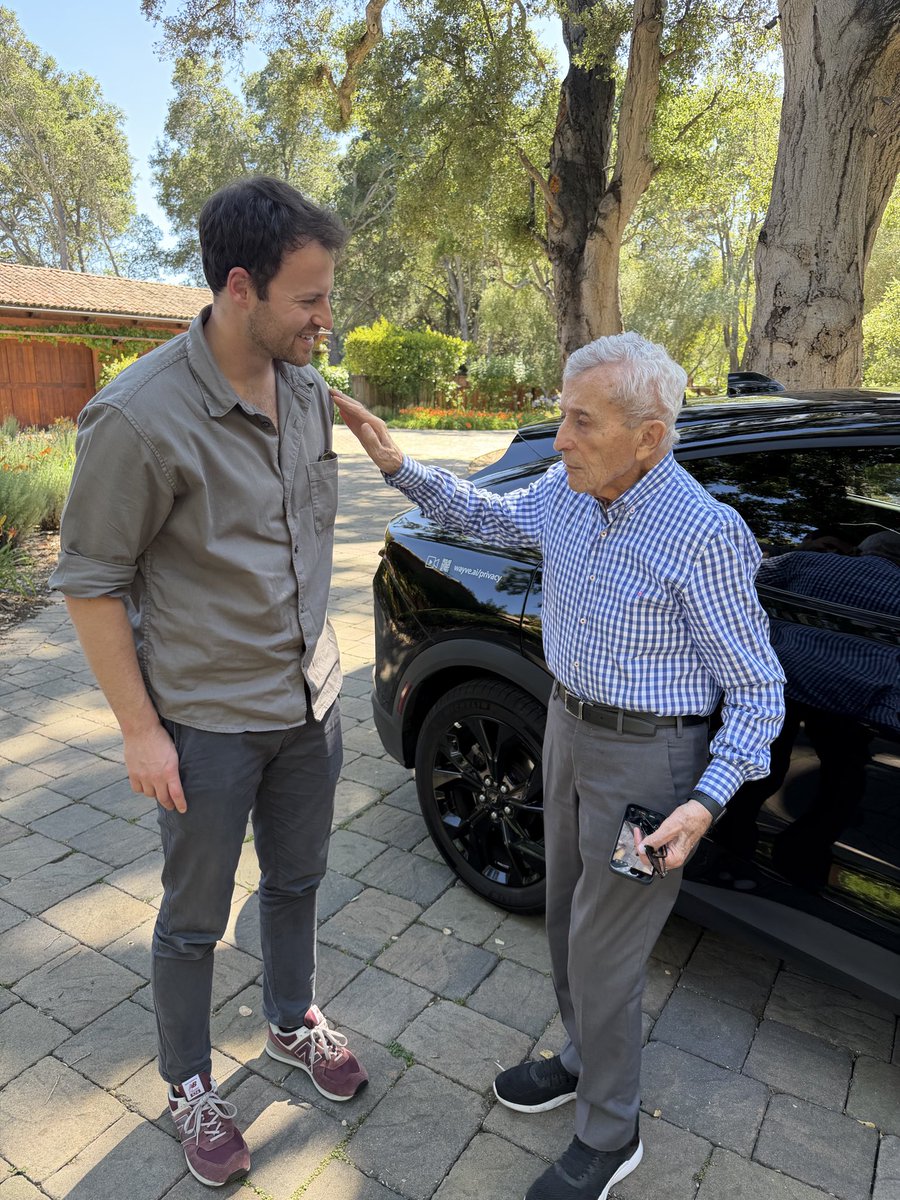
Earlier today @alexgkendall and I took Pierre Lamond, one of godfathers of modern computing, for autonomous ride in a @wayve_ai car.
Over the course of the ride he shared wisdom on how to keep a high growth org focused, key marketing strategies, and of course pushed us on why we aren’t moving fast enough! There may have been a Fairchild story or two as well. What a legend!
95 years old and still pushing us all to raise our standards higher. Blessed to have him as a mentor.
6
3
110
12,075
Seth Winterroth 🤖 retweeted

Jun 3
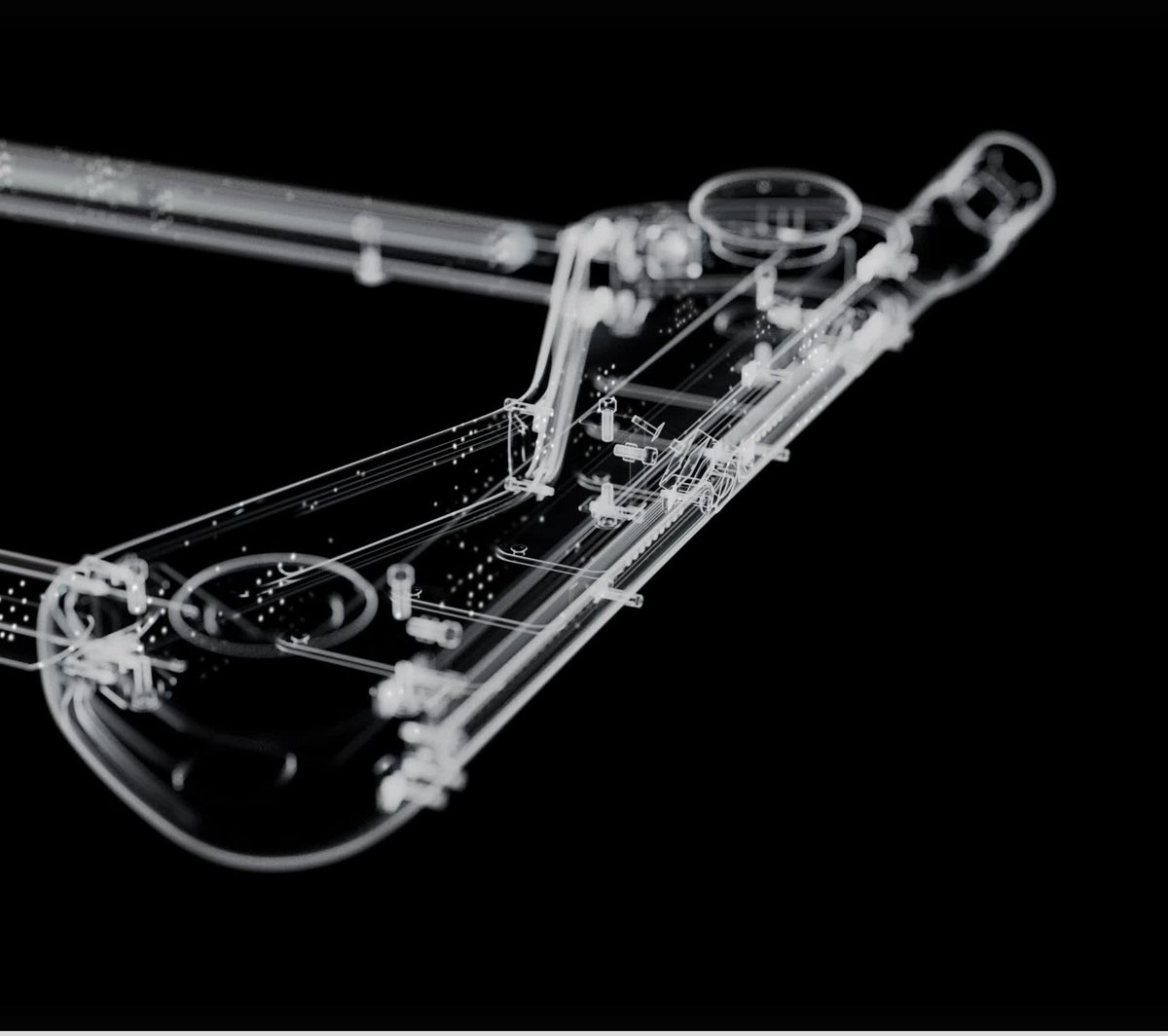
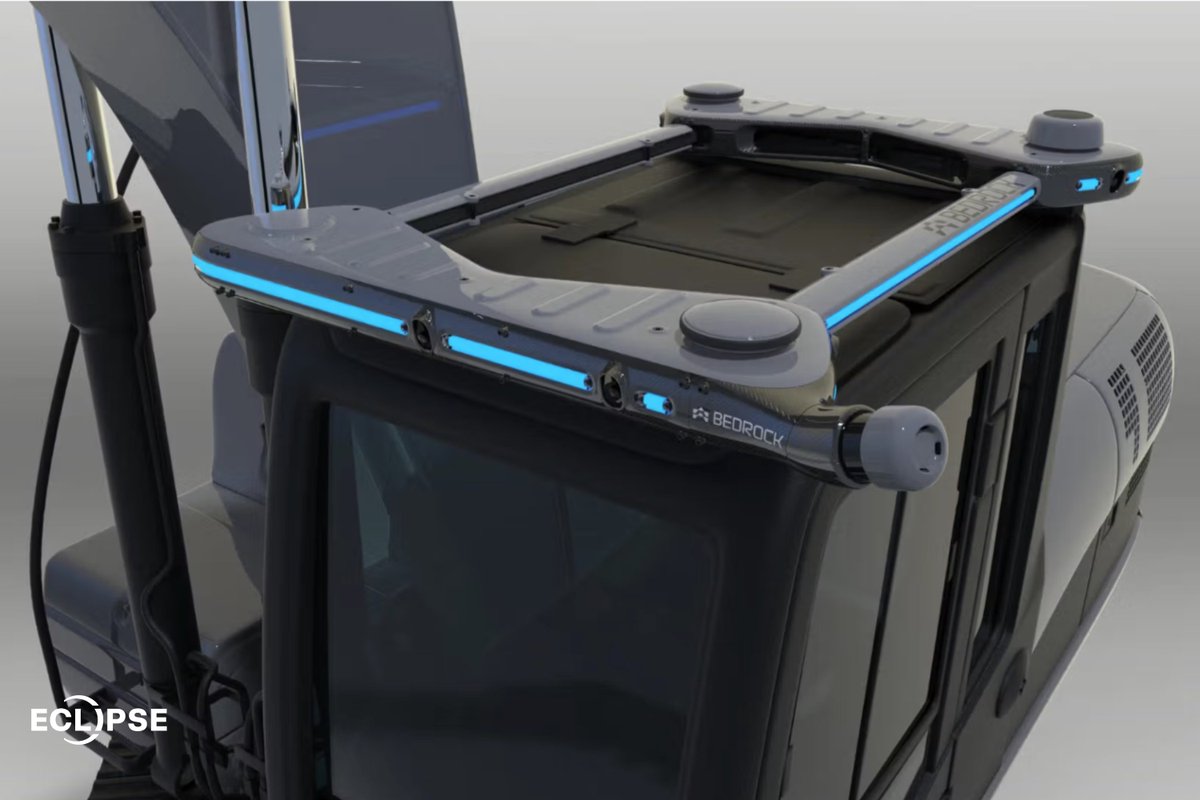
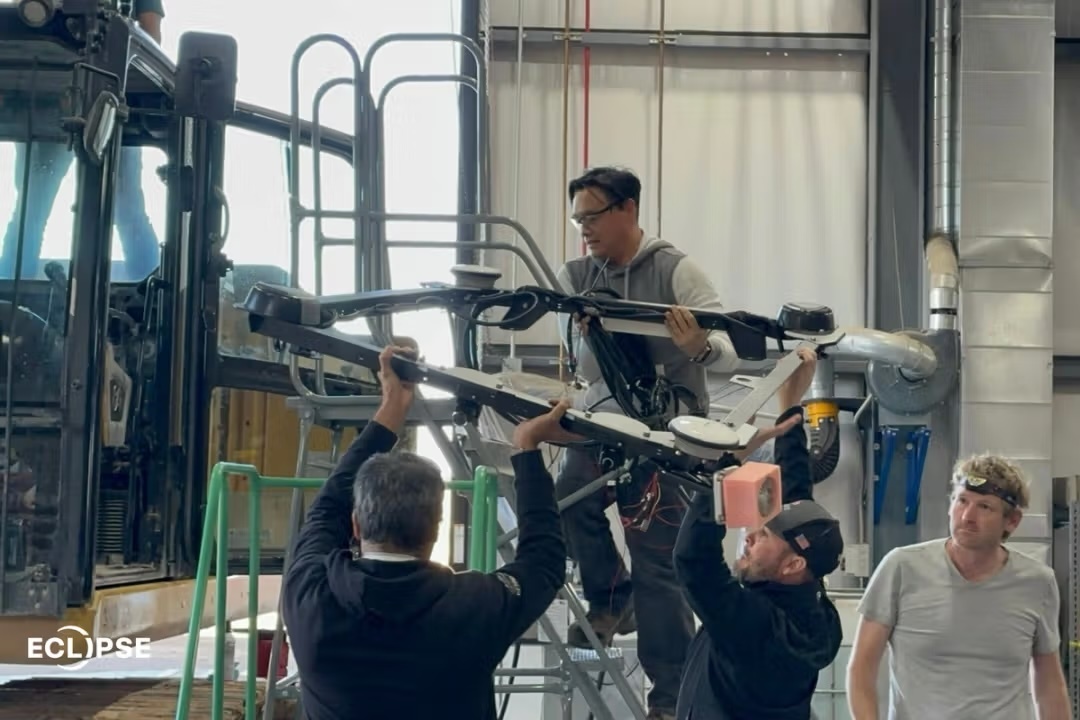
What happens when world-class autonomy founders partner with deep industrial expertise before a company is even formed?
@BedrockRobotics.
From market exploration to company formation, Eclipse helped shape the path from concept to category leader in construction autonomy.
Read more: bit.ly/4fptjtb

1
3
30
1,572
Susan bros 👀👀

Israeli networking company DriveNets raised a $410M Series D led by Bessemer and Atreides at an $8.5B valuation, taking its total funding to ~$1B (@meirorbach / CTech)
(Visit Techmeme dot com for the link and full context!)
1
13
5,685

May 29
Anything worth doing is going to be hard. No shortcuts.
May 29

Difficulty Levels of Startups:
Insane: Robotics
Hard: Hardware
Medium: Consumer Software
Easy: B2B SaaS
4
1
58
10,252
Seth Winterroth 🤖 retweeted

May 29
Today, I’m proud to announce the launch of Wayve Labs: @wayve_ai's frontier research unit for Embodied AI. 🧵
8
23
155
12,270
Introducing Wayve Labs - our frontier research unit dedicated to advancing embodied AI and solving the hardest and most important open problems in machine learning. wayve.ai/labs
5
9
47
2,417
Seth Winterroth 🤖 retweeted

May 27
Cool gets cooler
May 27

We are back again :) After three weeks of quiet building.
Introducing Genesis World 1.0, our latest simulation platform, the second release in our full-stack suite. Open-sourced.
Robotics is still bottlenecked by the 1× speed of the physical world. Every model, checkpoint, and data recipe eventually needs to be tested on physical hardware, slowly, expensively, and with limited coverage.
One hour in reality can become 100 days in simulation. That is how robotics model iteration moves from a wall-clock bottleneck to a compute problem.
To make this work, simulation has to be both fast and trustworthy.
Over the past year, we rebuilt the entire stack: a GPU-accelerated cross-platform compiler, penetration-free multi-physics contact solvers, unified rigid and deformable physics, and a photo-realistic renderer purpose-built for physical AI applications.
We built Nyx, a high-performance path-traced rendering engine for robotics application.
Genesis World 1.0 achieves near realtime performance with our latest development for penetration-free IPC solver, supporting various types of deformables beyond rigid bodies. It supports contact-rich, dexterous manipulation simulation across different embodiments: unitree, sharpa, wuji, genesis hand and various types of grippers.
Under the hood is Quadrants, our effort in pushing forward cross-platform GPU-accelerated computation. Quadrants started as a fork of Taichi, and we rebuilt most of the critical parts for optimizing simulation workloads, giving 10x faster launch time and up to 4.6x runtime performance compared to the initial Genesis release.
Together, they bring us to an unprecedentedly low sim-to-real gap, enabling zero-shot real-to-sim model evaluation and much faster iteration of GENE.
All available today.
Genesis World 1.0: github.com/Genesis-Embodied-…
Quadrants: github.com/Genesis-Embodied-…
Nyx: github.com/Genesis-Embodied-…
3
9
127
42,244
May 27
Just incredible 🤯🤯
May 27
We are back again :) After three weeks of quiet building.
Introducing Genesis World 1.0, our latest simulation platform, the second release in our full-stack suite. Open-sourced.
Robotics is still bottlenecked by the 1× speed of the physical world. Every model, checkpoint, and data recipe eventually needs to be tested on physical hardware, slowly, expensively, and with limited coverage.
One hour in reality can become 100 days in simulation. That is how robotics model iteration moves from a wall-clock bottleneck to a compute problem.
To make this work, simulation has to be both fast and trustworthy.
Over the past year, we rebuilt the entire stack: a GPU-accelerated cross-platform compiler, penetration-free multi-physics contact solvers, unified rigid and deformable physics, and a photo-realistic renderer purpose-built for physical AI applications.
We built Nyx, a high-performance path-traced rendering engine for robotics application.
Genesis World 1.0 achieves near realtime performance with our latest development for penetration-free IPC solver, supporting various types of deformables beyond rigid bodies. It supports contact-rich, dexterous manipulation simulation across different embodiments: unitree, sharpa, wuji, genesis hand and various types of grippers.
Under the hood is Quadrants, our effort in pushing forward cross-platform GPU-accelerated computation. Quadrants started as a fork of Taichi, and we rebuilt most of the critical parts for optimizing simulation workloads, giving 10x faster launch time and up to 4.6x runtime performance compared to the initial Genesis release.
Together, they bring us to an unprecedentedly low sim-to-real gap, enabling zero-shot real-to-sim model evaluation and much faster iteration of GENE.
All available today.
Genesis World 1.0: github.com/Genesis-Embodied-…
Quadrants: github.com/Genesis-Embodied-…
Nyx: github.com/Genesis-Embodied-…
1
5
13
3,897
May 26
Words of wisdom from my partner @GregReichow
May 26

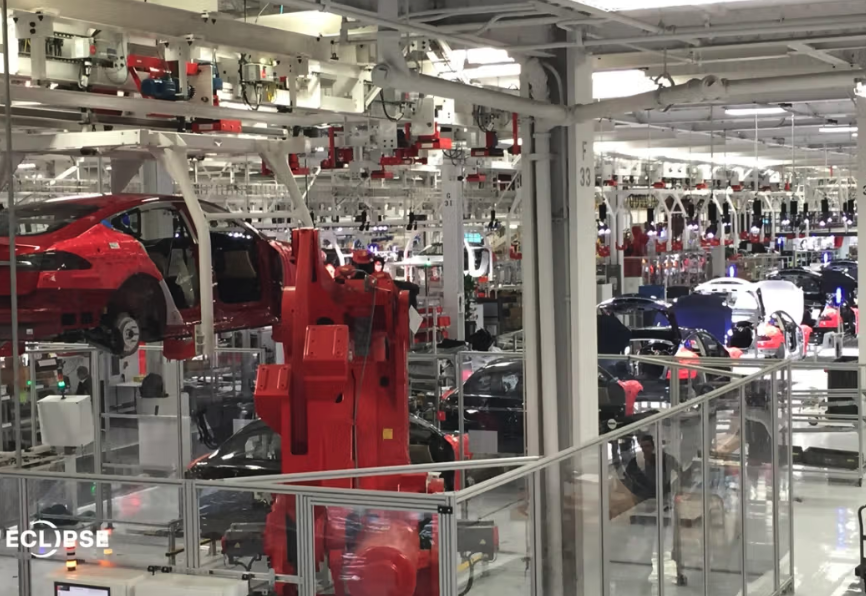
“Design for manufacturability” sounds smart until it becomes an excuse to optimize too late.
The best hardware companies don’t bolt manufacturing on after design. They embed manufacturing, suppliers, and process engineering from day one.
The latest piece from Eclipse Partner Greg Reichow's Industrial Scaling Playbook breaks down why:
• 70–80% of manufacturing cost is locked in during design
• Ramping with unresolved manufacturability issues destroys capital efficiency
• Great engineering teams remove parts and complexity instead of adding them
• The companies that win innovate in BOTH product manufacturing
In hardware, quality and scale aren’t downstream problems — they’re design decisions.
Read more: bit.ly/4uvgoKT
1
7
1,879
Seth Winterroth 🤖 retweeted

May 25
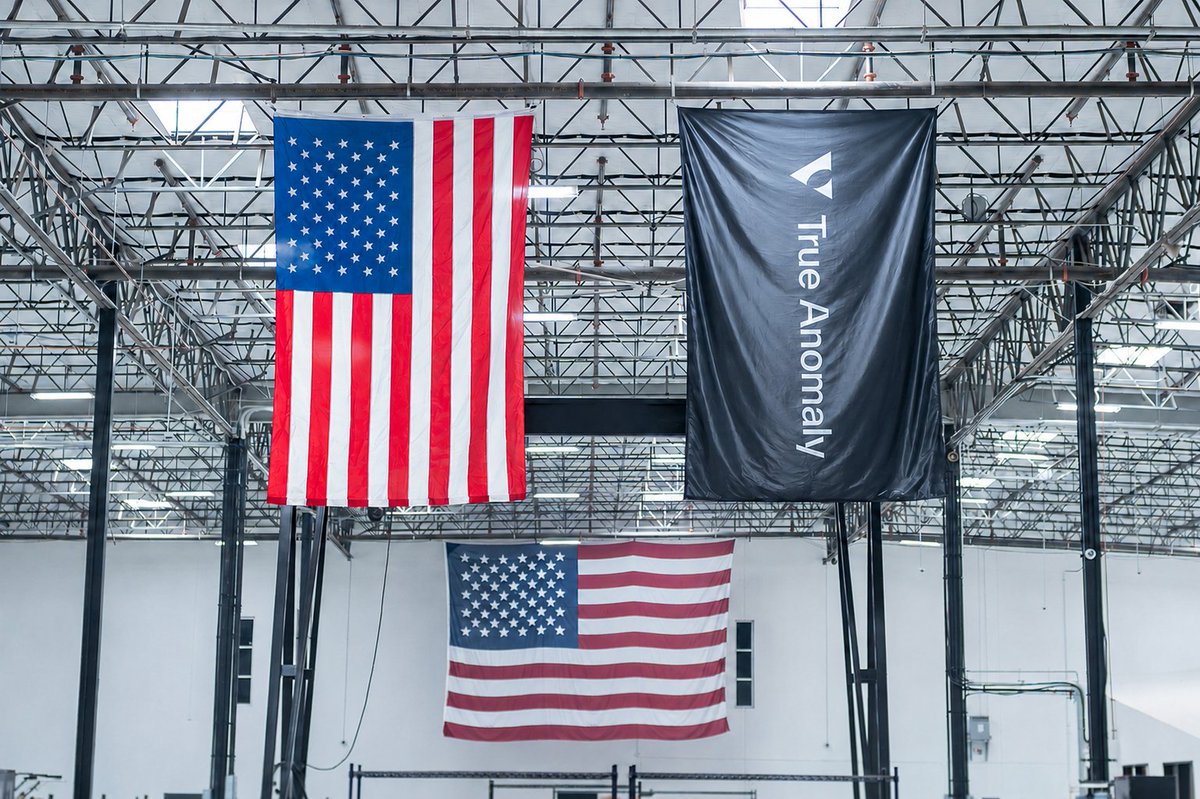
We proudly fly the True Anomaly flag next to the American flag to reflect our service to the men and women of the U.S. Armed Forces.
Today, it is a reminder to pause and reflect, remember, and honor the brave. We are forever grateful for those who serve our country.
We look forward to serving them for years to come.
Happy Memorial Day.
4
24
674
Seth Winterroth 🤖 retweeted

May 21
I recently joined the team at @gs_ai_. The Founders, @zhou_xian_, @theo_gervet , @yilingq97, @johnsonwang0810, and @Zhenjia_Xu are just incredibly talented and thoughtful humans. It's a privilege to work with them and the incredible team being built at Genesis. We're hiring! 🤖
May 6
We are back. After one year of quiet building.
Introducing GENE-26.5, our first robotic brain that takes a major step toward human-level capability.
For years, robotics has struggled to learn from the world’s largest and valuable data source: Humans.
Solving it means rethinking the whole stack from the ground up:
- A robotics-native foundation model.
- A 1:1 human-like robotic hand.
- A noninvasive data collection glove for motion, force, and touch.
- A simulator that turns weeks of experiments into minutes.
GENE-26.5 is trained across language, vision, proprioception, tactile, and action. We designed a set of tasks to test how far we can go with this new paradigm.
Fully autonomous, 1x speed, one model, same weights. (Enjoy with sound on)
We are approaching the endgame for robotics.
And this is just a beginning.
4
4
55
10,616
May 21
Scott is a legend. One of the best in the biz

Almost a decade ago, Scott Wilson, the chief investment officer at Washington University in St. Louis, placed about $50 million of the school’s money in SpaceX. bloomberg.com/news/articles/…
1
36
13,195