
Teaching/research on publishing & writing. Former journalist. Cares about words & what they mean. bit.ly/2Jjx4gZ Bluesky handle is the same.
Joined August 2010
- Tweets 13,667
- Following 698
- Followers 856
- Likes 4,086
231 Photos and videos







Susan Greenberg 🇺🇦 retweeted

I find AI-generated writing deeply depressing for this reason. You’ve been graced with the gift of literacy. You could be shaping thoughts into words that are funny & personal & uniquely you. And you gave it up. Millions of people now speak in the voice of a machine. It’s grim.
Jun 12

Good grief can people stop using AI to write everything? We can tell it’s AI. Everything written by AI sounds the same. Stop being a soulless weirdo and write like a normal human please!!!!
26
420
2,141
31,047
Susan Greenberg 🇺🇦 retweeted

For the love of God, bring back fact-checkers. Bring back copy editors. Bring back public editors. Bring back standards. Everybody tighten TF up.
Jun 4

“It’s okay to get some facts wrong,” one writer said. “It’s honestly refreshing.” gq.com/story/at-the-substack…
63
13,082
75,551
1,316,426
Susan Greenberg 🇺🇦 retweeted

Jun 3
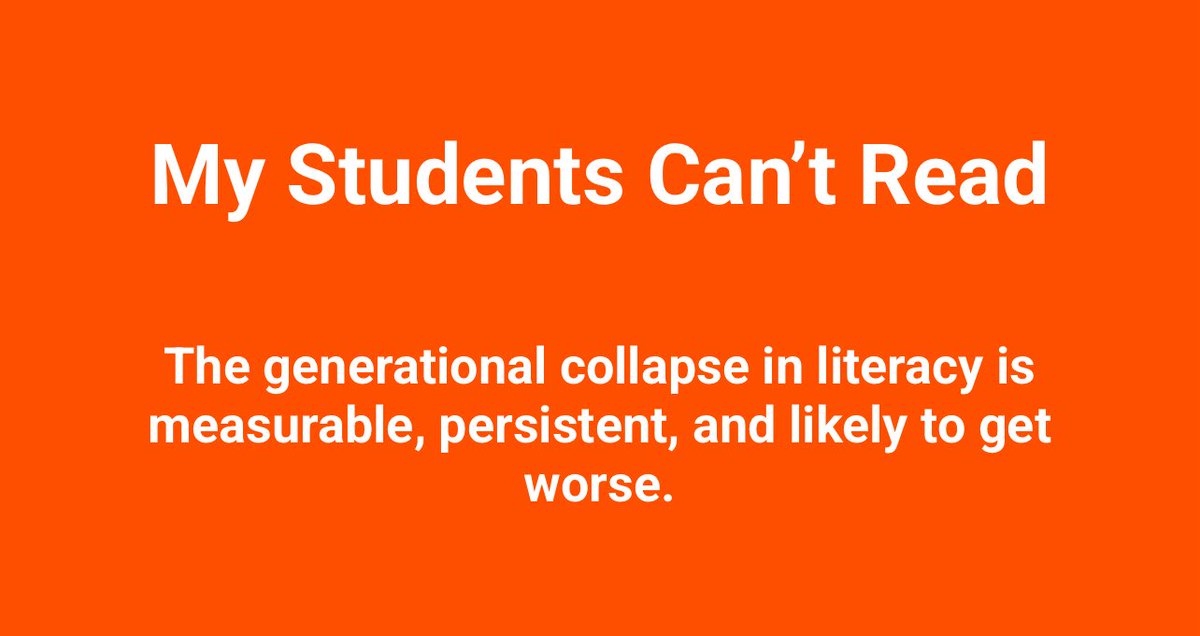
“We are admitting a cohort that cannot read at a college level and are pretending otherwise.”
Another college professor adds to the chorus of concern about student capacity.
In @chronicle:
“Six weeks into the term, I assigned my rhetoric and writing students a 20-page article. It was the same length I had assigned for five years and the same length I had read without complaint as an undergraduate a decade ago. Not one student finished it.
When I asked why, a student answered honestly: It was too long, and she kept losing track of what the paper was about. This was not a remedial class: These were students who had cleared the admissions process and written essays good enough to get them here. Yet a routine academic reading assignment had defeated them.
Every generation of professors has complained that their students cannot read. The lament is usually overblown, but data have caught up to anecdote, and what I am seeing in my classroom is no longer a hunch. There is a measurable, generational collapse in sustained reading and writing, and the academy is responding to it with improvisation and exhaustion rather than the structural overhaul it requires.
In February 2024, Adam Kotsko, who teaches in the Shimer Great Books School at North Central College, wrote in Slate that students who once handled 30 pages of reading per class meeting now seem “intimidated by anything over 10 pages and seem to walk away from readings of as little as 20 pages with no real understanding.” Crucially, he added that this is “not a matter of laziness on the part of the students” but of underlying skills they were never given a chance to build.
The Chronicle of Higher Education’s 2024 investigation found the same pattern across institutions as different as the Stevens Institute of Technology and Wellesley College, where the average SAT exceeds 1400. Nicholaus Gutierrez, an assistant professor at Wellesley, told The Chronicle that the baseline for what students consider a reasonable amount of work has dropped so noticeably that he has cut his readings accordingly; a 750-word essay now strikes many students as long. At Stevens, the science and technology studies associate professor Theresa MacPhail described following the mantra of “meet your students where they are” for so long that she has begun to feel “like a cruise director organizing games of shuffleboard.”
Worse, the national data tell the same story in colder language. On the 2011 National Assessment of Educational Progress (NAEP) writing assessment, which is the most recent comprehensive writing benchmark, only 24 percent of 12th graders reached the Proficient level, and just 3 percent reached Advanced; another 21 percent scored below Basic. The reading side of the ledger is worse, and getting worse fast: The 2024 NAEP results released in September 2025 show 12th-grade reading scores at the lowest level recorded since the assessment began in 1992. Thirty-two percent of 12th graders now score below NAEP Basic in reading, meaning that, in the assessment’s own language, they likely “cannot draw general conclusions based on concepts presented explicitly in a text.” And yet more than half of these same seniors reported being accepted to a four-year college. That last sentence is the whole problem in one line: We are admitting a cohort that cannot read at a college level and are pretending otherwise.”
76
350
1,146
104,200
“Changing old novels to avoid offence ‘Orwellian’, says Lee Child” attn @ghostofchristo1
thetimes.com/article/ec73e58…
45
Susan Greenberg 🇺🇦 retweeted

May 27
My argument in this piece is simple: Beijing is pressing foreign leaders to describe Taiwan in China’s language, while also keeping Taiwan’s own leaders from being heard on the world stage. The result is a dangerous distortion: Taiwan’s desire to preserve its democratic way of life is treated as a provocation, while China’s military and diplomatic coercion is treated as normal. But peace cannot be built on a narrative that blames the threatened for the threat.
May 26

China wants the world to hear only one version of Taiwan’s story: Beijing’s. And much of the world is listening to this version. buff.ly/owyKlSj

44
253
772
115,928
Susan Greenberg 🇺🇦 retweeted

May 28
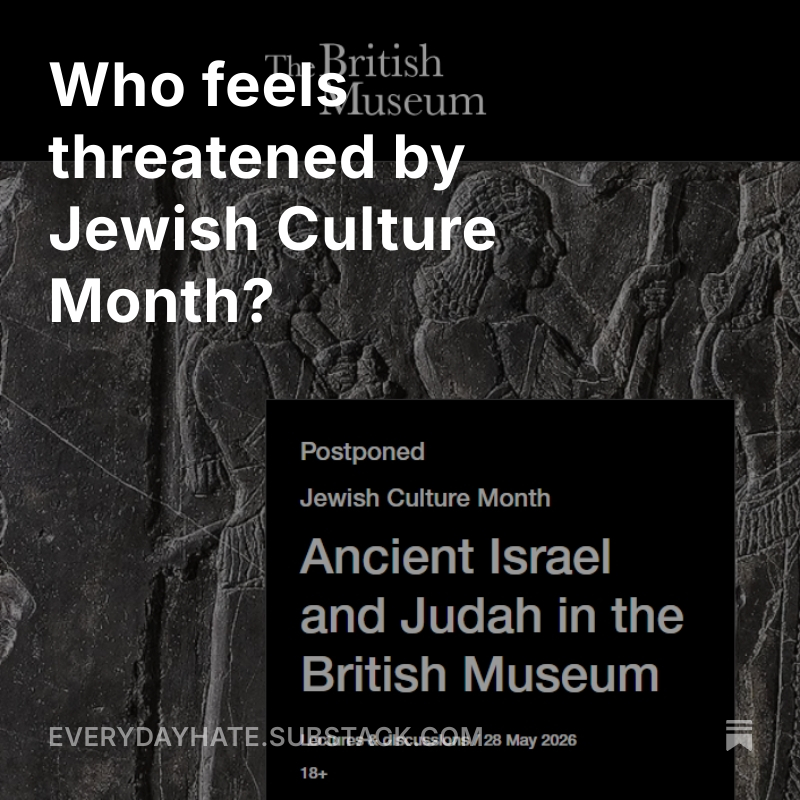
Imagine if, during Black History Month, the British Museum advertised an event about ancient black civilisations in Africa, and it had to be postponed because racists planned to disrupt the event.
That’s what just happened, but to Jews. everydayhate.substack.com/p/…
57
507
1,540
52,040
Susan Greenberg 🇺🇦 retweeted

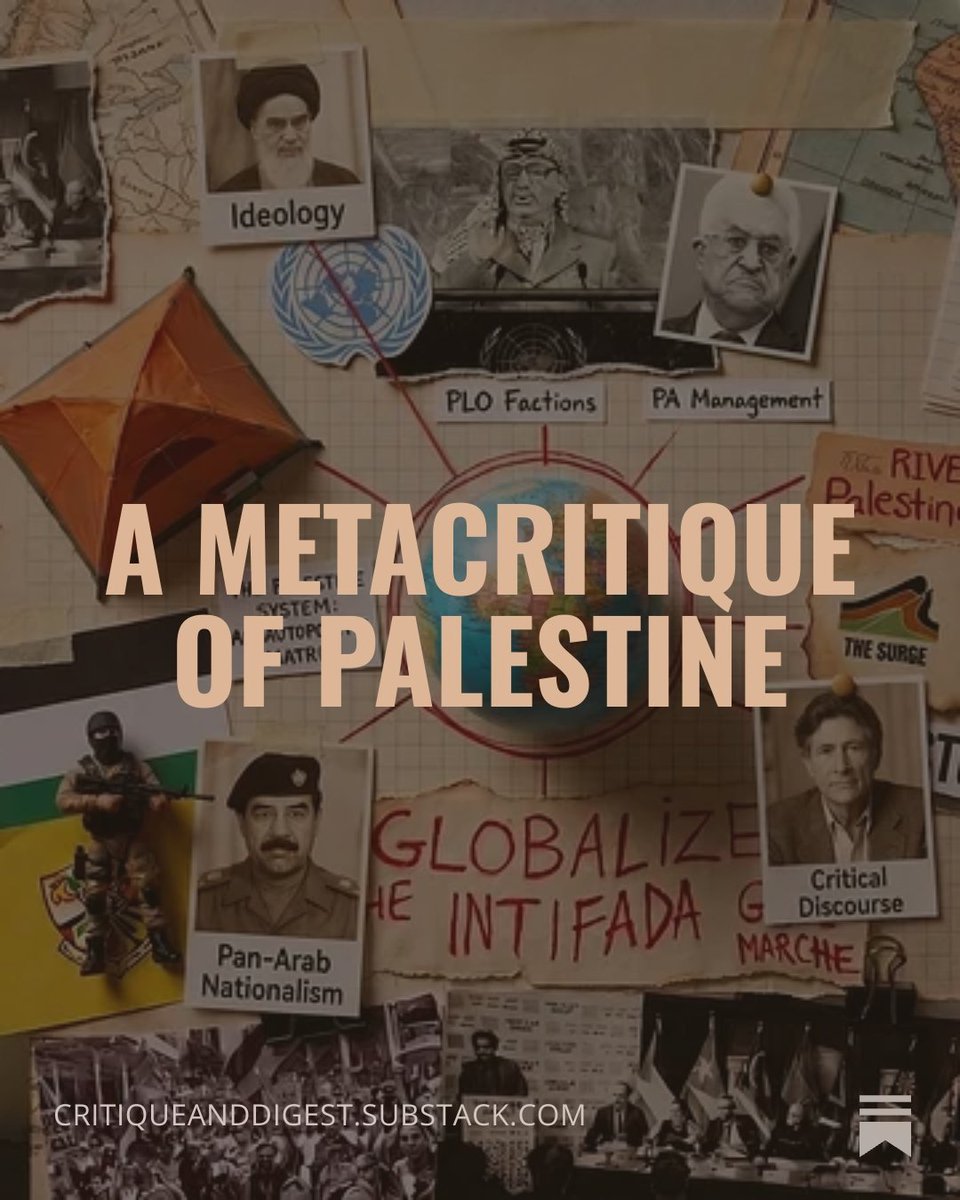
My latest essay:
What the Palestine word-symbol does to the populations that internalize it is not, in the first instance, a matter of ideology or belief, even though the ideology of anti-Zionism is indeed its only ideological content. But, in the first order, it is a matter of cognitive occupation. The symbol, once installed in the political consciousness of a population, takes over the entire space of political reasoning and renders the actual structures of that population’s political and economic condition unthinkable. The mechanism operates not by suppressing alternative explanations but by occupying, in advance, the cognitive territory in which such explanations would have to be developed. The alternatives are not censored but are simply completely unavailable, because every available cognitive pathway runs through the symbol, and the symbol terminates every line of inquiry before it can reach any other destination.
Link below
14
38
166
23,734
Susan Greenberg 🇺🇦 retweeted

May 16
Wrote this about King Lear and the assisted dying debate. Share with interested people. Was the prelude to the last novel, Let Go My Hand. observer.co.uk/style/feature…
@kimleadbeater @LordCFalconer
1
2
3
336

Susan Greenberg 🇺🇦 retweeted
May 1
If the answer cannot be found to repeated, violent attacks on Jews, than modern Britain has failed. I don’t mean it would have failed its Jews: I mean that Britain will have failed itself.
What is to be done? Here are some suggestions
everydayhate.substack.com/p/…
7
34
70
5,454

Apr 29
RT @b_judah: I want to stress British Jews are super concentrated in NW London. there are only 250k of us. Roughly around 100k of us live i…
570
Susan Greenberg 🇺🇦 retweeted

Apr 29
I just want to highlight how easy it is to find the same sinister reactions whenever innocent Jews are violently attacked. Variations on:
1. They deserved it.
2. A reflex pivot to Israel.
3. It was staged.
4. It was staged by Jews to drum up sympathy for Israel.
Antisemitism is a cancer.
6
21
188
4,137
Susan Greenberg 🇺🇦 retweeted

Apr 29
Today, beyond all reasonable doubt, it is clear that both Russia & Iran are paying British citizens to commit acts of terrorism on British soil, & both the government & the state still seem to be in reactive mode, even after it became clear Russia was targeting the PM directly.
19
169
963
36,819
Susan Greenberg 🇺🇦 retweeted

If you want to know how to support British Jews today one of the simplest things is to just check in with us and ask if we’re ok. So few have & it’s one of the things that has upset me most.
74
64
538
21,298
Susan Greenberg 🇺🇦 retweeted

I don't think people quite understand how up until even as short a time ago as the early 2010s, this sort of language was only really expressed publicly on the far right, among those with Neo-Nazi views.
Now it's openly, blatantly being expressed outside Parliament.

Palestine activists are currently standing outside Parliament giving out fake 'bank of Zionism' money to complain that Zionists "control UK politics" carrying signs saying "caution Zionists in the area".
The situation is not good.



54
412
1,630
80,910
Susan Greenberg 🇺🇦 retweeted

Apr 22
“People often don't even know why they rejected you” is important life advice
Apr 21

You don't need advice from editors on rejected manuscripts.
My short story “Ender's Game” was rejected by Ben Bova at Analog back when that was the top market for a sci-fi story. Ben gave me feedback. He thought the title should be “Professional Soldier” and he said to “cut it in half.”
But I knew he was wrong on both points and submitted it to Jim Baen at Galaxy. He sat on it for a year, and responded to my query with a rejection. There was some kind of explanation, but I don't remember what it was. I concluded at the time that Baen's comments showed that he had barely glanced at the story.
So … I got feedback both times, but it was not helpful. I looked at Ben's rejection again. What was it about the story that made him think it should, let alone COULD, be cut in half?
Apparently it FELT long. What made it feel long? Now, post-Harry Potter, I would call it the quidditch problem. I had too many battles in which the details became tedious. So I cut two battles entirely, merely reporting the outcomes, and shortened another. In retyping the whole manuscript (pre-word-processor, that was the only way to get a clean manuscript), I added new point-of-view material to the point that I had cut only one page in length. So much for “in half.”
But I already knew that my manuscripts did not need cutting — if it wasn't needed, it wouldn't be there in the first place. Even the battles were still there, but instead of showing them, I merely told what happened (so much for the usually asinine advice “show don't tell”), which kept the pace going.
Those changes made, I sent it to Ben again. I did not remind him of what he had advised me to do. I merely told him I liked my title, and said, “I have addressed your other concerns,” which was true. I figured he wouldn't remember what his exact words had been. My answer was a check. That revised story was the basis for my winning the Campbell Award for best new writer.
Did Ben's feedback help? Yes — but his specific advice was not right, and I knew it. On my next two submissions, Ben hated my endings, and I revised as suggested. The fourth submission he rejected outright, and the fifth, and I thought, Am I a one-story writer? I went back to Ender's Game and tried to analyze why it worked. Then, deliberately imitating myself, I wrote “Mikal's Songbird.” Ben bought it, and it received favorable mentions. I was afraid then that I had consigned myself to writing stories about children in jeopardy. But in fact I was writing character stories rather than idea stories. And THAT was how I built a career, not by self-imitation, and not by following editorial suggestions.
I did get wise counsel from David Hartwell on my novel Wyrms, but that was on a book that was already under contract, and it was story feedback, not style. I got wise counsel from Beth Meacham, too, on various books over the years — but again, only on books that were under contract. I also received appallingly stupid advice from the editor of my novel Saints, which temporarily destroyed the book's marketability; after that, I was allowed to go back to my original structure and save the book — now it's one of my best.
Editors don't know more than you about your story. They especially don't know why they decide to accept or reject stories. YOU have to know what your story needs to be, and take only advice that you believe in.
Your best counselor on a story nobody bought is TIME. Let some time pass and then reread the story. Don't even think about why it Didn't Work. Instead, think about what DOES work, and then write it again, a complete rewrite, keeping nothing from the previous draft. Find the right protagonist and begin at the beginning — the point where the protagonist first gets involved with the events of the story. Be inventive — the failed first draft no longer exists, so you're not bound by any of your earlier decisions. THAT is how you resurrect a good idea you did not succeed with on your first try.
6
94
2,163
291,123
Susan Greenberg 🇺🇦 retweeted

Apr 12
The Arab Word is Watching a Different War:
Three reasons why it has been difficult to understand the Arab position:
The first is the Arab relationship with Iran. From the vantage point of Brussels or London, Iran presents itself as a resistance movement with a grievance against American hegemony and Israeli occupation, and this presentation maps comfortably onto familiar Western anticolonial frameworks.
What it does not map onto is the lived experience of Arab populations in Lebanon, Iraq, Yemen, Bahrain, Syria, and across the Gulf. In those countries, Iran's presence meant Hezbollah holding the Lebanese state hostage to Tehran's decisions, thirty-five armed factions in Iraq drawing salaries from Iranian funds channeled through the Iraqi national treasury, and Houthi commanders answering to the Islamic Revolutionary Guard Corps while firing on Arab civilians from Yemeni soil. Freedom is not the word any serious Arab observer would use for what Iran brought.
Indeed, the Arab world's quarrel with Iran runs far deeper than American bases or Israeli airstrikes. What drives it is the systematic subversion of Arab sovereignty by a foreign power that uses the language of Islamic solidarity as cover for an imperial project conducted through proxies.
The second dimension is the proxy question itself, where Western analysis fails most comprehensively. Iran goes far beyond supporting armed groups. Parallel state structures get built inside Arab countries, financial systems get captured, and political figures get installed who owe their existence and survival entirely to Tehran.
The Iranians who have administered this project understand it as the export of a revolution, but what Arab populations have experienced is closer to a colonial occupation conducted through intermediaries, and as of now, they’re not mourning the Islamic Republic.
When Westerners treat these proxy networks as instruments of legitimate resistance rather than as mechanisms of subjugation, they endorse an imperial project while believing themselves to be opposing one, and as a matter of fact, make themselves the legitimizing force behind Iran’s war against the Arab world.
The third dimension is the most counterintuitive for a Western audience, and it is the one most consequential for how the current war is understood and misunderstood. For Arab nationalists, including secular nationalists and even those with deep reservations about Israeli policy, Iran represents a greater and more immediate threat than Israel does.
This is a position that Western media are structurally ill-equipped to render intelligible, because Western discourse on the Middle East has been organized for decades around the Israeli-Palestinian conflict as the primary axis of regional injustice.
The result is that when Western governments and Western publics take strong positions against Israel’s actions against Iran’s operations, they believe themselves to be standing with the Arab world. In reality, they are advancing a position that the Arab world does not share and has not asked for, while ignoring the threat that Arab governments and Arab populations actually live with.
The rhetorical use of Israel as a perpetual alibi for Iranian aggression has been one of the Islamic Republic’s most durable tools, and Western opinion has served as the unwitting amplifier of that tool across the entire duration of the Islamic Republic’s existence.
open.substack.com/pub/zinebr…
259
2,097
5,804
765,001
Susan Greenberg 🇺🇦 retweeted

Apr 10
The Hungarian people will pay little attention to what Vance says, but the visit may not be for them. Based on my experience living under Russian authoritarianism, speeches like Vance's can send a powerful message to the army and police, who might be given an explicit order by the government to administer force in the case of any confrontation. If Vance's full-throated endorsement of Orbán is read as giving the security services a green light to act harshly in the case of a disputed election, then America could tip the scales in favor of the regime, potentially outweighing any European sanctions. The willingness to use force is a hallmark of every authoritarian. zeit.de/politik/ausland/2026…
55
1,026
2,617
62,946
Susan Greenberg 🇺🇦 retweeted

Apr 9
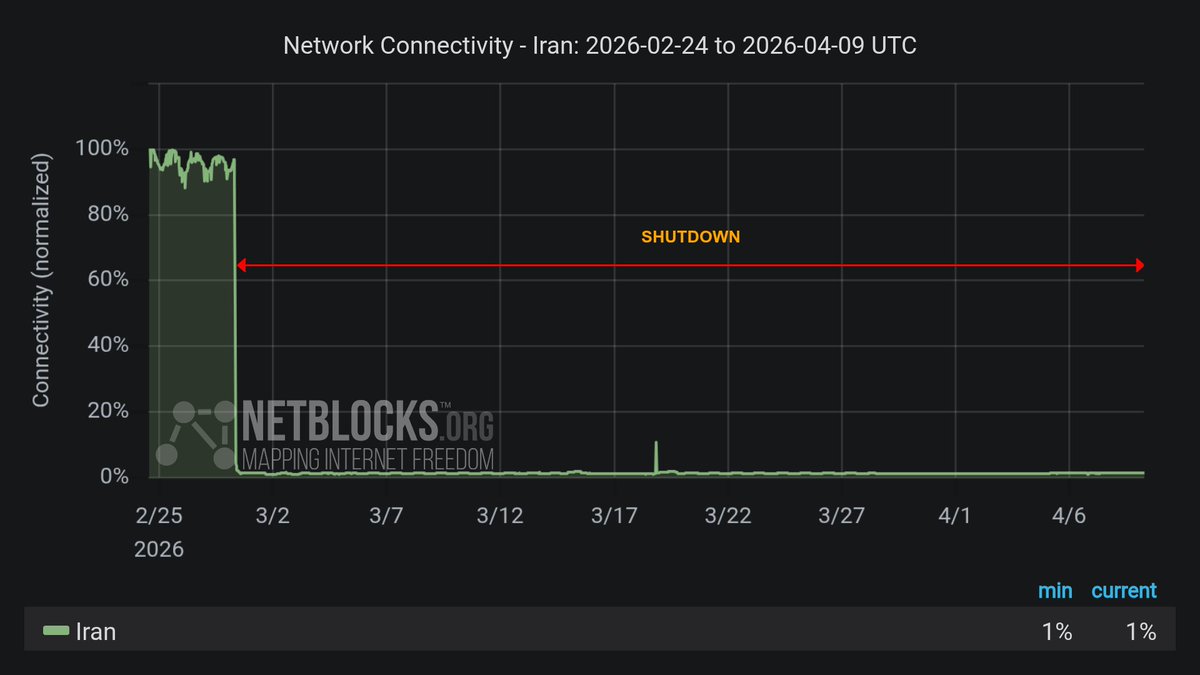
We are 99 days into 2026.
So far, most Iranians have spent at least 56 of those 99 days without outside internet access.
Apr 9

⚠️ Update: It's now day 41 of #Iran's internet blackout, with the regime's ban on access to global networks continuing past 960 hours. The measure, unprecedented in scale and duration for a connected society, continues to violate Iranians' rights to communicate and stay informed.
8
96
264
29,073