
Math-Whisperer. Creator of YouTeachYou.org.
Joined January 2017
- Tweets 5,095
- Following 3,481
- Followers 5,229
- Likes 9,060
87 Photos and videos
Pinned Tweet

9 Aug 2023
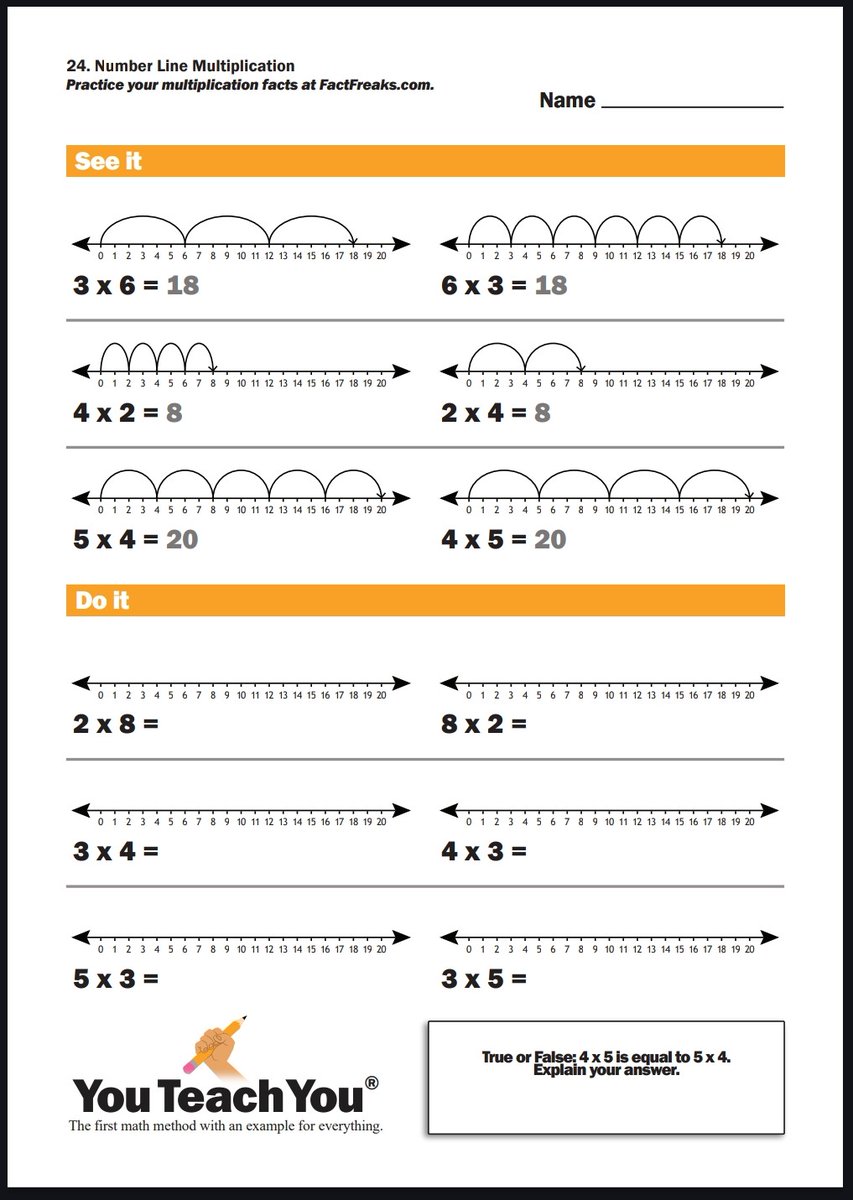
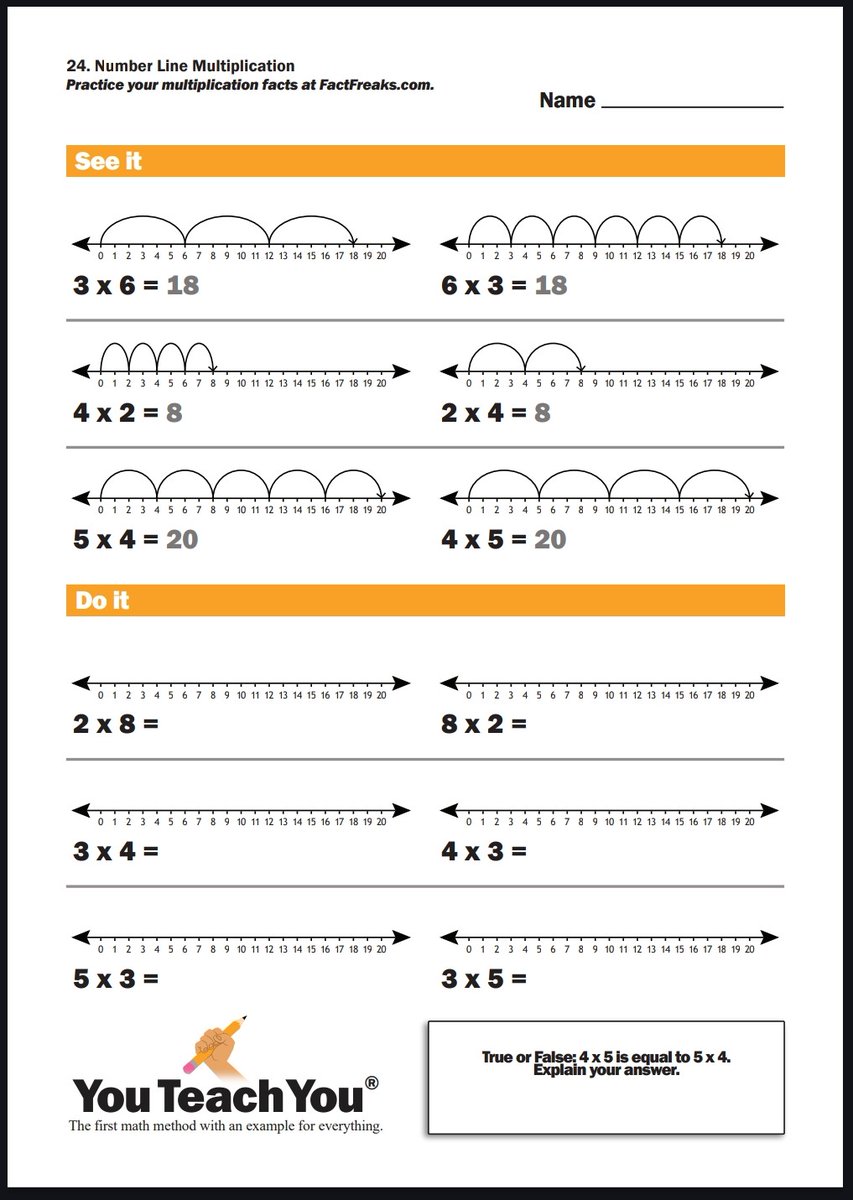
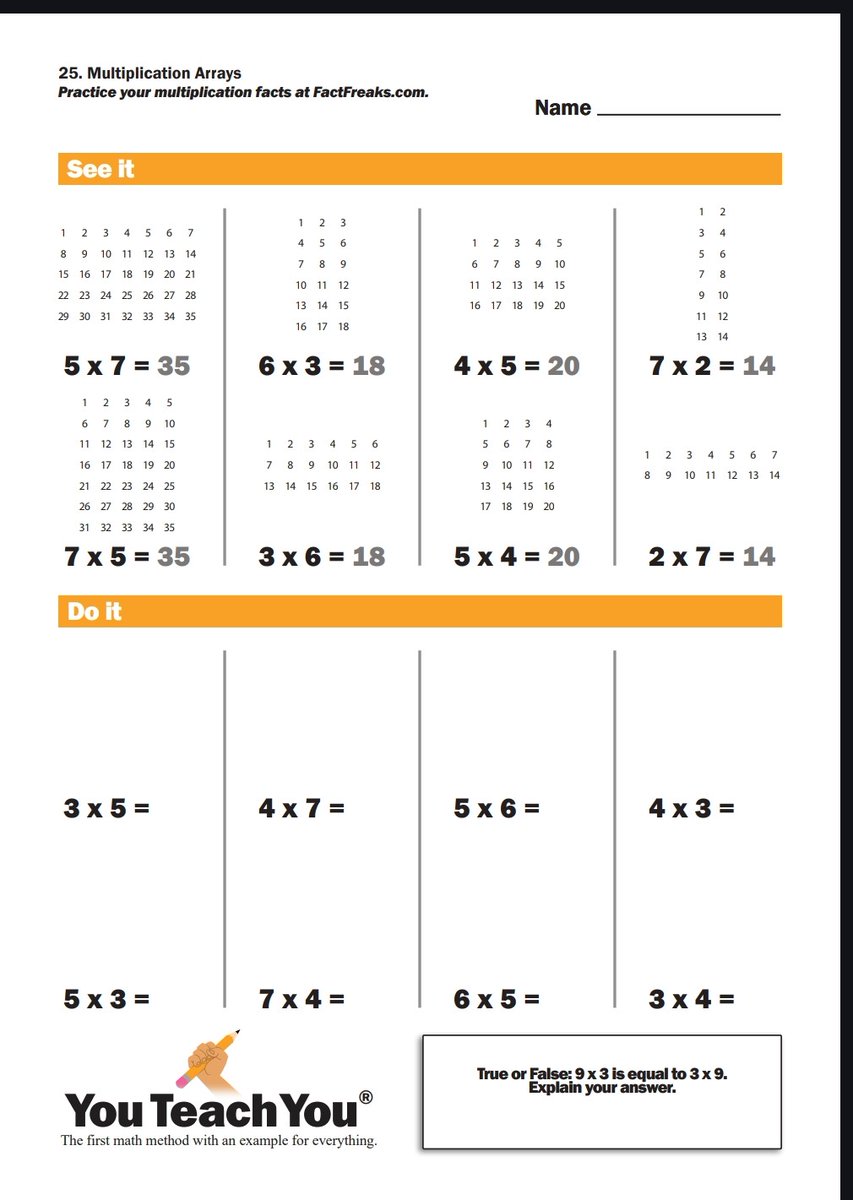
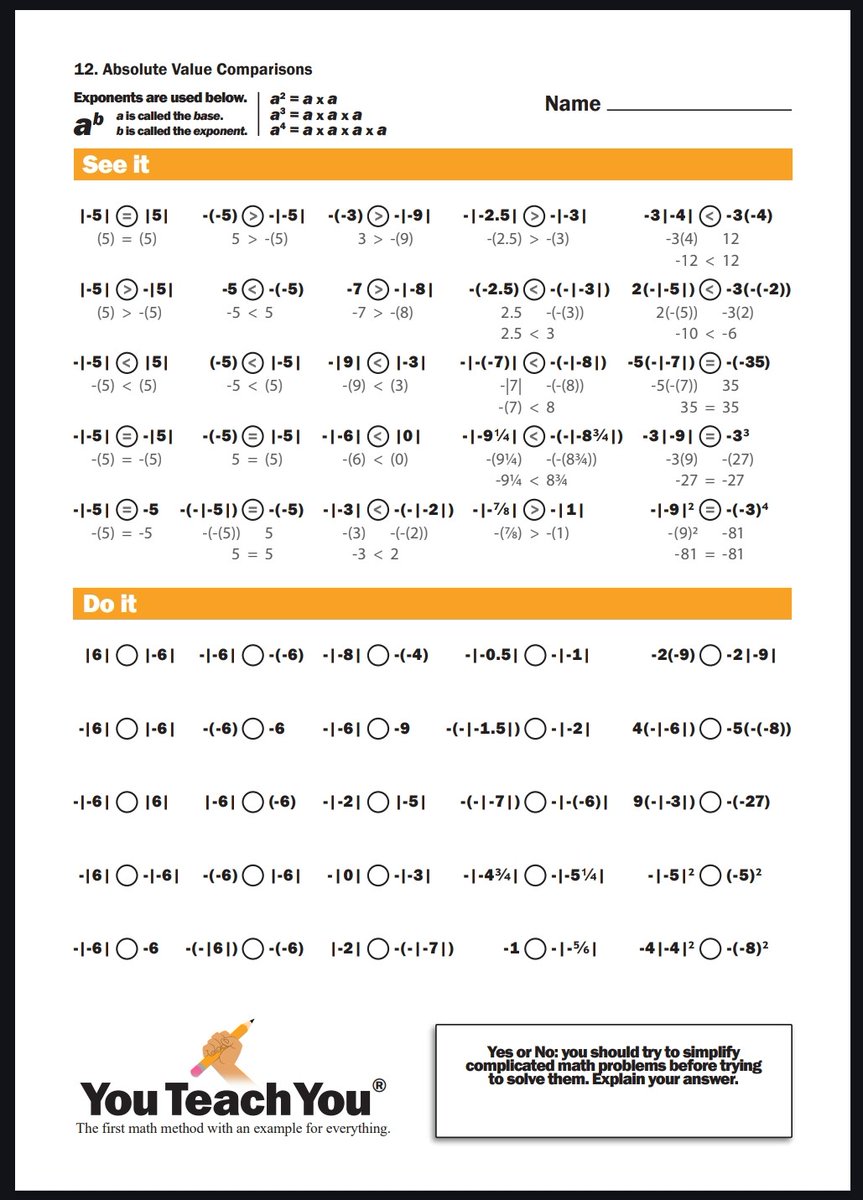
Too many kids fall behind during math lessons because they don't know their math facts. Don't let this happen to your child this year. Send them to FactFreaks, the website I created to get my students up to speed with all 400 basic facts. It only takes a minute to play, they can learn their facts from scratch with the new Basic Training feature, and best of all, it's 100% free, no ads. Start giving your kid an edge in math class right now!
45
81
504
47,561
Steve Hare retweeted

Students have their phones and screens. The teachers and admin rationalize their failure to teach basic arithmetic because they’re also so innumerate they can’t reckon the opportunities that are lost when students lack automaticity in basic computation.
The schools are kneecapping the kids financially, let alone in terms of STEM
careers.
Thank God for @sharemath and his series. youteachyou.org/?srsltid=Afm…
2
1
11
267
Steve Hare retweeted

This exposition of learning as compression in 4 steps/pillars is concrete and beautiful.
@3blue1brown recent post on Shannon compression extends this example; learning is prediction and predictability is the limit of compression.
Jun 8

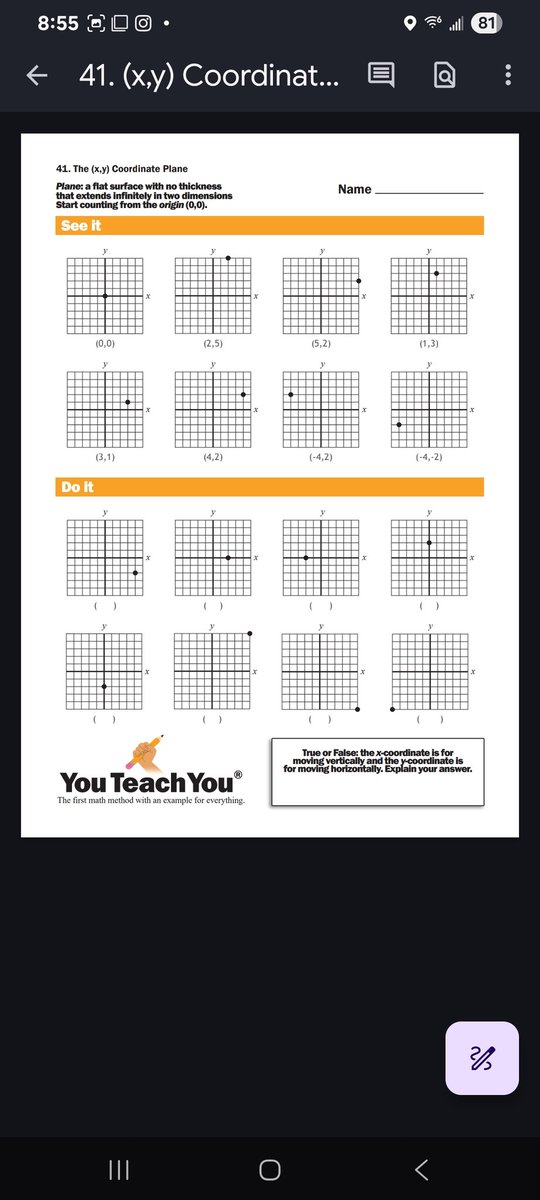
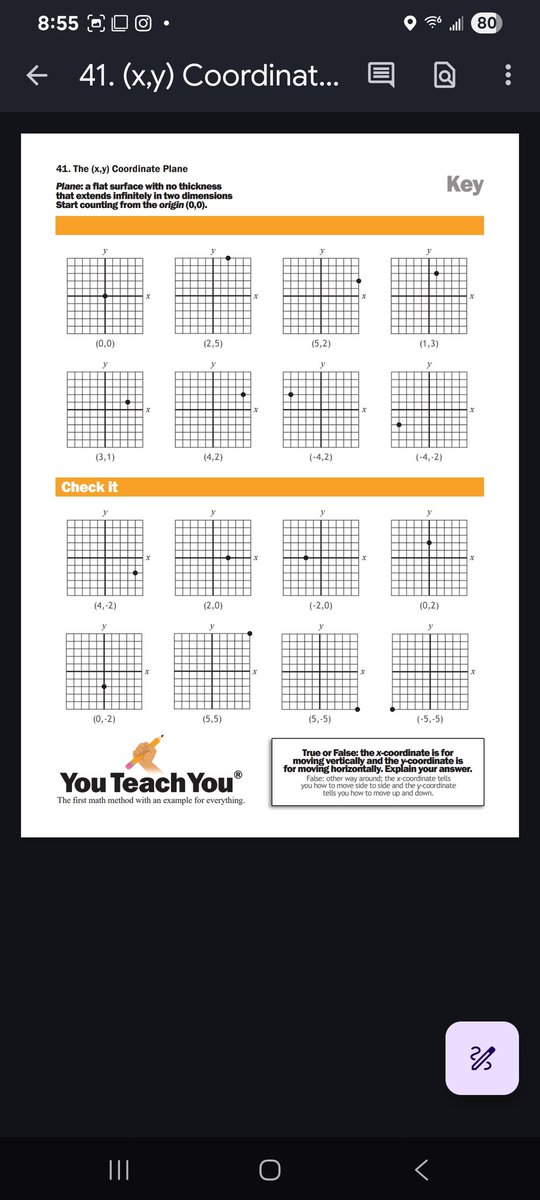
In 𝘏𝘰𝘸 𝘞𝘦 𝘓𝘦𝘢𝘳𝘯, neuroscientist Stanislas Dehaene identifies 4 Pillars of Learning, the biological requirements that make lasting processing possible. Here’s what they look like - all four - in a simple activity introducing the coordinate plane.
Attention: The eight completed examples at the top - with no explanation - create curiosity. “What’s going on here? Is there a pattern?”
Active Engagement: The eight similar problems below invite the student to immediately put their predictions to the test.
Error Feedback: The key on the back of the page shows every answer so that misconceptions are corrected instantly and privately, without stress.
Consolidation: The True or False question at the bottom invites the student to generalize and confirm the rule for moving around in the coordinate plane based on their own experience, making it easier to integrate the rule into their long-term memory.
With the 4 pillars in place, students have their 𝘰𝘸𝘯 reasons to learn about the coordinate plane.
Without them, it can seem pointless.
1
2
9
1,127
Steve Hare retweeted

I wanted more individualized learning (I still do). Now, I'm planning on not relying on edtech for it (though @Alphaschool is on the right path to do so).
Instead, I will use You Teach You books from @sharemath
1
1
3
295
Jun 8
In 𝘏𝘰𝘸 𝘞𝘦 𝘓𝘦𝘢𝘳𝘯, neuroscientist Stanislas Dehaene identifies 4 Pillars of Learning, the biological requirements that make lasting processing possible. Here’s what they look like - all four - in a simple activity introducing the coordinate plane.
Attention: The eight completed examples at the top - with no explanation - create curiosity. “What’s going on here? Is there a pattern?”
Active Engagement: The eight similar problems below invite the student to immediately put their predictions to the test.
Error Feedback: The key on the back of the page shows every answer so that misconceptions are corrected instantly and privately, without stress.
Consolidation: The True or False question at the bottom invites the student to generalize and confirm the rule for moving around in the coordinate plane based on their own experience, making it easier to integrate the rule into their long-term memory.
With the 4 pillars in place, students have their 𝘰𝘸𝘯 reasons to learn about the coordinate plane.
Without them, it can seem pointless.
2
8
47
3,135
Jun 6
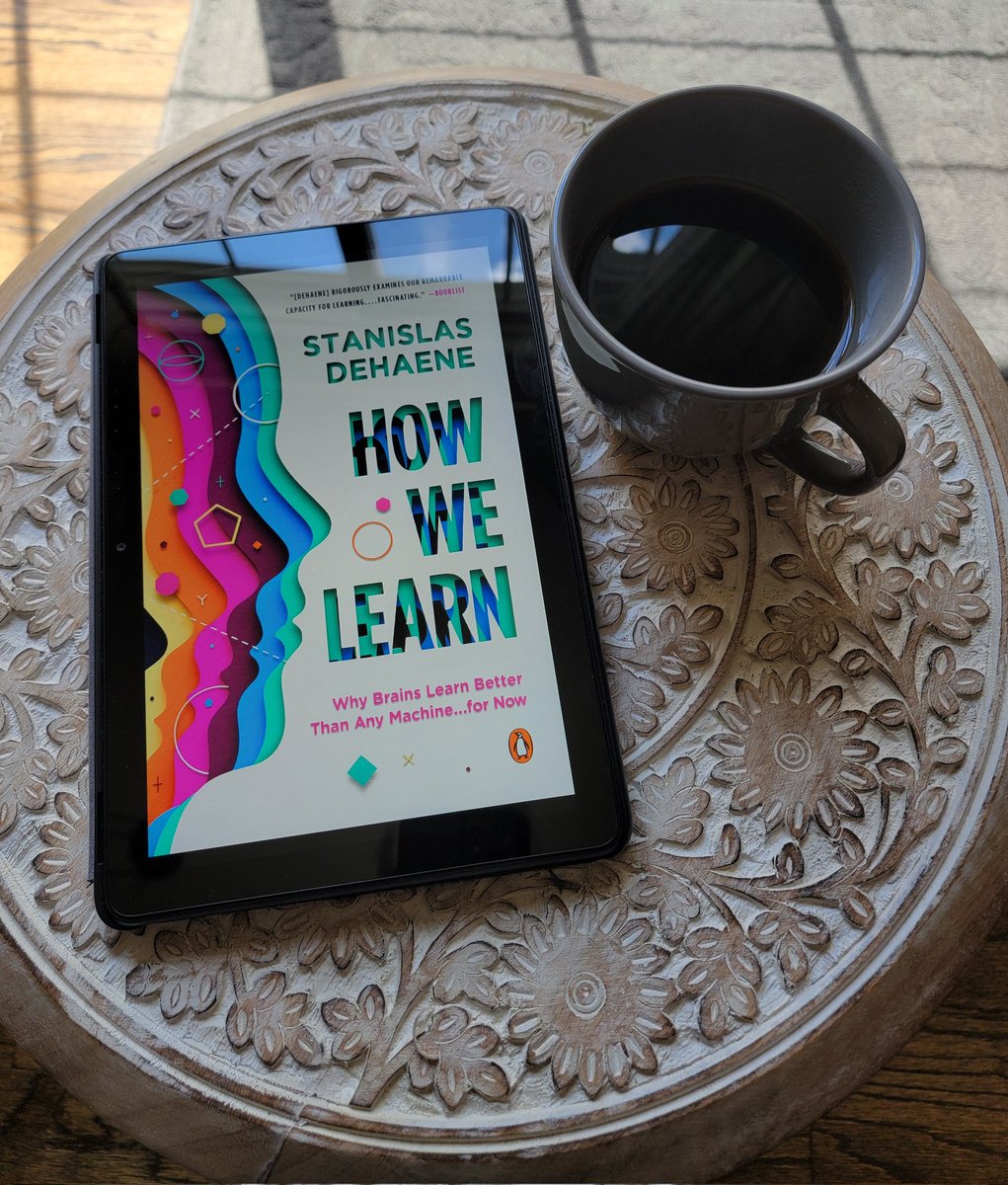
One of the most important books in education history may also be one of the most overlooked.
Stanislas Dehaene's 𝘏𝘰𝘸 𝘞𝘦 𝘓𝘦𝘢𝘳𝘯 shifts the focus from how educators can promote learning to something far more fundamental: the biological requirements for learning itself.
Dehaene would know. He's the most cited neuroscientist of learning in the world, the first-ever lifetime professor of Experimental Cognitive Psychology at France's most prestigious research institution, and the Director of NeuroSpin, France's advanced brain-imaging research centre. (He's also the President of the Scientific Council of the French Ministry of Education.)
So how could a major work by such a major figure be overlooked?
Well, it 𝘩𝘢𝘴𝘯'𝘵 been overlooked outside of education. Last year Dehaene won the Lewis Thomas Prize for scientific writing with 𝘏𝘰𝘸 𝘞𝘦 𝘓𝘦𝘢𝘳𝘯 featured prominently in the citation. And 𝘏𝘰𝘸 𝘞𝘦 𝘓𝘦𝘢𝘳𝘯 is currently available in 31 editions and translations worldwide.
So why aren't more people talking about it inside the evidence-based education community?
I don't know.
But I'm going to be shouting about it from the rooftops.
11
81
288
10,992
Jun 1
In 𝘏𝘰𝘸 𝘞𝘦 𝘓𝘦𝘢𝘳𝘯, Stanislas Dehaene—one of the world’s leading cognitive neuroscientists and winner of the Nobel-equivalent Brain Prize—identifies the 4 Biological Pillars of Learning. Without all 4 of these pillars in place, learning is fragile and will not last: 🧵
9
120
337
34,780
Jun 1
Pillar #4: Consolidation
New learning is initially fragile and must be consolidated into long-term memory to last. The primary mechanism is sleep: during sleep, the brain replays the day's learning at up to twenty times the speed of the original experience, transferring fragile new memories into stable long-term storage. Dehaene cites Jan Born's experiment in which participants who slept after learning a complex algorithm were twice as likely to discover a hidden shortcut as those who did not—sleep produced genuine insight, not merely retention. More instruction does not accelerate consolidation. Time, sleep, and spaced retrieval do.
4
7
49
3,328
Jun 1
These requirements are pillars, not preferences, and instruction that fails to account for all 4 is failing to account for the way humans actually learn.
Instruction that 𝘢𝘱𝘱𝘭𝘪𝘦𝘴 all 4 pillars, on the other hand…
3
6
56
3,273
May 29
Ты учишь себя, Tu t'enseignes, 我教你, Te enseño
That's 'You Teach You' in Russian, French, Chinese, and Spanish because we are global! 🌎 Now shipping to 180 countries! No surprise fees: taxes and duties paid at checkout.
Take a look at the First Math Method with an Example for Everything. (Yes, everything!)
3
2
522
May 28
You Teach You has international shipping! 🌎🌍🌏
The math method with an example for everything is now available everywhere! Get the entire K-8 series shipped right to your door—or deur, puerta, porta, mlango, kapi, porte, pinto, you name it!
YouTeachYou.org
1
3
197
May 17
These video clips are amazing. Take a few moments and witness the awesome potential of immediate feedback. Thanks, Catherine & Katherine!
May 16

I just realized: you should take a look at a video of my son Andrew learning English via immediate reinforcement
Andrew is autistic, living in a group home
And he’s constructing sophisticated sentences in English thanks to SentenceWeaver
It really is miraculous scienceofhumanwriting.substa…
1
2
10
1,269
May 15
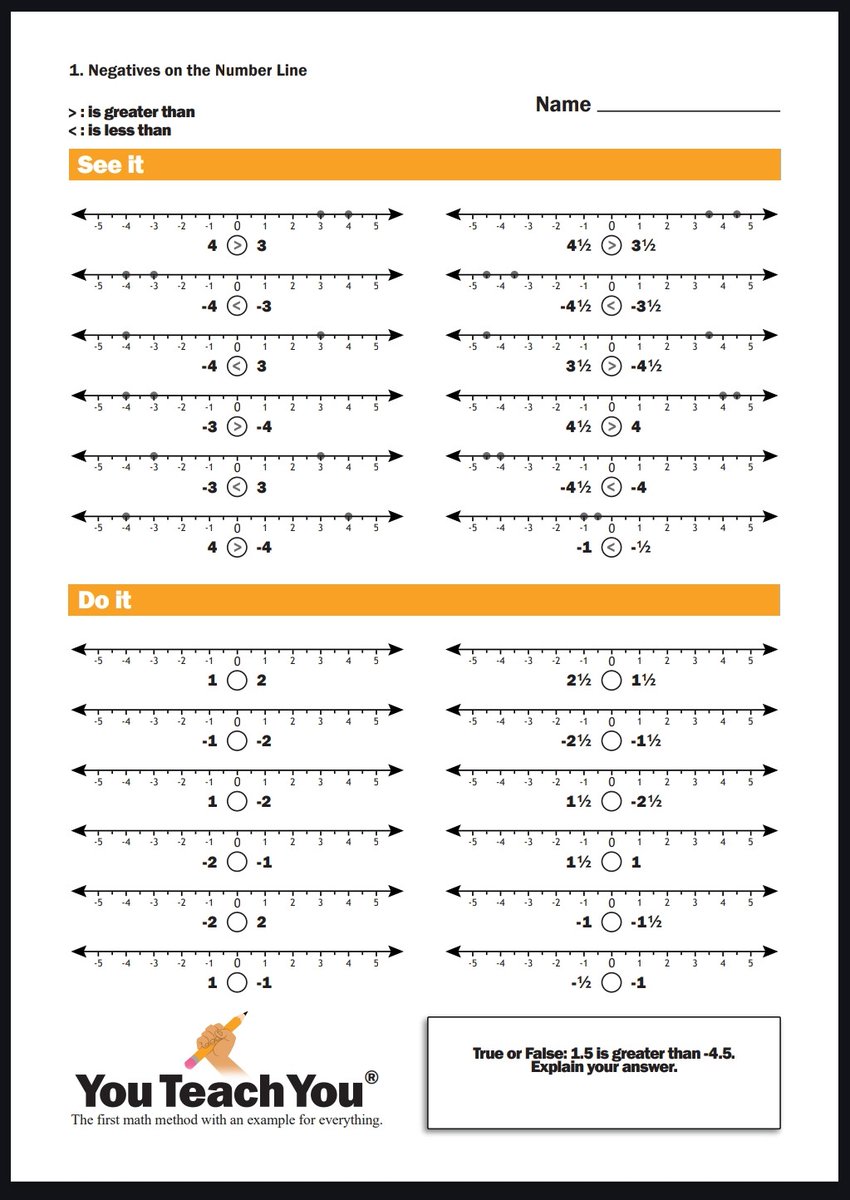
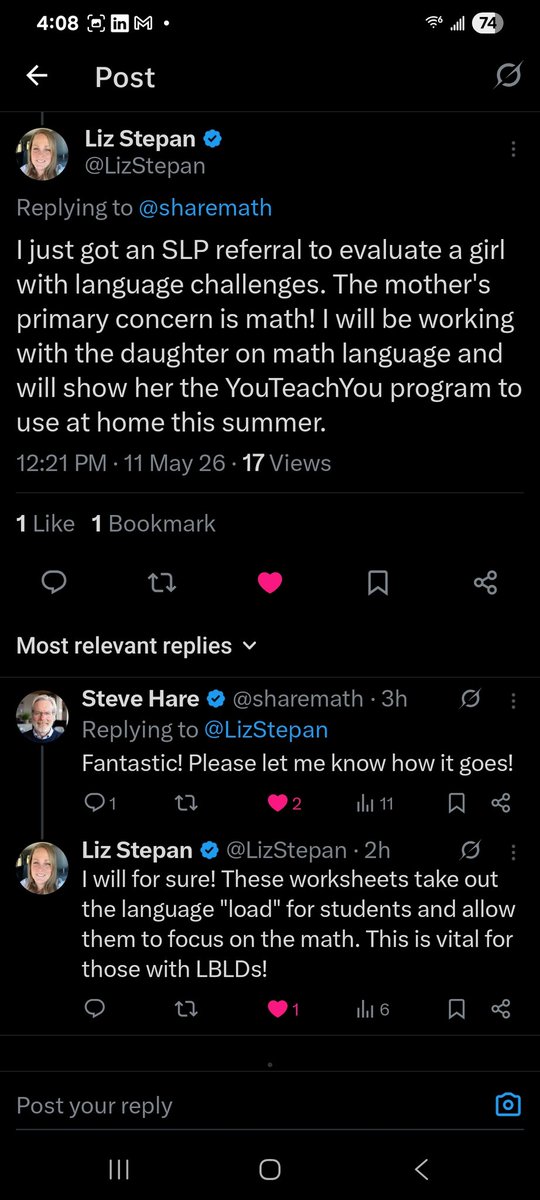
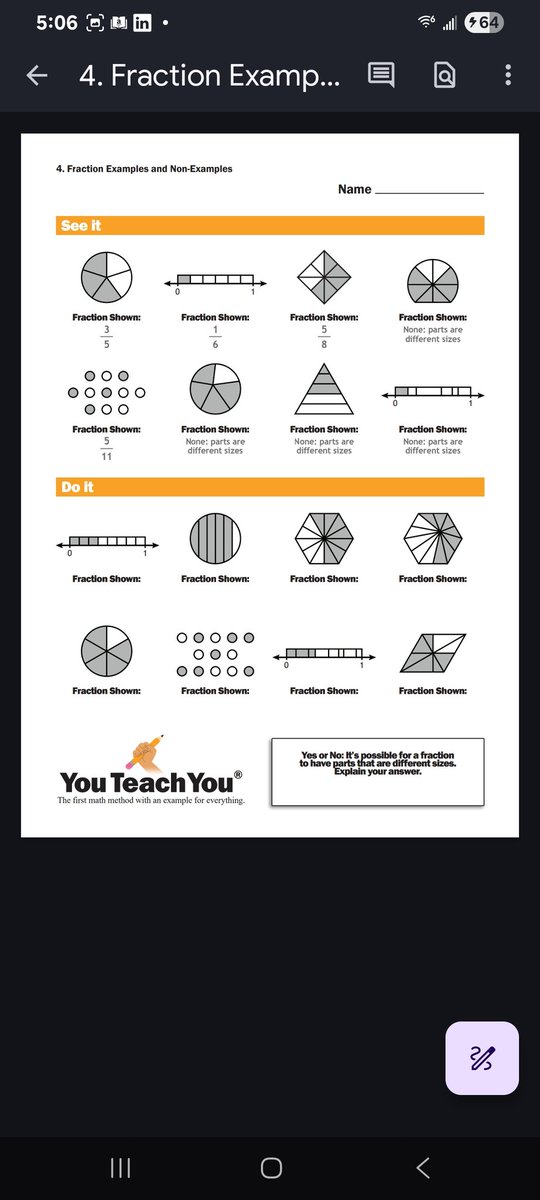
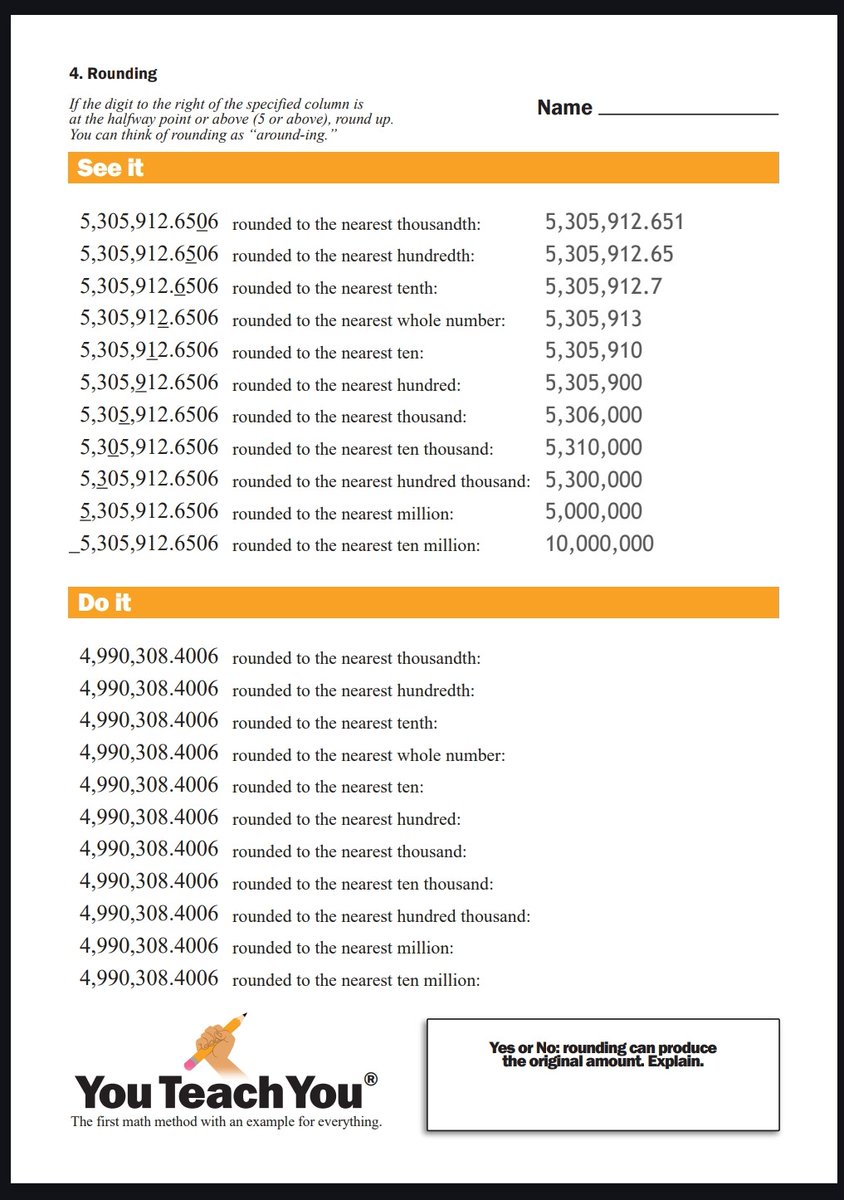
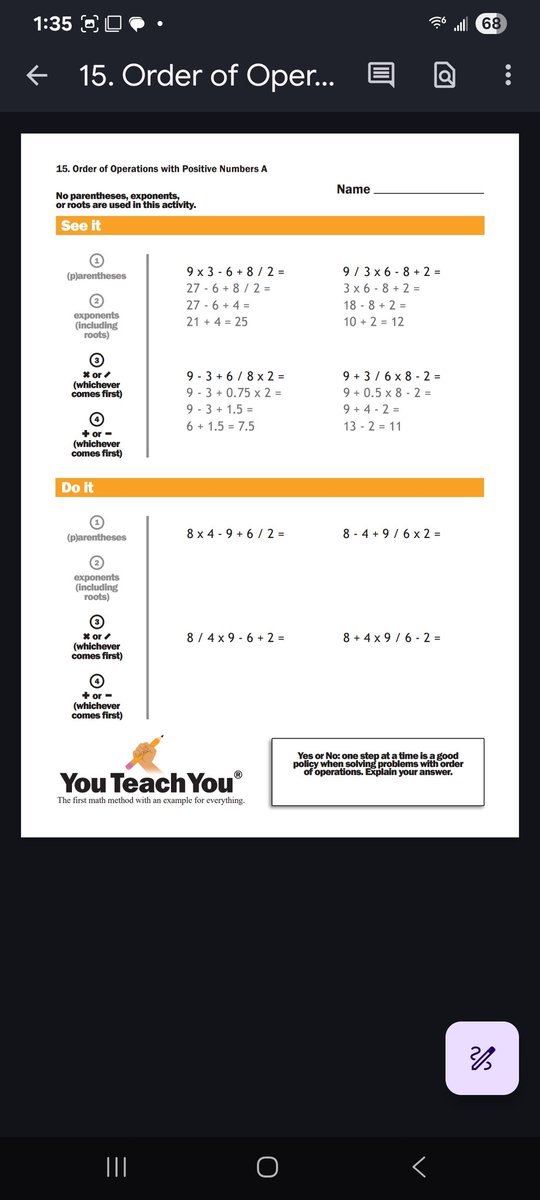
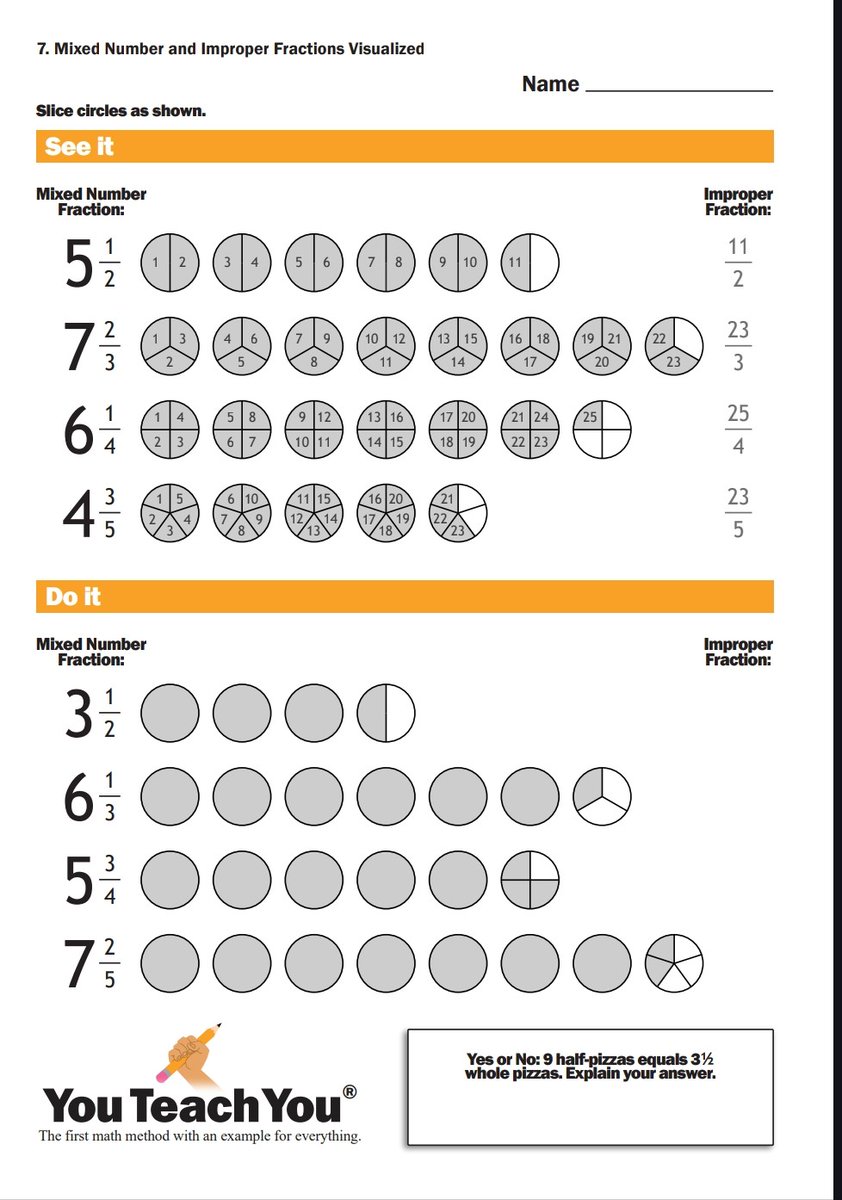
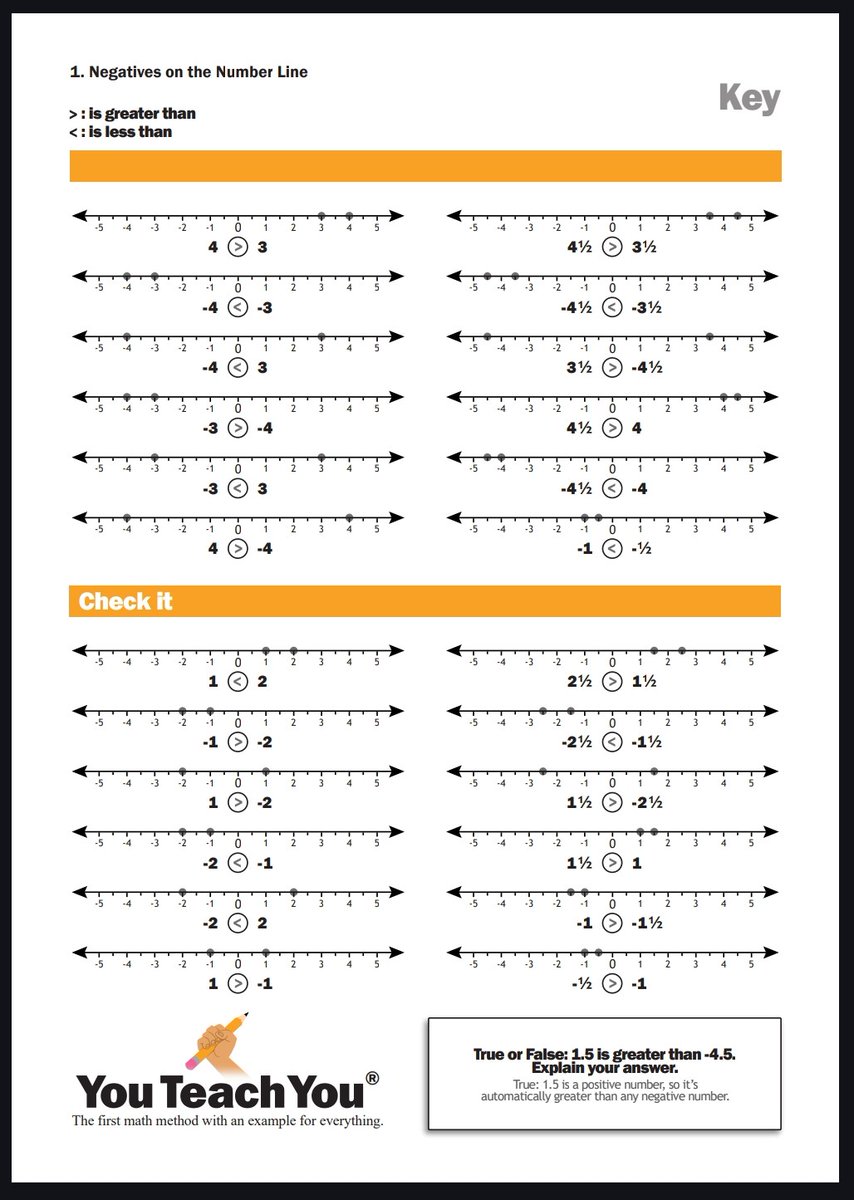
First day of negatives and students are mastering this previously confusing concept for themselves. That's the power of well-chosen examples, self-generated discoveries, and instant feedback. That's the power of You Teach You.
1
1
11
759
May 14
The claim that students struggle with math because it's "biologically secondary" is vastly overblown. Set up the environment with plenty of examples and feedback and the same mechanism that acquires language acquires math. We've seen it countless times with You Teach You.
May 13
I’m thinking the distinction between skills we learn “naturally” and “artificial” skills like reading that we have to be explicitly taught by teachers is overblown or wrong
Our brains use the same mechanism to learn both
The real difference is (probably) just that the environment is naturally set up to teach babies how to talk — it’s not set up to teach 5 year olds how to read
3
8
879
May 14
See it. Do it. Check it. The Apple II taught a generation of programmers the same way You Teach You teaches K-8 math. It's what works when you provide enough examples and let the learner drive. Thanks, Mr. McKenna!
May 14

When I was ~13 I had an apple ][ computer and many programs came with the code there for you to see. Seeing what a program did, seeing the code that did it, then doing my own, it was a very similar learning method. When I got you teach you math for my son, same thing played out
2
8
556
May 13
There’s something wrong with this letter from one of my former 7th grade students:
“I’m going to be honest, I was really bad at math up until this year. I mean, I didn’t even understand multiplication in fifth grade. That’s saying a lot, considering this year I’m doing insane things like graphing, finding medians, and even scientific notations. I’ll go home and try to teach my dad some things that I’ll find simple, like box plots. He won’t understand any of it then I’ll sit there all confused because of how easy I think it is. You’ve taught me so much and I’m so appreciative of that.”
What’s wrong with it?
I didn’t teach her at all that year, not even once. She completely taught herself, day after day, with pencil and paper, and not a screen in sight.
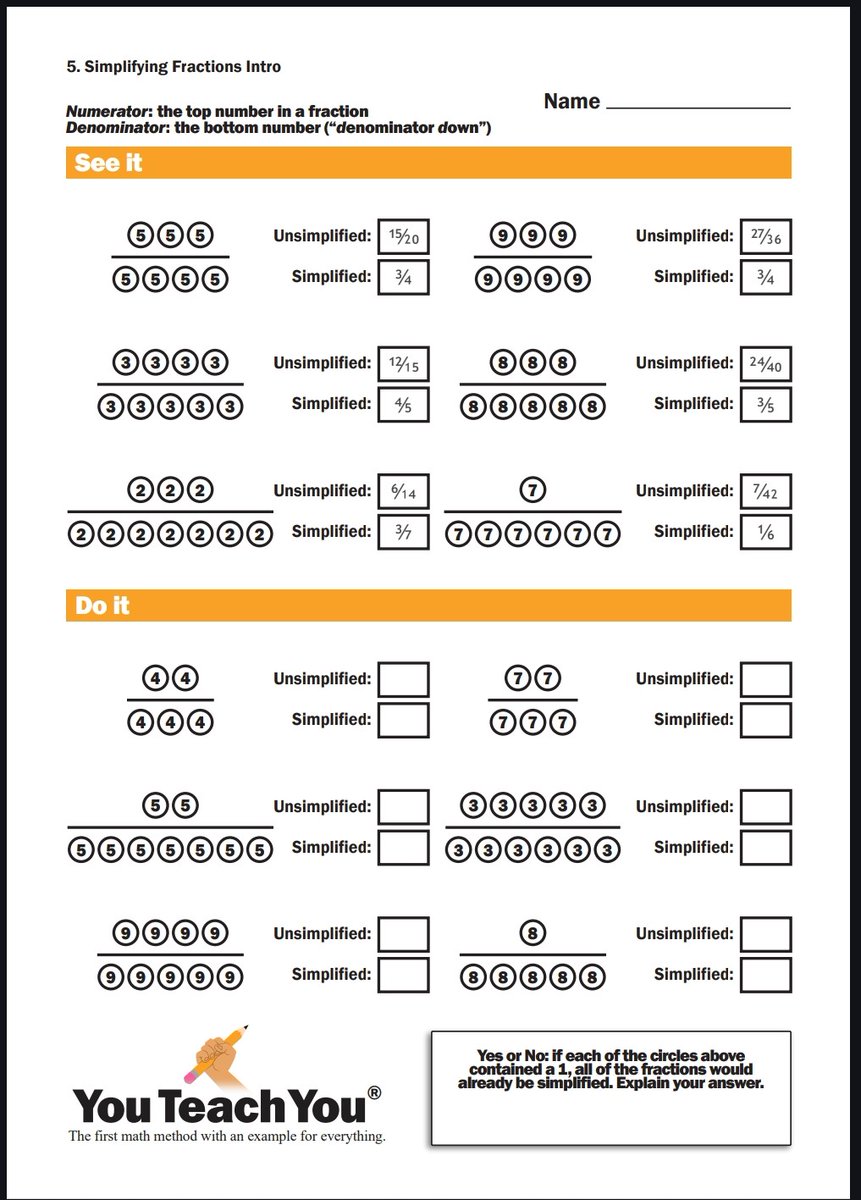
That was the year I first put my You Teach You math method to the test in the classroom, and she used the “examples for everything,” the related practice problems, and the fully-completed answer key on the back of each page to master even the trickiest concepts in the 7th grade curriculum, and to pull herself up from “Partially Proficient” at the beginning of the year to “Advanced Proficient” and into Algebra I the next. (I was available to her at all times of course—in the role of what I call “the sage at the side”—but she only asked for help once, and figured out her own mistake before I managed to get to the end of my explanation.)
People here on eduTwitter tend to be skeptical of the idea of students teaching themselves math—and they're right to be. I wasn’t sure the materials could do it without me either! But that year, student after student after student—132 in all—showed me otherwise.
And why shouldn’t they be able to? Kids learn to speak by hearing example after example and trying out their theories with feedback from the environment.
Math is no different. The brain doesn't need to be told the rules before it can learn them—it needs examples clear enough to see the pattern, and feedback immediate enough to correct the theory.
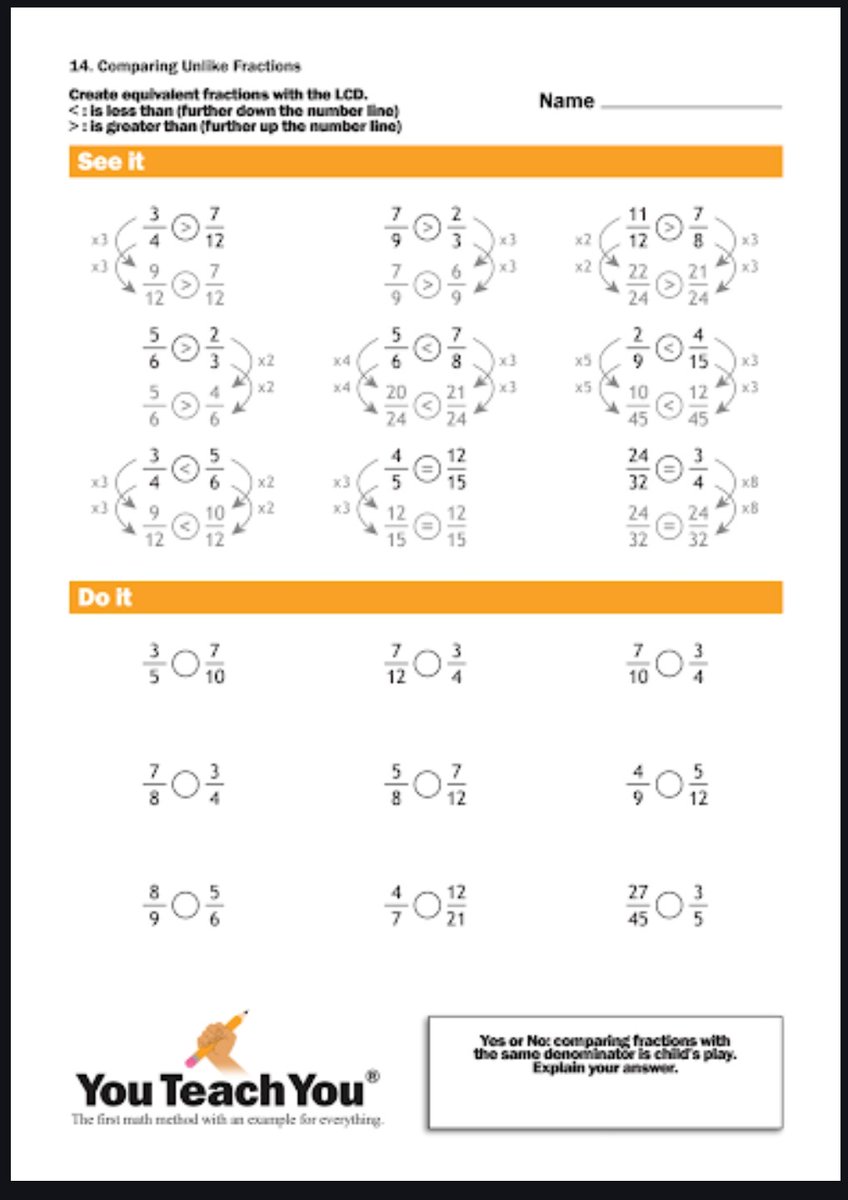
The full k-8 series I developed since then gives students both: a visual example for every single concept and a feedback loop that closes in seconds, not days.
That's not a new idea. It's how human beings learn everything.
And now it's how anyone can learn math.
Learn more at YouTeachYou.org
5
5
23
3,485
May 11
Tom Sherrington identifies the #1 weakness in teaching as the gap between "does anyone know?" and "does everyone know?"
He's right — and I built the You Teach You k-8 math method around that gap. Every student has all the examples they need and checks every answer against a fully-worked key — immediately, privately, without waiting for the teacher. The feedback loop closes for all 30 students at once, not just the ones with their hands up.
Learn more at YouTeachYou.org
May 11

The #1 problem/weakness in teaching and how to address it. teacherhead.com/2019/10/04/t… via @teacherhead
1
10
928