Privacy For Tezos
Joined February 2026
- Tweets 16
- Following 41
- Followers 50
- Likes 16
2 Photos and videos
Shield Bridge retweeted

Jun 4
Tezos has privacy and hasn’t been exploited just sayin
5
9
59
1,497

Apr 27
Most “privacy wallets” are just UI silos.
On Tezos, @shield_bridge , @TempleWallet , and @UmamiWallet all access the SAME Tez shielded set.
Your privacy isn’t app-dependent.
Your shielded account is what matters.
#Tezos #XTZ #Privacy #ShieldBridge
1
11
22
609
Shield Bridge retweeted

Apr 7
Most crypto transactions aren’t truly private.
They only appear that way.
On public blockchains, every transaction, balance, and wallet interaction is permanently visible.
Over time, addresses get traced, patterns emerge, and anonymity slowly disappears.
That’s the problem @shield_bridge is trying to solve.
Instead of relying on mixers or off-chain tricks, Shield Bridge uses Sapling privacy technology to create a shielded pool on the @tezos network.
- - -
Here’s how it works:
You move tokens into the shielded pool
→Inside the pool, balances and transfers become private
→When assets leave the pool, they return to normal public tokens.
From the outside, observers only see assets entering or leaving.
Everything in between stays confidential.
- - -
For developers, the project also offers tools to integrate privacy directly into apps, making it possible to build wallets, payments, or DeFi tools with confidential transactions by default.
Because if Web3 wants to power real economies, transparency alone isn’t enough.
Sometimes, privacy is the missing layer. 🔐

2
2
7
132
Everyone's racing to add privacy. Tezos shipped it at the protocol level.
Sapling brings native zero-knowledge shielded transactions to Tezos. Built into the protocol. Available to every token.
Shield Bridge is the front door.
shieldbridge.xyz
#Tezos #XTZ #ShieldBridge
16
40
1,042
You don't need real funds to try Shield Bridge.
The full app runs on Shadownet with testnet tokens.
Faucet: faucet.shadownet.teztnets.co…
App: shadownet.shieldbridge.xyz
Explore every feature risk-free. Mainnet is there when you're ready.
1
5
21
1,170
Mar 29
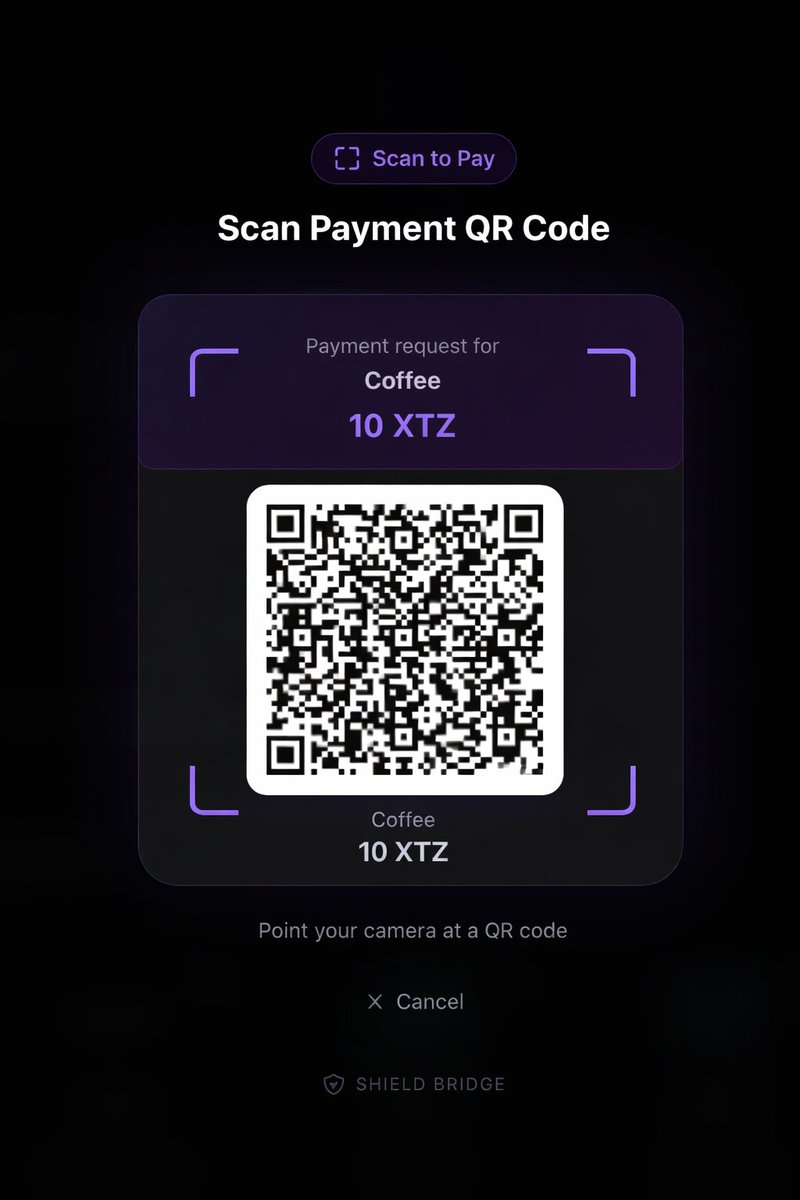
Heading to Cannes tomorrow? Someone owes you coffee?
Show the QR. They scan. Paid privately.
Shield Bridge's Scan to Pay facilitates private payments, in person.
shieldbridge.xyz
#Tezos #XTZ #ShieldBridge #Privacy #TezDev
1
10
24
545
Mar 29
Even with shielded transactions, the sender's address is still visible on-chain.
Shield Bridge solves that.
Turn on the Privacy Relay and your wallet disappears. A service wallet broadcasts for you. All you do is generate the proof.
Full anonymity. Optional. One toggle.
#Tezos
1
7
24
1,267
Mar 28
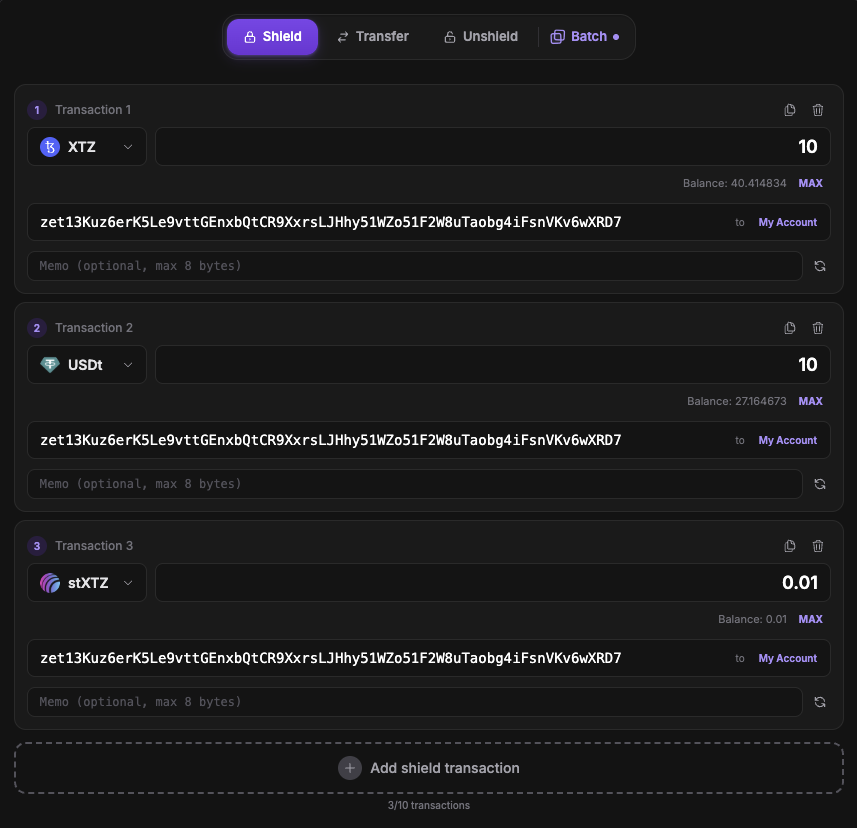
Why shield one token when you can shield ten?
Batch transactions in Shield Bridge. Combine multiple tokens and multiple amounts into one operation.
Your entire portfolio goes private in one click.
#XTZ #Tezos #ShieldBridge #Privacy
1
11
31
602
Mar 28
Private payments should be as easy as sharing a link.
Now they are.
Every shielded account on Shield Bridge has a payment page. Drop the link, get paid privately.
PSA: ⚠️Demo link⚠️ If you send to this address, that's between you and the blockchain.
shieldbridge.xyz/pay?to=zet1…
7
15
389
Mar 27
Shield Bridge V2 is live 🚀
Private transactions for any #Tezos token.
Shareable pay links for shielded payments.
Optional privacy relay for full anonymity.
shieldbridge.xyz
#XTZ #Privacy #ShieldBridge
11
33
670