
Joined February 2018
- Tweets 51
- Following 75
- Followers 47
- Likes 199
Photos and videos

Feb 16
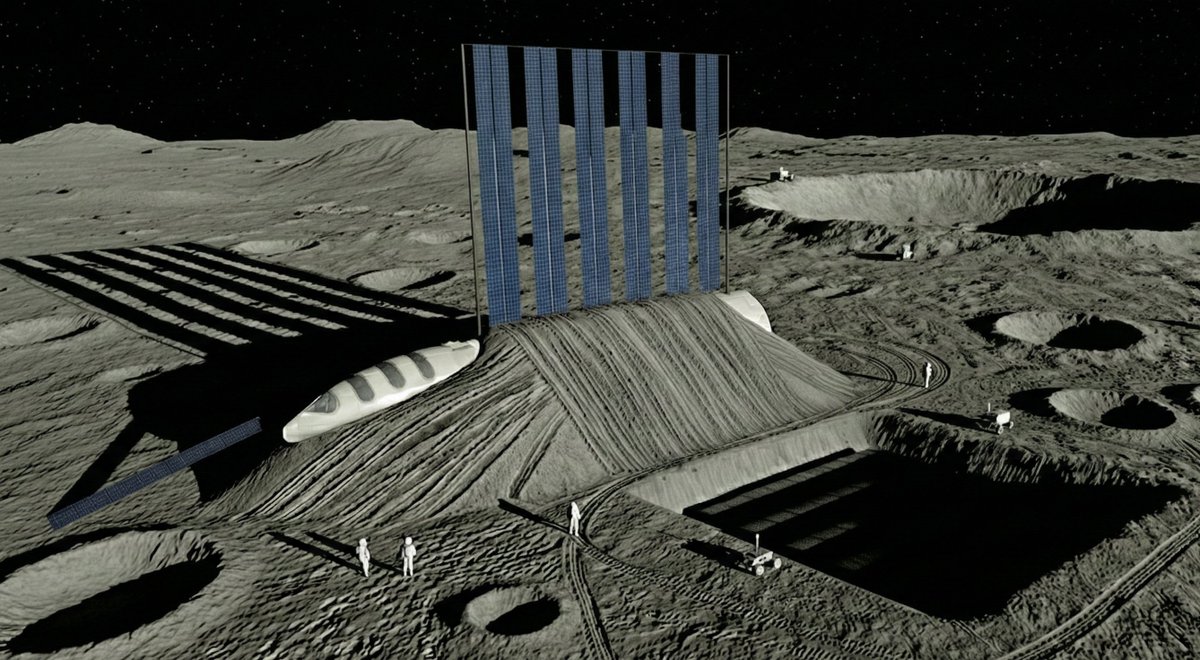
When we first started working on the @StarHabProject idea of converting the @SpaceX Starship HLS into a permanent habitat, we knew that putting it on its side was a high priority.
So we went back to basics with a Free Body Diagram (FBD) to see how the loads on the system will react and asked: "Is it feasible?" 🧵 (1/8)
1
1
6
187
Feb 16
We need to anchor three things to the ground: the pivot point, the truss, and the cable.
But we don't know (yet) if the regolith is compact and strong enough at the South Pole.
The pivot and truss only handle shear loads (easier to manage), but the cable anchor takes the heavy pull. So we drill extra helical anchors for the cables to ensure that if one fails, we have immediate redundancy. (7/8)
1
5
79
Feb 16
The "Horizontalization™" (yes, it's a mouthful) is the single biggest engineering challenge in the entire construction phase.
Once we solve this, the base becomes a reality—unlocking 2,500m³ of volume for the price of one landing.
@elonmusk, we’ve proved that it’s doable. Now we just need to do it.
Let’s build #StarHab humanity’s first home on another world. 🚀 (8/8)
5
75
Feb 12
The view of Earth from the @StarHabProject Lunar base will be spectacular!
I ran a physics-accurate simulation of the view from a potential landing site on the south pole of the Moon. Because of the Moon's axial tilt and libration, the Earth never truly "stays" put—it orbits a central point, rising and setting about 6.5° above and below the horizon over a 27-day cycle.
For our @StarHabProject architecture, this isn't just a visualization; it's a critical thermal and orbital mechanics constraint. 🧵 (1/4)
2
4
18
598
Feb 12
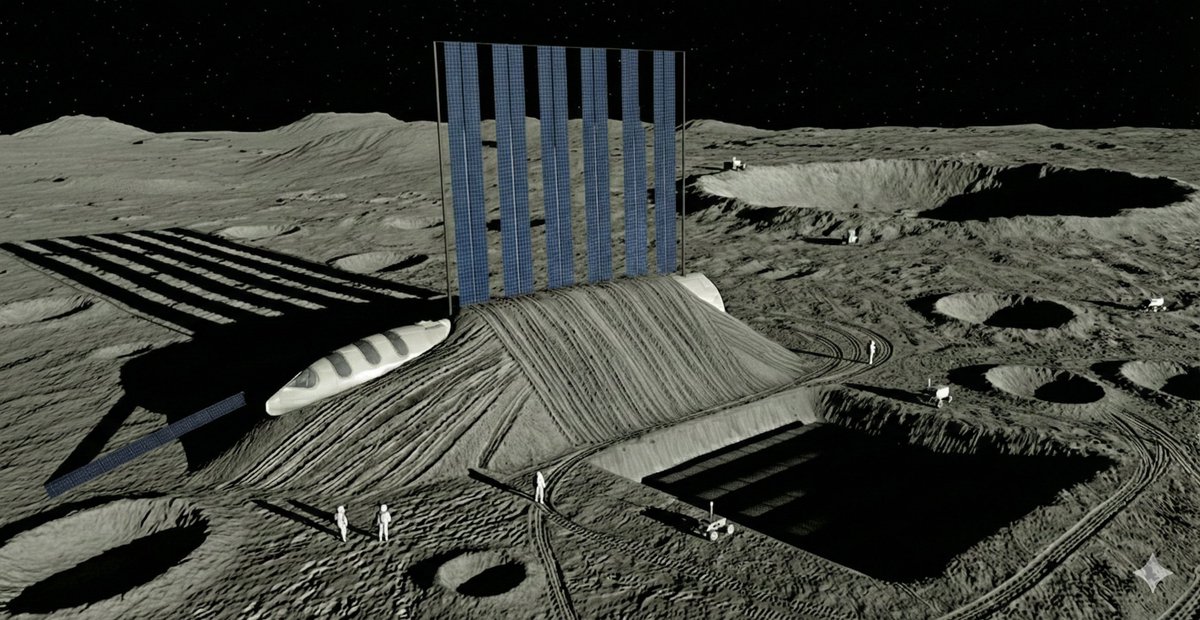
The view in the video above is what the crew sees from the control room (or "bridge") windows which is in the former payload bay.
Because the Sun skims the horizon, we track that 360° path for power, while the "bobbing" Earth allows for high-gain communication with near-zero pointing jitter. (3/4)
1
3
7
1,114
Feb 12
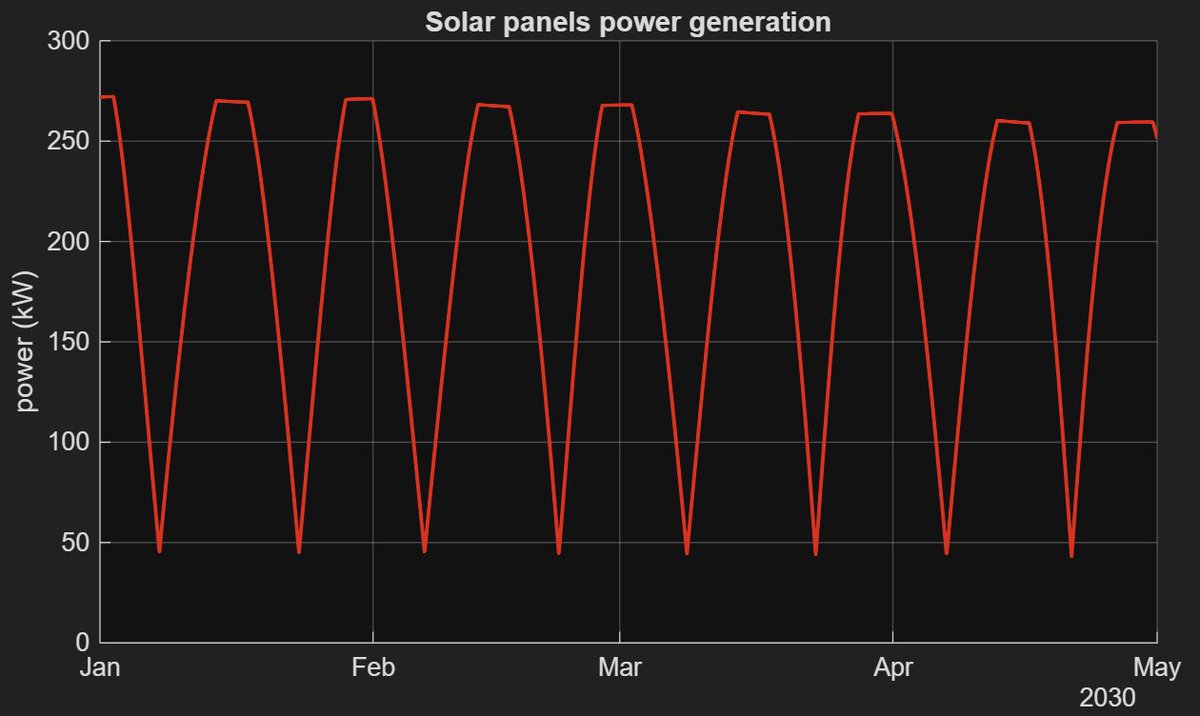
Because the sun skims the horizon, we hang our panels vertically from the StarHab roof. Each panel rotates along its vertical axis to track the 360° solar path.
As the sun moves, the panels inevitably cast shadows on one another. This creates the 14-day power cycle you see in the plot.
I’ll be "leaking" more of these technical snips (including the Mars-gravity mice centrifuge math) over the coming week.
@elonmusk 🚀 (4/4)
2
4
1,174
Feb 10
If you want to read more about how to convert the Starship HLS into a permanent lunar base we have another paper:
researchgate.net/publication…
1
3
166