Tech VC at Rialto.VC - Don't wait for the easy, handle hard better. Trying to become useless AFAP (as fast as possible).
Joined October 2006
- Tweets 14,612
- Following 1,653
- Followers 10,983
- Likes 126
482 Photos and videos




Jun 4
I might have missed it, but I would be super curious to hear @nntaleb 's view on the SpaceX IPO.
165
Apr 26
George Orwell: "Ages in which the dominant weapon is expensive or difficult to make will tend to be ages of despotism, whereas when cheap and simple, the common people have a chance." - could have been said about AI.
1
1
412
Mar 31
Brilliant :)

1
1
1,196
Mar 30
sed contra Bitcoin audentior ito
8 Oct 2025

Connecting the ecosystem with @Square has been the dream since we launched bitcoin in @CashApp in 2018
Starting today, all merchants can now seamlessly stack bitcoin behind the scenes from their daily sales
Bitcoin Payments Acceptance will be live for everyone on November 10
604
Mar 20
Almost the same as the Republic of Venice, which lasted 1,100 years - the longest in history.
Mar 19

A central point is that Phoenician city states were not interested in war and domination via land control; with the exception of Carthage, they just wanted commerce.
2
607
Feb 19
The next overnight $100B company is a videogame company that mixes Factorio with Gas Town. We will do things by playing a videogame. It will be called "Ready Agent One".
2
3
1,057
Feb 9
Brilliant! We will need some form of this for communications - WhatsApp, Email, etc - soon.
Feb 7

AI eliminated the natural barrier to entry that let OSS projects trust by default. People told me to do something rather than just complain. So I did. Introducing Vouch: explicit trust management for open source. Trusted people vouch for others. github.com/mitchellh/vouch
The idea is simple: Unvouched users can't contribute to your projects. Very bad users can be explicitly "denounced", effectively blocked. Users are vouched or denounced by contributors via GitHub issue or discussion comments or via the CLI.
Integration into GitHub is as simple as adopting the published GitHub actions. Done. Additionally, the system itself is generic to forges and not tied to GitHub in any way.
Who and how someone is vouched or denounced is up to the project. I'm not the value police for the world. Decide for yourself what works for your project and your community.
All of the data is stored in a single flat text file in your own repository that can be easily parsed by standard POSIX tools or mainstream languages with zero dependencies.
My hope is that eventually projects can form a web of trust so that projects with shared values can share their vouch lists with each other (automatically) so vouching or denouncing a person in one project has ripple effects through to other projects.
The idea is based on the already successful system used by @badlogicgames in Pi. Thank you Mario.
Ghostty will be integrating this imminently.
1,449
Jan 11
RIP

2
1,086
Jan 10
Few realize that Google (Alphabet) is the undisputed railway baron of the 21st century. Optic cables instead of steel rails.
370
29 Oct 2025
You're smart, Robert, but here it seems that you've got a Tesla fever. 12,000 workers, multiplied by a few times, is something that the Chinese don't have? Really? What about 12M workers instead, or 120M? The main argument for being bullish about Tesla is not a good one, IMNSHO.
29 Oct 2025

I've been visiting as many robotics companies as I can in San Francisco. And elsewhere (next week I'm heading to Abu Dhabi to meet technologists who are doing the same there).
Understanding how robots are trained is leading me to a new thesis:
Tesla will be able to do everything that @1x_tech showed, and much much more, but completely autonomously, by the end of next year.
Why?
The 12,000 workers at Tesla's Fremont Factory (it's first factory, and where Optimus is being designed).
Remember the workers who used to drive cars from the end of the factory line to where they get loaded on carriers to be delivered to customers around the United States?
Why haven't we seen any of them say "I got laid off today?"
Or try to organize us to be anti robots or anti AI?
Because they are doing what @1x_tech's first customers are doing: cleaning dishes, watering plants, doing laundry, but more importantly, helping teams working with others on the factory floor capture the data from workers on the factory floor, among other tasks.
Every robot company tells me they don't have enough data to "go generalized."
And this data collection doesn't need a highly skilled AI genius with a PhD from Carnegie Mellon. It just needs an organization of people who are doing the same kinds of tasks over and over, while being watched by a camera, or teleoperating a robot, or wearing sensors on their fingers as they do something more advanced than picking up a trash can.
And then that data must be tagged properly. This is a skill that requires a little bit of human intelligence, but not much. At @1x_tech's launch party the other night I met a guy who runs a company that does that kind of tagging.
It's not work that requires a whole lot of human intelligence. You need to bring a video, captured on the factory floor, into a computer screen, and then you need to manually tag everything that's happening in the video. A multi-modal AI does most of that work, so you just need to check what it perceived carefully and maybe add some more details. Like if it says a trash can was full, but it perceived that a little wrong, you fix it to say, "actually that's 7/8ths full." Accuracy matters, not smartness on the behalf of the human doing that work.
Remember the guy I shared with you last week who is building a blackberry-picking robot at @fdotinc in San Francisco? That's exactly what he is doing. A lot of what he is doing to build the computer vision system that sees blackberries, and understands them, is just mind-numbing repetition. He's picking up blackberries with his robot over and over and over and over. And then tagging anything his AI systems get wrong.
That's to build a robot that does ONE THING. Pick blackberries off of a bush and put them into a box.
The thing is Elon has 12,000 people who are doing the same in the factory. One guy is connecting wires under the dash in a new Tesla. He does that every 45 seconds. All day long. I watched him work at Tesla's factory. And most workers building a car are doing something similar.
Someone has to work with that guy to put a camera on his face, or sensors on his hands, to understand that task. But it is the worker who has value here in training the robot.
Tesla has the worker. Figure does too, but in a far less efficient way (it had to partner with other companies to do the same) and 1x doesn't have either, so has to get people to buy the robot, to complete the data collection.
Now 1x's approach might lead to understanding of homes that Tesla can't get. My dishwasher is slightly different than yours is. How I put plates into my cabinets is slightly different than yours is. So getting even 1,000 robots into homes will let 1x's NEO do the data collection on many homes, which will lead them to have a totally autonomous robot within three years too.
But it comes down to "can you collect the data from many different humans and their lives?"
Now, yes, we can simulate a whole lot of that. Last night I met a guy at @jowyang's AI startup launch event who can scan a factory floor, or my kitchen, bring it into a system, and do a lot of that training in a simulator with virtual beings. I'll have that video up in a bit.
But Tesla has the best advantage here, with the best AI workflows and systems, which is why Tesla's cars are self driving in my neighborhood and no others are.
I see it as the only company that has a credible shot at competing with the Chinese head on. Oh, and Tesla has another factory in China with another 12,000 workers. And another factory in Europe with another 12,000 workers. And another factory in Austin with another 12,000 workers. And another few factories in Nevada and New York and elsewhere. The Chinese don't. And neither does anyone else in San Francisco building robots.
So, by 2030, who do you think has the robot that does the most?
My thesis is Tesla.
Do you have another thesis? Bring it on. Explain to me how you will collect all the data.
I once interviewed the innovation team at Volkswagen. I asked "when are you going to put a camera on your workers to train AI's?" They said "we can't do that due to labor laws." In Detroit I asked the same and heard "Unions are hard to deal with."
The Fremont Factory has no Union. Why not? Because the traditional automakers laid them off, so they hate the Unions. And are highly innovative, which is why they are compensated far better than any other automaker workers in the world.
They are training robots. And building robots.
And next year you will see their work. By 2030 I don't believe anyone will be able to compete with them.
Tell me why I'm wrong.
1
1
3
1,280
27 Oct 2025
Hey Mitchell! (we met 10 years ago) - glad to read this. I also have a young kid and really appreciate your words. Trying to be more like you, and less like your friend :)
26 Oct 2025
I have a single friend in his late 30s right now. Mega-millionaire. Doing whatever he wants. He's happy! He always asks me "where are you going next" and I always respond "nowhere, I just want to be home with my kid." And he looks at me like I'm CRAZY. He tries to empathize, but can't.
I used to be him. There's nothing wrong with being him. I'm happy for him. But kids rebalance your life to realizing that nothing matters more than them. Like nothing even comes close to mattering. Everything else becomes noise.
And I didn't get it either. So I don't expect other people without kids to get it either. And that's fine. I'm not judging you. Even when I decided to have kids, I didn't (couldn't!) know what to expect. I wasn't particularly excited, honestly.
But holy shit does that change once they come. I look at my life in bewilderment almost every week thinking how my 20s self would've hated this, and yet this is the best my life has ever been.
My kid is sleeping right now and I'm just counting down the minutes for her to wake up so we can hang out. That's all I want.
1
1
890
25 Sep 2025
RT @moondrencht: Today, we're proud to launch Wilson to the world – your very own legal superagent.
Think Cursor for legal contracts.
To…
285
21 Aug 2025
why six or eight? boring. what about other means of movement? snake-like? snail-like? triped?
21 Aug 2025

All the interesting progress in robotics seems concentrated on bipedal humanoids and quadrupeds, any good leads on sick six/eight legged robots recently?
983
20 Aug 2025
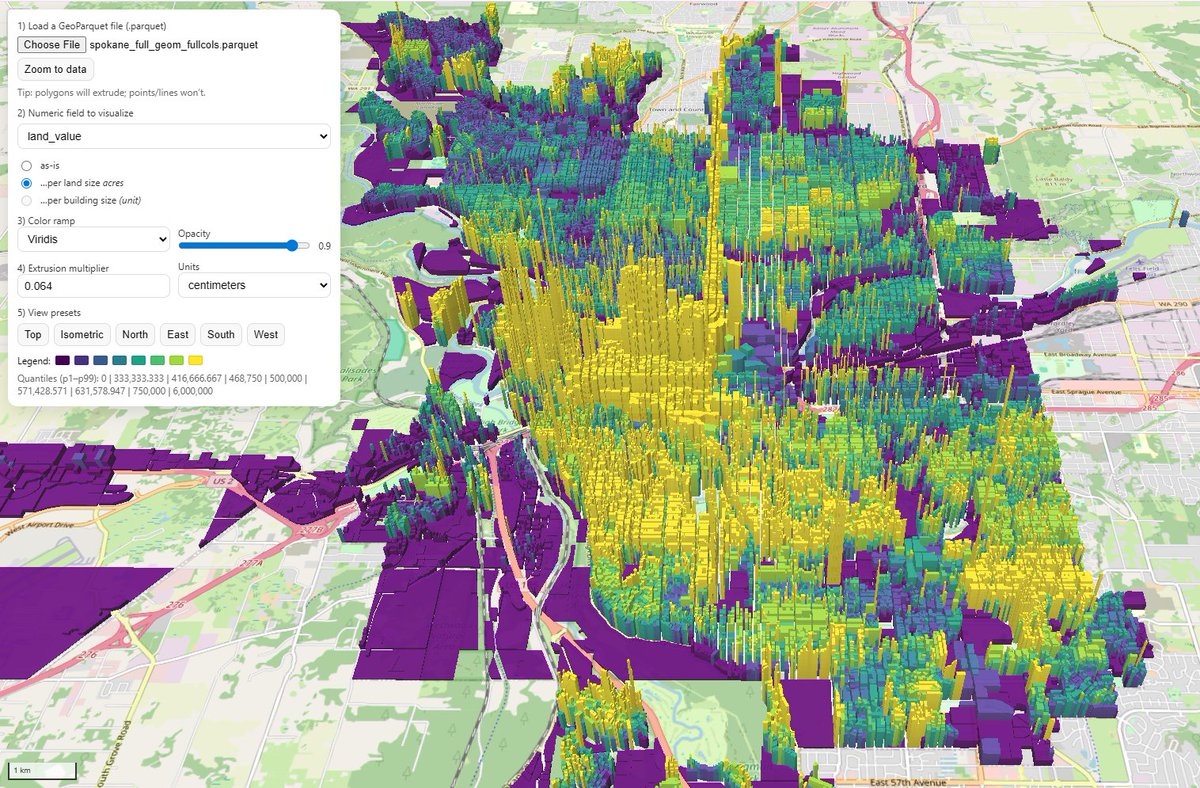
Tell us more!! We're curious!

1
759
20 Aug 2025
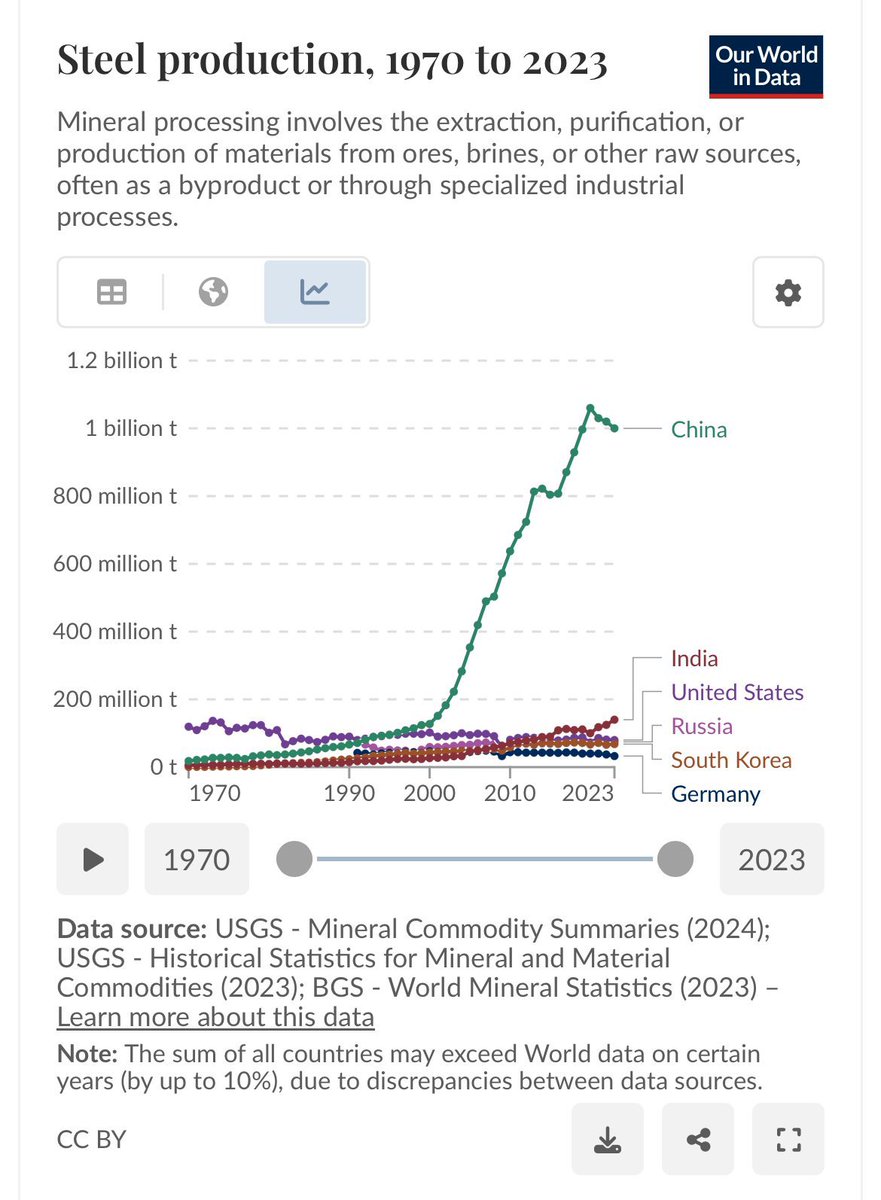
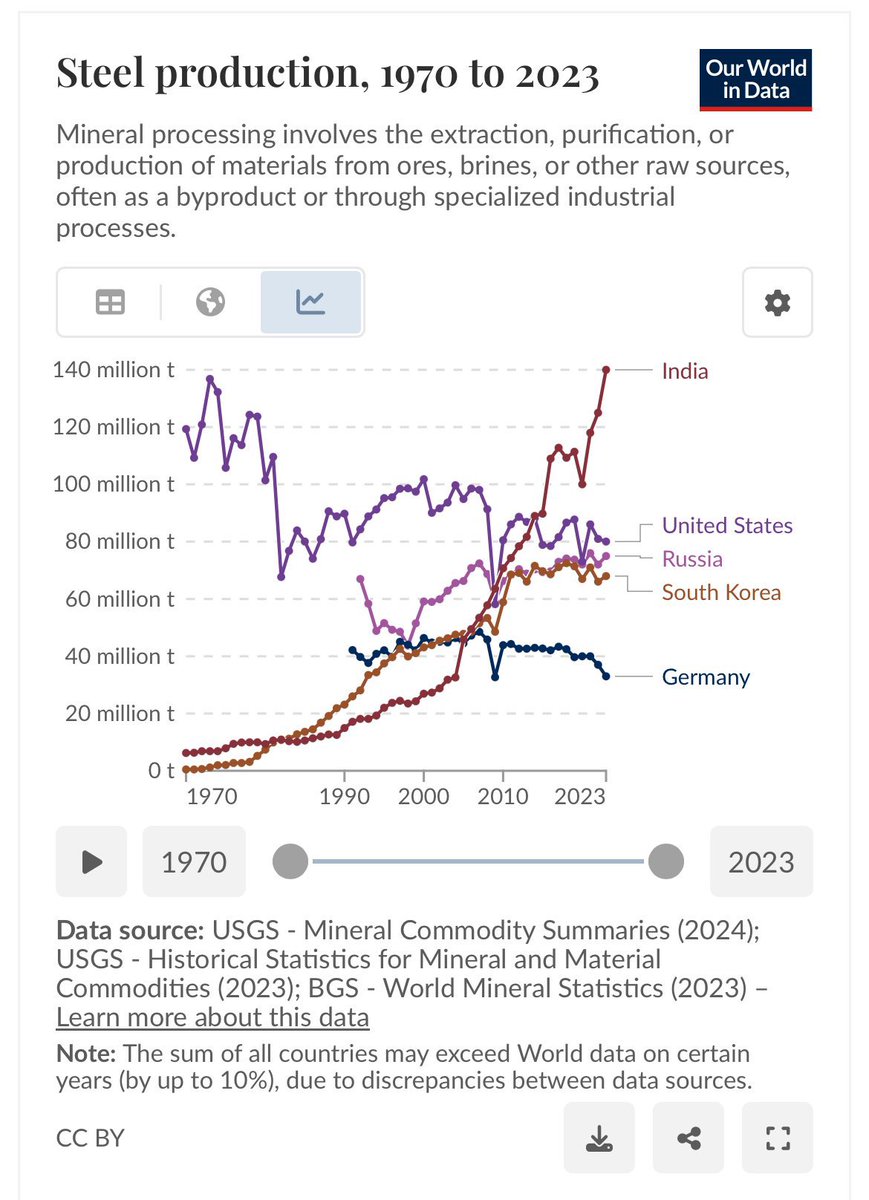
Have you considered the high cost of climate change as a potential "innovation tax" for India, more than for other countries?

On many graphs of the physical world, China is in first place by a wide margin.
But if you look more closely, India is a distant but real runner up.
1
1
515
25 Jul 2025
What do you think of this? x.com/premqnair/status/19484…
TLDR: Windsurf employees may well get their exit, if remaining management just executes the dividend.
After looking into this, I think the original intent was for that $100M cash balance to indeed be used to give employee distributions via a dividend. It corresponds very closely to the unvested equity number.
But due to the legal overhead that attends any Big Tech acquisition nowadays, the founder was muzzled and couldn't say this outright. He could only say "dividending out the balance is an option."
So: the remaining Windsurf shareholders can take that option, dividend out the $100M to employees, and then choose to shut down the company. The outcome is then similar to an acquisition.
It's just a new, dumb dance that we need to bake into licensing-style deals. Similar to all the other dumb dances regulators make companies do.
1
719
Simone Brunozzi retweeted

15 Jul 2025
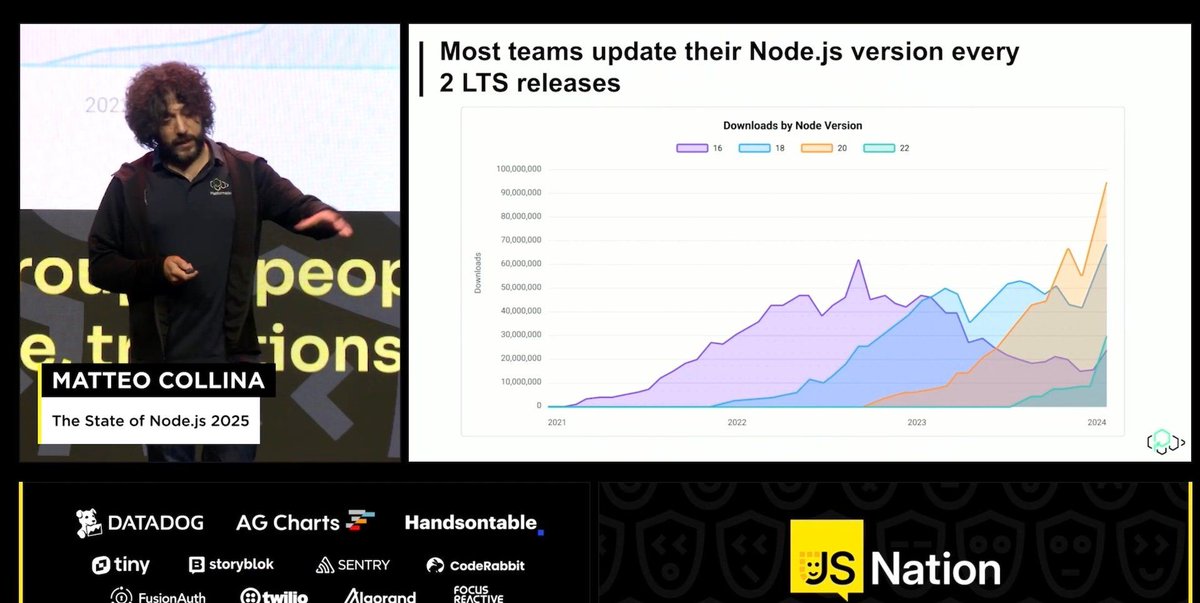
🧵 At JSNation, I showed graphs that honestly left me speechless about Node.js upgrade patterns
Let me break down why I'm so passionate about getting you to upgrade - from security nightmares to exciting v24 features:
1/11 👇
3
6
46
5,827
8 Jul 2025
Ask why it hasn't happened yet. Don't have the answer, but I know it shouldn't be simple for this company to exist.
8 Jul 2025

I would invest in this company.
462
Simone Brunozzi retweeted

3 Jul 2025
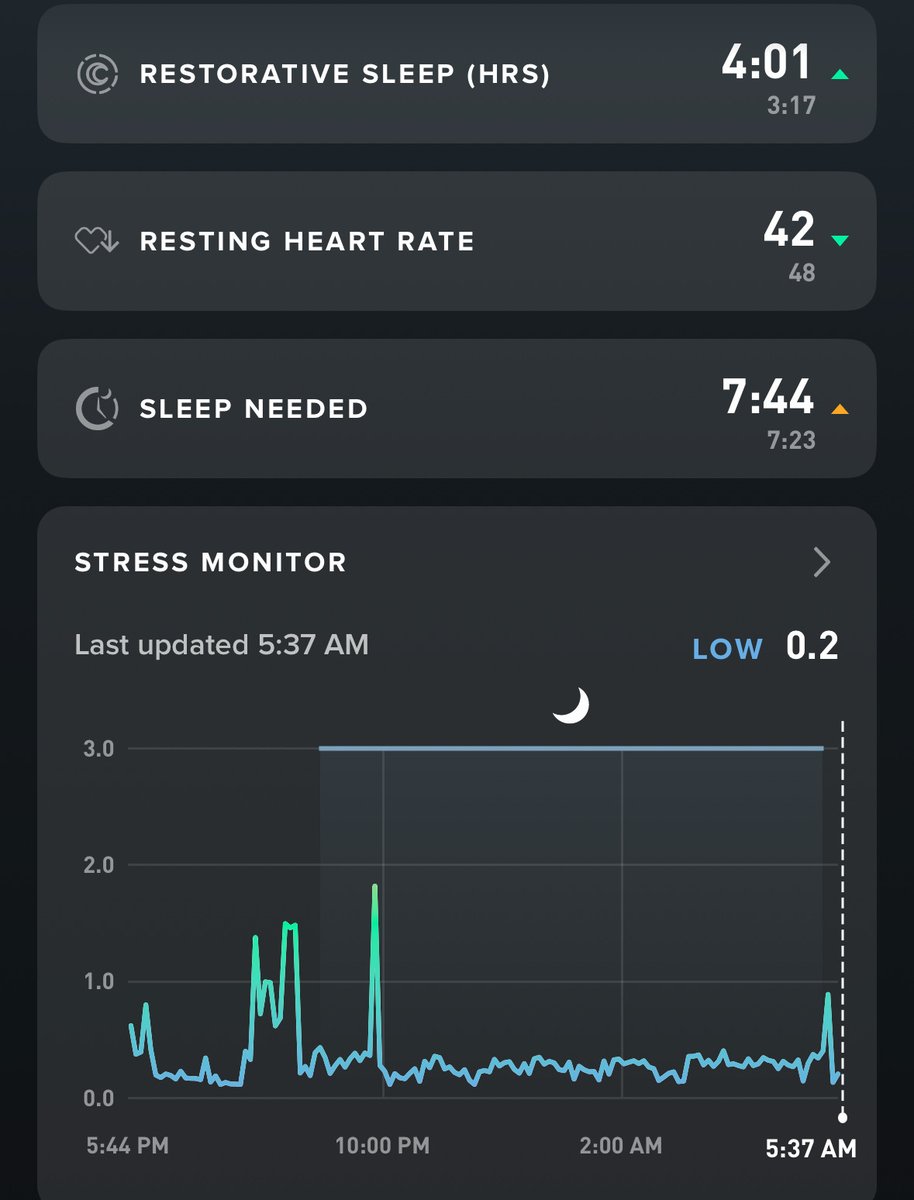
International travel deeply impacts your sleep. I travel over 250 days per year so I know this well. That is why I started working on a solution 18 months ago and now it is almost ready. I have been using it for months and it is a game changer. Stay tuned
3 Jul 2025

It's taken 18 days post international travel for my sleep architecture to normalize.
International travel is brutal on the body and mind.
40
4
295
81,774