
Freedom loving, joke telling, love living life dad to 3 awesome kids with a fantastic wife and one BAMOFO 🇺🇸
Joined September 2022
- Tweets 1,808
- Following 809
- Followers 1,438
- Likes 31,554
55 Photos and videos






Bill Simpson retweeted
A Coast Guard jumps onto a moving boat and safely stops it in Maryland.
104
356
3,407
63,511
Bill Simpson retweeted

Jun 15
This is WILD!
Tom Mueller. SpaceX employee #1, the man who built the engines and his 0.06% stake is now worth approximately $1.11 billion (Save this).
But the number undersells the story.
Mueller grew up in St. Maries, Idaho, population 2,500, the son of a logger who wanted him to follow the same path.
He spent four summers cutting timber to pay his way through engineering school, then moved to California with nothing but a degree and a passion for rockets.
He spent 15 years at TRW, one of the biggest aerospace companies in the world, watching his ideas get diluted inside a bureaucracy so he started building engines in his garage at night as a hobby.
By early 2002 he had built the largest amateur liquid-fuel rocket engine in the world, 80 pounds, 13,000 lbs of thrust and moved it to a friend's warehouse.
That's where @elonmusk found him.
Fresh from selling PayPal for $1.5 billion, Musk walked into that warehouse and asked one question: "Can you build something bigger?"
Mueller never fired that original engine, he took it back to his garage, where it still sits today.
Instead, he joined Musk on May 1, 2002 becoming employee #1 on the SpaceX payroll.
What followed was 18 years of building what became the most reliable rocket engine ever flown.
The Merlin engine, designed from scratch powered Falcon 1, Falcon 9, and Dragon.
The Merlin 1D holds the thrust to weight record for production rocket engines and it enabled the first ever propulsive landing of an orbital rocket booster, which is what made reusability possible, which is what made cheap access to space possible, which is what made Starlink possible, which is what made today's $2.1 trillion IPO possible.
Mueller also started the early development of what became the Raptor engine, the full flow staged combustion methane engine that powers Starship, which no American aerospace company had ever successfully built before.
He retired from SpaceX in November 2020 but he got bored within six months so he founded Impulse Space, building space tugs to move payloads around once they're in orbit, and planetary landers to deliver cargo to Mars.
What an incredible story!
58
890
5,414
194,256
I believe this.
Jun 15

Ron Baron this morning on CNBC on Elon Musk becoming a Trillionaire:
"If you are worth a Trillion or two, or three, or five, what difference does it make? That’s not what he’s interested in. He’s trying to save humanity."
This. 🎯
😆 😂
Jun 12

Elon Musk is about to become a trillionaire
If he agreed to pay just 80% of that as a wealth tax to the EU, the EU government could use its efficient operating experience to fund bicycles with solar panels attached to them for over 40 residents of the Netherlands
Elon is being selfish by not paying the wealth tax
4
🤦♂️
Jun 15

A pool party at a short-term rental in Birmingham escalated over the weekend, attracting dozens to a quiet neighborhood and leaving local residents unsettled. Neighbors are now voicing their concerns to city officials. We've spoken to the host of the party and neighbors -- learn more on Local 4 News at 6.
21
Bill Simpson retweeted

Jun 15
SpaceX has introduced a new investor relations website where you can sign up to get notified of for all investor related updates.
The site includes sections for financial filings, events, a leadership page with all top executives and board of directors listed, as well as the committee composition, and lastly an updates page.
This is where investors will go when SpaceX earnings reports are released: ir.spacex.com/investors/defa…
273
717
5,159
6,222,818
Bill Simpson retweeted

Jun 13
After so many artists backed out, God has stepped in as the great dramatist, architect, musician, painter, and dedicator of the 250th.
689
8,814
54,687
464,723
Bill Simpson retweeted

Jun 12
Today, I’m releasing never before seen intelligence revealing new evidence of past US government funding for more than 120 biolabs in over 30 countries, including Ukraine.
In support of President Trump‘s Executive Order to end federal funding of dangerous gain of function research around the world, and increase transparency and accountability, ODNI will continue working with partners across the Administration to identify where these labs are, what pathogens they contain, and what “research” is being conducted.
odni.gov/index.php/newsroom/…
16,302
83,787
289,444
42,422,756

Bill Simpson retweeted

Jun 13
Can someone please explain it to me like I'm five, why members of Congress are more upset that Elon became a trillionaire than they are that Somalis have defrauded our government out of hundreds of billions of dollars?
4,570
14,675
80,884
743,856

Jun 11
Dear God,
Please and thank you.
Amen 🙏
Jun 11

OH MY GOSH!
I don’t know what to say.
President Trump just called for the SAVE America Act to be attached to budget reconciliation 3.0.
Reconciliation packages only require a simple majority in the Senate.
This means that we could secure our elections with 51 votes.

19
Jun 11
At a distance, the circles are the same. Up close, the circles appear to change size or direction or location. The mind is so tricky.
Jun 10

Diese visuelle Darstellung zeigt sehr eindringlich, wie leicht unser Geist beeinflusst werden kann.
Die Ringe verändern ihre Position nicht!
Jedoch kann es unter anderem mit Hilfe der Pfeile, Verformung, etc. gelingen, bei uns den Eindruck zu erschaffen, dass sie sich bewegen.

23
Jun 10
😳😬

796
Bill Simpson retweeted

Jun 9
🔻 SUNSCREEN ENTERS YOUR BLOODSTREAM IN UNDER 24 HOURS. THE FDA CONFIRMED THIS IN 2019. THEY DID NOT PULL A SINGLE PRODUCT. THEY TOLD YOU TO KEEP APPLYING.
In January 2020, a randomized clinical trial published in JAMA found that six active sunscreen chemicals — including oxybenzone and avobenzone — absorb into the bloodstream after a single application. Not after years. After one use. At concentrations exceeding the FDA's own safety threshold by 180x to 500x.
The FDA did not recall them. They issued a statement: "Continue to use sunscreen."
Oxybenzone is a confirmed endocrine disruptor. It mimics estrogen. It crosses the placental barrier. It has been found in 97% of Americans tested. It is in breast milk. It is in amniotic fluid. It is in your children before they are born.
A former formulation chemist — 11 years at a top-3 sunscreen manufacturer:
"We had internal absorption data by 2014. Full transdermal penetration within 26 minutes of application. The compounds don't sit on the skin. They were never designed to. The delivery mechanism is identical to a pharmaceutical patch. We knew this. The mitigation strategy was never reformulation — it was public messaging. Keep the consumer applying. The margins on chemical sunscreens are 1,400% above production cost. Mineral alternatives cost 4x more to produce. The decision was financial. Every internal document confirmed that."
They told you the sun causes cancer. What they didn't tell you:
Vitamin D — produced only through direct sun exposure — is the single most critical regulator of immune surveillance against malignant cells. A 2023 meta-analysis confirmed: Vitamin D deficiency correlates with a 30-60% increased risk of colorectal, breast, and prostate cancers.
They blocked the one thing your immune system needs to fight cancer. Then sold you a chemical that enters your blood and mimics hormones. Melanoma rates have increased 320% since 1975 — the exact period sunscreen use became widespread.
The paradox is published. McGill University, 2023: "Sunscreen usage is climbing, but so are melanoma and skin cancer rates."
They didn't protect you from cancer. They removed your defense against it and charged you $14 a bottle.
15 minutes of direct sun daily. No screen. Arms and face exposed. Your body produces 10,000-20,000 IU of Vitamin D in that window — the amount they sell you in pills because they blocked the free version.
CODE: JAMA-2020-6CHEM / OXYBENZONE-97PCT / VIT-D-IMMUNE / MELANOMA-320-1975 / MCGILL-PARADOX-2023
⟁
They made you afraid of the sun so they could sell you a hormone disruptor and call it protection. The sun is free. That's why they taught you to fear it. Share this.
359
8,056
15,973
1,547,937
Bill Simpson retweeted

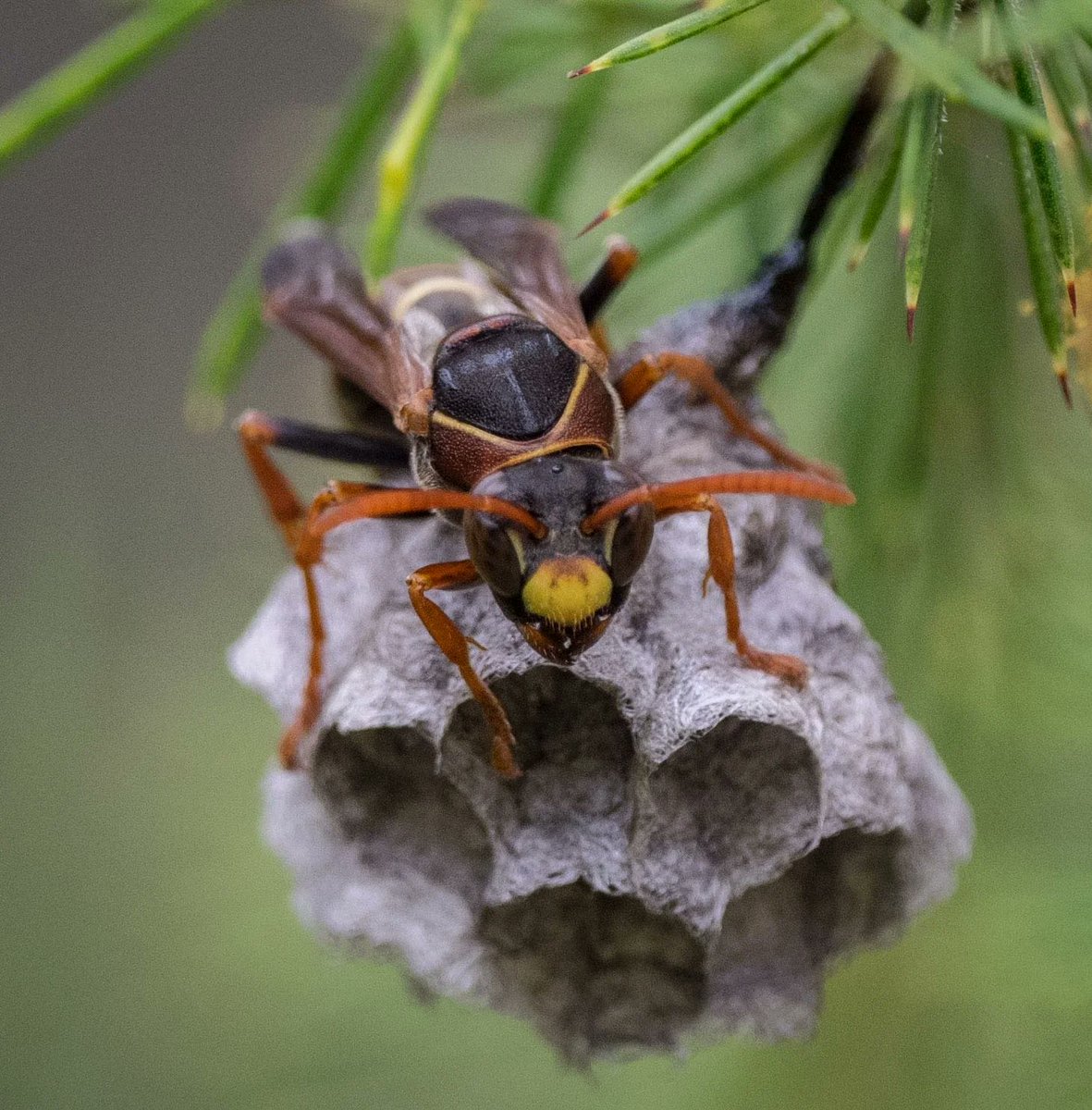
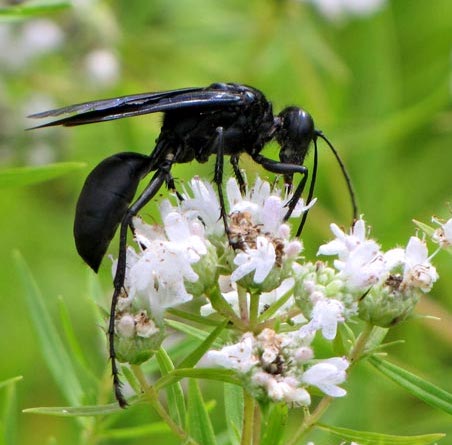
There are about 18,000 species of wasps in North America. Roughly 20 of them can hurt you.
The wasps people fear are all from one family: Vespidae. They make up less than 1% of wasp species on the continent. They build the visible nests, they defend them aggressively, and they're the ones you remember from a bad encounter.
The other 99% live solitary lives and ignore humans entirely. Many can't sting at all. Many more have stingers but never use them on people because they don't have a nest to defend.
What they do instead is hunt other insects. A single mud dauber stocks her nest with paralyzed spiders, including widows and recluses. A braconid wasp lays eggs in tomato hornworms. An ichneumon wasp parasitizes wood-boring beetles that kill ash trees. A cuckoo wasp infiltrates the nests of other wasps and bees. Some species control aphids; others control caterpillars, beetle grubs, or flies.
Most agricultural pest insects in North America are controlled, in part, by parasitic wasps that almost no human ever sees. There are over 25,000 species of ichneumon wasps alone, and they keep entire orders of insects in check.
The five or so wasp species that ruin a picnic in late August are real. The 17,995 species that are running the pest control infrastructure of an entire continent get almost none.
296
2,089
25,982
5,932,573
Bill Simpson retweeted

Jun 5
I don’t make the rules
123
210
3,533
2,108,886
Bill Simpson retweeted

Jun 5
The geomorphology of a river
[🎞️ MinuteEarth]
94
871
15,597
5,845,754
Bill Simpson retweeted

Jun 3
Bro was genuinely scared to death. 😂 🤣
Community note
This video was made using AI. Similar videos of a small dog wearing a scary mask to scare a big dog are created for entertainment with creators stating no animals were harmed.
facebook.com/MikesMayhem/po…
facebook.com/iamboh/posts/l…
1,686
10,895
89,333
5,403,694