Publishing The Evening Sky Map since January 2000. A free, easy-to-use 2-page monthly all-sky map & sky calendar of celestial events for sky watchers worldwide.

Joined May 2008
666 Photos and videos
🌟 On June 15 at 20h UT (now), Mercury reaches its greatest eastern elongation appearing 25Β° away from the Sun in the evening sky. Mercury will be at magnitude 0.6 at the time.πŸ”­ #stargazing
1
8
234
Sad to hear that Alan Hale passed a few days ago. Dr Hale was the co-discoverer of the widely observed Comet Hale-Bopp which peaked in 1997. The photo shows Alan Hale (left) and Bill Bradfield (right) -- 20th century's most prolific visual comet discoverer (18 comets). πŸ”­ #comet
1
5
28
1,154
Step outside in the early evening and simply look up to view the strikingly beautiful Venus-Jupiter conjunction. The conjunction is visible for several days worldwide, with the two planets at their closest (1.6Β°) at 21h UT on 9 June 2026. πŸ”­ More events: Skymaps.com/skycalendar/

1
2
4
251
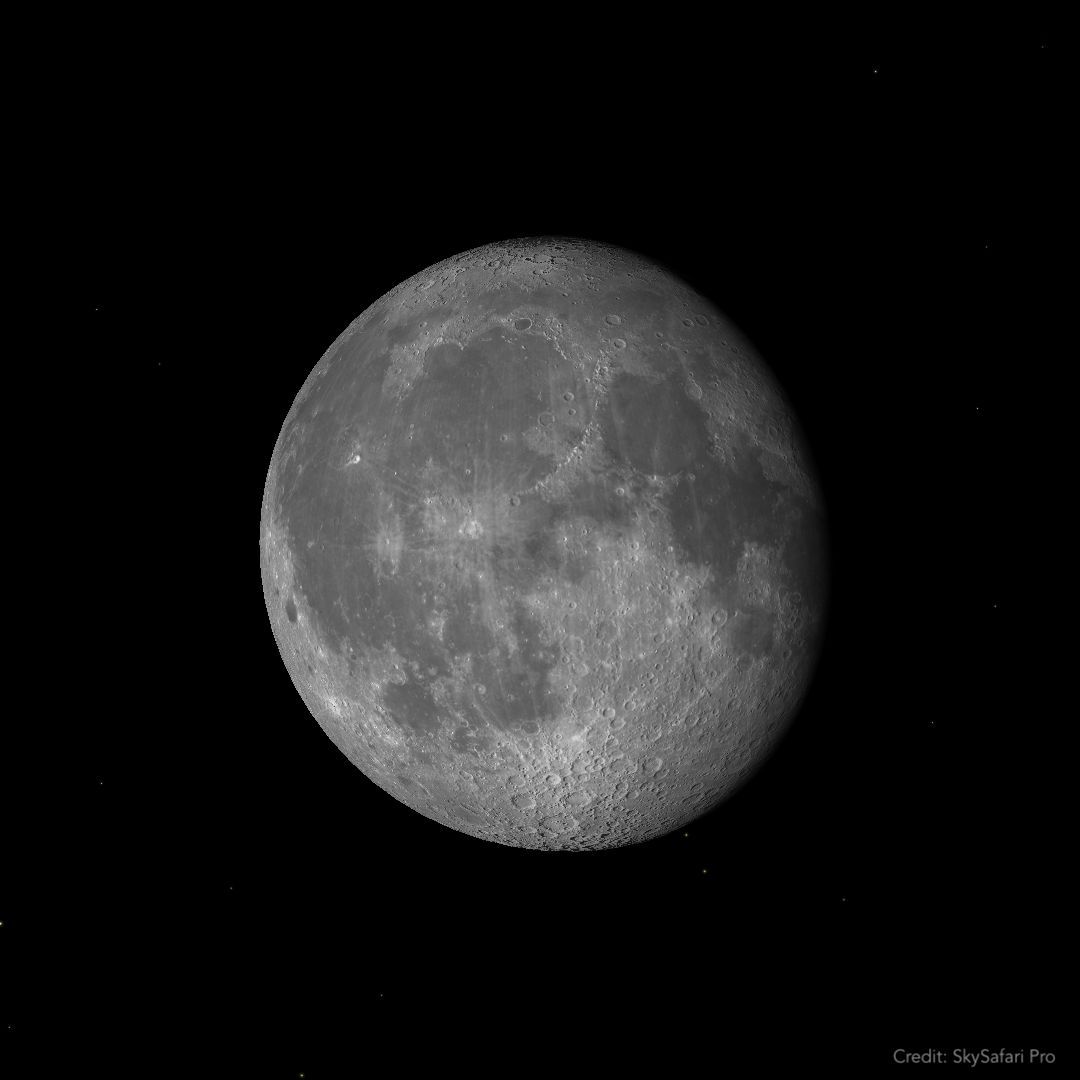
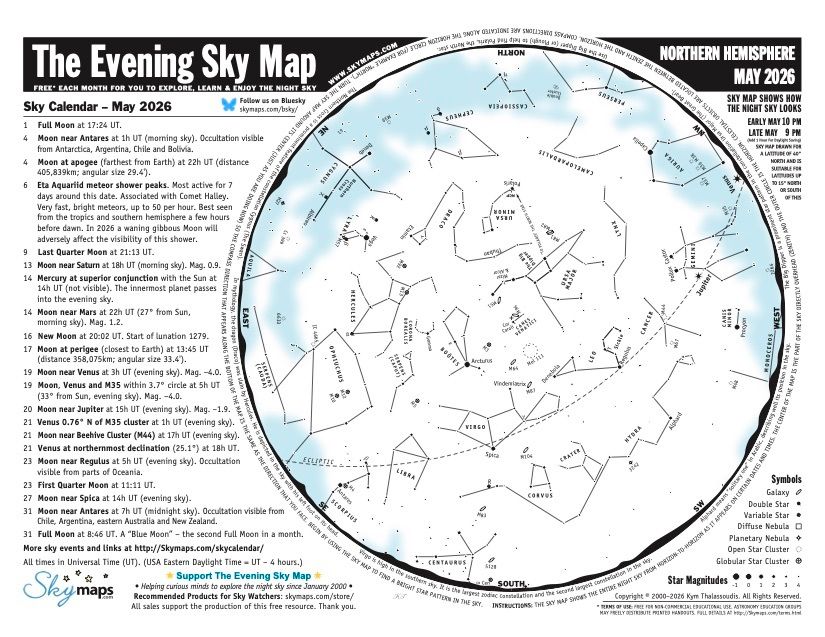
🌟8 June: Last Quarter Moon at 10:02 UT (now). This Moon phase marks the start of dark moonless evening skies for the next 7 to 10 days. Download a copy of The Evening Sky Map (PDF) from skymaps.com/tesm/ and enjoy an evening under the stars! #stargazing #moon
4
12
392
πŸŒ– The Moon will reach apogee (farthest from Earth) at 5h UT (now) on 1 June 2026. At this time the Moon's distance from Earth will be 406,366 km or 252,504 miles and span an angular size of 29.4 arc-minutes. πŸ”­ June 2026 Sky Calendar: skymaps.com/skycalendar/

1
6
253
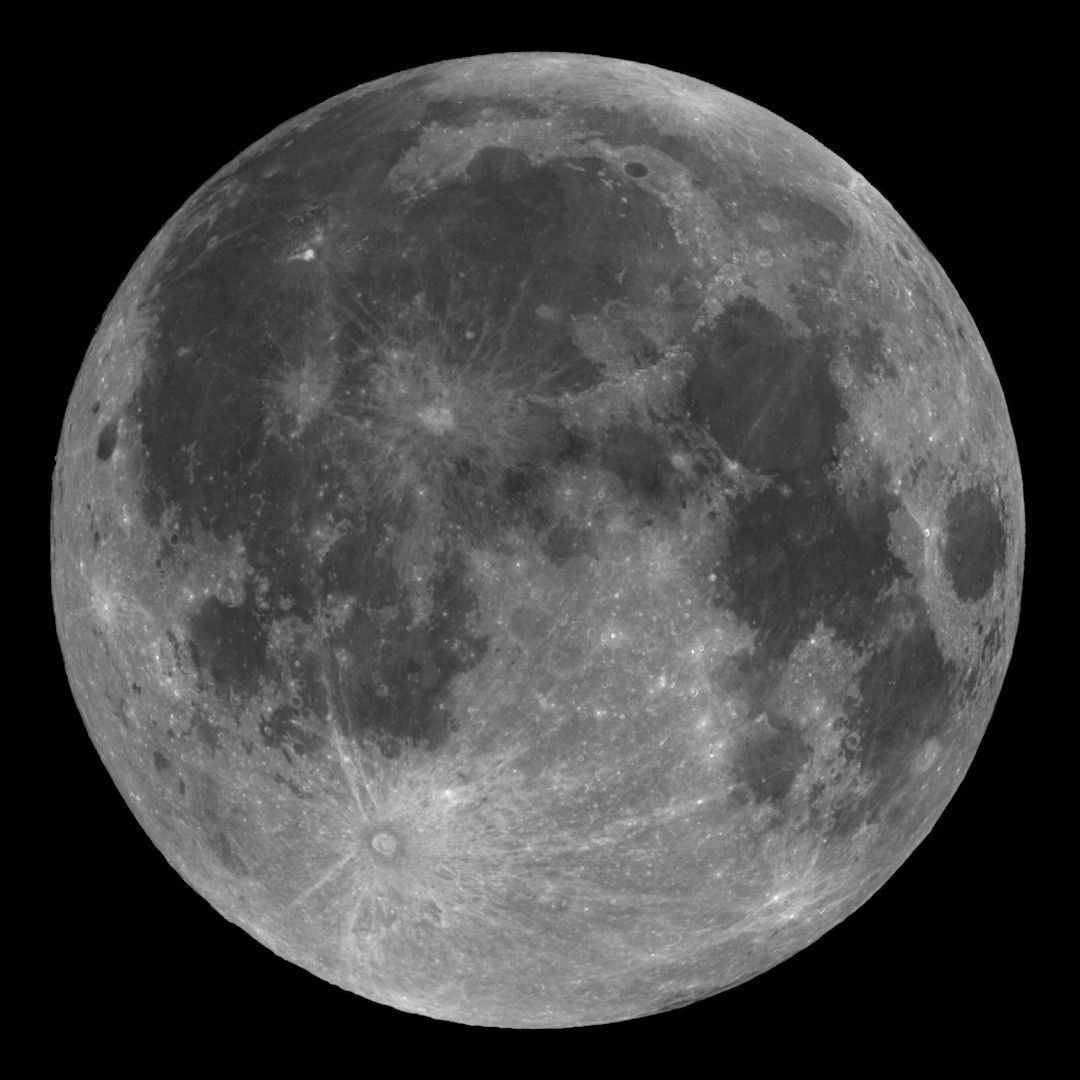
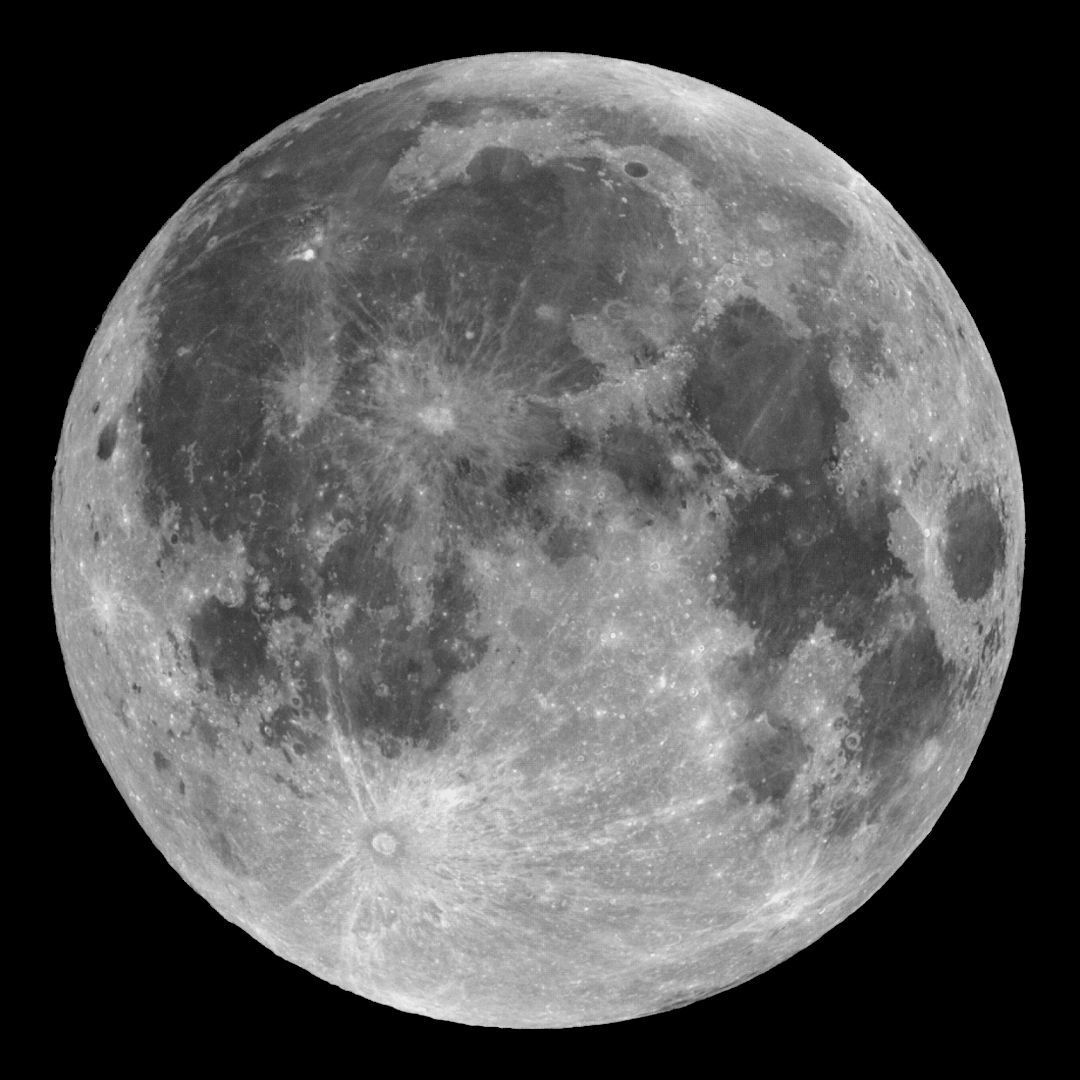
The second Full Moon this month occurs at 8:46 UT (now) on 31 May. Known as a "Blue Moon" it is a fairly rare event occurring every 2.5 years. The term was first used in this context in 1988. Whereas the common saying β€œOnce in a Blue Moon” has been used for hundreds of years! πŸ”­
3
17
617
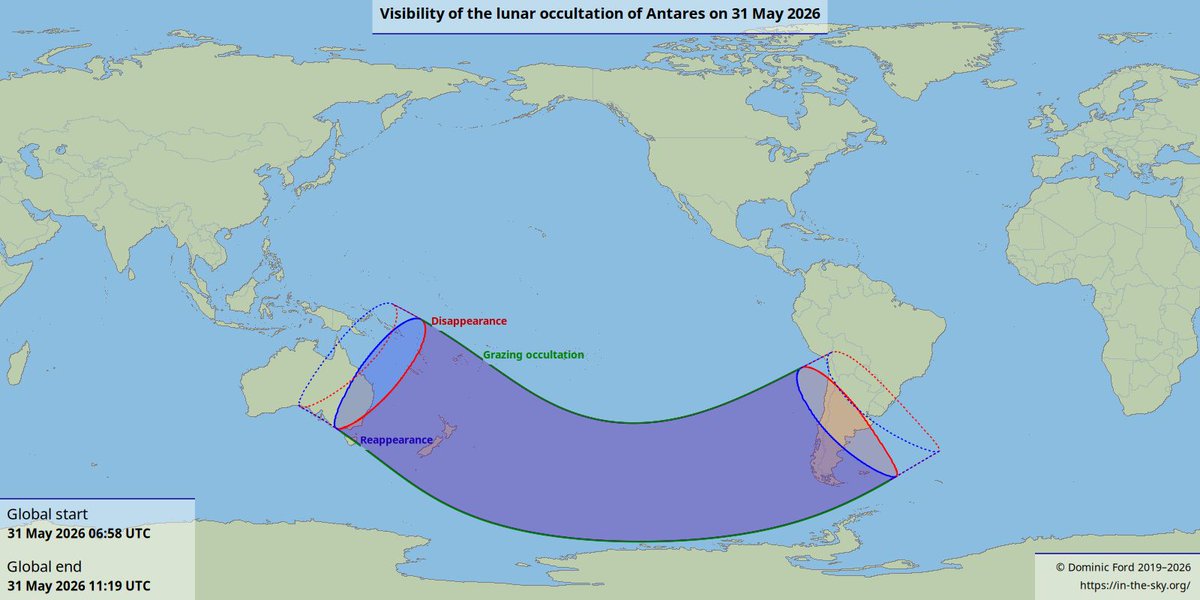
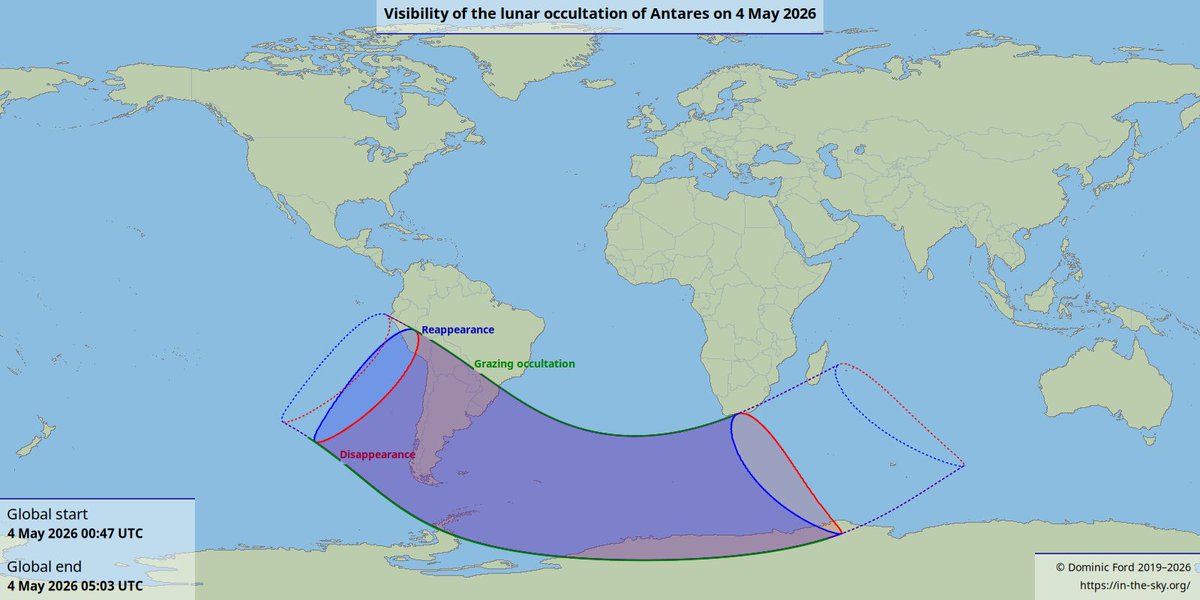
πŸŒ• 🌟 Antares the brightest star in Scorpius will soon be occulted by the Full "Blue" Moon. The event commences at 7h UT on 31 May 2026 and will be visible from Chile, Argentina, eastern Australia, New Zealand, and the southern Pacific. πŸ”­ in-the-sky.org/news.php?id=2… #bluemoon
3
10
415
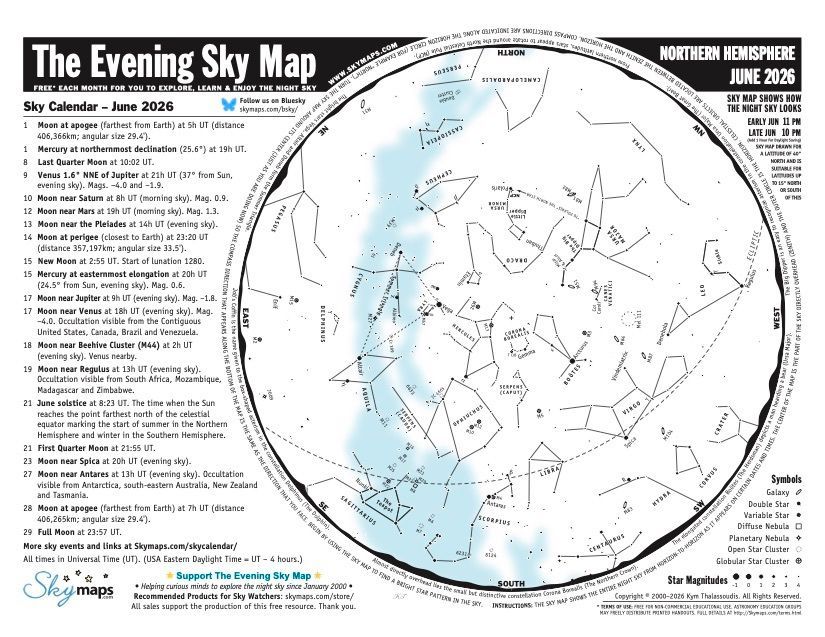
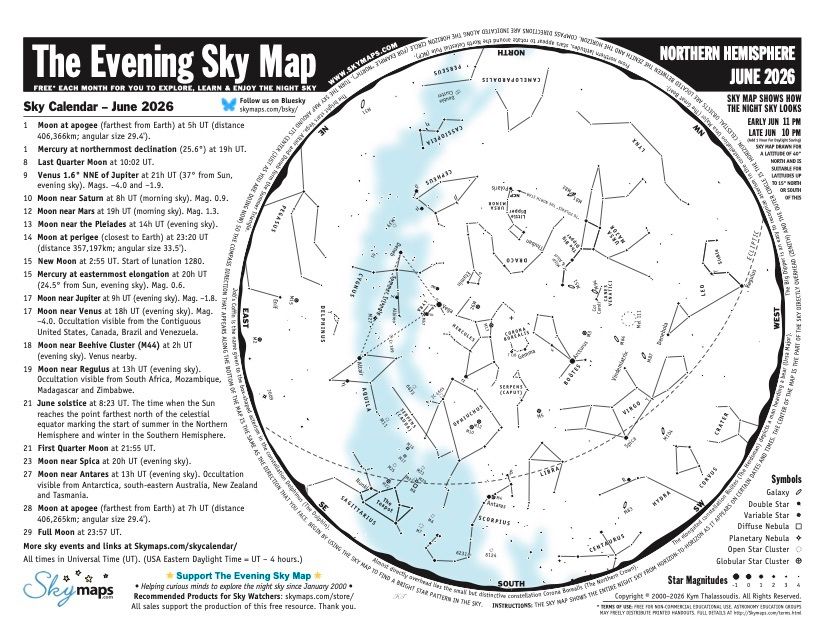
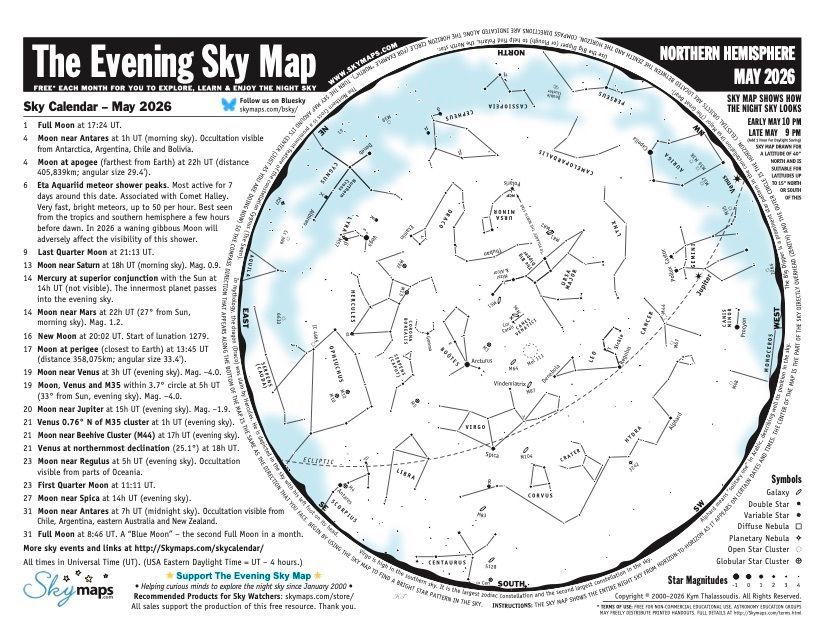
πŸ’« The June 2026 edition of The Evening Sky Map (PDF) is now available for download at skymaps.com/tesm/. The PDF features easy-to-use sky maps for the northern & southern hemispheres and equatorial regions. Please share and enjoy exploring the Universe! πŸ”­ #stargazing
8
15
475
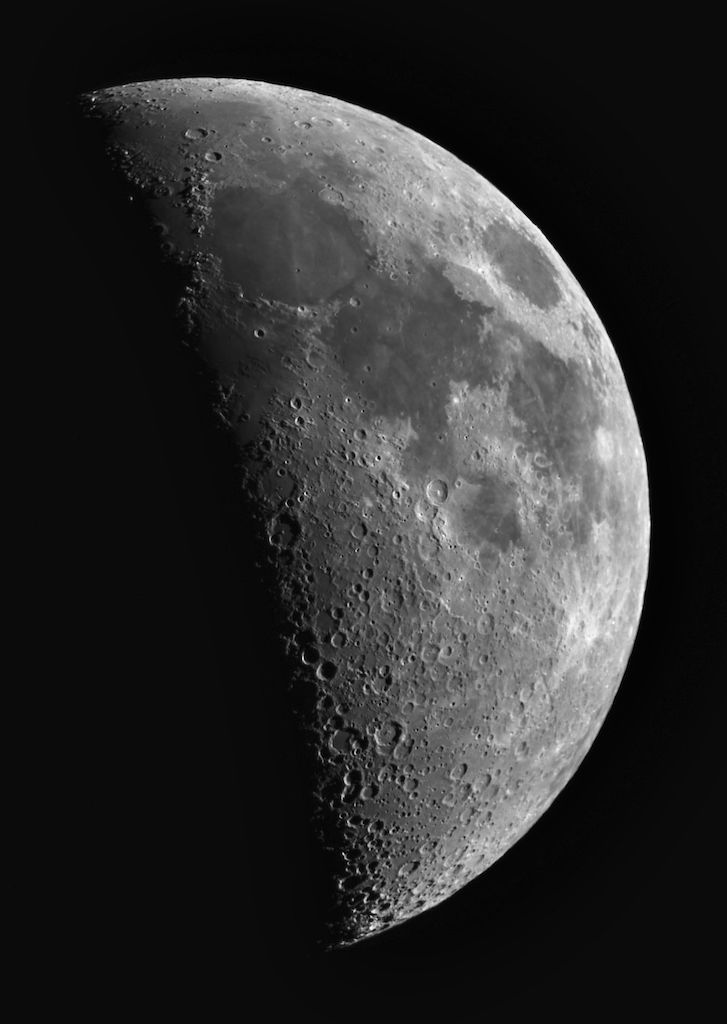
πŸŒ“ 23 May: First Quarter Moon at 11:11 UT (now). The days around First Quarter are a great time to explore and view craters and other lunar features. A telescope will provide stunning views. πŸ”­ πŸ“– NG Moon Map (Amazon): skymaps.com/a1/1566959535/ #stargazing #moon
3
2
13
440
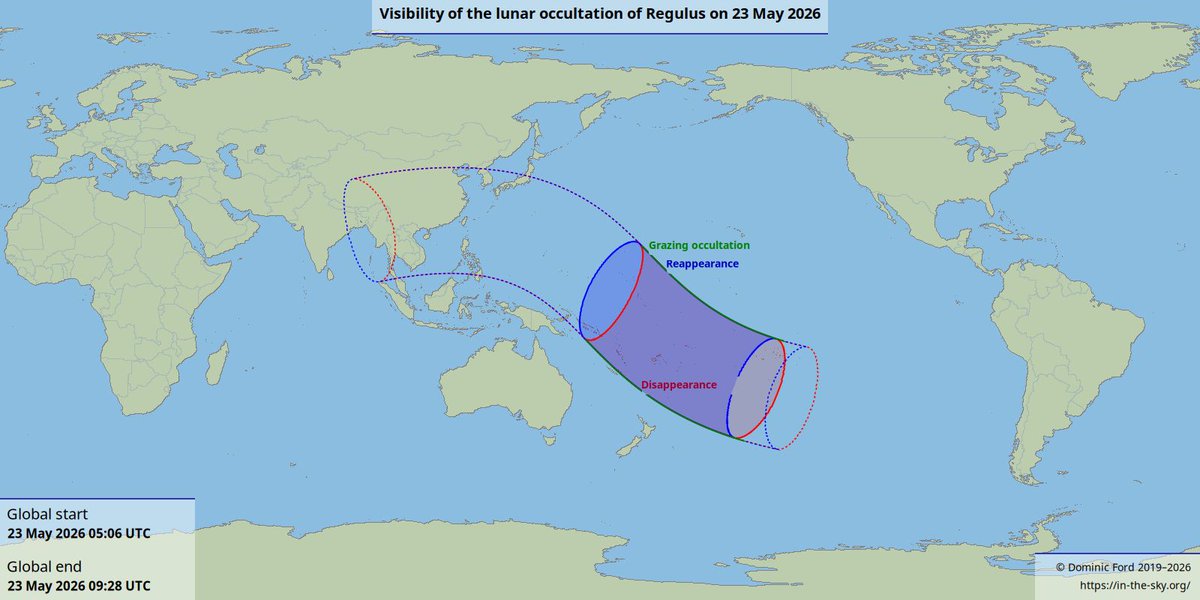
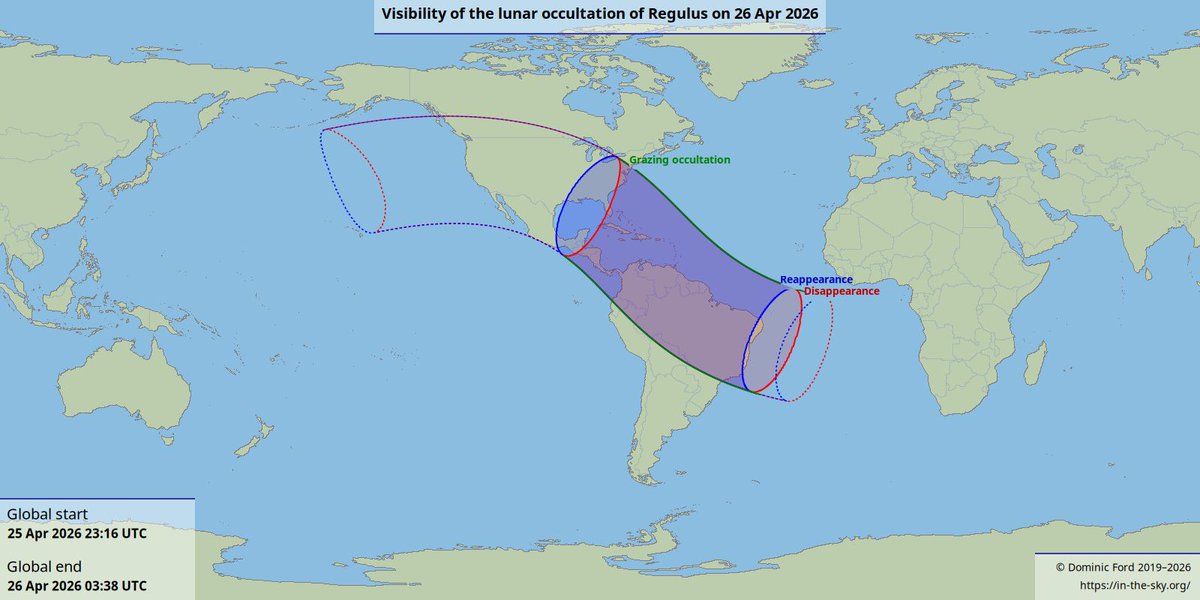
⭐ Over the next few hours, the Moon will once again pass near the bright star Regulus, aka "The Little King". Closest approach is at 5h UT on 23 May 2026, with an occultation visible from parts of Oceania. πŸ”­ in-the-sky.org/news.php?id=2… #stargazing #moon
2
6
834
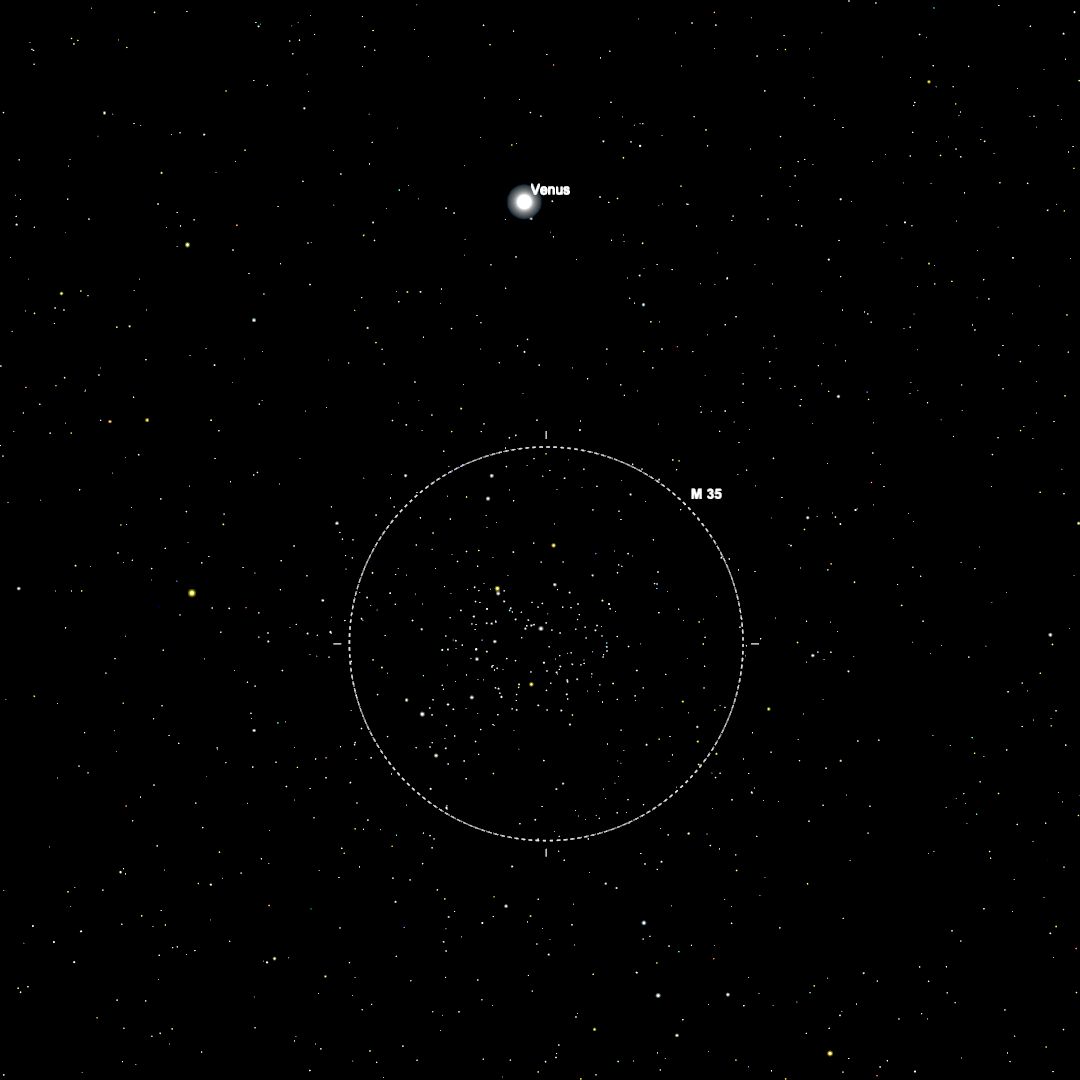
21 May: Venus (–4.0 mag.) is currently within 1 degree of the open star cluster M35 in Gemini. Look up this evening using binoculars for the best view. πŸ”­ #stargazing
1
6
20
754
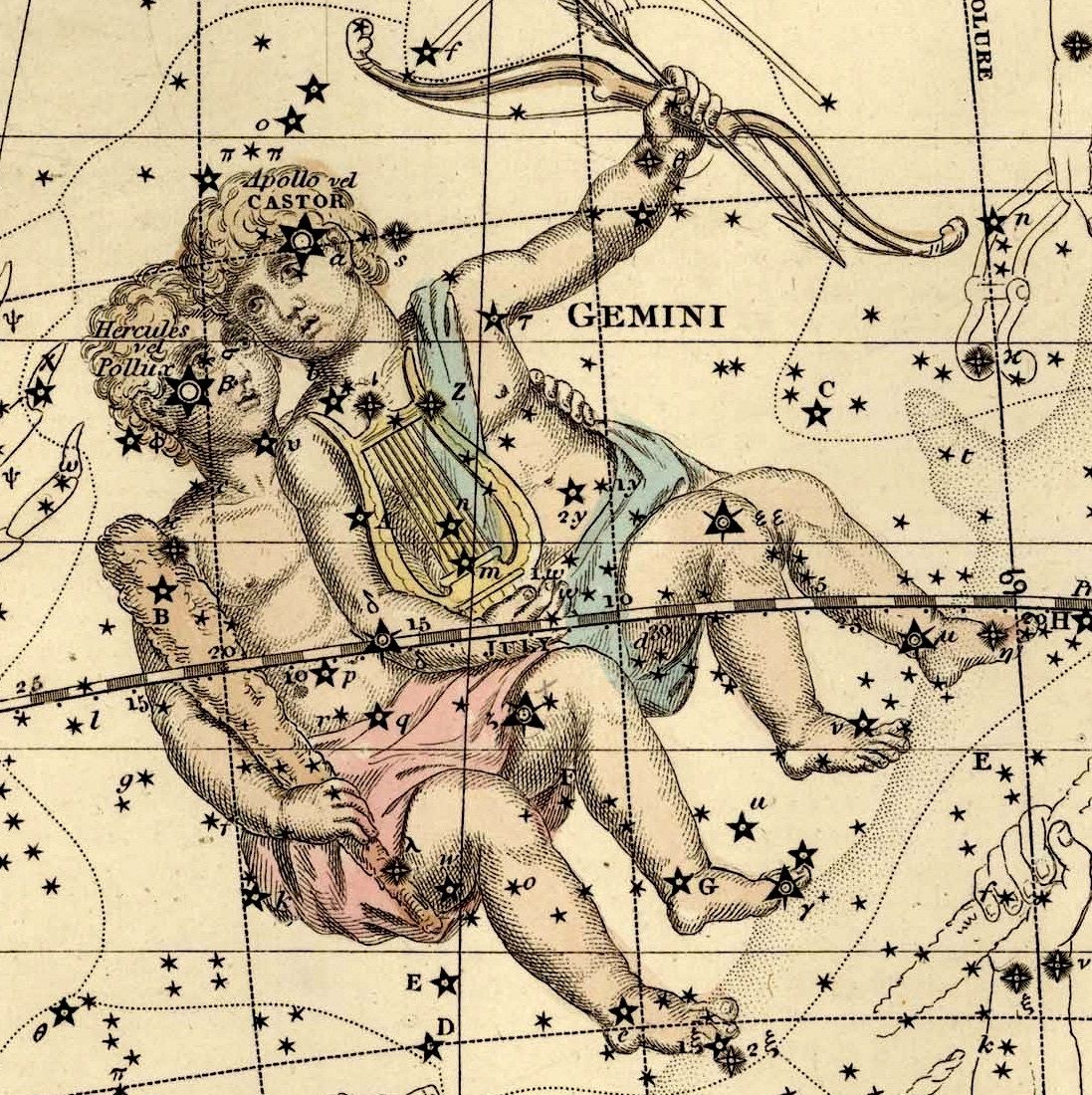
🌟 The waxing crescent Moon is currently near Castor and Pollux -- the twins of Greek mythology and the brightest stars in the constellation Gemini. Closest approach occurs at 11h UT and 16h UT on 20 May, respectively. Jupiter is also nearby. Sky Myths: skymaps.com/myths/
2
18
478
πŸŒ™ 🌟 Over the next few hours the crescent Moon will appear close to the planet Venus, with closest approach at 3h UT on May 19th. The beautiful scene is visible worldwide and is best viewed about an hour after sunset. Simply look up! πŸ”­ skymaps.com/skycalendar/

3
4
342
At 13:45 UT (now) on 17 May 2026 the Moon will reach perigee (closest to Earth). At this instant the Moon will be at a distance of 358,075 km (222,497 miles) with an angular size of 33.4 arc-minutes. #stargazing #moon skymaps.com/skycalendar/

1
4
262
Mercury will be at superior conjunction with the Sun on May 14th at 14h UT (now). The innermost planet will then gradually pass into the evening sky. πŸ”­ #stargazing #astronomy
2
9
227
πŸŒ’ The thin crescent Moon appears close to Mars over the next few hours. The pair is visible in the pre-dawn sky with closest approach around 22h UT on May 14th. To spot Mars, look for the bright red "star" a few degrees from the Moon. πŸ”­ May 2026 events: skymaps.com/skycalendar/

1
2
9
225
πŸŒ’ πŸͺ The waning crescent Moon appears close to Saturn over the next few hours. The pair is visible in the pre-dawn sky with closest approach around 18h UT on May 13th. To spot Saturn, look for the bright yellow "star" a few degrees from the Moon. πŸ”­ #stargazing
2
4
216
πŸŒ— Last Quarter Moon occurs at 21:13 UT (now) on 9 May 2026. This Moon phase marks the onset of dark moonless evening skies -- a great time to enjoy #stargazing. Go to skymaps.com/tesm/ to download The Evening Sky Map (PDF) and treat yourself to an evening under the stars!
2
11
276
The Eta Aquariid meteor shower peaks in the pre-dawn hours of 6 May 2026. Most active for 7 days around this date. Produces very fast, bright meteors, up to 50 per hour. Best seen from the tropics and southern hemisphere. Moonlight adversely impacts meteor visibility in 2026. πŸ”­
3
3
331
πŸŒ– The Moon will reach apogee (farthest from Earth) at 22h UT (now) on 4 May 2026. At this time the Moon's distance from Earth will be 405,839 km or 252,177 miles and span an angular size of 29.4 arc-minutes. πŸ”­ May 2026 Sky Calendar: skymaps.com/skycalendar/
5
15
479